Best Office Chairs for Students: Comfort for Long Study Nights
A study session rarely fits into a tidy, predictable schedule. Some nights it's an hour of reading before bed; other nights it's a five-hour stretch before an exam that leaves your back aching long before the material actually sinks in. The chair underneath you during those long, irregular sessions matters more than most students assume when they first furnish a dorm room or a shared apartment desk on a tight move-in budget.
Unlike office workers who sit in fairly predictable eight-hour blocks with a consistent routine, students deal with wildly uneven sitting patterns, tighter budgets, and often smaller rooms shared with a roommate or squeezed into a dorm layout designed by someone who clearly never had to actually work at that desk. A chair built for a corporate office doesn't always translate well to that context, and a chair marketed as a study chair isn't automatically better just because of the label on the listing.
This guide breaks down three chair styles that consistently hold up well for student use, weighing comfort alongside price, durability under inconsistent care, and how well each fits a room that usually serves more than one purpose. None of the three is the single correct answer for every student — the right pick depends on your study habits, your room, and your budget, and being honest about all three matters more than chasing whichever chair has the flashiest listing photos.
It's worth being upfront about what a chair can and can't fix. No chair eliminates the fatigue of a genuinely long study session, and no chair substitutes for standing up and stretching every hour or so. What the right chair does is remove the unnecessary strain — poor lumbar contact, an armrest digging into your side, a seat that cuts off circulation after an hour — so the time you do spend at the desk is less physically taxing than it would otherwise be.
It's also worth thinking beyond a single semester when you shop. A chair bought for a first-year dorm room often ends up following a student through several moves, apartments, and study environments over the following years, so durability and portability deserve more weight here than they might in a one-time furniture purchase for a permanent home.
Top 3 Office Chairs for Students (Detailed Reviews)
Mesh Back Ergonomic Chair – Best Overall for Long Study Sessions
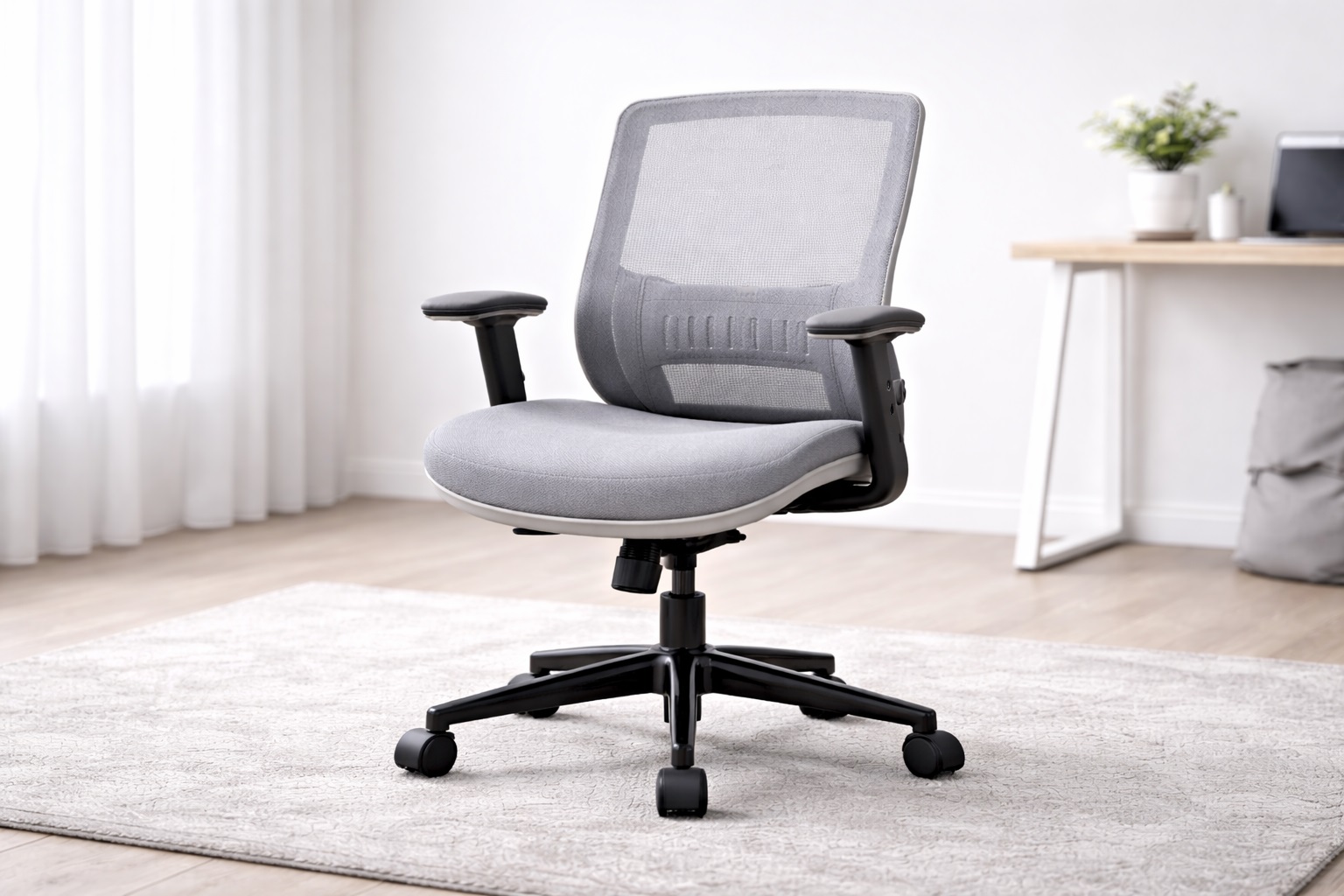
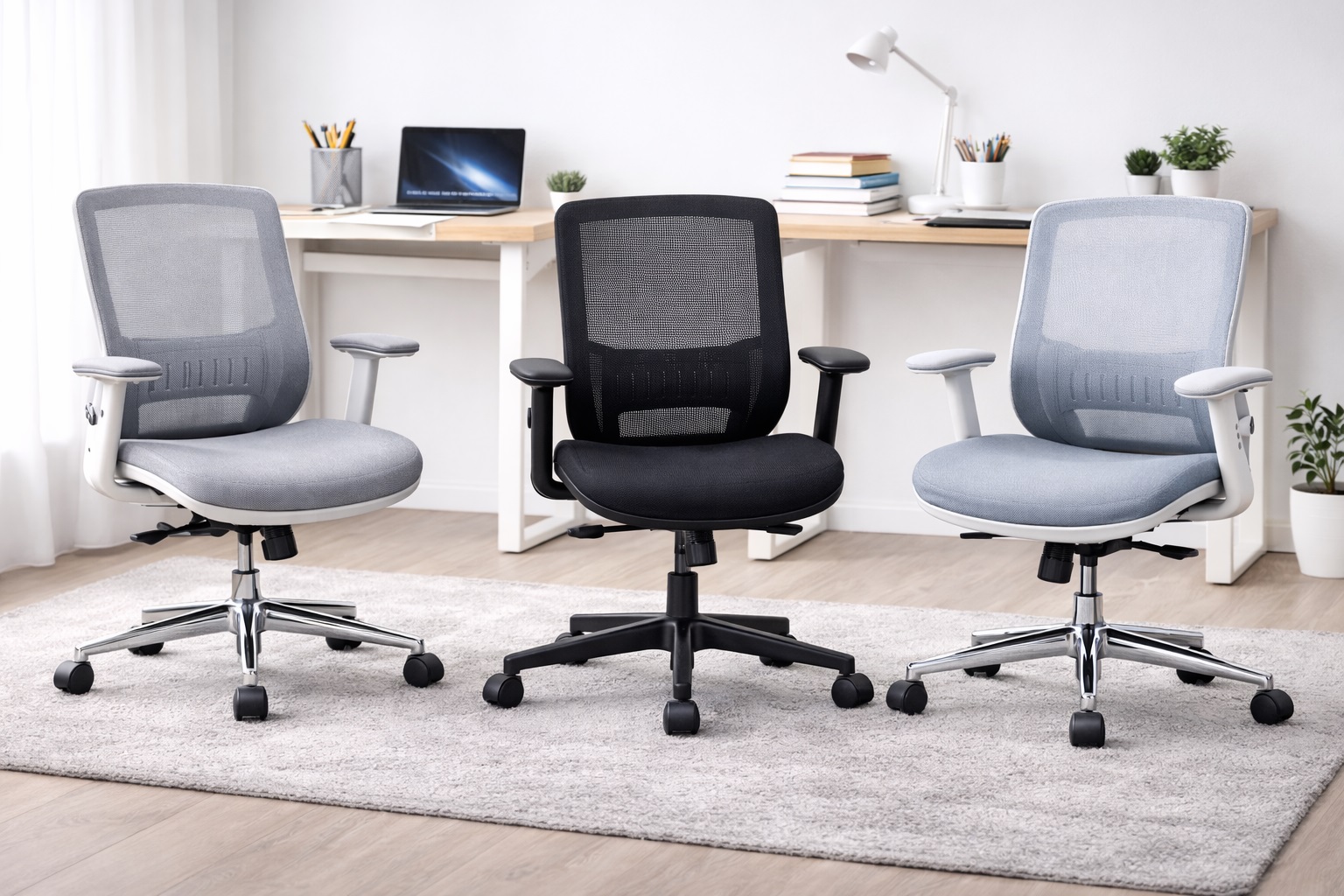
A mesh back chair uses a breathable fabric that conforms to your spine while letting air circulate behind your back, addressing both lumbar support and the heat buildup that comes with sitting through a genuinely long study session. Most mid-range mesh chairs include adjustable lumbar support, armrests, and seat height, covering the core adjustments that matter most during a late night at the desk before an exam.
For students specifically, the breathability advantage matters more than it might for a typical office worker, since dorm rooms and small apartments are frequently warmer and less ventilated than a climate-controlled office. A mesh back stays noticeably more comfortable through a three-hour study block than a heavily padded alternative sitting in the same warm room.
Mesh chairs also tend to be more forgiving of inconsistent care, which matters for a piece of furniture that will likely get used by roommates, moved between rooms during a move-out, or generally treated less gently than a chair in a professional office setting with a single careful owner.
Because mesh chairs span such a wide range of price points, it's worth reading a handful of specific listings rather than assuming any mesh chair automatically delivers strong lumbar support. Some budget mesh designs skip adjustable lumbar entirely, so confirm the specific adjustment features before assuming the category as a whole guarantees them.
- Pros:
- Breathable mesh back prevents heat and moisture buildup
- Conforms naturally to the spine's shape
- Includes the key ergonomic adjustments most students need
- Holds up well to less-than-careful daily use
- Cons:
- Mesh quality varies significantly between price points
- Firmer mesh seats can feel less plush on budget models
Best For: Students who study for four or more hours at a stretch and want breathable, adjustable support that holds up to daily, sometimes careless, use.
Why We Recommend It: The combination of genuine ergonomic adjustment and breathable comfort makes this the safest default for students whose study hours are long and unpredictable, regardless of the specific room they're sitting in.
Executive Padded Chair – Best for Cushioned Reading Comfort
An executive-style padded chair uses thick foam or memory foam across the seat and back, delivering a softer, more cushioned sit along with a taller backrest that supports the upper back and neck. For students who spend part of their study time reading rather than typing, the reclining function common on these chairs adds real comfort during those lower-intensity stretches between problem sets or essays.
These chairs are traditionally associated with a higher price point, but compact executive models have become genuinely affordable in recent years, making this style accessible even on a tighter student budget than it might have been in the past.
The trade-off is heat retention and a larger overall footprint, both of which matter more in a small dorm room than they would in a spacious home office, so it's worth weighing this style against your specific room before assuming it's automatically the right fit.
Looking specifically for a compact or armless variant of this style can narrow the footprint gap considerably, since much of the bulk in a typical executive chair comes from wide armrests rather than the backrest itself. That makes the padded comfort more accessible even in a genuinely small dorm room shared with a roommate.
- Pros:
- Plush padded seat for extended comfort
- Taller back supports the upper back and neck
- Typically includes a reclining function
- Comfortable for both reading and typing sessions
- Cons:
- Less breathable than mesh designs
- Larger footprint can feel bulky in a small dorm room
Best For: Students who split their study time between reading and typing and prefer a softer, more reclined sit over a firmer mesh design.
Why We Recommend It: When comfort preference leans toward plush over firm, this style delivers a genuinely different, and for many students preferable, sitting experience without requiring a full executive office setup.
Task Chair with Lumbar Support – Best for Tight Student Budgets
A task chair strips away premium styling and focuses on the adjustments that matter most — lumbar support, seat height, and armrests — at a price point that consistently undercuts both mesh and executive alternatives. For a student furnishing a first apartment or dorm room on a limited budget, this category delivers real ergonomic value without the added cost of features that don't actually affect back health.
The smaller footprint typical of task chairs also suits the tightest dorm layouts, where a desk is often squeezed into a corner alongside a bed and a shared closet, leaving little room for a bulkier executive design or a wide mesh chair with large armrests.
Because the design is simpler, there's also generally less to go wrong mechanically, which matters for a chair that may see rougher treatment than one bought for a permanent, carefully maintained home office setup with a single dedicated user.
The lighter overall build also makes this style easier to move between rooms or carry down a dorm hallway during a semester-end move-out, which is a genuinely practical advantage that heavier executive designs simply can't match when moving day actually arrives.
- Pros:
- Lowest typical cost of the three categories
- Compact footprint suits tight dorm rooms
- Still includes essential lumbar and height adjustments
- Fewer mechanical parts to break under heavy use
- Cons:
- Less visual presence than executive designs
- May lack a headrest or advanced tilt mechanisms
Best For: Budget-conscious students in the smallest rooms who prioritize real back support and low cost over premium styling.
Why We Recommend It: When budget is the primary constraint, this category delivers the ergonomic essentials that actually protect your back during long study sessions without the added expense of features you may never notice using in a dorm setting.
Buying Guide: How to Choose the Best Office Chair for Studying
Match these factors to how you actually study — the length of your typical sessions, your room size, and your budget — rather than defaulting to whichever chair has the most five-star reviews overall.
1. Lumbar Support Adjustability
Adjustable lumbar support is the most important ergonomic feature in any study chair. The natural curve of the lumbar spine varies between individuals, so a fixed lumbar position helps some students while doing little for others. Height-adjustable support is the minimum worth prioritizing, even on a tight budget, since it affects comfort more than any other single feature on this list across a full semester of use.
2. Seat Height Range
Correct seat height lets your feet rest flat on the floor with thighs roughly parallel to the ground. Most chairs adjust between 16 and 21 inches, suiting most adult heights. Dorm desks are sometimes shorter or taller than standard furniture, so confirm the chair's range works with your specific desk before buying rather than assuming a universal fit across every dorm layout.
3. Seat Depth and Cushioning
Two to four fingers should fit between the front edge of the seat and the back of your knees when seated correctly. A seat that's too deep forces you to perch forward, losing lumbar contact, while a seat with inadequate cushioning becomes noticeably uncomfortable during a multi-hour study session that runs late into the night before a deadline.
4. Armrest Adjustability
Armrests should let your arms rest without shrugging your shoulders, which matters over a long typing or writing session. Fixed armrests at the wrong height can actually worsen posture rather than help it, so adjustable armrests are worth prioritizing even on a budget chair, particularly if you type for multiple hours in a single sitting during finals week.
5. Back Material: Mesh vs. Foam
Mesh breathes better and suits warmer, less ventilated rooms common in dorms and small apartments. Foam-padded backs feel softer initially but retain more heat. Neither is universally correct — match the choice to your room's climate and your personal comfort preference rather than following a generic recommendation that assumes a climate-controlled office environment.
6. Durability Under Shared or Careless Use
Student furniture often gets treated less gently than furniture in a permanent home office — moved between rooms, used by roommates, or transported during a move-out. Look for reviews that specifically mention long-term durability rather than only initial comfort impressions, since first-week reviews rarely capture how a chair holds up after a full semester of actual use.
7. Weight Capacity
Check the stated weight capacity against your own needs. Most standard chairs support 250 to 300 pounds. Using a chair beyond its rated capacity accelerates wear on the frame and gas lift mechanism, shortening its usable life during years that already involve heavy, frequent use from a single owner or a rotating cast of roommates.
8. Base and Caster Quality for Dorm Flooring
Dorm rooms frequently mix carpet and hard flooring, sometimes within the same small space. Casters designed for hard floors use softer, wider wheels that won't scratch tile or vinyl, while standard carpet casters can leave marks on hard surfaces over time, which matters more in rooms you'll eventually have inspected for damage at the end of the year.
9. Price Relative to Expected Years of Use
Calculate cost against how many years you'll realistically use the chair, not just the sticker price. A slightly more expensive chair that lasts through an entire degree program often costs less annually than a cheaper one replaced every year or two, especially once you factor in the hassle of replacing it mid-semester during a busy stretch of classes.
10. Assembly Simplicity
Most chairs arrive partially disassembled and take 20 to 40 minutes to build with included tools. In a shared dorm room, confirm you'll have enough floor space and a helping hand if needed, since some assembly steps are easier with two people than working alone in a cramped room with limited clearance around the desk.
11. Footprint Relative to Dorm Furniture Layout
Dorm rooms are often furnished with fixed, non-negotiable layouts — a bed, a built-in desk, and limited floor space. Measure your actual clearance before choosing a chair style, since a chair that looks reasonably sized in photos can still feel cramped against dorm-standard furniture that wasn't designed with a proper desk chair in mind from the start.
12. Portability for Move-In and Move-Out
Students move more often than the average office worker — between dorms, apartments, and home during breaks. A chair that disassembles easily or fits in a standard car trunk saves real hassle at the end of each semester compared to a bulkier, harder-to-transport design that requires a larger vehicle or professional movers to relocate.
13. Noise and Mechanical Quietness
A chair that creaks or squeaks every time you shift position is a minor annoyance in a private office but a genuine irritant in a shared dorm room, especially during late-night sessions when a roommate is trying to sleep a few feet away. Gas lift mechanisms, tilt controls, and swivel bases all vary in how quietly they operate, and cheaper models are more likely to develop noise over time as internal components loosen with regular use. Reading reviews that specifically mention noise after several months of ownership, rather than just out-of-box impressions, gives a more honest picture of what to expect once the chair has settled into daily use.
14. Fabric and Upholstery Care
Dorm desks double as snack stations more often than most students admit, and a spilled coffee or a dropped slice of pizza is a matter of when, not if, over a full semester. Mesh backs generally wipe clean easily, but fabric-covered cushions can absorb stains if not treated quickly, while some budget upholstery options use a more stain-resistant weave specifically marketed for easier cleaning. Checking whether the seat cushion cover is removable or machine washable is worth the extra minute during a purchase decision, since it can turn an accidental spill from a lasting stain into a five-minute fix.
15. Warranty Coverage and What It Actually Protects
Warranty length varies widely across this price range, from a single year on the most budget-focused task chairs to several years or more on sturdier mid-range mesh and executive designs. What matters more than the number itself is what the warranty actually covers — many exclude fabric wear and tear entirely while still covering the frame, gas lift, and casters, which are the components most likely to fail under the kind of shared, inconsistent use a dorm chair typically sees. Reading the specific warranty terms before buying avoids an unpleasant surprise if something does go wrong partway through the year.
Not every factor above deserves equal weight for every student. If you're in a stable apartment for the next few years, portability matters less than it would for someone moving dorms every semester. Weigh the list against your specific situation rather than treating each point as equally critical regardless of your actual living arrangement.
Frequently Asked Questions
1. How do I set up a study chair correctly for ergonomic sitting?
Adjust seat height so your feet rest flat on the floor with thighs parallel or slightly declined. Set lumbar support to match your lower back's natural curve, and position armrests so your shoulders stay relaxed. Correct setup matters more for comfort than the chair's price tag, and it takes only a few minutes once the chair is in place at your desk.
2. Will a budget chair still support me through long study sessions?
Yes, provided it includes the core adjustments — lumbar support, seat height, and armrests. Price often reflects styling and materials more than core ergonomic function, so a genuinely affordable task chair can still protect your back effectively during long sessions that run late into the night before a deadline.
3. Is a mesh back chair better than a padded one for studying?
Neither is universally better — they suit different preferences and room conditions. Mesh breathes better and suits warmer rooms, while padded executive chairs offer a softer, more reclined sit. Match the choice to your room's climate and your personal comfort preference rather than assuming one is objectively correct for every student.
4. What tools do I need to assemble a study chair?
Most chairs include all necessary tools in the box, typically an Allen key and sometimes a Phillips screwdriver. Assembly usually takes 20 to 40 minutes for one person, though having a roommate help speeds up trickier steps like attaching the base to the seat in a tight room with limited floor space.
5. Can I use a study chair on both carpet and hardwood in the same dorm?
Check the caster type before buying. Casters designed for hard floors use softer, wider wheels that work reasonably well on carpet too, while standard carpet casters can scratch or mark hard flooring over time, which matters if your room mixes both surfaces in different areas.
6. Is the most expensive study chair always the best?
Not necessarily. Higher price often adds premium materials or styling, but many affordable options deliver the ergonomic essentials that matter most for long study sessions on a student budget, so spend on the features you'll actually notice using rather than styling alone.
7. How long should a quality study chair last?
A well-built chair from a reputable manufacturer typically lasts several years with regular use, often long enough to cover an entire degree program. Gas lift cylinders and casters are the most common wear points on any chair, regardless of price point or brand.
8. Can I return a study chair if it doesn't suit my dorm room?
Most retailers offer a 15 to 30 day return window. Keep the original packaging during your trial period, and test the chair against your actual desk and room layout before that window closes, since dorm rooms rarely match generic listing photos exactly.
9. What is the best office chair for students who study for long sessions specifically?
It depends on whether your biggest constraint is comfort preference, budget, or room size. Match your priority to the three categories above rather than assuming one option is universally best for every student, since each solves a genuinely different part of the problem.
10. Does brand name matter when choosing a study chair?
Established brands generally offer more consistent quality control and more reliable warranty support. Newer, budget-focused brands can still offer good value, so check verified student reviews specifically before deciding, since they tend to reflect real dorm and apartment use over time.
11. Can a study chair double as a gaming or general-use chair?
Yes, for most students. The ergonomic factors that matter for studying — lumbar support, seat height, armrests — are the same ones that matter for general computer use, so a well-chosen study chair rarely needs to be a separate purchase from a general desk chair used for other activities.
12. How do I transport a study chair between dorm move-ins?
Check whether the chair disassembles easily using the same tools required for initial assembly. Chairs that break down into a compact, flat-packable form are considerably easier to move between dorms or store over a summer break than fully rigid designs that resist disassembly entirely.
13. Is it worth spending more on a chair I'll only use for one or two years?
It depends on how intensively you study and how many semesters you expect to keep the chair. If you study long hours regularly, the comfort and durability gains from a mid-range chair are often worth the extra cost even over a shorter ownership period, since the daily comfort difference adds up quickly.
14. Can I share a study chair with a roommate without it wearing out faster?
Shared use does accelerate wear somewhat, particularly on casters and the gas lift mechanism. Choosing a chair with a higher-rated weight capacity and simpler mechanical design, like a task chair, tends to hold up better under shared, inconsistent use than a more delicate executive model.
15. Do I need a chair mat under a study chair in a dorm?
It depends on your flooring and caster type. A chair mat protects carpet from caster wear and makes rolling easier on thick pile, while hard floors generally don't need one if you've matched the caster type to the surface correctly. Many dorms restrict certain adhesives or damage to flooring, so a mat can also serve as a simple, low-risk way to protect a deposit on rented furniture or flooring you don't own.
16. How much should I realistically budget for a good student study chair?
A genuinely supportive task chair with real lumbar and height adjustment is available at the lower end of this category's price range, while mesh and executive options with more features and better materials sit somewhat higher. Rather than fixing a number in advance, it's more useful to decide which ergonomic features are non-negotiable for your study habits first, then shop within that requirement rather than starting from price alone and hoping the ergonomics work out.
17. Should I buy a chair with a headrest for studying?
A headrest mainly benefits reclining or leaning-back postures rather than the upright, forward-leaning posture most studying and typing sessions actually involve, so it's a nice-to-have rather than an essential feature for most students. It matters more if you plan to use the chair for relaxing between study blocks or for gaming in the same room, where a more reclined sit is common enough that the extra neck support earns its keep.
Not every question above will apply equally to your situation. A student in a stable apartment for several years can weight durability and comfort more heavily than portability, while someone moving dorms every year should treat transportability as a near-equal priority to comfort itself.
Final Verdict
- Best Overall for Long Study Sessions: Mesh Back Ergonomic Chair – breathable, adjustable support built for long, unpredictable study sessions.
- Best for Cushioned Reading Comfort: Executive Padded Chair – a softer, reclined sit for students who split time between reading and typing.
- Best for Tight Student Budgets: Task Chair with Lumbar Support – genuine ergonomic support at the lowest typical cost.
Studying for hours at a stretch takes a real toll on your back if the chair underneath you isn't doing its job, regardless of how tight your budget or how small your room. Each of the three categories above delivers genuine ergonomic support through a different balance of comfort, cost, and footprint, and none of them is a wrong choice so much as a choice suited to a different set of priorities.
Think honestly about how you actually study — session length, room size, and what you can realistically spend — and match that pattern to the buying guide above rather than chasing the most popular option in general. A chair chosen around your real habits will serve you far better through a semester, and likely through several semesters after that, than one chosen around a generic recommendation that doesn't account for how differently students actually live and work.