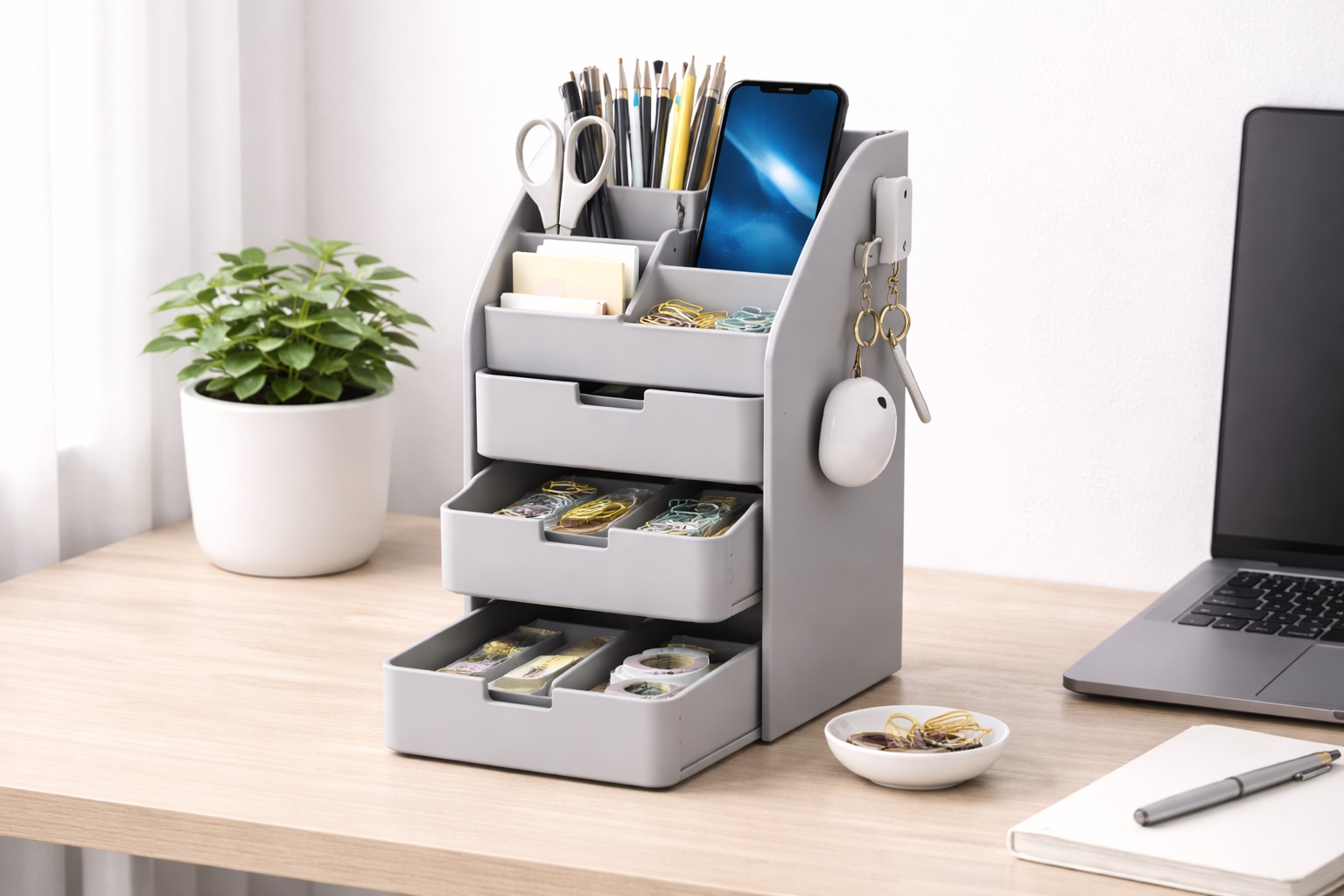
Best Desk Organizers for Small Desks: Compact Storage Solutions
A small desk forces trade-offs a larger one never has to make. Every accessory you add competes directly with the surface you need for a laptop, a notebook, and enough elbow room to actually work. Add an organizer that's even slightly oversized and you've traded one kind of clutter for another — the desk looks tidier in theory, but you've lost the working space that made it usable in the first place.
This isn't really a question of finding the "best" organizer in some general sense. It's about matching storage capacity to a footprint that a small desk can actually spare. The three organizer types below cover the range of trade-offs most compact-desk owners end up weighing, from the naturally sized bamboo caddy to the vertical file system that solves paper storage without eating into desk width.
Vertical space is the quiet advantage in a small-desk setup. An organizer that builds upward rather than outward stores just as much without stealing the horizontal room your keyboard, mouse, and notebook need. Keep that principle in mind as you weigh the specific options below — footprint matters more here than almost any other single factor.
None of this requires an expensive purchase. It requires picking the organizer whose shape actually fits the desk you have, not the one that looks best in a wide product photo shot on a desk twice the size of yours.
Top Picks Reviewed
1. Bamboo Desktop Organizer – Best For a Natural, Compact Footprint
Bamboo organizers built for smaller desks tend to favor a stacked, vertical layout over a wide horizontal tray, which keeps the base footprint modest while still offering several distinct compartments — a pen slot, a small phone stand, and a shallow tray for loose items. The natural material also resists the scratches and dents that come from a compact desk's compartments being reached into constantly throughout the day, since everything on a small desk tends to get touched more often simply because it's all within arm's reach.
The trade-off on a small desk is largely about weight distribution. A solid bamboo piece is heavier than a plastic equivalent, which is actually an advantage in a tight space — it won't slide around every time you reach for something — but it does mean less flexibility if you want to shuffle your layout often.
- Pros:
- Compact vertical layout keeps the base footprint small
- Sturdy enough to resist damage from frequent, close-range use
- Warm natural look suits a small home-office corner
- Multiple compartment sizes without a wide horizontal base
- Cons:
- Heavier than plastic, so repositioning takes more effort
- Exposed wood needs care around spills in a tight, busy space
Best For: Small home-office corners and compact bedroom desks where a warm, natural-material accessory fits the existing decor.
Why We Recommend It: A stable, vertically stacked design gives real storage capacity without the wide base that a small desk simply can't spare, and the material holds up to the closer, more frequent handling a tight workspace demands.
2. Mesh Wire Organizer – Best For Maximum Visibility in Minimal Space
On a small desk, being able to see what's stored without opening anything matters more than it does on a larger surface, because there's no room to spread items out and search. A wire mesh organizer's open structure solves exactly that — everything is visible at a glance, which saves the fumbling that comes from digging through a closed compartment on a desk with no extra room to set things down while you search. Most models keep a narrow, upright profile specifically suited to tight spaces, trading width for height.
Steel construction holds up well under frequent handling, and the light visual weight of an open mesh design doesn't make an already-small desk feel more crowded the way a solid box can. The compromise is that open storage collects visible dust faster in a space where you're already working in close quarters with it.
- Pros:
- Open structure means no searching through closed compartments
- Narrow, upright profiles suit tight desk widths
- Doesn't visually crowd a small desk the way solid designs can
- Durable steel construction for frequent handling
- Cons:
- Dust is more visible in a compact, closely viewed space
- Less warm appearance than natural-material alternatives
Best For: Anyone on a small desk who needs to grab items quickly without wasting the limited surface area on searching.
Why We Recommend It: Immediate visibility solves a problem that's worse on small desks than large ones — there's simply no spare surface to lay things out on while you dig for what you need.
3. Vertical File Organizer With Storage – Best For Paper Storage Without Losing Desk Width
Paper is often the single biggest space consumer on a small desk, because a flat stack of documents spreads horizontally and keeps growing until it takes over the surface. A vertical file organizer solves this directly by turning that horizontal stack into an upright row, freeing the desk width the papers were previously occupying. Small compartments built into the same unit handle pens and accessories, consolidating several small-desk problems into one moderately sized piece rather than several scattered ones.
The unit itself is larger than a basic caddy, which sounds counterproductive on a small desk until you compare it to the alternative — a growing paper pile that takes up more space every week. Positioned against a wall or in a back corner, it reclaims far more usable surface than it occupies.
- Pros:
- Converts a horizontal paper stack into vertical storage
- Consolidates file storage and small-item organization in one piece
- Net gain in usable desk surface despite its own footprint
- Keeps documents accessible rather than buried in a pile
- Cons:
- Larger single footprint than a basic pen-and-tray organizer
- Not worth the space if you rarely handle physical documents
Best For: Small-desk users who still handle regular paperwork and need it out of the way without losing track of it.
Why We Recommend It: On a small desk, an unmanaged paper stack is usually the biggest space problem in the room. This is the only option of the three that solves it directly rather than just tidying around it.
Buying Guide: How to Choose the Best Desk Organizer for a Small Desk
Small-desk shopping rewards a different set of priorities than a general organizer purchase. Capacity still matters, but footprint efficiency usually matters more, since every square inch an organizer occupies is an inch you can't use for actual work. It also pays to think about your desk holistically rather than shopping for the organizer in isolation — the same footprint that looks reasonable next to a large monitor and full-size keyboard can feel completely different once you account for a laptop, a mouse pad, and whatever notebook or reference material you keep within reach during the day.
1. Measure Before You Shop
Write down your desk's exact usable width and depth before browsing anything. It's easy to underestimate how much room a laptop, keyboard, and mouse already need, and an organizer that looked reasonably sized online can turn out to consume a third of your remaining space once it arrives.
2. Vertical Over Horizontal Design
Given the choice between a wide, low tray and a narrower, taller unit with the same capacity, the taller option almost always serves a small desk better. Height is usually the more available dimension in a compact setup, while width is the scarcer resource. This is why the vertical file organizer style, despite being the largest of the three types reviewed here, often ends up net-neutral or even net-positive for usable surface area once it replaces a growing pile of loose paper.
3. Compartment Count Versus Actual Need
More compartments sound useful but often just mean more individual footprint. On a small desk, a focused organizer with two or three compartments you'll actually use beats a sprawling multi-slot design where half the sections sit empty.
4. Wall-Mounted or Under-Desk Alternatives
Before committing to a desktop organizer, consider whether some storage can move off the desk surface entirely — a wall-mounted pen cup or an under-desk tray reclaims desktop space that a standing organizer never can.
5. Weight and Slide Resistance
On a compact surface where you're reaching across a shorter distance repeatedly, a lightweight organizer that slides with every touch becomes a real annoyance faster than it would on a larger desk where it's touched less often. A weighted base or rubber feet solve this reliably.
6. Corner Versus Center Placement
A small desk usually has one back corner that's otherwise wasted space, since it's awkward to reach for active work. Placing the organizer there instead of centered behind the keyboard reclaims usable centerline space without sacrificing storage.
7. Material Durability Under Frequent Handling
Everything on a small desk gets touched more often simply because it's all within close reach. Choose a material — bamboo or coated steel over thin plastic — that holds up to that increased handling frequency rather than showing wear within months.
8. Stackable and Modular Options
Modular systems let you start with a minimal footprint and add components only if you actually need more storage later, rather than committing upfront to a larger single unit that might turn out to be more capacity than you use.
9. Cable Routing to Reduce Visual Clutter
On a small desk, loose cables have nowhere to hide and end up crossing directly over your working area. An organizer with a routing channel or clip points keeps cords contained to the edges rather than draped across your workspace.
10. Color and Tone Against a Small Room
In a small room, a bulky-looking organizer in a dark or heavy tone can visually shrink the space further. Lighter, more open designs tend to keep a compact desk area feeling less cramped even when the physical footprint is similar.
11. Paper Habits Before Buying File Storage
If you rarely print anything, a vertical file section is space you'll never recover the value of. Be honest about your actual paper habits before dedicating a chunk of your limited desk to file storage you won't use.
12. Cost Relative to Space Saved
On a small desk, the value of an organizer is partly about the desk space it frees up, not just the storage it adds. A slightly pricier option that reclaims meaningfully more usable surface can be worth more than a cheaper one that barely improves your working area.
13. Reach and Ergonomics in a Tight Layout
On a compact desk, an organizer placed too far back can force an awkward reach every time you need something from it. Position and size it so frequently used items stay within a comfortable arm's length without requiring you to shift your seated position.
14. Testing the Fit Before Committing
Where possible, measure out the organizer's footprint with tape on your actual desk before buying, especially for larger vertical file units. It's a five-minute check that avoids the hassle of returning something that looked right in photos but crowds your real setup.
15. Depth Matters as Much as Width
Small-desk shoppers often measure width carefully but overlook depth, and a deep organizer can push your laptop or keyboard forward into an uncomfortable typing position even if the width fits fine. Check both dimensions against your desk's actual usable depth, not just the front-to-back space available at the very back edge.
16. Multi-Purpose Compartments Over Single-Use Slots
A compartment that only fits one specific item — a slot sized for a single style of pen, for instance — wastes space on a small desk if your accessories don't match it exactly. Flexible, open compartments that can hold a mix of item shapes and sizes generally deliver more practical value per square inch than rigid, single-purpose slots.
Frequently Asked Questions
What's the ideal organizer size for a small desk?
As a rough guide, keep the organizer's footprint under a quarter of your desk's total surface area. On a 24-inch-wide desk, that generally means a compact unit no more than 6–8 inches across, leaving enough room for a laptop and comfortable typing space.
Should I prioritize height or width when space is limited?
Height, in most cases. Small desks are almost always constrained by width and depth rather than vertical clearance, so a taller, narrower organizer typically fits better than a wide, low one with the same storage capacity.
Is a wire mesh organizer a good fit for a very small desk?
Yes, particularly upright, narrow models. The open structure keeps the visual footprint light, which matters on a small desk where a solid, boxy organizer can make the whole surface feel more cramped than it actually is.
How do I stop paper clutter from taking over a small desk?
A vertical file organizer is the most direct fix, since it turns a spreading horizontal stack into a compact upright row. Pair it with a habit of filing or discarding documents weekly rather than letting them accumulate.
Are wall-mounted organizers better than desktop ones for small desks?
They can be, if wall space near the desk is available and unused. A wall-mounted option removes storage from the desk surface entirely, which is the single biggest space-saving move available for a genuinely tight desk.
Will a heavier bamboo organizer be harder to manage on a small desk?
Not necessarily — the added weight actually helps on a small desk, since it resists sliding when you're reaching across a shorter distance repeatedly. The trade-off is that it's less convenient if you like to rearrange your layout often.
How often should I clean a small-desk organizer?
Because everything on a compact desk gets handled more frequently, a weekly wipe-down of touched surfaces plus a monthly full clean-out keeps it looking presentable and prevents buildup in tight, closely viewed compartments.
Is the most expensive desk organizer for small desks always the best?
Not necessarily. Higher price often reflects sturdier materials or a more efficient footprint, but plenty of mid-range options are well suited to compact spaces. Match the purchase to your actual footprint constraints rather than the price tag.
How long should a small-desk organizer last?
A well-built option in bamboo or coated steel typically holds up for two to five years of regular handling. Because small-desk organizers get touched more often, checking build quality matters more here than for a larger, less frequently handled setup.
Can I return a desk organizer if it doesn't fit my space as expected?
Most retailers allow returns within 15–30 days. Keep the packaging until you've placed the organizer on your actual desk and confirmed it doesn't crowd your working area more than expected.
What is the best desk organizer for a compact workspace overall?
There isn't a single universal answer — it depends on whether your priority is warmth and durability, minimal visual footprint, or solving a paper-clutter problem. Match your pick to whichever constraint is actually limiting your small desk the most.
Does brand name matter for small-desk organizers?
Established brands tend to offer more consistent sizing information and better customer support if a product doesn't fit as expected. Lesser-known brands can still offer good value, but double-check listed dimensions carefully before buying.
Can I combine two organizer types on one small desk?
Sometimes, but carefully. Combining a compact bamboo caddy with a slim wall-mounted piece can work well, while stacking two desktop units usually consumes more footprint than a single, well-chosen organizer would.
Is a modular organizer worth it for a small desk?
Yes, if your storage needs might grow. Starting with a minimal footprint and adding components only when needed avoids committing upfront desk space to capacity you don't yet require.
How do I organize cables on a small desk without a dedicated feature?
Adhesive cable clips along the desk edge or the underside of the organizer itself can route cords out of the main work area even without a built-in channel. It's a low-cost supplement worth considering if your chosen organizer doesn't include cable management.
Should I choose an organizer based on my laptop size?
Indirectly. A larger laptop takes up more desk width on its own, which shrinks the space left for an organizer. Measure your laptop's footprint alongside the organizer's before finalizing a choice, rather than treating the two purchases as unrelated.
Should I match the organizer color to a small room's wall color?
It helps visually. A close, light-toned match tends to make a small desk area feel more open, while a dark, contrasting organizer can make the corner it sits in look more closed-in and cluttered.
What's the most common mistake people make organizing a small desk?
Buying an organizer sized for a general desk rather than measuring their own compact surface first. A unit that looks modest in a product photo shot on a large desk can consume a disproportionate share of a smaller one.
Should I remove items I rarely use rather than find storage for them?
Often, yes. On a small desk, decluttering by removing rarely used items is frequently more effective than buying additional storage for them. An organizer works best when it holds things you reach for daily, not items kept only because you haven't decided where else to put them.
How do I know if my current organizer is actually the wrong size?
A simple test: if you regularly move things off the organizer to make room for something else on the desk, it's either too small for your needs or positioned poorly. If you rarely use half its compartments, it's likely larger than your actual storage needs require.
Are there downsides to buying the smallest organizer available?
Yes — an undersized organizer can end up holding less than you need, pushing overflow items back onto the open desk surface, which defeats the purpose. The goal is matching capacity to genuine need, not simply minimizing size for its own sake.
Does the organizer's shape matter for a corner desk setup?
Yes. A corner desk often has an angled or curved section that a rectangular organizer doesn't sit flush against, wasting the awkward space behind it. A narrower, freestanding unit placed just off the angled section usually fits more cleanly than one pushed directly into the corner.
Can I use two smaller organizers instead of one larger unit?
It's possible, but on a small desk this usually costs more total footprint than a single well-chosen piece, since each separate item needs its own clearance. One organizer sized correctly for your needs is typically the more space-efficient route.
Does an organizer with a phone stand make sense on a small desk?
Only if you actually prop your phone at your desk regularly. On limited surface area, a built-in stand you don't use is space better spent on a compartment for something you reach for daily.
Can I use an organizer to also raise my monitor or laptop slightly?
Some flatter organizer styles can double as a low platform, but purpose-built stands generally provide more stable and appropriately angled elevation. If screen height is a priority, treat it as a separate purchase rather than expecting an organizer to serve both roles well.
What's a reasonable budget for a small-desk organizer?
Basic plastic options start quite low, while bamboo and steel designs cost more but tend to last considerably longer under the frequent handling a small desk sees. Because these organizers get touched more often than on a larger desk, spending slightly more upfront for durable materials often pays off within the first year or two.
Is it better to buy locally or check exact dimensions online first?
Online listings are more reliable for exact measurements, since you can compare them directly against your own desk before committing. In-person shopping makes it easier to judge material quality and finish, so where possible, confirm dimensions online and inspect the actual material if you get the chance before buying.
Is it worth measuring my chair's reach distance, not just the desk?
Yes. On a small desk, an organizer placed at the far back edge might be outside a comfortable seated reach even though it fits the available space. Factor in how far you can comfortably extend your arm without shifting position before finalizing placement.
Do small-desk organizers come in adjustable widths?
Some modular designs let you add or remove sections to adjust the overall width slightly, though most fixed organizers come in set sizes. If exact width matching is important, check the specific product's dimensions carefully rather than assuming standard sizing applies.
Final Verdict
- Best For a Natural, Compact Footprint: Bamboo Desktop Organizer – sturdy, warm storage that doesn't demand a wide base.
- Best For Maximum Visibility in Minimal Space: Mesh Wire Organizer – open storage that doesn't visually crowd a tight desk.
- Best For Paper Storage Without Losing Desk Width: Vertical File Organizer With Storage – turns a spreading paper stack into a single, upright footprint.
On a small desk, the right organizer is rarely the one with the most compartments — it's the one whose shape actually matches the space you have left after your laptop, keyboard, and notebook claim their share. Measure first, be realistic about what you'll actually use, and let the footprint drive the decision more than the feature list.
Give whichever option you choose a real trial period before deciding it's the right fit. Place it where you intend to keep it, use it for a normal work week, and note whether it's actually freeing up space or just relocating the clutter to a slightly tidier-looking pile. That practical test matters more on a small desk than it does anywhere else, since there's no spare room to absorb a poor fit.
It's also worth revisiting the setup periodically rather than treating the first purchase as permanent. Habits change — a mostly digital workflow can shift toward more paperwork, or a cluttered corner you thought you needed might turn out to be dead space once you actually live with it for a few weeks. A small desk rewards this kind of ongoing adjustment more than a larger one does, simply because every inch of gained or lost space is more noticeable when the total area is already limited.