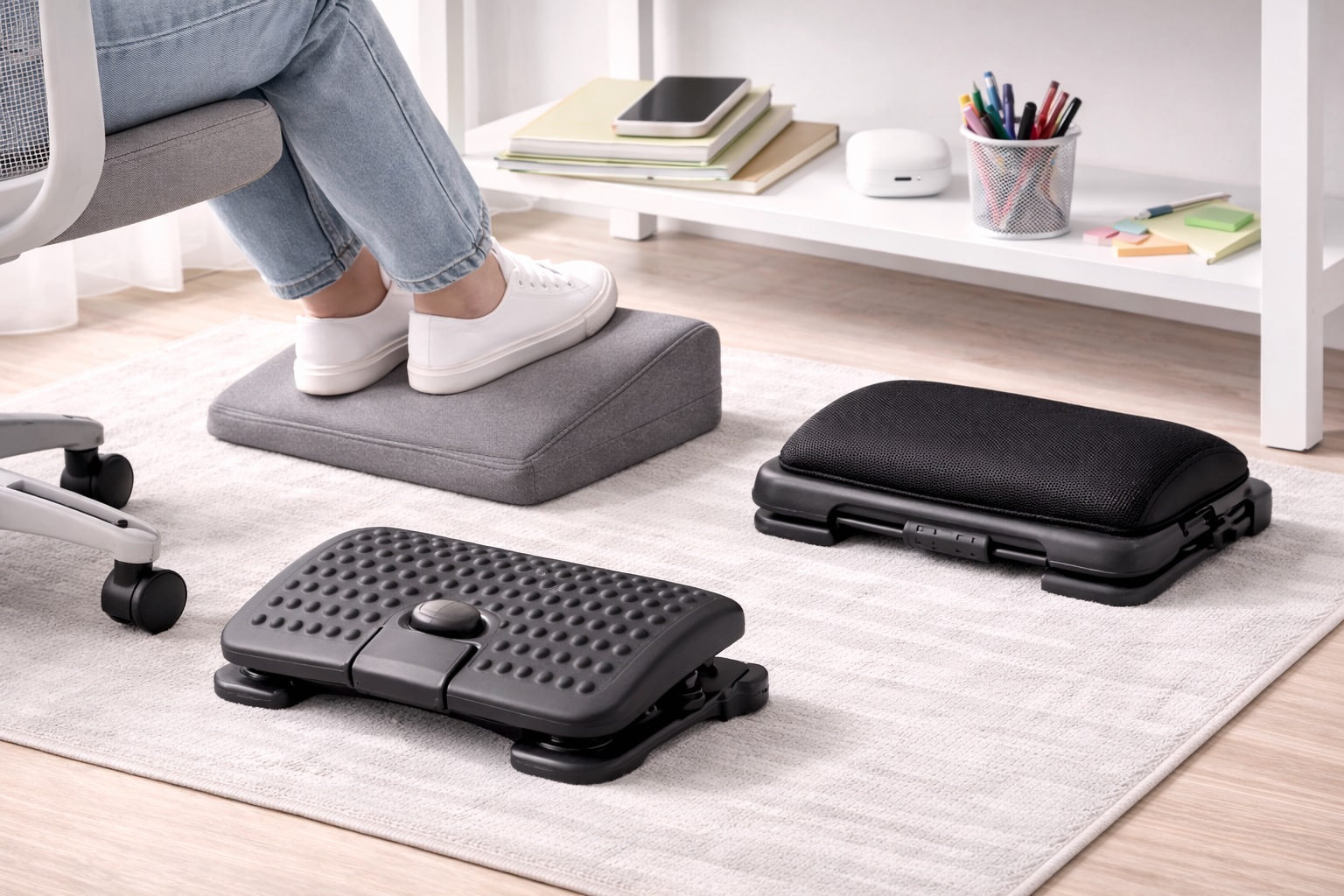
Best Foot Rests for Students: Comfortable Study Support From Any Desk
Student desk setups tend to be improvised in a way professional home offices usually aren't. A dorm room desk, a shared kitchen table, a library carrel, or a hand-me-down desk from a previous tenant all present different heights, different chair types, and different amounts of available floor space, often changing from semester to semester as living situations shift. A foot rest chosen for this kind of setup needs to work reasonably well across a range of conditions rather than being finely tuned to one specific desk, since the desk itself might not be a fixture for more than a year. Even within a single academic year, some students find themselves splitting time between a dorm room, a library, a friend's apartment, and a family home during breaks, each with its own furniture and its own quirks, which is a fundamentally different pattern of use than a professional settling permanently into one home office chair and desk combination.
Budget is also a more consistent constraint for students than for working professionals furnishing a permanent home office, and portability matters in a way it doesn't for someone who knows they'll be at the same desk for the next several years. A product that needs to move between a dorm room and a family home over school breaks, or between apartments as a lease ends, has different practical requirements than one that's installed once and never touched again. Even the process of shopping looks a little different for a student, since a parent or family member may be involved in the decision, and the purchase often needs to fit within a broader back-to-school budget that also covers a mattress topper, desk lamp, storage bins, and a long list of other move-in essentials.
This guide focuses on foot rest types and buying factors that make sense specifically for student study environments — affordability, adaptability across different desk heights, and portability between spaces — along with the questions students and their families ask most often when shopping for this kind of desk accessory. The goal is comfortable, sustainable study posture without assuming a fixed, permanent setup. None of the advice here treats a student's situation as a smaller-scale version of a professional home office; it's a genuinely different shopping problem with its own priorities, and it deserves its own dedicated set of recommendations rather than a generic list that happens to also apply.
It's also worth acknowledging that study sessions often run at irregular hours and irregular lengths, sometimes short and sometimes stretching well past what a typical workday would look like during exam periods. A foot rest that performs consistently whether it's being used for a twenty-minute reading session or a four-hour paper-writing marathon is more genuinely useful for a student's actual routine than one optimized narrowly for a single predictable use pattern.
There's also a financial reality worth naming directly: students are juggling a long list of expenses, and a foot rest competes for budget attention against textbooks, meal plans, transportation, and everything else that comes with school life. That doesn't mean the product deserves less thought — if anything, getting genuine value out of a smaller budget requires more careful comparison, not less, since there's less room to absorb a poor purchase decision and simply buy a replacement.
The three product types below were chosen because each addresses a distinct part of the student experience — adaptability for changing living situations, sustained comfort for long and irregular study sessions, and affordability paired with portability for a budget-conscious, frequently moving lifestyle. Few other shopper profiles combine all three of these constraints as consistently as a student does.
Top Picks Reviewed
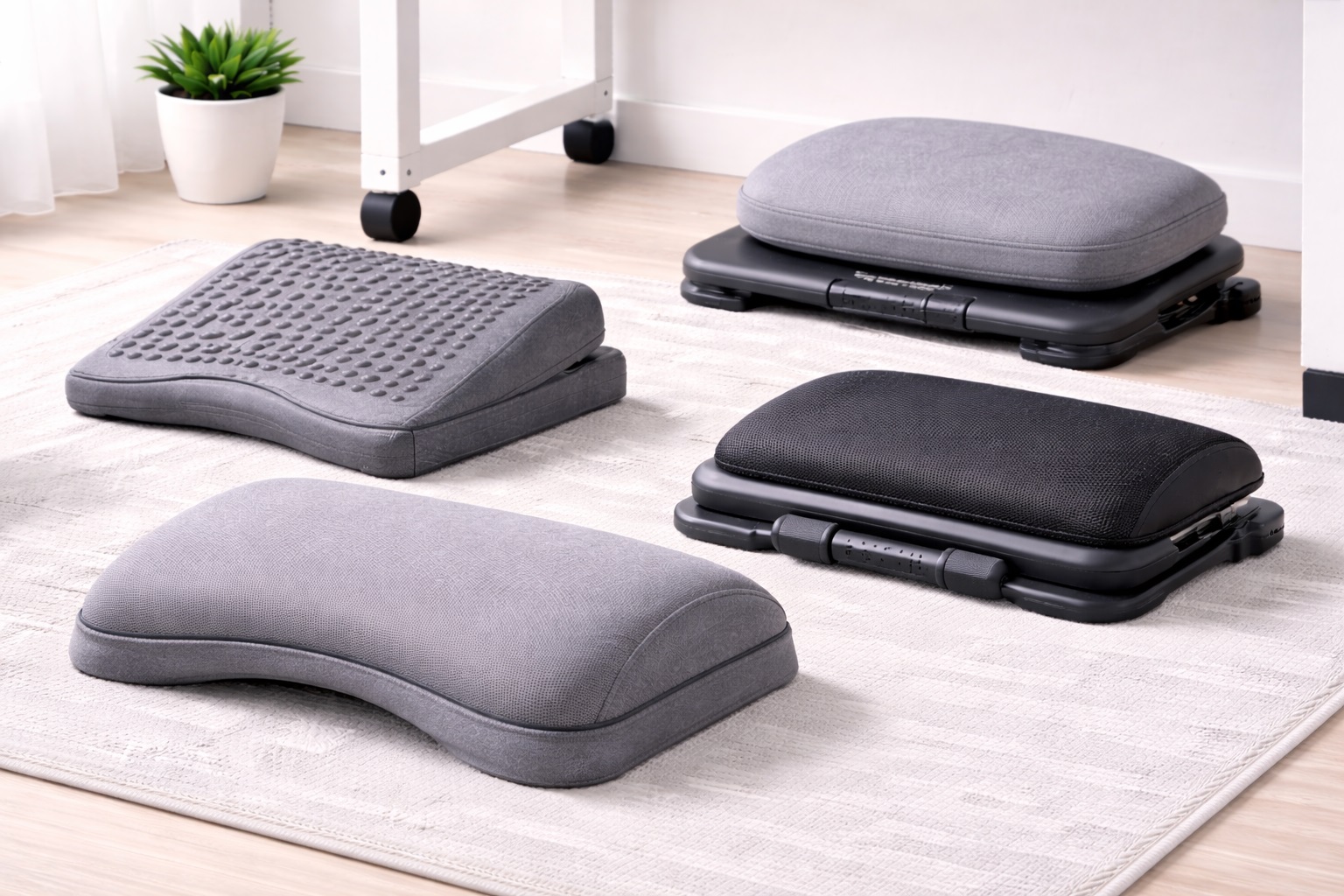
1. Adjustable Tilt Foot Rest – Best for Different Desks Over Time
An adjustable tilt foot rest lets you set both height and angle to match your leg length and whatever desk and chair combination you're currently using, which matters more for students than for someone with a single permanent desk setup. Since dorm furniture, library carrels, and hand-me-down desks rarely share the same height, a foot rest that adapts to each new environment is considerably more useful over a multi-year college career than one built for a single fixed configuration.
- Pros:
- Height and angle adjustment works across different desks and chairs
- Accommodates the height changes that come with moving dorms or apartments
- Non-slip surface keeps feet positioned correctly during long study sessions
- Stable base prevents shifting during focused work
- Cons:
- Plastic construction on budget models feels less premium
- Some tilt mechanisms require more effort to adjust
Because a student's desk situation is likely to change at least once or twice over a few years of school, the adaptability adjustable height and angle provides is worth prioritizing over a fixed-height product that might suit this year's desk but not next year's, even if the fixed option is marginally cheaper up front. Think of the small price premium for adjustability as insurance against the very real chance that your desk situation will look different by next fall, since replacing a mismatched fixed-height product ends up costing more overall than paying slightly more for one that adapts from the start.
Best For: Students whose desk setup is likely to change between semesters, dorm rooms, or apartments, and who want one product that adapts rather than needing to be replaced with each move.
Why We Recommend It: Adjustability solves a problem specific to student life — the near certainty that your desk and chair combination will change at least once before you're done with school — in a way that a fixed-height alternative simply cannot. Even within a single semester, a student might use the product at a dorm desk, a library table, and occasionally a kitchen counter converted into a temporary workspace, and the ability to reconfigure the height for each of those situations is a meaningfully practical benefit that goes beyond simple comfort.
2. Rocking Foot Rest – Best for Long Study Sessions
A rocking foot rest allows gentle foot and leg movement throughout a study session, supporting circulation and reducing the fatigue that builds during the long, sometimes irregular hours that studying for exams or writing papers often requires. The subtle motion helps counter the stiffness that comes from sitting still for hours at a stretch, whether that's an afternoon in the library or a late night finishing an assignment before a deadline. Some students find the light rocking motion also gives them a small, quiet outlet for restlessness during a lecture recording or a dense reading assignment, which can be a more productive habit than tapping a foot against the floor or shifting position in a chair every few minutes.
- Pros:
- Promotes leg movement and circulation during long study sessions
- Reduces fatigue from static foot positioning during marathon sessions
- Simple, durable mechanism that holds up to daily student use
- Comfortable across the irregular hours a student schedule often requires
- Cons:
- Rocking motion requires a brief adjustment period
- Less suitable for users who need a completely fixed foot platform
Because student study sessions are often less predictable in length than a standard workday — sometimes short, sometimes running well past midnight before an exam — a foot rest that stays comfortable regardless of session length is a genuinely practical advantage over one optimized for a single predictable duration.
Best For: Students who regularly study for extended, sometimes unpredictable stretches and want built-in movement to counter the fatigue those longer sessions bring.
Why We Recommend It: The rocking design's continuous, gentle movement addresses the specific pattern of student study habits — long, irregular sessions rather than a steady predictable schedule — better than a static platform built around a fixed routine. Many students describe their study patterns as bursts of intense, extended focus followed by lighter periods rather than an evenly paced daily schedule, and a product that performs consistently regardless of how long any individual session runs fits that pattern more naturally than one tuned for a predictable eight-hour workday.
3. Flat Non-Slip Foot Rest – Best Budget and Portability Pick
A flat foot rest elevates the feet at a fixed height with no tilt or rocking mechanism, and it's consistently the most affordable and most portable style available, which makes it a natural fit for a student budget and a student's tendency to move between living spaces regularly. Its light weight and simple, thin construction mean it packs easily alongside other belongings when moving between a dorm and home for breaks.
- Pros:
- The most affordable foot rest style, well suited to a student budget
- Lightweight and easy to pack when moving between dorm and home
- Simple, reliable design with no moving parts to break in transit
- Immediately improves posture for short-legged users
- Cons:
- Fixed height — not adjustable across very different desk heights
- No tilt for personalized foot angle
For a student on a tight budget who mainly needs a reliable way to keep their feet from dangling at whatever desk they're currently using, this style solves the problem directly without the added expense of an adjustable mechanism they may not need. It's also a sensible first purchase for anyone unsure whether they'll actually stick with using a foot rest regularly, since the low cost limits how much is at stake if it turns out not to fit into their routine.
Best For: Budget-conscious students who need a straightforward, portable solution that travels easily between dorm rooms, apartments, and home over school breaks.
Why We Recommend It: When affordability and portability are the priorities, a simple flat design delivers real ergonomic value at the lowest cost and lowest weight of any style, which matters when you're also budgeting for textbooks and everything else that comes with student life. It's also a low-risk way to try out whether a foot rest genuinely improves your study comfort at all before deciding whether a pricier adjustable model is worth the additional expense down the line.
Buying Guide: How to Choose the Best Foot Rest for Students
Use these factors to find a product that suits the realities of student living — variable desk setups, tight budgets, and the need to move between spaces — rather than assuming a permanent, fixed home office setup.
1. Adaptability Across Different Desks
Since a student's desk situation often changes between semesters or housing arrangements, prioritize a foot rest that adjusts across a range of heights rather than one built for a single specific configuration you may not have next year. This is a meaningfully different priority order than a professional shopping for a permanent home office, where a fixed-height product matched precisely to one known setup is a perfectly reasonable choice.
2. Budget Realistically
Compare foot rests specifically within a price range that makes sense alongside other student expenses. Many capable options exist at accessible prices, so there's rarely a need to stretch toward premium products for a genuinely good result. Setting a specific price ceiling before you start browsing, and sticking to it, is a simple habit that prevents the common pattern of gradually drifting toward pricier options simply because they appear near the top of search results.
3. Weight and Portability
If you'll move the product between a dorm and home, or between apartments as leases change, prioritize lighter, more compact designs that pack easily without adding significant bulk to your other belongings. A product that fits into an existing storage bin or suitcase alongside your other move-out items is more genuinely practical than one that requires its own separate box every time you relocate.
4. Durability for Frequent Moves
A foot rest that travels regularly experiences more handling stress than one that stays permanently in place. Favor sturdier construction over the absolute lightest option if you expect to move it several times a year. Being tossed into a moving box, jostled in the back of a car, or carried up several flights of stairs during a move is a different kind of stress on a product than simply sitting under a permanent desk, and it's worth choosing accordingly.
5. Height Range for Shared or Rotating Furniture
Roommates, shared study spaces, or furniture that changes between housing situations mean a wider adjustment range serves you better than a narrow one matched only to a single current setup. This is particularly relevant if you share a study space with roommates who use different chairs or desks, since a single foot rest that works reasonably well for multiple people avoids the need for everyone to buy their own.
6. Surface Grip for Long Study Sessions
Non-slip surfaces keep feet in place during the long, focused stretches that studying often requires, preventing the small foot drift that can quietly undo the posture benefit over a multi-hour session. This matters especially during exam preparation or paper deadlines, when a single sitting can stretch on for far longer than a typical daily routine would otherwise require.
7. Noise Level in Shared Spaces
If you study in a shared dorm room or library, a quiet mechanism matters more than it would in a private home office. Rocking designs vary in how quiet they are, so checking reviews for noise level is worth doing if a roommate's comfort is a consideration. Late-night study sessions in particular are a common point of friction in shared living spaces, and a quiet product avoids adding one more small irritation to that dynamic.
8. Base Stability on Varied Flooring
Dorm rooms and rental apartments can have different flooring than a permanent home — tile, thin carpet, or vinyl are all common. A base that grips well across a variety of surfaces serves a student better than one optimized narrowly for one floor type. Since you likely won't know your next room's flooring until you actually move in, a base with broadly good grip across multiple common surface types is a safer bet than one specifically marketed for a single flooring type you may not encounter again.
9. Weight Capacity for General Reliability
Most foot rests rate for standard adult weight, generally 250 to 300 pounds. Confirming this comfortably exceeds your needs is a reasonable general durability check regardless of your specific living situation. It's a quick check that costs nothing beyond a moment of attention to the product specification page, and it rules out a meaningful category of potential disappointment before you've spent any money.
10. Return Policy for Trial Use
Since a student's study habits and preferences may not be fully established yet, a flexible return window is useful for genuinely testing whether a specific style suits your actual routine before committing. Use a couple of weeks of normal study sessions, not just a single afternoon, to form a genuine opinion before the return window closes.
11. Storage When Not in Use
Dorm rooms in particular often have limited storage space. A foot rest that folds flat or slides easily under a bed when not needed is a practical bonus for students dealing with genuinely tight overall room space, not just desk space. A dorm room shared between two people leaves very little floor area to spare for anything that can't be tucked away, and a product's storage profile deserves as much attention as its working footprint under those conditions.
12. Assembly-Free Setup for Move-In Day
Move-in day already involves unpacking a full room's worth of belongings, so a foot rest that works straight out of the box without tools or assembly saves a small but real amount of time and hassle on an already busy day. Flat and most rocking designs typically need no assembly at all, while some adjustable models include a base and a separate platform that need to be connected before first use, so check the listing for this detail if move-in day simplicity matters to you.
13. Color and Aesthetic Fit for Shared Spaces
Dorm rooms are frequently shared, and a foot rest that clashes badly with a roommate's side of the room or a strict housing decor policy can become a minor point of friction. Most foot rests come in simple black or gray finishes that blend into almost any room, but it's worth confirming the color options if you're sharing a small space with someone else's furniture and belongings already in view.
Frequently Asked Questions
1. Do students really need a foot rest?
If dorm or rental furniture leaves your feet dangling, or if long study sessions cause leg fatigue, a foot rest addresses these issues directly. It's a genuinely useful accessory for anyone spending several hours a day at a desk that wasn't necessarily built with their specific height in mind, which describes a large share of student furniture whether it's institutionally provided or simply whatever was already in the room when you moved in.
2. What's the best budget foot rest for a student?
A simple flat non-slip foot rest is typically the most affordable option that still delivers real ergonomic benefit, making it a sensible starting point for students working with a tight budget. If it turns out to genuinely improve your comfort, upgrading to an adjustable model in a later semester is always an option once the budget allows.
3. Will a foot rest work at different desks if I move dorms or apartments?
Adjustable height models handle this best, since they can be reconfigured for whatever desk and chair combination you encounter next, rather than being matched to only one specific setup. Bring a small tape measure when you first arrive at a new desk so you can quickly re-dial the height correctly rather than guessing at the new setting.
4. Is a rocking foot rest good for long study sessions?
Yes, particularly for the extended sessions that come with papers, projects, or exam preparation, since the built-in movement helps counter the fatigue of sitting still for hours at a stretch. Students preparing for finals or working through a heavy reading list often describe exactly this kind of extended, uninterrupted sitting, which is the scenario this style handles best.
5. How do I pack a foot rest when moving between dorm and home?
Flat, lightweight designs pack most easily, often fitting into a suitcase or box alongside other belongings without adding meaningful bulk or weight to a move. If you're flying rather than driving between school and home, weight and size become even more important, and the lightest, thinnest option is generally the most practical choice.
6. Can a foot rest help with focus during long study sessions?
Indirectly. Reduced physical discomfort makes it easier to sustain focus over a long session, since fidgeting or shifting position due to leg fatigue is a common, avoidable distraction. Removing one more small source of physical discomfort frees up attention that would otherwise go toward noticing that discomfort rather than the material you're actually trying to study.
7. Should I buy a foot rest for a library carrel or shared study space?
A portable, quiet option makes the most sense if you regularly study in shared or public spaces, since you'll want to bring it with you and avoid disturbing others nearby. A simple flat design generally travels most easily to shared or public study locations, since it requires no assembly and makes no noise at all during use.
8. How long should a student foot rest last?
A reasonably well-made product should last through several years of regular use, covering most of a typical degree program, provided it isn't subjected to excessive handling damage during frequent moves. Choosing a slightly more durable option up front, rather than the absolute cheapest available, tends to pay off over the course of a multi-year program during which the product may travel a dozen times or more.
9. Can I return a foot rest if it doesn't suit my study habits?
Most retailers offer a 15 to 30 day return window, which is generally enough time to test whether a specific style genuinely fits your actual study routine. Use it deliberately across a variety of study sessions rather than a single quick test, since a routine that includes both short reading assignments and long paper-writing marathons benefits from being evaluated across both extremes.
10. What should I prioritize on a student budget?
Adaptability and portability matter more for students than for a fixed home office, so prioritize those two qualities alongside basic durability rather than premium materials or extra features. A product that checks those specific boxes will generally serve you well regardless of which specific dorm, apartment, or study space you end up in over the following semesters.
11. Is it worth asking family to help cover the cost?
Given how directly foot support connects to sustained comfort during long study sessions, many families consider it a reasonable addition to other back-to-school desk setup expenses, though this naturally depends on individual circumstances.
12. Can roommates share a single foot rest?
Yes, particularly an adjustable model that can be reconfigured for different leg lengths and desk heights between users. A flat fixed-height design can also work if both roommates are similar in height, but an adjustable option removes the guesswork entirely when two people with different builds are sharing the same desk setup.
13. Does a foot rest help during online classes and recorded lectures?
Yes — long stretches of watching lecture recordings or attending video seminars involve the same static seated posture as reading or writing, and a foot rest addresses the leg fatigue that builds up just as effectively during passive viewing as during active studying. Students who attend back-to-back online classes for several hours often notice this benefit even more than those with a more varied daily schedule.
Final Verdict
- Best for Different Desks Over Time: Adjustable Tilt Foot Rest — adapts across the desk changes a student's living situation often brings.
- Best for Long Study Sessions: Rocking Foot Rest — sustained comfort through the irregular hours that studying often requires.
- Best Budget and Portability Pick: Flat Non-Slip Foot Rest — the most affordable, most travel-friendly option available.
Student living rarely stays in one place for long, and a foot rest chosen with that reality in mind — adaptable, affordable, and easy to move — will serve you better across a multi-year school career than one built for a permanent setup you don't actually have. Match the product to your actual routine and budget, and you'll get real comfort benefit without overspending on features a temporary desk setup doesn't need. Whichever style you land on, it's a small purchase relative to the total cost of a school year, and one that genuinely pays off in reduced discomfort across the many hours you'll spend at a desk before the semester is over.