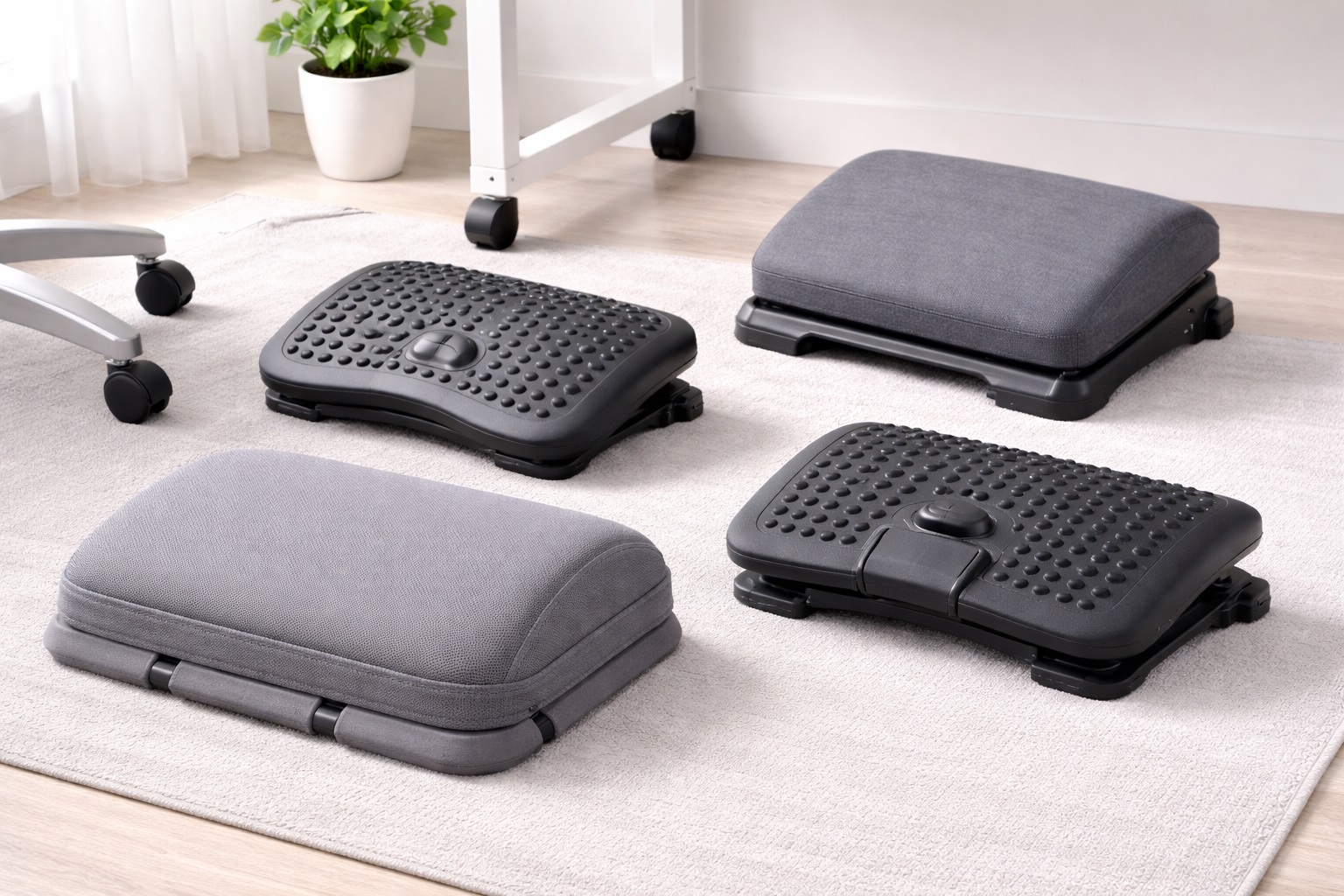
Best Foot Rests for Working From Home: Fix Your Posture Today
Most home office upgrades focus on the upper body — a better chair, a monitor arm, an ergonomic keyboard — while the feet and legs get whatever happens to be underneath the desk. That's a mistake, because seated posture is a chain reaction. If the feet aren't properly supported, the knees, hips, and lower back all compensate in small ways throughout the day, and those small compensations add up to the kind of stiffness and discomfort that a great chair alone can't fix. It's a bit like buying an expensive mattress but ignoring the pillow — one piece of the system is excellent while a smaller, cheaper piece quietly undermines the benefit of the whole setup.
A foot rest sounds like a minor accessory, but it directly addresses one of the most overlooked links in that chain. This guide compares the three foot rest styles that solve the most common seated-posture problems at a desk, how each one changes the way your legs feel by the end of a workday, and how to figure out which type actually matches your chair, your height, and your desk setup. None of the three require rethinking your entire office — they're additions that work alongside whatever chair and desk you already have.
It's worth noting upfront that a foot rest is one of the cheapest ergonomic purchases available relative to the discomfort it can eliminate. A quality office chair or a sit-stand desk can run into hundreds of dollars, while a foot rest that solves a genuine fit problem between your chair and floor typically costs a fraction of that, making it one of the highest-value small additions to an otherwise well-equipped setup, and one that's easy to overlook precisely because it's so inexpensive relative to everything else on a typical home office shopping list.
3 Best Foot Rests for Working From Home (Detailed Reviews)
Adjustable Tilt Foot Rest – Best Overall Ergonomic Support
An adjustable tilt foot rest lets you dial in both the height and the angle that places your feet in the most neutral position for your specific leg length and chair height. That dual adjustment matters because no two people share the exact same combination of height, chair, and desk, and a foot rest that only offers one fixed position is really only ideal for whoever happened to be the exact size the manufacturer designed around. Multiple angle settings also let you shift position through the day rather than locking your feet into one posture for eight straight hours. A morning spent hunched over detailed work and an afternoon spent on video calls often call for subtly different foot positions, and an adjustable model is the only style flexible enough to follow that shift without any compromise.
A non-slip top surface keeps the feet from sliding as you adjust position, and a stable base prevents the whole unit from shifting when you push against it to change your sitting posture. Because this style covers the widest range of body types and desk configurations, it's the safest default recommendation for anyone who isn't sure exactly what their feet need.
It's also the most forgiving choice in a household where more than one person uses the same desk. A shared home office setup between partners or roommates of different heights means the ideal foot position genuinely changes from user to user, and only an adjustable model can actually follow that shift rather than leaving one of you compensating for a fixed setting built around someone else.
- Pros:
- Height and angle adjustment personalized to your body and chair
- Accommodates a wide range of desk and chair height combinations
- Non-slip surface keeps feet correctly positioned
- Stable base resists shifting during use
- Cons:
- Budget models can feel less premium in plastic construction
- Some tilt mechanisms take more effort to adjust than others
Best For: Anyone unsure exactly what foot position works best for them, or households where more than one person shares the same desk and chair.
Why We Recommend It: Adjustability is the single most valuable feature in this category, because the ideal foot position is entirely dependent on your individual height, chair, and desk combination. A fixed-position foot rest is only ideal for users who happen to match its exact preset dimensions, while an adjustable one works for nearly everyone.
Rocking Foot Rest – Best for Leg Circulation
A rocking foot rest allows continuous gentle movement of the feet and legs throughout the day, which promotes circulation and reduces the leg fatigue that builds up from holding one static position for hours. The rocking motion is subtle by design — enough to encourage small, frequent shifts in position without becoming a distraction during focused work. This kind of built-in micro-movement addresses a problem that a completely static foot rest can't: the simple fact that no position, however well chosen, feels good if held motionless for an entire workday. The body simply isn't built for prolonged stillness, no matter how ergonomically correct that stillness happens to be on paper.
Ergonomics research on prolonged sitting consistently points to movement variety as more protective than any single correct fixed posture, and a rocking foot rest is one of the simplest ways to introduce that variety without requiring you to stand up or change your entire routine.
Anyone who has ever caught themselves bouncing a knee or shifting their feet restlessly during a long call already understands the underlying appeal here — the body wants small movement even during otherwise focused, still work, and this design gives it somewhere productive to happen rather than fighting the urge or ignoring it entirely.
- Pros:
- Encourages continuous leg movement and circulation
- Reduces fatigue that builds from static foot positioning
- Quiet rocking mechanism on well-built models
- Comfortable for genuinely long sitting stretches
- Cons:
- Takes a short adjustment period to get used to the motion
- Less suitable if you specifically need a completely fixed platform
Best For: Remote workers who sit for long, uninterrupted stretches and want to reduce leg fatigue and stiffness without having to stand up more often.
Why We Recommend It: Static sitting is the real underlying problem behind most seated leg discomfort, and a rocking foot rest solves it directly by building movement into the position itself rather than asking you to remember to move on your own throughout the day.
Flat Non-Slip Foot Rest – Best Simple Platform
A flat foot rest elevates the feet to a fixed height without any tilt or rocking mechanism. For anyone whose legs are slightly short relative to their chair height — a common mismatch that leaves the feet dangling or barely touching the floor — a simple elevated platform corrects posture and circulation immediately. It's the most straightforward design in the category, with no moving parts to break or adjust.
Because there's nothing to calibrate or maintain, this style also tends to be the most affordable entry point into foot rest ergonomics, making it a reasonable first purchase for anyone who wants to try a foot rest without committing to a more feature-rich model right away. If it turns out you need more adjustment than a flat platform offers, you'll know that quickly and can upgrade with a clearer sense of what you're actually looking for.
It's also a sensible pick for a secondary workspace — a laptop station in a living room, a desk at a second home, or an office you only use part-time — where the cost and complexity of a fully adjustable model isn't worth it for occasional use, but bare, unsupported feet still aren't ideal.
- Pros:
- Simple, reliable design with nothing to break
- Immediately corrects posture for shorter-legged users
- Affordable entry point into foot rest ergonomics
- Non-slip surface on most models
- Cons:
- Fixed height with no adjustment
- No tilt option for a personalized foot angle
Best For: Users whose feet don't comfortably reach the floor in their current chair and need a simple, no-frills elevated platform, including anyone furnishing a first home office on a tight budget who wants to address the most obvious fit problem first before investing in more specialized ergonomic accessories.
Why We Recommend It: When the specific problem is feet not reaching the floor, a flat foot rest solves it completely and immediately at the lowest possible cost. There's no need for a complex mechanism when a simple, stable platform does the entire job, and the absence of moving parts also means there's essentially nothing on this style that can wear out or need repair down the line.
Buying Guide: How to Choose the Best Foot Rest for Working From Home
A foot rest interacts with your chair, desk, and body all at once, which makes fit more important here than in almost any other desk accessory category. Work through these ten factors before choosing, and weigh each one against your actual daily sitting habits rather than the feature list alone.
1. Height Adjustment Range
The foot rest should raise your feet to a height where your knees sit at roughly ninety degrees and your thighs run close to parallel with the floor. The exact height needed depends on your leg length and chair height together, so check that a given model's adjustment range genuinely covers your specific combination before buying. Sitting in your actual chair and measuring the gap between your feet and the floor takes only a minute and removes most of the guesswork, and it's a far more reliable method than estimating based on your height alone, since chair seat depth and cushion thickness both affect the actual number.
2. Tilt Angle Options
A tilted position places the feet in a slightly dorsiflexed posture — toes raised above the heels — which some people find more comfortable over a long sitting session than a completely flat position. Others prefer flat. Models offering multiple tilt settings let you find your own preference rather than committing to whichever angle the manufacturer assumed would suit everyone. There's no universally correct angle here, only the one that feels right after a genuine trial period, so resist the urge to judge a tilt setting after just a few minutes of testing before your muscles have had a chance to adjust.
3. Surface Texture and Grip
The top surface needs to grip the feet firmly without feeling sticky or uncomfortable against socks or bare feet. A non-slip texture prevents the feet from sliding off during normal movement throughout the day. Some models add a light massage texture, which is a comfort preference rather than a meaningful ergonomic feature on its own, so don't let it be the deciding factor over more functional considerations like grip and stability that affect your posture far more directly than a textured pattern ever will.
4. Base Stability
A foot rest that slides across the floor every time you push against it quickly becomes more frustrating than helpful. Rubber-padded bases grip hard flooring well, while a base built for carpet may slide on tile or hardwood. Match the base material to your actual floor type rather than assuming a universal design works everywhere, since this single mismatch causes more return requests than almost any other factor, and it's one of the easiest issues to prevent simply by checking your flooring type before ordering rather than after the product has already arrived.
5. Footprint Size
A larger foot rest offers a more stable, secure platform for the feet but takes up more floor space under the desk. Compact models suit tight under-desk areas better. Measure the actual clearance under your desk before ordering, since some desk frames and cable management bars near the floor limit how much room is genuinely available, and a foot rest that interferes with rolling your chair in and out defeats its own purpose, turning a comfort upgrade into a daily obstacle you have to work around instead.
6. Rocking vs Static Design
A static foot rest holds one fixed position throughout use, while a rocking design introduces gentle ongoing movement. If completely static positioning feels uncomfortable to you over long sessions, a rocking model addresses that directly by building in the movement variety your legs need. If you prefer a stable, unmoving platform, a static design suits you better — there's no objectively correct answer, only a better match for your own sitting style, and it's worth honestly considering how restless or still you tend to be during a typical workday before deciding.
7. Weight and Portability
If you move your foot rest between rooms, between a home office and a shared space, or even between a home and a workplace desk, weight becomes a practical factor. Most foot rests weigh only a few pounds, and a carrying handle or a compact folded profile makes regular relocation noticeably more convenient, which matters more than it sounds if your setup changes from day to day, whether that's a hybrid work schedule or simply rearranging furniture seasonally as the layout of a room evolves.
8. Material Durability
Plastic construction keeps a foot rest lightweight but can feel less substantial underfoot. A metal frame typically holds up to more repeated pressure over time. Surface materials also vary — a cushioned top feels more comfortable initially but tends to wear faster than a hard plastic or textured rubber surface. Match your material choice to how much daily pressure the rest will realistically see, and remember that a foot rest under constant use each workday faces far more cumulative stress than one used only occasionally.
9. Under-Desk Clearance
Measure the actual height clearance under your specific desk before ordering, accounting for any support beams, drawers, or cable trays near floor level. A foot rest that's slightly too tall for the available space will feel cramped and uncomfortable no matter how good its other features are, so treat this measurement as a hard requirement rather than a nice-to-have.
10. User Weight Rating
Most standard foot rests are rated for typical adult body weight, generally up to 250 to 300 pounds, while heavy-duty models support more. The base's stability and the frame's material strength should be proportional to the actual pressure it will experience during daily use, particularly if you tend to rest significant weight on the platform rather than lightly resting your feet on it, since a rest that flexes or bows under load stops providing the stable support it's meant to deliver.
11. Chair Height Interaction
A foot rest doesn't work in isolation — it corrects for a chair that's set too high relative to your desk, which is a common compromise made so the desk height itself works for typing. Before buying, check whether your chair is at the correct height for your desk in the first place; if it's dramatically too high, a taller adjustable foot rest may be needed than you'd expect from your height alone.
12. Noise Level During Use
Rocking and tilt mechanisms can produce a faint creak or click during movement, which matters more in a quiet home office, especially one shared with a sleeping household member or used during recorded calls. Reading reviews specifically for noise complaints helps avoid a rest that becomes an audible distraction during video meetings or focused work.
13. Combining a Foot Rest With Other Ergonomic Adjustments
A foot rest works best as part of a coordinated setup rather than a standalone fix. After adding one, it's worth rechecking monitor height and keyboard position, since raising your feet can subtly shift your overall seated posture and, in turn, the ideal screen height. A five-minute posture check across your whole setup after introducing a foot rest catches small mismatches before they become habitual.
Frequently Asked Questions
1. Do I actually need a foot rest for working from home?
If your feet already rest flat and comfortably on the floor with your chair set at the correct height, probably not. But if your feet dangle, your legs meet the floor at an awkward angle, or you notice leg fatigue building through long sitting sessions, a foot rest addresses those specific issues directly and improves overall seated posture. A quick self-check at your own desk usually answers the question within a minute — sit as you normally would, look down, and see whether your feet are genuinely flat and relaxed or subtly straining to reach the floor.
2. What height should my foot rest for working from home be?
Ideally, the height should bring your knees to roughly ninety degrees with your thighs close to parallel to the floor and your feet resting flat on the surface. The exact number varies by your height and chair setup, which is why an adjustable model is usually the safer choice over a fixed-height one, especially if you're not entirely sure what number you need before the rest arrives, and dialing it in gradually over your first few days of use tends to work better than trying to get it perfect on the very first attempt.
3. Can a foot rest for working from home actually help with back pain?
Indirectly, yes. Correct foot and leg positioning is one link in the overall chain of seated posture, and getting it right reduces the compensations further up the body — including the lower back — that come from feet dangling or resting at an awkward angle. It works best as one part of a broader ergonomic setup rather than a standalone fix, so pair it with attention to your chair height and monitor position too, since posture problems rarely have a single root cause and usually respond best to several small corrections applied together.
4. Is a rocking foot rest for working from home better than a fixed one?
For most people, yes, since the gentle ongoing movement reduces the circulation stagnation and stiffness that come from completely static sitting. If you specifically need a stable, unmoving platform — for very precise foot positioning, for instance — a fixed design is the better fit. Trying both in person, if you have the option, settles the preference faster than reading specifications alone, since the difference between the two styles is felt rather than described.
5. Can I use a foot rest for working from home with a standing desk?
A foot rest is designed for seated use. When you're standing at a sit-stand desk, an anti-fatigue mat is the more appropriate ergonomic support for your feet. Some rocking foot rests are tall enough to offer mild support while standing too, but their primary design purpose remains seated use, so don't expect one to fully replace a proper standing mat.
6. Is the most expensive foot rest for working from home always the best?
Not necessarily. Higher price often reflects premium materials or additional features rather than a meaningful jump in everyday comfort. A well-reviewed mid-range option frequently performs just as well for typical daily use as a considerably pricier alternative, so it's worth reading what specific complaints separate the tiers before assuming more expensive means better, since the answer often has more to do with brand positioning than any functional difference you'd actually feel.
7. How long should a quality foot rest for working from home last?
A well-built model from a reputable manufacturer should reasonably last three to five years or more with normal use. The length of the manufacturer's warranty is a useful proxy for how confident they are in the product's long-term durability, and checking the base and hinge points periodically helps you catch early wear before it becomes a real problem, the same way you'd occasionally glance at the tread on a pair of shoes you wear every day.
8. Can I return a foot rest for working from home if it doesn't suit my setup?
Most retailers offer a return window of fifteen to thirty days. Since fit against your specific chair and desk height matters so much with this category, it's worth genuinely testing the rest through a few full workdays before that window closes, rather than judging it after a single short session at your desk, since posture-related comfort issues often only reveal themselves over hours, not minutes.
9. What should I prioritize when choosing a foot rest for working from home?
Start with the specific discomfort you're trying to solve — dangling feet, static leg fatigue, or general posture support — and choose the style that addresses that problem most directly rather than trying to maximize every possible feature at once. Naming your actual problem before you start browsing keeps you from being swayed by unrelated bells and whistles that sound appealing in a product description but don't actually solve what's bothering you at your own desk.
10. Does brand name matter when buying a foot rest for working from home?
It matters to a degree, since established ergonomic furniture brands typically offer steadier manufacturing quality and better warranty support. That said, a number of newer brands have built strong reputations specifically in ergonomic accessories, so a lesser-known name with consistently strong reviews shouldn't be ruled out purely on unfamiliarity, especially if that brand focuses specifically on ergonomic accessories rather than spreading itself across an unrelated product catalog.
11. Will a foot rest help if my discomfort is mostly in my lower back rather than my legs?
It can help indirectly, since foot position affects the whole seated posture chain, but a foot rest alone rarely resolves back pain that has a separate root cause, like an unsupportive chair or poor lumbar alignment. Treat it as one piece of a broader posture fix rather than a dedicated back-pain solution on its own.
12. How do I know if I need a taller or shorter foot rest?
Sit in your normal working position and check where your feet naturally land relative to the floor. A gap of more than an inch or two usually calls for a taller rest, while feet that are already flat but slightly cramped may just need a low, flat platform rather than significant height. When in doubt, an adjustable model removes the guesswork entirely.
13. Can children or teens use an adult foot rest for a home study desk?
Yes, and it's often even more useful for a shorter user, since child and teen desk-chair combinations are frequently sized for adults and leave feet dangling. An adjustable model is particularly practical here, since it can be lowered now and raised again as the user grows.
Final Verdict
- Best Overall Ergonomic Support: Adjustable Tilt Foot Rest — personalized support for nearly any height, chair, or desk combination.
- Best for Leg Circulation: Rocking Foot Rest — reduces fatigue and improves circulation through continuous gentle movement.
- Best Simple Platform: Flat Non-Slip Foot Rest — the simplest, most affordable fix for feet that don't reach the floor.
Feet are the most overlooked part of a home office setup, and correcting their position is one of the least expensive ergonomic upgrades available relative to the difference it makes by the end of a long workday. Whether you need full personalization, continuous movement, or a simple fixed platform, all three styles above deliver a genuine improvement over resting your feet on nothing at all — and pairing the right one with your existing chair and desk setup closes one of the last remaining gaps in a properly ergonomic home office, often for less money than any of the other upgrades you've already made.