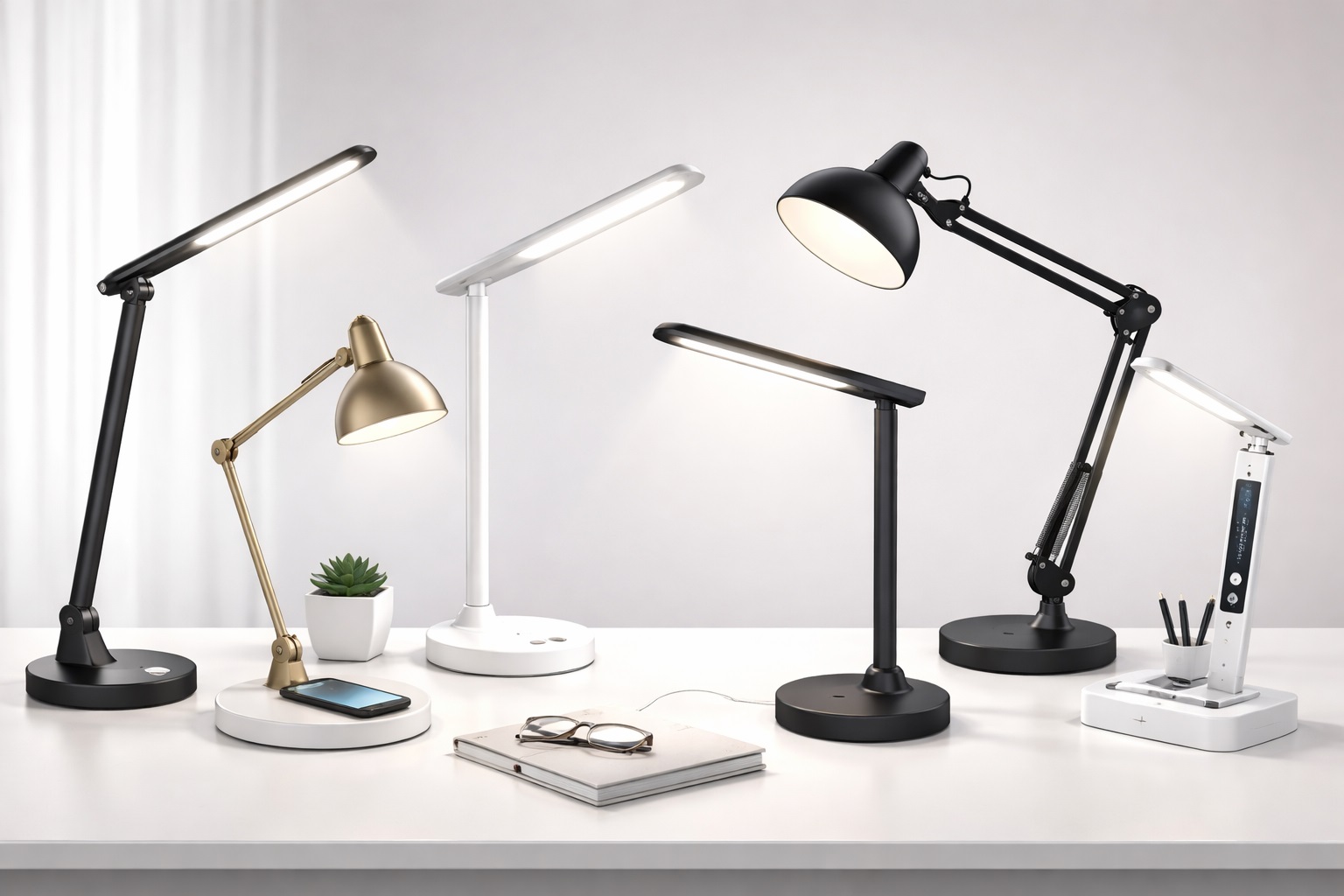
Best Desk Lamps Under $100: Professional Lighting at a Smart Price
A desk lamp seems like a simple purchase until you actually start comparing models. Brightness ratings, color temperature ranges, arm articulation, base stability, and charging ports all vary widely even within a tight budget window, and the difference between a lamp that genuinely helps you work and one that just sits there looking nice usually comes down to a handful of practical details.
Anyone shopping under $100 has more good options today than they did even a few years ago, thanks to LED technology becoming cheaper and more reliable across the board. That also means more noise to sift through. This guide narrows the field down to a set of distinct lamp styles, each suited to a different kind of desk, workflow, and budget, so you can match the lamp to how you actually work rather than picking based on star ratings alone.
Below you will find detailed breakdowns of four practical desk lamp categories, a buying guide covering the technical and practical factors that matter most, answers to the questions people ask most often before buying, and a final verdict to help you land on the right pick quickly.
It helps to think about a desk lamp less as a single product category and more as a set of trade-offs between reach, control, footprint, and light quality. No single lamp maximizes all four at once, which is exactly why the categories below are organized around distinct roles rather than a single ranked list from best to worst.
Top Picks Reviewed (Detailed Reviews)
Adjustable LED Desk Lamp – Best Overall Under $100
An adjustable LED desk lamp is the safest starting point for most buyers because it covers the widest range of use cases without any major compromise. These lamps typically offer several brightness levels alongside multiple color temperature settings, letting you shift from a cooler, more alert tone during the day to a warmer tone in the evening. A flexible arm lets you angle the light exactly where you need it, whether that's directly over a keyboard or across a wider desk surface, and most models in this price bracket include a USB charging port so your phone or tablet can charge without an extra wall adapter cluttering the outlet strip.
Build quality on these lamps has improved considerably as LED components have become cheaper to source, which means a $100 budget now buys features that would have required a premium price tag a decade ago. The trade-off at the lower end of this category is usually in the base and control scheme rather than the light output itself.
- Pros:
- Multiple brightness and color temperature settings
- USB charging port for phone
- Flexible arm for precise positioning
- Eye-care flicker-free LED technology
- Energy efficient with long LED lifespan
- Cons:
- Basic models may lack touch dimmer controls
- Cheaper bases can feel lightweight
Because this style covers so many bases at once, it also tends to be the easiest recommendation for someone buying their first proper desk lamp. You are not locked into a single use case the way you might be with a more specialized design, and the combination of adjustable color temperature and a movable arm means the same lamp can serve a home office during the workday and a reading corner in the evening without needing to own two separate fixtures.
Best For: Home office workers and students who want adjustable, eye-friendly task lighting under a reasonable budget.
Why We Recommend It: An adjustable LED lamp with color temperature control covers both daytime productivity and evening study sessions effectively, making it a versatile purchase for the price and a sensible default choice if you are not sure which specific feature matters most to you yet.
Clip-On Desk Lamp – Best for Saving Desktop Space
Clip-on desk lamps solve a problem that adjustable base lamps cannot: desk space. Rather than sitting on the surface, these lamps clamp directly onto the edge of a desk, headboard, shelf, or monitor, which frees up the entire footprint a traditional base would otherwise occupy. This matters more than it sounds for anyone working in a dorm room, a small home office corner, or a shared desk where every inch counts.
Most clip-on lamps in this price range use LED bulbs paired with a gooseneck or hinged arm, so you still get reasonable positioning flexibility despite the compact mounting style. They tend to be lighter overall since they don't need a weighted base to stay upright, which also makes them easy to move between locations if you split time between a desk and a couch or bed.
- Pros:
- No desktop footprint
- Attaches to desks, shelves, or monitors
- Flexible arm positioning
- Affordable price point
- Lightweight and easy to reposition
- Cons:
- Clamp may scratch some surfaces
- Limited arm reach compared to full base lamps
The trade-off with a clamp mount is reach. Because the light source is anchored at the edge of the desk rather than centered on it, the arm has to work harder to cover the same working area a base-mounted lamp would reach easily. This is rarely a dealbreaker for the smaller desks these lamps are designed for, but it's worth keeping in mind if you also use a larger work surface at times.
Best For: Small desk setups, dorm rooms, and anyone who needs task lighting without sacrificing desk space.
Why We Recommend It: The clip-mount design solves a very specific problem — adding focused light in a tight space without taking any desk area. For compact setups, this is often the most practical choice, and the lower weight makes it simple to relocate as your workspace needs change.
Architect Swing Arm Lamp – Best for Precision Task Lighting
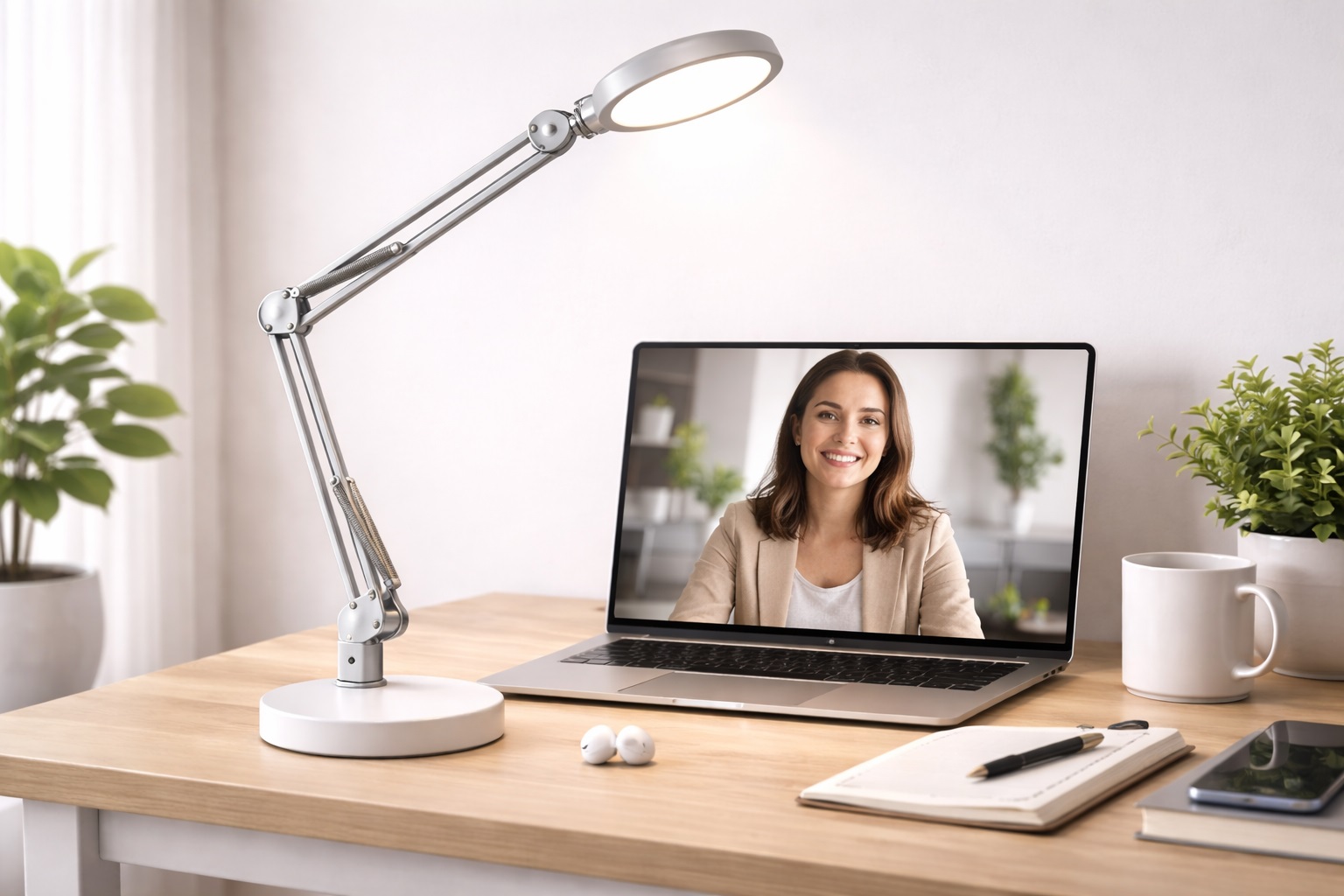
Architect-style lamps trade compactness for reach and control. The defining feature is a multi-joint swing arm, usually built around a spring-tension mechanism, that lets you extend the light source far across a desk and lock it into almost any angle. This makes the format especially useful for anyone doing detailed hands-on work, since the light can be positioned directly over a sketchpad, keyboard, or workpiece rather than shining down from a fixed angle.
Many affordable versions in this category use a standard E26 bulb socket instead of an integrated LED module, which has a real advantage: you can swap in whatever LED bulb best matches your preferred brightness and color temperature rather than being locked into the manufacturer's built-in choice. A weighted base is standard at this price point and helps keep the lamp stable even when the arm is extended to its full reach.
- Pros:
- Wide reach and precise arm positioning
- Classic design suits most office styles
- Compatible with standard LED bulbs
- Stable weighted base on most models
- Long arm for covering large desk areas
- Cons:
- May not include a built-in USB port at lower price points
- Arm joints can loosen over time
The spring-tension joints on this style also mean the arm holds its position under the weight of the lamp head without drifting, which matters when you've spent time dialing in exactly the right angle for a specific task. Over years of use, those springs can loosen slightly, which is the main durability concern with this format, but it's a slow, gradual change rather than a sudden failure.
Best For: Designers, artists, architects, and detailed task workers who need precise control over their light source.
Why We Recommend It: The swing arm format gives you the most control over exactly where the light falls, making it the right choice when precision matters more than compact form, and the replaceable bulb socket means you are not stuck with the light quality it ships with.
Touch-Control LED Desk Lamp – Best for Ease of Use
Touch-control lamps remove the small daily friction of hunting for a rocker switch or turning a dial. A flat touch pad, usually located on the base, cycles through brightness levels and color modes with a light tap, and most models in this range offer several preset combinations rather than a single fixed white output. A warmer tone suits late evening reading, while a cooler daylight tone works better for focused work during the day.
Because the control surface is built into a clean, low-profile base, these lamps also tend to have a more minimal visual footprint on a desk, which appeals to anyone who prefers a tidy, modern setup over a more mechanical, industrial-looking fixture. A built-in USB port on most models means one less charging cable running to a wall outlet.
- Pros:
- Intuitive one-touch brightness and color control
- Multiple preset lighting modes
- USB charging port on base
- Modern minimalist appearance
- Easy to adjust without fumbling for a switch
- Cons:
- Touch sensors can be accidentally triggered
- May lack mechanical dimmer for fine-tuned control
This style also tends to appeal to buyers upgrading from a very basic single-mode lamp for the first time, since the jump from one fixed brightness to several selectable modes feels like a meaningful improvement without requiring you to learn a complicated interface. The trade-off is that presets, however well chosen, are still less precise than a continuous dimmer dial for someone who wants to fine-tune brightness to an exact level.
Best For: Home office professionals, students, and anyone who values a clean, modern desk setup with simple controls.
Why We Recommend It: The touch interface removes friction from adjusting your lighting throughout the day, and the built-in charging port keeps your desk cleaner by eliminating a separate charger, which adds up to a more pleasant daily experience than it might sound on paper.
Buying Guide: How to Choose the Best Desk Lamp Under $100
Use these key factors to match your purchase to your actual needs rather than defaulting to the highest-rated or most-reviewed option on a retailer's page.
1. Brightness and Lumen Output
Lumens measure total light output, and for desk work most people need somewhere between 400 and 800 lumens depending on the ambient light already in the room. A dim room with no overhead lighting calls for a lamp at the higher end of that range, while a bright room with natural daylight or ceiling fixtures may only need supplemental light on the lower end. Adjustable brightness settings let one lamp cover both scenarios instead of forcing a single fixed output. It's also worth considering how the brightness is distributed rather than just the peak number, since a lamp that concentrates all its output into one narrow beam behaves very differently on a desk than one that spreads the same lumen count across a wider pool of light.
2. Color Temperature Range
Color temperature, measured in Kelvin, determines whether the light looks warm and yellow or cool and blue-white. Cooler temperatures around 4000–6500K tend to support alertness and focus, which suits daytime work or studying. Warmer temperatures around 2700–3000K feel more relaxing and are easier on the eyes late in the evening. A lamp that offers both ranges is more versatile across the full day, and models with a stepless adjustment dial let you land on a temperature in between rather than jumping between only two or three fixed presets.
3. Arm Flexibility and Reach
How far and in how many directions the arm can move determines how precisely you can aim the light. A short, limited arm might be fine if your desk setup rarely changes, but anyone who shifts between a keyboard, notebook, and reading material throughout the day will benefit from a longer, multi-jointed arm that can reach across the whole desk surface. Pay attention to how many pivot points the arm has as well — a single hinge only tilts the head, while multiple joints let you position the light source in three dimensions.
4. Base Stability and Footprint
A heavier, wider base resists tipping when the arm is fully extended, which matters more on lamps with longer reach. If desk space is limited, a smaller footprint or a clip-mount design that skips the base entirely may be worth prioritizing over base weight. Weighted metal bases perform noticeably better in this regard than hollow plastic ones, even when both look similar in a product photo.
5. Control Scheme
Some lamps use a simple rocker switch, others use a rotary dial, and increasingly common are touch-sensitive panels that cycle through preset brightness and color combinations. Consider how often you will actually adjust the settings during the day — frequent adjusters benefit most from touch controls or physical dimmer dials that offer fine control rather than stepped presets. If you tend to set a lamp once and leave it alone for weeks at a time, a basic switch is perfectly adequate and one less thing to potentially fail.
6. USB Charging Ports
A built-in USB port turns a desk lamp into a secondary charging station, which reduces cable clutter and frees up a wall outlet. Check whether the port is USB-A or USB-C, and match it to the cables you already use most, since a mismatched port type just means carrying an adapter anyway. Also check the port's output current if listed, since a low-power port may charge a phone slowly compared to a dedicated wall charger.
7. Flicker-Free LED Technology
Cheaper LED drivers can flicker at a rate too fast to consciously notice but still detectable by the eyes over long periods, which contributes to eye strain and fatigue during extended desk sessions. Flicker-free technology maintains a steady, constant light output and is worth prioritizing if you spend several hours a day under the lamp. This is one of the harder specifications to judge from a product listing alone, so checking verified buyer reviews for mentions of eye strain can be a useful shortcut.
8. Eye Comfort Features
Beyond flicker-free operation, look for even light diffusion rather than a single harsh point source, since diffused light reduces glare and shadow on a work surface. Some models include anti-glare shades or diffuser panels that spread the light more evenly across a wider area. A lamp positioned at the correct height and angle also reduces direct glare into your eyes regardless of the diffuser quality, so placement matters as much as the hardware itself.
9. Bulb Type: Integrated vs. Replaceable
Lamps with an integrated LED module are typically more compact and efficient but cannot be upgraded once the light source ages or if your preferences change. Lamps with a standard E26 or E12 socket let you swap bulbs freely, trading a bit of compactness for long-term flexibility and the ability to choose your own brightness and color temperature. Replaceable-bulb lamps also tend to be simpler to repair if something goes wrong, since the bulb is a separate, inexpensive component rather than an integrated part of the fixture.
10. Build Materials and Durability
Metal arms and bases generally hold their position better over time than plastic ones, especially at the joints, which are the first point of wear on any adjustable lamp. If you plan to reposition the lamp frequently, durable joint construction becomes more important than it would be for a lamp that stays in one fixed position. Rubberized or weighted feet on the base also help prevent the lamp from sliding or scratching a desk surface during regular use.
11. Desk Size and Placement
A large desk with multiple work zones benefits from a longer-reach lamp like an architect-style swing arm, while a compact desk or shared surface is often better served by a clip-on model that adds light without adding footprint. Measure your available space before assuming a full-size lamp is the right fit, and consider where nearby power outlets sit relative to your preferred lamp position.
12. Warranty and Return Policy
A warranty of at least one year is a reasonable baseline at this price point and signals that the manufacturer stands behind the build quality. Check the retailer's return window as well, since a lamp that looks fine in photos may not suit your desk setup or lighting preference once it's actually in use. A slightly longer trial period gives you time to test the lamp during both daytime and evening work sessions before committing to it.
Frequently Asked Questions
How many lumens do I need for a desk lamp?
For focused reading and computer work, 400–800 lumens is typically sufficient. If you work in a very dark room without other light sources, aim for the higher end of that range. Creative and detail work may benefit from up to 1000 lumens with a neutral or daylight color temperature.
What color temperature is best for studying?
Cool white or daylight color temperatures (4000–6500K) are generally better for studying and focused work because they promote alertness. Warmer temperatures (2700–3000K) are more relaxing and better suited to evening reading when you don't need to stay as alert.
Is a USB-C charging port worth paying extra for?
If your phone charges via USB-C, yes — it means one less adapter on your desk. If you primarily use older USB-A cables, a standard USB-A port is equally useful. Some lamps include both, which is the most versatile option.
Can I leave an LED desk lamp on all day?
Yes. LED lamps generate very little heat compared to older incandescent or CFL bulbs and consume significantly less electricity. Leaving a modern LED desk lamp on during an 8-hour workday has minimal impact on energy bills and poses no safety concerns under normal use.
What is flicker-free LED technology?
Standard LED lamps can flicker at a frequency not clearly visible to the naked eye but detectable to the visual system. Over hours of use, this can cause eye fatigue or headaches. Flicker-free LEDs maintain a constant output without cycling, which is noticeably more comfortable for extended desk work.
Is the most expensive desk lamp under $100 always the best?
Not necessarily. Higher price often means more features, but many mid-range options offer excellent performance for everyday use. Focus on the features that matter for your specific needs rather than assuming price alone indicates quality.
How long should a quality desk lamp under $100 last?
A well-built product from a reputable brand typically lasts two to five years or longer with reasonable care. Always check warranty terms as a quality indicator, since a longer warranty usually reflects greater manufacturer confidence in the build.
Can I return a desk lamp under $100 if it doesn't suit me?
Most retailers offer a 15–30 day return window. Keep the original packaging during your evaluation period to ensure you have the option to return the lamp if it doesn't meet your needs once you've tried it at your actual desk.
What is the best desk lamp under $100 for students on a tight budget?
A clip-on lamp is usually the strongest option for students, since dorm desks are often small and shared, and the clamp mount frees up surface space that a traditional base would otherwise occupy.
Does brand name matter when choosing a desk lamp under $100?
Established brands generally offer better quality control, customer support, and warranty reliability. However, newer brands sometimes offer excellent value — read verified reviews carefully before purchasing to see how a specific model has held up for other buyers.
Should I prioritize a wider base or a longer arm?
It depends on your desk size and how far you need the light to reach. A longer arm needs a heavier base to stay stable when fully extended, so the two features work together rather than being an either-or choice on well-designed lamps.
Are touch controls reliable long-term?
Touch controls on quality lamps are generally durable since there are no moving parts to wear out, unlike mechanical switches or dials. The main downside reported by users is occasional accidental activation when dusting or moving the lamp, rather than any long-term reliability issue.
Do desk lamps under $100 use much electricity?
No. LED desk lamps typically draw somewhere between 5 and 15 watts even at their brightest setting, which is a fraction of what an older incandescent desk lamp would use. Running one for several hours a day adds only a small amount to a monthly electricity bill.
Can a desk lamp replace overhead room lighting entirely?
A desk lamp is designed as task lighting for a specific work area, not as a replacement for general room lighting. Using only a desk lamp in an otherwise dark room can create strong contrast between the lit and unlit areas, which increases eye strain over time rather than reducing it. Pairing a desk lamp with at least some ambient room light, even a dim one, generally produces a more comfortable working environment than relying on the desk lamp alone.
What's the difference between a warm white and daylight setting for evening work?
A warm white setting shifts the light toward a yellow-orange tone that is easier on the eyes and less likely to disrupt your body's natural wind-down signals in the evening. A daylight setting is a cooler, bluer tone that mimics midday sun and is better suited to periods when you want to stay alert, such as early morning work sessions.
Final Verdict
- Best Overall Under $100: Adjustable LED Desk Lamp – Versatile pick for all-day use at a great price.
- Best for Saving Desktop Space: Clip-On Desk Lamp – The smartest choice for small, crowded desks.
- Best for Precision Task Lighting: Architect Swing Arm Lamp – Best for detailed creative work and precise task lighting.
- Best for Ease of Use: Touch-Control LED Desk Lamp – Most user-friendly option for everyday home office use.
The right desk lamp under $100 depends entirely on how you'll use it and what you need most from it day to day. Someone splitting time between a laptop and handwritten notes has different priorities than someone doing detailed creative work under a swing arm, and a student in a shared dorm room has different space constraints than someone with a dedicated home office.
None of the four categories above is objectively "better" than the others in an absolute sense — each one simply optimizes for a different combination of desk size, work style, and control preference. A buyer who prioritizes desk space above all else will be happiest with a clip-on model even if it has slightly less reach than a full base lamp, while someone doing precise detail work will find that same limited reach a genuine drawback rather than a minor trade-off.
Use the buying guide factors and the individual breakdowns above to weigh your own priorities rather than picking based on price or star rating alone, and you'll end up with a lamp that actually earns its spot on your desk for years rather than one that gets replaced within a few months because it never quite fit how you actually work.