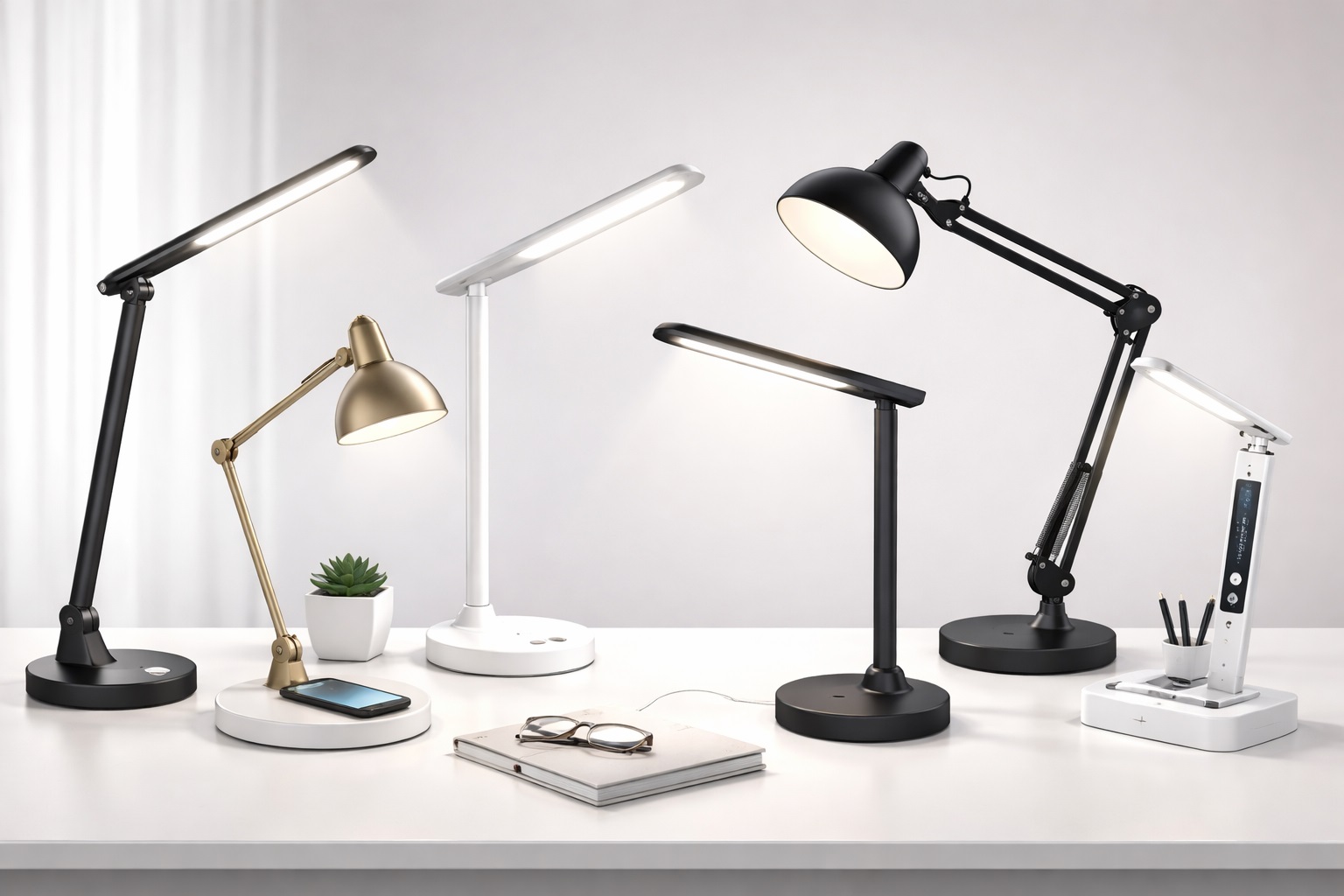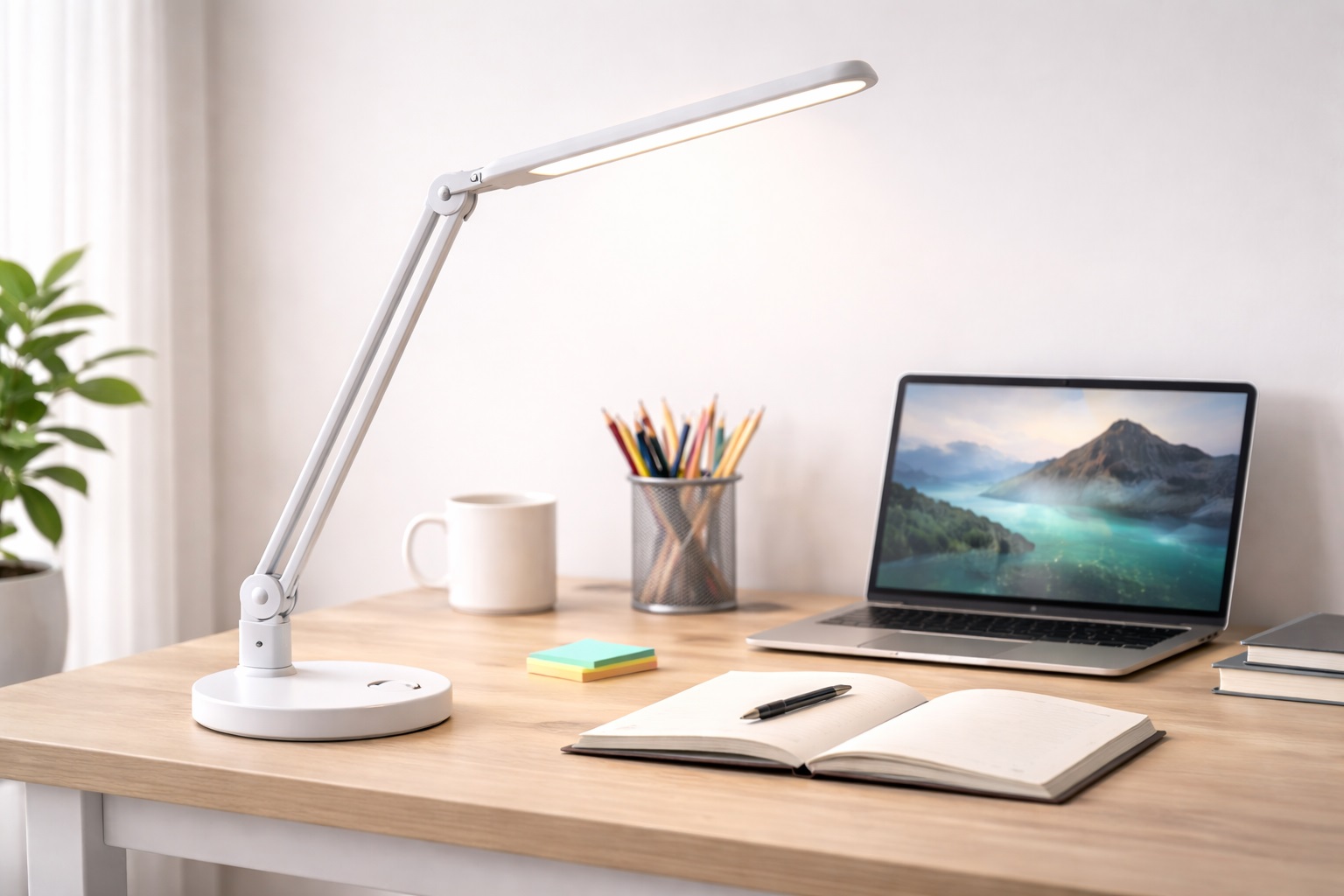
Best Desk Lamps for Beginners: Simple, Reliable First Lighting
Setting up a first desk lamp shouldn't require reading a manual. Most beginners just want something that switches on reliably, throws enough light to read or type by, and doesn't demand constant fiddling to get right. Unfortunately, the lamp market is full of options built around features that have little to do with that basic goal — app connectivity, elaborate color modes, or touch interfaces that are more confusing than the switch they replaced.
This guide sets those distractions aside and focuses on the desk lamp styles that genuinely work well for first-time buyers: people setting up a bedroom desk, a first home office corner, or a study space for the first time. Each entry covers a distinct approach to keeping things simple, along with where its particular simplicity starts to show limits.
The goal throughout is dependable, easy lighting rather than an impressive feature list. A lamp that's slightly less capable but genuinely simple to live with will get used every day, while one with an intimidating set of controls tends to get switched to its lowest, laziest setting and left there indefinitely.
It also helps to remember that a first desk lamp doesn't need to anticipate every future need. Preferences around brightness, positioning, and even smart features tend to become clear only after weeks of actually using a desk regularly. Buying with that in mind — choosing something reliable and reasonably priced rather than trying to guess every feature you might eventually want — tends to lead to a better first experience than chasing a lamp built for an experienced user's habits.
It's also worth setting expectations about what a first lamp is actually for. Its job isn't to be a permanent, lifelong fixture — it's to get a workspace functional quickly while you figure out your own habits around light, positioning, and screen distance. Judged by that standard, nearly every option below succeeds, which is why the choice between them comes down to which specific kind of simplicity fits your desk rather than which one is objectively "best."
Top 6 Beginner-Friendly Desk Lamps (Detailed Reviews)
Each of the six styles below takes a slightly different approach to keeping a first desk lamp simple, from the most basic touch switch to a smart lamp designed with beginners specifically in mind. Reading through all of them helps identify which particular kind of simplicity actually matches how you plan to use the lamp.
1. Simple Touch Control Lamp – Best For No-Fuss Daily Use
A simple touch control lamp replaces a traditional switch with a touch-sensitive base, usually cycling through a few brightness levels with each tap. There's no dial to fumble with in the dark and no button combination to remember, which makes it about as intuitive as a lamp can be for a first-time buyer.
Because the control scheme is so minimal, there's very little to go wrong during setup, and most users figure out the full brightness cycle within their first few taps. The trade-off is that touch controls occasionally misfire if tapped too quickly or with a wet finger, though this is a minor and infrequent annoyance rather than a real functional problem.
- Pros:
- Extremely simple to operate with no learning curve
- No physical switch or dial to wear out over time
- Cycling through brightness levels takes only a few taps
- Sleek, minimal design with no visible buttons
- Cons:
- Touch sensor can occasionally misregister a tap
- No fine-grained brightness control between preset levels
Best For: First-time buyers who want the simplest possible daily operation without any learning curve.
Why We Recommend It: It removes any possible confusion about how to operate the lamp, which matters most in the first weeks of using a new desk setup. There's genuinely nothing to configure, which is exactly the point for a first lamp, and it's the style least likely to end up gathering dust because someone gave up on figuring out the controls.
2. Entry-Level LED Desk Lamp – Best For Dependable Basic Lighting
This category covers straightforward LED lamps with a traditional switch and a small number of clearly defined brightness settings. It's the closest thing to a default choice in the desk lamp category, prioritizing dependable output over any particular design flourish or extra feature.
Because the design and mechanism are so well established, quality and reliability tend to be consistent across this category, with fewer surprises than more feature-heavy alternatives. For a beginner who simply wants a lamp that works the same way every single day, that consistency is a genuine advantage.
That consistency also makes this category easy to shop for without extensive research, since the differences between similarly priced models tend to be minor rather than the kind of meaningful trade-off you'd have to weigh carefully in a more specialized category.
- Pros:
- Straightforward, familiar switch-based operation
- Consistent, dependable brightness output day to day
- Widely available at accessible price points
- Few moving parts to malfunction or wear out
- Cons:
- Fewer brightness levels than touch or smart-controlled lamps
- Design tends to be plain rather than distinctive
Best For: Beginners who want a dependable, no-surprises lamp without paying for extra features.
Why We Recommend It: Predictability matters more than novelty for a first lamp, and this category delivers exactly that — reliable, familiar operation you don't have to think about. It's a sensible default when you're not sure what else to prioritize yet.
3. Basic Adjustable Neck Lamp – Best For Learning What Position Works Best
A basic adjustable neck lamp uses a simple bendable or hinged neck to let you point the light where you need it, without any electronic positioning or memory features. For a first-time buyer who isn't yet sure exactly where they'll want their light aimed, this hands-on adjustability is genuinely useful during the early weeks of figuring out a workspace layout.
Unlike premium articulating lamps with multiple joints, this style typically uses a single flexible neck, which is simple to understand and adjust but offers somewhat less precision than a multi-joint design. For basic desk work, that simplicity is rarely a real limitation.
- Pros:
- Simple, intuitive adjustability with a single flexible neck
- Helps beginners find their ideal lighting position through trial and error
- No electronic components to learn or troubleshoot
- Works well across a range of desk heights and layouts
- Cons:
- Less precise positioning than multi-joint articulating lamps
- Neck can loosen slightly after extended daily adjustment
Best For: Beginners still figuring out their ideal desk layout who need to reposition light frequently.
Why We Recommend It: It gives new desk owners room to experiment with positioning without requiring any technical understanding of the lamp itself. That flexibility during the first few weeks of a new setup often matters more than any single spec on the box.
4. Beginner Clip-On Lamp – Best For Small or Temporary Setups
A clip-on lamp attaches directly to the edge of a desk or shelf, which is especially useful for beginners who don't yet have a permanent desk setup or are working with limited surface space. It also tends to be one of the more affordable entry points into the category.
Because it doesn't need its own base, a clip-on design frees up desk space that a beginner might not realize they'll want until their setup starts to fill up with other items. The clip mechanism does require checking desk edge compatibility beforehand, which is worth a quick measurement before ordering.
For a beginner who might still be renting furniture, borrowing a desk, or unsure whether the current setup is even permanent, that combination of low cost and no dedicated footprint makes a clip-on lamp one of the lowest-commitment ways to get functional lighting in place immediately.
- Pros:
- Doesn't take up desk surface space like base-mounted lamps
- Affordable entry point into the desk lamp category
- Easy to move between desks or reposition along an edge
- Good option for temporary or evolving workspace setups
- Cons:
- Requires a compatible desk edge thickness to mount securely
- Not usable on desks with unusually thick or shaped edges
Best For: Beginners with small, temporary, or evolving desk setups who want to preserve surface space.
Why We Recommend It: It solves a real space problem that's common in first workspaces, without asking a new desk owner to commit to a large permanent fixture. It also travels easily if your desk or room changes before your setup is fully settled.
5. Budget First Desk Lamp – Best For Keeping the First Purchase Low-Risk
For a genuinely first-ever desk lamp, spending a lot doesn't make much sense before you know what you actually want from your lighting. The budget first desk lamp category exists specifically for that low-commitment first purchase, covering the essentials at the lowest reasonable price.
It won't match pricier lamps on build quality or extra features, but it reliably covers the basic job of providing usable desk light. For many beginners, this category also functions as a useful trial run before deciding whether to invest in something more feature-rich later.
- Pros:
- Lowest price point, making it an easy first purchase to justify
- Covers the essential function of providing usable desk lighting
- Low risk if your lighting needs or preferences change later
- A sensible way to test whether you even need extra features
- Cons:
- Materials and components are noticeably lighter-duty
- May need replacing sooner than a more durable mid-range option
Best For: First-time buyers who want to cover the basics without committing much money before they know their long-term needs.
Why We Recommend It: Not every first lamp needs to be a long-term investment, and this option lets a beginner get set up affordably while they figure out what actually matters to them. It's a reasonable way to avoid overspending on a decision you're not yet fully informed enough to make confidently.
6. Easy-Use Smart Lamp for Beginners – Best For Simple App or Voice Control
Some smart lamps are designed specifically to keep setup and daily use simple, despite offering app or voice control. This category strips away the more complicated smart-home features and focuses on a small, clearly explained set of controls, aimed at beginners who want a taste of smart lighting without a steep learning curve.
Initial setup does require connecting the lamp to an app or a smart assistant, which adds one extra step compared to a purely manual lamp. Once configured, though, day-to-day use is usually straightforward, with voice commands or simple app taps replacing physical controls.
- Pros:
- Offers voice or app control without an overwhelming feature set
- Can be adjusted without needing to reach the lamp itself
- Good introduction to smart lighting for curious beginners
- Often includes simple scheduling features once set up
- Cons:
- Requires a one-time app or smart assistant setup step
- Relies on a stable home network connection to function fully
Best For: Beginners curious about smart lighting who want an easy, low-complexity entry point into the category.
Why We Recommend It: It offers a taste of smart control without the steep learning curve that comes with more advanced smart lighting systems. For beginners genuinely interested in a connected home setup, this is a gentler starting point than a full-featured smart lamp aimed at experienced users.
Across these six categories, the recurring theme is that simplicity itself is a feature worth prioritizing for a first lamp. Whichever style you choose, the goal is a lamp you can operate without thinking about it, freeing up your attention for whatever you're actually working on.
Buying Guide: How to Choose the Best Desk Lamp for Beginners
Beyond the general style, a handful of practical details determine whether a first desk lamp becomes a dependable daily tool or an early source of frustration. These are the factors worth checking before buying.
1. Simple Controls
Look for a lamp with an intuitive on/off mechanism and, ideally, no more than a few clearly labeled brightness settings. Overly complex control schemes are one of the most common reasons beginners feel confused by their first lamp.
2. Base Stability
A lamp with a narrow, lightweight base is more likely to tip over during everyday use, especially on a desk that gets bumped often. A wider or weighted base is worth prioritizing even on an otherwise basic lamp.
3. Adequate Brightness for Reading and Studying
Check that the lamp provides enough light for close reading or detailed work, not just ambient illumination. A lamp that looks bright in a photo can still feel dim once it's actually being used for focused tasks.
4. LED Lifespan
Most modern desk lamps use LED bulbs rated for a long service life, which matters since replacement isn't always straightforward on integrated designs. Confirm whether the bulb is replaceable or built permanently into the fixture.
5. Energy Efficiency
LED lamps are generally efficient by default, but wattage and efficiency can still vary between models. This mostly affects long-term running cost rather than day-to-day usability, but it's a reasonable factor to compare between similar options.
6. Cord Length and Outlet Placement
Check the cord length against your desk's distance from the nearest outlet before buying, since a lamp with a too-short cord can force an awkward extension cord setup that a beginner may not anticipate.
7. Physical Size and Desk Space
Consider how much surface area the lamp's base actually occupies on a first desk, which is often smaller than expected. A clip-on or compact design can matter more than brightness on a genuinely small desk.
8. Glare and Eye Comfort
A lamp with a diffused or shielded light source is considerably more comfortable for extended study or work sessions than one with an exposed, harsh bulb. This matters especially for beginners spending long hours reading or writing.
9. Adjustability for Different Tasks
Even basic adjustability — a bendable neck or a simple tilt — lets you redirect light for different tasks throughout the day. A completely fixed lamp can feel limiting once you're using the desk for a variety of activities.
10. Warranty and Support
Even inexpensive first lamps sometimes include a short warranty period, which is a reasonable signal of basic manufacturer confidence and worth checking before you buy.
11. Return Policy
Since brightness and comfort are hard to judge from a listing alone, check the seller's return window in case the lamp doesn't match your expectations once you're using it daily.
12. Setup Complexity
A lamp that requires app downloads, account creation, or network configuration adds real friction for a first-time buyer. If you want the absolute simplest experience, prioritize a fully manual lamp over a connected one.
13. Room for Future Upgrades
Consider whether this lamp is meant to be a long-term fixture or a starting point you'll likely replace once you know more about your preferences. That expectation should reasonably shape how much you spend on your first purchase.
14. Compatibility With Your Existing Desk
Check the lamp's base size, clip thickness requirement, or mounting method against your actual desk before ordering, since compatibility issues are one of the more common first-purchase disappointments.
15. Reviews From Other First-Time Buyers
Reviews specifically from other beginners tend to highlight setup difficulty and everyday usability more directly than general ratings, making them especially useful when comparing options for a first lamp.
16. Noise and Flicker
Some inexpensive LED drivers produce a faint hum or subtle flicker that becomes noticeable only after extended use. It's worth checking reviews for mentions of flicker-free operation, particularly if you're sensitive to this.
17. How the Lamp Fits Your Daily Routine
Think about when you'll actually use the lamp most — late evening study sessions, early morning work, or both — since some lamps handle very low or very bright settings better than others depending on that pattern.
18. Assembly and Unboxing Simplicity
Some desk lamps arrive fully assembled, while others require attaching a base, screwing in a bulb, or snapping together an arm before first use. For a genuinely first lamp, it's worth checking product listings or reviews for mentions of assembly, since a beginner unfamiliar with the category may not have basic tools like a screwdriver readily on hand. A lamp that works straight out of the box removes one more small barrier between purchase and actually having usable light on the desk.
19. Where the Lamp Will Actually Sit
Before buying, it's worth briefly mapping out where the lamp will live — corner of a desk, edge of a bed used as a workspace, or a shared table — since this affects which style makes sense more than any spec sheet does. A beginner setting up in a shared or temporary space often benefits more from a compact or clip-on design than from a full-size lamp that assumes a permanent, dedicated desk.
Frequently Asked Questions
Do I need a fancy desk lamp for my first workspace?
No. A simple, dependable lamp that provides adequate brightness is more valuable for a first setup than extra features you likely won't use right away.
How bright should a beginner desk lamp be?
Enough for comfortable reading and close work without straining your eyes. If a lamp offers adjustable brightness, starting on a middle setting and adjusting from there is a reasonable approach.
Are touch control lamps harder to use than switch-based ones?
Not typically. Most touch controls are intuitive after the first few uses, though a traditional switch remains the simplest option if you want to avoid any learning curve at all.
Do I need a smart lamp as a beginner?
Not necessarily. Smart features add convenience but also add setup complexity. A simple manual lamp is often the better choice for a genuinely first-ever desk lamp.
How do I know if a lamp will fit my desk?
Check the base dimensions or clip thickness requirements listed by the seller and compare them against your actual desk before ordering.
Can a budget desk lamp still provide good lighting?
Yes. Brightness and basic function are rarely the weak point of budget lamps — durability and extra features are typically where the compromises show up instead.
What's the most common mistake beginners make buying their first lamp?
Choosing based on design alone without checking brightness or base stability, which can lead to a lamp that looks nice but doesn't provide enough usable light or tips over easily.
Should my first desk lamp have adjustable color temperature?
It's a nice extra but not essential for a first lamp. Focus first on reliable brightness and a stable design before prioritizing color temperature adjustment.
How long do beginner-focused desk lamps typically last?
With regular use, a reasonably built entry-level lamp can last several years, though budget models may need replacing sooner than mid-range options.
Is it better to buy a desk lamp online or see it in person first?
Online buying offers a wider selection, while an in-person look lets you judge brightness and build quality directly. For most first-time buyers, ordering online with a clear return policy is the more practical approach.
Can I use a clip-on lamp if I don't have a desk yet?
It depends on what you plan to clip it to — a shelf, bed frame, or bookcase edge can work in many cases, but check the clip's compatible thickness range first.
What tools do I need to set up a basic desk lamp?
Most manual desk lamps require no tools at all beyond plugging them in. Smart lamps may require a smartphone for initial app setup.
Do beginner desk lamps come with a warranty?
Coverage varies, but many include at least a short warranty period. Checking this before buying is a reasonable step even for an inexpensive first lamp.
Should I prioritize brightness or adjustability for my first lamp?
Brightness matters most for basic usability, but even simple adjustability makes a noticeable daily difference once you start using the desk for a variety of tasks.
Can a first desk lamp double as a nightlight or ambient light?
Some models with adjustable brightness can serve this purpose reasonably well on their lowest setting, though a dedicated task lamp isn't specifically designed for ambient lighting.
How much should a beginner expect to spend on a first desk lamp?
Most practical beginner options fall into an accessible entry-level price range. Spending significantly more usually buys extra features rather than a meaningfully different core lighting experience.
Is it normal to replace a first desk lamp within a year?
It's fairly common, especially with budget options, as beginners often discover more specific preferences once they've lived with a basic lamp for a while. This isn't a sign anything went wrong with the first purchase.
Do I need to worry about wattage when choosing a beginner lamp?
Not much with LED lamps specifically, since they use very little power regardless of brightness output. Focus on lumen output and adjustability rather than wattage figures, which matter more for older bulb technologies.
What's the easiest way to test if a new lamp is bright enough?
Use it for your actual daily tasks — reading, typing, or writing — for a few days rather than judging it by a quick glance when it first arrives. Real usage reveals brightness issues that a first impression often misses.
Can I use my first desk lamp as a bedside lamp too?
Many simple desk lamps work reasonably well as a bedside lamp, particularly touch control or adjustable models that can be dimmed low for nighttime reading. If you expect to use it in both roles, a lamp with a wider brightness range is worth prioritizing over one built for a single fixed setting.
Is it worth buying a spare bulb or backup lamp upfront?
Not usually for a first purchase. Most modern LED lamps are rated for years of regular use, so a spare bulb rarely gets used before preferences change anyway. It's more practical to wait and see how the first lamp performs before buying backups.
Final Verdict
There's no single best desk lamp for every beginner — only the best fit for your desk, your budget, and how much complexity you actually want to deal with. The categories above cover the situations most first-time buyers run into, from a purely manual switch lamp to a beginner-friendly smart option.
- For most beginners: An entry-level LED desk lamp or simple touch control lamp offers the best balance of reliability and ease of use.
- For small or evolving setups: A clip-on lamp saves desk space and works well for a first, temporary workspace.
- For the lowest-risk first purchase: A budget first desk lamp covers the basics without a large upfront commitment.
Whatever you choose, prioritize a lamp you can operate without thinking about it over one with an intimidating list of features. Simplicity is what actually gets used consistently in a first workspace, and consistent use is what makes any lamp worth buying in the first place.
It's also worth revisiting your lighting setup once you've lived with your first desk for a while. Many beginners discover after a few months that they'd genuinely benefit from a feature they initially skipped, whether that's better adjustability, stronger brightness, or a more stable base — and by that point, you'll have a much clearer sense of exactly what to look for in an upgrade.
There's no downside to starting simple. A first lamp that costs little and does its job reliably buys you time to learn your own habits — how late you tend to work, how close you sit to your screen, whether you read printed material often — before spending more on a lamp built around preferences you haven't discovered yet.