Best Desk Lamps for Studying: Bright, Eye-Friendly Lighting That Lasts
A desk lamp seems like an afterthought until you've spent a few late nights squinting at a page under lighting that's either too dim, too harsh, or flickering just enough to give you a headache by the second chapter. For students and home office users who spend hours at a desk, the right lamp isn't about decoration — it's about consistent, adjustable, eye-friendly light that holds up through long study sessions without adding fatigue to an already demanding workload.
This guide covers six distinct approaches to desk lighting built with studying and focused work in mind, from a straightforward dimmable LED lamp to a fully adjustable smart model with app-based control. Each one solves a slightly different problem — some prioritize brightness and adjustability, others focus on charging convenience or space-saving design for smaller desks — and the right choice depends on your desk setup, your study habits, and how much control you want over your lighting.
It's worth noting upfront that "eye-friendly" claims are common in this category, but the features that actually support comfortable, sustained reading are fairly specific: flicker-free drivers, adjustable color temperature, and a wide enough dimming range to match both bright daytime studying and dimmer evening sessions. The reviews below focus on what each lamp type genuinely offers rather than repeating marketing language that doesn't hold up under actual daily use.
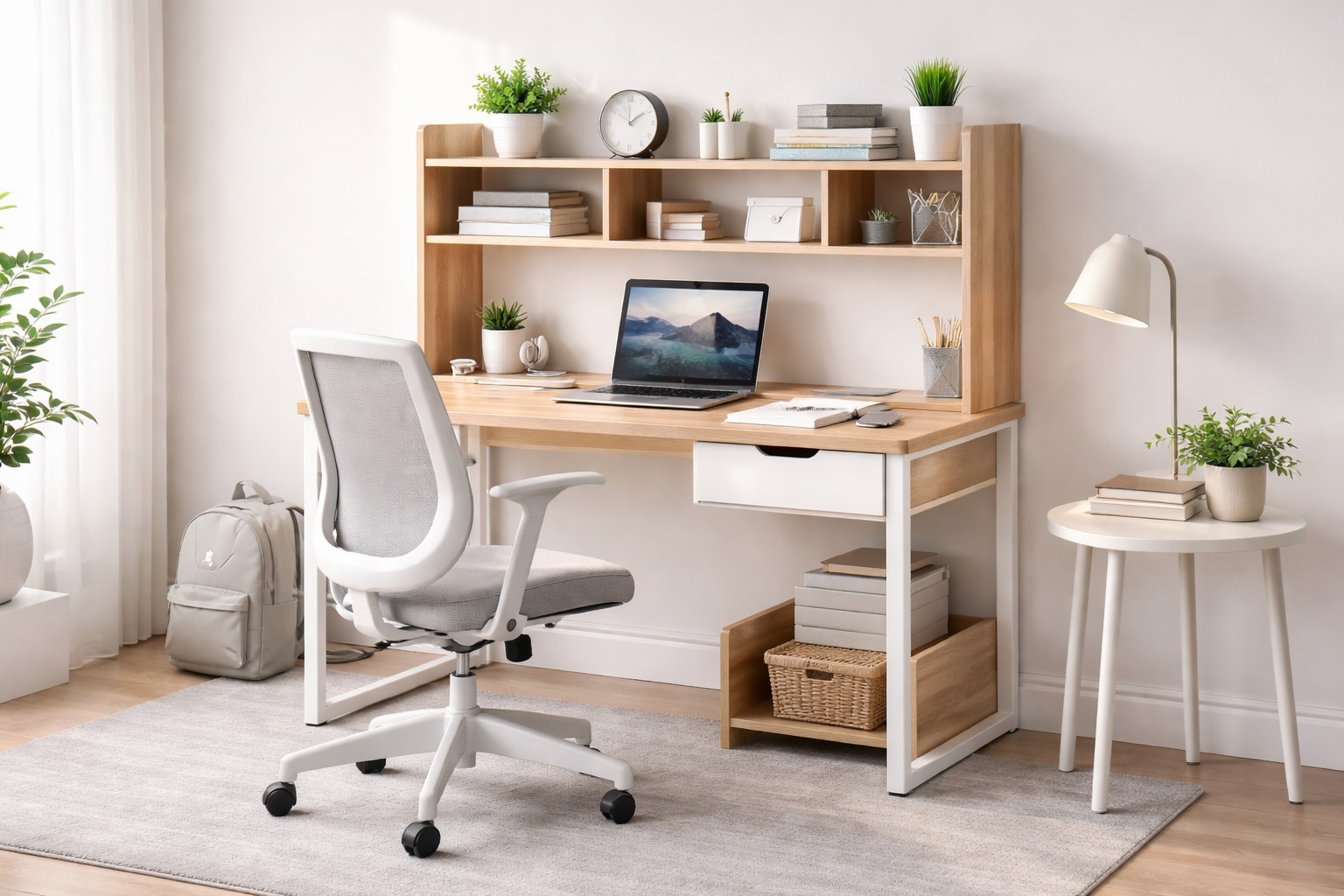
Desk setup also plays a bigger role in lighting comfort than many students expect. A lamp that performs well on an open desk in a dorm room may not suit a cramped shared workspace, and a lamp chosen purely for brightness can still leave you dealing with glare off a laptop screen or awkward shadows cast by your own writing hand. Thinking through your actual desk layout, typical study hours, and how many devices you need charged nearby will narrow the six categories below far faster than comparing lumen counts alone.
Top Desk Lamps for Studying (Detailed Reviews)
1. LED Desk Lamp with Dimmer – Best Overall for Studying
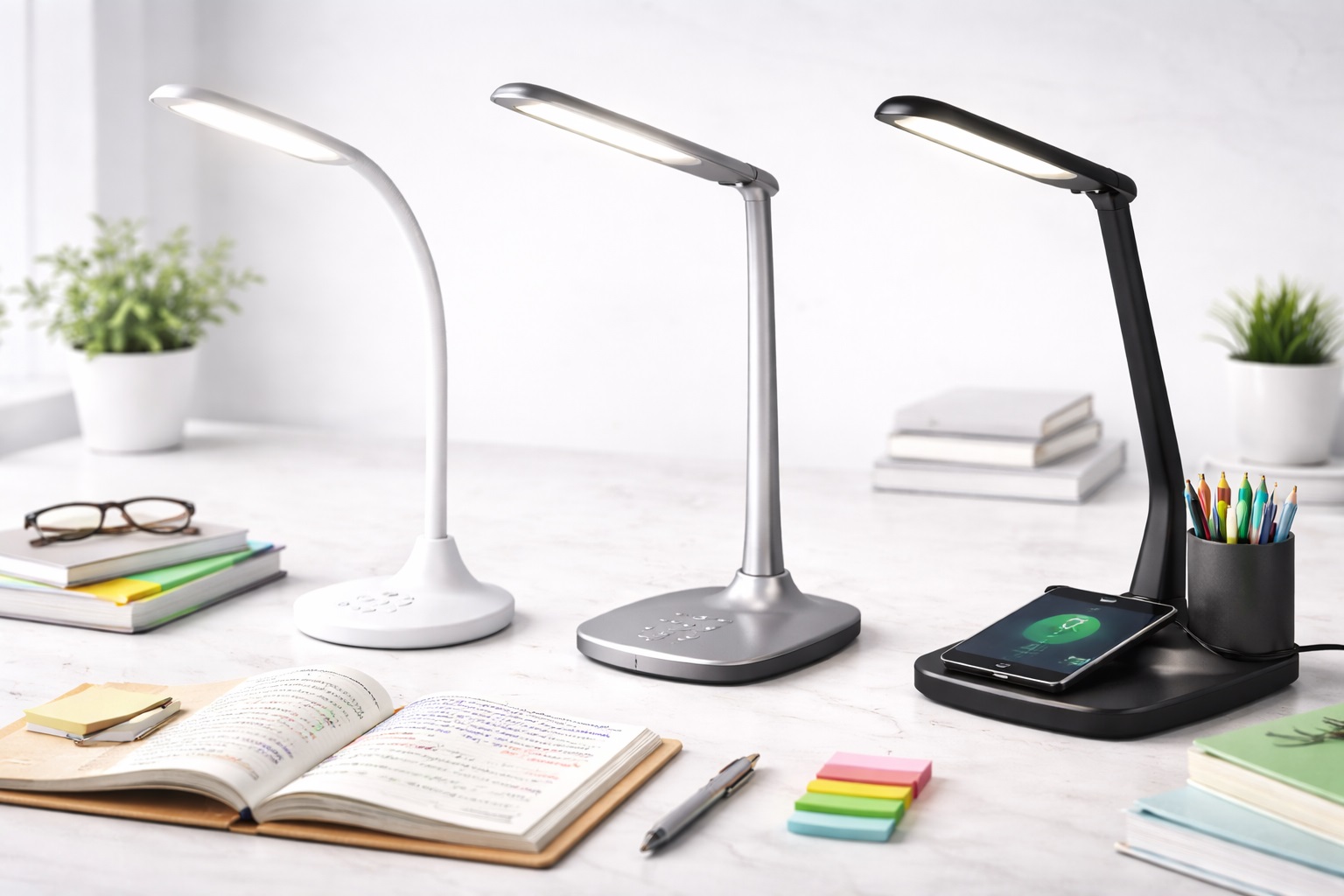
A dimmable LED desk lamp remains the most versatile everyday option for students, offering a wide brightness range you can adjust to match the time of day, the task at hand, and how tired your eyes already are after hours of screen time. The dimmer function alone solves one of the most common study-lighting complaints — a lamp that's either glaringly bright or too dim with no middle ground.
Because this category is built around general-purpose flexibility rather than one standout feature, it may lack the charging ports, precision arm adjustment, or app-based control found in more specialized lamp types. For straightforward, reliable task lighting, though, it remains hard to beat.
- Pros:
- Wide, adjustable brightness range suited to different times of day
- Simple, dependable operation with an intuitive dimmer control
- Widely available across a broad range of price points
- Cons:
- Lacks specialized features like USB charging or app control
- Arm adjustability varies more by specific model than by category
- Basic models may have a narrower color temperature range
Best For: Students who want reliable, adjustable brightness without needing extra smart features.
Why We Recommend It: For everyday studying, a well-made dimmable LED lamp covers the core need — comfortable, adjustable light — without unnecessary complexity.
This is also usually the easiest category to find at a reasonable price with a long expected lifespan, since LED lamps have become the standard baseline for desk lighting across nearly every price tier.
Because the category is so broad, quality still varies a fair amount between individual models — some dimmable LED lamps include a proper eye-care flicker-free driver and a wide color temperature range, while others are simply a basic bulb with a dimmer knob attached. Checking the specific model's dimming range and color temperature options is worth the extra few minutes before assuming every lamp in this category performs identically.
2. Architect-Style Lamp – Best for Precision Task Lighting
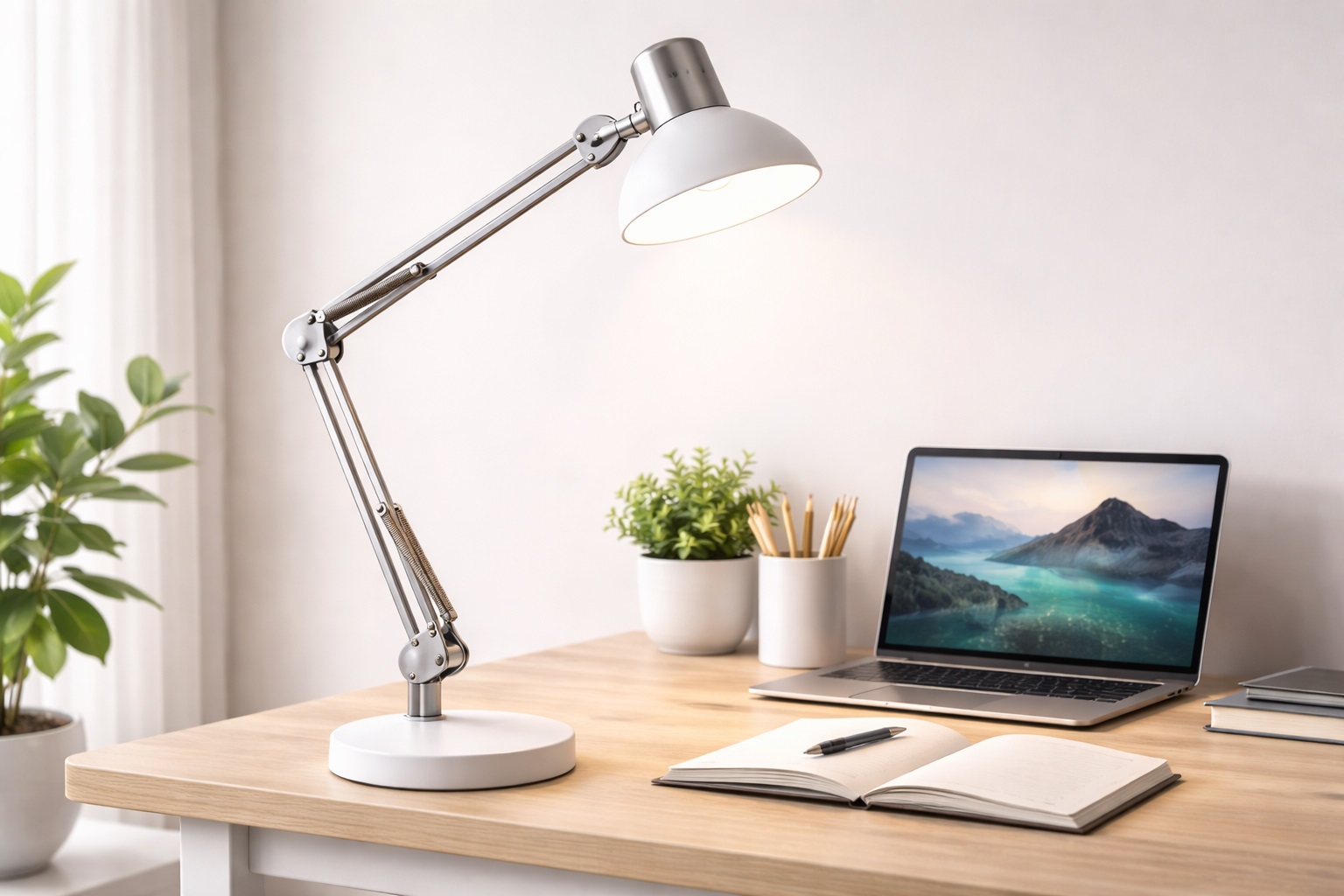
Architect-style lamps use a multi-jointed arm that can be positioned precisely over a specific area of a desk, historically designed for drafting and detailed work where exact light placement matters. For students working with textbooks, handwritten notes, or detailed diagrams, this precision means you can direct light exactly where you're reading or writing rather than relying on general ambient coverage.
The tradeoff is footprint and stability — the extended arm and clamp or weighted base typically take up more desk space than a simpler lamp, and the mechanical joints, while durable, require occasional attention to stay properly balanced over years of adjustment.
- Pros:
- Precise light positioning over a specific work area
- Sturdy, adjustable arm built for repeated repositioning
- Classic design that suits a range of desk styles
- Cons:
- Larger footprint than compact or clip-on alternatives
- Clamp or base mounting may not suit every desk type
- Joints may loosen over years of frequent adjustment
Best For: Students doing detailed reading, writing, or drafting work who need precisely directed light.
Why We Recommend It: The multi-joint arm design offers a level of positioning precision that flatter, more compact lamp styles typically can't match.
This style also tends to hold up well over years of heavy adjustment, since the same mechanical joint design has been refined for decades in professional drafting and studio settings before becoming popular for home desks.
Students working with physical textbooks, graph paper, or hand-drawn diagrams tend to notice the benefit of this precision most, since directing a tight, well-aimed beam onto a specific page or notebook reduces the kind of general glare that a broader, less adjustable lamp head can produce on glossy paper.
3. Lamp with USB-C Charging – Best for Students Who Need to Charge Devices
A desk lamp with a built-in USB-C charging port solves a small but genuinely common problem: needing to charge a phone or tablet at the same desk where you're studying, without hunting for an additional outlet or juggling extra cables and adapters. For students in dorm rooms or shared spaces where outlets are limited, this consolidation is a real practical benefit.
Because the built-in port is the standout feature, charging speed may not match a dedicated fast charger, and the lamp itself is often similar in lighting performance to a standard LED model rather than offering additional lighting-specific advantages.
- Pros:
- Built-in charging reduces the need for extra outlets or adapters
- Convenient for dorm rooms or desks with limited power access
- Keeps devices charging within reach while studying
- Cons:
- Charging speed may be slower than a dedicated fast charger
- Lighting performance is often comparable to standard LED lamps
- Adds to the lamp's overall price compared to non-charging models
Best For: Students in dorms or shared spaces with limited outlet access who need to keep devices charged.
Why We Recommend It: It solves a specific, everyday inconvenience by combining two things students need at the same desk into a single appliance.
This is particularly useful during exam periods or long study sessions where a phone or tablet is being used for reference material and needs to stay charged without interrupting the session to find another outlet.
It also reduces general cable clutter on a small desk, since one lamp cord doing double duty as a charging source means one fewer adapter competing for a limited number of nearby outlets — a small detail that matters more in a shared dorm room than it might in a private home office.
4. Clip-On Study Lamp – Best for Small Desks & Space-Saving
A clip-on lamp attaches directly to the edge of a desk, shelf, or headboard rather than requiring its own base, freeing up desk surface area that a standard lamp base would otherwise occupy. For students with small desks, shared workspaces, or limited surface area, this space-saving design can make a meaningful practical difference.
The tradeoff is mounting flexibility — clip-on lamps need a suitable edge to attach to, which isn't always available on every desk design, and the clamping mechanism, while generally secure, can be less stable than a weighted base if bumped.
- Pros:
- Frees up desk surface by clipping to an edge rather than sitting on it
- Well suited to small desks or shared study spaces
- Often lightweight and easy to reposition or remove
- Cons:
- Requires a suitable edge or surface to clip onto
- Can be less stable than a weighted base if bumped
- Arm reach and adjustability may be more limited than larger lamps
Best For: Students with small or shared desks who need lighting without sacrificing surface space.
Why We Recommend It: When desk space is the limiting factor, a clip-on design solves the problem directly rather than asking you to make room for a base.
This category also travels well for students who move between dorm rooms, libraries, or shared study spaces, since the compact, clip-based design is generally easier to pack and reposition than a lamp with its own weighted base.
Before buying, it's worth measuring the actual edge you plan to clip onto, since desks with rounded profiles, unusually thick tops, or built-in shelving lips don't always accommodate a standard clamp. A quick check avoids the disappointment of a lamp that arrives but doesn't fit the intended spot.
5. Budget Desk Lamp – Best Budget Pick
Budget-friendly desk lamps cover the essentials — basic LED lighting, a simple on/off or limited dimming function, and a stable enough base for everyday use — without the extended color temperature range, charging ports, or app control of pricier models. For students on a tight budget or furnishing a first dorm room, this remains a sensible starting point.
The compromise typically shows up in brightness range and color temperature flexibility, since budget models often offer fewer dimming steps and a narrower range of warm-to-cool light settings than higher-priced alternatives.
- Pros:
- Low upfront cost for functional everyday lighting
- Covers basic studying needs without extra features to pay for
- Simple to set up and use immediately
- Cons:
- Narrower brightness and color temperature range
- Fewer dimming steps than pricier models
- Build quality may be less robust over years of daily use
Best For: Students who need dependable basic lighting without a large budget.
Why We Recommend It: It covers fundamental studying needs at a price that makes sense for a first dorm room or a tight student budget.
For many students, this category is genuinely sufficient — the biggest gains in comfort during long study sessions often come from good posture and screen positioning as much as from lamp features beyond basic adjustable brightness.
Budget lamps are also a reasonable choice for a secondary desk or a temporary setup, such as a summer sublet or a short-term dorm assignment, where investing in a premium lamp doesn't make sense given how long it will actually be used in that specific spot.
6. Smart Adjustable Desk Lamp – Best Premium & Best for Customization
Smart adjustable desk lamps combine a fully adjustable arm and head with app-based or touch-based control over brightness, color temperature, and sometimes scheduled lighting changes throughout the day. For students who want the most granular control over their study lighting — including features like automatically shifting to warmer tones in the evening — this category offers the most customization available.
That level of control comes at the highest price point in this lineup, and the added electronics mean slightly more that could eventually need troubleshooting compared to a simple mechanical dimmer switch.
- Pros:
- Most granular control over brightness and color temperature
- Can automate lighting changes throughout a study session or day
- Fully adjustable arm and head for precise positioning
- Cons:
- Highest price point among desk lamp categories
- App or smart features add complexity some users won't need
- More components that could eventually require troubleshooting
Best For: Students who want maximum control and customization over their study lighting setup.
Why We Recommend It: For anyone who values fine-tuned control over every aspect of their lighting, a smart adjustable lamp offers capability no basic model can match.
This category particularly appeals to students who study at irregular hours, since scheduled or app-controlled warm-light modes in the evening can help ease the transition toward winding down after a late study session.
Some models in this category also support voice control or integration with existing smart home systems, which can be a genuine convenience for hands-free adjustment while in the middle of writing or typing without breaking focus to reach for a physical switch.
Buying Guide: How to Choose the Best Desk Lamp for Studying
Once you've identified which category fits your desk and study habits, these factors help you compare specific models within it.
1. Brightness and Lumen Output
Lumen output determines how bright the lamp can get at its maximum setting, which matters most for detailed reading or note-taking. Too little brightness strains the eyes over long sessions, while excessive brightness without dimming options can feel harsh, especially at night.
The ideal brightness also depends on how much ambient light already exists in the room, since a lamp that feels perfectly bright in a dim dorm room may feel underpowered in a well-lit shared study space during the day.
2. Color Temperature Range
Cooler, bluer light generally supports alertness and focus, while warmer, yellower light is gentler on the eyes during evening study sessions. A lamp that adjusts across this range offers more flexibility than one fixed at a single color temperature.
Some students find it useful to match color temperature to the type of task — cooler light for active problem-solving or dense reading, and warmer tones for reviewing notes or winding down before sleep.
3. Dimming Levels and Control Precision
More dimming steps allow finer adjustment to match the time of day and task, while a lamp with only a few abrupt brightness jumps offers less precise control over comfortable lighting levels.
4. Flicker-Free, Eye-Care Technology
Genuinely flicker-free LED drivers reduce the subtle strain that can build up during long study sessions, even when the flicker itself isn't consciously noticeable. This is one of the more meaningful specifications for anyone studying for extended periods.
5. USB Charging Port Availability
A built-in charging port adds practical convenience for students who need to keep a phone or tablet charged at the same desk, particularly useful in dorm rooms or spaces with limited outlet access.
6. Arm and Head Adjustability
The range of motion in the lamp's arm and head determines how precisely you can direct light toward a book, keyboard, or notes. More joints generally mean more positioning flexibility, though also more parts that could eventually loosen.
Testing a lamp's adjustability in person or checking demonstration videos, where possible, gives a better sense of real range of motion than a spec sheet alone, since some lamps advertised as fully adjustable still have practical limits on how low or how far to the side the head can tilt.
7. Base Stability or Mounting Type
A weighted base offers stability on an open desk surface, while a clamp or clip mount saves surface space but requires a suitable edge to attach to. Consider your desk's actual layout before choosing a mounting style.
8. Desk Footprint and Available Space
Larger architect-style and base-mounted lamps take up more desk surface than clip-on designs, which matters most for smaller desks already crowded with books, a laptop, and other study materials.
9. Price and Long-Term Value
Consider how long you expect to use the lamp and how much you value extra features like charging ports or app control against a simpler, less expensive dimmable option that covers the basics reliably.
A lamp that will travel with you through several years of school is worth a slightly higher upfront investment compared to one intended for a single semester or a temporary living situation.
10. Brand Reliability and Warranty
Established lamp brands typically offer more consistent LED quality and driver longevity, along with clearer warranty terms — a meaningful consideration since LED lamps are generally expected to last for years without significant brightness loss.
11. Real-World User Feedback
Specifications don't always reveal how a lamp performs after months of nightly use — whether the dimmer stays smooth, whether the arm joints loosen, or whether the color temperature claims hold up in practice. Reviews focused on longevity add valuable context.
Pay particular attention to feedback mentioning extended daily use over several months rather than first-impression reviews written the week a lamp arrived, since early enthusiasm doesn't always reflect how a product holds up under real routine.
12. Noise from Any Cooling or Electronic Components
Most desk lamps are silent, but some smart models with additional electronics can occasionally produce a faint hum. This is worth checking in reviews if you study in an otherwise quiet room where even minor noise is noticeable.
Frequently Asked Questions
What color temperature is best for studying?
Cooler, more neutral light (often in the 4000–5000K range) tends to support alertness and focus during active study sessions, while warmer light in the evening can feel gentler on the eyes as you wind down. A lamp with adjustable color temperature lets you match both needs.
Is a higher lumen count always better for a study lamp?
Not necessarily — what matters more is having enough brightness available with the flexibility to dim it down when full brightness feels excessive, particularly during evening study sessions or when using a bright screen alongside the lamp.
Do I really need a flicker-free lamp?
Flicker that isn't consciously visible can still contribute to eye strain and fatigue over long study sessions, so it's a genuinely useful feature to prioritize for students who study for multiple hours at a stretch rather than in short bursts.
How much desk space does a clip-on lamp actually save?
Since a clip-on lamp mounts to the desk edge rather than sitting on the surface, it frees up the entire footprint a base would otherwise occupy — often several square inches that can instead hold books, a laptop, or notes.
Are smart desk lamps worth the extra cost for a student?
If you value fine-tuned control over brightness and color temperature, or want automated lighting changes throughout the day, yes. If you mainly need reliable, adjustable brightness, a simpler dimmable LED lamp often covers the same core need at a lower price.
Can a desk lamp actually help with eye strain from screen use?
A well-positioned desk lamp reduces the contrast between a bright screen and a dark room, which is a common contributor to eye strain during evening study or work. Proper ambient lighting alongside your screen matters as much as the screen's own brightness settings.
How do I know if a lamp's arm is sturdy enough for daily repositioning?
Look for reviews that specifically mention long-term joint stability rather than just initial impressions, since some lamps that feel sturdy out of the box can loosen after months of frequent adjustment.
Is USB-C charging on a lamp fast enough for a phone or tablet?
Charging speed varies by model and is often slower than a dedicated wall charger, so it's a convenient backup or overnight charging option rather than a replacement for fast charging when you need a quick top-up.
What's the difference between a desk lamp and a reading lamp for studying?
The terms overlap significantly, but "desk lamp" typically implies a broader range of tasks — writing, typing, spreading out materials — while "reading lamp" sometimes suggests a narrower, more focused beam. For studying, a lamp with adjustable positioning generally serves both purposes well.
How long do LED desk lamps typically last?
LED lamps are generally rated for tens of thousands of hours of use, which translates to years of typical daily studying before any noticeable brightness decline, assuming reasonable care and use within the manufacturer's specifications.
Should I position my desk lamp on a specific side of my desk?
Right-handed people often benefit from a lamp positioned on the left side of the desk to avoid shadows cast by the writing hand, and vice versa for left-handed students. Adjustable arm lamps make this easy to test and adjust as needed.
Can a desk lamp replace overhead room lighting entirely while studying?
A desk lamp alone can create a stark contrast with a dark room that may increase eye strain over time. Combining task lighting from a desk lamp with softer ambient room lighting generally provides more comfortable overall conditions for extended study sessions.
Do desk lamps use much electricity if left on for long study sessions?
LED desk lamps draw very little power compared to older incandescent or halogen designs, so running one for several hours during a study session has a negligible effect on electricity costs, even at higher brightness settings.
Is it better to buy a desk lamp online or see it in person first?
Online listings usually provide more detailed specifications and a wider selection, while seeing a lamp in person lets you judge its actual brightness, color temperature, and build quality firsthand. For students without easy access to a store, checking recent, detailed reviews is a reasonable substitute for a hands-on look.
Final Verdict
- Best Overall: A dimmable LED desk lamp provides reliable, adjustable lighting for most everyday studying needs.
- Best for Precision: An architect-style lamp offers the most precise light positioning for detailed reading and writing.
- Best Premium: A smart adjustable desk lamp delivers the most granular control for students who want full customization.
- Best Budget: A budget desk lamp covers essential lighting needs at an accessible price.
- Best for Small Desks: A clip-on study lamp frees up valuable desk space in tight or shared study areas.
The right desk lamp for studying comes down to matching lighting flexibility, desk space, and any extra conveniences like charging to your actual routine, rather than defaulting to whichever lamp looks the most impressive. A lamp that genuinely reduces eye strain and fits your desk without getting in the way will support long study sessions far better than one chosen for looks alone.
If you're unsure where to start, prioritize adjustable brightness and color temperature above every other feature — these two factors affect comfort during every single study session, while charging ports, smart controls, and precision arms are meaningful conveniences that matter more for some students than others depending on their specific setup and habits.