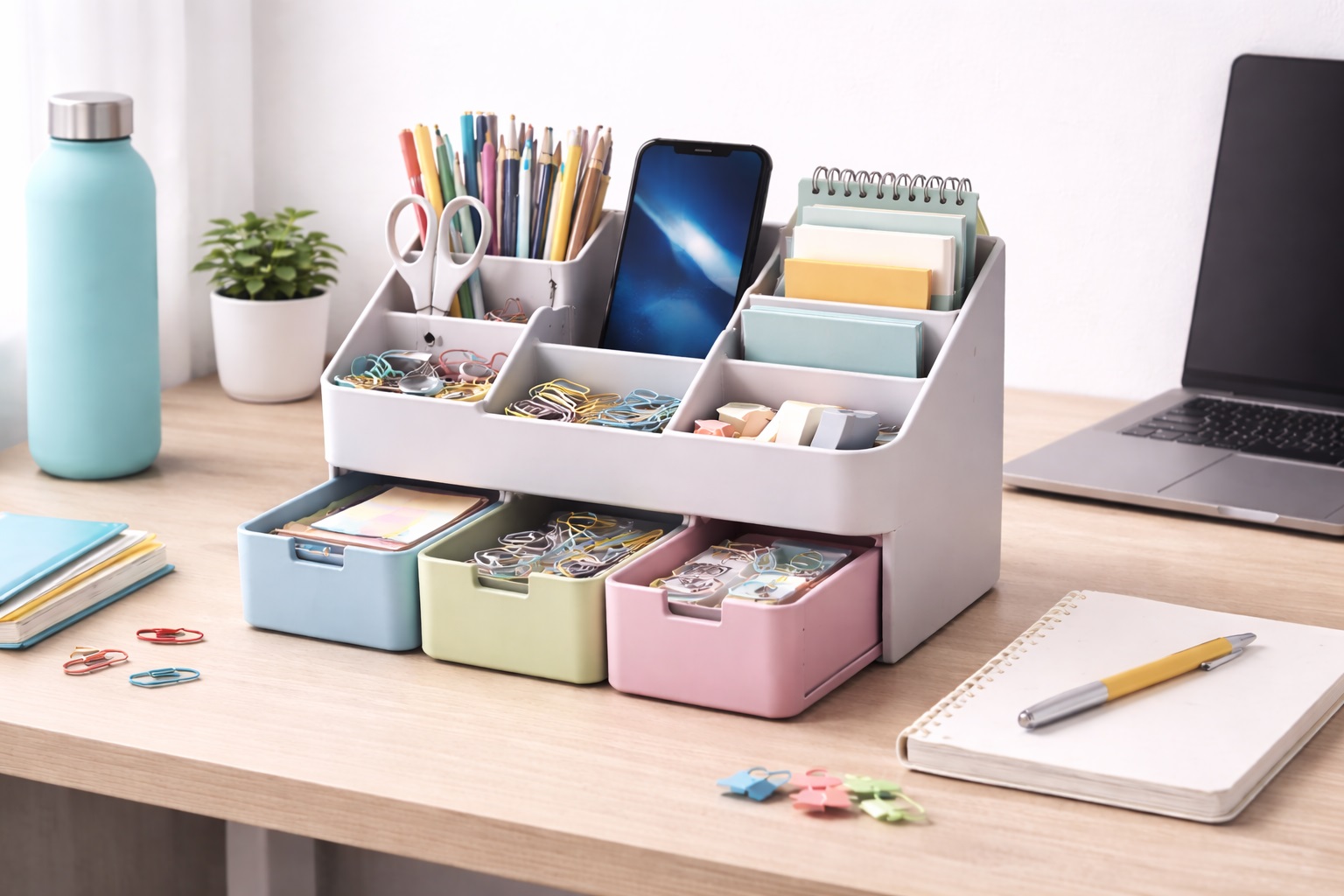
Best Desk Organizers Under $100 for Home Offices
There's a wide gap between a flimsy dollar-store tray and the boutique desk accessories that cost as much as a small appliance, and most people shopping for a desk organizer are really looking for something in between: a piece that looks intentional, holds up to daily use, and doesn't require justifying a three-figure purchase for what is, at the end of the day, a container for pens and cables. The good news is that the sub-$100 range covers a surprisingly wide spread of quality, and the organizers that stand out here aren't cutting corners so much as skipping unnecessary extras.
This guide compares three organizers that represent distinct approaches within that budget, each aimed at a slightly different kind of home office user. One leans into natural material and a warm look that suits a home environment specifically. One takes a minimal, open-wire approach that prioritizes function and visibility. One is built for people whose desk clutter is mostly paper rather than pens and gadgets. None of them is a compromise pick — each is simply better suited to a different daily routine.
Throughout the reviews below, we focus on what actually matters at this price point: how the material holds up over months of use, whether the compartment layout matches how people really use a desk, and where each design's limitations start to show. We also cover the buying factors worth checking before you commit, since the difference between a good and disappointing purchase under $100 often comes down to a handful of details that are easy to miss in a product listing.
If you're setting up or refreshing a home office and want an organizer that looks and performs like it cost more than it did, the picks and buying guide below are built specifically around that goal.
It's worth being clear about what a sub-$100 organizer realistically delivers. You're not getting motorized components, app connectivity, or the kind of premium materials found in designer office furniture — and you don't need any of that for a desk organizer to do its job well. What you are getting, in the options covered here, is genuinely solid construction, sensible compartment design, and materials that age reasonably rather than degrading within a season. That's the actual bar worth measuring against, not a comparison to luxury furniture that serves a different market entirely.
It's also worth thinking about how a desk organizer fits into the broader home office setup rather than evaluating it in isolation. A well-chosen organizer can reduce the need for other accessories entirely — a good phone stand section means you don't need a separate phone dock, and a well-designed cable channel can replace a standalone cable management box. Viewed that way, a $60–$90 organizer that consolidates two or three separate accessory purchases can end up being the more economical choice even before considering how it looks.
Top 3 (Detailed Reviews)
1. Bamboo Desktop Organizer – Best For Home Office Aesthetic
Bamboo desk organizers use a fast-growing, renewable material that gives them a warmer, more furniture-like look than the plastic and metal options that dominate the budget end of this category. A typical layout includes a few pen slots, a small cut-in phone stand, and a shallow open tray for the loose items that accumulate over a normal week. Because bamboo is dense and hard, the surface resists the small scuffs and scratches that show up quickly on cheaper plastic within the first few months of regular handling. It also tends to look more at home in a residential setting, where a plastic organizer can read as leftover office supply rather than an actual piece of furniture. Assembly, where needed, is usually limited to a few pre-cut panels that slot together without tools, and the finish tends to deepen slightly and look better with age rather than showing wear the way scuffed plastic does. The main thing to watch for is spilled liquid — a coffee spill left sitting on exposed bamboo can leave a mark that plastic or sealed metal wouldn't. A quick wipe with a barely damp cloth right after any spill generally prevents lasting damage, but leaving liquid to sit for an hour or more is where the risk really starts to build. Most bamboo organizers in this price range also arrive pre-finished with a light sealant, which helps but doesn't fully eliminate the need for basic care around water.
- Pros:
- Natural, sustainable material with a genuinely furniture-like appearance
- More scratch-resistant than typical budget plastic organizers
- Blends into a home environment rather than looking like office equipment
- Compartments sized around the items people actually keep on a desk
- Cons:
- Heavier than plastic or wire alternatives at a similar price
- Vulnerable to water damage if liquid sits directly on the exposed surface
Best For: Home office professionals who want their workspace to look considered rather than purely functional, and who are comfortable keeping liquids away from the organizer itself.
Why We Recommend It: Bamboo delivers a level of visual polish under $100 that's genuinely hard to find in plastic or basic metal alternatives at the same price. For a home office where the organizer sits in view all day, that difference in appearance is worth the small tradeoff in weight and water sensitivity.
2. Mesh Wire Organizer – Best For Visibility and Value
Metal mesh organizers take a more minimal, industrial approach that suits modern home office setups particularly well. Because the frame is open wire rather than a solid shell, everything stored inside stays visible at a glance, which removes the need to dig through a closed compartment looking for a specific pen or cable. Most models include a few different compartment sizes along with a base with enough width or weight to resist tipping when you reach in for something. Steel construction holds up reliably over time and avoids the small stress cracks that lower-quality plastic organizers eventually develop under repeated use. Cleaning is straightforward since there's no enclosed cavity collecting dust out of sight, though the tradeoff is that dust settles visibly on stored items rather than staying hidden. At this price point, mesh organizers also tend to offer the best storage volume per dollar of any material covered here. The powder-coated finish common on most models also resists chipping better than painted plastic, so the organizer keeps a fresh appearance well past the first year of use. Because the frame is welded rather than glued or clipped together, there's also very little risk of pieces working loose over time the way some multi-part plastic organizers eventually do.
- Pros:
- Visible storage makes finding items fast and effortless
- Durable steel construction holds up to daily handling
- Modern, minimal look suits contemporary home office setups
- Typically the best storage volume for the price among the three styles
- Cons:
- Less warm in appearance than bamboo or wood-finish alternatives
- Open mesh offers no dust protection for stored items
Best For: Home office professionals who want a clean, modern desk and prioritize function and value over a softer, warmer aesthetic.
Why We Recommend It: For the price, mesh organizers deliver the most practical storage and the least maintenance friction of any option here. The open design solves a specific everyday annoyance — searching a closed compartment for a small item — better than the alternatives.
3. Vertical File Organizer with Storage – Best For Paper-Heavy Workflows
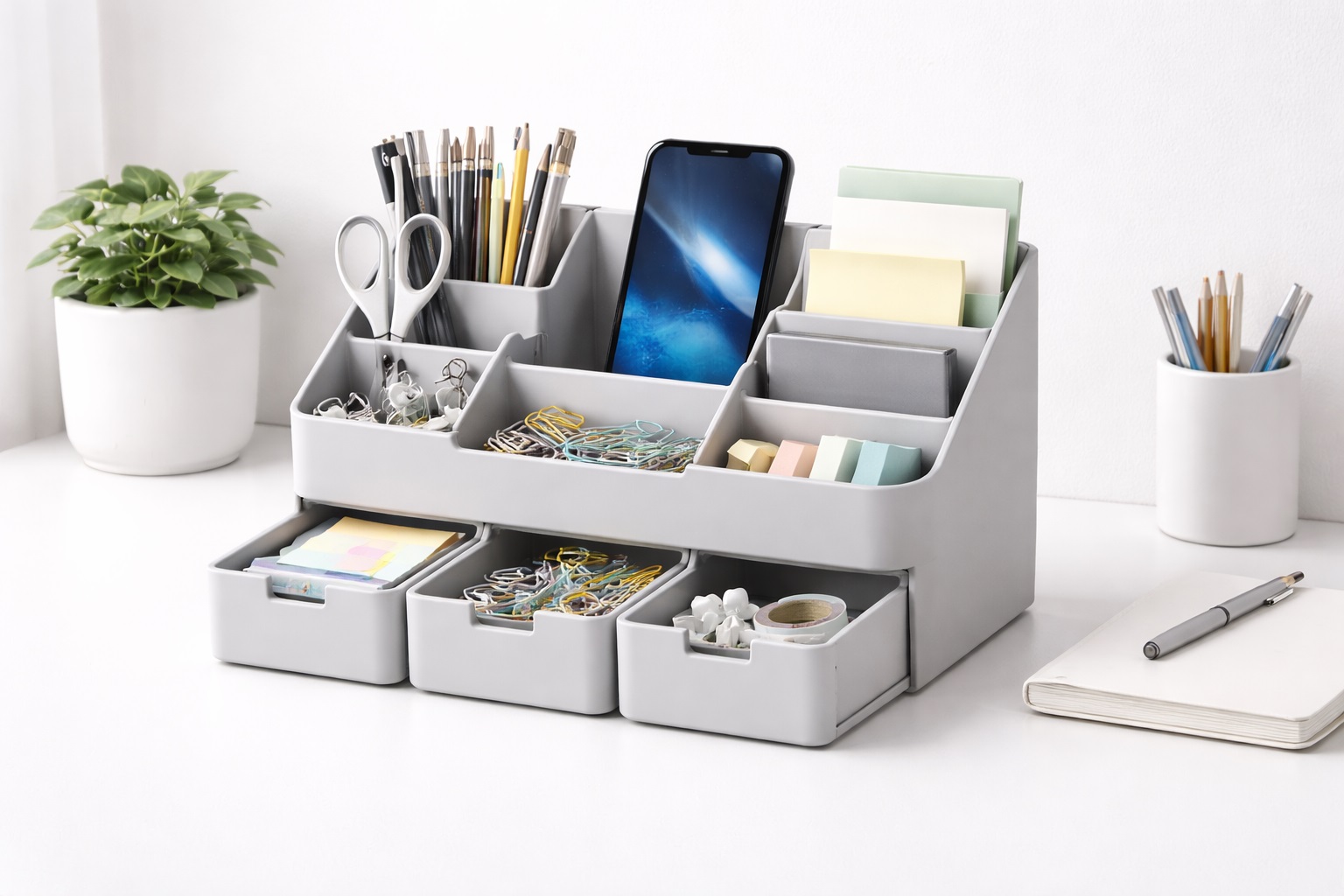
This style combines a vertical file holder with a smaller general storage section, aimed at professionals who still manage a meaningful volume of physical paperwork alongside digital tools. The file section keeps folders and documents upright and visible rather than stacked flat where they get buried, while the attached compartments handle pens, a phone, and small accessories. Because it combines two functions, it has a larger footprint than a basic organizer, but it still takes up less total desk space than buying a separate file holder and pen tray would require. Most versions use angled rather than flat-bottomed slots, which keeps folders from sliding together into an unreadable stack and makes flipping through them for a specific document noticeably faster. For a home office professional who still deals with mail, signed documents, or printed forms regularly, the reduction in visible paper clutter after switching to this style is immediately noticeable. Many versions also include a small labeled-tab option or removable dividers, which makes it easier to separate categories like invoices, signed contracts, and reference material without needing a second filing system elsewhere in the office.
- Pros:
- Handles physical documents and small accessories in a single unit
- Keeps papers upright and visible rather than buried in a flat stack
- Meaningfully reduces visible clutter for paper-heavy workflows
- More space-efficient than a separate file holder and organizer combined
- Cons:
- Larger footprint than a basic desk organizer
- More organizer than necessary for professionals who work almost entirely digitally
Best For: Home office professionals, consultants, and small business owners who still manage real paperwork alongside their laptop or desktop setup.
Why We Recommend It: For anyone whose home office clutter is mostly paper rather than pens and cables, this is the one organizer on this list built specifically to solve that problem within a sub-$100 budget, and it does so without requiring a second, separate accessory.
Buying Guide: How to Choose the Best Desk Organizer Under $100
Use the factors below to match your purchase to your actual home office routine, rather than defaulting to whichever option has the most reviews or the highest star rating.
1. Compartment Size and Configuration
Start by thinking through what you actually place on your desk during a normal work week. A single open tray suits people who mostly store a notebook or tablet. Small divided sections work better for pens, USB drives, and small items that get lost in a larger compartment. If you use a phone stand or manage cables daily, look for an organizer with a section built specifically for that rather than trying to make a general tray work for everything. It also helps to think seasonally — tax season or year-end reporting can temporarily change what a home office desk needs to hold, and a slightly more flexible layout absorbs that better than a rigidly fixed one.
2. Material and Long-Term Durability
Bamboo resists scratching and light moisture better than most budget plastic, while steel wire is close to indestructible under normal desk use. Plastic organizers vary enormously in quality even within this price range — some are genuinely rigid and long-lasting, while others flex and eventually crack under repeated handling. Reading verified reviews that specifically mention how a product looks after six months or a year is more useful than trusting the initial unboxing photos most listings lead with. Pay particular attention to reviews from buyers in humid climates, since moisture resistance varies more than most listings acknowledge.
3. Value Relative to Similar Furniture
Within the sub-$100 range, it's worth comparing what else that budget could buy — a basic desk lamp, a small shelf unit, or a modest monitor stand. An organizer that genuinely improves your daily workflow earns its place in that budget; one that just looks nice in photos but doesn't solve a real clutter problem might be better swapped for a different accessory entirely. Try listing the three things that bother you most about your current desk before shopping — it's a quick way to filter out organizers that look appealing but wouldn't actually fix your specific frustrations.
4. Non-Slip Base
A base without grip tends to slide across a desk every time you pull a pen or document out, which becomes irritating quickly. Rubber feet or a textured base coating solve this reliably. A slipping organizer is also more prone to tipping when a compartment is loaded unevenly, so base grip and overall stability tend to go hand in hand. This is a detail rarely mentioned in product photos, which makes checking reviews specifically for complaints about sliding or tipping worth the extra couple of minutes.
5. Height and Sightlines
Taller organizers hold more but can block your view of a monitor or window behind the desk. Lower, horizontal designs keep a home office feeling more open. Consider your monitor height and what you actually want visible above the organizer before choosing between a taller or lower-profile design. It's a small detail that's easy to miss in a product photo but immediately obvious once the organizer is sitting on your actual desk in front of your actual monitor.
6. Cable Management Features
Some organizers in this price range include routing channels or clip points specifically for cables, which noticeably cuts down on visible mess. Even a couple of simple clip points near the base can be the difference between a desk that looks tidy and one where charging cables snake across every visible surface. If your home office involves frequent video calls, this detail matters even more since a cluttered background is the kind of thing colleagues notice without saying anything.
7. Cleaning and Maintenance
Every desk organizer collects dust eventually, regardless of material. Closed-back designs trap less visible dust but are harder to wipe out thoroughly. Open wire or mesh designs show dust more obviously but are quicker to clean when you get around to it. Neither approach eliminates maintenance entirely — they just change how often you notice it needs doing. Setting a recurring monthly reminder is a simple way to keep this from slipping down the priority list indefinitely.
8. Desktop Footprint
Measure your actual available desk space before ordering. An organizer that provides excellent storage but consumes most of your usable surface defeats its own purpose. Vertical designs generally maximize storage per square inch of footprint, which makes them a better fit for smaller home office desks than wide horizontal trays. A quick tape-measure check against the listed dimensions avoids the common disappointment of an organizer that technically fits but leaves no room to actually work.
9. Modular or Expandable Options
Some organizer systems are built from stackable pieces you can add to over time, which is useful if your home office needs tend to shift. Buying one core piece first and adding modules later spreads out the cost, which can be more comfortable within a sub-$100 budget than committing to a full system at once. This approach also lets you evaluate whether the base module actually solves your problem before investing further.
10. Style Consistency with Your Home Office
An organizer that clashes visually with the rest of your desk still functions fine, but it creates a small disconnect every time you look at it. Matching material and finish to your monitor stand, keyboard, or desk surface makes the whole setup feel considered rather than assembled piece by piece over time. This matters even more if your home office regularly appears on video calls, where a cohesive background reads as more professional than a mismatched assortment of accessories.
11. Warranty and Retailer Return Policy
At this price point, warranty coverage varies significantly between brands. A one-year warranty is a reasonable baseline; anything shorter is worth factoring into your decision, especially for organizers made from thinner materials that are more prone to early failure. It's also worth checking whether the warranty is handled directly by the manufacturer or only through the retailer, since that affects how smoothly a claim actually gets resolved.
12. Price Relative to Longevity
Basic plastic organizers near the bottom of this price range are inexpensive but tend to need replacing sooner. Bamboo and metal cost more within the range but typically last significantly longer under regular use. Thinking in terms of cost per year of use rather than just the sticker price often changes which option looks like the better value, particularly once you account for the hassle of reordering and re-setting-up a replacement every year or two.
Frequently Asked Questions
1. What's a realistic budget range within "under $100" for a quality desk organizer?
Genuinely well-built options in this category tend to sit in the middle of the range rather than at either extreme. The cheapest options often cut corners on material thickness, while spending right up to the $100 ceiling usually buys additional finish quality rather than meaningfully better function. Most buyers find the sweet spot somewhere in the middle third of the range, where material quality and finish both improve noticeably over the entry-level tier.
2. How do I stop a desk organizer from picking up odors over time?
Bamboo and metal resist odor buildup better than plastic. Regular emptying and a wipe-down with a slightly damp cloth prevents most buildup before it starts. Avoid storing food in any compartment, since that's the most common source of lingering smell in a home office organizer.
3. Is a desk organizer with cable management worth the extra cost?
If tangled charging cables genuinely bother you on a daily basis, yes. Dedicated routing channels or clip points noticeably reduce visible mess. If your cable situation is minor, a separate inexpensive cable clip might solve the problem for less than upgrading the whole organizer for that one feature. Weigh how much the clutter actually bothers you day to day against the price difference before treating it as a must-have.
4. Can I assemble a modular desk organizer system without tools?
Yes, on most designs in this price range. Individual pieces typically stack or slot together without hardware. Sketching your intended layout before ordering avoids the common mistake of buying pieces that don't actually combine into a workable footprint. It's a five-minute exercise that can save an unnecessary return down the line.
5. How often should I clean a desk organizer?
Once a month is enough to prevent significant buildup for most home offices. Empty every compartment, wipe surfaces with a slightly damp cloth, and let everything dry fully before replacing items. High-touch spots like pen holders benefit from a quicker wipe weekly.
6. Is the most expensive option under $100 always the better choice?
Not necessarily. A higher price within this range usually buys a nicer finish or extra compartments, but many mid-range options cover everyday home office needs just as well. Focus on the specific features that matter for your actual workflow rather than assuming price alone tells the whole story. In this category, the jump from entry-level to mid-range tends to buy real improvements in material and stability, while the jump from mid-range to the top of the range often buys mostly finish and aesthetics.
7. How long should a quality desk organizer under $100 last?
With reasonable care, a well-built organizer from a reputable brand typically lasts two to five years, sometimes longer for bamboo or metal designs. Checking warranty terms before buying is a reasonable shortcut for gauging how confident the manufacturer is in their own build quality.
8. Can I return a desk organizer if it doesn't suit my home office?
Most retailers offer a 15 to 30 day return window. Keep the original packaging during your evaluation period, and photograph the item on arrival in case the retailer requires proof of condition for a return. Note the return window on your calendar too, since it's easy to lose track once the organizer is in daily use.
9. What's the best desk organizer under $100 for someone furnishing a home office from scratch?
It depends on what will actually clutter your desk. Someone with a mostly digital workflow benefits most from the mesh organizer's visibility and value, while someone managing paperwork benefits more from the vertical file design. Match the pick to your actual routine rather than a general "best" label.
10. Does brand reputation matter for a sub-$100 desk organizer?
It matters more than people expect, particularly for warranty support if something goes wrong. That said, smaller or newer brands sometimes offer genuinely good value in this range — reading verified reviews carefully is worth the extra few minutes before purchasing.
11. Are desk organizers under $100 sturdy enough for daily professional use?
The bamboo, steel mesh, and vertical file options covered in this guide are all genuinely solid within this budget. The organizers to be cautious of are thin, low-quality plastic designs that cut cost by cutting material thickness rather than through efficient design.
12. Can a desk organizer under $100 double as a small gift for a coworker's home office setup?
Yes, particularly the bamboo option, which tends to read as more considered and personal than a generic plastic organizer at a similar price. A vertical file organizer is a more practical gift for someone who's mentioned struggling with paper clutter specifically. Either choice tends to be better received than generic desk gadgets, since organization is a problem almost everyone with a home office quietly deals with.
Final Verdict
- Best Overall: Bamboo Desktop Organizer – the most polished look available under $100.
- Best Value: Mesh Wire Organizer – the most storage and least maintenance for the price.
- Best for Paperwork: Vertical File Organizer with Storage – the practical pick for professionals managing real paper alongside digital work.
Within a sub-$100 budget, the right choice comes down to what actually clutters your desk rather than which option photographs best. A home office that's mostly digital benefits from the visibility and value of the mesh organizer, while one with real paperwork benefits more from the vertical file design's dedicated storage. Use the reviews and buying guide above to match the organizer to your actual routine, and you'll end up with something that earns its keep well past the first few weeks of a fresh home office setup. Take a few minutes before ordering to picture your desk a year from now, still functional and still looking considered rather than worn out, and let that image guide the final decision.