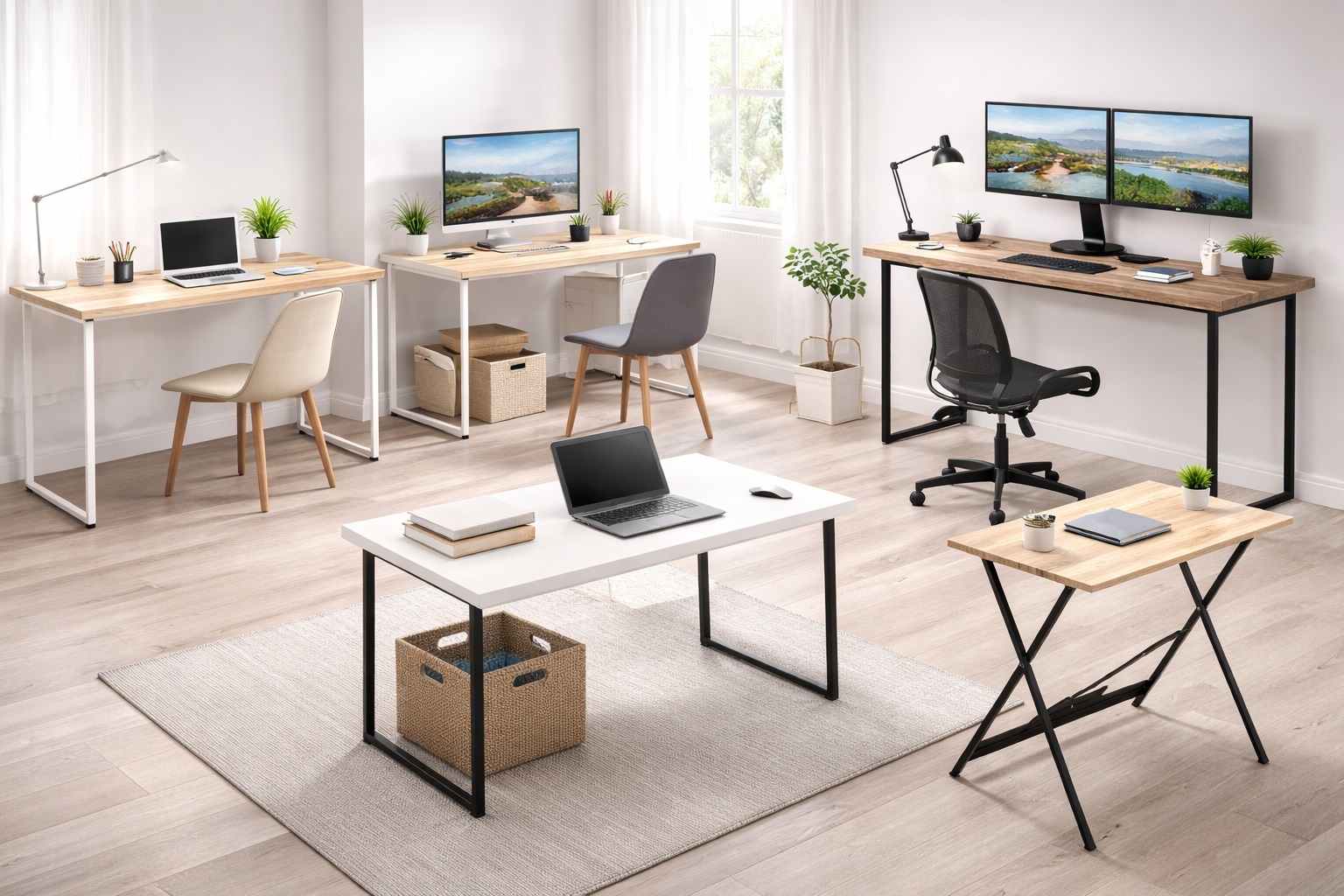
Best Lightweight Desks for a Flexible, Portable Workspace
A lightweight desk sounds like a simple category until you actually try to define what "lightweight" means in practice. Some buyers want a desk that folds flat and disappears into a closet between uses, while others just want a slim, easy-to-carry surface that won't take two people to move across a room. Both are valid definitions of lightweight, but they lead to very different products.
This guide compares three distinct approaches to a lightweight workspace, each solving a slightly different problem for remote workers, students, and minimalists who move their workspace regularly or simply don't want a heavy piece of furniture dominating a small room. Rather than ranking them against each other on a single scale, the goal here is to help you match the desk style to your actual living situation.
The remote work shift over the past several years has also changed what people expect from a home desk. A workspace that used to be a rarely-used corner for occasional bill-paying is now, for many people, a daily fixture that needs to support hours of video calls, focused work, and study sessions. That shift has pushed manufacturers to design lightweight desks that no longer feel like a downgrade from a traditional office desk, but rather a deliberate choice suited to smaller, more flexible living spaces.
Below you'll find detailed breakdowns of each option, a buying guide covering the practical factors that matter most when shopping for a lightweight desk, answers to common buyer questions, and a final verdict to help you land on the right choice quickly.
Weight alone is also a misleading way to compare desks, since a 15-lb foldable frame and a 28-lb bamboo desk can both be described as "lightweight" relative to a traditional 60-lb office desk, yet they serve completely different purposes. The more useful comparison is how each option handles the specific constraints of your living situation — how often you move, how much floor space you have, and whether the desk needs to double as a piece of furniture you're happy to look at every day.
It's also worth remembering that a lightweight desk is not automatically a compromise on quality. The materials and engineering that make modern lightweight furniture possible, from aircraft-grade aluminum extrusions to engineered bamboo laminate, are often more advanced than what went into older, heavier furniture built from solid particleboard or thick steel tubing.
Top Picks Reviewed (Detailed Reviews)
Foldable Lightweight Desk – Best for Flexible Rooms
A foldable lightweight desk collapses flat for storage and opens in seconds without tools. Modern designs use aluminum or tubular steel frames that keep the weight low without sacrificing meaningful load capacity. The best models fold compactly enough to stand behind a door or slide under a bed, which makes them genuinely useful in rooms that serve more than one purpose during the day.
This category tends to appeal most to people who don't have a room dedicated solely to work, whether that's a studio apartment, a shared bedroom, or a guest room that needs to revert to guest duty when visitors arrive. The trade-off for that flexibility is a smaller working surface and, on some models, a bit less rigidity than a permanently assembled desk would offer.
- Pros:
- Folds completely flat for storage
- No assembly required
- Easy to carry and reposition
- Fits in multi-purpose rooms
- Cons:
- Limited surface area compared to fixed desks
- Can feel less stable at full extension
Best For: Apartment dwellers, guest room setups, and anyone who needs a desk that disappears when not in use.
Why We Recommend It: The foldable design solves the space problem directly — you get a real working surface when you need it and reclaim the room completely when you don't, which is a trade-off few fixed desks can offer at any price.
Buyers who've lived through multiple moves also tend to appreciate that a folded desk fits into a car trunk or a moving box far more easily than any assembled furniture, which removes one more logistical headache from an already stressful process.
Slim Writing Desk – Best for Minimalist Spaces
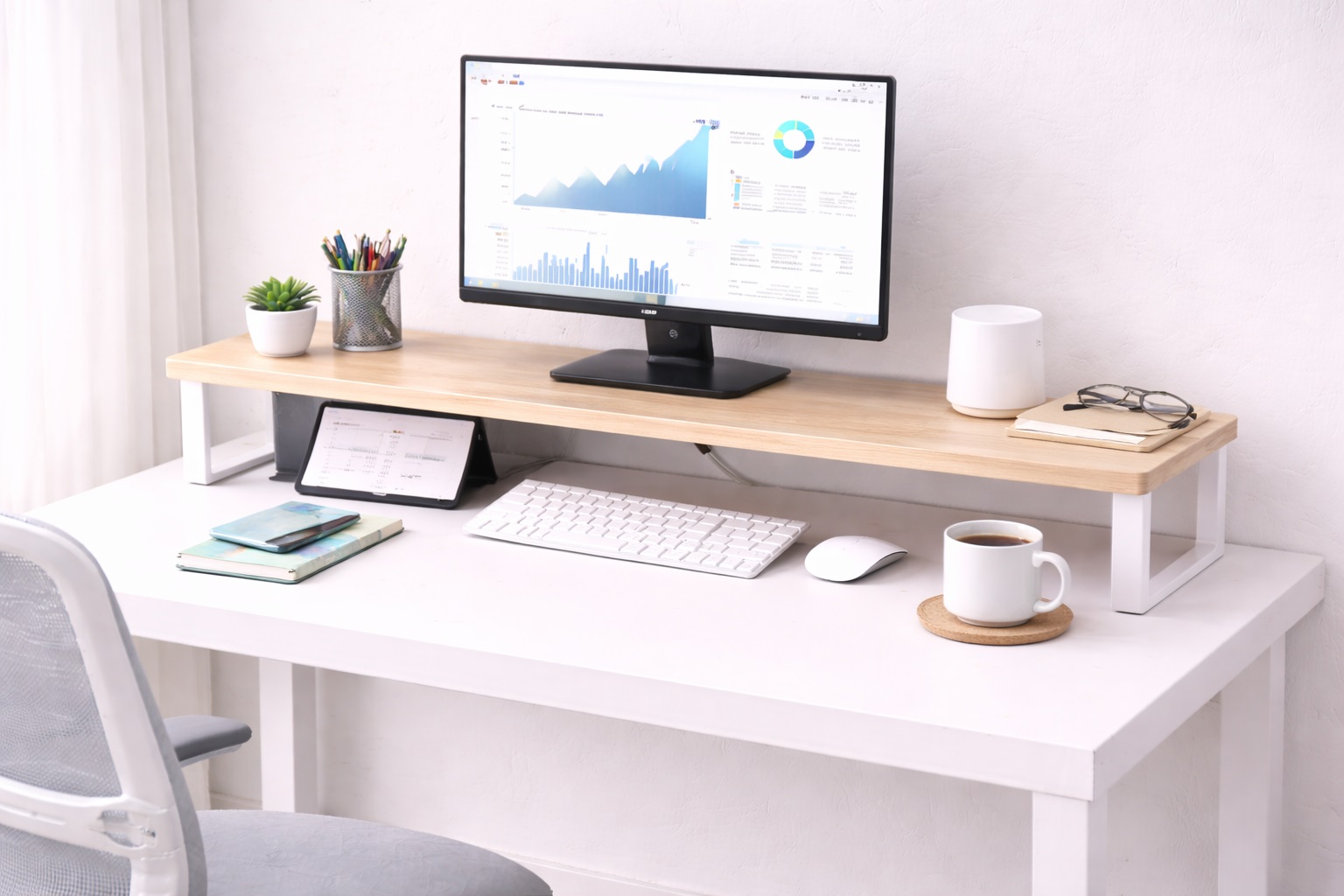
A slim writing desk provides a defined workspace with a small footprint and minimal visual weight. Designs in this category typically feature a narrow desktop, often in the 20 to 22 inch depth range, paired with simple, light construction that makes repositioning straightforward even without folding hardware. They work well in bedrooms and living rooms where a heavy statement piece would feel intrusive or visually overwhelming.
Unlike a foldable desk, a slim writing desk stays assembled and in place, which gives it a bit more day-to-day stability and a more finished, permanent look. The narrower surface is the main compromise, since it limits how much you can spread out papers, a large monitor, or peripheral accessories compared to a wider fixed desk.
- Pros:
- Small footprint suits narrow rooms
- Light enough to reposition solo
- Clean modern aesthetic
- Often available flat-pack for easy delivery
- Cons:
- Less storage than shelved alternatives
- Narrower surface limits multi-monitor setups
Best For: Students, writers, and minimalists who need a dedicated workspace without dominating a room.
Why We Recommend It: The slim profile keeps the room feeling open and uncluttered, which matters in small apartments where every piece of furniture affects how spacious the space feels, without asking you to give up a permanent, always-ready desk.
Because it stays set up permanently, a slim writing desk also tends to accumulate fewer wear points from repeated folding or assembly cycles, which can make it a more durable long-term choice for anyone who has settled into a stable living situation.
Bamboo or Solid Wood Light Desk – Best for Eco-Conscious Buyers
Desks made from bamboo or lighter solid woods like pine can be surprisingly lightweight while offering better visual warmth and sustainability than particle board alternatives. These designs often have a Scandinavian-inspired look that blends into residential spaces more naturally than metal-frame alternatives, which tends to matter more to buyers who see their desk as a piece of furniture rather than purely functional equipment.
Bamboo in particular has a strength-to-weight ratio that rivals or exceeds many hardwoods, which is why manufacturers have leaned on it to build desks that feel substantial without actually being heavy. The trade-off is usually price relative to synthetic lightweight alternatives, along with a bit more weight than a bare aluminum-frame foldable model.
- Pros:
- Natural appearance suits home environments
- More durable surface than MDF alternatives
- Eco-friendly materials
- Good long-term value
- Cons:
- May cost more than synthetic lightweight alternatives
- Heavier than metal-frame foldable options
Best For: Home workers who want a permanent, attractive lightweight desk that fits living spaces without looking like office furniture.
Why We Recommend It: The natural material adds warmth and character to a home environment that a basic steel-and-MDF desk can't match, making it worth the modest premium for those who care about how their workspace looks as much as how it functions.
For anyone furnishing a space they expect to stay in for years rather than months, the extra upfront cost of natural materials often pays off in the form of a desk that still looks good well after cheaper alternatives have started to show scuffs or discoloration.
Buying Guide: How to Choose the Best Lightweight Desk
Use these key factors to match your purchase to your actual needs rather than defaulting to the highest-rated or most-reviewed option on a retailer's page.
1. Actual Weight of the Desk
A genuinely portable desk should weigh under roughly 20 lbs so a single person can lift and reposition it without strain. Some foldable aluminum-frame models weigh under 15 lbs, while desks built from solid wood or bamboo often land closer to 25–30 lbs. Decide how often you'll actually be moving the desk before prioritizing weight over other factors like surface area or stability. If the desk will realistically live in one spot for months at a time, a few extra pounds matters far less than it would for someone relocating every semester.
2. Load Capacity and Weight Rating
Lightweight doesn't mean low capacity. Most well-built lightweight desks carry a rated capacity of 50 lbs or more, which comfortably covers a laptop, monitor, and standard accessories. If you plan to run a dual-monitor setup or add a printer, check the specific weight rating rather than assuming all lightweight desks handle load the same way. Manufacturers list this rating for a reason, and exceeding it regularly is one of the more common causes of premature sagging or joint failure.
3. Surface Dimensions
Desktop size varies significantly across lightweight categories, with foldable desks often the most compact and fixed slim desks offering a bit more length even at a similar depth. Measure your actual working setup, including keyboard, mouse, notebook, and monitor footprint, before assuming a compact desk will comfortably fit everything. It helps to lay out your current equipment on a piece of cardboard cut to the listed dimensions before buying, since photos rarely convey scale accurately.
4. Frame Material
Aluminum and tubular steel frames offer the best strength-to-weight ratio and are the standard choice for foldable desks. Solid wood and bamboo trade a bit of weight savings for a warmer, more furniture-like appearance. Choose based on whether portability or aesthetics matters more in your specific room, keeping in mind that a mixed design, such as a wood top on a metal frame, can sometimes balance both priorities reasonably well.
5. Assembly Requirements
Foldable desks typically require no assembly at all, arriving ready to unfold and use. Slim writing desks and wood desks are more often flat-packed and require basic assembly with included hardware. If you move frequently or dislike assembling furniture, prioritize a no-assembly foldable design, since repeated assembly and disassembly can gradually loosen screws and fittings on flat-pack furniture over time.
6. Stability at Full Extension
A lightweight frame can still feel stable if it includes diagonal bracing or solid corner joints, but cheaper models sometimes wobble when weight is applied near the edge of the desktop. Look for verified reviews that specifically mention stability during typing or writing, since this is hard to judge from photos alone. A quick tap test on the corner of the desktop, if you can try one in person, reveals a lot about how the frame will hold up under daily typing pressure.
7. Storage and Space in a Multi-Purpose Room
If the desk needs to disappear when not in use, measure the storage space you have in mind, whether that's behind a door, under a bed, or in a closet, before assuming a folded desk will actually fit there. Folded dimensions vary more than people expect between models that look similar when set up, so check the manufacturer's folded measurements rather than estimating from the assembled size.
8. Portability Beyond the Home
Some lightweight desks are designed to travel between rooms or even outdoors for occasional use, while others are only "lightweight" relative to standard office furniture but still awkward to carry any real distance. If true portability matters, check for a carrying handle or strap rather than assuming any foldable desk travels equally well, since handle placement affects balance significantly when carrying the desk any distance.
9. Aesthetic Fit With Your Room
A metal-frame foldable desk reads as more utilitarian, while a bamboo or solid wood desk blends more naturally into a living room or bedroom that isn't styled as an office. Consider how visible the desk will be when deciding how much weight to give appearance versus pure functionality, particularly if the desk will sit in a shared living space rather than a private room.
10. Cable Management
Lightweight desks, especially foldable ones, often skip built-in cable management features found on larger office desks. If you have a multi-cable setup with a monitor, charger, and peripherals, consider a clip-on cable tray or check whether the specific model includes a grommet or routing channel, since retrofitting cable management onto a bare desktop afterward is far less tidy than buying a model that already accounts for it.
11. Price Relative to Materials
Bamboo and solid wood desks generally cost more than comparable aluminum-frame foldable desks due to material and manufacturing differences. Decide upfront whether the visual and tactile upgrade of natural materials is worth the added cost for your specific use case, or whether a functional metal-frame design meets your needs just as well without the added expense.
12. Warranty and Return Policy
A warranty of at least one year is a reasonable baseline for a lightweight desk and signals the manufacturer's confidence in the frame and joints. Check the retailer's return window as well, since a desk that looks fine in photos may feel different once it's actually set up and loaded with your equipment for a week or two of real use.
13. Floor Protection
Lightweight desks are more prone to sliding on hard floors than heavier furniture, simply because there's less mass holding them in place. Rubber or felt feet help prevent both sliding and scratches on hardwood or laminate flooring, and it's worth checking whether these are included standard or need to be added separately.
14. Long-Term Value Versus Replacement Cost
A cheaper lightweight desk that needs replacing within a year can end up costing more over time than a slightly pricier option built to last several years. Weigh the upfront price against expected lifespan rather than comparing sticker prices alone, especially for desks that will see daily use.
15. Who Should Consider Skipping a Lightweight Desk
Anyone running a permanent multi-monitor workstation, heavy dual-purpose gaming and work setup, or a desk that needs to support significant sustained weight from equipment like a large printer or multiple external drives may be better served by a standard heavier office desk built for that load. Lightweight desks excel at flexibility and ease of movement, not at maximizing raw capacity, so matching the desk to the heaviest realistic use case matters more than chasing the lightest possible option.
Frequently Asked Questions
How light should a lightweight desk actually be?
A genuinely portable desk should weigh under 20 lbs so that one person can carry and reposition it without difficulty. Some foldable models weigh under 15 lbs. Above 25 lbs, moving the desk becomes more of a two-person task.
Are lightweight desks stable enough for daily use?
Yes, if well designed. Look for diagonal bracing, solid corner joints, and positive customer reviews on stability. Lightweight doesn't have to mean wobbly — quality construction keeps frames rigid even at low weight.
Can a lightweight desk support a monitor?
Most lightweight desks with a 50 lbs or higher load rating can comfortably support a monitor and standard office accessories. Check the weight rating before purchasing if you plan to use a heavy desktop monitor or multiple screens.
What is the best material for a lightweight desk?
Aluminum frame with a composite or bamboo top offers the best weight-to-strength ratio. MDF tops are common and affordable but heavier than bamboo alternatives for similar surface areas.
Is a foldable desk worth it?
If you need a desk that stores away completely when not in use, yes. Foldable desks solve the space problem that fixed desks can't. For a dedicated permanent workspace, a fixed slim design usually offers better stability and surface area.
Is the most expensive lightweight desk always the best?
Not necessarily. Higher price often means more features, but many mid-range options offer excellent performance for everyday use. Focus on the features that matter for your specific needs rather than assuming a higher price always means a better fit.
How long should a quality lightweight desk last?
A well-built product from a reputable brand typically lasts two to five years or longer with reasonable care. Always check warranty terms as a quality indicator, since a longer warranty period generally signals sturdier construction.
Can I return a lightweight desk if it doesn't suit me?
Most retailers offer a 15–30 day return window. Keep the original packaging during your evaluation period to ensure you have the option to return the desk if it doesn't meet your needs once it's set up in your space.
What is the best lightweight desk for someone who moves apartments often?
A foldable aluminum-frame desk is usually the best fit for frequent movers, since it disassembles to a flat profile that's easy to transport in a car or moving box without needing to be broken down with tools.
Does brand name matter when choosing a lightweight desk?
Established brands generally offer better quality control, customer support, and warranty reliability. However, newer brands sometimes offer excellent value — read verified reviews carefully before purchasing to see how a specific model has performed over time.
Will a lightweight desk wobble more than a standard heavy desk?
Not necessarily, though it depends on design quality more than raw weight. A well-braced lightweight frame can be just as stable during typing and writing as a heavier desk, while a poorly designed heavy desk can still wobble if the joints are weak.
Can a lightweight desk be used as a standing desk converter base?
Most lightweight desks are designed as fixed-height surfaces rather than adjustable standing desks, so they are generally not suited to holding a separate standing desk converter, which adds meaningful weight and requires a sturdier, more stable base than most lightweight designs provide.
How do I clean a bamboo or solid wood lightweight desk?
A soft, slightly damp cloth is usually sufficient for routine cleaning, followed by a dry cloth to avoid leaving moisture on the surface. Avoid harsh chemical cleaners, which can strip protective finishes over time, and wipe up spills promptly to prevent staining on untreated or lightly sealed wood surfaces.
Do foldable desks make noise when opened or closed?
Some metal-framed foldable desks produce a mechanical click or clunk when locking into position, which is normal and indicates the locking mechanism has engaged properly. Persistent looseness or rattling during normal use, however, can indicate a lower-quality hinge or locking pin.
Can a lightweight desk fit in a car for moving day?
Most foldable lightweight desks fold flat enough to fit in the trunk or back seat of a standard sedan, which is one of the main reasons people choose them over fixed furniture when relocation is a regular part of life. Slim writing desks and wood desks are more likely to require a larger vehicle or professional movers due to their assembled or bulkier flat-pack dimensions.
Is it worth buying a lightweight desk secondhand?
A secondhand lightweight desk can be a reasonable option if the frame shows no visible bending, rust, or looseness at the joints, since these issues tend to worsen rather than improve with continued use. Test any folding mechanism in person before buying, since a sticky or difficult-to-operate hinge is hard to fix and often signals broader wear.
Do lightweight desks come with a matching chair?
Most lightweight desks are sold as standalone pieces without a matching chair, since chair sizing and preference vary so much between buyers. Check the product listing carefully if a chair or accessory bundle is expected, as this is more the exception than the standard for this category.
Can a lightweight desk handle a heavier laptop docking station setup?
A docking station along with cables, a monitor arm, and peripherals adds up quickly, so it's worth totaling the combined weight against the desk's rated capacity rather than assuming a laptop alone represents the full load. Most mid-tier lightweight desks handle a standard docking setup comfortably, but a premium multi-monitor arm can push closer to the rated limit.
How do I know if a lightweight desk will fit through a doorway?
Check the listed folded or flat-pack dimensions against your doorway width and height before ordering, particularly for solid wood desks that may ship partially assembled. Foldable models are the least likely to cause a fitting problem, since their entire design purpose is to collapse down to a slim, easily maneuverable profile.
Are lightweight desks a good fit for shared or co-working spaces?
Foldable and slim lightweight desks work well in shared or co-working environments where desks may need to be reconfigured for different group sizes throughout the day. Their smaller footprint and easy repositioning make it simpler to rearrange a room quickly compared to bulkier, fixed office furniture designed for a single permanent layout.
Final Verdict
- Best for Flexible Rooms: Foldable Lightweight Desk – Disappears when not needed; ideal for multi-purpose rooms.
- Best for Minimalist Spaces: Slim Writing Desk – Keeps rooms feeling open and clutter-free.
- Best for Eco-Conscious Buyers: Bamboo or Solid Wood Light Desk – Best natural-look option for home office setups.
The right lightweight desk depends entirely on how you'll use it and what you need most from your living space. A frequent mover values a folding frame above almost everything else, a minimalist in a small apartment values a slim, unobtrusive footprint, and someone furnishing a permanent home workspace may prioritize the warmth of natural materials over portability.
None of the three approaches above is a compromise version of the others — each is built around a genuinely different priority, and the "best" one is simply whichever priority matches your actual living situation. A student moving between a dorm room and a summer apartment every year has fundamentally different needs than someone who has just signed a long-term lease and wants their home office to feel like a real, permanent room rather than a temporary setup.
It's also worth revisiting your own habits honestly before deciding. Many buyers assume they need maximum portability because they might move someday, only to realize a slim, permanently assembled desk would have served them just as well and looked better in the meantime. Others underestimate how often they actually rearrange a room and end up frustrated with a heavier desk that's a hassle to reposition.
Use the buying guide factors and the individual breakdowns above to make a confident, well-matched decision rather than picking based on price or popularity alone. A desk that fits your actual routine, rather than a hypothetical future scenario, is far more likely to still be in daily use a year from now.