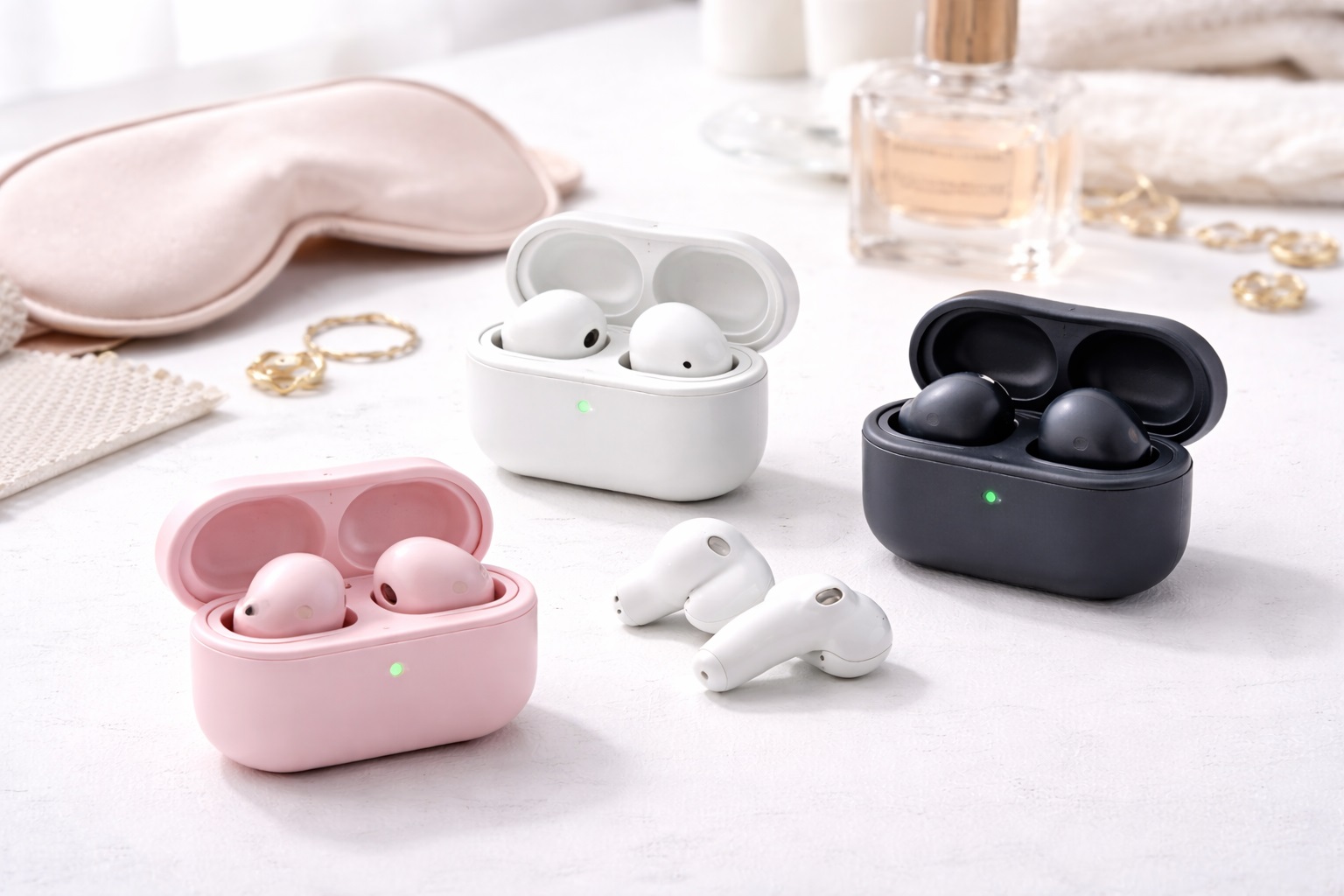
Best Lightweight Bluetooth Earbuds for All-Day Comfortable Listening
Ear fatigue is the single most common complaint among people who wear earbuds for long stretches of the day. A pair that sounds great in a five-minute store demo can start to ache, slip, or feel intrusive after three or four hours of continuous use, and that gap between "sounds good" and "feels good all day" is exactly what separates a genuinely lightweight earbud from one that's simply marketed as compact. Weight, ear tip geometry, and how the housing sits against your ear canal all matter more than raw spec sheet numbers once you're past the two-hour mark.
This guide is built around one specific use case: people who keep earbuds in for four or more hours at a stretch, whether that's during a workday of calls and focus music, a long commute, a flight, or back-to-back workouts. The categories below aren't random picks — each one represents a distinct design philosophy for reducing ear fatigue, from ultralight in-ear shells to open-ear designs that avoid ear canal pressure entirely. Some trade a bit of bass response or noise isolation for comfort; others trade battery capacity for a smaller shell. Understanding those trade-offs upfront will save you from buying a pair that looks perfect on paper but doesn't suit how you actually use earbuds day to day.
It's also worth being honest about why so many people end up with earbuds they don't actually enjoy wearing: most buying decisions are made based on brand reputation, marketing claims, or a quick in-store try-on that lasts less than a minute. None of that reveals how a shell feels after hour three of a workday, or how a stem presses against your ear when you're lying down on a long flight. The categories in this guide are organized specifically around that longer-term comfort question, not around headline audio specs, because for the four-plus-hour wearer, comfort is usually the deciding factor that determines whether a pair actually gets used.
Below, you'll find a breakdown of the main approaches to lightweight earbud design, a detailed buying guide covering the factors that actually affect long-wear comfort, and answers to the questions people ask most often before committing to a pair. Whichever category fits your routine, the goal is the same: earbuds you forget you're wearing.
Top Lightweight Earbud Categories Reviewed
1. Under-4g Ultralight In-Ear Options – Best Overall for All-Day Wear
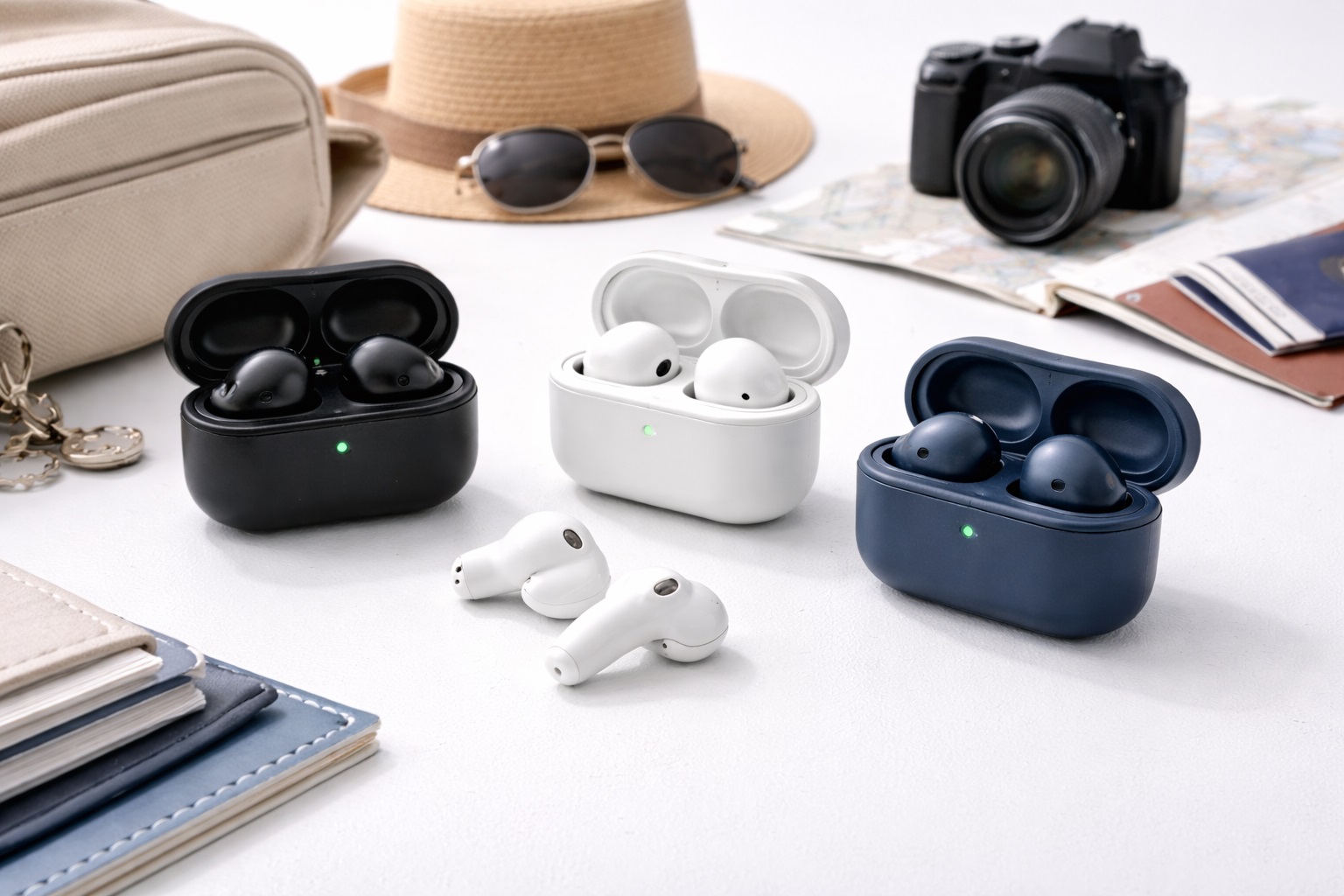
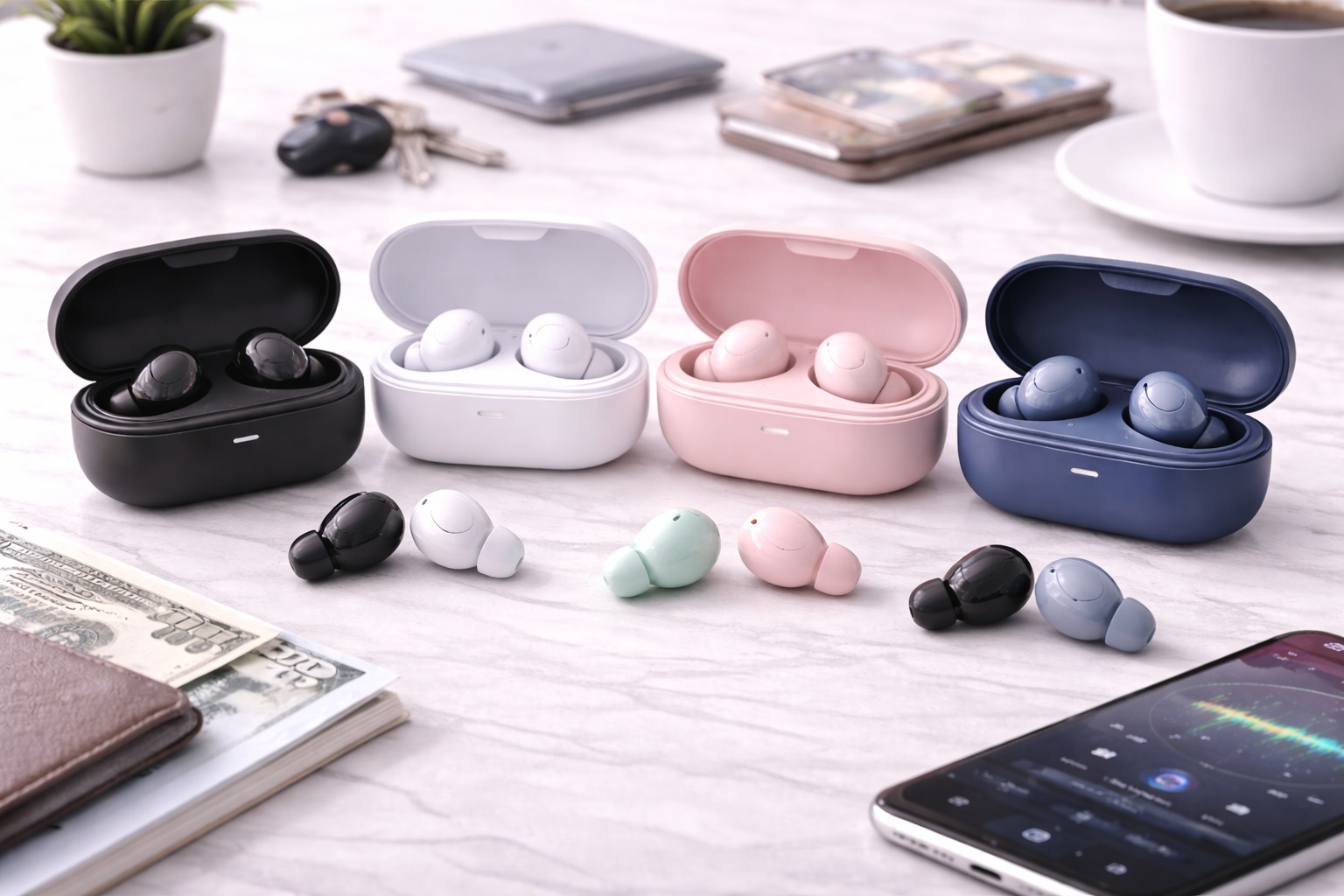
This is the category most people mean when they search for "lightweight earbuds" — individual earbuds that weigh under four grams each, achieved through smaller batteries, compact drivers, and pared-back housings. The reduced mass is noticeable almost immediately: there's less pull on the ear canal and less pressure buildup over long sessions, which is exactly what matters for someone wearing earbuds through an eight-hour workday. Manufacturers in this class typically pair the lighter shell with a range of ear tip sizes so you can dial in a seal without the earbud itself adding extra bulk.
- Pros:
- Minimal per-earbud weight reduces fatigue over multi-hour sessions
- Smaller shell profile tends to sit more discreetly in the ear
- Usually ships with multiple ear tip sizes for a customized fit
- Cons:
- Smaller battery cells often mean shorter per-charge listening time
- Compact drivers can sacrifice some low-end bass response
Best For: Anyone who wears earbuds for four or more hours at a time and wants the lowest possible physical weight in the ear.
Why We Recommend It: When comfort over long durations is the primary goal, reducing the actual weight in your ear canal addresses the root cause of fatigue rather than working around it, making this the most direct solution for all-day wear.
2. Open-Fit Design – Best for Awareness and Breathability
Open-fit earbuds hook around the outer ear or rest just outside the ear canal instead of sealing inside it. Because there's no plug pushing into the canal, there's no pressure buildup at all — the trade-off is sound isolation, since ambient noise passes through more freely. This design is particularly well suited to people who need to remain aware of their surroundings, such as those taking calls throughout the day, walking or cycling in traffic, or working in a shared office where being approachable matters. The absence of an in-canal seal also means no moisture buildup, which some users find more comfortable during long wear in warm environments.
- Pros:
- No in-ear seal means zero pressure buildup, even after many hours
- Keeps you aware of ambient sound and conversations
- Reduces moisture and irritation for warm-weather or sweaty use
- Cons:
- Little to no passive noise isolation from outside sound
- Bass response is generally weaker without a sealed cavity
Best For: People who need situational awareness throughout the day, such as office workers, commuters, and anyone taking frequent calls.
Why We Recommend It: By removing ear canal pressure from the equation entirely, this design solves the fatigue problem from a completely different angle than lightweight in-ear shells, and it adds the practical benefit of staying tuned in to your surroundings.
3. Semi-In-Ear Comfort Design – Best for Sensitive Ears
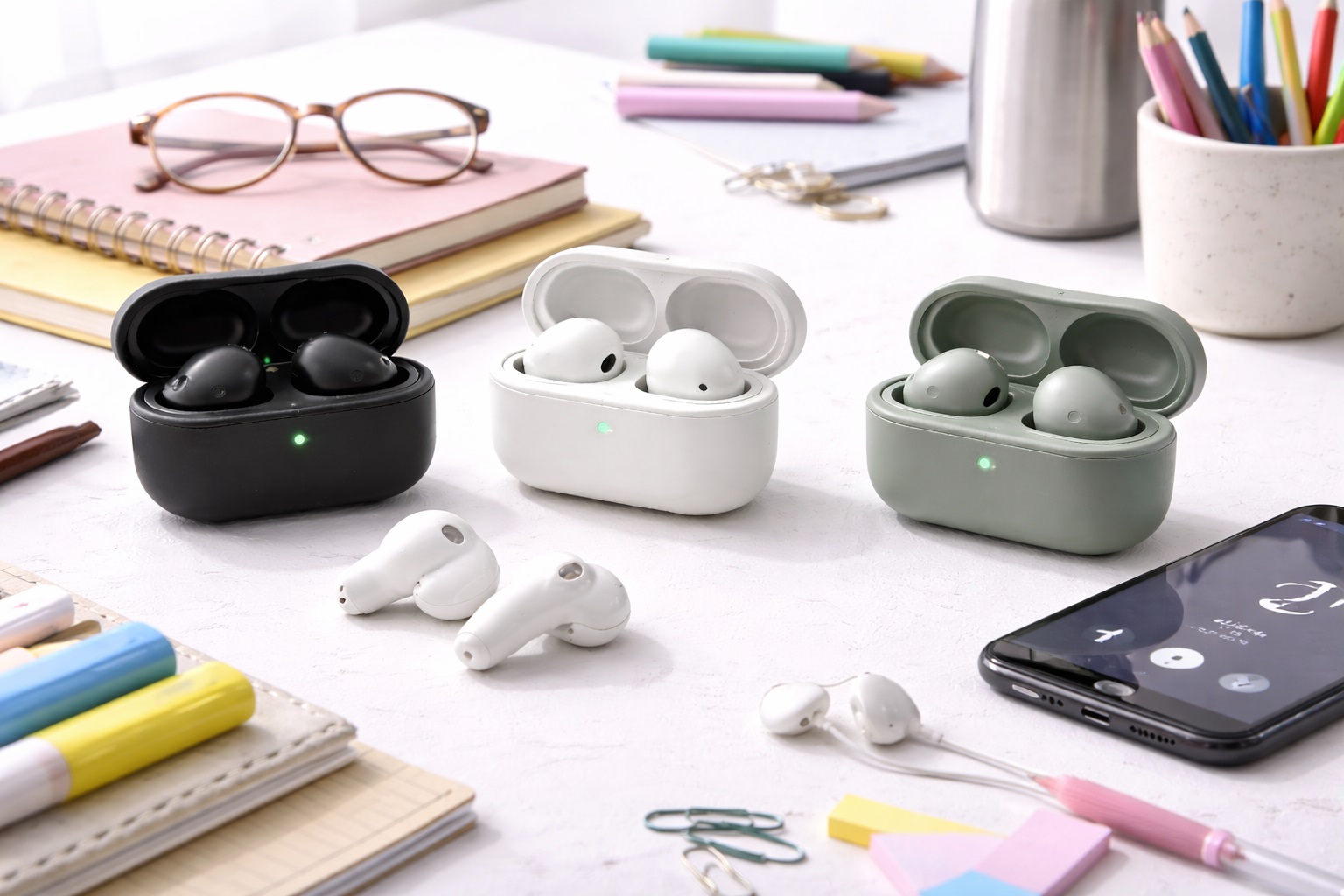
Semi-in-ear earbuds sit partway into the ear canal without forming a deep, full seal, splitting the difference between fully sealed in-ear buds and open-fit designs. This shallower fit reduces the pressure and "suction" sensation that some people find uncomfortable with silicone tips that seal deep in the canal, while still offering more isolation than a fully open design. It's a good match for anyone who has tried standard in-ear buds and found them irritating after an hour or two, but who still wants a reasonable amount of noise blocking for commuting or focus work.
- Pros:
- Shallower fit reduces the suction feeling some users dislike
- Balances partial isolation with reduced canal pressure
- Often more comfortable for people with smaller or sensitive ear canals
- Cons:
- Isolation is inconsistent in loud environments compared to deep-seal tips
- Fit security can vary more between individual ear shapes
Best For: Users who find standard sealed in-ear tips uncomfortable but still want a moderate degree of noise isolation.
Why We Recommend It: This middle-ground fit addresses a specific complaint — canal pressure and suction discomfort — without giving up as much isolation as a fully open design, making it a practical option for sensitive-ear users who still want to block some outside noise.
4. Budget Lightweight Earbuds – Best Budget Pick
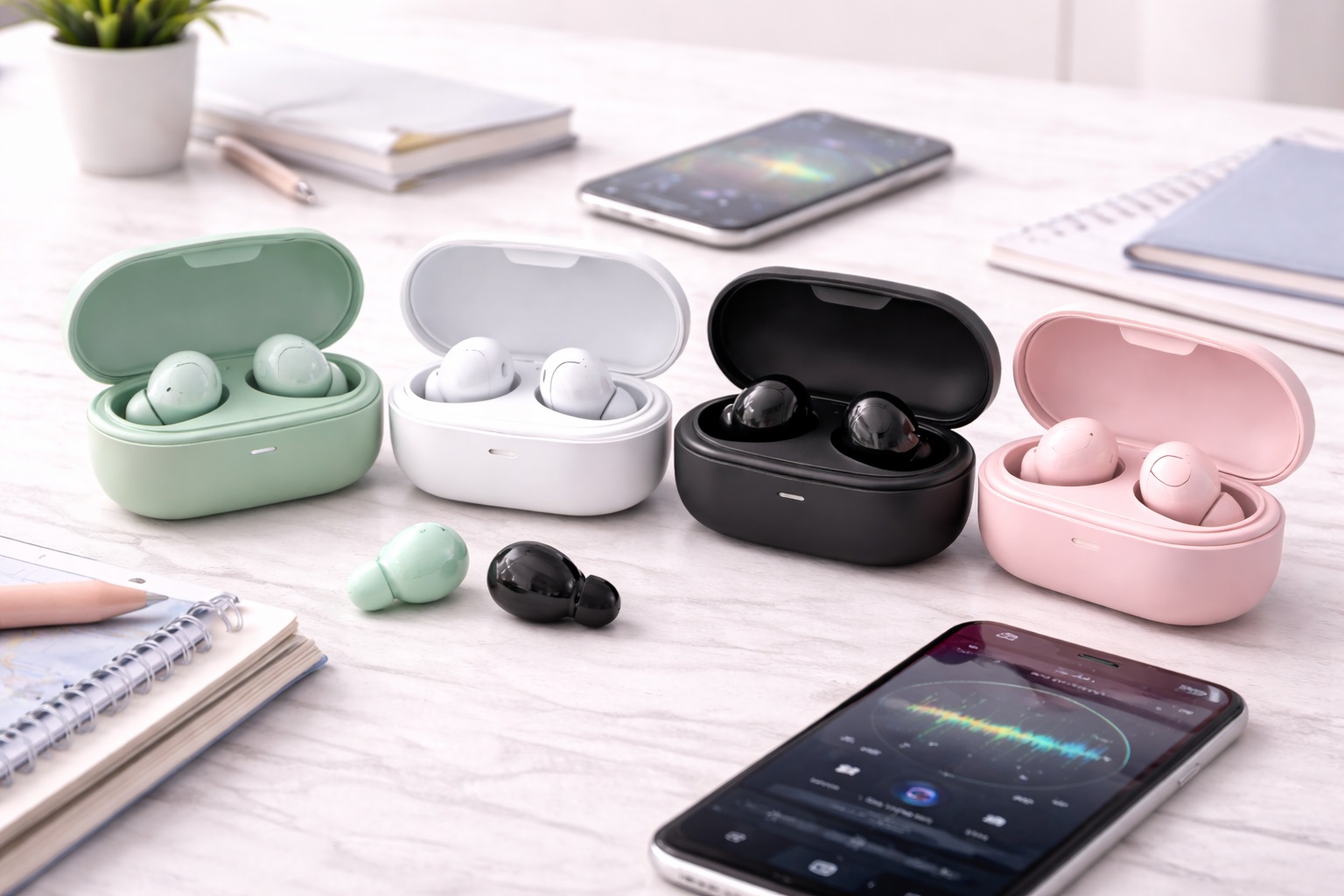
This category covers lightweight earbuds priced well below the premium segment, aimed at buyers who want the comfort benefits of a light shell without paying for extras like advanced noise cancellation or premium materials. The shells in this class are often lightweight simply because they use fewer internal components and smaller batteries, which happens to align well with the comfort goal even if it wasn't the primary design intent. For someone who mainly wants long-wear comfort at a reasonable price, this can be an efficient way to get most of the fatigue-reduction benefit without the premium price tag.
- Pros:
- Lower price point makes the comfort benefits accessible to more buyers
- Simplified feature set often means a smaller, lighter shell
- Reasonable option for casual, everyday listening needs
- Cons:
- Build quality and long-term durability are less consistent at this price
- Fewer extras such as active noise cancellation or app-based tuning
Best For: Budget-conscious buyers who want comfortable, lightweight earbuds without paying for premium features they may not use.
Why We Recommend It: It proves that comfort and low weight aren't exclusive to premium price points — a simpler feature set can incidentally produce a lighter, more comfortable shell at a fraction of the cost.
5. Sport Lightweight Earbuds – Best for Workouts
Designed specifically for movement, this category combines low weight with secure fit mechanisms such as ear wings, hooks, or textured tip surfaces that keep the earbud in place during running, cycling, or gym sessions. Weight still matters here, but stability during motion is treated as equally important, since an earbud that shifts or falls out mid-workout is arguably more disruptive than a slightly heavier one that stays put. Sweat and moisture resistance is also a common feature in this class, addressing a comfort issue that's specific to extended physical activity rather than stationary all-day wear.
- Pros:
- Combines light weight with secure-fit mechanisms for movement
- Frequently includes sweat or moisture resistance ratings
- Reduces the need to constantly readjust during activity
- Cons:
- Ear wings or hooks add slightly more surface contact than a bare shell
- Not every sport-fit design suits every ear shape equally well
Best For: Runners, cyclists, and gym-goers who need earbuds that stay secure through movement without adding noticeable weight.
Why We Recommend It: For an active lifestyle, comfort isn't just about weight — it's about the earbud staying put without constant fiddling, and this category is purpose-built to solve both problems at once.
6. Bone Conduction (Truly Weightless-Feeling) Options – Best Premium Alternative
Bone conduction earbuds don't go into or over the ear canal at all — they sit against the cheekbone in front of the ear and transmit sound through vibration, leaving the ear canal completely open. For users who find that any form of in-ear or over-ear pressure becomes uncomfortable after enough hours, this is the closest thing to a genuinely weightless listening experience, since there's no seal, no suction, and no canal contact whatsoever. It's a fundamentally different technology from the other categories here, and the sound signature reflects that difference, so it suits a narrower set of listening needs than a traditional earbud.
- Pros:
- No ear canal contact at all, eliminating pressure-related fatigue entirely
- Keeps both ears fully open to ambient sound
- Comfortable for extremely long wear periods, including all-day use
- Cons:
- Sound quality and bass response differ noticeably from sealed in-ear designs
- Typically priced at a premium relative to standard lightweight earbuds
Best For: Users who have tried other lightweight categories and still experience discomfort from any in-ear pressure, and who prioritize comfort over traditional sealed sound quality.
Why We Recommend It: It solves the comfort question in the most literal way possible — by removing ear canal contact entirely — making it the logical next step for anyone who has exhausted other lightweight options without success.
Buying Guide: How to Choose the Best Lightweight Bluetooth Earbuds
Before making a purchase decision, work through these factors in order of how directly they affect comfort during long wear sessions. A pair that scores well on paper but ignores one or two of these points can still end up uncomfortable after a few hours.
1. Per-earbud weight
Weight is the single most direct factor in long-wear comfort. Even a difference of one or two grams per earbud becomes noticeable after several hours, since that weight is constantly resting against ear canal tissue or cartilage. If all-day comfort is your primary goal, prioritize published per-earbud weight over other specifications. Where possible, compare the weight figure against a pair you already own so the number translates into something you can actually picture rather than an abstract spec.
2. Ear tip material and size range
The ear tip is the actual point of contact with your skin, so its material and fit matter as much as the shell's weight. Silicone tips are common and widely compatible, while foam tips mold to the ear canal shape and can reduce pressure points for some users. A wide range of included tip sizes increases the odds of finding a genuine seal without forcing a tip that's slightly too large or small. If your ears run smaller or larger than average, check whether extra-small or extra-large tips are included before assuming the standard set will fit.
3. Fit style: sealed, semi-in-ear, or open
These three fit styles produce fundamentally different comfort profiles, as outlined in the categories above. Sealed designs isolate sound best but create the most canal pressure. Semi-in-ear designs reduce that pressure at some isolation cost. Open designs remove canal pressure entirely but sacrifice isolation and bass. Match this choice to whichever trade-off matters most for your listening environment, and don't assume the fit style that worked for a previous pair is automatically the right one for a different daily routine.
4. Stability during movement
An earbud that needs constant readjustment is uncomfortable regardless of its weight, because the repeated touching and repositioning becomes its own source of fatigue. If you plan to wear earbuds while active, look for models with ear wings, hooks, or textured grip surfaces designed to hold position without added clamping pressure. Even for non-workout use, a secure fit matters for anyone who talks, chews, or moves their jaw frequently throughout the day, since jaw movement alone can loosen a poorly fitted seal.
5. Battery life relative to your typical session length
Lighter shells generally house smaller batteries, so it's worth checking whether the rated battery life actually covers your typical continuous wear session, plus the charging case's total additional charges. Running out of charge mid-session and needing to swap to a backup pair defeats the comfort benefit you were originally optimizing for. Quick-charge features that add an hour or two of playback from a short top-up can help bridge a gap if your listening sessions run longer than the earbuds' standalone rating.
6. Audio quality trade-offs for the design
Every comfort-focused design makes some compromise in sound reproduction, whether that's reduced bass in open-fit models or a different tonal signature in bone conduction units. Decide upfront how much you're willing to trade sound quality for comfort, since expecting flagship, fully-sealed audio performance from an open-fit or ultralight shell will lead to disappointment. If music fidelity is your top priority, a sealed design will typically serve you better than an open-fit or bone conduction alternative, even at some cost to long-wear comfort.
7. Touch controls and accidental activation
Touch-sensitive controls are common on smaller shells since there's less room for physical buttons, but overly sensitive touch surfaces can cause accidental pauses or skips when adjusting the fit during long wear. Check whether controls can be remapped or their sensitivity adjusted through a companion app if this has been an issue for you before. Some users find physical button controls preferable specifically because they eliminate accidental taps when repositioning the earbud during the day.
8. Sweat and moisture resistance
Extended wear naturally produces moisture, whether from physical activity or simply body heat over several hours. An IP-rated design for sweat and light moisture resistance protects the internal components and can also reduce irritation from trapped moisture against the skin, which matters even for non-workout, all-day use cases. A higher IP rating is generally a safe indicator of build quality even if you never plan to use the earbuds during exercise.
9. Case size and charging convenience
A genuinely portable, all-day earbud setup depends on the charging case as much as the earbuds themselves. A bulky case undermines the low-profile appeal of lightweight earbuds if you're carrying them daily, so weigh case dimensions and total charge cycles alongside the earbuds' individual weight. A case that fits easily into a pocket rather than requiring a bag is a meaningful convenience factor for daily commuters.
10. Brand reliability and firmware support
Earbuds increasingly rely on firmware updates to fix bugs, improve battery management, and add features after purchase. Established brands with a track record of ongoing software support tend to offer a more consistent experience over the product's lifespan than newer, less established manufacturers. This matters more for lightweight designs specifically, since manufacturers sometimes tune touch sensitivity or fit-detection behavior after launch based on user feedback.
11. Warranty and replacement policy
Because earbuds are small, frequently handled, and prone to loss, a clear warranty and replacement policy is worth checking before purchase. Some manufacturers offer discounted single-earbud replacements if one is lost, which can be a meaningful cost consideration over the life of the product. It's also worth checking whether the warranty covers battery degradation, since earbud batteries naturally lose capacity over repeated charge cycles and this is a common long-term complaint.
12. Real-world comfort reviews over spec sheets
Manufacturer weight specifications tell only part of the story — how a shell's shape interacts with different ear geometries varies significantly between people. Reading verified reviews specifically mentioning long-wear comfort, rather than general audio quality reviews, gives a more accurate picture of how a given pair will feel after hours of actual use. Where possible, look for feedback from reviewers who mention their specific use case, such as long commutes or full workdays, since that context is far more useful than a generic star rating.
Frequently Asked Questions
1. What actually makes an earbud "lightweight"?
There's no single industry standard, but earbuds are generally considered lightweight when each individual bud weighs under roughly four to five grams. This is typically achieved through smaller batteries, compact drivers, and minimal housing material, though the exact threshold varies by manufacturer.
2. Will lighter earbuds have worse sound quality?
Not always, but there is often some trade-off. Smaller drivers and thinner housings can affect bass response and overall fullness compared to larger, heavier designs. The gap has narrowed considerably as driver technology has improved, but it's still worth listening to a pair before assuming identical sound to a bulkier alternative.
3. How do I know which ear tip size fits me correctly?
A correctly fitted tip should sit comfortably without needing to be pushed in repeatedly, and it should create a light seal without a strong suction sensation. Most manufacturers include three or more sizes; trying each one for at least a few minutes, rather than judging on insertion alone, gives a more accurate sense of long-wear comfort.
4. Are open-fit earbuds a good choice for the office?
Yes, for many people. Open-fit designs let you hear colleagues, phone notifications, and ambient conversation while still listening to audio, which many office workers find more practical than fully sealed isolation throughout a workday.
5. Can I wear lightweight earbuds while sleeping or lying down?
This depends heavily on shell shape rather than weight alone. Low-profile, rounded shells without protruding stems tend to be more comfortable lying on your side than bulkier designs, though comfort here varies significantly by individual ear anatomy.
6. Do bone conduction earbuds work well for music, or just calls and podcasts?
They can be used for both, but the sound signature differs from traditional sealed earbuds, generally with less deep bass response. Many users find them perfectly suitable for podcasts, calls, and casual music listening, while critical listening for bass-heavy genres may feel less satisfying.
7. How much should I expect to spend on genuinely comfortable lightweight earbuds?
Comfort-focused features appear across a wide price range. Budget options can deliver solid comfort through a simplified feature set, while premium options add extras like active noise cancellation or advanced materials. Set a budget based on which additional features matter to you rather than assuming comfort itself requires a high price.
8. Do lightweight earbuds fall out more easily than standard ones?
It depends on the fit style rather than weight alone. Sport-focused designs with wings or hooks are built specifically to prevent this, while ultralight designs without added stabilization can be less secure during vigorous movement. Match the fit style to your activity level.
9. Is active noise cancellation available in lightweight designs?
Some lightweight models do include noise cancellation, though it's more commonly found in sealed in-ear designs than in open-fit or bone conduction options, since ANC generally requires a sealed cavity to work most effectively.
10. How often should I clean my earbuds and ear tips?
Regular cleaning, ideally weekly for daily users, helps maintain both hygiene and fit consistency, since built-up residue on tips can affect seal quality over time and contribute to irritation during long wear.
11. What's the return policy situation if a pair doesn't feel comfortable after a few days?
Most retailers offer a return window of 15 to 30 days, though policies on opened earbuds specifically can vary due to hygiene considerations. Check the retailer's specific policy on opened audio products before purchasing if comfort uncertainty is a concern.
12. Should I prioritize weight or battery life if I can't get both?
This depends on your typical session length. If your longest continuous wear period fits comfortably within a lighter model's battery life, prioritize the weight reduction. If you regularly need all-day battery without a mid-day recharge, a slightly heavier design with a larger battery may serve you better overall.
13. Can I use lightweight earbuds for work calls throughout the day?
Yes, and this is one of the most common use cases driving demand for this category. Open-fit and semi-in-ear designs tend to work particularly well for call-heavy days since they reduce the fatigue that comes from a sealed fit worn for back-to-back meetings, while still providing clear microphone pickup.
14. Do I need a different pair for travel versus daily office use?
Not necessarily, though the priorities can shift. For flights, a sealed or semi-in-ear design with decent isolation and long battery life is usually preferable, since environmental noise is more of a factor. For office use, open-fit designs that preserve awareness of your surroundings are often more practical. Many buyers find a single well-chosen pair covers both situations adequately.
Final Verdict
- Best Overall: Under-4g ultralight in-ear designs offer the most direct, broadly applicable solution to long-wear comfort.
- Best for Awareness: Open-fit designs suit anyone who needs to stay tuned into their surroundings throughout the day.
- Best Budget: Budget lightweight earbuds deliver much of the comfort benefit without the premium price tag.
- Best Premium Alternative: Bone conduction options remove ear canal contact entirely for users who need it.
There isn't a single "best" lightweight earbud that works for everyone, because comfort is shaped as much by individual ear anatomy and daily routine as by any spec sheet. The categories above represent genuinely different approaches to the same underlying goal, and matching your specific wear pattern — office calls, workouts, travel, or simple all-day listening — to the right design will get you closer to a pair you can wear for hours without thinking about them at all.