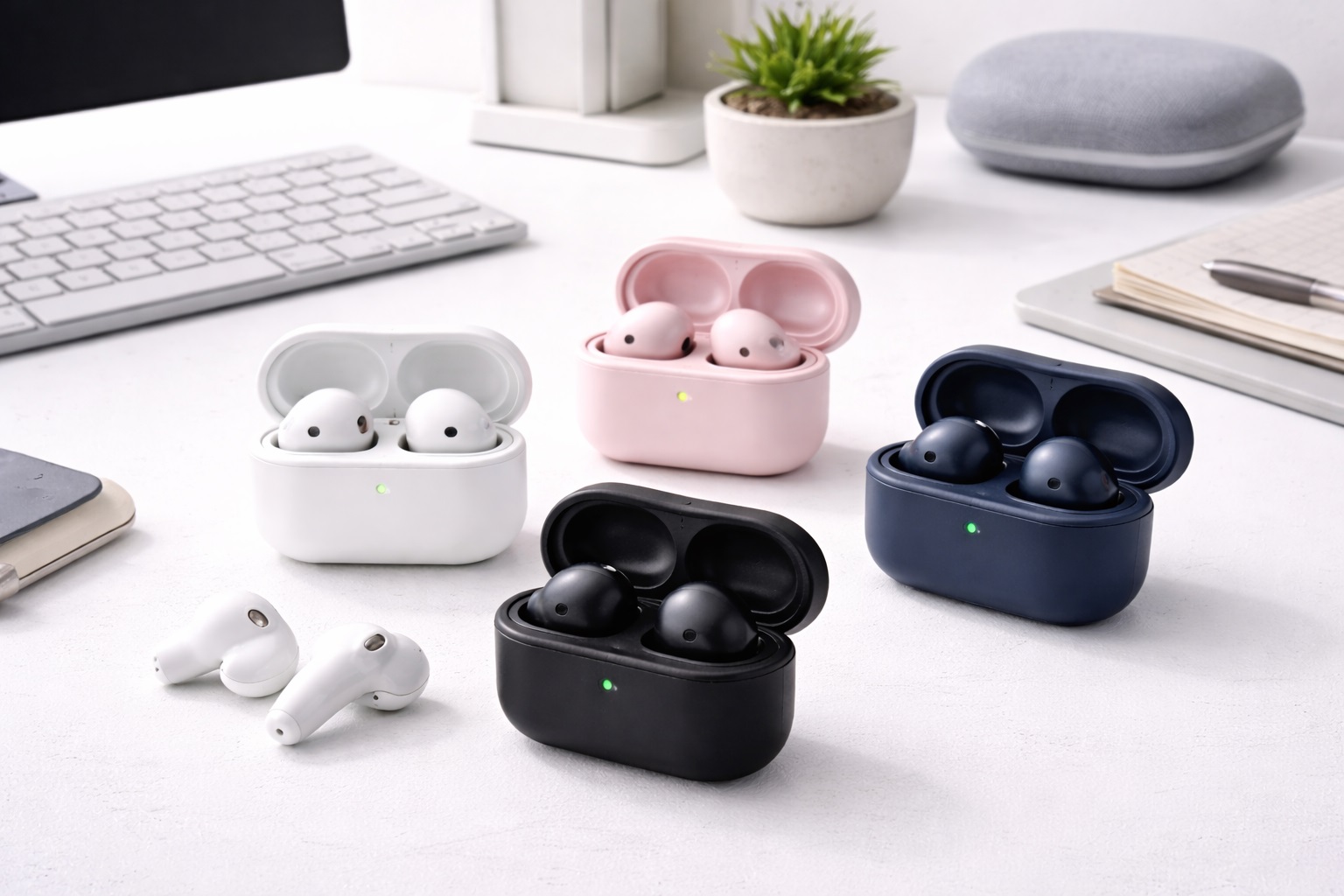
Best Bluetooth Earbuds Under $100: Pro Features on a Smart Budget
The under-$100 earbud market has changed considerably in the past few years. Features that used to be reserved for $200-plus flagships — active noise cancellation, multipoint connectivity, wireless charging cases — now show up regularly in budget-friendly models. The catch is that not every earbud in this price range delivers those features well; some include ANC in name only, with weak noise reduction and audible hiss, while others cut corners on battery life or build quality to hit an aggressive price point.
This guide is built for buyers who want the closest thing to a premium listening experience without paying premium prices — people who care about sound quality and noise cancellation but don't need (or want to pay for) every extra feature a flagship pair bundles in. The categories below reflect the real price tiers and feature trade-offs you'll encounter while shopping in this range, from earbuds pushing right up against the $100 ceiling with genuine ANC, down to sub-$50 options that focus on the fundamentals.
Below you'll find a breakdown of the strongest approaches in this price bracket, a buying guide covering what actually separates a good budget pair from a disappointing one, and answers to the most common questions buyers have before spending in this range. The goal throughout is value — getting the features that matter to you without paying for the ones that don't.
It also helps to understand how manufacturers actually hit these lower price points, since the answer varies more than most buyers assume. Some brands genuinely engineer smart cost savings — reusing a proven driver design across several models, or skipping a companion app in favor of solid out-of-the-box tuning. Others cut corners in ways that are harder to spot from a spec sheet alone, such as using a single lower-quality microphone or a battery cell that degrades faster than average after a year of daily charging. Knowing which category a given pair falls into is exactly what separates good budget value from a false economy.
It's also worth setting realistic expectations before diving into specific picks. No pair of earbuds under $100 will match a $250 flagship on every metric simultaneously — that's simply not how the economics of audio manufacturing work. What buyers can reasonably expect is a pair that excels at the one or two things that matter most to them personally, while being merely adequate elsewhere. The trick is figuring out which trade-offs you're comfortable making before you start comparing specific models, rather than being swayed by whichever marketing page you happen to read first.
Top Bluetooth Earbuds Under $100 Reviewed
1. Best Value ANC Earbuds – Best Overall
This tier sits at the top of the under-$100 range and typically delivers the most complete feature set available before crossing into premium pricing: functional active noise cancellation, a genuinely balanced sound signature, and app-based EQ controls. These earbuds are aimed at buyers who specifically want ANC and are willing to spend closer to the $100 ceiling to get a version that actually works well, rather than a token implementation. The ANC performance won't match flagship models costing two or three times as much, but it's usually strong enough to meaningfully reduce commute and office noise. Buyers coming from a wired or non-ANC pair tend to notice the difference immediately, even if audiophiles comparing against premium options would spot the gap.
- Pros:
- Genuinely effective noise cancellation for the price tier
- Balanced sound signature suitable for varied music genres
- Often includes app-based EQ and control customization
- Cons:
- ANC depth still falls short of premium flagship performance
- Sits at the higher end of the under-$100 price range
Best For: Buyers who specifically want working noise cancellation and are willing to spend near the top of the budget range to get it.
Why We Recommend It: It represents the best available balance of features for anyone unwilling to compromise on noise cancellation but also unwilling to pay flagship prices for it. Buyers coming from a previous budget pair without ANC often describe the upgrade as one of the more noticeable improvements they've made to their daily commute, even if the noise cancellation itself is a step below what a $250 flagship delivers.
2. Best Sound Under $100 – Best for Audio Quality
This category prioritizes tuning and driver quality over extra features, aimed at buyers whose primary concern is how the music actually sounds rather than noise cancellation or app ecosystem extras. These earbuds tend to use larger or more carefully tuned drivers relative to their price, often at the expense of a slightly bulkier shell or a shorter feature list. For anyone who listens critically — checking clarity in vocals, separation between instruments, or bass control — this is usually the strongest pick in the price bracket. The trade-off is that these models sometimes skip flashier extras entirely, betting that sound quality alone will be the deciding factor for the buyer they're targeting.
- Pros:
- Sound tuning is prioritized over secondary features
- Often includes equalizer presets suited to different genres
- Strong value for buyers who listen critically to music
- Cons:
- Noise cancellation, if present, is usually a secondary feature
- Shell size can be slightly larger to accommodate bigger drivers
Best For: Music-focused listeners who prioritize audio fidelity over extra features like ANC or app ecosystems.
Why We Recommend It: When sound quality is the deciding factor, this category consistently outperforms feature-heavy alternatives at the same price because the engineering focus goes into the driver and tuning rather than being spread across ANC, touch controls, and app features. Listeners who've spent time with higher-end wired headphones tend to appreciate this approach the most, since it mirrors the priorities of that market rather than the feature-checklist approach common to wireless earbuds.
3. Best Budget ANC Earbuds – Best Value
Positioned below the top ANC tier, this category brings noise cancellation down to a more accessible price point, typically in the middle of the under-$100 range. The ANC performance here is noticeably lighter than the top tier — it reduces steady, low-frequency noise like engine hum or HVAC systems reasonably well but struggles more with sudden or high-frequency sounds. For buyers who want some noise reduction without spending near the $100 ceiling, this tier offers a reasonable middle ground. It's a sensible entry point for someone who has never used ANC before and wants to try the feature without committing to the top-tier price.
- Pros:
- Brings noise cancellation to a more accessible price point
- Handles steady background noise reasonably well
- Better overall value than paying full price for top-tier ANC
- Cons:
- Noticeably weaker against sudden or high-frequency noise
- Battery life may be shorter with ANC engaged continuously
Best For: Buyers who want noise cancellation as a feature but don't need it to perform at a premium level.
Why We Recommend It: It makes noise cancellation accessible to buyers who would otherwise skip the feature entirely due to price, delivering meaningful (if not class-leading) noise reduction well below the top of the price bracket. For a first pair of ANC earbuds, this tier is often a more sensible starting point than the top-tier option, since it lets a buyer confirm they'll actually use the feature regularly before spending more on the next upgrade.
4. Best Under $80 True Wireless – Best Mid-Range Balance
This tier represents the broad middle of the under-$100 market, where most models balance sound quality, battery life, and build quality without leaning heavily into any single feature. These earbuds typically skip ANC altogether or include only a basic version, redirecting that cost savings into more consistent connectivity and a more comfortable, durable shell. For buyers who want dependable everyday earbuds without paying for noise cancellation they may not use often, this category is usually the most balanced option. It's also where you'll find some of the more consistent user reviews in this price range, since fewer competing features means fewer places for something to go wrong.
- Pros:
- Balanced performance across sound, battery, and build quality
- More budget available for connectivity stability and durability
- Solid all-around choice for everyday, non-specialized use
- Cons:
- ANC is often minimal or absent entirely
- Doesn't stand out strongly in any single category
Best For: Everyday listeners who want dependable, well-rounded earbuds without paying extra for noise cancellation.
Why We Recommend It: By not chasing a single headline feature, this tier tends to deliver the most consistent day-to-day experience across sound, connection stability, and comfort for typical use. It's also the tier most likely to hold up well over a two- or three-year ownership period, since the engineering budget wasn't stretched thin trying to support a marquee feature on top of the basics.
5. Best Under $60 Wireless Earbuds – Best Budget Pick
This category covers earbuds priced well below the $100 ceiling, aimed at buyers who want dependable wireless audio without paying for extras at all. Expect a simpler feature set — reliable Bluetooth connectivity, decent call quality, and reasonable battery life — without noise cancellation, app-based customization, or premium materials. For casual listening, calls, and podcasts, this tier often covers the essentials perfectly well. Buyers who already own a premium pair for critical listening often keep a set from this tier as a spare for the gym or for lending to guests.
- Pros:
- Lowest price point while still offering functional core features
- Straightforward operation without complex app dependencies
- Good option for casual or secondary-pair use
- Cons:
- No noise cancellation or advanced audio tuning
- Build materials and long-term durability are more basic
Best For: Budget-conscious buyers who want reliable wireless earbuds for casual listening without extra features.
Why We Recommend It: It delivers the core wireless listening experience reliably at the lowest reasonable price point in this comparison, making it a sensible pick for anyone who doesn't need ANC or premium tuning. Buyers replacing a lost or broken pair on short notice also tend to gravitate here, since the lower price makes the loss easier to absorb the next time it happens.
6. Best $50 Wireless Earbuds – Best Entry-Level Option
Sitting at the entry point of this price comparison, this category is aimed at first-time wireless earbud buyers or anyone who wants a low-risk backup pair. Features are kept minimal, focusing on basic Bluetooth pairing, acceptable call quality, and a simple charging case, without the tuning refinement or extras found in higher tiers. It's a reasonable starting point for someone testing whether wireless earbuds fit their routine before investing more. Kids, teenagers, and anyone prone to occasionally misplacing earbuds also tend to gravitate toward this tier, since the cost of eventual loss or damage is easier to absorb.
- Pros:
- Lowest financial commitment for trying wireless earbuds
- Simple setup and operation with minimal learning curve
- Useful as a backup or secondary pair
- Cons:
- Sound quality and isolation are noticeably basic
- Fewer durability safeguards than higher-priced tiers
Best For: First-time buyers or anyone wanting a low-cost backup pair without a significant investment.
Why We Recommend It: For buyers unsure whether they'll use wireless earbuds regularly, this entry point removes the financial barrier while still providing a functional, usable product.
Buying Guide: How to Choose the Best Bluetooth Earbuds Under $100
Before making a purchase decision, work through these factors to understand where your money is actually going in this price bracket, since budget earbuds vary widely in which corners they cut.
1. Whether ANC is genuinely functional or a checkbox feature
Not all noise cancellation is created equal, and this is especially true under $100. Some models include ANC that meaningfully reduces background noise, while others include a token implementation that barely outperforms passive isolation from the ear tips alone. Reading reviews that specifically discuss ANC performance, rather than just its presence, is important before assuming this feature will meet your expectations. Look for reviewers who describe testing it on a specific commute type, such as a subway or an airplane, since that context translates far better than a generic rating.
2. Sound signature versus your listening habits
Budget earbuds often ship with a bass-forward tuning to sound impressive on a quick demo, which may not suit listeners who prefer a more neutral or vocal-forward signature. Check whether the model offers EQ adjustment through a companion app, since this can meaningfully compensate for a default tuning that doesn't match your taste. Podcast and audiobook listeners in particular should pay attention to midrange clarity rather than bass output, since that's the frequency range most relevant to spoken word.
3. Battery life with and without ANC enabled
Battery ratings are usually listed both with ANC on and off, and the difference can be substantial. If you plan to use noise cancellation regularly, base your expectations on the ANC-enabled rating rather than the higher figure quoted for ANC-off listening. Also check the charging case's total additional charges, since a smaller case paired with a smaller battery can mean less total listening time across a full day away from an outlet.
4. Bluetooth codec support
Codec support affects both audio quality and connection stability, and budget models don't always support the same range of codecs as premium alternatives. Check compatibility with your specific phone or device, since mismatched codec support can lead to more noticeable compression artifacts or connection drops. Android and iPhone users sometimes get a meaningfully different experience from the same earbuds depending on which codecs each platform supports.
5. Call quality and microphone performance
If you'll use these earbuds for calls or video meetings regularly, microphone quality deserves as much attention as music playback. Budget models vary widely here — some include multiple microphones with noise-reduction processing for calls, while others rely on a single, more basic microphone that struggles in windy or noisy environments. If you regularly take calls outdoors or in a car, this factor deserves more weight than it's typically given in budget-focused comparisons.
6. Connectivity range and stability
Bluetooth connection stability, particularly at a distance from your phone or through walls, is a common area where budget models fall short compared to premium options. Look for reviews specifically mentioning connection dropouts, especially if you plan to leave your phone in a bag or another room frequently. This is also worth checking if you regularly connect to a laptop for calls, since some budget earbuds handle phone pairing more reliably than computer pairing.
7. Build quality and water resistance
An IP rating for sweat and light water resistance is common even in budget tiers now, but the specific rating varies. Check whether the rating covers your intended use — light sweat resistance for casual wear differs meaningfully from a rating suitable for running in the rain. Build quality also affects long-term comfort, since a shell with visible seams or rough edges can become irritating well before the electronics themselves fail.
8. Charging case features
Wireless charging, once a premium-only feature, now appears in some under-$100 cases, though not universally. Check whether the case supports wireless charging if that matters to you, and note the total number of additional full charges the case provides beyond the earbuds' standalone battery life. A case with a USB-C port rather than an older connector is also worth checking, since it simplifies carrying a single charging cable for multiple devices.
9. App ecosystem and firmware updates
A companion app can add meaningful value through EQ customization, control remapping, and firmware updates that improve performance over time. Budget brands vary considerably in how well they maintain these apps post-launch, so checking recent app store reviews can reveal whether support has been consistent.
10. Warranty length and manufacturer reputation
Warranty terms in the budget segment vary more than in premium tiers, and a shorter warranty can be a signal about expected product lifespan. Established brands with a longer track record in this price range tend to offer more consistent quality control than newer entrants competing purely on price.
11. Return policy and trial period
Because fit and sound preference are personal, a generous return window matters more at this price point than most buyers assume. Confirm the seller's return policy before purchasing, particularly for online marketplace listings where policies can vary between third-party sellers. Some marketplaces also distinguish between a return for a refund and an exchange for a different size or color, so check which options are actually available before you need them, rather than discovering the limitation after a problem shows up.
12. Matching the tier to your actual priorities
The single biggest mistake in this price range is paying for a feature-heavy tier when your actual priority is something simpler, or the reverse — settling for a basic tier when noise cancellation genuinely matters to your daily routine. Identify your top one or two priorities before comparing options, rather than trying to maximize every feature at once. Writing down your actual daily use case — a specific commute, a specific workout routine, a specific number of calls per week — before shopping tends to produce a better outcome than starting from a generic feature comparison chart, since it forces a concrete answer to what you actually need rather than what sounds appealing on a product page.
Frequently Asked Questions
1. Can earbuds under $100 really compete with $200-plus flagships?
Not across the board, but the gap has narrowed significantly in specific areas like basic ANC and everyday sound quality. Flagship models still generally lead in advanced ANC depth, premium materials, and codec support, but many budget buyers won't notice the difference in typical daily use.
2. Is it worth paying closer to $100 versus choosing a $50 option?
It depends on whether you specifically want noise cancellation or premium sound tuning. If your needs are basic — casual listening, calls, podcasts — a $50 option can serve perfectly well, and the extra $50 may be better spent on features you'll actually use rather than a general upgrade.
3. Do budget earbuds support multipoint connection to two devices?
Some do, though it's less consistently available than in premium models. Check the specific model's connectivity specifications if switching between a laptop and phone without re-pairing is important to you.
4. How long does ANC battery life typically last in this price range?
This varies by model, but budget ANC earbuds generally offer shorter battery life with noise cancellation active compared to premium alternatives. Checking the specific ANC-on rating, rather than assuming it matches non-ANC figures, avoids disappointment.
5. Are budget earbuds durable enough for daily commuting?
Many are, particularly those with a reasonable IP rating and solid reviews on long-term reliability. Reading reviews that specifically address several months of daily use, rather than initial impressions, gives a more accurate picture of real-world durability.
6. What's the biggest trade-off buyers make at this price point?
Most commonly, it's ANC depth and premium materials. Budget earbuds can deliver very good core listening experiences, but the refinement found in flagship noise cancellation and build quality is the area where the price difference shows most clearly.
7. Should I prioritize sound quality or noise cancellation if I can't get both well?
This comes down to your listening environment. If you commute through consistently noisy environments, ANC delivers more day-to-day value. If you listen mostly in quieter settings and care about music quality, prioritizing sound tuning will serve you better.
8. Do cheaper earbuds have worse call quality?
Not always, but it's an area where corners are sometimes cut. If calls are a primary use case, specifically check reviews or specifications mentioning microphone quality and background noise reduction during calls, rather than assuming call quality scales directly with price.
9. Is it safe to buy budget earbuds from online marketplaces?
Generally yes, from reputable sellers with verified reviews and clear return policies. Check the seller's rating and read recent reviews specifically, since product quality can occasionally vary between listings even for the same model name.
10. How do I know if a pair under $100 will fit comfortably?
Check whether multiple ear tip sizes are included, and read reviews mentioning comfort during extended wear specifically, rather than just initial fit impressions. Comfort can vary significantly between individuals regardless of price tier.
11. Do budget earbuds receive firmware updates after launch?
This varies by brand. More established manufacturers in this space tend to provide ongoing firmware support, while smaller or newer brands may not maintain updates as consistently. Checking the brand's app store page for recent update history can be a useful indicator.
12. Is it better to buy the newest model or a slightly older one at a discount?
An older model at a discounted price can offer excellent value if reviews confirm it still performs well, since audio technology in this range doesn't necessarily make older models obsolete. Compare the specific features and reviews rather than assuming newer automatically means better value.
Final Verdict
- Best Overall: Best value ANC earbuds deliver the strongest all-around feature set near the top of this price bracket.
- Best for Audio Quality: Best sound under $100 options prioritize tuning for critical listeners.
- Best Value: Best budget ANC earbuds bring noise cancellation to a more accessible price point.
- Best Budget Pick: Best under $60 wireless earbuds cover the essentials reliably at the lowest reasonable cost.
The under-$100 earbud market rewards buyers who know their actual priorities rather than those chasing the longest feature list. Deciding upfront whether noise cancellation, sound quality, or simple reliability matters most to your daily routine will point you toward the right tier faster than comparing every spec across every option, and it's the surest way to end up with a pair that feels like good value rather than a compromise.
It's also worth revisiting your choice after a few months of ownership rather than assuming the decision is final. Listening habits shift — a buyer who initially prioritized battery life for long commutes might later find that call quality on video meetings matters more once their routine changes. Because this price bracket moves quickly, with new models regularly replacing older ones, checking back on the category every year or two, even for a pair that's still working fine, is a reasonable way to make sure you're still getting the value you originally wanted. Keeping the original packaging and receipt until you're confident in the fit and comfort of a new pair is a small habit that pays off more often than buyers expect, since it preserves your return options during the period when problems are most likely to surface.