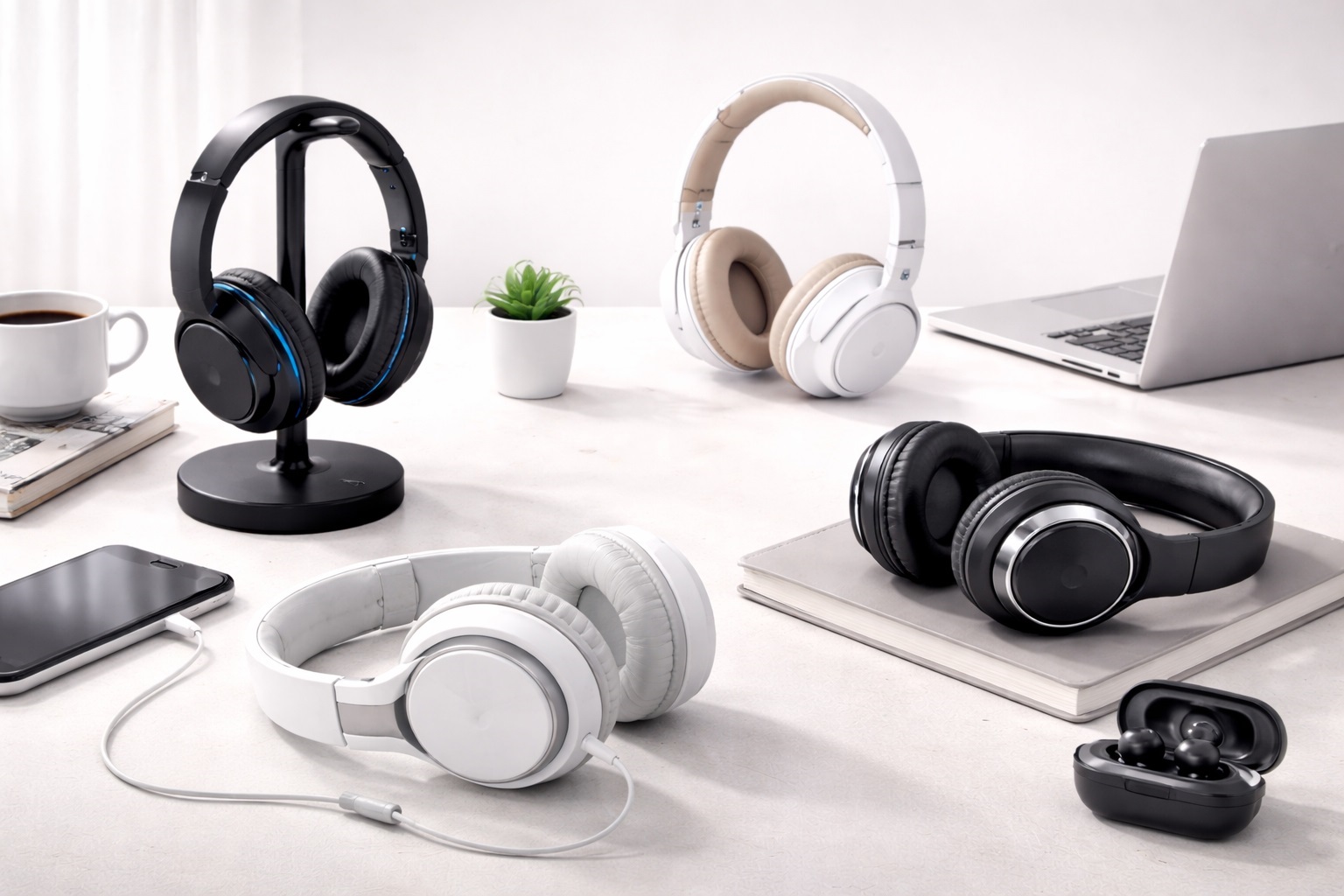
Best Headphones for Beginners: Easy Setup, Great Sound
Buying your first proper pair of headphones is a different exercise than replacing a pair you already understand. When you've only ever used the earbuds that shipped with your phone, terms like driver size, passive isolation, and Bluetooth codec support don't mean much yet — and most beginner buyers end up choosing based on looks or price alone, then wonder why the pair they picked feels uncomfortable after an hour or sounds thin compared to what they expected. The learning curve isn't steep, but it helps to know what actually matters before you spend money.
This guide is written specifically for first-time headphone buyers upgrading from earbuds. It skips the jargon-heavy specification battles that dominate most audio review sites and instead focuses on what actually changes your day-to-day listening experience: comfort over long sessions, how much outside noise gets through, how simple the headphone is to pair and use, and whether the sound is noticeably better than what you're used to. The three categories compared below cover the realistic starting points most beginners consider, along with the practical trade-offs of each.
It also helps to set expectations early. Almost any mid-range headphone will sound better than stock earbuds — that jump is where most of the improvement lives, and it happens regardless of which of the three categories below you choose. What differs between them is comfort, portability, and how well they handle background noise, which is exactly what this comparison is built around rather than chasing marginal audio gains that only experienced listeners tend to notice.
None of these categories are objectively "better" in isolation — they suit different habits and living situations. Someone who listens mostly at a desk in a quiet room has very different priorities than someone who wants to carry headphones in a backpack every day or who lives with roommates and constant background noise. Use the comparisons and the buying guide that follows to figure out which starting point actually matches how you'll use your headphones day to day, rather than which one has the most impressive spec sheet on a retail listing.
Top 3 (Detailed Reviews)
1. Over-Ear Wireless Headphones – Best For First-Time Buyers Who Want the Full Upgrade
For someone stepping up from earbuds, over-ear wireless headphones deliver the most obvious improvement. The full ear cups seal around the ear rather than sitting inside the canal, which changes how bass and midrange sound — fuller, less thin, and far less fatiguing during long listening sessions. Most models in this category run Bluetooth 5.0 or newer, support pairing with two or more devices, and last 20 to 40 hours between charges, which for a first-time buyer means fewer surprises around battery management. Because the ear cups fully surround the ear rather than resting against it or sitting inside it, the fit tends to be more forgiving across different head shapes and ear sizes, which matters a lot when you don't yet know what fit works best for you.
- Pros:
- Immediate, noticeable jump in sound quality compared to stock earbuds
- Passive isolation from the ear cup design blocks a meaningful amount of ambient noise without any electronics
- Long battery life reduces how often a beginner has to think about charging
- Larger, more forgiving fit is easier to get comfortable with than in-ear tips
- Cons:
- Bulkier than what a beginner may be used to carrying around
- Can feel warm on the ears during longer sessions in a hot room
Best For: First-time buyers who want the most noticeable upgrade in comfort and sound quality without needing to research technical specifications first.
Why We Recommend It: Over-ear headphones are the most forgiving starting point for a beginner because the fit works for nearly everyone out of the box, and the sound improvement over earbuds is obvious rather than subtle — the kind of difference a new listener notices in the first five minutes of putting them on.
2. On-Ear Wireless Headphones – Best For Beginners Who Prioritize Portability
On-ear headphones rest against the ear rather than surrounding it, which keeps the overall size and weight down. For a beginner who's used to the compact footprint of earbuds, this middle-ground format can feel like a less dramatic jump — still noticeably better sound than earbuds, but in a shape that's easier to fold up and stash in a bag. The trade-off is a bit less isolation and slightly less low-end depth than a full over-ear design, though the gap is smaller than most beginners expect once they've tried both. Many on-ear models also weigh noticeably less, which can matter if you're not used to wearing anything larger than a set of earbuds. For a beginner who splits time between a desk, a commute, and a gym bag, that lighter build often ends up mattering more day to day than the small difference in bass depth compared to a full over-ear pair.
- Pros:
- Lighter and easier to get used to than bulkier over-ear designs
- Folds flat for simple storage, which matters if this is your first pair and you're not used to carrying headphones at all
- Usually more affordable, which lowers the risk of a first purchase
- Still a clear step up in sound over standard earbuds
- Cons:
- Less isolation from outside noise than a sealed over-ear design
- Resting directly on the ear can feel like pressure during long sessions until you find the right headband adjustment
Best For: Beginners who want better sound than earbuds but aren't ready to commit to a bulkier, full-size headphone just yet.
Why We Recommend It: On-ear models bridge the gap between the earbuds you already know and full over-ear headphones, giving new users a lighter transition without giving up much in the way of everyday usability or sound quality.
3. Noise Canceling Headphones – Best For Beginners in Noisy Homes or Shared Spaces
Active noise cancellation (ANC) uses built-in microphones to detect and cancel out consistent background sound like fans, traffic hum, or a housemate's TV. It used to be a feature reserved for expensive flagship headphones, but it's now common well into the mid-range. For a beginner who's frustrated by how much background noise leaks through basic earbuds, this is often the single feature that makes the biggest difference in daily use — more so than any improvement in raw sound quality. Most current ANC headphones also include a transparency or ambient mode, letting you hear announcements or a conversation without removing the headphones entirely.
- Pros:
- Cuts through constant background noise far more effectively than passive isolation alone
- Transparency mode lets you hear your surroundings when needed without removing the headphones
- Often paired with above-average sound tuning even at accessible prices
- USB-C charging is standard on current models, so no separate cable is needed
- Cons:
- Adds to the price compared to a basic wireless pair
- Lower-cost ANC implementations can introduce a faint hiss or pressure sensation some new users notice at first
Best For: Beginners who study, work, or relax in a noisy household and want a genuine escape from background sound rather than just better music.
Why We Recommend It: For a first-time buyer whose main frustration is background noise rather than sound quality itself, ANC solves that specific problem directly and is usually worth the modest price increase over a non-ANC pair.
Buying Guide: How to Choose the Best Headphones for Beginners
These twelve factors matter more to a first-time buyer than most spec-sheet comparisons, because they affect how the headphones actually feel and behave once you're using them daily rather than reading about them on a product page.
1. Comfort Comes Before Sound Quality
It's tempting to chase the "best sounding" option first, but a headphone you can't wear comfortably for more than 30 minutes won't get used regardless of how it sounds. Try to check reviews specifically mentioning clamping force and ear cup padding before comparing frequency response charts, since comfort issues are the most common reason beginners return a first pair. If you wear glasses, pay particular attention to how the headband and ear cups interact with the frame arms, since even a mild pressure point can become uncomfortable after an hour.
2. Active vs. Passive Noise Isolation
Passive isolation comes from the physical seal of the ear cup and padding — no batteries involved. Active noise cancellation uses microphones to electronically cancel sound and costs more, but performs much better against constant low-frequency noise like engine hum or HVAC systems. Beginners in quiet homes may not need ANC at all, which can save a meaningful amount on a first purchase. Think honestly about where you'll wear the headphones most — a quiet bedroom has very different noise demands than a shared apartment or an open-plan office.
3. Getting Used to Bluetooth Pairing
If you've only used wired earbuds or a phone's default connection before, the first Bluetooth pairing process can feel unfamiliar. Look for headphones with a simple pairing button and clear voice prompts — this small detail makes a noticeably smoother first experience for someone new to wireless audio and avoids the frustration of a failed first connection. Most manufacturers also provide a companion app that walks through pairing step by step, which is worth checking for if you'd rather not rely on trial and error.
4. Driver Size and What It Actually Means
Larger drivers, typically 40mm or above, tend to produce fuller bass response. This doesn't automatically mean better sound, but for a beginner comparing options at a similar price, driver size is a reasonable rough indicator of how full and rich the low end will feel, particularly compared to the small drivers used in most earbuds. Two headphones with the same driver size can still sound quite different depending on tuning, so treat this as one factor among several rather than a definitive ranking.
5. Ear Cup Material
Protein leather (faux leather) padding isolates sound well but can feel warm during longer sessions. Fabric or velour padding breathes better but lets in slightly more outside noise. Memory foam, regardless of the outer material, tends to conform to your ears better than basic foam and is worth prioritizing if you plan to wear headphones for more than an hour at a stretch. If you tend to run warm or live somewhere with hot summers, breathable padding is worth weighing more heavily than isolation alone.
6. Battery Life for Everyday Use
Most modern wireless headphones offer 20 to 30 hours of playback, which is more than enough for a beginner who isn't using them for eight hours a day. Don't over-prioritize the highest possible number — match battery life to how much you'll actually use the headphones between charges, since chasing an extra ten hours rarely changes the real-world experience. A quick top-up feature, where a short charge of five to ten minutes provides a couple of hours of playback, is often more useful day to day than a marginally higher total capacity.
7. Microphone Quality If You'll Take Calls
If this pair will double as your headset for calls, check reviews that specifically address call clarity rather than just music playback. Built-in microphones vary significantly in how well they isolate your voice from background noise, and this is easy to overlook when comparing headphones mainly for music listening. A pair that sounds excellent for music can still perform poorly on calls if the microphone array wasn't a priority for the manufacturer.
8. Foldability and a Case
If you don't yet own a dedicated headphone bag or case, look for a model that folds flat and includes at least a basic pouch. This matters more for beginners than experienced users, since a first pair is more likely to get tossed loosely into a backpack alongside books, chargers, and other items that could scratch or bend it. A hard-shell case adds bulk but offers noticeably better protection than a soft pouch if you travel with your headphones often.
9. Touch Controls vs. Physical Buttons
Touch panels look modern but can be harder to operate reliably without looking, especially before you've memorized the gestures. Physical buttons give clearer, more predictable feedback, which is often a better fit for someone still learning how their new headphones work and where the controls are located by feel. Accidental taps on a touch panel while adjusting the headphones are a common early frustration worth avoiding if you can.
10. Return Policy and Trial Period
Because comfort and fit are hard to judge from a product page, prioritize retailers with a generous return window. A 15 to 30 day trial period gives you enough time to know whether a pair genuinely suits you before you're stuck with it, which is especially important for a first purchase where your preferences aren't fully established yet. Wear the headphones around your normal routine during that window rather than just briefly at home, since fatigue and fit issues often only show up after extended use.
11. Setting Realistic Expectations for Sound Quality
Coming from stock earbuds, almost any mid-range headphone will sound like an upgrade. Don't feel pressured into spending far above your budget chasing marginal audio improvements — the jump from earbuds to any of the three categories above is where most of the noticeable difference lives, and diminishing returns set in quickly after that. Save the deeper research into tuning preferences and driver technology for your second or third pair, once you have a clearer sense of what you actually enjoy listening for.
12. Warranty Coverage as a Quality Signal
A one-year warranty is standard, but some brands extend coverage to two years on mid-range and premium models. As a first-time buyer without a track record with any particular brand, warranty length is a reasonably reliable indicator of how confident the manufacturer is in their own build quality. Register your purchase where possible, since this can simplify any future warranty claim considerably.
13. Head Shape and Ear Cup Coverage
Not every over-ear design actually fits over every ear. Beginners with larger ears sometimes find that a "full-size" ear cup on a budget model still presses against the top or bottom of the ear rather than fully surrounding it, which defeats the comfort advantage the category is supposed to offer. Before buying, check user reviews or product photos for the internal ear cup dimensions rather than assuming that all over-ear headphones cover ears the same way. If you have a larger or smaller than average head, look specifically for reviewers who mention their own fit experience rather than relying on the manufacturer's general comfort claims.
14. Bass-Heavy vs. Balanced Sound Signatures
Headphones aren't tuned identically, and a beginner comparing two similarly priced pairs may notice one sounds noticeably "boomier" while the other sounds flatter and more neutral. Bass-heavy tuning tends to suit pop, hip-hop, and electronic music, while a more balanced signature suits podcasts, classical music, and general-purpose listening without one frequency range overpowering dialogue or vocals. Neither is objectively correct, but it's worth spending a few minutes listening to the same familiar song on different models if you get the chance, since sound signature is one of the harder qualities to judge from a spec sheet or review description alone.
15. Matching the Headphone to Where You'll Actually Wear It
A beginner who listens almost entirely at a desk has different priorities than one who wants a single pair for commuting, working out, and relaxing at home. If you'll be moving between environments, prioritize a lighter on-ear or a foldable over-ear model with decent battery life over a heavier audiophile-style design that's built primarily for stationary listening. Buyers who know they'll mostly sit in one place, on the other hand, can lean into comfort and sound over portability without giving anything up in daily practicality.
Frequently Asked Questions
1. What's the biggest difference beginners notice moving from earbuds to headphones?
Most new users notice fuller bass and reduced background noise first, followed by improved comfort during longer listening sessions since weight is distributed across the head rather than resting in the ear canal for hours at a time.
2. Do I need noise-canceling headphones as a beginner?
Only if your everyday environment is genuinely noisy. In a quiet room, passive isolation from a well-fitted over-ear pair often performs adequately without the added cost of active noise cancellation, so consider your typical listening environment before paying extra for it.
3. Is on-ear or over-ear better for a first pair?
Over-ear typically offers more comfort and isolation for extended use, while on-ear is lighter and more portable. Beginners who want the most obvious sound upgrade tend to prefer over-ear; those prioritizing portability and a lighter feel often choose on-ear instead.
4. How long should a beginner's first pair of headphones last?
A well-built pair from a reputable brand typically lasts two to five years with normal care. Check the warranty terms, since they're a reasonable proxy for how confident the manufacturer is in long-term durability.
5. Will wireless headphones work with my laptop and phone at the same time?
Many mid-range and premium models support multi-device pairing, letting you switch between a laptop and phone without manually re-pairing each time. Check this specification directly, since it isn't universal across every model in a given price range.
6. Is a more expensive pair always the right choice for a beginner?
Not necessarily. Beginners benefit most from mid-range options that cover comfort, decent sound, and simple pairing — the extra cost of flagship models often goes toward refinements that matter more to experienced listeners than to someone buying their first pair.
7. How do I know if the fit is right before buying?
Look for adjustable headbands and swappable ear cushions where possible, and read reviews that specifically mention clamping force. If you can try a pair in person first, do so — fit is the hardest thing to judge from a listing alone, and it varies more between individuals than most other specifications.
8. Can I return headphones if they don't feel right after a few days?
Most retailers allow returns within 15 to 30 days. Keep the original packaging during this window so you retain the option to send the pair back if it doesn't suit you once you've had a few days to actually live with it.
9. Do beginners need to worry about Bluetooth codecs like aptX or AAC?
Not urgently. These affect wireless audio quality at a fairly technical level. For a first pair, comfort, isolation, and battery life matter far more to the everyday experience than codec support, which is more relevant once you already have a sense of what you're listening for.
10. What should a beginner budget for their first real pair of headphones?
Mid-range pricing tiers typically offer the best balance for new buyers — enough to get real comfort, reasonable sound, and basic ANC where relevant, without paying for features aimed at enthusiasts who already know exactly what they're looking for.
11. Does brand name matter for a first purchase?
Established brands tend to offer more consistent quality control and more reliable customer support, which matters more for a beginner who may need help during the return or warranty process. Newer brands can still offer good value, but it's worth researching them a little more carefully first.
12. Should I buy in a store or order online for my first pair?
If a physical store is convenient, trying a pair on before buying removes a lot of the guesswork around comfort and clamping force. If you're ordering online, lean on a retailer with a strong return policy to offset the fact that you can't test the fit beforehand.
13. What's the difference between "wireless" and "true wireless" headphones?
"Wireless" headphones, the type covered in this guide, are typically over-ear or on-ear pairs connected by a headband, with no cable between the device and your ears. "True wireless" usually refers to separate earbuds with no cable connecting the two sides at all. Beginners upgrading from stock earbuds are almost always better served by the over-ear or on-ear category, since the comfort and sound gains discussed throughout this guide come specifically from the larger ear cup design rather than from removing the connecting headband.
14. How do I clean and maintain my first pair of headphones?
Wipe ear cushions down with a slightly damp cloth after heavy use, and avoid harsh cleaning products that can degrade protein leather padding over time. If the cushions are removable, check whether replacements are sold separately, since ear pads are usually the first part to wear out on a daily-use pair and replacing them is far cheaper than replacing the whole headphone. Store the headphones in their case or pouch when not in use to avoid dust buildup on the drivers and hinges.
15. Can I use my new headphones for gaming as well as music?
Most wireless headphones covered here work fine for casual gaming, though beginners should be aware that Bluetooth can introduce a small amount of audio lag compared to a wired connection, which matters more in fast-paced competitive games than in casual or single-player titles. If gaming is a significant part of why you're buying, check whether the model supports a low-latency mode or a wired auxiliary input as a backup option.
Final Verdict
- Best Overall for Beginners: Over-Ear Wireless Headphones — the most complete upgrade from earbuds in comfort and sound.
- Best for Portability: On-Ear Wireless Headphones — a lighter, easier transition for anyone not ready for a bulkier pair.
- Best for Noisy Environments: Noise Canceling Headphones — the clearest solution if background noise is your main frustration.
There isn't a single right answer for every first-time buyer — the best starting point depends on whether comfort, portability, or quiet matters most to you day to day. Use the comparisons and buying guide above to match your first real pair of headphones to how you'll actually use them, rather than picking based on price or appearance alone. Whichever category you choose, the jump from stock earbuds is likely to be the most noticeable upgrade you'll make, and the rest is simply a matter of fine-tuning fit and features to your own routine. If you're still unsure after reading through the comparisons, default to the category that matches where you'll wear the headphones most often rather than the one with the longest feature list, since everyday habits matter more to long-term satisfaction than any single spec you'll find on a product page.