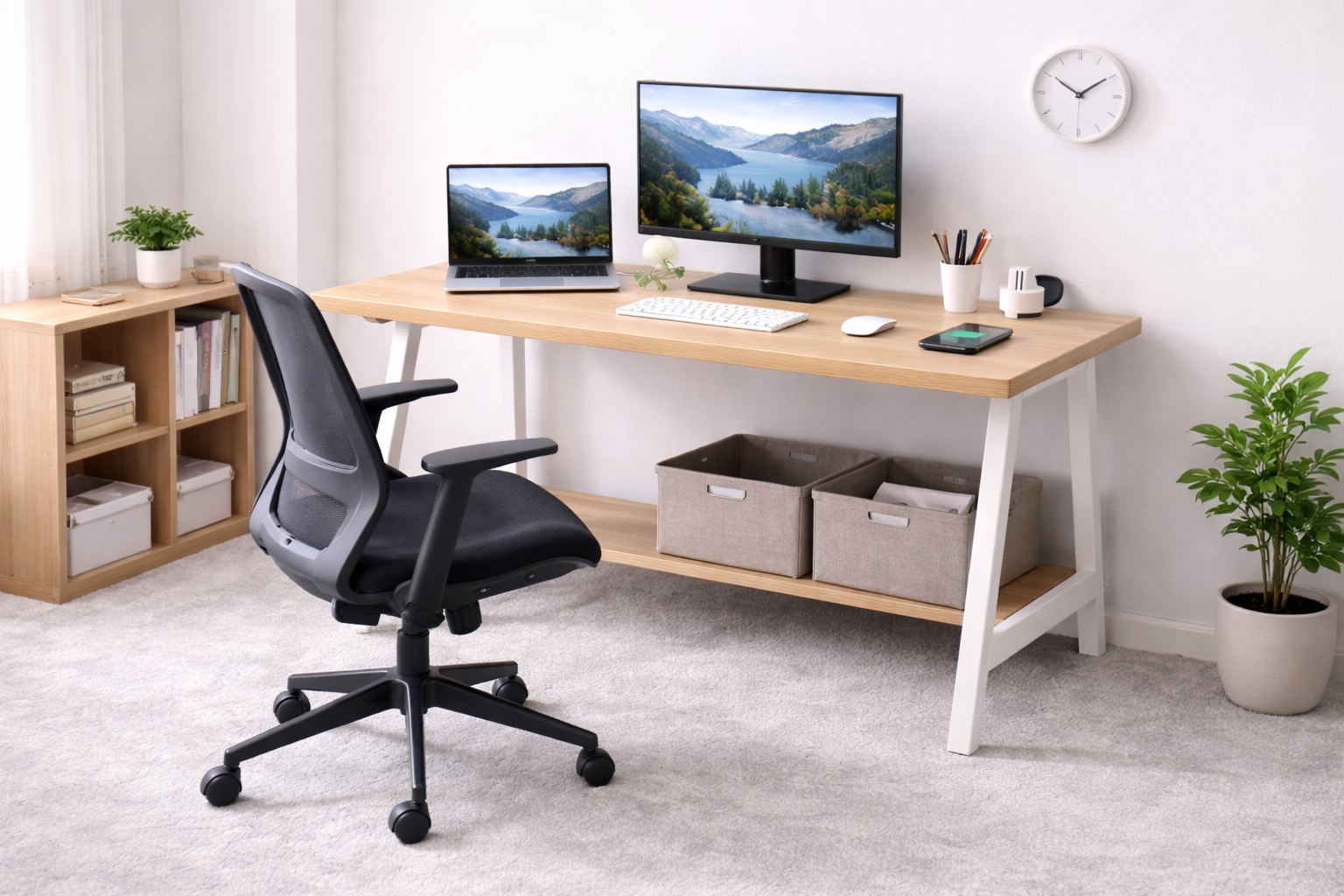
Best Desks for Beginners: Simple First Home Office Setups
Setting up a first desk is rarely about chasing the fanciest model on the shelf. Most beginners are trying to solve a much simpler problem: they need a stable, reasonably sized surface where they can work, study, or sit through video calls without fighting the furniture itself. The desk market, however, is full of options built for very different priorities — some are designed around heavy-duty adjustability, others around minimal footprint, and others purely around price. None of that matters if the desk in front of you is hard to put together, wobbles under normal use, or simply doesn't fit the space you have.
This guide narrows things down to the desk styles that consistently work well for first-time buyers: people setting up a bedroom corner, a small home office, or a shared study space for the first time. Each entry below focuses on a distinct category of desk, what it actually does well, and where its limitations show up once you start using it every day.
It helps to think about a first desk less as a single purchase and more as the foundation of a habit. If the desk is uncomfortable, oversized, or difficult to keep tidy, it becomes easy to avoid sitting down at it altogether, and the whole point of setting up a dedicated workspace gets lost. A modest desk that fits the room and gets used every day beats an impressive one that ends up as a place to pile laundry. Keep that practical goal in mind as you weigh the categories below against your own room, budget, and habits.
Top 6 Beginner-Friendly Desks (Detailed Reviews)
The six categories below are grouped by the situation they solve best, not by brand or price alone. Reading through all of them, even the ones that clearly don't apply to your room, is worth the extra few minutes — it's common for beginners to assume they need a corner desk or a drawer unit, only to realize partway through this list that a plain writing desk actually covers everything they need.
1. Simple Writing Desk – Best For a Clean, No-Fuss Start
The simple writing desk strips the category down to its essentials: a flat top, four legs, and nothing else competing for your attention. It's the closest thing to a default choice for someone who has never owned a desk before, because there's very little that can go wrong with the design or the setup process. Because the design is so pared back, it also tends to be the lightest option in this list, which matters if you expect to rearrange your room more than once while you figure out what layout actually works.
- Pros:
- Minimal parts mean assembly rarely takes more than 20–30 minutes
- Slim profile fits into bedrooms and small apartments without dominating the room
- Clean look works with almost any existing furniture or decor
- Light enough to move or reposition without help
- Cons:
- No built-in storage, so you'll need a separate drawer unit or shelf
- Smaller surface area can feel tight once you add a second monitor
Best For: First-time buyers who want a distraction-free workspace and don't need built-in storage.
Why We Recommend It: It removes the guesswork. There's no configuration to get wrong, no bulky hardware to wrestle with, and the simplicity keeps the price and the setup time low.
2. Compact Study Desk – Best For Small Bedrooms and Dorm Rooms
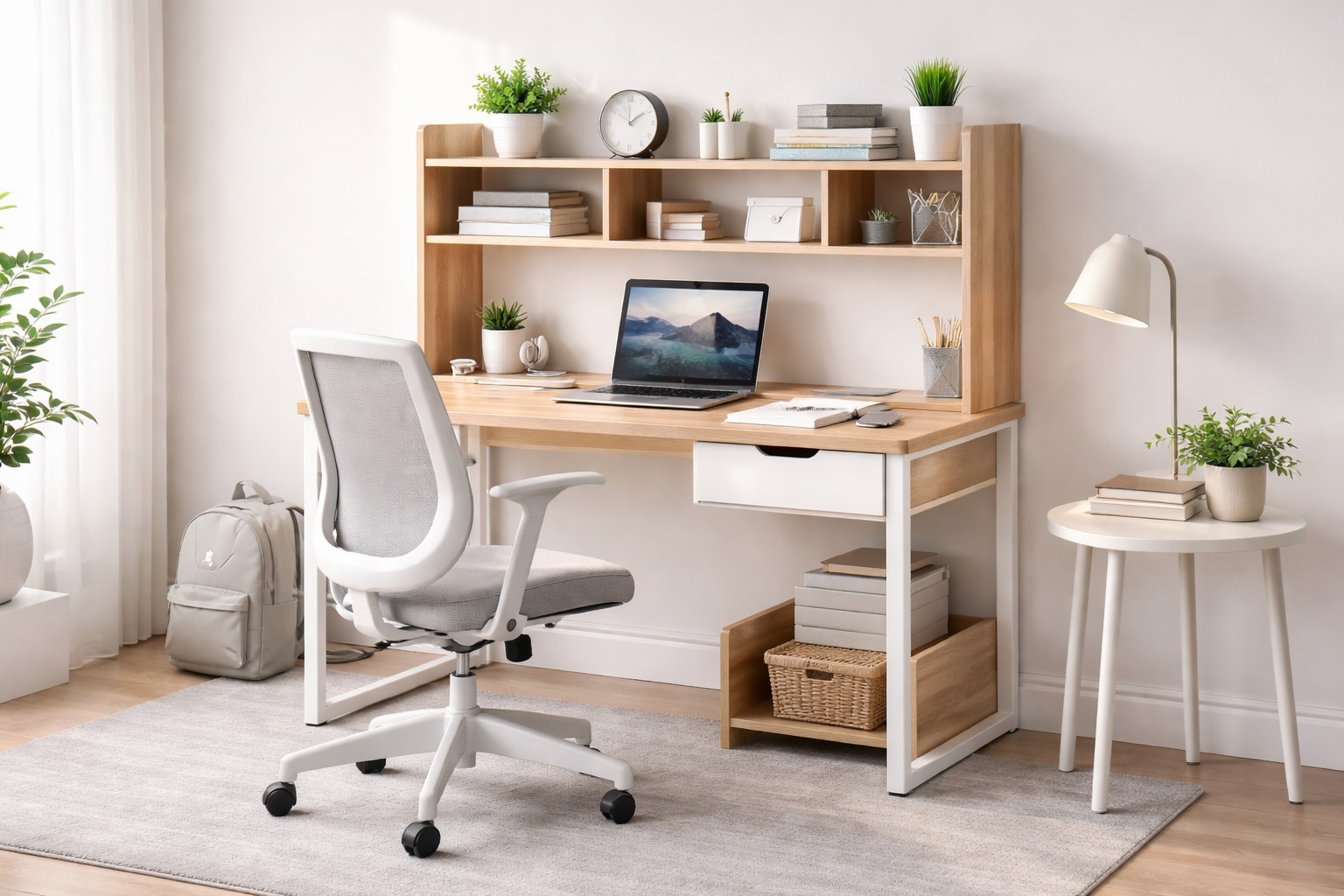
Built specifically for tight footprints, the compact study desk trades surface area for a shape that tucks neatly into corners or against a single wall. It's a common pick for students and anyone furnishing a small room where every square foot counts. The reduced size doesn't have to mean reduced usefulness — many compact designs make smart use of vertical space instead, adding a small riser or slim shelf above the main surface to compensate for the smaller footprint below.
- Pros:
- Small footprint fits rooms where a full-size desk simply won't
- Lightweight construction makes it easy to move or reposition
- Often priced lower than larger desk categories
- Some designs include a small upper shelf to offset the reduced surface area
- Cons:
- Limited space for a keyboard, mouse, and papers at the same time
- Not ideal if you plan to add a large monitor or additional peripherals later
Best For: Students or anyone working with a small bedroom, dorm room, or shared living space.
Why We Recommend It: When floor space is the biggest constraint, this category solves that problem directly without asking you to compromise on basic stability.
3. Easy-Assemble Computer Desk – Best For Buyers Who Dread Building Furniture
This category is built around one core promise: getting from box to usable desk with as little friction as possible. Pre-drilled holes, labeled hardware, and simplified instructions are the norm, making it a strong pick for anyone who has struggled with flat-pack furniture in the past. Many models in this group also reduce the total number of steps in the instructions themselves, grouping several small actions into one illustrated stage so there's less room for a beginner to lose track of where they are partway through.
- Pros:
- Clear, simplified assembly instructions reduce common setup mistakes
- Often includes cable management features suited to a first computer setup
- Reasonably sturdy once fully assembled and tightened
- Hardware is usually pre-sorted or bagged by assembly stage
- Cons:
- Some models use lighter materials to keep assembly simple, which can affect long-term sturdiness
- Design tends to be functional rather than stylish
Best For: Beginners who want their first computer desk set up correctly the first time, without a frustrating build process.
Why We Recommend It: A desk that's hard to assemble often ends up wobbly or improperly tightened. This category avoids that problem by design.
4. Desk With Single Shelf – Best For Basic Organization Without Bulk
Adding just one shelf changes the practicality of a desk considerably. This category keeps the simple, lightweight profile of a basic writing desk while giving you a dedicated spot for a printer, books, or a small storage bin — without the bulk of a full set of drawers. It's a sensible step up for anyone who initially considered a bare writing desk but realized during setup that they'd rather not have chargers, notebooks, and spare cables sitting directly on the work surface.
- Pros:
- Extra shelf adds useful storage without significantly increasing the footprint
- Keeps cables and accessories off the main work surface
- Still simple enough to assemble in well under an hour
- A practical middle step between a bare desk and a full storage unit
- Cons:
- Shelf placement can sometimes interfere with legroom depending on desk height
- Storage is open, so it won't hide clutter the way a drawer would
Best For: Buyers who want a small amount of extra storage without stepping up to a bulkier desk with drawers.
Why We Recommend It: It's a practical middle ground — more useful than a bare desk, without adding real assembly or space complexity.
5. Budget Beginner Desk – Best For Keeping Costs Low
Every category has an entry point, and the budget beginner desk is built for buyers who want to get set up without spending much. It won't compete with premium options on materials or finish, but it covers the basics reliably. For someone who isn't yet sure how much use their new workspace will actually get, this category offers a sensible way to test the habit of working at a desk before committing more money to a longer-term setup.
- Pros:
- Lowest price point in the category, making it easy to justify as a starter purchase
- Good option for testing whether a desk setup even fits your routine before investing more
- Still stable enough for typing, writing, and everyday laptop use
- Low financial risk if your needs or space change later
- Cons:
- Materials and hardware are noticeably lighter-duty than mid-range options
- May need replacing sooner if used heavily or moved often
Best For: Buyers on a tight budget or anyone who wants to try a desk setup before committing to a bigger purchase.
Why We Recommend It: Not every first desk needs to be a long-term investment. This option lets you get started without overspending on a setup you're still figuring out.
6. Corner Desk for First Workspace – Best For Maximizing an Awkward Room Layout
Corner desks are designed to make use of a space most furniture ignores. For a first workspace carved out of a shared bedroom or living area, fitting a desk into an unused corner can be the difference between having a proper setup and not having one at all. Because the two sides of a corner desk typically meet at an angle, they also tend to offer noticeably more usable surface length than a straight desk that occupies the same amount of visible wall space.
- Pros:
- Makes productive use of corner space that would otherwise sit empty
- Often provides more total surface area than a straight desk of similar footprint
- Can help separate a work area from the rest of a shared room
- Leaves more open floor space along the straight walls of the room
- Cons:
- Assembly is slightly more involved due to the angled shape
- Only practical if you actually have a usable corner to place it in
Best For: Beginners setting up a workspace in a shared room who need to make use of corner space efficiently.
Why We Recommend It: It solves a layout problem that straight desks can't, giving you more usable surface without needing more floor space.
Taken together, these six categories cover the vast majority of first-desk situations, from a bare bones writing surface to a shape built specifically around an awkward room. If none of them feel like an obvious fit, it usually means your priorities sit somewhere between two categories — for example, wanting the low cost of the budget option but the storage of the single-shelf design. In that case, it's worth listing your top two priorities and picking whichever category satisfies more of them, rather than searching for a single perfect match that may not exist.
Buying Guide: How to Choose the Best Desk for Beginners
Once you've narrowed down the general style, a handful of practical details separate a desk that works well from one that becomes a daily annoyance. These are the factors worth checking before you commit. None of them require special expertise to evaluate — they're mostly a matter of slowing down and checking the listing carefully instead of relying on the main product photo alone.
1. Assembly Difficulty
If this is your first desk, look closely at how it's assembled before buying. Desks with fewer parts, pre-attached hardware, or clearly labeled pieces save real time and frustration compared to models with vague instructions and dozens of loose screws. Reading a handful of reviews that specifically mention the assembly experience is often more useful than looking at the product photos alone, since two desks that look almost identical can differ enormously in how straightforward they are to put together.
2. Measuring Your Space First
Before adding anything to your cart, measure the actual area where the desk will go, including clearance for a chair to slide in and out. A desk that looks reasonably sized in photos can feel cramped or oversized once it's in the room. It's also worth measuring the height of any window sills, radiators, or shelving nearby, since a desk placed just beneath one of these can end up limiting how you arrange a monitor or lamp later on.
3. Desk Height and Ergonomics
Standard desk heights work for most adults, but if you're notably shorter or taller than average, check the listed height against your own seated posture. An uncomfortable height is one of the most common reasons beginners regret a purchase. If you're unsure, sitting at a similar-height table or counter for a few minutes beforehand can give you a rough sense of whether the listed dimensions will actually feel comfortable during longer sessions.
4. Surface Stability
A desk that wobbles when you type is more than an annoyance — it affects your focus and can shorten the product's lifespan as joints loosen further. Look for reviews that specifically mention stability once fully assembled, not just first impressions out of the box. Uneven flooring can also contribute to wobble even on a well-built desk, so check whether the legs include adjustable levelers if your floor isn't perfectly flat.
5. Storage Needs
Decide honestly whether you need built-in storage. If you already own a separate drawer unit or shelf, a bare desk keeps things simpler and cheaper. If not, a desk with at least one shelf or drawer can prevent clutter from taking over the surface. Think specifically about what you'll actually store day to day, rather than what you might theoretically need, since extra storage you never use just adds cost and bulk.
6. Cable Management
Even a simple beginner setup usually involves a charger, a monitor cable, and maybe a lamp. Desks with a small cable cutout or hook keep cords from bunching up on the floor or across your workspace. This small detail is easy to overlook while shopping but makes a noticeable difference once the desk is in daily use, particularly if the desk sits away from a wall where cords would otherwise be visible.
7. Weight Capacity
Check the listed weight capacity against what you actually plan to put on the desk — a laptop and a lamp is very different from a desktop tower, dual monitors, and a printer. Beginner desks vary quite a bit in how much they can safely hold, and exceeding that limit over time is one of the more common causes of sagging or warped surfaces down the road.
8. Material and Finish
Most beginner-focused desks use engineered wood with a laminate finish, which is durable enough for daily use but can be sensitive to moisture. Wiping up spills quickly and avoiding direct contact with hot items will meaningfully extend the desk's lifespan. A textured or matte laminate also tends to show scuffs less readily than a glossy finish, which matters if the desk will see daily wear from a laptop or notebooks sliding across it.
9. Room Layout and Traffic Flow
Consider how the desk's shape interacts with the rest of the room. A corner or L-shaped design can free up walking space in a small room, while a straight desk is often simpler to reposition later if your needs change. Walk through your usual path around the room before deciding, since a desk that blocks a doorway or closet even slightly becomes a daily irritation rather than a one-time inconvenience.
10. Budget Versus Long-Term Use
If you expect to upgrade your setup within a year or two, a lower-cost option makes sense. If this is likely to be a longer-term workspace, spending slightly more on sturdier materials tends to pay off in fewer replacements down the line. Think of the purchase in terms of cost per year of expected use rather than the sticker price alone, which often reframes which option actually represents the better value.
11. Return Policy and Packaging
Desks are bulky, and returns can be inconvenient. Check the seller's return window and keep the original packaging until you're confident the desk works for your space, in case it needs to go back. It's also worth inspecting the box for shipping damage as soon as it arrives, since some carriers handle large, flat-packed furniture boxes roughly in transit.
12. Reviews From Similar Buyers
Look specifically for reviews from other first-time buyers rather than general ratings alone. Their comments on assembly difficulty, stability, and real-world sizing tend to be more directly useful than a broad star average. Photos submitted by other buyers, in particular, often reveal details about scale and finish that professional product photos tend to smooth over.
Frequently Asked Questions
How do I keep a beginner desk from getting damaged over time?
Use a coaster or mat under drinks, avoid setting hot items directly on the surface, and wipe up spills right away. These small habits matter more for laminate-finished desks, which are common in this category, than for solid hardwood furniture.
Do I need to buy a chair at the same time as the desk?
Not necessarily right away, but pairing the desk with a chair at a compatible height matters for comfort. If you already own a chair, check the desk height against it before finalizing your choice so the two work together properly.
How do I clean and maintain a beginner desk long-term?
A damp cloth followed by a dry one handles most day-to-day dust and light marks on a laminate surface. Avoid abrasive cleaners, which can dull the finish over time, and periodically check that leg bolts haven't loosened from regular use.
Do I need a fancy desk for my first home office?
No. A simple, stable desk that fits your space and is easy to assemble is more valuable for a first setup than extra features you may not end up using. Focus on getting the basics right before considering upgrades.
How long does it usually take to assemble a beginner desk?
Most simple designs take 20 to 45 minutes with basic tools. Desks with additional shelves or angled corner shapes can take somewhat longer, especially the first time you assemble one on your own.
What size desk is best for a small bedroom?
A compact or corner desk under roughly 40 inches wide typically works well in small bedrooms, leaving enough clearance to move a chair comfortably in and out each day.
Should I choose a desk with drawers as my first desk?
Only if you actually need enclosed storage. A single open shelf is often enough for a first setup, and it keeps assembly and cost lower than a full drawer unit while still adding useful organization.
Are budget desks sturdy enough for daily use?
For light use like a laptop, lamp, and notebooks, yes. If you plan to add a desktop computer or multiple monitors, a mid-range option with stronger materials and a higher weight capacity is a safer choice.
What tools do I need to assemble a beginner desk?
Most beginner-focused desks include the necessary hardware and a basic Allen wrench. Having a Phillips screwdriver on hand as well can speed up the process and reduce hand strain during longer assemblies.
Can one person assemble a desk alone?
Most simple and compact desks can be assembled solo. Larger corner desks or heavier models are easier with a second person to hold pieces in place during assembly, particularly when flipping the desk right-side up.
How do I know if a desk will fit through my doorway?
Check the packaged dimensions listed by the seller, not just the assembled size, and compare them against your doorway and hallway width before ordering, especially for larger corner designs.
Is it better to buy a desk online or in a physical store?
Online shopping offers more choice and often better prices, while a physical store lets you check the feel of a desk firsthand. For a first purchase, online buying with a clear return policy is usually the more practical route.
What's the most common mistake beginners make when buying a desk?
Choosing based on appearance alone without measuring the space or checking weight capacity. This often leads to a desk that looks great in photos but doesn't fit the room or the setup it needs to support.
Do corner desks work in rooms without an obvious corner space?
Not always. If your room doesn't have a genuinely open corner, a straight or compact desk is usually a better fit than forcing a corner design into the wrong layout.
How much should a first desk cost?
Beginner desks span a wide price range, but most practical, stable options fall into an affordable entry-level bracket. Spending more generally buys better materials and more storage rather than dramatically different functionality.
Can a beginner desk be upgraded later with accessories?
Yes. Many buyers add a monitor arm, a small desk organizer, or a cable tray after the initial setup rather than buying all of it at once. Starting simple and adding accessories as you identify a genuine need is usually more cost-effective than guessing upfront.
Final Verdict
There's no single "best" beginner desk — only the best fit for your room, your budget, and how you plan to use it. The categories above cover the situations most first-time buyers actually face, from tight bedrooms to shared spaces to simple cost-conscious setups.
- For most beginners: A simple writing desk or easy-assemble computer desk offers the best balance of low effort and dependable use.
- For small rooms: A compact or corner desk makes better use of limited floor space.
- For tight budgets: A budget beginner desk gets you set up without overcommitting before you know your long-term needs.
Whatever you choose, prioritize a desk that's simple to put together and genuinely stable over one with features you may never use. Getting those basics right is what actually makes a first workspace comfortable to sit down at every day, and it's that daily comfort — far more than any single spec — that determines whether a desk earns its keep.
It's also worth remembering that a first desk rarely needs to be a permanent decision. Needs change once you actually start using a workspace regularly — you might discover you need more storage than expected, or that a corner layout works better than the straight wall you originally planned around. Treating this first purchase as a starting point rather than a final answer takes the pressure off getting everything perfect on the first try, and lets you make a confident, low-stress choice today.