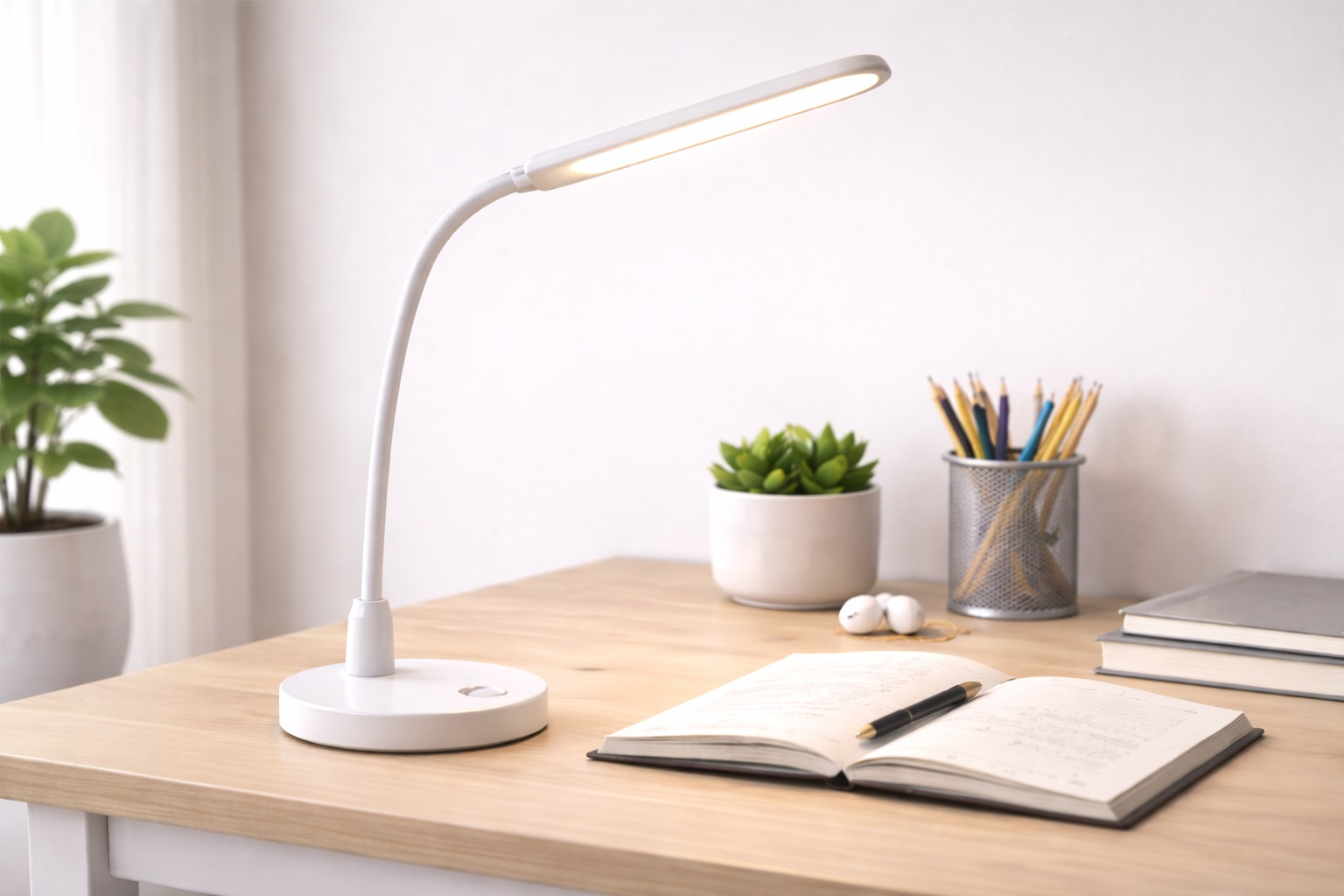
Best Lightweight Desk Lamps: Bright Light, Minimal Weight
Not every desk lamp needs to stay in one place. Students moving between dorm rooms, remote workers switching between a home office and a coffee shop, and anyone who simply rearranges their space often all have the same basic need: a lamp light enough to move without a second thought, but still bright enough to actually work under. Many lamps marketed as portable turn out to be heavier or bulkier than expected once they arrive.
This guide focuses specifically on lamps that deliver on genuine lightness, from ultra-light LED designs to clip-on and collapsible styles built around minimizing weight and bulk. Each category takes a slightly different approach to staying light, and each comes with its own small trade-offs worth understanding before buying.
It also helps to separate two related but distinct ideas: lightness and portability. A lamp can be genuinely light in the hand yet still awkward to pack or transport if it isn't designed with movement in mind, while a slightly heavier lamp with a smart folding mechanism might actually travel better in practice. Keeping both factors in view, rather than focusing on weight alone, leads to a more accurate comparison between the categories below.
Being lightweight doesn't have to mean flimsy or dim. Modern LED components make it possible to build a genuinely bright, useful lamp without the heavier bases and hardware that older lighting designs required, and the categories below reflect that shift toward smaller, lighter, still-capable lighting.
It's worth being specific about why you want a lightweight lamp before choosing a category, since "lightweight" can mean different things depending on the goal. Someone packing a lamp for weekly travel has different priorities than someone who simply wants a lamp that's easy to lift with one hand while cleaning a desk. Matching the category to your actual reason for wanting lightness leads to a better fit than choosing based on weight alone.
There's also a practical, everyday case for lightness that has nothing to do with travel at all. Anyone who rearranges furniture occasionally, shares a desk with a roommate or family member, or simply likes to move their lamp closer for detailed tasks and further away otherwise benefits from a lamp that doesn't feel like a chore to pick up. A heavier lamp tends to get set in one spot and left there permanently, while a genuinely light one is far more likely to actually get repositioned as your needs shift throughout the day, which is part of why the category has grown well beyond just students and frequent travelers.
Top 6 Lightweight Desk Lamps (Detailed Reviews)
Each of the six styles below takes weight reduction seriously in a different way — through materials, folding mechanisms, mounting style, or simply stripped-down design. Reading through all of them helps identify which specific approach to lightness actually fits how you plan to move and use your lamp.
1. Ultra-Lightweight LED Lamp – Best For an All-Around Light, Portable Option
This category takes a standard desk lamp shape and rebuilds it using the lightest materials that can still hold together reliably, typically thin-gauge metal or reinforced plastic rather than heavier cast bases. The result looks like a normal desk lamp but weighs noticeably less when you pick it up.
Because it keeps a familiar lamp shape rather than a specialized folding or clipping mechanism, this category tends to be the most versatile of the lightweight options, working reasonably well in almost any setting without needing a compatible desk edge or a particular mounting surface.
- Pros:
- Noticeably lighter than a standard desk lamp of similar size
- Familiar shape works in almost any desk setup
- No special mounting or folding mechanism required
- Balances weight savings with everyday versatility
- Cons:
- Lighter materials can feel less substantial than a heavier lamp
- Base may need a wider footprint to remain stable at low weight
Best For: Buyers who want an all-purpose lightweight lamp without a specialized folding or clip mechanism.
Why We Recommend It: It delivers meaningful weight savings without asking you to adapt to an unfamiliar lamp shape or mounting method. For most people moving a lamp occasionally rather than constantly, this straightforward approach is the easiest to live with, and it doubles as a perfectly normal permanent lamp if your routine settles down later.
2. Clip-On Featherlight Lamp – Best For Minimal Weight and No Desk Footprint
Combining a lightweight build with a clip mount rather than a base, this category removes the weight of a traditional base entirely, relying on a desk or shelf edge for support instead. This makes it among the lightest options in the category by design, not just through material choices.
Because it has no base of its own, this style also frees up desk surface space, which is a secondary benefit worth considering alongside its low weight for anyone working with a small or crowded desk.
- Pros:
- Among the lightest options due to lacking a traditional base
- Frees up desk surface space by mounting to an edge
- Easy to relocate between desks, shelves, or other edges
- Compact enough to pack easily when moving frequently
- Cons:
- Requires a compatible desk edge thickness to mount securely
- Not usable on desks with unusually thick or shaped edges
Best For: Buyers who want the lowest possible weight and don't mind mounting rather than a freestanding base.
Why We Recommend It: Removing the base entirely is one of the most effective ways to cut weight, and the added desk-space savings make it a smart pick for anyone juggling both concerns at once. It's a design choice that solves two separate problems with a single, simple mechanism.
3. Collapsible Travel Lamp – Best For Frequent Movers and Multi-Location Setups
This category folds down into a slim, compact bundle specifically for repeated packing and unpacking, aimed at people who genuinely relocate their lamp often — between a dorm and home, or across multiple work locations during a week. The folding mechanism is central to the design rather than an afterthought.
Unlike a lamp that's simply light but rigid, a collapsible design also protects itself somewhat during transport, since a folded lamp is less likely to catch on other items in a bag than one left fully extended.
- Pros:
- Folds into a slim bundle built specifically for repeated packing
- Well suited to genuinely frequent relocation between spaces
- Folded shape is less likely to snag on other bag contents
- Sets up and breaks down quickly each time it's moved
- Cons:
- Folding hinges can introduce slight flex versus rigid designs
- Smaller footprint once unfolded than some full-size lamps
Best For: Students and multi-location workers who relocate their lamp on a regular, ongoing basis.
Why We Recommend It: It's purpose-built for the specific stress of repeated packing, which a lamp that's merely light but not designed to fold can't handle nearly as gracefully over time. Anyone who has previously watched a supposedly portable lamp fall apart after a few months of daily transport will appreciate the difference.
4. Portable Lightweight USB Lamp – Best For Charging Simplicity Alongside Low Weight
This category pairs a lightweight build with USB or USB-C power, letting you skip a bulky wall adapter in favor of a cable you likely already carry for other devices. That combination of low weight and simple charging makes it a natural fit for anyone building a genuinely minimal mobile setup.
Some models in this category run on battery power for cordless use, while others simply use USB as a lighter-weight power connection while remaining plugged in during use. Either approach reduces the overall bulk compared to a traditional wall-powered lamp.
- Pros:
- Combines low weight with simple, familiar USB charging
- Reduces reliance on a separate bulky wall adapter
- Works well alongside laptops and other USB-powered devices
- Some models offer cordless battery operation for added flexibility
- Cons:
- Battery-powered versions require remembering to recharge
- USB power delivery can limit maximum brightness on some models
Best For: Buyers who want to minimize both weight and the number of separate chargers they carry.
Why We Recommend It: It solves two portability problems at once — physical weight and charging complexity — which matters most for anyone assembling a genuinely minimal mobile work setup. Cutting down on charger variety is a small change that pays off every single time you pack a bag.
5. Budget Light-Weight Desk Lamp – Best For Low-Cost Portability
Not everyone needs premium materials to get a genuinely light lamp, and this category covers simple, inexpensive designs that achieve low weight mainly through basic plastic construction rather than specialized lightweight materials. It won't match pricier options on refinement, but it covers the core need reliably.
For anyone testing whether a lightweight, portable lamp actually fits their routine before investing more, this category offers a reasonable, low-risk way to try the concept without a significant upfront cost.
- Pros:
- Lowest price point among lightweight lamp categories
- Achieves genuine weight savings through simple construction
- Low financial risk if your needs or routine change later
- Reasonable way to test whether portability suits your habits
- Cons:
- Build materials are noticeably lighter-duty than pricier options
- May need replacing sooner under frequent daily transport
Best For: Budget-conscious buyers who want to try a lightweight, portable lamp without a big investment.
Why We Recommend It: Not every lightweight lamp purchase needs to be a long-term investment, and this option lets you test the concept affordably before committing to something more refined. It's a reasonable way to confirm portability actually matters to your routine before spending more on it, and if it turns out you barely move the lamp after all, you haven't overspent on features you never ended up using. That low-risk starting point is part of why this category remains a sensible first purchase even for buyers who eventually upgrade to a pricier design.
6. Minimal Design Lightweight Lamp – Best For a Clean Look Alongside Low Weight
This category pairs weight reduction with a simple, understated visual design, aimed at buyers who want their lamp to look intentional rather than purely utilitarian. Minimalist shapes often naturally use less material than more elaborate designs, which helps keep weight down as a side effect of the aesthetic choice.
The simplified design typically means less adjustability than a gooseneck or articulating lamp, so it suits buyers with a fairly fixed lighting position in mind rather than those who reposition light frequently throughout the day.
- Pros:
- Clean, considered look alongside genuine weight savings
- Simple shape naturally contributes to a lighter overall build
- Blends into a tidy desk setup rather than standing out
- Compact enough to move easily between spaces
- Cons:
- Limited or no adjustability compared to articulating designs
- Fixed positioning may not suit every desk layout
Best For: Buyers who want a visually clean, lightweight lamp and don't need extensive repositioning.
Why We Recommend It: It proves that a lightweight lamp doesn't have to look purely functional, delivering a tidy appearance alongside genuine portability. For a desk setup where appearance matters as much as function, that combination is harder to find than it should be.
Across all six categories, the underlying goal is the same — a lamp light enough to move without hesitation, while still providing genuinely usable light. The right pick depends less on which lamp is objectively lightest and more on how and how often you actually plan to move it.
It's also worth noting these categories often overlap in real products. A clip-on lamp can also be USB powered, and a minimalist design can fold flat for transport. Use the descriptions above to identify which combination of low weight, portability style, and appearance matters most to you, then look for a specific model that brings those features together rather than assuming you must settle for exactly one defining trait.
Buying Guide: How to Choose the Best Lightweight Desk Lamp
Beyond the general style, several practical details determine whether a lightweight lamp holds up well to regular movement and daily use. These are the factors worth checking before buying.
1. Actual Listed Weight
Compare specific weights between models rather than assuming all lamps described as "lightweight" weigh roughly the same, since the term is used inconsistently across the market.
2. Brightness Relative to Size
A genuinely useful lightweight lamp should still provide adequate brightness for reading or work, not just ambient light. Check lumen output rather than judging by size alone.
3. Base Stability at Low Weight
Lighter lamps can be more prone to tipping, so check for a wider base footprint or clip mount that compensates for the reduced weight holding it down.
4. Material Durability
Lightweight materials vary in how well they hold up to repeated handling. Reinforced plastic or thin-gauge metal generally outlasts the flimsiest budget materials under frequent transport.
5. Folding or Collapsing Mechanism Quality
If choosing a collapsible design, check that the folding hinges feel solid rather than loose, since this mechanism takes the most repeated stress from frequent packing and unpacking.
6. Compatibility With Mounting or Clip Style
For clip-on designs, confirm the compatible desk edge thickness range against your actual desk or shelf before buying, since clip mounts have a limited compatible range.
7. Power Source
USB and USB-C powered lamps avoid a bulky wall adapter, which contributes to overall portability beyond the lamp's own physical weight.
8. Cord Length
For corded designs, check cord length against typical outlet distances in the spaces where you'll use the lamp most often, particularly if you move it between multiple locations.
9. Adjustability
Even a lightweight lamp benefits from basic adjustability, such as a bendable neck, to redirect light for different tasks without needing to reposition the entire lamp.
10. Packability for Frequent Transport
If you plan to carry the lamp in a bag regularly, consider its folded or collapsed size and whether it will survive being packed alongside other items without damage.
11. Price Versus Frequency of Movement
Someone moving a lamp daily benefits from investing in a more durable, purpose-built portable design, while occasional movers may be well served by a simpler budget option.
12. Noise and Flicker
Some inexpensive LED drivers in ultra-compact lamps can introduce subtle flicker. Checking reviews for mentions of flicker-free operation is worth doing if you're sensitive to this.
13. Warranty Coverage
Even lightweight, budget-friendly lamps sometimes include a short warranty, which is a reasonable signal of manufacturer confidence worth checking before buying.
14. Return Policy
Since actual weight and brightness are hard to judge from a listing, check the seller's return window in case the lamp doesn't match your expectations once you're using it regularly.
15. Visual Design Versus Adjustability Trade-Off
Minimalist designs often sacrifice some adjustability for a cleaner look. Decide which matters more for your specific use before choosing a style purely on appearance.
16. Long-Term Value Versus Replacement Frequency
A slightly pricier lightweight lamp with better materials can outlast several of the cheapest options combined, particularly under frequent daily transport and handling.
17. Ease of One-Handed Operation
If you'll often be adjusting the lamp while holding something else, such as books or a bag, controls that are easy to operate with one hand add real everyday convenience beyond the lamp's weight alone.
18. Light Quality and Color Temperature
Some lightweight lamps offer adjustable color temperature, letting you shift between a warmer tone for relaxed evening reading and a cooler, crisper tone for focused work. A fixed single-temperature lamp is simpler and often lighter, but sacrifices that flexibility, which is worth weighing if you use the same lamp across very different tasks throughout the day.
19. Shade or Diffuser Design
The way a lamp's light is diffused affects how comfortable it feels to work under for extended periods. A lamp with a well-designed shade or diffuser spreads light more evenly and reduces harsh glare, while an exposed or minimally shielded LED source can feel noticeably harsher on the eyes despite otherwise similar brightness.
Frequently Asked Questions
How light does a desk lamp need to be to count as genuinely lightweight?
There's no strict cutoff, but lamps under roughly one pound are generally considered genuinely lightweight and easy to carry or reposition without much thought.
Do lightweight lamps sacrifice brightness compared to standard lamps?
Not necessarily. Modern LED components allow lightweight lamps to remain quite bright, though the very smallest, most minimal designs may have a somewhat reduced light spread.
Are clip-on lamps stable once mounted?
When properly clipped to a compatible desk edge, yes — the clip mount is generally quite stable since it's secured directly to the desk rather than relying on its own base weight.
Can a lightweight lamp still provide enough light for detailed work?
Many can, particularly ultra-lightweight LED and USB-powered designs built to balance low weight with genuinely usable brightness for reading and close work.
How do I know if a collapsible lamp will hold up to frequent folding?
Check reviews specifically for mentions of hinge durability over repeated use, since this is the component under the most stress in a collapsible design.
Is a lightweight lamp a good choice for a permanent home office desk?
It can be, particularly if you value the ability to reposition or relocate the lamp occasionally, though a heavier, more substantial lamp may feel more premium for a fixed setup.
Do budget lightweight lamps sacrifice durability?
Often somewhat, yes. Budget lightweight lamps typically achieve their low weight through simpler plastic construction, which can wear faster under frequent handling than pricier reinforced materials.
What's the most common issue with lightweight desk lamps?
Reduced base stability is a common trade-off, since less material and weight in the base can make the lamp more prone to tipping compared to a heavier design.
Can I use a lightweight lamp with a USB power bank while traveling?
Many USB-powered lightweight lamps work fine from a power bank, making them a practical option for travel or locations without convenient wall outlets.
Are lightweight lamps a good choice for students moving between dorms each year?
Yes, particularly collapsible and clip-on styles, which are specifically suited to the repeated packing and relocating that comes with moving between living situations.
How much should I expect to pay for a good lightweight desk lamp?
Most practical lightweight options fall into an accessible price range, with USB-powered and collapsible designs sometimes costing slightly more than basic budget options.
Do lightweight lamps come with a warranty?
Coverage varies by manufacturer and price point, and checking warranty terms before buying is reasonable, particularly for pricier models with more complex folding mechanisms.
Is it worth paying more for a minimal design lightweight lamp?
If visual appearance matters to you alongside portability, yes. If adjustability matters more, a gooseneck-style lightweight lamp may serve you better despite a less minimal look.
Can a lightweight lamp double as a travel lamp?
Many can, particularly collapsible and USB-powered designs, which overlap significantly with what's typically marketed specifically as travel lighting.
How do I clean a lightweight desk lamp?
Most can be wiped down with a damp cloth, though it's worth checking the specific material before using cleaning products, since some lightweight plastics are more sensitive than others.
Should I buy a lightweight lamp online or see it in person first?
Online buying offers a wider selection of lightweight designs, while an in-person look lets you judge actual weight and build quality directly. For most buyers, ordering online with a clear return policy remains the more practical approach.
Do lightweight lamps get damaged more easily during transport?
Purpose-built collapsible or clip-on designs are generally engineered to withstand regular transport, while a lamp that's merely light without being built for movement may be more prone to damage if carried frequently in a bag.
Is there a meaningful difference between plastic and metal lightweight lamps?
Reinforced plastic can achieve very low weight but sometimes feels less substantial, while thin-gauge metal often strikes a slightly better balance between low weight and a sturdier feel, usually at a somewhat higher price.
Can a lightweight lamp be repaired if a joint or clip breaks?
Repairability is often limited on the lightest, most budget-friendly models, since replacement parts aren't typically sold separately. Sturdier mid-range options are somewhat more likely to have available replacement components.
Do lightweight lamps make sense for a permanent desk setup, or only for portability?
They work perfectly well as a permanent fixture too. There's no real downside to choosing a lighter lamp even if you never plan to move it, aside from a slightly less substantial feel compared to a heavier design.
Can a lightweight lamp survive being dropped occasionally during transport?
Purpose-built collapsible and clip-on designs are generally sturdier under an occasional bump or drop than their overall low weight might suggest, since manufacturers account for regular handling in the design. That said, no lightweight lamp is drop-proof, so packing it away from harder or sharper items in a bag remains a sensible precaution.
Are lightweight lamps a good option for a shared or multi-person desk?
Yes, particularly clip-on or minimal designs, since their small footprint and easy repositioning make it simple to shift the lamp between work areas as different people use the desk throughout the day.
Final Verdict
There's no single best lightweight desk lamp — only the best fit for how often you move it, where you use it, and how much brightness and adjustability you actually need. The categories above reflect the different reasons people prioritize a lighter lamp, from frequent relocation to simple desk-space savings.
- For most buyers: An ultra-lightweight LED lamp offers the best all-around balance of low weight and everyday versatility.
- For frequent movers: A collapsible travel lamp is purpose-built for repeated packing and relocating.
- For small or crowded desks: A clip-on featherlight lamp saves both weight and valuable surface space.
Whatever you choose, prioritize genuine, verified weight savings over marketing language alone, and make sure the lamp still delivers brightness you'll actually be satisfied with day to day. A lamp that's impressively light but too dim to use comfortably isn't really solving the problem it was bought for.
It's also worth revisiting your choice as your routine changes. Someone who initially needed a lamp mainly for occasional repositioning might later find themselves moving it daily between two work locations, at which point a more purpose-built collapsible or clip-on design may serve them better than the all-purpose option they started with.
Because most lightweight lamps are relatively inexpensive compared to premium desk lighting, there's little downside to starting with a reasonable option and switching later if your needs turn out to be different than expected. A lamp that ends up traveling with you consistently, without becoming an afterthought left behind, is the clearest sign you chose the right category from the start.