Best Lightweight Wireless Mice for Fatigue-Free All-Day Use
Anyone who has spent a full workday dragging a mouse across a desk knows the toll it takes on the wrist, forearm, and shoulder by the late afternoon. A lightweight wireless mouse addresses that problem directly by cutting the mass you have to move with every click and swipe, which reduces the cumulative strain of thousands of small motions over the course of a session. This matters most for people who sit at a computer for hours at a stretch — writers, designers, developers, analysts, and gamers alike — where even a difference of twenty or thirty grams becomes noticeable after enough repetitions.
Not every lightweight mouse is built the same way, and the category covers more ground than it first appears. Some models chase the lowest possible weight through shell perforations and internal cutouts, others simply use denser but smaller components, and a few borrow their chassis directly from competitive gaming mice because that community has spent years optimizing for exactly this problem. Sensor accuracy, grip compatibility, battery life, and build durability all vary across these approaches, and the "best" option changes depending on which of those factors matters most to you.
This guide walks through six distinct types of lightweight wireless mice, each aimed at a different kind of user and budget, followed by a detailed buying guide and answers to the most common questions people have before switching to a lighter setup. The goal is to help you match the right design to your hand size, grip style, and daily workload rather than simply chasing the lowest gram count on a spec sheet.
It also helps to think about this purchase as solving a specific problem rather than upgrading for its own sake. If you already know that your discomfort shows up after long stretches of repetitive clicking and dragging, weight reduction alone may solve most of it. If the discomfort is more about wrist angle or shoulder tension, an ergonomically shaped model paired with a lighter body will likely serve you better than chasing the single lightest mouse available. Keeping that distinction in mind while reading through the options below will make the buying guide sections that follow far more useful.
Top Lightweight Wireless Mice (Detailed Reviews)
1. Sub-70g Wireless Mouse – Best Overall
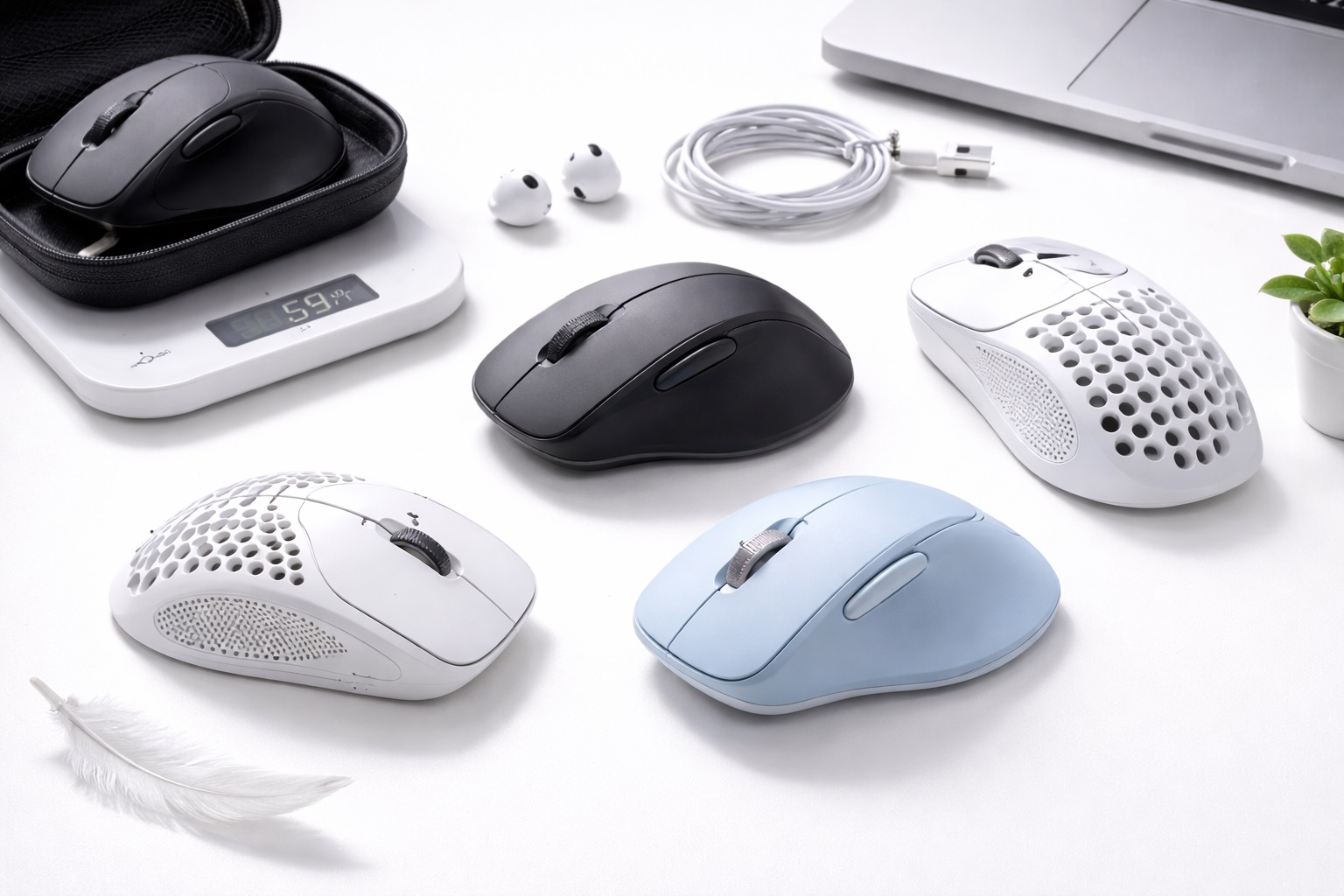
Mice in the sub-70g class strike a balance that suits the widest range of users: light enough to meaningfully reduce fatigue, but not so aggressively hollowed out that the shell feels fragile or the click response feels hollow. This weight bracket typically retains a fuller, more conventional shape than the most extreme ultralight designs, which makes it easier to recommend to someone switching from a standard wireless mouse without a long adjustment period. Most models in this range pair the lighter body with a dependable optical sensor and a 2.4GHz wireless connection, giving you low latency without the added mass of a wired tether.
- Pros:
- Noticeably lighter than a standard wireless mouse without feeling flimsy
- Familiar shape that suits palm and claw grips alike
- Balanced sensor performance for both office work and casual gaming
- Shorter learning curve for anyone switching from a heavier mouse
- Cons:
- Not as extreme in weight savings as dedicated ultralight designs
- Perforated shells on some models can collect dust over time
- Fingertip grip users may still find it slightly heavier than ideal
Best For: Users who want a meaningful reduction in hand fatigue without adopting an unfamiliar shape or an aggressively stripped-down design.
Why We Recommend It: This weight class offers the most balanced entry point into lightweight mice, combining a familiar feel with genuine ergonomic benefit, which makes it the safest first step for most buyers.
2. Ultralight Wireless Mouse (Sub-60g Class) – Best for Precision Work
Pushing below 60 grams generally requires a honeycomb or perforated shell, a smaller internal battery, and a stripped-back set of extra buttons, all in service of shaving away every unnecessary gram. The payoff is a mouse that feels almost weightless during rapid, repetitive movements, which benefits anyone doing detailed cursor work such as photo retouching, CAD adjustments, or spreadsheet navigation across multiple monitors. The tradeoff is that the shell can feel less substantial in the hand, and some users need a short adjustment period before the reduced heft stops feeling unusual.
- Pros:
- Among the lightest options available, ideal for rapid, repetitive cursor movement
- Reduces strain during long sessions of fine, precise work
- Often paired with high-quality sensors despite the reduced weight
- Cons:
- Perforated shells expose internals to dust and occasional debris
- Feels unfamiliar at first to anyone used to a heavier mouse
- Smaller battery capacity than heavier models in some cases
Best For: Detail-oriented work that involves frequent, precise cursor movement over long periods, such as design, editing, or data-heavy tasks.
Why We Recommend It: When weight reduction is the single most important factor, this class delivers the most noticeable difference, and the sensor quality on offer means you are not sacrificing accuracy to get there.
3. Lightweight Gaming-Derived Mouse – Best for Gaming Crossover Use
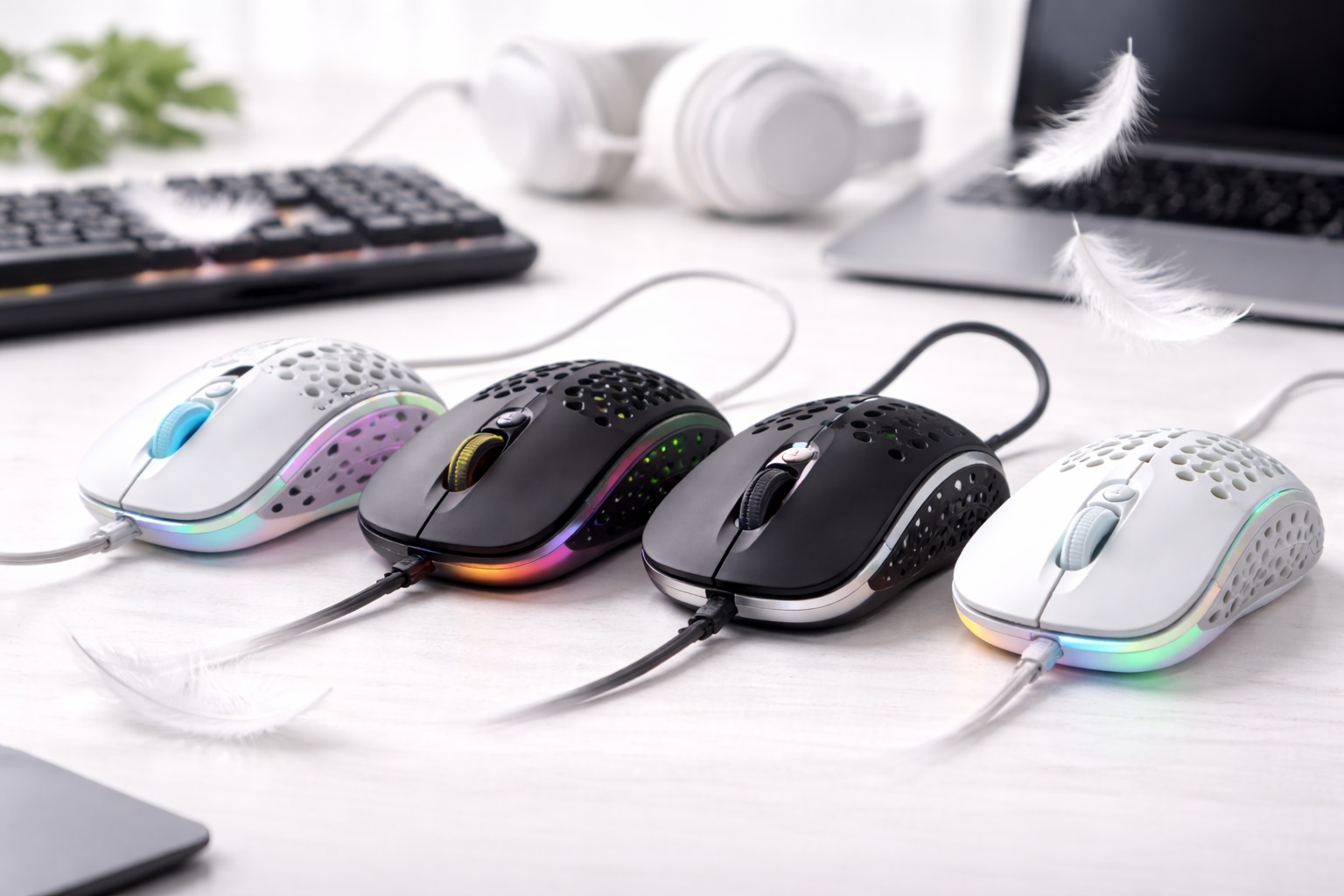
Several of the best lightweight wireless mice on the market started life as competitive gaming mice before crossing over into general productivity use. These models inherit the obsessive weight optimization, low-latency wireless protocols, and high polling rates that gaming communities have spent years refining, then apply those same qualities to everyday tasks. The result is a mouse that handles fast-paced work — rapid tab switching, quick drag-and-drop actions, multitasking across windows — with the same responsiveness it was designed to deliver in competitive play.
- Pros:
- Excellent sensor tracking and low input latency
- Weight optimization carried over directly from competitive gaming design
- Durable switches rated for high click counts
- Cons:
- Gaming-oriented shapes may lack extra productivity buttons
- Aesthetic and branding can feel out of place in an office setting
- Software suites are sometimes built around gaming features rather than office workflows
Best For: Users who want gaming-grade responsiveness and weight savings applied to daily work, or who split their time between work and gaming on the same machine.
Why We Recommend It: The engineering behind competitive gaming mice was built specifically to solve the fatigue and latency problems this category addresses, so borrowing that design for everyday use is a genuinely practical choice.
4. Carbon Fiber Wireless Mouse – Best Premium Pick
Carbon fiber and other composite-shell mice take a different approach to weight reduction: rather than perforating a plastic shell, they use inherently lighter and stiffer materials to keep the body solid while still cutting mass. This tends to produce a mouse that feels more premium and structurally sound than a honeycomb design, with a smoother, closed surface that resists dust and grime better than a perforated alternative. The tradeoff is cost — these materials and manufacturing processes are more expensive, which is reflected in the price. For buyers who have already tried a perforated ultralight mouse and disliked the feel, a composite shell offers a way to get similar weight savings without changing the tactile experience of holding a conventional mouse.
- Pros:
- Solid, closed shell resists dust better than perforated designs
- Premium material feel with a more durable overall construction
- Weight savings without the fragile feel of heavily cut-out shells
- Cons:
- Higher price point than most other lightweight categories
- Weight savings are sometimes less dramatic than ultralight honeycomb designs
- Fewer models available compared to standard plastic-shell options
Best For: Buyers who want the ergonomic benefits of a lighter mouse but prefer a solid, closed shell and a more premium in-hand feel, and who are willing to pay more for it.
Why We Recommend It: This category proves that weight reduction and structural solidity are not mutually exclusive, making it a strong choice for anyone who dislikes the look or feel of a perforated shell.
5. Budget Lightweight Wireless Mouse – Best Budget Pick
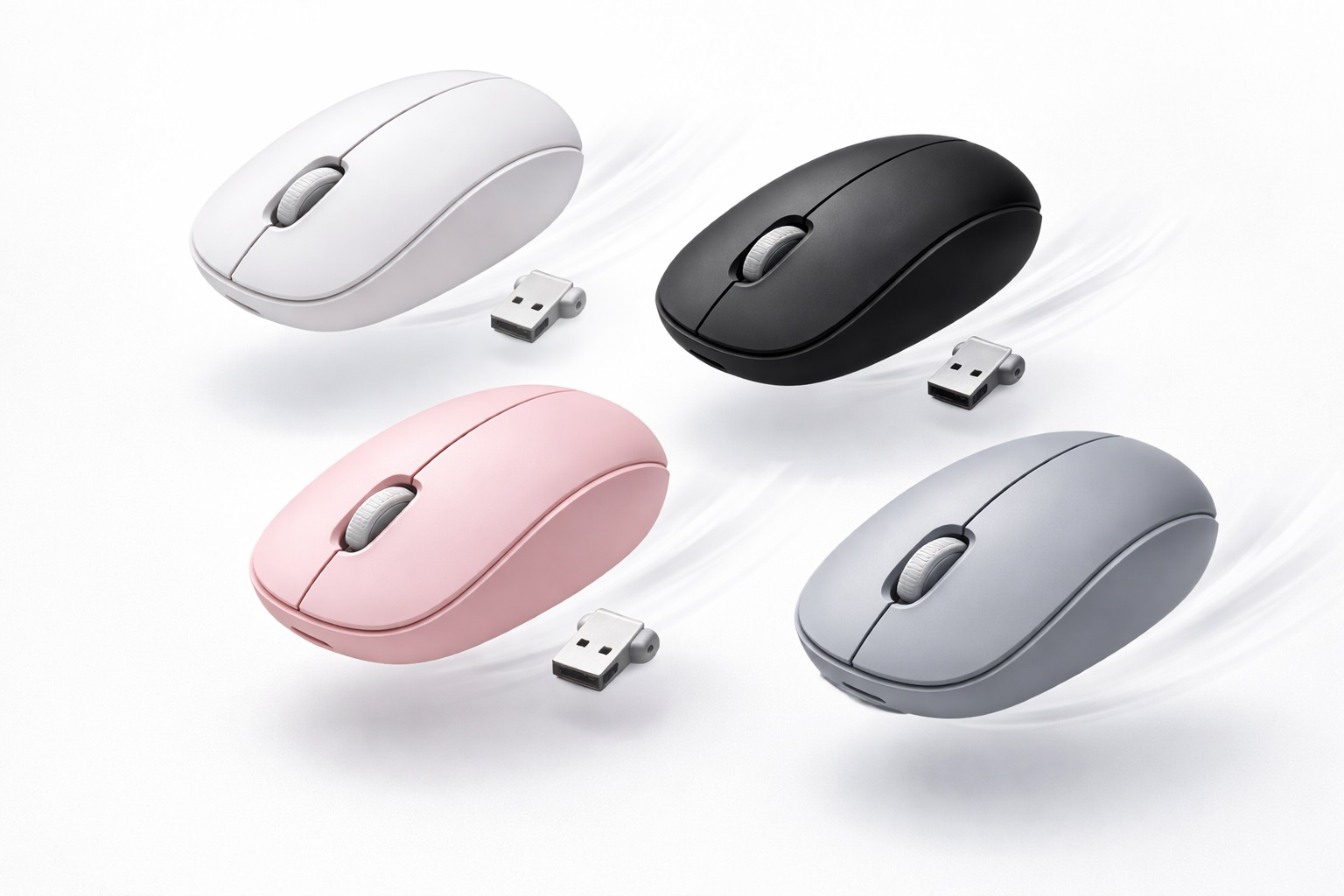
Lightweight design has become common enough that it is no longer confined to premium price brackets. Budget-friendly options typically achieve their reduced weight through simpler internal layouts and smaller batteries rather than exotic materials or aggressive shell perforation, which keeps manufacturing costs down. These mice will not match the sensor precision or build refinement of pricier alternatives, but for everyday browsing, document work, and general navigation, they deliver a real reduction in hand fatigue at an accessible price.
- Pros:
- Meaningful weight reduction at a fraction of premium pricing
- Good enough sensor accuracy for everyday browsing and office tasks
- Low barrier to trying a lightweight mouse for the first time
- Cons:
- Build quality and materials are noticeably more basic
- Sensor and click response may lag behind premium alternatives
- Battery life is often shorter than higher-end competitors
Best For: Buyers who want to experience the benefits of a lighter mouse without committing to a premium price before knowing if the format suits them.
Why We Recommend It: It removes the financial barrier to entry, letting budget-conscious users test whether a lighter mouse actually solves their fatigue problem before investing in a higher-end model.
6. Ergonomic Lightweight Mouse – Best for All-Day Comfort
This category blends a reduced-weight design with a shape specifically contoured to support a more natural wrist and forearm position, rather than focusing on weight savings alone. These mice tend to feature a more pronounced curve, textured grip zones, and sometimes a slightly raised profile that keeps the wrist from twisting into an unnatural angle during long sessions. For anyone who already experiences discomfort beyond simple fatigue — including mild wrist strain or early signs of repetitive strain — the ergonomic shaping can matter as much as the weight itself. Because the emphasis here is comfort rather than raw speed, these designs are generally aimed at office and everyday computing rather than fast-paced gaming, and buyers should set their expectations accordingly.
- Pros:
- Combines weight reduction with genuinely ergonomic shaping
- Well suited to users with existing wrist or hand discomfort
- Comfortable for extended sessions well beyond typical office hours
- Cons:
- Contoured shapes tend to favor one grip style over others
- Larger ergonomic bodies can partially offset weight savings
- Less suited to fast, precise gaming-style movement
Best For: Users whose primary concern is long-term comfort and wrist health during extended daily computer use, rather than raw weight or gaming performance.
Why We Recommend It: Weight is only one part of the fatigue equation, and this design addresses the shape and posture side of the problem alongside it, making it a strong option for anyone managing existing discomfort.
Buying Guide: How to Choose the Best Lightweight Wireless Mouse
Choosing the right lightweight wireless mouse means weighing several factors together rather than chasing a single spec. The considerations below cover the areas that make the biggest practical difference once the mouse is actually in daily use.
1. Weight in Grams — Lighter Is Generally Better, But Not Absolute
Weight is the defining spec of this category, and lower numbers generally translate to less fatigue over long sessions. That said, the difference between 58 grams and 68 grams is far less noticeable in daily use than the difference between 68 grams and 110 grams. Rather than chasing the absolute lightest model on the market, look for a mouse meaningfully lighter than what you currently use, since that comparative jump is what your hand will actually feel. Check your current mouse's listed weight before shopping so you have a real baseline for comparison rather than judging new options in isolation.
2. Balance and Center of Gravity
Two mice with an identical listed weight can feel completely different in hand depending on where that mass is distributed. A mouse with the battery and sensor positioned toward the front can feel nose-heavy, while poor internal balance can make even a very light mouse feel awkward during quick directional changes. If possible, test a model in person or read hands-on impressions before buying, since gram counts alone do not capture this. A mouse that feels evenly weighted tends to be easier to control during both slow, deliberate movements and quick directional flicks, which matters whether you are navigating a spreadsheet or lining up a precise selection in an image editor.
3. Grip Style Compatibility
Palm, claw, and fingertip grips each interact differently with a mouse's shape and weight distribution. Fingertip grip users tend to benefit most from the lightest designs since they lift the mouse more often, while palm grip users may prioritize a fuller shape even at a slightly higher weight. Identify your natural grip style before narrowing down shape and size options, since the "best" shape genuinely differs by grip.
4. Sensor Quality for Precise Control
Reducing weight should never come at the cost of tracking accuracy. Look for a sensor with consistent tracking at the DPI range you actually use, without excessive smoothing or acceleration that makes fine cursor movements feel imprecise. This matters more for detail-oriented work like design or editing than for basic browsing, where sensor demands are lower. If you regularly work across multiple monitors or high resolutions, a sensor with a wider adjustable DPI range gives you more flexibility to fine-tune cursor speed to the task at hand.
5. Battery Life and Charging Approach
Lighter mice often use smaller batteries to save weight, which can mean more frequent charging. Some models offset this with efficient power management or quick-charge capability that adds several hours of use from a short charging break. Decide whether you prefer a mouse with a larger battery and marginally more weight, or the lightest possible option paired with more frequent top-ups. Also check whether the mouse uses a replaceable coin-cell or AA battery versus a built-in rechargeable cell, since each approach has different long-term convenience tradeoffs.
6. Wireless Connection Type
Most lightweight wireless mice use a proprietary 2.4GHz USB receiver for the lowest latency, Bluetooth for fewer cables and dongles, or both. A 2.4GHz connection is generally the more reliable choice for demanding, latency-sensitive work, while Bluetooth is more convenient if you frequently switch between multiple devices and want to avoid juggling a physical receiver.
7. Shell Material and Perforation
Perforated or honeycomb shells achieve some of the lowest weights but can allow dust and debris to enter the mouse over time, requiring occasional cleaning. Solid composite shells avoid this issue but rarely reach the same extreme weight reduction. Consider your working environment — a dusty workspace may favor a solid shell even at a small weight penalty.
8. Skate and Glide Quality
The feet, often called skates, determine how smoothly the mouse glides across your mousing surface. Poor-quality skates can make even a very light mouse feel effortful to move, undermining the entire point of a lightweight design. Higher-quality PTFE skates glide more smoothly and tend to last longer before needing replacement.
9. Price and Value
Price scales with materials, sensor quality, and brand reputation, but the most expensive option is not automatically the correct one for your needs. Decide which features genuinely matter for your workload — precise sensor tracking, premium shell material, extended battery life — and use that shortlist to judge whether a higher price is actually buying you something useful.
10. Brand Reliability and Software Support
Established brands in the peripherals space tend to offer more consistent quality control, clearer firmware and driver support, and more predictable warranty service. Lesser-known brands can still offer good value, but it is worth checking whether ongoing software support exists, particularly if the mouse relies on companion software for button customization or DPI adjustment.
11. Warranty and Long-Term Support
A longer warranty period is often a reasonable proxy for how confident a manufacturer is in their own build quality. Given how much moving parts like switches and scroll wheels are used daily, warranty coverage becomes more relevant the longer you plan to keep the mouse in daily rotation.
12. Compatibility With Your Existing Setup
Confirm the mouse works properly with your operating system, and check whether any specialized features — like extra programmable buttons or on-the-fly DPI switching — require companion software that may or may not be available for your platform. This is especially relevant if you split time between different operating systems or work computers.
13. Click and Scroll Wheel Durability
Switches and scroll wheels are the components most likely to wear out with heavy daily use, since they endure thousands of actuations every week. Mechanical switches rated for a high number of click cycles tend to hold their crisp feel longer, while worn switches often develop double-click issues or a mushy response well before the rest of the mouse shows any sign of age. If you expect to keep a mouse for several years, this is worth checking alongside the warranty terms.
Frequently Asked Questions
1. How light does a mouse need to be to actually reduce hand fatigue?
Most people notice a meaningful difference once they move to a mouse at least 20 to 30 grams lighter than what they currently use. The exact number matters less than the comparative drop from your current baseline.
2. Are ultralight mice durable enough for daily use?
Reputable ultralight designs are built to withstand normal daily use despite their reduced weight, since the weight savings come primarily from shell perforation and internal layout rather than weaker materials. That said, extremely aggressive designs may feel less structurally solid than a standard mouse.
3. Do I need a gaming mouse to get the benefits of a lightweight design?
No. While many lightweight mice originated in the gaming space, plenty of models are designed specifically for office and productivity use without any gaming branding or features you won't use. Choose based on shape, sensor quality, and weight rather than assuming a gaming label is required to get a genuinely light mouse.
4. Is a lighter mouse automatically better for wrist pain?
Weight reduction helps, but shape and grip support matter just as much for existing wrist discomfort. An ergonomically shaped lightweight mouse typically offers more relief than a purely weight-optimized design with a flat or unsupportive shape.
5. Do perforated shells collect dust and dirt?
Yes, honeycomb-style shells can allow dust and skin oils to accumulate inside over time. Periodic cleaning with a soft brush or compressed air keeps this from affecting performance, but it is a genuine maintenance consideration.
6. Will switching to a lighter mouse feel strange at first?
Most users report a brief adjustment period, typically a few days, before the reduced weight starts feeling completely natural. This is normal and not a sign the mouse is unsuitable.
7. Is 2.4GHz wireless better than Bluetooth for a lightweight mouse?
2.4GHz connections generally offer lower latency and more consistent performance for demanding tasks, while Bluetooth offers convenience for multi-device use. Neither is universally "better" — it depends on your priorities.
8. How long do batteries last in lightweight wireless mice?
Battery life varies significantly by model, largely because lighter mice often use smaller batteries. Check the manufacturer's stated battery life and consider whether quick-charge support is available if frequent charging is a concern. Real-world battery life is also affected by how often you use always-on RGB lighting or a high polling rate, both of which draw more power than a basic office setup.
9. Are lightweight mice suitable for gaming and productivity in the same device?
Many gaming-derived lightweight mice handle both roles well, since the same low-latency, low-weight design benefits fast-paced work and competitive gaming alike. Just confirm the shape and button layout suit your non-gaming workflow too, since some competitive gaming shapes omit extra side buttons that productivity users rely on.
10. What is the return policy if a lightweight mouse doesn't suit my grip?
Most retailers offer a return window of 15 to 30 days. Since grip comfort is highly personal, it is worth testing the mouse for daily tasks within that window before committing long-term.
11. Do lightweight mice sacrifice sensor accuracy for weight savings?
Not necessarily. Many lightweight models, particularly those derived from gaming designs, pair aggressive weight reduction with high-quality sensors, so weight and precision are not inherently at odds.
12. Can a lightweight mouse help with long-term repetitive strain concerns?
Reducing the mass you move repeatedly can lessen cumulative strain, and pairing that with an ergonomic shape addresses posture as well. It is a reasonable preventative step, though anyone with an existing diagnosed condition should also consult a medical professional about their specific situation.
13. Should I size my lightweight mouse to my hand, or just pick the lightest option?
Hand size and grip style should generally take priority over gram count alone. A mouse that is uncomfortably small or large for your hand will undermine the fatigue benefits of reduced weight, so it is worth checking a model's dimensions against your hand size before weight becomes the deciding factor.
Final Verdict
- Best Overall: The sub-70g wireless mouse offers the most balanced combination of familiar shape, dependable sensor performance, and meaningful weight savings for most users.
- Best Premium: The carbon fiber wireless mouse delivers a more solid, dust-resistant build for buyers willing to pay more for premium materials.
- Best Budget: The budget lightweight wireless mouse lets cost-conscious buyers test the category without a large upfront investment.
There is no single correct answer to which lightweight wireless mouse is best — the right choice depends on your grip style, your workload, and how much weight reduction actually matters to you compared to shell durability, sensor precision, or ergonomic shaping. Start by identifying which one or two factors matter most for your daily use, then use that shortlist to narrow down the options above rather than defaulting to whichever model has the lowest gram count on the box.
If you are switching from a standard wireless mouse for the first time, give yourself a short adjustment period before judging whether the new shape and weight feel right, since the initial impression of a lighter mouse can differ from how it feels once your hand has adapted. Pay attention to how your wrist and hand feel at the end of a full workday rather than just during the first few minutes of use, since that longer-term comfort is really what this category is meant to deliver.