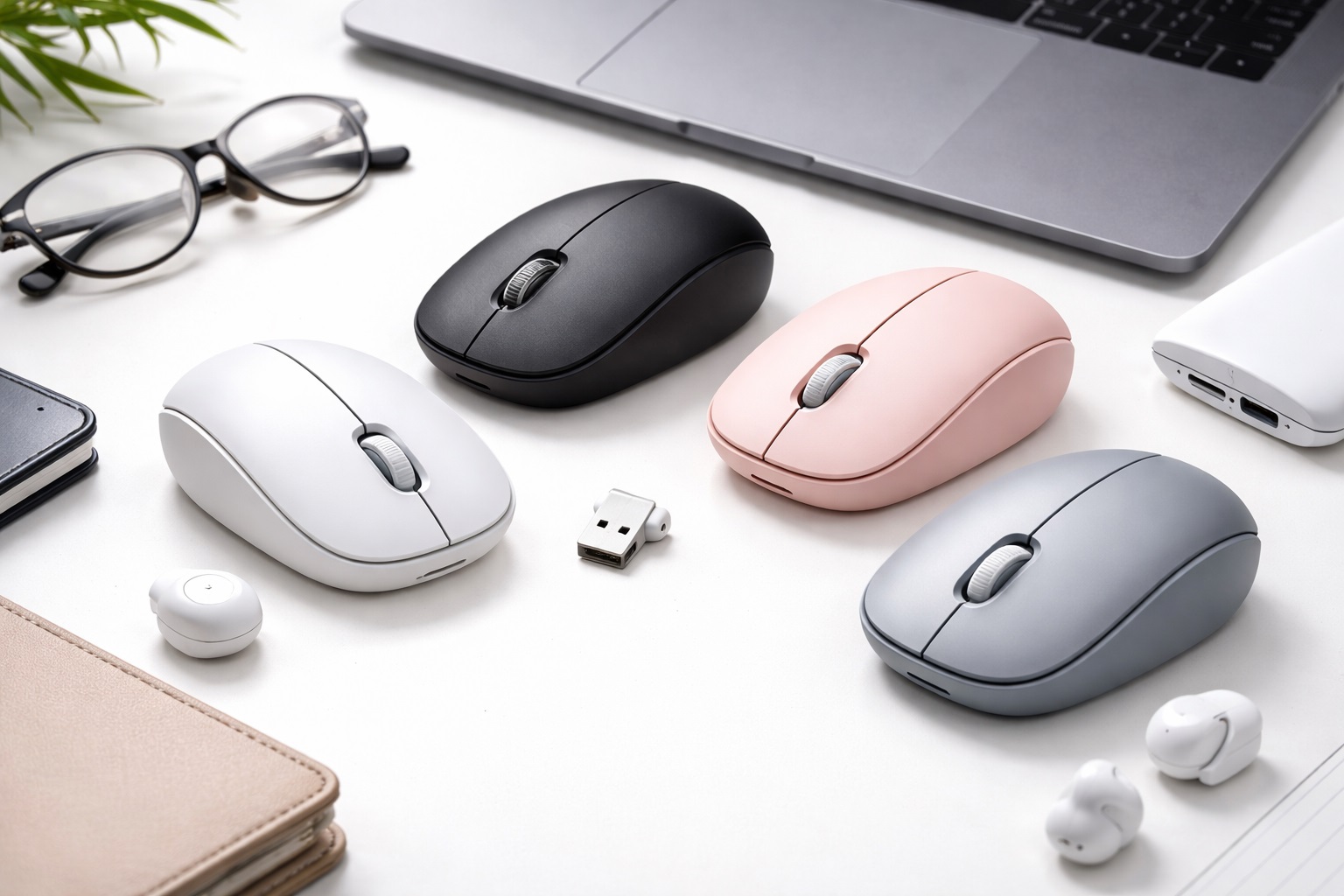
Best Wireless Mice for Beginners: Simple, Reliable & Easy to Set Up
Switching to a wireless mouse for the first time should be a simple upgrade, not a project. Yet plenty of wireless mice on the market are built with power users in mind — loaded with programmable buttons, companion software, adjustable weight systems, and settings menus that mean nothing to someone who just wants their cursor to move smoothly without a cable tangled across the desk. For a first-time buyer, all of that extra complexity is friction, not value.
A genuinely beginner-friendly wireless mouse succeeds by doing the opposite: working the moment it's unboxed, tracking reliably on whatever desk surface is available, and lasting a long time on battery without demanding attention. The differences between models in this category often come down to how the wireless connection is handled, how the mouse is shaped, and how long it runs before needing new batteries or a recharge — details that matter enormously in daily use but rarely show up in a quick glance at a product listing.
This guide covers six distinct approaches to beginner-friendly wireless mice, followed by a detailed buying framework and answers to the questions new wireless mouse buyers ask most often. Each option below is suited to a different kind of first-time buyer, so the aim is to help you find the one that matches your setup and habits rather than simply pointing to whatever is most popular.
It's worth remembering that "beginner-friendly" doesn't mean lower quality — it means the product's complexity has been deliberately minimized rather than its performance. A mouse built with beginners in mind can still track accurately, feel comfortable, and last for years; it simply doesn't ask the user to configure anything or learn unfamiliar terminology to get there. That distinction is useful to keep in mind while comparing options, since the simplest-looking product on a shelf is often the most thoughtfully designed one for someone who just wants a mouse that works.
None of this needs to feel like a major research project, either. The categories below are deliberately narrow and specific, so the fastest way to find your fit is to identify which single constraint matters most to you — port availability, hand comfort, portability, or budget — and start with the category built around that one factor rather than trying to weigh all of them equally at once.
Top Picks Reviewed
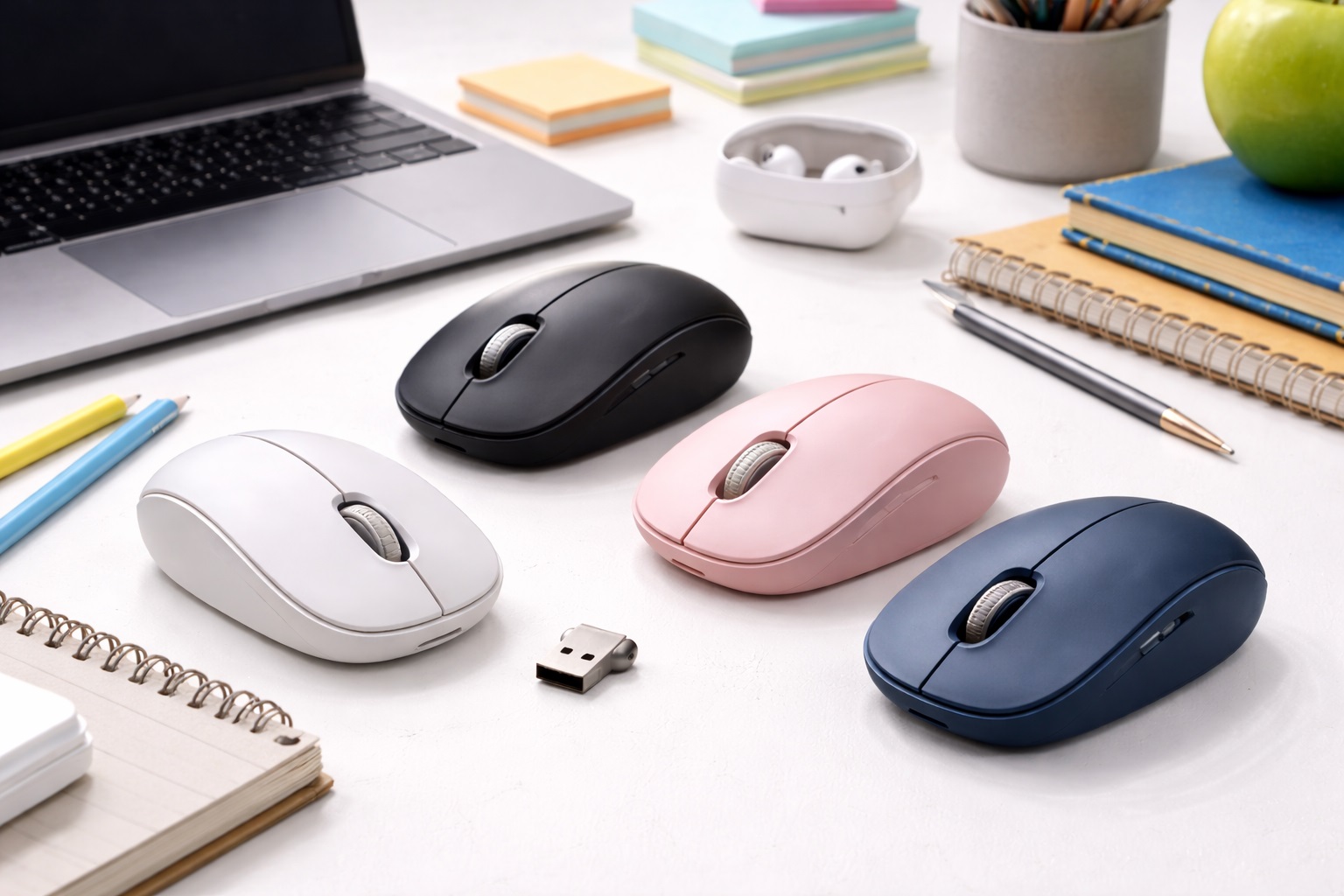
Basic USB Receiver Mouse – Best For Simplest Plug-and-Play Setup
This category uses a small USB dongle that plugs into a computer's USB port and pairs with the mouse automatically, right out of the box. There's no app to install, no Bluetooth menu to navigate, and no pairing code to enter — you plug it in and the cursor moves. For someone who has never used a wireless mouse before and simply wants it to work without any setup steps, this is usually the most foolproof starting point. Because the receiver and mouse are pre-paired at the factory, there's no risk of a confusing setup screen or a pairing code that doesn't seem to work.
- Pros:
- Works immediately after plugging in the receiver, with zero configuration
- No software installation or account setup required
- Generally very reliable, stable connection once paired
- Cons:
- Uses up a USB port, which can matter on laptops with limited ports
- The small receiver is easy to lose if removed and misplaced
Best For: First-time wireless mouse users who want the simplest possible setup with no learning curve at all.
Why We Recommend It: It removes every possible point of confusion for someone new to wireless peripherals, making the transition from a wired mouse feel effortless rather than intimidating.
Bluetooth Beginner Mouse – Best For Cutting Out the USB Port
Rather than relying on a physical USB receiver, this category connects directly through a computer's built-in Bluetooth radio. This means no port is used at all, which matters increasingly as laptops ship with fewer USB ports. The tradeoff is a slightly more involved initial pairing process, usually requiring a few taps through a Bluetooth settings menu the first time. Once that one-time setup is done, though, the mouse typically reconnects automatically every time it's turned on near the paired computer.
- Pros:
- Frees up a USB port that would otherwise be used by a receiver
- No small receiver dongle to lose or misplace
- Works well with laptops and tablets that have limited ports
- Cons:
- Initial pairing requires a few extra steps compared to plug-and-play receivers
- Requires a computer with built-in Bluetooth support
Best For: Beginners using a modern laptop with limited USB ports who don't want to sacrifice one to a mouse receiver.
Why We Recommend It: Once paired, it offers the same effortless day-to-day experience as a USB receiver mouse while solving the port-scarcity problem that increasingly affects thin, modern laptops.
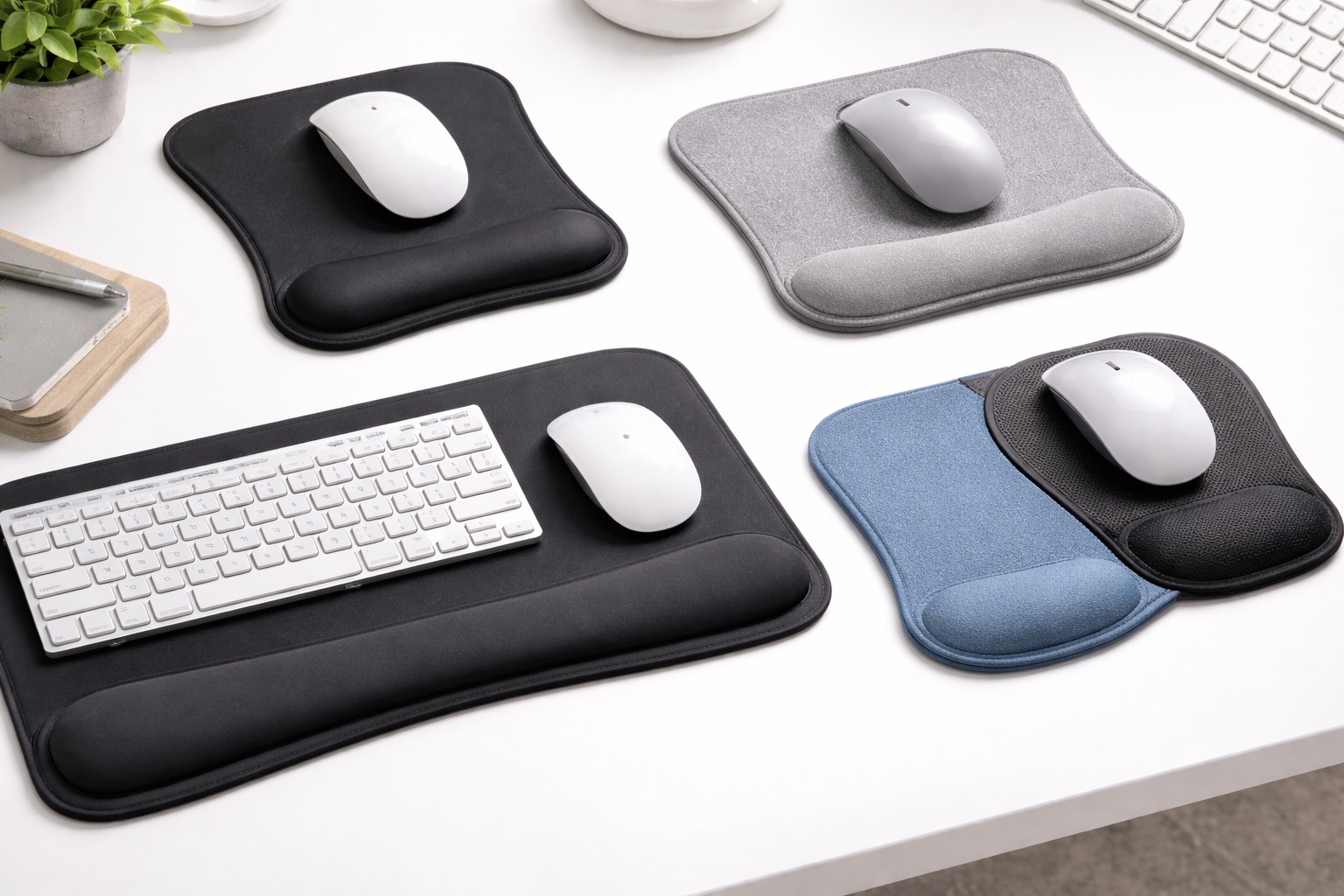
Ergonomic Beginner Mouse – Best For All-Day Comfort
Standard mouse shapes can cause noticeable wrist and hand strain over a long day of use, especially for someone switching from a different input device or working longer hours than before. An ergonomic beginner mouse uses a contoured shape designed to keep the wrist in a more natural position, without requiring any extra software knowledge to benefit from the improved comfort. Many people don't realize how much strain a standard mouse shape causes until they switch to a contoured design and notice the difference after just a few days.
- Pros:
- Reduces wrist and hand strain during long work sessions
- Comfort benefits require no configuration — the shape does the work
- A good match for anyone transitioning from extended daily computer use
- Cons:
- Ergonomic shapes don't suit every hand size or grip style equally well
- Often bulkier than a standard mouse, which can affect portability
Best For: Beginners who spend many hours a day at a computer and want built-in comfort without learning ergonomic software settings.
Why We Recommend It: It solves a genuine physical comfort problem through design alone, which fits the beginner-friendly philosophy of working well without requiring the user to configure anything.
Budget Simple Wireless Mouse – Best For Tight Budgets
Not every first-time buyer wants to spend much on a mouse, especially before knowing whether they'll prefer wireless over wired long-term. A budget-focused option in this category strips away extras like ergonomic shaping or premium materials, focusing purely on reliable basic function at the lowest reasonable price. It's a sensible starting point for anyone who isn't yet sure whether they'll stick with wireless long-term and doesn't want to commit much money to find out.
- Pros:
- Low price makes it an easy, low-risk first purchase
- Still delivers the core plug-and-play wireless experience
- A sensible way to test whether wireless suits your workflow before spending more
- Cons:
- Build quality and button feel are generally more basic than pricier options
- Battery life may be shorter than premium alternatives
Best For: First-time buyers who want to try a wireless mouse without committing much money before they know their preferences.
Why We Recommend It: It delivers the essential wireless experience at minimal cost, making it a reasonable low-commitment way to find out whether wireless is the right long-term fit.
2.4GHz Beginner Mouse – Best For Lag-Free Reliability
This category uses a dedicated 2.4GHz radio connection through a USB receiver, a technology distinct from Bluetooth that's generally known for very low latency and a stable connection even in rooms with several other wireless devices. For beginners who've heard stories about wireless mice lagging or disconnecting, this technology directly addresses that concern. It's the connection type most likely to feel indistinguishable from a wired mouse during actual daily use, which matters most to someone still deciding whether wireless can really match their old setup.
- Pros:
- Very low latency, comparable to a wired connection in daily use
- Stable connection that holds up well even with other wireless devices nearby
- Simple pairing that typically works the moment the receiver is plugged in
- Cons:
- Requires a free USB port for the receiver, same as basic USB models
- Losing the small receiver means losing the connection entirely
Best For: Beginners specifically worried about lag or connection drops who want the most dependable wireless performance available.
Why We Recommend It: It directly answers the most common hesitation new wireless mouse buyers have — whether a wireless connection can really feel as responsive as a wired one — with a resounding yes in normal use.
Compact Beginner Mouse – Best For Travel and Small Bags
Sized smaller than a standard mouse, this category is built for portability rather than desk-bound comfort. It's designed to slip into a laptop bag alongside a charger and notebook, making it a natural fit for beginners who split time between a desk and working on the go, such as students or early-career remote workers. It's a practical choice for anyone who has grown tired of relying on a laptop's built-in trackpad while away from a main desk setup.
- Pros:
- Small enough to travel easily in a laptop bag or backpack pocket
- Lighter than full-size mice, adding minimal weight to a bag
- Still delivers the same plug-and-play simplicity as larger beginner models
- Cons:
- Smaller size can feel less comfortable during very long sessions
- May not suit users with larger hands as well as a full-size mouse
Best For: Beginners who move between locations regularly and need a mouse that travels as easily as their laptop.
Why We Recommend It: It solves the specific problem of portability without sacrificing the plug-and-play simplicity that defines this entire beginner category.
Buying Guide: How to Choose the Best Wireless Mouse for Beginners
Before making a purchase, it helps to separate the factors that genuinely affect a beginner's day-to-day experience from ones that matter more to advanced or specialized users but add unnecessary complexity for a first-time buyer.
1. Plug-and-Play USB Receiver Setup
For the simplest possible experience, a USB receiver that pairs automatically the moment it's plugged in removes any risk of a confusing setup process. This is often the most beginner-friendly connection method available, requiring no technical knowledge at all, which matters most for anyone who has never configured a wireless peripheral before.
2. No Driver Software Required
Some mice require installing companion software to unlock full functionality, which adds an unnecessary step for a beginner who just wants basic cursor movement and clicking. Favor mice that work fully with built-in operating system drivers rather than requiring extra downloads or account sign-ups.
3. Comfortable Standard Grip
Even without ergonomic shaping, a mouse should feel reasonably comfortable to hold for extended periods. Consider your hand size relative to the mouse's dimensions, since a mouse too small or too large for your hand can cause discomfort regardless of other features it offers.
4. Reliable Tracking on Common Surfaces
A mouse that struggles to track accurately on a wooden desk, fabric mousepad, or glass surface creates daily frustration. Check whether the sensor is described as suitable for a range of common surfaces rather than requiring a specialized mousepad you'd need to buy separately.
5. Long Battery Life for Worry-Free Use
For a beginner, nothing undermines confidence in a wireless mouse faster than unexpectedly running out of battery mid-task. Favor options with a longer stated battery life, and consider whether the mouse uses replaceable batteries or a rechargeable internal battery, since each has different practical implications for how you'll manage it long-term.
6. Connection Type: USB Receiver Versus Bluetooth
Each connection method has genuine tradeoffs. A USB receiver tends to be simpler to set up but uses a port, while Bluetooth frees up ports but requires a slightly more involved initial pairing. Choose based on how many free USB ports your computer actually has available day to day.
7. Size and Portability Needs
Think honestly about whether the mouse will stay on one desk or travel with you regularly. A compact mouse suits portability, while a larger mouse often offers more comfort for extended desk-based sessions where portability isn't a concern.
8. Button Layout and Simplicity
A beginner-friendly mouse doesn't need an abundance of extra buttons that go unused. A simple, familiar layout with standard left-click, right-click, and scroll wheel functionality is usually all that's needed, without added complexity that has no real benefit for basic use and just adds to the price.
9. Build Quality and Click Durability
Buttons that feel mushy or inconsistent quickly become an annoyance in daily use. Reading user feedback on click quality and overall build can reveal issues that aren't obvious from a spec sheet or product photo alone, especially regarding how the buttons hold up after months of regular clicking.
10. Price Relative to Actual Needs
A beginner typically doesn't need to spend heavily on advanced sensor technology or programmable buttons they won't use. Weigh the price against genuinely useful features like reliable tracking and long battery life rather than premium extras aimed at specialized or competitive users.
11. Warranty and Manufacturer Support
A reasonable warranty period offers a useful signal of build confidence, and it's worth checking before purchase, especially for anyone new to a brand or unfamiliar with how reliable a specific manufacturer's peripherals tend to be over time.
12. Compatibility With Your Operating System
Confirm the mouse works fully with your specific operating system without requiring extra drivers or losing functionality. Most basic wireless mice work broadly across systems, but it's worth double-checking before purchase, particularly for less common or older operating system setups.
13. Understanding Polling Rate and Why Beginners Rarely Need to Worry About It
Polling rate refers to how frequently a mouse reports its position to a computer, and it's a spec that shows up often in marketing for gaming-focused mice. For everyday beginner use — browsing, document editing, general navigation — the default polling rate on virtually any modern wireless mouse is more than sufficient, and it's not a spec worth spending extra time researching for a first purchase. This is a good example of a feature that matters considerably to a specialized user group but adds no real value to a beginner's daily experience.
14. What a Reasonable Adjustment Period Looks Like
Switching from a wired mouse, a laptop trackpad, or a different mouse shape entirely usually involves a short adjustment period, often just a day or two, before the new device feels fully natural. This is a normal part of adapting to any new input device rather than a sign that the product itself is a poor fit. Giving a new mouse a fair trial period of a few full days of normal use, rather than judging it within the first few minutes, leads to a more accurate sense of whether it's genuinely comfortable for your hand and habits.
Frequently Asked Questions
Is a USB receiver mouse or Bluetooth mouse better for a first-time buyer?
Both work well for beginners, but a USB receiver mouse is generally considered the simpler starting point since it pairs automatically with no setup steps. A Bluetooth mouse is worth considering primarily if you're short on free USB ports, since its initial pairing process requires a few extra steps through a settings menu.
How long does the battery typically last in a beginner wireless mouse?
This varies significantly by product, ranging from a few weeks to well over a year depending on the mouse's power efficiency and battery type. Checking the manufacturer's stated battery life estimate before purchase gives a reasonable idea of what to expect in regular daily use, though actual results depend on how many hours a day the mouse is active.
Do I need to install software to use a wireless mouse?
For most basic beginner-oriented wireless mice, no software installation is required — the mouse works using drivers already built into modern operating systems. Software is typically only necessary for mice with programmable buttons or custom settings, which beginner-focused models generally don't include.
What should I do if my wireless mouse stops responding?
First check the battery level, since a low or dead battery is the most common cause of connection problems. If the battery isn't the issue, try unplugging and replugging a USB receiver, or turning Bluetooth off and back on if using a Bluetooth connection, before assuming there's a hardware fault. Restarting the computer itself also resolves a surprising number of connection glitches that have nothing to do with the mouse.
Can a wireless mouse work as well as a wired one for everyday tasks?
Yes, for typical everyday tasks like browsing, document editing, and general computer use, a good wireless mouse performs essentially the same as a wired one. The main differences that matter to advanced users, such as extremely low input latency for competitive gaming, generally aren't noticeable in everyday beginner use, and most people who switch report no meaningful downside after the first day or two of adjustment.
What size mouse should a beginner choose?
This depends on your hand size and how you plan to use the mouse. A standard or slightly larger mouse tends to be more comfortable for extended desk use, while a compact mouse suits portability and travel. If possible, holding a mouse in person before buying, even a similar model, can help gauge comfort.
Is it worth paying more for an ergonomic mouse as a beginner?
If you spend many hours a day using a computer, an ergonomic shape can meaningfully reduce strain over time, which may justify the added cost. For lighter, occasional use, a standard-shaped mouse is often perfectly comfortable and may be the more practical choice.
How do I know if a wireless mouse is compatible with my computer?
Check the product's listed compatibility, which usually includes major operating systems and connection requirements such as a USB port or built-in Bluetooth. Most basic wireless mice have broad compatibility, but it's worth confirming before purchase if you use an older or less common system.
Can I lose the USB receiver, and what happens if I do?
Yes, the small receiver can be lost if removed from the computer and misplaced, and without it a USB-receiver-based mouse generally can't connect. Some manufacturers offer replacement receivers, though this isn't guaranteed across all products, so it's worth being careful about where the receiver is stored when not in use. Many people simply leave the receiver plugged in permanently to avoid this problem entirely, since it's small enough to stay out of the way in most setups.
Do beginner wireless mice work well for both left-handed and right-handed users?
Many basic wireless mice use a symmetrical shape that works reasonably well for both left- and right-handed users. Ergonomic mice, however, are often designed specifically for right-handed use, so left-handed buyers should check the product description carefully before choosing an ergonomic option.
Can I return a wireless mouse if it doesn't feel comfortable after a few days?
Most retailers offer a return window, typically between 15 and 30 days. Checking the specific return policy before purchasing, and keeping original packaging during the evaluation period, is a sensible precaution in case the mouse doesn't suit your grip or hand size.
Are more expensive wireless mice always more reliable than budget options?
Not necessarily. While premium options often include additional features and sometimes better build materials, many budget-friendly wireless mice from established brands are perfectly reliable for everyday beginner use. Reading verified user reviews for a specific product is a more useful indicator of reliability than price alone.
Will a wireless mouse work if my computer's USB ports are all in use?
If all your USB ports are occupied, a Bluetooth mouse is generally the better choice, since it connects through your computer's built-in Bluetooth radio rather than needing a dedicated port. A basic USB hub is another option, though it adds an extra piece of hardware to manage.
How do I switch a wireless mouse between multiple computers?
Some wireless mice support switching between paired devices, often through a button on the underside of the mouse, while basic beginner models are typically designed to stay paired with a single computer at a time. If switching between devices matters to you, check the specific product's multi-device support before buying.
Do wireless mice cause any noticeable delay compared to wired mice?
For everyday tasks like browsing, typing, and document work, a quality wireless mouse feels essentially identical to a wired one, with no delay a typical user would notice. The most technology-sensitive use cases, such as competitive gaming, are the only scenarios where extremely minor differences in latency might occasionally be perceptible, and even then usually only with certain connection types.
What's the difference between a 2.4GHz receiver and a Bluetooth connection in practice?
Both are wireless, but they use different underlying radio technology. A 2.4GHz receiver typically offers a very stable, low-latency connection dedicated solely to that mouse, while Bluetooth shares a general-purpose wireless protocol with your device's other Bluetooth accessories. In everyday use, both work well, though 2.4GHz connections are sometimes considered marginally more consistent for precise cursor movement.
Should a beginner buy a mouse with a scroll wheel that clicks sideways?
A basic scroll wheel that only moves up and down is sufficient for the vast majority of everyday tasks, including browsing and document editing. Side-scrolling or tilt-click functionality is a nice extra for people who regularly work with wide spreadsheets, but it isn't a feature most beginners will need or notice missing.
18. Should I clean my wireless mouse, and how often?
Yes, wiping down the outer surface with a slightly damp cloth every few weeks helps prevent buildup from regular hand contact, and gently cleaning the tracking sensor on the underside occasionally can help maintain accurate tracking if you notice any inconsistency. Avoid using harsh cleaning chemicals directly on the device.
19. Can I use a wireless mouse and my laptop's trackpad at the same time?
Yes, most laptops allow both to function simultaneously without any conflict, and some people naturally switch between the two depending on the task, using the trackpad for quick adjustments and the mouse for more extended work.
Final Verdict
The right wireless mouse for a beginner isn't necessarily the one with the most features — it's the one that works immediately, stays comfortable through daily use, and doesn't require learning anything new. Getting there means being honest about your setup, such as how many free USB ports you have, and your habits, such as whether the mouse needs to travel with you.
- For the simplest possible experience: a basic USB receiver or 2.4GHz mouse offers true plug-and-play setup with no learning curve.
- For modern laptops with limited ports: a Bluetooth mouse frees up a port at the cost of a slightly more involved initial pairing step.
- For long daily use or travel needs: an ergonomic or compact mouse addresses comfort or portability specifically, on top of the same beginner-friendly simplicity.
Match the mouse to your actual setup and daily habits rather than choosing based on the longest feature list. A wireless mouse that works reliably from the moment you plug it in, and that stays comfortable through a full day of use, is the one that will actually earn a permanent place on your desk.
It's also a reasonably low-stakes decision compared to most computer accessories. Most beginner-friendly options across every category here are inexpensive enough that a first choice which doesn't quite fit your grip or workflow isn't a significant loss. Many people end up trying more than one style before landing on a lasting favorite, and that's a perfectly normal part of figuring out what actually feels right in daily use rather than a sign the first purchase was a mistake.