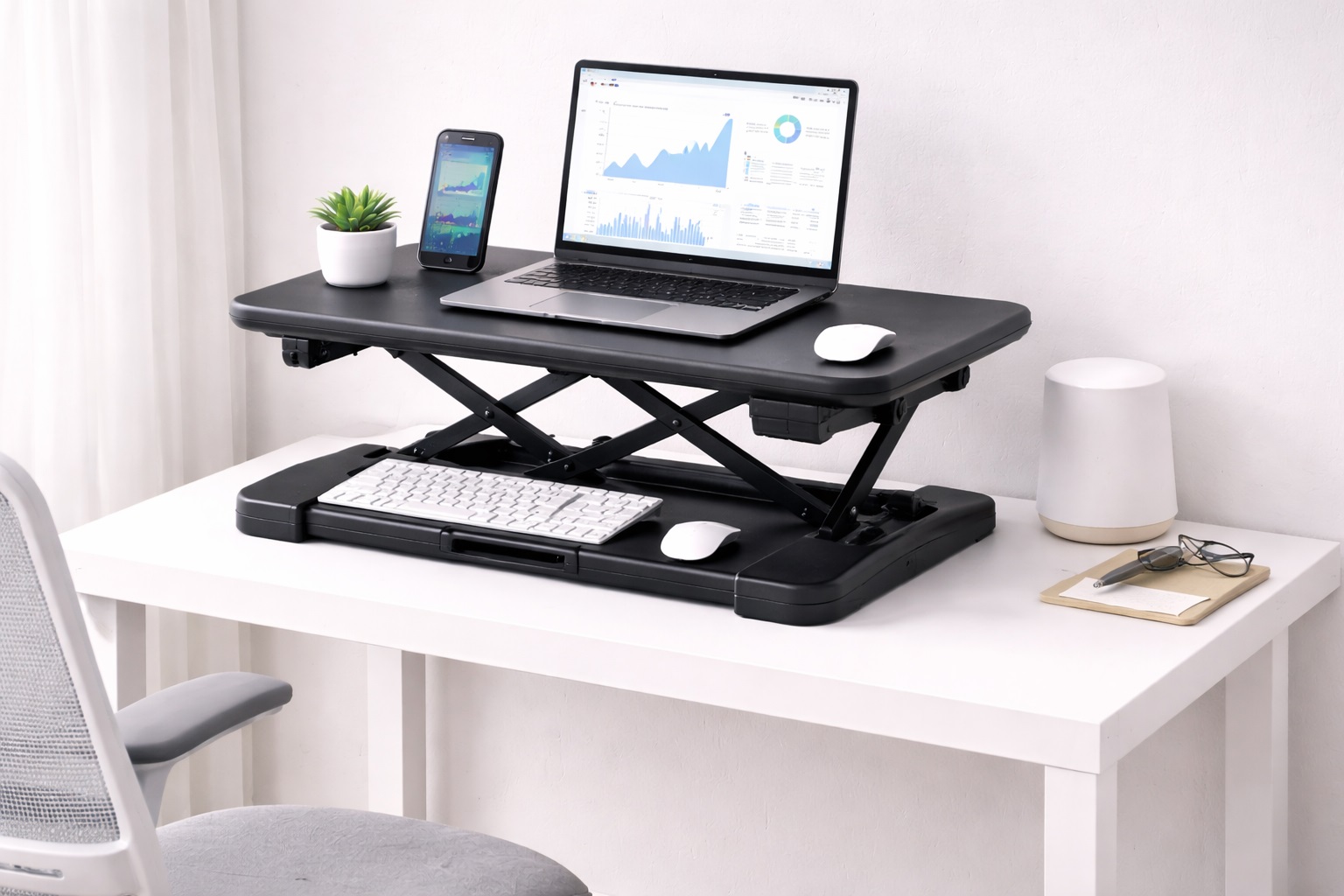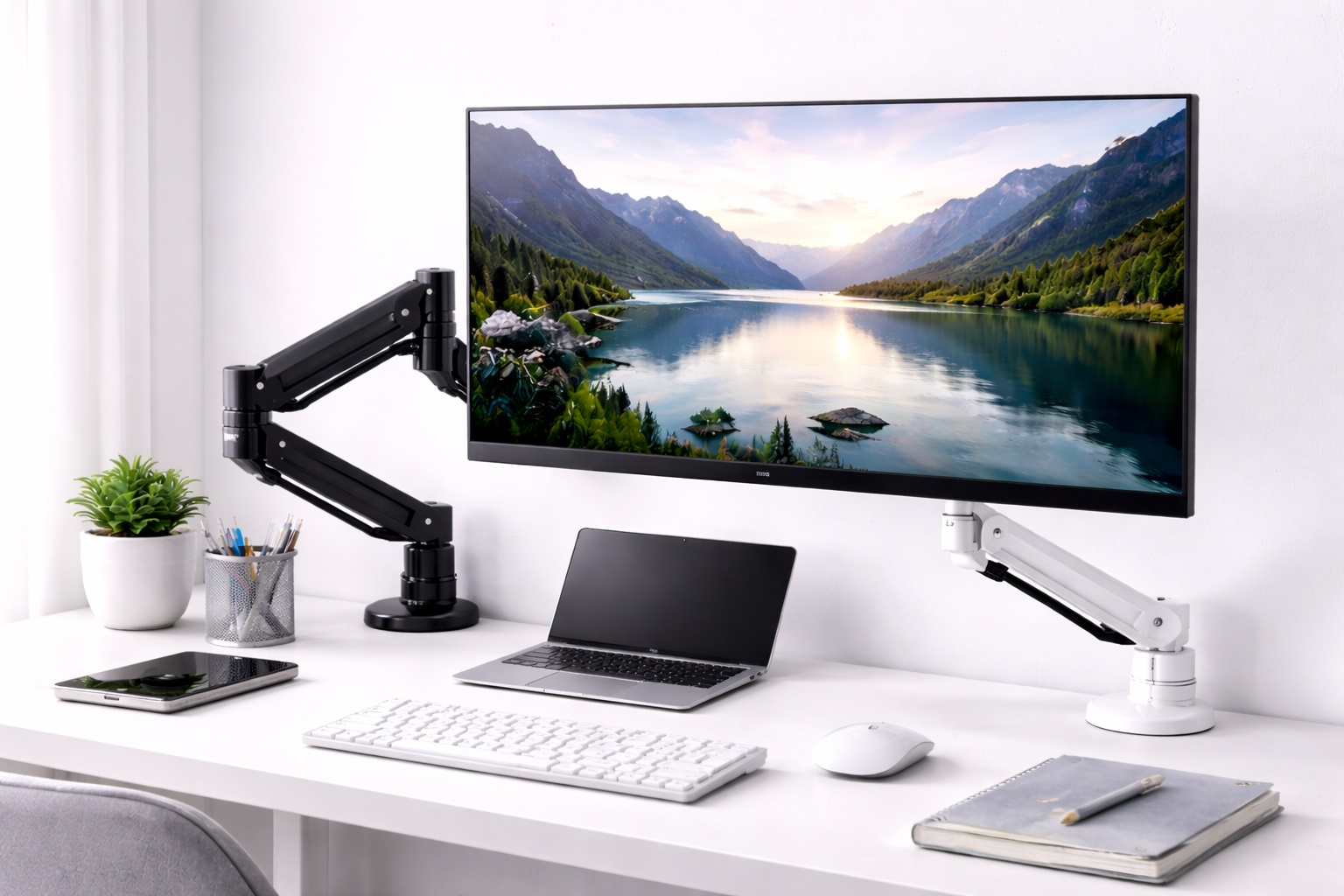
Best Desk Shelves for Small Desks: Vertical Organization in a Tight Space
A small desk amplifies every organizational problem that a larger desk can absorb without much thought. There's no spare corner to stash a notebook, no extra depth to slide a speaker out of the way, and no forgiving margin if a shelf's footprint turns out slightly larger than expected. Choosing a desk shelf for this kind of space means prioritizing differently than someone shopping for a spacious home office desk.
The core challenge is that most desk shelf designs are built with an average or generous desk in mind, then marketed as suitable for "any desk" without much attention to how they behave on a genuinely small one. A shelf that leaves a comfortable amount of working space on a 30-inch-deep desk can consume most of the usable surface on a 20-inch-deep one, which makes generic recommendations far less reliable for compact setups.
Small desks show up in a wide range of living situations — a studio apartment corner, a child's bedroom desk repurposed for remote schoolwork, a narrow secretary desk inherited from a previous tenant, or simply a deliberate choice to keep a room's footprint minimal. None of these situations call for the same shelf a spacious dedicated home office would use, yet most buying guides don't distinguish between them at all.
This guide compares the shelf styles that perform best specifically on small desks, followed by a buying framework built around footprint, depth, and installation trade-offs rather than generic organizational advice, and answers to the questions compact-desk owners ask most often. The goal is finding a shelf that adds genuine storage value without eating into the limited working surface you already have.
Reading dimensions carefully matters more here than in almost any other furniture accessory purchase. On a spacious desk, a shelf that's an inch or two larger than expected barely registers. On a small desk, that same discrepancy can be the difference between a comfortable amount of remaining workspace and a surface that feels perpetually tight no matter how the rest of the desk is organized.
It helps to think about this purchase in terms of net gain rather than gross storage capacity. A large shelf that technically holds more items but leaves your desk feeling cramped and difficult to work at isn't actually a win. The right small-desk shelf recovers more usable space than it consumes, which is a different calculation than simply maximizing storage volume.
This net-gain framing is worth returning to throughout the buying process, since it's easy to get pulled toward a shelf with more compartments or a larger stated capacity without stopping to check whether that extra capacity is actually needed. On a small desk, a shelf that's slightly undersized for your ambitions but genuinely fits the space tends to outperform a larger one that technically holds more but crowds the desk you have to work at every day.
Rental and installation constraints often matter as much as size for this category. Many small desks belong to renters, students, or anyone in a temporary living situation, which rules out permanent wall installation for a meaningful share of buyers before size is even considered. The buying guide below treats this as a first-order decision alongside footprint rather than an afterthought.
There's also a tendency, when shopping for a small space, to either overcorrect toward the absolute minimum possible shelf or undercorrect by buying a shelf sized for a desk twice as large simply because it was the most prominently featured listing. Both mistakes are common enough to be worth naming directly: the goal is a shelf sized specifically for the desk you actually have, not the smallest theoretically available option or the most popular option regardless of fit.
Top Picks Reviewed
Each of the four options below takes a different approach to minimizing footprint while still delivering genuinely useful storage. Match your choice to your specific desk depth, your rental status, and what you actually need to store rather than to whichever shelf looks most compact in a photo.
1. Compact Monitor Riser Shelf – Best All-Purpose Pick for Small Desks
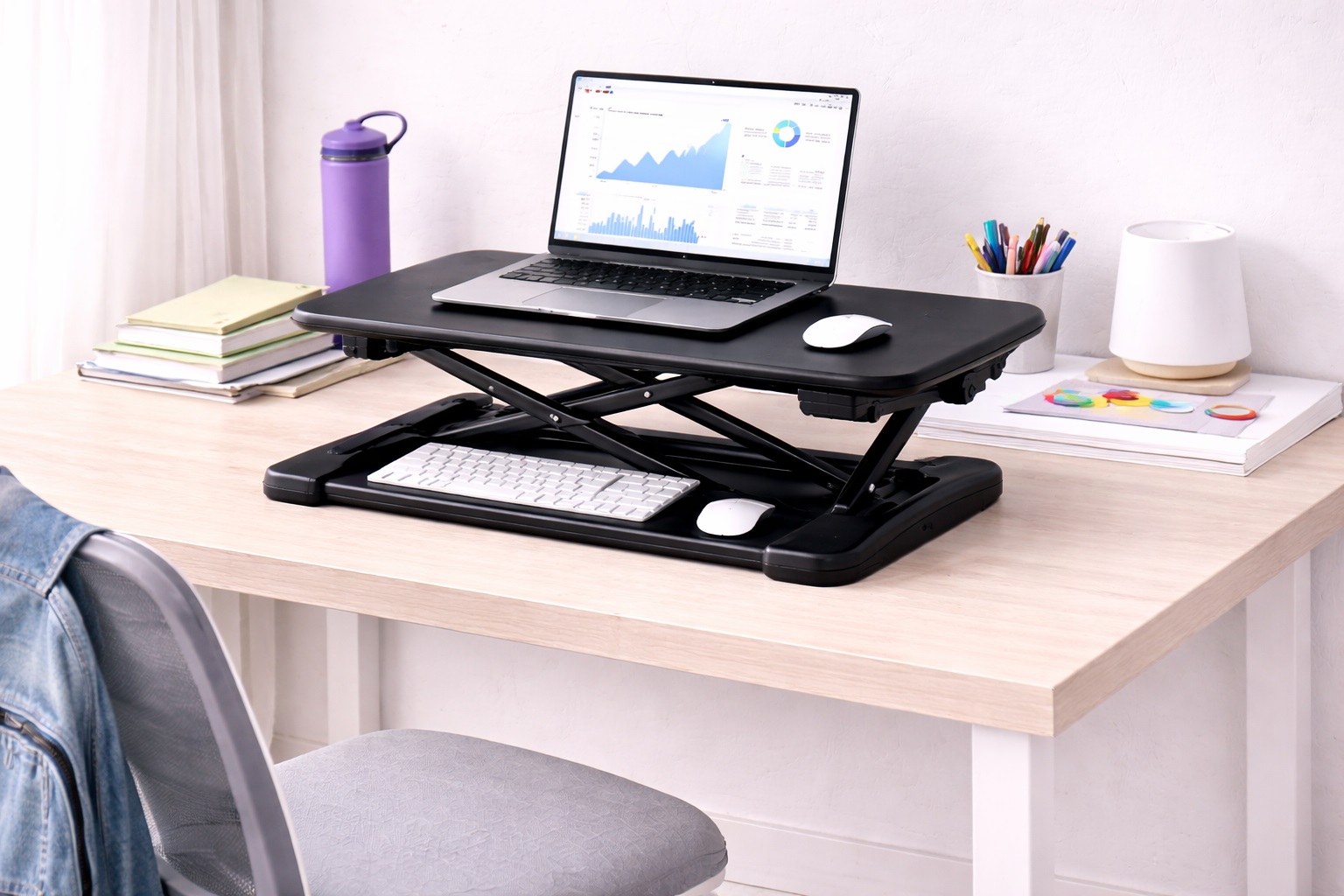
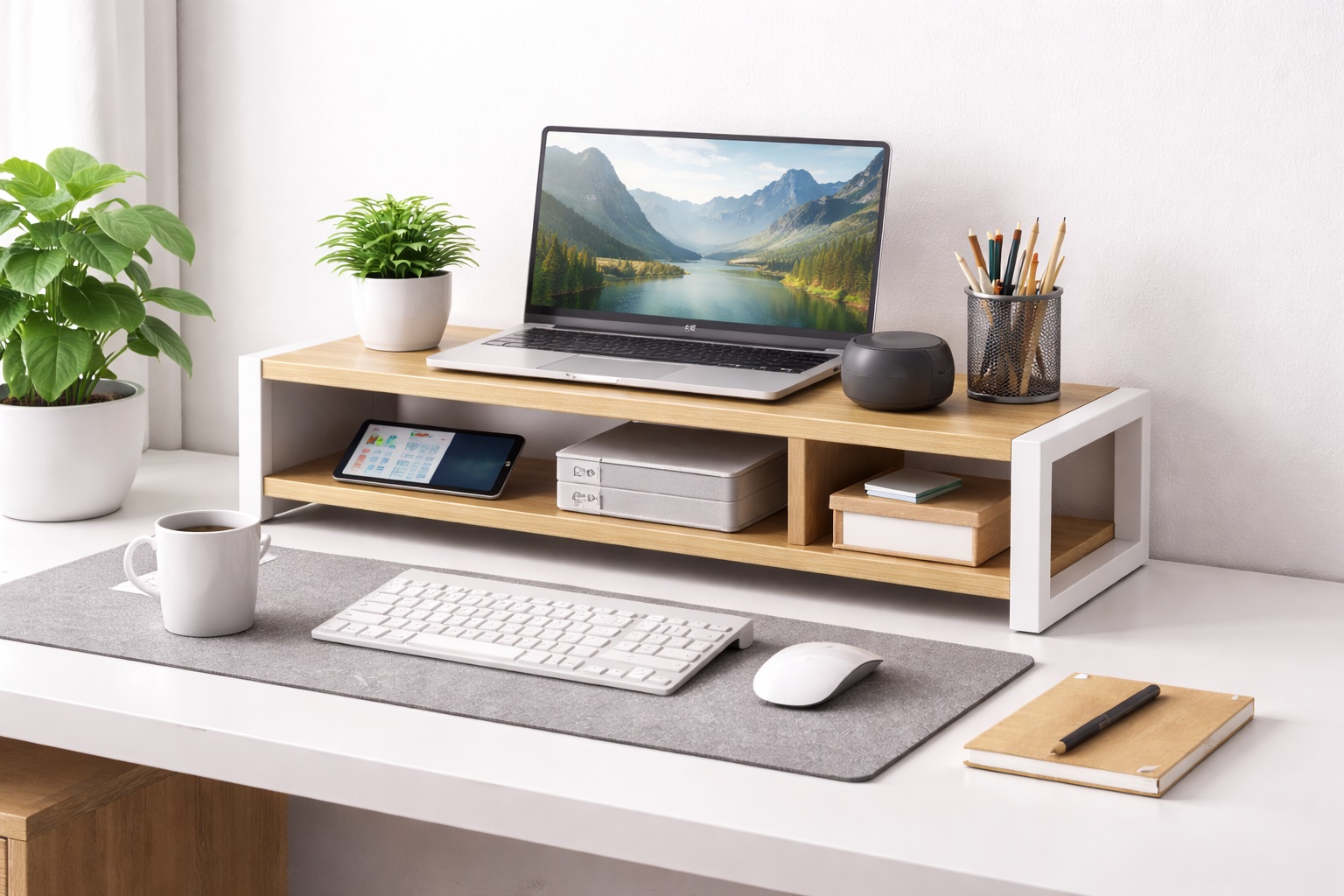
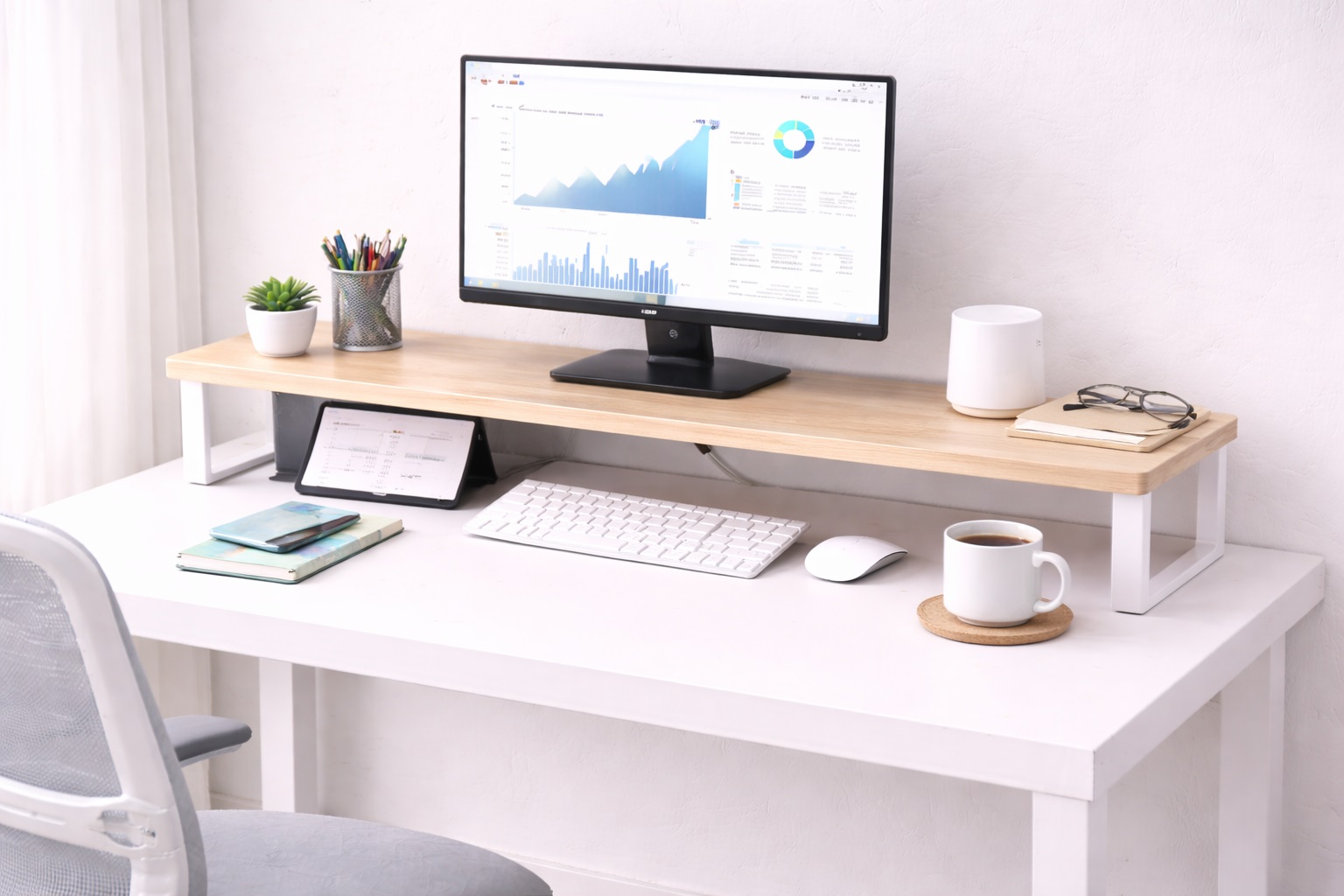
A scaled-down monitor riser with an integrated lower shelf raises the screen to eye level while creating storage underneath sized specifically for a smaller desk footprint. Because the storage space sits directly beneath equipment you already need on the desk, it adds organization without claiming any additional desk area beyond what the monitor already occupied.
Most versions are built from bamboo, MDF, or lightweight metal, each offering a slightly different balance of weight and appearance, and the better-designed compact versions keep the platform shallow enough to avoid crowding a desk that's already tight on depth. Some models also taper the front edge slightly, which shaves a bit more usable working space back without reducing the actual monitor platform area.
- Pros:
- Solves monitor height and storage together without extra footprint
- Shallow, compact design suits desks with limited depth
- Storage stays within easy reach directly under the screen
- Available in finishes that suit most small-desk aesthetics
- Cons:
- Fixed height once placed, with no further adjustment
- Storage capacity is naturally limited by the compact size
Best For: Anyone with a small desk who wants correct monitor height and a modest amount of accessible storage without losing working space. It also suits a first small-desk purchase for someone unsure how much shelving they'll actually use, since the low footprint keeps the downside of getting it slightly wrong fairly minimal.
Why We Recommend It: On a small desk, every accessory needs to earn its footprint twice over, and a compact riser-shelf does exactly that by solving two needs in the same space the monitor already required.
2. Slim Freestanding Organizer Shelf – Best for Multi-Zone Storage Without Installation
This style provides several narrow storage tiers in a slim, low-depth footprint designed specifically to sit at the rear of a small desk without crowding the working area in front. Unlike a full-size freestanding unit, the slim version trades some capacity for a meaningfully smaller footprint, which matters directly on a compact desk.
Because it requires no installation, it can be repositioned or removed entirely as your setup changes, offering more flexibility than a fixed shelf while still providing genuine multi-level organization for books, accessories, and small items. That flexibility matters especially for anyone still experimenting with exactly how they want a small desk arranged before settling on a final layout.
- Pros:
- Slim depth specifically designed not to crowd small desks
- No installation required, unlike wall-mounted alternatives
- Multiple tiers provide organized storage for varied item types
- Fully repositionable or removable as your needs change
- Cons:
- Lower total capacity than a full-size freestanding unit
- Still occupies some desk footprint at the rear of the surface
Best For: Small-desk owners who want organized multi-category storage without giving up significant working surface or drilling into a wall.
Why We Recommend It: The slim profile is specifically engineered around the constraint that matters most for small desks — depth — rather than simply shrinking a full-size design proportionally.
3. Wall-Mounted Floating Shelf – Best for Reclaiming Desk Surface Entirely
A wall-mounted floating shelf positioned above a small desk removes items from the desktop completely, which matters more on a compact desk than almost anywhere else, since every square inch of desktop area is already valuable. Because nothing on the shelf touches the desk itself, this approach recovers the maximum possible working surface of any shelf style.
Installation requires basic tools and wall anchors, and once mounted, the shelf becomes a permanent fixture rather than something repositioned casually — a reasonable trade for the desk space it reclaims on a small setup. On a compact desk in particular, the difference between a shelf resting on the desktop and one floating entirely above it can be the deciding factor in whether the workspace feels usable or perpetually cramped.
- Pros:
- Frees the entire desk surface, which matters most on small desks
- Creates the cleanest possible working area of any shelf style
- Stable, permanent storage regardless of desk size or depth
- Shelf position adjustable at the time of installation
- Cons:
- Requires drilling, which isn't suitable for every rental situation
- Fixed position once installed, with no repositioning afterward
Best For: Small-desk owners who can install wall fixtures and want to recover as much desktop area as physically possible.
Why We Recommend It: On a desk where every inch of surface matters, moving storage entirely off the desktop delivers a bigger practical improvement than it would on a larger, more forgiving desk.
4. Clamp-Mounted Shelf – Best No-Drill Option for Reclaiming Desk Space
This style attaches to the back edge of the desk with a clamp mechanism rather than resting its weight on the desktop or requiring wall drilling, splitting the difference between a freestanding shelf and a wall-mounted one. For renters who want desk-surface recovery without a permanent wall installation, this is often the most practical middle path available.
Clamp mounting does require a compatible desk edge and slightly more setup effort than simply placing a shelf down, but for the right small desk, it reclaims meaningful surface area without any wall modification at all. Because the clamp attaches at the very back edge of the desk, it also avoids intruding into the working depth in front the way even a slim freestanding unit inevitably does.
- Pros:
- Reclaims desk surface without drilling into a wall
- Suitable for renters who need a no-drill solution
- Sturdy once properly clamped to a compatible desk edge
- Removable without leaving marks when moving out
- Cons:
- Requires a desk edge compatible with the clamp mechanism
- Slightly more involved setup than a simple freestanding shelf
Best For: Renters with a small desk who want desktop space recovery without any wall drilling or permanent installation. It also suits anyone who simply prefers not to commit to a fixed shelf position yet, since a clamp can be relocated to a different edge of the desk far more easily than a wall-mounted shelf can be moved.
Why We Recommend It: For the common situation of wanting a wall shelf's desk-space benefit without a wall shelf's permanence, clamp mounting delivers much of that advantage while remaining fully removable.
Buying Guide: How to Choose the Best Desk Shelf for Small Desks
Use these factors to match a shelf to the specific constraints of a small desk rather than to features designed for a larger workspace.
1. Define Exactly What You're Shelving
List specifically what you want on the shelf — monitor only, monitor plus speakers, books, or a mix of small accessories. On a small desk, being precise about this matters more than usual, since there's little room to accommodate a shelf sized for storage you don't actually need. Walking through the specific items on paper before shopping tends to prevent buying a shelf that's either too large or, less commonly, too small for what you actually intended to store.
2. Actual Desk Depth Before Anything Else
Measure your desk's real usable depth first, since this is the single most limiting factor for small desks specifically. A riser-shelf or freestanding unit that fits comfortably on a 28-inch desk can consume nearly all the working space on a 20-inch one. It's worth measuring at more than one point across the desk's width too, since some desks taper slightly or have obstructions that don't show up in a single depth measurement.
3. Monitor Height Relative to Your Eye Level
If choosing a riser-shelf, confirm the height places your screen center at or slightly below seated eye level. Most compact risers stand 4 to 6 inches tall, which suits average seated height, but it's worth double-checking against your own measurements rather than assuming. A quick check with your current monitor position, before and after imagining the added riser height, takes only a moment and avoids a mismatch that's frustrating to correct after purchase.
4. Weight Capacity for Your Actual Items
Verify the shelf's stated capacity comfortably covers everything you plan to place on it. Compact shelves sometimes carry lower weight ratings than full-size versions, so don't assume a smaller shelf automatically scales its capacity down proportionally to what you need. Add up your actual equipment weight rather than estimating, since monitors and small speakers add up faster than most people expect.
5. Rental Compatibility and Installation Requirements
If you're renting, prioritize freestanding, riser, or clamp-mounted designs that avoid wall drilling entirely. Wall-mounted shelves may violate lease terms or simply not be worth the commitment for a temporary living situation, particularly if you expect to move again within a year or two.
6. Material Choice for a Small Visual Footprint
Bamboo is durable and scratch-resistant with a warm appearance. MDF is more affordable but heavier. Lightweight metal frames suit a modern look without adding visual bulk. On a small desk, a lighter-looking material often makes the whole setup feel less crowded than a bulkier equivalent, even when the physical footprint is identical on paper.
7. Cable Management for a Tight Footprint
Some riser-shelves include cable routing holes that keep cords tidy once the monitor is elevated. This matters more on a small desk, where loose cables have fewer places to hide and are more likely to end up visibly tangled across the limited surface, undermining the clean look the shelf was meant to create in the first place.
8. Width Relative to Desk Coverage
Measure your desk's actual width and compare it against the shelf's width before ordering. A shelf that's slightly too wide can overhang the desk edges awkwardly, while one that's too narrow may leave storage unevenly distributed across the surface, creating an unbalanced look on an already compact desk.
9. Clamp or Wall-Mount Compatibility
If considering a clamp-mounted or wall-mounted design, confirm your desk edge or wall type is actually compatible before purchasing. A clamp needs a suitable edge thickness, and a wall mount needs an appropriate anchor point for the intended load, so check manufacturer specifications carefully rather than assuming universal compatibility.
10. Assembly Simplicity
Most freestanding and riser-shelves require minimal assembly, typically attaching legs or side panels. Wall-mounted and clamp-mounted designs require more setup effort. Reading assembly-specific reviews helps avoid frustration with an otherwise simple product, especially if you don't have a full set of tools readily available.
11. Visual Balance on a Small Desk
A shelf that looks proportionate on a large desk can look oversized and cluttered on a small one. Consider how the shelf's visual bulk compares to your desk's actual size, not just whether it technically fits within the available footprint, since a shelf that fits numerically can still look and feel disproportionate once it's actually in place.
12. Checking the Clamp Mechanism's Desk-Edge Requirements
Clamp-mounted shelves specify a minimum and maximum desk-edge thickness the mechanism can grip securely, and a desk that falls outside that range won't clamp properly no matter how sturdy the shelf itself is. Measure your desk's back edge thickness before ordering a clamp-mounted design, since this single spec eliminates more otherwise-suitable products than any other single factor in this style.
13. Testing Fit Before Fully Committing
On a small desk, it's worth placing a piece of cardboard or a stack of books cut to the shelf's approximate footprint on your desk before the product arrives, just to get a physical sense of how much working space will remain. This low-cost test catches a footprint mismatch before you're stuck deciding whether to return an item that technically matched its listed dimensions but still feels wrong in person.
14. Layering Storage Without Doubling Footprint
Rather than buying one larger shelf to solve every storage need at once, consider whether a smaller riser-shelf paired with a single slim wall-mounted or clamp-mounted piece actually recovers more usable space overall than one bigger unit would. On a small desk, two well-placed compact pieces sometimes fit the available space more efficiently than a single shelf sized to do everything at once.
Frequently Asked Questions
1. What's the best desk shelf option for a genuinely small desk?
A compact monitor riser-shelf is usually the safest starting point, since it adds storage without consuming any additional desk footprint beyond what the monitor already occupies. Wall-mounted or clamp-mounted options are worth considering next if more desk surface recovery is needed once the essentials are addressed.
2. Will a standard desk shelf fit a small desk?
Not always — many standard shelves are designed with an average or larger desk in mind. Measure your desk's actual depth and width before assuming a generically marketed shelf will fit comfortably on a compact surface, since listing photos rarely convey true scale accurately.
3. Is a wall-mounted shelf better than a freestanding one for a small desk?
It depends on your rental status and installation comfort. A wall-mounted shelf recovers more desk surface, which matters more on a small desk, but a freestanding or clamp-mounted option avoids drilling entirely for renters or anyone hesitant about permanent installation in a space they don't own.
4. Does a smaller shelf mean less storage capacity?
Generally, yes, to some degree — compact shelves trade some capacity for a reduced footprint. The goal on a small desk isn't maximizing storage volume but finding the amount of storage that fits comfortably without crowding the working area you actually need for daily tasks.
5. Can a desk shelf make a small desk feel more cramped?
Yes, if it's poorly matched to the desk's actual size. An oversized or visually bulky shelf can make a small desk feel more crowded rather than more organized, which is why measuring and considering visual proportion matters as much as raw storage capacity when shopping.
6. What material works best for a small desk shelf?
Lightweight materials like bamboo or thin metal tend to suit small desks well, since they add storage without much visual bulk. Heavier materials like solid wood can look and feel oversized in a compact setup even at the same physical dimensions on paper.
7. Is a clamp-mounted shelf a good alternative to a wall shelf?
Yes, particularly for renters who want desk-surface recovery without drilling. It requires a compatible desk edge and slightly more setup than a simple freestanding unit, but it delivers much of a wall shelf's benefit without the permanence or lease concerns.
8. How much desk depth do I need for a monitor riser-shelf?
Compact riser-shelves typically need somewhat less depth than full-size versions, but it's still worth measuring your desk and comparing it against the specific product's footprint rather than assuming all "compact" listings use the same dimensions across brands.
9. Should I prioritize footprint or storage capacity first?
Footprint first, for a genuinely small desk. A shelf that fits your desk's actual depth and width but offers slightly less storage is more useful day to day than one with more capacity that crowds your working area and makes daily tasks harder.
10. Can I return a desk shelf that turns out too large for my desk?
Most retailers offer a return window of roughly 15 to 30 days. It's worth test-placing the shelf on your desk as soon as it arrives to confirm the fit works in practice, not just according to the listed measurements on the product page.
11. Does brand matter more for small-desk shelves specifically?
Somewhat, since compact designs leave less margin for engineering shortcuts, and a poorly built small shelf tends to show stability or fit issues more readily than an equivalent full-size version. Reading reviews specific to the compact variant of a product line is worthwhile before committing.
12. Can I use two different shelf styles together on a small desk?
Yes, and it's often a better strategy than relying on one larger shelf. A compact riser-shelf for immediate under-monitor storage paired with a slim wall-mounted or clamp-mounted shelf for less frequently used items tends to use a small desk's limited space more efficiently than a single bigger unit.
13. How do I know if my desk edge is compatible with a clamp-mounted shelf?
Check the manufacturer's listed minimum and maximum edge thickness against your desk's actual back edge measurement. A rounded, beveled, or unusually thick edge can also prevent a secure clamp fit even when the raw thickness measurement falls within range, so it's worth checking edge shape as well as thickness.
14. Is it better to undersize or oversize a shelf when unsure on a small desk?
Undersizing is generally the safer choice. A slightly smaller shelf that comfortably fits leaves you with a functional desk and the option to add a second piece later, while an oversized shelf can make the desk feel cramped in a way that's harder to correct without returning the item entirely.
Final Verdict
- Best All-Purpose Pick for Small Desks: Compact Monitor Riser Shelf — storage and ergonomics solved without extra footprint.
- Best for Multi-Zone Storage Without Installation: Slim Freestanding Organizer Shelf — organized tiers sized for tight desk depth.
- Best for Reclaiming Desk Surface Entirely: Wall-Mounted Floating Shelf — maximum desktop recovery for permanent setups.
- Best No-Drill Option for Reclaiming Desk Space: Clamp-Mounted Shelf — desk-surface recovery without wall installation.
The right desk shelf for a small desk comes down to how much desk surface you need to recover, whether wall installation is realistic for your living situation, and exactly what you're trying to store. A compact riser-shelf handles the most common need efficiently, while wall-mounted and clamp-mounted options make sense when reclaiming desktop space becomes the priority.
If you're still deciding, start with the compact riser-shelf as a low-risk first step, since it adds organization without any real downside beyond the modest cost. From there, you can gauge how much additional storage you actually need before committing to a wall-mounted or clamp-mounted solution that involves more installation effort or a more permanent commitment to a specific layout.
Whichever style you choose, measure your desk carefully before ordering rather than trusting a general "compact" or "small desk" label on the listing. On a genuinely tight desk, a difference of just a couple of inches in footprint can be the difference between a shelf that meaningfully improves your workspace and one that quietly makes it feel more crowded than before.
It's also worth revisiting the arrangement after a few weeks of actual use rather than assuming the first setup is final. Items that seemed essential to keep within reach sometimes turn out to be rarely used, freeing up room to rearrange the shelf's contents or even downsize to a smaller unit later. On a small desk specifically, this kind of periodic reassessment tends to matter more than it would on a larger desk with room to spare for trial and error.
Finally, don't overlook how a new shelf interacts with anything else already occupying the limited space around your desk — a nearby bookshelf, a wall outlet, or a window that provides natural light. A shelf that blocks a light switch, sits awkwardly close to a window frame, or interferes with an existing storage piece can undo much of the organizational benefit it was meant to provide, so it's worth walking through the full space mentally before finalizing a purchase, not just the desk surface in isolation.