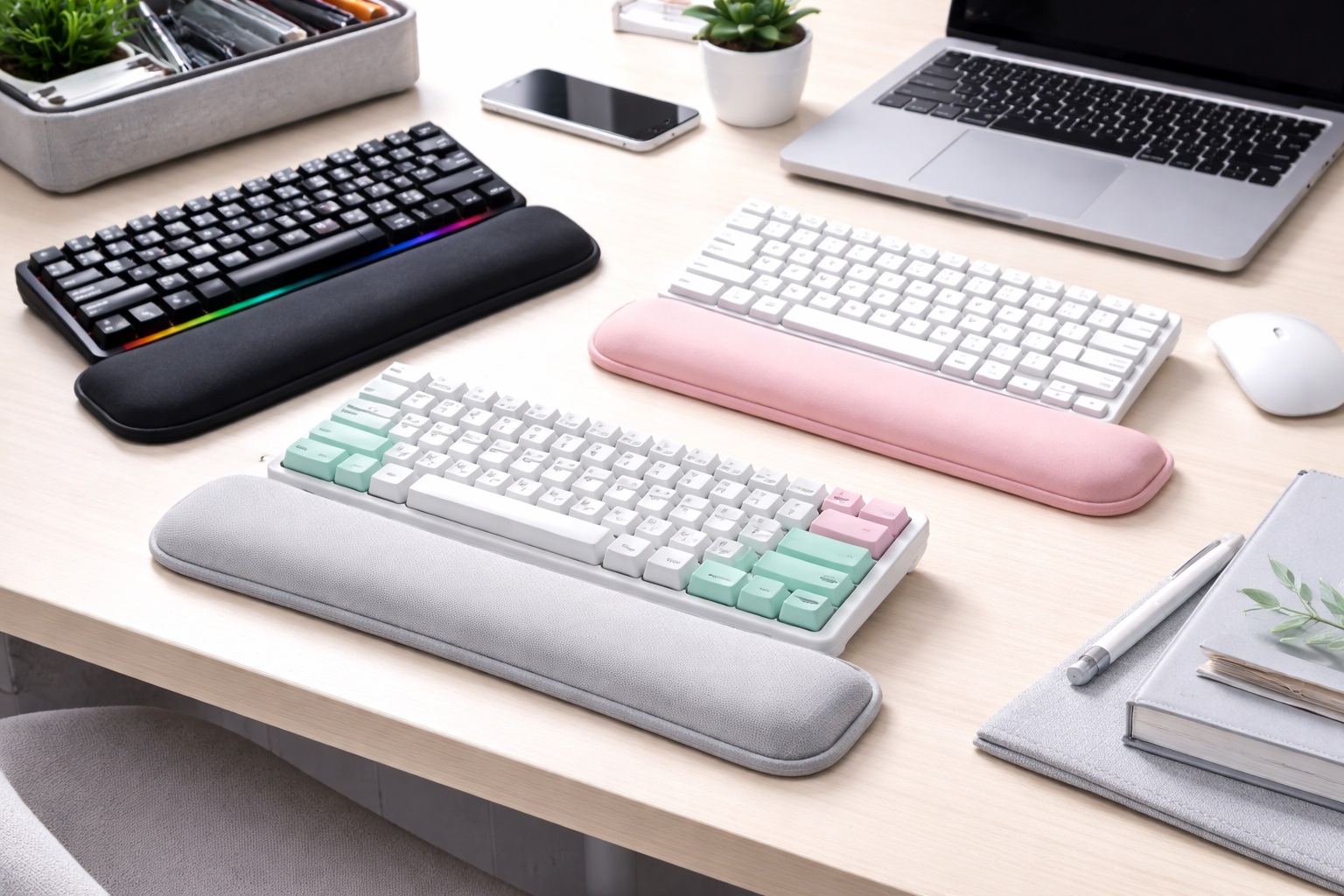
Best Keyboard Wrist Rests for Small Desks (2026 Guide)
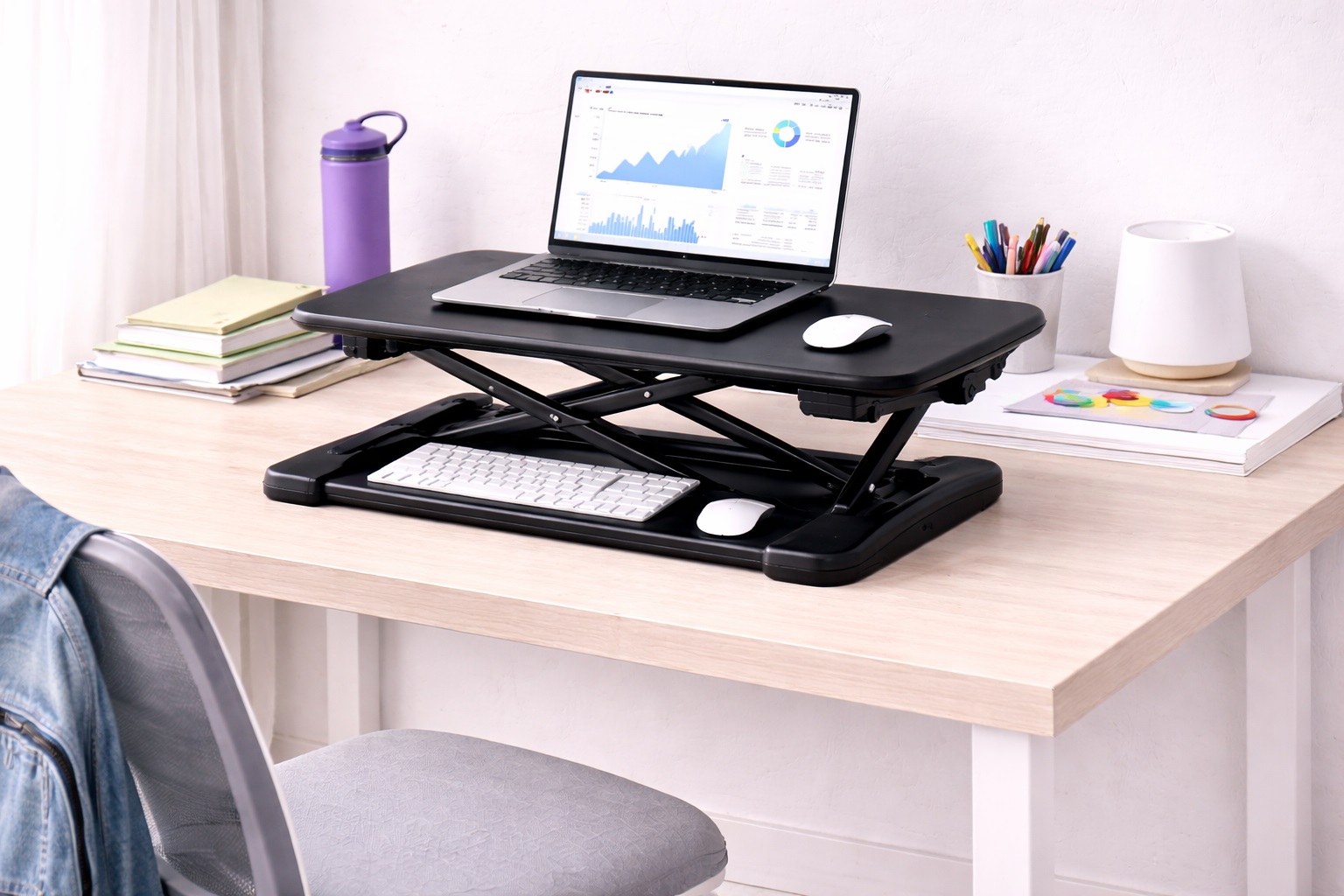
When your desk is already crowded with a monitor, a laptop stand, a mouse, and whatever else lives on the surface day to day, adding a wrist rest can feel like the thing that finally tips the space over the edge. But skipping wrist support because of a small footprint usually isn't the right trade-off — the real issue is picking a rest sized and shaped for a compact workspace instead of the bulky, oversized options built for wide executive desks.
This guide focuses specifically on compact workspace users who need genuine ergonomic wrist support without giving up the limited desk space they already have. It compares the three most practical materials for this situation, walks through the sizing and placement decisions that matter most on a small desk, and answers the questions that come up most often when space is tight.
None of the products discussed require you to rearrange your entire setup. In most cases, the right wrist rest for a small desk is simply a correctly sized version of the same core materials used on larger desks — the difference is in matching dimensions to your available space rather than picking the biggest, most feature-heavy option available.
It's worth noting up front that a wrist rest for a small desk needs to earn its footprint. Every inch of desk surface matters more here than it would on a large L-shaped setup, so fit and placement deserve as much attention as material comfort when you're comparing options below.
There's also a difference between a desk that's small because of the room it's in and a desk that's small by design, such as a fold-down or wall-mounted unit. Both benefit from the same core approach — sizing the rest to the keyboard rather than the available real estate — but a fold-down desk in particular rewards a lighter, thinner rest that won't add noticeable bulk when the desk is stowed or repositioned during the day.
Top 3 Keyboard Wrist Rests for Small Desks (Detailed Reviews)
1. Memory Foam Keyboard Wrist Rest – Best Overall for Small Desks
Memory foam wrist rests conform to the shape of the wrist and palm, distributing pressure evenly across the contact surface rather than concentrating it at one point the way a rigid desk edge does. This matters even more on a small desk, where there's often no spare inch of surface to rest your hands on besides the keyboard tray itself. Most memory foam models include a non-slip base that keeps the rest anchored in place even when desk space is tight and there's little room for it to drift, along with a washable fabric cover that's easy to maintain in a compact setup where the rest gets touched constantly throughout the day. Because memory foam is available in a wide range of thicknesses and widths, it's also the easiest material to find in a size genuinely matched to a compact keyboard rather than settling for whatever happens to be labeled "space-saving" without checking the actual measurements. This matters in practice more than it might seem, since two rests marketed with the same nominal size can differ by half an inch or more once actually measured, a gap that's negligible on a spacious desk but noticeable on a keyboard tray with almost nothing to spare.
- Pros:
- Conforms to wrist shape for even pressure distribution
- Non-slip base prevents movement during typing
- Washable fabric cover on most models
- More comfortable than gel for extended sessions on most wrists
- Cons:
- Can retain heat during extended use in warm environments
- Memory foam compresses over time with heavy daily use
Best For: Compact workspace users who want dependable, all-around wrist support without needing to think about swapping materials to suit specific desk conditions.
Why We Recommend It: On a small desk, simplicity counts. Memory foam doesn't require special care around temperature or firmness preferences, and it fits into the tight margins of a compact setup as easily as it does on a larger one, without asking you to give up desk space for a niche benefit.
2. Gel Wrist Rest – Best for Small Desks in Warm Rooms
Gel wrist rests use a dense silicone fill that stays cool to the touch and holds a consistent firmness over time, unlike memory foam which slowly compresses under repeated pressure. On a small desk that's often pushed against a wall or tucked into a corner with limited airflow, that cooling quality can be a genuine advantage during long typing sessions in a room that runs warm. The smooth surface also wipes clean quickly, a practical plus when a compact desk means your wrist rest sits inches from your coffee cup, snack, or notebook. Because gel doesn't compress the way foam does, it also tends to hold its exact shape and footprint over months of use, which is a small but real benefit on a small desk where you've already measured and planned around a specific set of dimensions.
- Pros:
- Cool to the touch during extended sessions
- Maintains consistent firmness over time without compression
- Easy to wipe clean surface
- Preferred texture for users who find foam too warm
- Cons:
- Firmer than memory foam — some find it less conforming
- Gel can feel cold in air-conditioned environments
Best For: Small-desk users in warmer rooms or those who dislike the slightly warm feel memory foam develops during a full day of steady typing in a confined space.
Why We Recommend It: A cramped desk often means less airflow around your hands, and gel's cooling property offsets that more directly than foam can. For anyone who's noticed their compact setup runs warmer than a larger desk elsewhere in the room, gel is the more comfortable alternative.
3. Leather or Faux Leather Wrist Rest – Best for a Polished Small-Desk Look
Leather-covered wrist rests wrap a foam or gel core in genuine or synthetic leather, giving a compact desk a more finished, professional look rather than an obviously utilitarian one. On a small desk, where every visible item contributes more to the overall aesthetic simply because there's less surface to distract the eye, a leather rest tends to stand out as a quality touch rather than a compromise. It's also more durable than a fabric-covered alternative, wiping clean easily in a space where crumbs, spills, and everyday clutter are harder to avoid given the limited room. Because a small desk puts every accessory closer together, the visual contrast between a leather-covered rest and a plain plastic mouse or keyboard tends to be more noticeable than it would be on a larger surface with more room between items.
- Pros:
- Premium professional appearance
- Wipe-clean surface for easy maintenance
- More durable surface than fabric alternatives
- Genuine leather improves in texture over time
- Cons:
- Higher cost than foam or gel alternatives with fabric covers
- Leather surface can be cool and slightly slippery initially
Best For: Compact workspace users who want their small desk to look deliberately curated rather than simply cramped, and who value a durable, easy-to-clean surface in tight quarters.
Why We Recommend It: On a small desk, visible items carry more visual weight than they would on a larger surface. Leather's premium appearance and durability make it a sensible choice for anyone who wants their compact setup to feel intentional rather than improvised.
Buying Guide: How to Choose the Best Keyboard Wrist Rest for a Small Desk
Use these factors to match a wrist rest to a genuinely limited desk footprint, rather than defaulting to whatever rest happens to be marketed as "compact."
1. Measure Available Depth Before Width
On a small desk, depth in front of the keyboard is usually the tightest dimension, not width. Measure the actual clear space between your keyboard's front edge and the desk's front edge before choosing a rest, since a deep model can push your keyboard further back than is comfortable to reach. Write this measurement down before shopping, since it's easy to underestimate how little clearance a compact desk actually leaves once the keyboard, monitor stand, and any other accessories are already in place.
2. Match Width to Your Keyboard, Not Extra Desk Space
A wrist rest should match or slightly exceed your keyboard's width regardless of desk size. On a small desk, resist the temptation to size down further than your keyboard actually requires just to save space — an undersized rest leaves your outer wrist unsupported exactly where fatigue starts.
3. Prioritize a Low-Profile Design
A thinner wrist rest takes up less visual and physical space on a small desk while still providing the height needed to match your keyboard's home row. Look specifically for slim profile options rather than the thicker, more cushioned designs built for desks with room to spare. A low-profile rest also tends to sit more flush with the desk surface, which reduces the visual bulk it adds even before accounting for its actual footprint.
4. Height Still Matters More Than Size
Regardless of how compact the rest is, it should sit at or slightly below your keyboard's home row. A rest that's too high forces the wrists into extension, increasing rather than reducing strain, and this holds true whether your desk is large or small.
5. Check Base Grip on a Crowded Surface
A small desk often means your wrist rest sits close to other items — a mouse, a notebook, a phone stand. A rest with a strong non-slip base stays in position even when nudged by nearby objects, while a rest with a weak base can be knocked out of alignment more easily in tight quarters.
6. Consider a Rest That Doubles as a Mouse Pad Extension
Some wrist rests pair with or extend into a mouse pad area, which can be a genuine space-saver on a small desk by combining two accessories into one footprint instead of two separate items competing for the same limited surface.
7. Weigh Material Against Cleaning Frequency
A small desk sees more contact per square inch simply because there's less room to spread items out. Fabric-covered foam or gel rests need more frequent washing in this context; leather's wipe-clean surface may be worth the extra cost if your compact desk doubles as an eating or drinking spot during the day.
8. Don't Sacrifice Support for a Smaller Footprint
It's tempting to buy the smallest wrist rest available to save space, but a rest that's too narrow or too thin to actually support your wrist properly defeats its own purpose. A correctly sized rest that fits your keyboard is a better use of limited desk space than an undersized one that doesn't do its job, even if it means accepting a slightly larger footprint than you originally hoped for.
9. Think About Storage When Not in Use
On a small desk shared with other activities, a lightweight rest that can be tucked aside or stacked easily when not typing adds practical flexibility that a bulkier rest doesn't offer. This matters most on desks that double as dining surfaces, craft tables, or homework spots where the keyboard itself gets put away between sessions.
10. Factor In Replacement Cost Over Time
Wrist rests are consumable — foam compresses and fabric wears with regular use. Budget models around $10–$20 may need replacing annually, while a well-built memory foam model can last three to five years, which matters more when desk space is limited and you'd rather not repurchase frequently.
11. Test Fit With Your Actual Keyboard in Place
Because small-desk setups are often more tightly configured than average, test the wrist rest with your keyboard already in its normal position rather than judging fit in isolation. A rest that looks appropriately sized on its own can still crowd a keyboard that's already close to the desk's front edge.
12. Reassess Your Overall Desk Layout
Adding a wrist rest to a small desk is a good opportunity to reassess what else is competing for that same space. Moving a phone stand or consolidating cable clutter can free up the small amount of room a properly sized wrist rest actually needs.
13. Consider Whether a Curved or Contoured Shape Helps
Some wrist rests use a slightly curved or scalloped front edge rather than a straight rectangular block. On a small desk where the keyboard may sit closer to the front edge than ideal, a contoured shape can occasionally allow a slightly shorter overall footprint while still supporting the same wrist area, though this varies enough between models that it's worth checking specific dimensions rather than assuming all contoured designs save space.
14. Don't Let Cable Management Compete With the Wrist Rest
On a small desk, cables often run along the same front edge where a wrist rest sits. Before finalizing your choice, check whether existing cable clips or a cable tray will interfere with the rest's position, since rerouting cables afterward is more annoying than accounting for them during initial placement.
15. Weigh a Two-Piece Setup Against a Single Combined Rest
On some small desks, a single wrist rest that spans the full keyboard width plus a separate small rest for the mouse hand actually uses less total space than one oversized combined unit, because the two pieces can be arranged around other items rather than needing one uninterrupted block of desk space. It's worth measuring both configurations before committing to either approach.
16. Desk Surface Material and Grip Performance
A non-slip base grips differently depending on what it's sitting on. Rubberized or silicone bases hold firmly on wood, laminate, and most fabric desk mats, but can slide more easily on glass or highly polished desks where there's less surface texture for the base to catch on. If your small desk has a glass or glossy finish, look specifically for reviews mentioning performance on smooth surfaces, or consider adding a thin desk mat underneath the rest to improve grip without adding meaningful bulk.
17. Using a Wrist Rest with a Pull-Out Keyboard Tray
Some small desks rely on a pull-out keyboard tray rather than a fixed surface, which introduces an extra consideration: the tray's own depth is often shallower than a standard desktop, leaving even less room for a wrist rest in front of the keyboard. A slim, low-profile rest matters even more in this setup, and it's worth confirming the tray retracts fully with the rest in place, since a rest that's slightly too deep can prevent the tray from sliding back under the desk.
18. Seasonal Humidity and Material Longevity
Memory foam and leather both respond to humidity changes over a full year of use. Foam can feel slightly softer in humid conditions and firmer in dry winter air, while leather is more prone to drying out and cracking in low-humidity environments unless it's conditioned occasionally. Gel is largely unaffected by either extreme, which is worth factoring in if your small desk sits in a room without reliable climate control.
Frequently Asked Questions
Will a wrist rest make my small desk feel more cramped?
A correctly sized rest that matches your keyboard's width shouldn't meaningfully add to a sense of clutter, since it occupies space that's typically already reserved for your hands during typing pauses. Oversized rests bought without measuring are the more common cause of a cramped feeling, not wrist rests in general.
What's the smallest wrist rest that still provides real support?
The rest should match or slightly exceed your keyboard's width to provide full support — going narrower than that compromises the ergonomic benefit. Thickness and depth can be reduced with a low-profile design without sacrificing support, but width is the dimension to hold firm on, since it directly determines how much of your wrist is actually supported during typing pauses.
Should I use a keyboard wrist rest for small desks while actively typing?
Ergonomic guidance suggests resting the wrists during typing pauses rather than maintaining constant contact while keys are being pressed. Resting your wrists on the pad while your fingers actively move over keys can increase pressure on the carpal tunnel. Use the rest as a support reference between typing bursts.
How do I know what height keyboard wrist rest for small desks I need?
The wrist rest height should match or sit slightly lower than your keyboard's home row. If your keyboard has a steep positive tilt, a taller wrist rest is appropriate. For keyboards with zero or negative tilt, a flatter wrist rest suits better, and this remains true regardless of desk size.
Does a keyboard wrist rest for small desks actually help with wrist pain?
For pain caused by hovering the wrists unsupported during typing pauses, a wrist rest provides direct relief. For pain from incorrect typing technique or repetitive motion, a wrist rest alone won't resolve the underlying cause, but combined with correct keyboard height it contributes to a healthier setup.
How do I clean a keyboard wrist rest for small desks?
Fabric-covered wrist rests can be hand-washed or machine-washed on a gentle cycle if the cover is removable. Leather surfaces wipe clean with a damp cloth. Gel rests can be wiped directly with a mild detergent solution — a useful advantage on a small desk that sees frequent food or drink nearby. Let any surface dry fully before use, since trapped moisture is more noticeable on a rest that gets handled constantly in a tightly used space.
Can I use a keyboard wrist rest for small desks with any keyboard?
Yes, though the height match matters. Verify the wrist rest height suits your keyboard's profile. Ultra-thin keyboards pair with thinner rests; tall mechanical keyboards pair with correspondingly taller ones. Most wrist rests stay in position through their non-slip base alone.
Is the most expensive keyboard wrist rest for small desks always the best?
Not necessarily. Higher price often means more features, but many mid-range, low-profile options offer excellent performance for a compact setup. Focus on width match and slim profile rather than price alone.
How long should a quality keyboard wrist rest for small desks last?
A well-built product from a reputable brand typically lasts two to five years with reasonable care. Checking warranty terms at purchase is a useful quality indicator, especially for a product that gets frequent contact in a tightly used space.
Can I return a keyboard wrist rest for small desks if it doesn't fit my space?
Most retailers offer a 15 to 30 day return window. Keep the original packaging during your evaluation period so you retain the option to return it if the dimensions turn out to crowd your setup more than expected.
What is the best keyboard wrist rest for compact workspace users who need ergonomic wrist support without taking excessive desk space?
The best choice depends on your specific priorities. Review the buying guide factors above and match each option — memory foam, gel, or leather — to your available depth, width requirements, and how much visible desk space you're able to dedicate.
Does brand name matter when choosing a keyboard wrist rest for small desks?
Established brands generally offer better quality control and more accurate published dimensions, which matters more when you're working with tight measurements. Newer brands sometimes offer excellent value, but verify dimensions carefully against your own measurements either way.
Can I use a wrist rest on a standing desk that's also relatively narrow?
Yes, and the same width and low-profile guidance applies. On a narrow standing desk, weight is less of a concern than depth, since a shallow work surface leaves even less room in front of the keyboard than a similarly small seated desk. Prioritize a slim, low-profile rest in this setup as well.
Will a small wrist rest work if I share my desk with another device, like a tablet or second keyboard?
It can, but measure the combined footprint of everything you regularly place on the desk before choosing a rest, not just the keyboard alone. A rest sized correctly for the keyboard but placed in a spot that's frequently used for other devices may end up pushed aside more often than it's actually used.
Is it better to buy a wrist rest and mouse pad separately or as a matched set on a small desk?
A matched set often uses desk space more efficiently on a small desk because the two pieces are designed to sit flush against each other rather than needing a gap between separately purchased items. If your desk is genuinely tight on room, a matched set is usually the more space-conscious choice.
Do slim or low-profile wrist rests wear out faster than thicker ones?
Not inherently — wear is driven more by material quality and daily use than by thickness alone. A well-made low-profile foam or gel rest can last just as long as a thicker version, though very thin foam models have less material to compress before bottoming out, which is worth checking in reviews.
Does the material of my desk affect how well a wrist rest stays in place?
Yes. Non-slip bases grip wood and laminate desks well but can slide more easily on glass or glossy surfaces. A thin desk mat underneath the rest can improve grip on a smooth desk without adding much bulk.
Can a wrist rest work with a pull-out keyboard tray instead of a fixed desk?
Yes, but check that the tray still slides fully back under the desk with the rest in place, since pull-out trays are often shallower than a standard desktop and leave less room to spare.
Does humidity affect how long a wrist rest lasts?
It can. Leather may dry out and crack in low-humidity conditions without occasional conditioning, and memory foam can feel slightly softer or firmer depending on the surrounding humidity. Gel is largely unaffected by either extreme.
Final Verdict
- Best Overall for Small Desks: Memory Foam Keyboard Wrist Rest – dependable support that fits a compact footprint without complication.
- Best for Small Desks in Warm Rooms: Gel Wrist Rest – a cooling alternative for tight, less ventilated setups.
- Best for a Polished Small-Desk Look: Leather or Faux Leather Wrist Rest – a durable, visually finished option where every item on the desk stands out.
A small desk doesn't have to mean compromised ergonomics. The right wrist rest for a compact workspace is one that matches your keyboard's actual width, sits at the correct height, and stays anchored in a crowded space — not necessarily the smallest option on the shelf. Measure carefully, prioritize a low-profile design, and choose the material that suits how your particular corner of the room actually feels during a long working day.
If you're still unsure which material fits your setup, start with memory foam in a size matched exactly to your keyboard's width — it's the most forgiving choice for a compact desk and gives you a clear baseline to compare against if you later decide gel's cooler surface or leather's cleanable finish suits your space better.