Best Travel Keyboard Wrist Rests for Remote Work (2026)
Working from a hotel desk, a coworking space, or a client's office means typing on furniture you didn't choose and can't adjust. The desk height is whatever it is, the chair is rarely ergonomic, and the one variable you can actually control from trip to trip is what you bring with you. A wrist rest that lives in your laptop bag is one of the few pieces of ergonomic equipment that travels well, provided you pick a version built for portability rather than a bulky desktop model that happens to be small enough to squeeze into a suitcase.
This guide is built for remote workers and frequent travelers who carry a wrist rest specifically for hotel and coworking use — people who need reliable wrist support that survives repeated packing and unpacking without falling apart or becoming a nuisance to carry. It compares the three most practical materials for this exact situation, covers the packing and durability factors that matter more on the road than at a permanent desk, and answers the questions travelers ask most before choosing one to bring along.
None of the options below require checked luggage or add meaningful weight to a laptop bag. The goal is a wrist rest that earns its place among the handful of accessories you actually bother packing every trip, rather than one more item left behind after the first inconvenient experience.
It's worth being honest about tradeoffs here: a travel-friendly wrist rest usually gives up some thickness or cushioning compared to a desktop-only model, in exchange for being something you'll actually carry consistently. The right choice depends on how much you're willing to trade portability for plushness, and that balance is different for every traveler.
It's also worth considering how often you actually travel before deciding how much to invest. Someone on the road every week has different priorities than someone who takes one or two work trips a year, and the buying guide below separates those considerations so you can weigh pack size, durability, and comfort according to your own travel frequency rather than a one-size-fits-all recommendation.
Top 3 Travel Keyboard Wrist Rests (Detailed Reviews)
1. Memory Foam Keyboard Wrist Rest – Best Overall for Travel
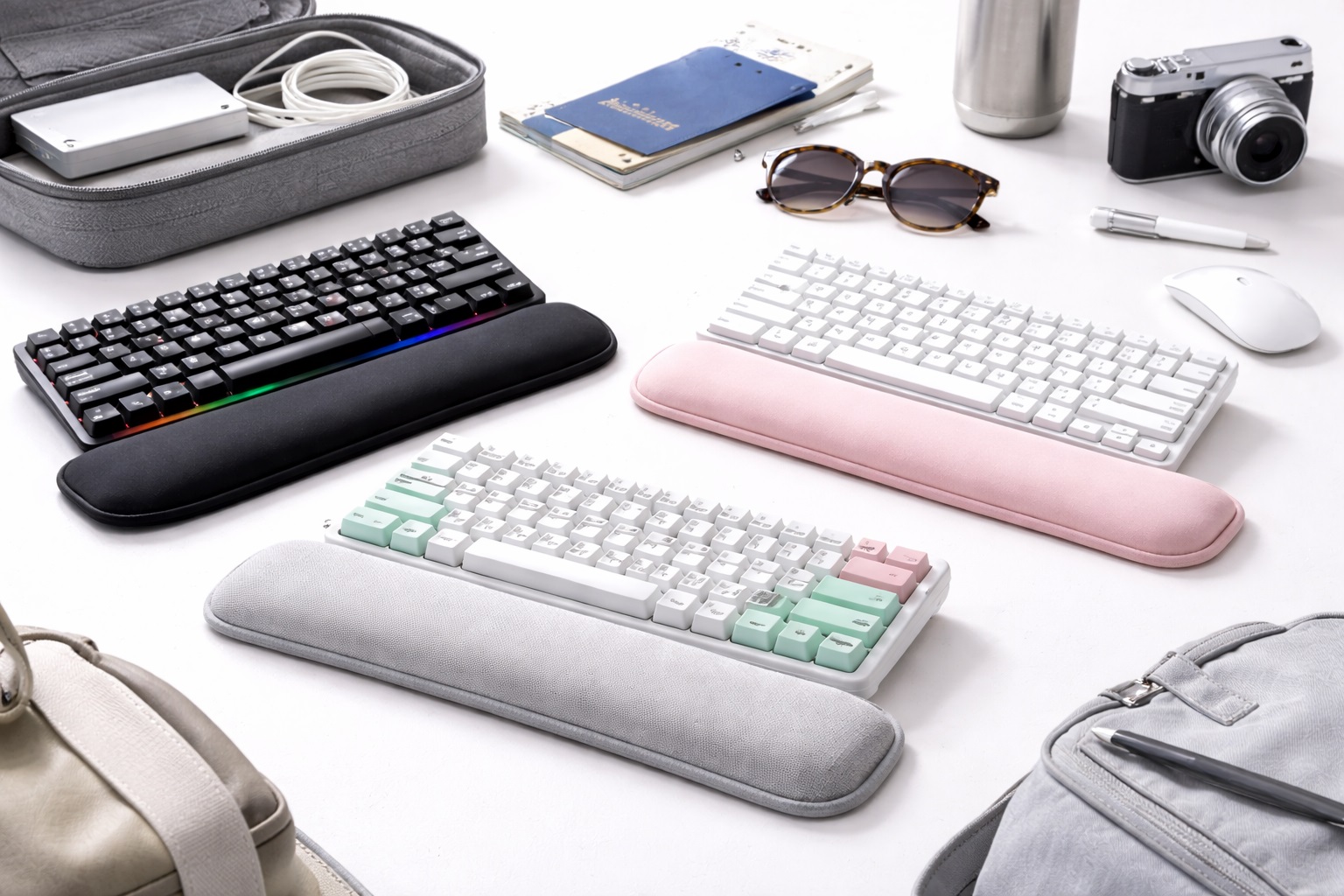
Memory foam wrist rests conform to the shape of the wrist and palm, distributing pressure evenly across the contact surface rather than concentrating it at one point — a real benefit when the hotel desk or coworking table you're using has no adjustable height and simply isn't built for long typing sessions. Most include a non-slip base that keeps the rest anchored even on unfamiliar desk surfaces with varying textures and finishes, which matters more when you're setting up in a new location every few days and can't rely on a desk you already know. A washable fabric cover is standard on most models, a genuine advantage for travel use since it inevitably picks up more dust and handling residue in transit than a rest that stays in one place permanently. Because memory foam is widely available in thin, travel-oriented profiles as well as thicker desktop versions, it's usually possible to find a version specifically marketed for portability without giving up the conforming feel that makes the material comfortable in the first place.
- Pros:
- Conforms to wrist shape for even pressure distribution
- Non-slip base prevents movement during typing
- Washable fabric cover on most models
- More comfortable than gel for extended sessions on most wrists
- Cons:
- Can retain heat during extended use in warm environments
- Memory foam compresses over time with heavy daily use
Best For: Remote workers who type for extended hours across multiple locations and want dependable, adaptive support that performs consistently regardless of where they set up for the day.
Why We Recommend It: Memory foam doesn't require the desk itself to be adjustable or ergonomic to deliver its benefit — it adapts to your hands wherever you happen to be working, which is exactly the kind of consistency a traveling setup needs when almost nothing else about the workspace is under your control.
2. Gel Wrist Rest – Best for Travel in Warm Climates
Gel wrist rests use a dense silicone fill that stays cool to the touch and holds a consistent firmness, unlike memory foam which slowly compresses with repeated use over time. For travelers working in warmer climates, in un-air-conditioned coworking spaces, or simply in a hotel room where the air conditioning isn't reliable, gel's cooling property is a more direct comfort benefit than foam can offer during a long afternoon of typing. Its smooth, wipe-clean surface is also a practical plus on the road, where a rest is more likely to pick up dust or grime from a bag or unfamiliar desk than one that never leaves a single home office. Gel also tends to hold its shape more reliably than foam after being compressed inside a laptop bag for a flight or a long drive, which matters over months of repeated travel wear. This shape retention becomes especially noticeable on a multi-leg trip, where the rest might be compressed and released several times in a single day between flights, taxis, and coworking stops.
- Pros:
- Cool to the touch during extended sessions
- Maintains consistent firmness over time without compression
- Easy to wipe clean surface
- Preferred texture for users who find foam too warm
- Cons:
- Firmer than memory foam — some find it less conforming
- Gel can feel cold in air-conditioned environments
Best For: Travelers working through warm climates or unpredictable air conditioning who want a wrist rest that stays comfortable regardless of ambient room temperature.
Why We Recommend It: Temperature control is one of the few comfort variables you can't manage when working out of hotels and coworking spaces. Gel's built-in cooling effect compensates for that in a way memory foam simply doesn't, making it the more reliable pick for warm-weather travel routines.
3. Leather or Faux Leather Wrist Rest – Best for Client-Facing Travel Work
Leather-covered wrist rests wrap a foam or gel core in genuine or synthetic leather, giving a temporary workspace a more polished, professional appearance than a plain foam or fabric alternative — worth considering if your travel work regularly involves video calls or in-person meetings where your visible setup matters. Leather also holds up better than fabric over repeated packing and travel wear, resisting the fraying and staining that a cloth-covered rest eventually shows after enough trips in a bag alongside other gear. The tradeoff is a higher price than an equivalent foam or gel model, and a surface that can feel a touch cool and slightly slippery until it's been broken in. Because leather doesn't absorb moisture the way fabric does, it also tends to survive humid climates and unpredictable weather during travel better than a cloth-covered alternative. That resistance to moisture also means it's less likely to develop a musty smell after being sealed in a bag for a few days between trips, a small but real convenience over a fabric surface that traps humidity more readily.
- Pros:
- Premium professional appearance
- Wipe-clean surface for easy maintenance
- More durable surface than fabric alternatives
- Genuine leather improves in texture over time
- Cons:
- Higher cost than foam or gel alternatives with fabric covers
- Leather surface can be cool and slightly slippery initially
Best For: Consultants, executives, and client-facing remote workers who want their travel desk setup to look considered even when working from a hotel room or shared office.
Why We Recommend It: For travel work where appearance matters on camera or in person, leather's durability and polished look hold up to repeated packing far better than fabric, without sacrificing the practical wipe-clean convenience travel demands.
Buying Guide: How to Choose the Best Travel Keyboard Wrist Rest
These factors focus specifically on what changes when a wrist rest needs to travel with you, rather than sit permanently at one desk.
1. Weight and Pack Size Come First
Before comparing materials, check the actual weight and folded or rolled dimensions of the rest. A wrist rest that adds noticeable bulk to a laptop bag is one you'll eventually stop packing, regardless of how comfortable it is at the desk.
2. Look for a Rest That Holds Its Shape After Packing
Some foam rests lose their shape after being compressed in a bag repeatedly, while gel and denser foams tend to bounce back more reliably. Check reviews specifically for mentions of long-term shape retention under travel conditions rather than just desk comfort.
3. Match Width to Your Travel Keyboard, Not Your Home Setup
If you travel with a compact or laptop keyboard rather than your full-size home keyboard, size the rest to that narrower travel setup specifically, rather than packing the wider rest built for your home desk and finding it awkward to fit in your bag.
4. Height Still Needs to Match the Keyboard's Home Row
Regardless of portability, the rest should sit at or slightly below your keyboard's home row to avoid forcing the wrists into extension. This matters just as much on a hotel desk as it does at home, even though the desk height itself is out of your control.
5. Prioritize a Base That Grips Unfamiliar Desks
Desk surfaces vary enormously across hotels, coworking spaces, and client offices — glass, laminate, wood veneer, even marble in some hotel business centers. A rest with a strong, reliable non-slip base performs consistently across all of these, while a weak base that works fine at home may slide on an unfamiliar surface. This is one factor where reading reviews from other frequent travelers, rather than general desk-bound users, tends to give a more accurate picture of real-world performance.
6. Consider a Carrying Case or Sleeve
Some travel-oriented wrist rests come with a thin protective sleeve or fold into a self-contained pouch, keeping the surface clean inside a bag and protecting it from getting crushed under other items. This is a genuine convenience difference over a rest with no protective covering at all.
7. Weigh Durability Against Comfort
A rest that travels well needs to survive repeated handling, temperature changes in a bag or checked case, and contact with other items. Leather and gel generally tolerate this better than a delicate fabric-covered foam, even if foam remains the more comfortable surface for extended typing.
8. Think About Climate Range Across Destinations
If your travel routine covers a wide range of climates, gel's temperature-neutral consistency may suit you better than memory foam, which behaves differently in a warm tropical hotel room than in an air-conditioned office building.
9. Check Cleaning Requirements for the Road
A rest that requires machine washing is harder to maintain while traveling than one that wipes clean with a damp cloth or hotel washcloth. Factor this into your choice if you travel for extended stretches without access to laundry facilities.
10. Budget for More Frequent Replacement
Travel wear accelerates the natural breakdown of any wrist rest. A model that might last three to five years at a stationary desk could need replacing sooner under repeated packing and handling, so factor a shorter realistic lifespan into your budgeting for a travel-specific rest. Buying a slightly more durable material upfront, such as gel or leather, can offset this if you travel often enough that replacement cost adds up over a year.
11. Test It on a Real Trip Before Committing Long-Term
Before assuming a wrist rest is your permanent travel solution, bring it on one or two actual trips and note how it performs — pack size, comfort on unfamiliar desks, and how it holds up after being compressed in a bag. This real-world test reveals issues that a quick home trial won't.
12. Decide Whether You Need One Rest or Two
Some travelers keep a slim, packable rest for trips and a thicker, more cushioned one for their home office, rather than trying to find a single rest that does both jobs well. This avoids compromising either setup for the sake of a single all-purpose product.
13. Account for Security Screening and Carry-On Rules
A wrist rest doesn't typically raise flags at airport security, but if you travel with carry-on only and pack tightly, a bulky rest competing for space with other electronics accessories is worth reconsidering. A flatter, more compressible option tucks more easily around a laptop, charger, and cables in a single bag.
14. Plan for Extended Stays Differently Than Short Trips
A wrist rest chosen for a two-night trip doesn't need to hold up the same way as one used daily during a multi-month remote work stint abroad. For longer stays, prioritize durability and washability over pure pack size, since the rest will see far more cumulative use before you're back home.
15. Checked Luggage Compression on Longer Trips
If a wrist rest occasionally ends up in checked luggage rather than a carry-on laptop bag, it faces more sustained pressure from being packed under heavier items for the duration of a flight, sometimes for many hours at a stretch. Denser foam and gel generally recover their shape faster after this kind of prolonged compression than a softer, more delicate foam. If you routinely check a bag rather than carrying your gear onboard, it's worth favoring a slightly firmer core over the plushest option available, since firmness that feels marginally less luxurious at the desk often translates into a rest that looks and performs the same after months of repeated travel compression.
16. Matching the Rest to a Multi-Device Travel Setup
Many remote workers travel with more than one device — a laptop paired with a folding Bluetooth keyboard, or a tablet used with a compact external keyboard for lighter trips. Each of these travel keyboards can have a noticeably different height and profile than a full-size home keyboard, which means the wrist rest that matches your home setup may not match what you actually pack for a given trip. Checking the profile of whichever keyboard you plan to travel with, rather than assuming your usual rest transfers over automatically, avoids an awkward height mismatch once you're already away from home.
17. Time Zone Adjustment and Increased Reliance on Consistent Support
The first few days after a long-haul flight or a significant time zone change often come with reduced focus and more general physical fatigue, which can make sloppy wrist posture more likely simply because you're paying less attention to it while adjusting to a new schedule. A dependable, familiar wrist rest is one small way to keep your typing posture consistent even when the rest of your routine — sleep schedule, meal times, even your sense of what time it actually is — is temporarily thrown off by travel. Packing the same rest on every trip, rather than switching between different ones, adds a small but genuine layer of physical consistency during an otherwise disorienting stretch of days.
Frequently Asked Questions
What's the lightest material for a travel keyboard wrist rest?
Thin memory foam and gel models are generally the lightest practical options, while leather-covered rests tend to weigh slightly more due to the leather layer and typically denser core. If minimizing bag weight is the top priority, check the specific product's listed weight rather than assuming by material alone.
Should I use a travel keyboard wrist rest while actively typing?
Ergonomic guidance suggests resting the wrists during typing pauses rather than maintaining constant contact while keys are being pressed. Resting your wrists on the pad while your fingers actively move over keys can increase pressure on the carpal tunnel. Use the rest as a support reference between typing bursts, which applies whether you're at home or on the road.
How do I know what height travel keyboard wrist rest I need?
The wrist rest height should match or sit slightly lower than your keyboard's home row. If your travel keyboard has a steep positive tilt, a taller wrist rest is appropriate. For flatter keyboards, a lower-profile rest suits better, and this holds true regardless of which desk you're using that week.
Does a travel keyboard wrist rest actually help with wrist pain?
For discomfort caused by hovering the wrists unsupported during typing pauses, a wrist rest provides direct relief, which can matter more on the road where you're often typing on unfamiliar, non-adjustable furniture. For pain from incorrect technique, a rest alone won't resolve the underlying cause.
How do I clean a travel keyboard wrist rest?
Fabric-covered wrist rests can be hand-washed if the cover is removable, though machine washing may not be practical while traveling. Leather or faux leather surfaces wipe clean with a damp cloth. Gel rests can be wiped directly with a mild detergent solution — often the easiest option to maintain on the road.
Can I use a travel keyboard wrist rest with any laptop or keyboard?
Yes, though the height match matters. Verify the wrist rest height suits your specific travel keyboard's profile. Ultra-thin laptop keyboards pair with thinner rests. Most wrist rests don't attach to the keyboard and stay in position through their non-slip base alone.
Is the most expensive travel keyboard wrist rest always the best?
Not necessarily. Higher price often means more features, but many mid-range, travel-specific options offer excellent durability and comfort for regular use on the road. Focus on pack size and shape retention rather than price alone.
How long should a quality travel keyboard wrist rest last?
A well-built product from a reputable brand typically lasts two to five years at a stationary desk, though repeated packing and travel handling can shorten that lifespan. Checking warranty terms at purchase is a useful quality indicator for a product that will see more wear than a desk-bound equivalent, and it's reasonable to expect a somewhat shorter usable life given the additional handling involved.
Can I return a travel keyboard wrist rest if it doesn't suit my routine?
Most retailers offer a 15 to 30 day return window. Keep the original packaging during your evaluation period, ideally testing the rest on at least one real trip before that window closes, so you can judge its travel performance rather than just desk comfort.
What is the best travel keyboard wrist rest for remote workers who carry wrist rests in their laptop bag for hotel and coworking use?
The best choice depends on your specific priorities. Review the buying guide factors above and match each option — memory foam, gel, or leather — to how much you travel, the climates you work in, and how much you value cushioning versus pack size.
Does brand name matter when choosing a travel keyboard wrist rest?
Established brands generally offer better quality control and more durable construction, which matters more for a product that will be packed and unpacked repeatedly. Newer brands sometimes offer excellent value, but check reviews specifically for durability under travel conditions.
Is a foldable or rollable wrist rest better than a rigid one for travel?
A foldable or rollable design saves pack space but can develop a permanent crease or lose some cushioning over repeated folding. A rigid low-profile rest avoids that issue but takes up a fixed amount of bag space regardless of how it's packed. Which is better depends on whether pack size or long-term shape retention matters more to you.
Will a travel wrist rest work on both a laptop keyboard and an external keyboard?
Generally yes, as long as the height matches whichever keyboard you're using in a given setup. Many travelers pack a slim external keyboard along with a laptop for ergonomic reasons, and a correctly sized travel wrist rest can support either, provided you check the profile against each keyboard's specific height.
How do I stop a travel wrist rest from smelling musty after being packed away between trips?
Make sure the rest is fully dry before packing it away, and store it in a breathable pouch rather than sealed tightly in plastic if you won't use it again for a while. Fabric covers benefit from an occasional wash between longer gaps in travel to prevent trapped moisture or odor from building up.
Does packing a wrist rest in checked luggage damage it over time?
It can, more than carrying it in a laptop bag. Sustained pressure from heavier items during a long flight compresses softer foams more than firmer foam or gel. If you check luggage regularly, a firmer core tends to hold its shape better across repeated trips.
Can I use the same travel wrist rest with a folding Bluetooth keyboard?
Yes, but check the height match specifically. Folding keyboards often sit at a different profile than a laptop's built-in keyboard or a full-size home keyboard, so confirm the rest still sits at or slightly below the home row before assuming it transfers over without adjustment.
Does jet lag make wrist strain more likely while traveling?
Indirectly, yes. General fatigue and reduced attention to posture in the days following a long flight or major time zone change can make sloppy wrist positioning more likely. A consistent, familiar wrist rest helps maintain decent typing posture even when the rest of your daily routine is temporarily disrupted.
Final Verdict
- Best Overall for Travel: Memory Foam Keyboard Wrist Rest – dependable, adaptive comfort for varied desks and long working sessions on the road.
- Best for Travel in Warm Climates: Gel Wrist Rest – a cooling, shape-stable option for travelers moving through inconsistent temperatures.
- Best for Client-Facing Travel Work: Leather or Faux Leather Wrist Rest – a durable, polished choice for professionals who need their travel setup to look the part.
A wrist rest that travels well needs to survive the realities of life in a bag — repeated packing, unfamiliar desks, and inconsistent climates — while still delivering the same core support it would at a permanent desk. Memory foam remains the safest all-around choice for most remote workers, but gel and leather both address specific travel conditions that some routines call for directly. Choose based on how you actually work on the road, not just how the product feels during a five-minute test at home.
If you travel frequently enough that this becomes a recurring purchase decision, keep notes on what actually held up after a few trips rather than relying solely on the initial impression. Pack size, base grip on unfamiliar desks, and how the material tolerates repeated compression in a bag only become clear after real use, and that experience is worth more than any single review when choosing your next travel wrist rest.