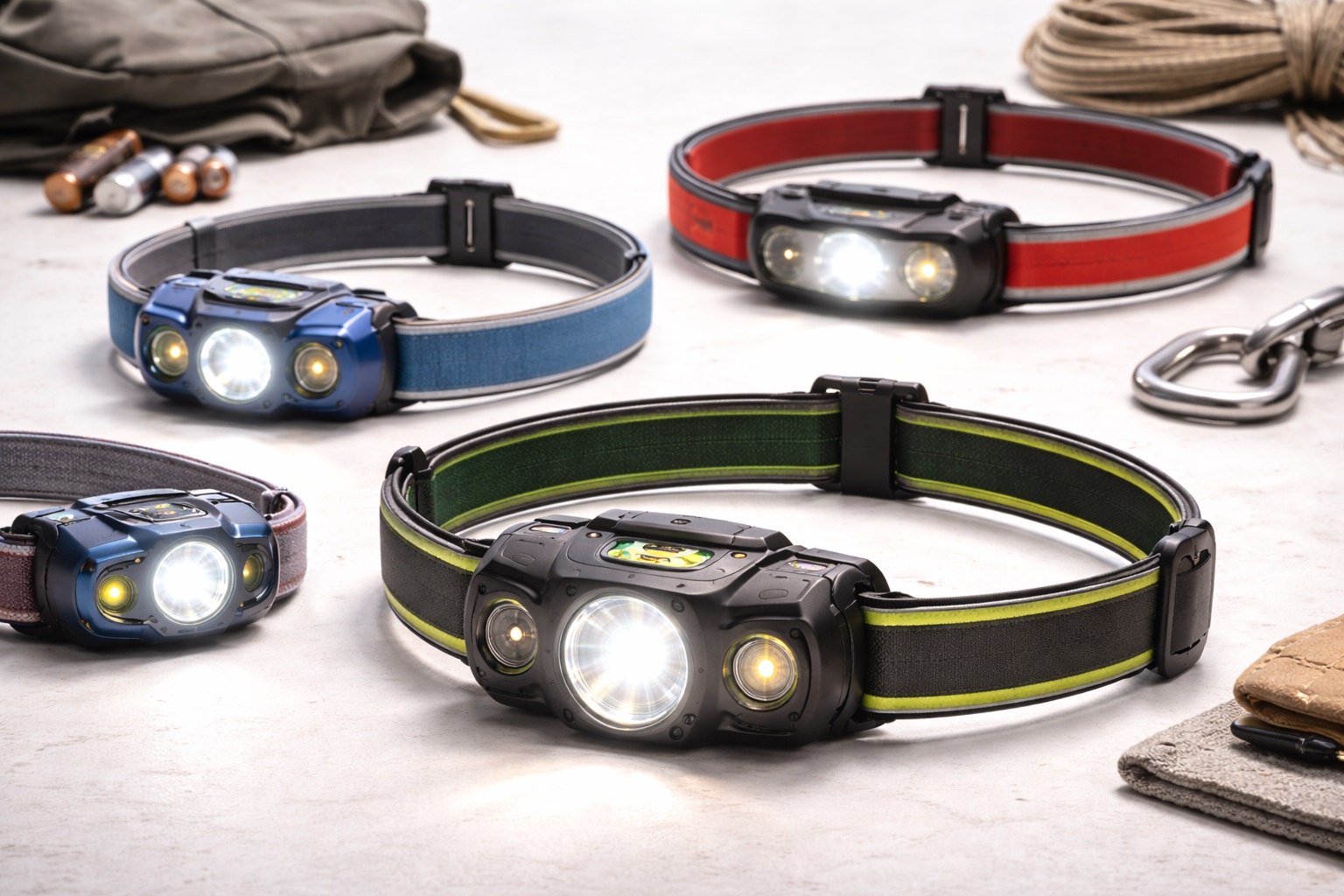
Best Budget Headlamp in 2026
A good headlamp shouldn't require a premium price tag. In 2026, the affordable end of the headlamp market has closed most of the gap with pricier models, offering respectable lumen output, dependable batteries, and comfortable headbands for a fraction of the cost. The trick is knowing which corners a low-priced model can safely cut and which ones actually matter once you're relying on that light on a dark trail, during a power outage, or on an early morning dog walk.
Value shoppers are not looking for the flashiest spec sheet. They want a headlamp that turns on reliably, throws enough light to be useful, survives a drop or a light rain shower, and doesn't need to be replaced again in six months. Some budget models achieve this by keeping the feature set simple, while others pack in surprising extras like multiple beam patterns or hybrid battery compatibility without inflating the price much at all. Understanding which category a given headlamp falls into before you buy saves you from either overpaying for extras you won't use or underbuying and regretting a missing feature a few weeks later.
Below, we compare eight widely available headlamps across the price spectrum so you can see exactly where the real value sits. Whether you want the cheapest usable option or a slightly pricier pick that still counts as a bargain, this guide walks through the pros, cons, and ideal buyer for each one before covering everything you should weigh before checking out.
It also helps to think of a budget headlamp as a long-term purchase rather than a disposable one. A well-made model in the $15 to $30 range can easily outlast a pricier lamp with a weaker seal or switch, simply because the housing resists sweat and moisture better and the battery compartment stays reliable over repeated use. Reading through the strengths and weaknesses of each pick below should make it easier to spot which of these traits matters most for your own routine, rather than chasing the single lowest sticker price on the shelf.
To keep this list genuinely useful for value shoppers, we looked closely at how each headlamp balances its price against the features that tend to matter most in everyday use: battery type, water resistance, brightness control, and overall comfort. A headlamp that costs less but fails after a few weeks of light use isn't actually a bargain, so build quality carried real weight alongside the sticker price. We also paid attention to how each brand positions its budget offering, since some companies scale down a flagship design while others build a dedicated entry-level model from the ground up, and that distinction often shows up in small but noticeable ways once you're actually wearing the lamp.
Top 8 Best Headlamp Picks (Detailed Reviews)
1. Petzl Actik Core – Best Overall Value
Petzl built its reputation on outdoor lighting long before the budget headlamp category became crowded, and the Actik Core still shows why that reputation holds up. Its hybrid concept battery system lets you run it on a rechargeable core or swap in standard AAA batteries when you're far from an outlet, which is a genuinely useful flexibility feature at its roughly $75 price point. For shoppers who want one headlamp that can handle both everyday errands and weekend trips without a second purchase, it earns its spot at the top of this budget-focused list. The button layout is also refreshingly intuitive, with a single control cycling through brightness levels rather than forcing you to memorize a sequence of taps, and the overall housing feels noticeably more refined than what most lamps in this price bracket typically offer. It sits at the top of this list because it rarely asks you to compromise, even if the sticker price nudges the upper edge of what a value shopper wants to pay.
- Pros:
- Hybrid battery flexibility between rechargeable core and AAA cells
- Trusted, long-standing outdoor lighting brand
- Solid, well-sealed build quality
- Cons:
- Sits at the upper edge of a budget-conscious price range
- Fewer color and style options than some rivals
Best For: Buyers who want one dependable headlamp that covers both rechargeable convenience and battery backup.
Why We Recommend It: The hybrid power setup means you rarely get caught with a dead headlamp, and that reliability is worth the slightly higher spend for value-focused shoppers who don't want to buy twice. Over a year of regular use, avoiding a second purchase because the first one failed or ran out of options tends to save more money than the small price gap suggests.
2. BioLite HeadLamp 330 – Best for All-Day Comfort
BioLite took a different approach with the HeadLamp 330, using a 3D slimfit construction that distributes weight around the head instead of stacking it all on the forehead. At around $60, it sits in the middle of this lineup, but the comfort-first design is what makes it worth considering if you'll be wearing a headlamp for hours at a stretch, whether that's an overnight hike or a long stint doing chores after dark. The rear-mounted battery pack also helps counterbalance the front housing, which is a detail that becomes noticeable only after the first hour of wear, when cheaper front-heavy lamps start to feel like they're slowly sliding down your forehead.
- Pros:
- 3D slimfit design reduces forehead pressure
- Low-profile shape that doesn't feel bulky
- Reliable build from an established outdoor brand
- Cons:
- Costs more than the cheapest options here
- Limited color choices compared to some rivals
Best For: Anyone who prioritizes comfort during extended wear over squeezing out the lowest possible price.
Why We Recommend It: A headlamp you forget you're wearing is worth a modest premium, and the 330's fit makes it a smart value pick for long days. Comfort complaints are one of the most common reasons people abandon a cheap headlamp entirely, so paying a bit more here can actually be the more economical choice in the long run.
3. Black Diamond Spot 400 – Best Waterproof Design
The Black Diamond Spot 400 brings an IPX8 waterproof rating to a roughly $50 price point, which is a meaningful upgrade for anyone who has ever had a cheap headlamp die mid-drizzle. Black Diamond is a well-regarded name in outdoor gear, and this model reflects that pedigree with a build that can handle unpredictable weather without demanding a premium price. Beyond the waterproofing itself, the overall fit and finish feel a step above what the price alone would suggest, with a headband that stays put during brisk movement and a housing that shrugs off the occasional bump against a tent pole or car door.
- Pros:
- IPX8 waterproof rating for wet conditions
- Reputable outdoor gear brand
- Strong functionality relative to its price
- Cons:
- Priced above the cheapest budget options
- Color selection is on the narrower side
Best For: Value shoppers who need a headlamp that can survive rain, snow, or accidental dunks.
Why We Recommend It: Waterproofing at this price is a genuine bargain, since many cheaper lamps skip weather sealing entirely, and a soaked headlamp that stops working is one of the more frustrating ways a budget purchase can go wrong.
4. Nitecore NU25 – Best Lightweight Pick
Nitecore's NU25 keeps things simple with a triple output design that switches between white, red, and high-CRI light without adding bulk. At around $35, it lands solidly in budget territory while still offering the kind of versatility that pricier lamps charge extra for. Its lightweight build makes it an easy add to a bag you're already trying to keep light. The magnetic accessories some buyers pair with it also make it easy to detach and use as a hands-free work light, which extends its usefulness well past typical headlamp duties without adding to the base price.
- Pros:
- Triple output design covers multiple lighting needs
- Compact, lightweight housing
- Reasonable price for the feature set
- Cons:
- Smaller size means a smaller battery reserve
- Limited color options
Best For: Minimalist packers who want more than one light mode without paying a premium.
Why We Recommend It: Few budget headlamps offer this much output flexibility in such a small, affordable package, and the compact size means it rarely feels like dead weight in a bag when you're not actively using it.
5. Slonk LED Headlamp – Best Budget Buy
At roughly $15, the Slonk LED Headlamp is the most wallet-friendly option in this roundup, and its USB rechargeable value is exactly the kind of feature that used to be reserved for pricier lamps. It won't outshine premium competitors on raw specs, but for anyone who simply needs a working headlamp without a big outlay, it's hard to argue with the price. It's also a sensible choice for households that want a spare headlamp in a junk drawer or car glovebox for emergencies, since the low cost makes it easy to justify buying a second or third one just for backup purposes.
- Pros:
- Lowest price point in this comparison
- USB rechargeable, avoiding constant battery purchases
- Straightforward, no-fuss operation
- Cons:
- Build quality trails behind premium brands
- Fewer accessory and color options
Best For: Shoppers who want the cheapest usable headlamp that still charges over USB.
Why We Recommend It: It delivers the core function of a headlamp at a price that makes it an easy first purchase, a low-risk gift, or a reliable backup light to keep on hand for emergencies.
6. Vitchelo V800 – Best for Night Vision
The Vitchelo V800 stands out at around $25 thanks to its red night vision mode, a feature that helps preserve your eyes' adjustment to darkness during stargazing, wildlife watching, or late-night camp tasks. It's a mid-tier budget option that punches above its price by including a mode typically found on costlier lamps. The adjustable strap and tilt bracket also feel more substantial than the price would suggest, giving it a sturdier in-hand feel than several competitors sitting in the same general price bracket.
- Pros:
- Dedicated red night vision mode
- Affordable, accessible price point
- Solid general build quality
- Cons:
- Not as widely known a brand as some competitors
- Limited premium extras
Best For: Budget-minded users who want a red light option without paying premium-brand prices.
Why We Recommend It: The night vision mode is a thoughtful inclusion that adds real value at this price, especially for anyone who spends time around sleeping campmates or wants to protect their own dark-adjusted eyesight.
7. Princeton Tec Remix – Best for Simple Controls
Princeton Tec keeps the Remix approachable with a simple tactile toggle that's easy to operate even with gloves on or in the dark, all for around $45. It's a straightforward, no-frills headlamp that favors dependable operation over a long list of settings, which appeals to buyers who just want something that works the same way every time. That consistency matters more than it might seem: a headlamp with too many modes can be frustrating to operate in a hurry, and the Remix avoids that problem entirely by keeping its control scheme predictable.
- Pros:
- Simple tactile toggle is easy to use by feel
- Dependable, established brand
- Straightforward operation with no learning curve
- Cons:
- Mid-range price for a relatively simple feature set
- Fewer advanced modes than some rivals
Best For: Buyers who want dead-simple, glove-friendly controls over an extensive settings menu.
Why We Recommend It: Simplicity has value of its own, especially when you need a light to work instantly without fumbling through modes, and that reliability is worth paying a little more for.
8. Energizer LED Headlamp – Best for Adjustable Brightness
Energizer brings its battery expertise to the headlamp category with advanced dimming tech that lets you fine-tune brightness rather than jumping between a few fixed settings. At around $18, it's one of the more affordable options here while still offering more control than many similarly priced competitors. Energizer's decades of battery manufacturing experience also show up in small ways, like a compartment design that resists corrosion and a lamp that seems to squeeze reliable run time out of every charge.
- Pros:
- Advanced dimming for precise brightness control
- Very accessible price point
- Backed by a trusted battery and lighting brand
- Cons:
- Premium features are limited at this price
- Color options are minimal
Best For: Value shoppers who want adjustable brightness without paying for a mid-range model.
Why We Recommend It: Dimming control is a feature you'd expect on pricier lamps, and finding it here makes the Energizer a smart budget pick for anyone who wants precise control without paying extra for it.
Buying Guide: How to Choose the Best Budget Headlamp
1. Total Cost vs. Included Features
Before comparing lumens or battery types, decide what you're actually willing to spend. Budget headlamps generally range from about $15 to $75, and the features that matter most, like water resistance or dimming control, tend to appear gradually as price increases. Map out which of those features you truly need before letting a low price alone drive the decision, and resist the urge to pay for extras you're unlikely to use regularly.
2. Battery Type: Replaceable, Rechargeable, or Hybrid
Replaceable AAA batteries are convenient when you're away from outlets for extended periods, while USB rechargeable models save money over time and reduce battery waste. Hybrid designs split the difference, letting you use either option depending on the situation. Consider how and where you'll use the headlamp most before choosing, since a purely rechargeable model can leave you stranded during a multi-day trip without power access.
3. Lumen Output and What You Actually Need
More lumens sound better on paper, but most everyday tasks, like walking a dog or checking a fuse box, need far less brightness than a serious backcountry trek. Buying more output than you need often means paying for battery drain you'll never use, so match the lumen count to your actual activities rather than chasing the highest number on the box.
4. Beam Distance and Spot vs. Flood Patterns
A spot beam throws light farther in a narrow cone, which is useful for spotting distant trail markers, while a flood beam spreads light wider for close-up tasks like reading a map or setting up a tent. Some budget models offer both, switching between them, which adds real versatility without a big price jump and reduces the odds you'll wish you'd bought a different lamp for a specific task.
5. Run Time on a Single Charge or Battery Set
Run time varies significantly based on brightness setting, so check whether a stated run time reflects the lamp's highest or lowest output. A headlamp that lasts all night on a low setting but drains in an hour on high still gives you flexibility for different situations, so understanding this tradeoff helps you avoid an unpleasant surprise mid-activity.
6. Water and Dust Resistance Ratings
An IPX rating tells you how well a headlamp handles rain, sweat, or dust. Budget models don't always advertise this clearly, so it's worth checking before you buy if you expect to use the light in unpredictable weather rather than strictly indoors. Even a modest rating can be the difference between a lamp that survives a downpour and one that doesn't.
7. Weight and All-Day Wearability
A lightweight headlamp with a well-balanced design stays comfortable for hours, while a front-heavy model can start to feel like a nuisance after even a short walk. If you plan to wear yours for extended periods, prioritize comfort over a slightly higher lumen count, since discomfort is one of the fastest ways to stop using a headlamp altogether.
8. Red Light Mode for Preserving Night Vision
A red light setting is genuinely useful for stargazing, checking a map without waking a tent-mate, or preserving your eyes' adjustment to darkness. It's increasingly common even on affordable headlamps, so it's worth checking whether your shortlist includes it, particularly if you spend time outdoors after sunset on a regular basis.
9. Number of Brightness Settings
Multiple brightness levels let you conserve battery for low-light tasks and reserve full power for when you actually need it. Even budget lamps often include at least a few settings, so compare how granular the control is between models you're considering, since a wider range of settings gives you more control over battery life.
10. Headband Comfort and Adjustability
An adjustable, breathable headband makes a bigger difference in comfort than most buyers expect. Look for elastic or ratcheting straps that won't slip during activity, and consider whether the material will feel comfortable against skin during warmer months when sweat and friction become more noticeable.
11. Durability and Build Quality at a Lower Price
Budget doesn't have to mean flimsy. Check for a snug, well-sealed housing and a button that clicks positively rather than feeling mushy. These small build details are often the clearest sign of whether a low-cost headlamp will hold up over repeated use, long after the novelty of a new purchase has worn off.
12. Warranty and Brand Support
Established outdoor and battery brands typically back their headlamps with some form of warranty or replacement policy, which adds peace of mind even on an inexpensive purchase. It's worth a quick check before buying, especially if you're choosing between two similarly priced options, since a warranty can offset the risk of an early defect.
13. Where You'll Actually Use It
Finally, think honestly about your primary use case. A headlamp for occasional power outages has very different requirements than one meant for weekly trail runs or camping trips, and matching the product to that reality is the single best way to avoid overspending on unused features you'll rarely, if ever, take advantage of.
14. Charging Convenience and Cable Compatibility
If you're leaning toward a rechargeable or hybrid model, check what charging cable it uses. A USB-C headlamp can share a cable with your phone or other electronics, which is a small convenience that adds up when you're packing for a trip and trying to minimize the number of cords you bring along.
Frequently Asked Questions
How much should I spend on a budget headlamp?
Most reliable budget headlamps fall between $15 and $75. Spending toward the higher end of that range typically buys better water resistance, more brightness settings, or hybrid battery flexibility, while the lower end still covers basic everyday needs.
Do cheaper headlamps sacrifice brightness?
Not always. Several affordable models offer competitive lumen output; the tradeoffs tend to show up more in build quality, battery options, or extra features like dimming control rather than raw brightness alone.
Is a hybrid battery headlamp worth the extra cost?
If you frequently travel away from charging outlets, a hybrid model that accepts both rechargeable cores and standard batteries can be worth the modest price increase for the added flexibility it provides in unpredictable situations.
What lumen output is enough for camping and hiking?
For general camp tasks and trail walking, a moderate output setting is usually sufficient, while a brighter setting helps when navigating rougher or unfamiliar terrain after dark or moving at a faster pace.
Are budget headlamps waterproof?
Some are, but not all. Check for an IPX rating specifically if you expect to use your headlamp in rain, snow, or other wet conditions, since not every affordable model includes meaningful sealing.
How long do budget headlamp batteries last?
Battery life depends heavily on brightness setting and battery type, with lower settings extending run time considerably compared to a lamp's maximum output on a single charge or battery set.
Can I replace the batteries in an affordable headlamp?
Many budget models use standard AAA batteries that are easy to replace, while USB rechargeable versions rely on a built-in cell instead that recharges directly through a cable.
What's the difference between spot and flood beams?
A spot beam concentrates light into a focused, far-reaching cone, while a flood beam spreads light wider for close-range visibility, such as reading or setting up gear at a campsite.
Do budget headlamps have a red light mode?
Many now do, since it's become a fairly standard feature even at lower price points, useful for preserving night vision during activities like stargazing or checking on a sleeping child.
How do I know if a headlamp will be comfortable for long wear?
Look for an adjustable, padded headband and a balanced weight distribution rather than a front-heavy design, since that combination tends to reduce fatigue during extended use over several hours.
Are rechargeable headlamps cheaper to run over time?
Generally yes, since you avoid the ongoing cost of replacing disposable batteries, though the upfront price of a rechargeable model can be slightly higher than a comparable battery-powered option.
What should I avoid when buying a cheap headlamp?
Be cautious of models with no stated water resistance, a flimsy-feeling housing, or a battery compartment that seems difficult to seal properly, as these are common early failure points.
Is it worth upgrading from a budget model later?
If your needs grow, such as more frequent outdoor trips, upgrading to a model with better water resistance or longer run time can be worthwhile, but many users find a well-chosen budget headlamp meets their needs indefinitely without ever needing to upgrade.
Can a budget headlamp handle regular outdoor use?
Yes, many affordable models are built specifically with outdoor durability in mind, though it's worth checking for water resistance and a secure headband if you plan on frequent trail or camp use.
Do budget headlamps come with a memory function?
Some do, remembering your last brightness setting so you don't have to cycle through modes each time you turn the light on, though this feature is more common on mid-range models than the cheapest options.
How do I extend the lifespan of a budget headlamp?
Store it somewhere dry, avoid leaving batteries in it for long stretches of disuse, and clean the lens and housing occasionally to keep the seals in good condition. These simple habits go a long way toward extending the working life of an affordable model.
Final Verdict
- Top Pick: Petzl Actik Core for overall excellence.
- Budget Choice: Black Diamond Spot 400 for great value.
- Premium Choice: BioLite HeadLamp 330 for high-end features.
None of these eight headlamps require a big budget to deliver dependable performance. Whether you lean toward the hybrid flexibility of the Petzl Actik Core, the all-day comfort of the BioLite HeadLamp 330, or simply want the lowest price that still gets the job done with the Slonk LED Headlamp, matching the features above to your actual routine is the surest way to land on a headlamp you'll be glad you bought. It's also worth remembering that the most expensive option in a lineup isn't automatically the best fit for you personally; a $15 headlamp that covers your actual needs is a smarter purchase than a $75 model with capabilities you'll never touch. Take stock of how often you'll use the light, in what conditions, and for how long at a stretch, and let those honest answers guide your final decision rather than the length of a feature list. Any of the eight picks above will serve a budget-conscious buyer well, and the differences between them come down to which specific tradeoffs fit your life best.