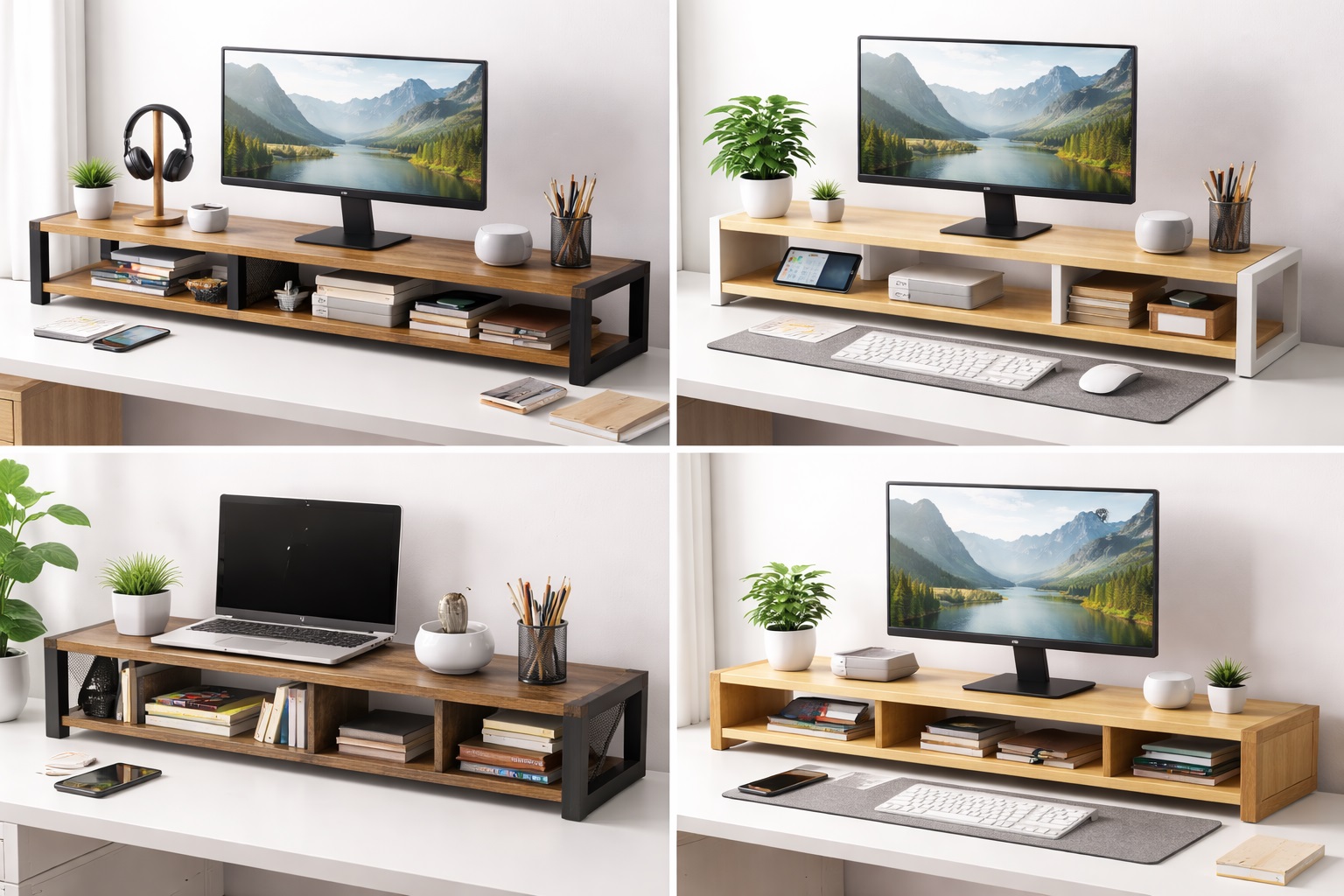
Best Desk Shelves Under $200: Premium Organization for Every Workspace
A budget of up to $200 opens up a meaningfully different tier of desk shelf than the entry-level options crowding most marketplace listings. At this price point, solid wood construction, reinforced joinery, and thoughtful design details become realistic expectations rather than lucky exceptions, and the difference shows up in exactly the places that matter most — long-term stability, weight capacity, and how the piece looks after years of daily use rather than weeks.
The temptation at this budget is to assume more money automatically buys more shelf — wider, taller, with more compartments. That's not always the right trade. The better use of a $200 budget is often spending on quality where it matters most: genuine solid wood or premium bamboo rather than composite board, sturdier joinery, and finishing details that hold up to years of visible use in a home office.
This is a subtle but important distinction from how budget shopping works. At the low end of pricing, the main question is whether a product performs its basic function reliably at all. At this higher tier, the products under consideration have almost all cleared that bar already, so the real comparison shifts to how well they'll continue performing and looking good years down the line, which requires evaluating a somewhat different set of details than a first-pass budget comparison would.
This guide compares the desk shelf styles that deliver genuinely premium quality within this budget, followed by a buying framework focused on where that additional spending actually pays off, and answers to the questions buyers ask most often when shopping in this higher tier. The goal is spending the extra budget on durability and design that lasts, not on features that look impressive in a listing but add little real value.
This price tier tends to attract buyers who have already lived with a budget shelf and know specifically what they want to improve — more stability, a nicer finish, or additional capacity that a basic version couldn't provide. That prior experience is genuinely useful context, and this guide is written with that more informed starting point in mind rather than assuming a completely blank slate.
At this price range, it's also worth being more selective about brand and manufacturing quality than you might be shopping at the lowest tier. The premium segment includes both genuinely well-made products from established furniture makers and inflated pricing on products that aren't meaningfully better than budget alternatives. Distinguishing between the two is the central skill this guide is built around.
One useful test is to ask whether a specific product feature would still matter to you after several years of ownership, or whether it's the kind of detail that looks appealing in a listing photo but fades in importance once the product is simply part of daily life. Structural quality, weight capacity, and finish durability tend to pass that test consistently. Decorative flourishes and marketing-driven feature lists tend not to.
A shelf in this range is also more likely to become a long-term fixture of your workspace rather than something replaced within a year or two, which changes how you should weigh design and finish. Since you'll be looking at it every day for years, aesthetic details that seem minor at the point of purchase — the exact grain of a wood finish, the proportions of a design — matter more here than they would for a purely functional budget purchase.
This is also the price range where a desk shelf starts to function as a genuine piece of furniture rather than a purely utilitarian accessory. It's reasonable to hold it to a similar standard as other furniture purchases in this range — expecting it to look intentional and well-made rather than simply functional, and to hold up under the same scrutiny you'd apply to a bookshelf or side table bought for the same room.
Top Picks Reviewed
Each of the four styles below represents a genuine step up in quality within a $200 budget, whether through premium materials, more sophisticated engineering, or design flexibility. Match your choice to which aspect of "premium" matters most to you — material quality, capacity, desk-space recovery, or customization.
1. Solid Wood Monitor Riser with Lower Storage Shelf – Best Premium All-Purpose Pick
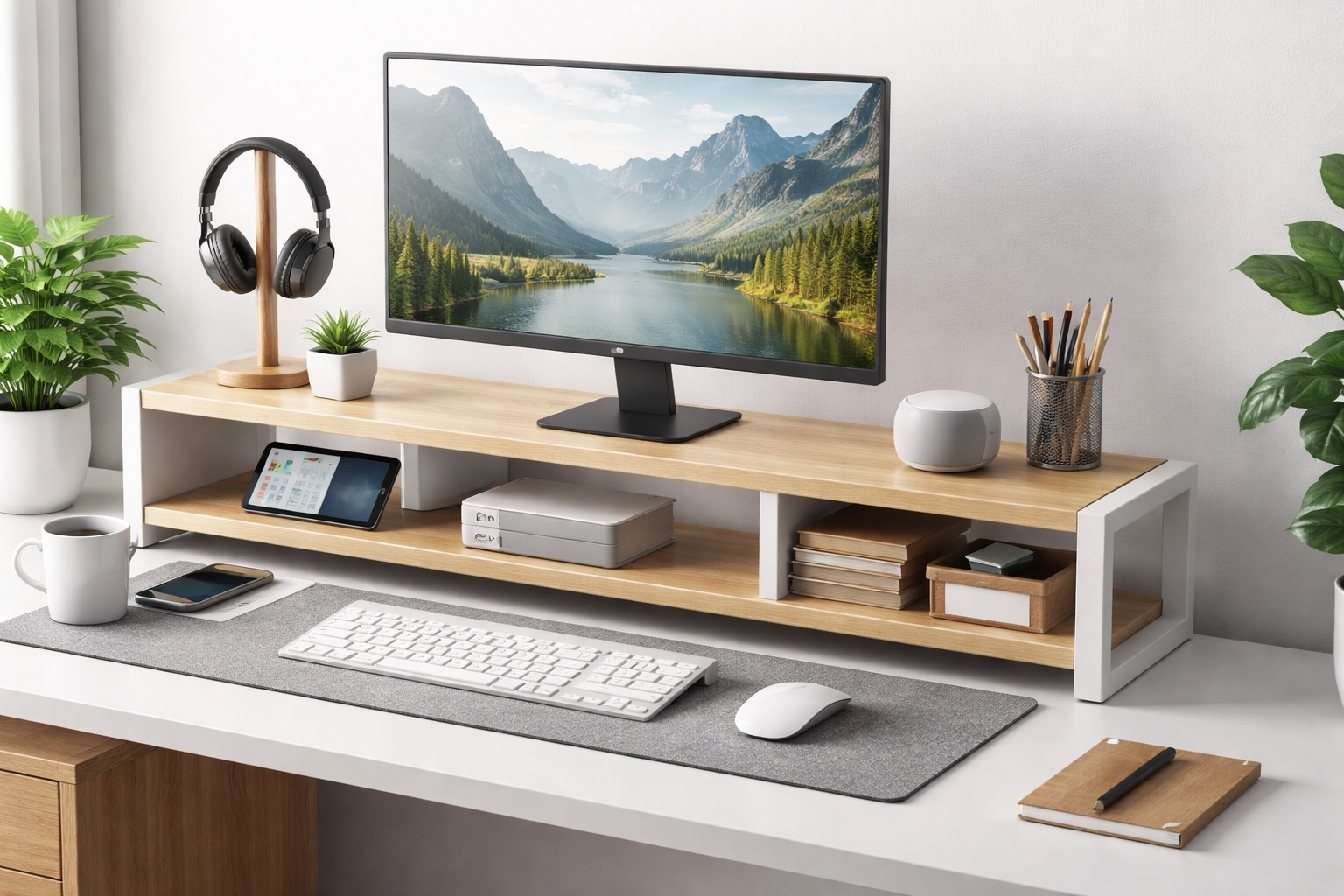
A solid wood monitor riser shelf raises the monitor to ergonomic eye level while creating an accessible, sturdier storage space underneath than composite alternatives typically offer. At this price tier, solid hardwood or premium bamboo construction replaces the MDF common in budget versions, delivering meaningfully better resistance to sagging, moisture, and general wear over years of daily use.
The added cost over a basic riser-shelf buys genuine structural improvement rather than just a nicer surface finish — thicker platform material, sturdier leg joinery, and a higher realistic weight capacity that holds up under a larger monitor or additional accessories without flexing. Over years of daily use, this difference in underlying construction is what separates a shelf that still looks and performs like new from one that visibly sags or wobbles. It's worth checking the leg-to-platform connection specifically, since a mortise-and-tenon or dowelled joint tends to hold up considerably better under repeated daily pressure than a simple glued butt joint, even when both look identical from the outside once assembled.
- Pros:
- Solid wood or premium bamboo construction resists sagging and wear
- Higher realistic weight capacity than budget composite alternatives
- Refined finish and joinery that looks presentable for years
- Solves monitor height and storage in one well-built piece
- Cons:
- Fixed height once placed, with no further adjustment
- Costs meaningfully more than a basic composite riser-shelf
Best For: Buyers who want the core riser-shelf function built to a genuinely higher standard of material and construction quality.
Why We Recommend It: This is the clearest example of premium spending paying off exactly where it should — in the structural quality of a piece you'll rely on daily, not in unnecessary added features.
2. Multi-Tier Solid Wood Organizer Shelf – Best for Premium Multi-Zone Storage
This freestanding shelf provides multiple storage tiers built from solid wood or high-grade engineered wood rather than the basic composite common at lower price points, delivering noticeably better rigidity across a wider organizational footprint. Reference books, accessories, and frequently used items each get a dedicated, sturdy tier rather than a single flexing shelf trying to do everything.
The premium construction shows up most clearly under real load — a fully loaded multi-tier unit built from quality materials stays level and stable, while a comparable budget unit can develop a visible sag across its widest shelf within months. This matters especially for the top or widest tier, which typically bears the greatest unsupported span and therefore the greatest risk of visible flex over time. It's worth checking whether the widest tier includes a center support or brace rather than relying purely on the side panels for rigidity, since that single design detail often explains why two visually similar multi-tier shelves perform very differently once fully loaded.
- Pros:
- Solid wood or high-grade construction resists sagging under full load
- Multiple genuinely sturdy tiers for organized, varied storage
- Refined finish suited to a long-term, visible workspace fixture
- No installation required despite the premium build quality
- Cons:
- Heavier and bulkier than composite freestanding alternatives
- Larger footprint than a single riser-shelf
Best For: Buyers who need genuinely sturdy multi-category storage and are willing to spend toward the upper end of this budget for it.
Why We Recommend It: A multi-tier design puts more stress on materials than a single flat shelf, which makes this exactly the product type where premium construction delivers the most noticeable real-world benefit.
3. Premium Wall-Mounted Floating Shelf – Best for a Polished Permanent Installation
A premium wall-mounted floating shelf uses concealed bracket hardware and higher-grade board material to achieve a cleaner, more refined "floating" appearance than budget wall shelves typically manage, while still recovering the entire desk surface below. The hardware itself also tends to be rated for higher weight capacities, supporting heavier monitors or multiple items with more margin than entry-level brackets.
Installation still requires wall anchors and basic tools, and the finished result functions identically to a budget wall shelf in basic terms, but the visual execution and long-term hardware reliability are noticeably better at this tier. Since a wall shelf is a permanent, highly visible fixture once installed, the extra investment in a polished appearance tends to feel worthwhile every time you look up at it.
- Pros:
- Concealed bracket hardware creates a cleaner floating appearance
- Higher-rated hardware supports heavier loads with more margin
- Premium board material resists warping better than budget options
- Recovers the entire desk surface, like any wall-mounted design
- Cons:
- Requires wall drilling, unsuitable for every rental situation
- Higher cost than an entry-level wall-mounted shelf
Best For: Permanent home office setups where visual polish and long-term hardware reliability justify spending toward the higher end of the budget.
Why We Recommend It: A wall shelf is the most visually prominent storage choice in a home office, and the premium tier delivers a noticeably cleaner, more finished look for a fixture that will be visible every day for years.
4. Modular Shelf System – Best for Customizable Premium Setups
A modular shelf system uses interchangeable panels, brackets, or units that can be reconfigured or expanded over time, allowing the storage layout to evolve alongside changing needs rather than committing to one fixed configuration. At this price tier, the individual modules are typically built from more durable materials than budget all-in-one units, and the system as a whole can often be expanded with additional pieces purchased separately later.
This flexibility comes at the cost of a more involved initial setup and planning process compared to a single pre-configured shelf, but for buyers who expect their storage needs to change, that adaptability is a meaningful long-term advantage. A modular system also tends to hold its value better over time, since individual worn or outdated modules can be replaced without discarding the entire system. Before committing to a specific modular line, check how long the manufacturer has offered it and whether add-on modules are still being actively sold, since a system built around a discontinued module line loses much of its long-term expandability advantage.
- Pros:
- Reconfigurable and expandable as storage needs change over time
- Individual modules typically built to a higher durability standard
- Can be tailored to unusual desk shapes or specific storage needs
- Avoids being locked into a single fixed configuration long-term
- Cons:
- More involved initial planning and setup than a fixed shelf
- Expanding the system later adds to the overall cost over time
Best For: Buyers who expect their storage needs to evolve and want a premium system that can grow and adapt rather than a fixed one-time configuration.
Why We Recommend It: Paying a premium for flexibility makes sense when future needs are genuinely uncertain, and a modular system avoids the wasted cost of replacing an entire fixed shelf once your setup outgrows it.
Buying Guide: How to Choose the Best Desk Shelf Under $200
Use these factors to identify where premium spending in this budget actually delivers meaningful value.
1. Solid Materials Over Composite Boards
At this budget, prioritize genuine solid wood, premium bamboo, or high-grade engineered wood over basic MDF or particleboard. This is the single change that most reliably improves long-term durability, moisture resistance, and appearance compared to entry-level shelves, and it's usually visible in close-up product photos if you look carefully at the grain and edges.
2. Joinery and Structural Construction
Look closely at how the shelf is actually assembled — reinforced joints, screwed rather than glued connections, and thicker structural supports all indicate genuine build quality improvements that justify a higher price beyond surface-level finish. Product photos showing the underside or joint details are worth examining specifically for this reason.
3. Realistic Weight Capacity With Margin
Premium construction should translate into a genuinely higher weight capacity, not just a nicer-looking listing. Confirm the stated capacity with margin above your actual equipment weight, and check reviews for feedback on performance under real, sustained loads rather than the manufacturer's laboratory-tested maximum.
4. Finish Quality for Long-Term Visibility
Since a shelf in this price range is likely to remain in your workspace for years, examine the finish quality closely — even coloring, smooth edges, and consistent grain in wood products all indicate a manufacturer investing in appearance that holds up over time rather than just at first unboxing. A finish that looks slightly uneven in photos rarely improves once it arrives.
5. Hardware Quality for Wall-Mounted Options
If considering a wall-mounted shelf, confirm the bracket hardware is rated for a genuinely higher capacity than entry-level equivalents, and look for concealed mounting designs that improve the finished appearance compared to visible support arms. Stainless or coated hardware also resists corrosion better over years of use than basic plated metal.
6. Modularity and Future Expansion
If your storage needs might grow or change, consider whether a modular system offers genuine expansion options at a reasonable additional cost, rather than locking you into a single fixed configuration that would need full replacement later. Check that replacement modules remain available for the specific product line rather than being discontinued quickly.
7. Cable Management Sophistication
Premium riser-shelves often include more thoughtfully integrated cable routing than budget versions — concealed channels rather than simple holes, for instance. This detail matters more at this price tier, where a polished overall appearance is part of what you're paying for, and visible cable clutter undermines that polish regardless of how well-built the shelf itself is.
8. Desk Depth and Footprint at a Premium Size
Premium shelves sometimes come in larger standard sizes than budget equivalents. Measure your desk carefully regardless of price tier, since a larger premium shelf that doesn't fit your desk delivers no more value than an ill-fitting budget one, no matter how well it's constructed.
9. Warranty Length as a Premium Signal
A longer warranty at this price tier is a reasonable expectation and a useful signal of genuine manufacturer confidence. Compare warranty length specifically against budget alternatives to confirm you're getting a meaningful durability guarantee for the higher price rather than an identical warranty despite the price increase.
10. Aesthetic Coherence With a Long-Term Workspace
Since a premium shelf is likely to stay in place for years, weigh its visual style more heavily than you would for a budget purchase. Consider how the specific wood tone, metal finish, or design silhouette will look alongside furniture and decor you expect to keep for the same timeframe, rather than choosing based on how it looks in isolation.
11. Verified Reviews Over Marketing Claims
At this price point, marketing language often emphasizes premium positioning regardless of actual build quality. Rely on verified purchase reviews, particularly ones describing long-term use, to confirm the product delivers on its premium claims rather than trusting listing copy alone, which can overstate quality regardless of price tier.
12. Assembly Complexity at This Tier
Premium construction sometimes means more assembly steps than a simple budget shelf, particularly for multi-tier and modular designs with more individual pieces and connection points. Check the listing or product reviews for an honest sense of assembly time and difficulty before ordering, and set aside a reasonable block of uninterrupted time rather than assuming a $200 shelf will go together as quickly as a basic single-piece riser.
13. Matching Finish to Existing Furniture
Because a shelf at this price tier is likely to remain a visible, long-term fixture, it's worth comparing its specific wood tone or metal finish against your existing desk and nearby furniture rather than treating it as a purely functional accessory. A close but not quite matching finish can look more out of place next to established furniture than a neutral black or white option that doesn't attempt to match at all, so consider a neutral finish if your existing furniture's exact tone isn't clearly represented among the available options.
Frequently Asked Questions
1. Is it worth spending up to $200 on a desk shelf?
For anyone planning to keep a home office setup for several years, yes — the difference in material quality, stability, and finish at this tier is genuinely noticeable compared to entry-level options, and the shelf tends to last considerably longer as a result, offsetting the higher upfront cost over time.
2. What's the biggest quality difference between budget and premium desk shelves?
Material and joinery quality make the largest practical difference. Solid wood or premium bamboo construction with reinforced joints resists sagging and wear far better than basic composite boards used in most budget shelves, particularly under sustained daily loads.
3. Do premium desk shelves actually hold more weight?
Often, yes, though it varies by specific product. Check the stated weight capacity directly rather than assuming a higher price automatically means a higher rating, since some premium pricing reflects design rather than structural capacity alone.
4. Is a modular shelf system worth the extra planning effort?
If your storage needs are likely to change over the next few years, yes — the ability to expand or reconfigure the system avoids replacing an entire fixed shelf later, which often costs more in the long run than the initial modular investment upfront.
5. Are premium wall-mounted shelves worth the extra cost over budget versions?
If visual polish and long-term hardware reliability matter to you, yes. The core desk-space recovery benefit is functionally similar across price tiers, but the finished appearance and hardware durability are noticeably better at the premium tier over years of use.
6. What material should I prioritize at this budget?
Solid wood or premium bamboo generally deliver the best balance of durability and appearance at this price range, outperforming basic MDF in both moisture resistance and long-term structural stability under regular use.
7. How long should a premium desk shelf last?
A well-built shelf at this price tier typically lasts five years or longer with reasonable care, meaningfully outlasting most budget alternatives, particularly when built from solid wood rather than composite materials that degrade faster.
8. Can I return a premium desk shelf if it doesn't meet expectations?
Most retailers offer a 15- to 30-day return window regardless of price tier. It's worth testing the shelf with your actual equipment as soon as it arrives to confirm the quality matches the premium positioning before that window closes and a return becomes more difficult.
9. What should I prioritize first when shopping in this price range?
Material and joinery quality first, since these determine how the shelf performs over years rather than weeks. Aesthetic details and added features are worth considering only after confirming the underlying construction is genuinely solid and well-built.
10. Does brand name matter more at this price point?
Somewhat, since established furniture brands are more likely to justify premium pricing with genuine material and construction improvements. Still, verified reviews remain the most reliable way to confirm quality regardless of brand reputation or marketing claims.
11. Is it better to buy one premium shelf or two budget shelves for the same total price?
It depends on your storage needs. A single well-built premium shelf often serves a focused storage need better and lasts longer, while two budget shelves might suit separate, distinct storage zones — the right choice depends on whether your clutter is concentrated or spread across different areas of the desk.
12. Is a $200 desk shelf overkill for a small home office?
Not necessarily — a smaller workspace often benefits even more from a well-built shelf, since there's less room to simply add a second budget product later if the first one underperforms. A single, genuinely durable piece sized correctly for a small desk can be a more efficient use of both space and budget than a cheaper option that needs replacing or supplementing within a year.
13. Can premium desk shelves be repaired rather than replaced if something breaks?
Often, yes, particularly for solid wood or modular designs where a single damaged panel, bracket, or module can sometimes be replaced individually rather than discarding the entire piece. This is one of the quieter advantages of spending more upfront, since budget composite shelves are typically not designed with individual part replacement in mind.
Final Verdict
- Best Premium All-Purpose Pick: Solid Wood Monitor Riser with Lower Storage Shelf — genuine material upgrade for the most common desk shelf need.
- Best for Premium Multi-Zone Storage: Multi-Tier Solid Wood Organizer Shelf — sturdy, organized storage that holds up under full load.
- Best for a Polished Permanent Installation: Premium Wall-Mounted Floating Shelf — refined appearance and higher-rated hardware.
- Best for Customizable Premium Setups: Modular Shelf System — adaptable storage built to grow with changing needs.
The right desk shelf under $200 depends on which aspect of premium quality matters most for your situation — material durability, storage capacity, visual polish, or long-term adaptability. A solid wood riser-shelf delivers the most broadly useful upgrade for most buyers, while the other options make sense for more specific storage or design priorities.
If you're weighing multiple options and unsure where to start, the solid wood riser-shelf remains the safest default recommendation, since it addresses the single most common desk organization need with a genuine material upgrade over budget alternatives. From there, additional pieces like a multi-tier organizer or a wall-mounted shelf can be added later once you've confirmed exactly what further storage your workspace actually needs.
Whatever you choose, use this budget to buy genuine construction quality rather than simply more features or a larger size. A well-built shelf at this price point should still look and perform well after several years of daily use, which is the real return on spending more than the lowest available price in this category.
It's also worth taking a bit more time with this purchase than you might with a lower-cost item, given the larger investment and the longer period you'll likely keep the shelf in place. Reading through a broader set of reviews, comparing a few finalist products side by side, and confirming your desk measurements carefully all pay off more at this price tier than they would for a small, easily replaced budget purchase.
Finally, remember that even genuine premium construction benefits from basic care over time. Keeping wood surfaces away from standing liquids, periodically checking that joints and hardware remain tight, and avoiding loads well beyond the stated capacity all help a well-built shelf actually reach the multi-year lifespan its construction quality makes possible, rather than falling short of it through avoidable wear.