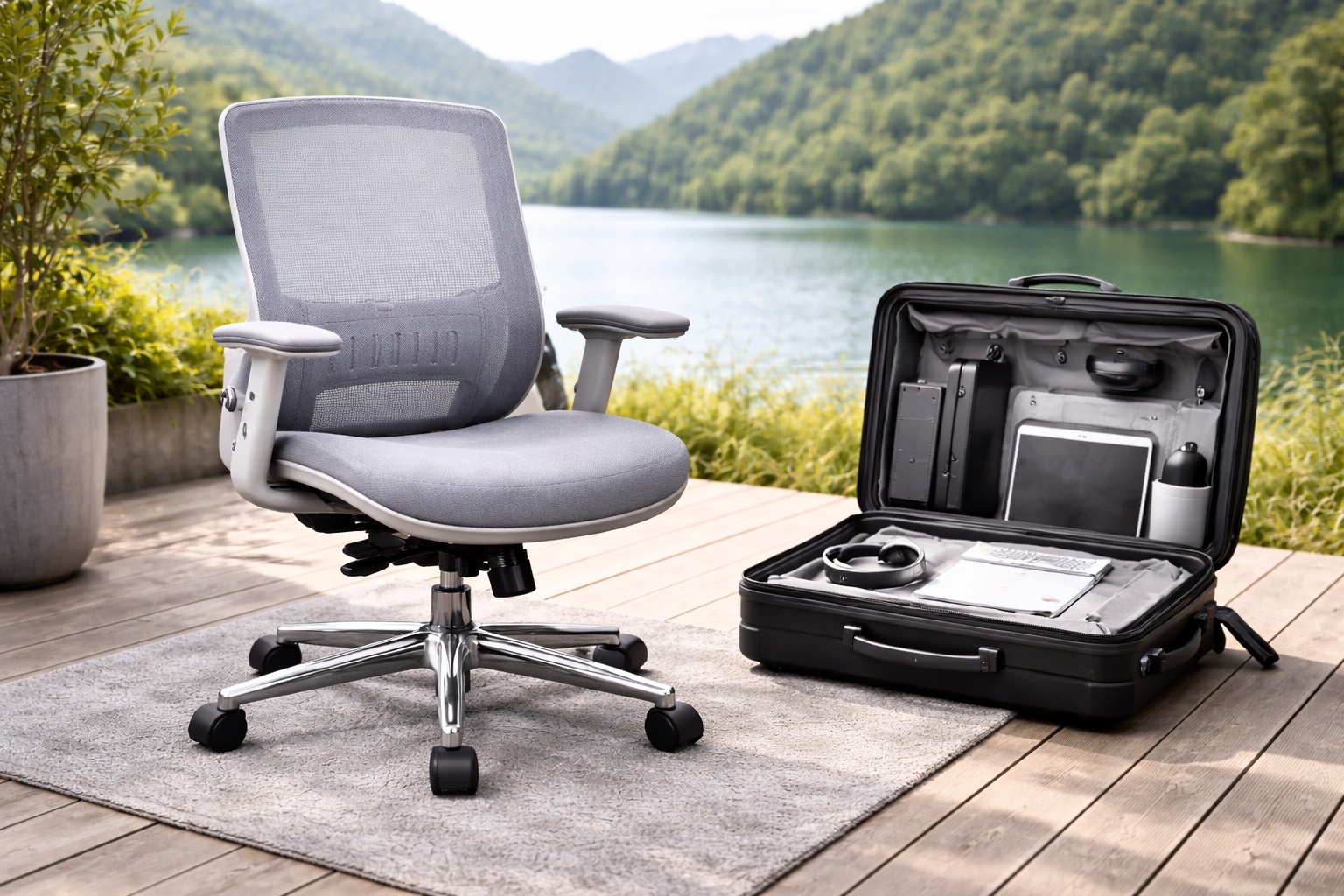
Best Office Chairs for Travel: Ergonomic Support On the Road
Working from a hotel desk chair, a rigid coworking bench seat, or whatever furniture came with a short-term rental exposes a problem most digital nomads eventually run into: none of it was designed with a full workday of sitting in mind. A chair that seems tolerable for a two-hour dinner turns genuinely painful somewhere around hour four of a work call, and by the second week of a trip, the cumulative back strain can outlast the trip itself.
The instinct for a traveling remote worker is often to just tough it out, since carrying furniture seems impractical by definition. But a meaningful slice of the office chair market has adapted specifically to this problem — not full-size office chairs shrunk down, but genuinely different designs built around the trade-offs that matter for temporary, changing workspaces rather than one fixed desk.
This guide compares three approaches that hold up differently for travel-based remote work: a mesh ergonomic chair for those who set up a semi-permanent base for weeks at a time, a cushioned executive-style option for those who prioritize comfort during longer stays, and a lightweight task chair built around portability and quick setup. None of these is a universal answer for every nomad — the right pick depends on how long you typically stay in one place and how much you're willing to carry.
It's also worth being realistic about the trade-off at the center of every travel chair decision: comfort and portability pull in opposite directions, and no single chair fully escapes that tension. The most ergonomically complete chairs tend to be heavier and less convenient to move, while the lightest, most portable options sacrifice some adjustability to get there. Understanding where each option lands on that spectrum will help you choose based on your actual travel pattern rather than a generic recommendation.
It's worth naming the actual cost of getting this decision wrong, too. A digital nomad who buys a bulky, feature-complete chair and then finds themselves needing to relocate every few days ends up either abandoning an expensive purchase or hauling something genuinely impractical through airports and train stations. Conversely, someone who buys the lightest possible option but then settles into one apartment for three months may end up wishing they'd invested in something more supportive for that longer stretch. Matching the chair to the actual travel pattern, not a hoped-for one, avoids both of these outcomes.
Top 3 Office Chairs for Travel (Detailed Reviews)
Mesh Back Ergonomic Chair – Best for Extended Stays
For a digital nomad settling into a coworking space, a serviced apartment, or an Airbnb for several weeks at a time, a mesh back ergonomic chair delivers the most complete support of the three options here. The breathable mesh conforms to your spine while allowing air circulation, addressing both lumbar support and the heat buildup that comes with sitting through a genuinely long remote workday, particularly in warmer climates common to many popular remote work destinations.
Most mid-range mesh chairs include adjustable lumbar support, armrests, and seat height, covering the core adjustments that matter for anyone treating a temporary location as a real, full-time workspace rather than a brief stopover. That adjustability matters more the longer you stay in one place, since small ergonomic mismatches compound over weeks rather than days.
The trade-off is that this style is bulkier and heavier than the other two options, making it a poor fit for someone changing locations every few days. It's the right choice specifically for the nomad who stays somewhere for a month or more and wants genuine ergonomic support during that extended period, even if it means the chair stays behind or gets shipped rather than carried in a suitcase.
- Pros:
- Breathable mesh back suits warmer travel destinations
- Includes genuine lumbar, armrest, and height adjustment
- Handles long, extended work sessions comfortably
- Widely available secondhand or through short-term rental furnishing services
- Cons:
- Too bulky for frequent relocation or carry-on travel
- Not a practical option for stays under a few weeks
Best For: Nomads settling into one location for a month or more who want genuine ergonomic support during an extended remote work stint.
Why We Recommend It: For longer stays, the ergonomic completeness of a proper mesh chair outweighs the portability downside, since you're not carrying it between cities every few days anyway.
It's also worth noting that many longer-term travelers source this style secondhand or through furnished-apartment marketplaces rather than buying new, since a chair that only needs to last a few months of use doesn't necessarily justify the cost of a brand-new premium model. Checking local secondhand listings before your stay begins can meaningfully reduce the cost of getting proper ergonomic support during an extended trip.
Executive Padded Chair – Best for Comfort-Focused Longer Trips
An executive-style padded chair trades some of the breathability of mesh for a softer, more cushioned sit, along with a taller backrest that supports the upper back and neck. For a nomad who spends part of the workday on calls and part reading or planning rather than typing continuously, the reclining function common on these chairs adds genuine comfort during those lower-intensity stretches of a long travel-based workday.
This style suits travelers renting furnished apartments for a month or longer who care more about overall comfort than absolute portability, and who may be setting up in a cooler climate where the reduced breathability of foam padding matters less than it would in a tropical destination.
The larger footprint and heavier weight mean this isn't a chair anyone carries between destinations — it's typically sourced locally or through a furnished rental service rather than packed. That makes it a fit specifically for longer, more settled stretches of travel rather than a fast-moving, frequently changing itinerary.
- Pros:
- Plush, cushioned comfort for longer work sessions
- Taller back and headrest support upper body during calls
- Reclining function suits mixed reading and typing days
- Well suited to cooler climates where breathability matters less
- Cons:
- Heaviest and bulkiest of the three options, unsuitable for carrying
- Retains more heat, which matters in warm destinations
Best For: Travelers settled into a furnished rental for an extended stretch who prioritize plush comfort over portability.
Why We Recommend It: For a longer, more settled stay, this style offers a genuinely different and often preferable comfort profile compared to firmer mesh alternatives, without requiring anyone to actually transport it.
This option also tends to suit travelers who've deliberately chosen a slower pace of travel — spending a full season in one region rather than hopping between cities every week. If that describes your general approach, prioritizing comfort over portability for each individual stop makes more sense than optimizing every purchase around a moving pace you're not actually keeping.
Lightweight Task Chair with Lumbar Support – Best for Frequent Relocation
For a nomad who changes cities or accommodations every week or two, portability outweighs almost every other consideration, and a lightweight task chair with basic lumbar support is the most practical answer. Stripped of premium styling and bulky padding, this style focuses on the adjustments that matter most — lumbar support, seat height, and armrests — in a compact, genuinely transportable form factor.
Some models in this category are specifically designed to fold flat or break down into a compact bag, making them realistic to check as luggage or fit into a car for road-trip-style travel between destinations. This is the only one of the three styles genuinely built around frequent relocation rather than adapted to it after the fact.
The trade-off is a simpler feature set and less plush comfort than the other two options, which matters over a very long single stay but matters less when you're only using the chair in any one location for a handful of days before moving on again.
- Pros:
- Lightest and most compact of the three options
- Some models fold or break down for genuine portability
- Still includes essential lumbar and height adjustment
- Practical for frequent moves between short-term stays
- Cons:
- Less plush and less visually polished than executive designs
- Simpler mechanism means fewer fine-tuning options overall
Best For: Nomads who relocate frequently and need a genuinely portable ergonomic option rather than furniture that stays behind.
Why We Recommend It: When your itinerary changes every week or two, a chair you can actually carry and set up quickly outweighs the marginal ergonomic gains of a bulkier, more complete design you'd never realistically travel with.
It's also the most forgiving option if your travel plans change unexpectedly, which happens often for people working while traveling. A chair you can pack in minutes and check as luggage without a second thought fits naturally into a schedule that might shift by days or weeks at short notice, unlike a bulkier piece of furniture that assumes a more fixed itinerary.
Buying Guide: How to Choose the Best Office Chair for Travel
Match these factors to your actual travel pattern — how long you typically stay in one place, and how much you're willing or able to carry — rather than defaulting to whichever chair looks most impressive in photos.
1. Length of Typical Stay
Your average stay length is the single biggest factor in this decision. Extended stays of a month or more favor a more complete ergonomic chair even if it's heavier, since you're not moving it often. Frequent relocation favors a lighter, more portable option, since the hassle of moving a bulky chair outweighs its comfort advantages over a short stay. If your pattern genuinely varies trip to trip, lean toward the more portable option as a safer default, since it's easier to supplement a lightweight chair with a rented or borrowed upgrade during an occasional longer stay than the reverse.
2. Weight and Portability
If you're carrying the chair yourself between locations, weight matters enormously. Look for models specifically marketed as foldable or travel-oriented rather than assuming any lightweight-looking chair packs down easily, since some compact designs still require significant disassembly to transport. Checking the actual packed dimensions against airline luggage restrictions before buying can save an unpleasant surprise at the check-in counter.
3. Lumbar Support Adjustability
Adjustable lumbar support remains the most important ergonomic feature regardless of travel pattern. Even the most portable, stripped-down chair should include some form of height-adjustable lumbar support, since this single feature affects comfort more than any other on a long remote workday.
4. Seat Height Range for Varied Desks
Temporary workspaces vary enormously in desk height, from a proper coworking desk to an improvised hotel room table. A wide seat height adjustment range helps the same chair work reasonably well across genuinely different desk setups, which matters more for travelers than for someone with one fixed desk at home.
5. Assembly and Setup Speed
A chair that takes 30 minutes to assemble is a poor fit for someone staying somewhere for only a few nights. Prioritize models with tool-free or minimal-tool setup if your travel pattern involves frequent moves, since setup time adds up meaningfully across a fast-changing itinerary.
6. Climate Suitability
Mesh backs suit warmer, more humid destinations by staying cooler and more breathable. Padded executive designs suit cooler climates where breathability matters less and warmth is more welcome. Match the material to the climate of your actual destination rather than a generic preference formed elsewhere.
7. Durability Under Repeated Transport
A chair that's packed and unpacked repeatedly experiences more mechanical stress than one that stays in place. Look specifically for reviews mentioning durability after repeated moves, since a chair that holds up fine in a stationary home office might loosen or wear faster under frequent transport.
8. Weight Capacity
Check the stated weight capacity against your own needs regardless of travel pattern. Most standard chairs support 250 to 300 pounds, and using a chair beyond its rated capacity accelerates wear on the frame and gas lift mechanism faster than it would with stationary, occasional use.
9. Caster and Base Compatibility with Varied Flooring
Temporary accommodations mix flooring types unpredictably — hardwood in one rental, tile in another, carpet in a third. Casters designed for hard floors generally perform acceptably across most surfaces, making them a safer default choice than carpet-specific casters for someone moving between different types of temporary housing.
10. Storage and Transport Bag Options
Some travel-oriented chairs include a dedicated carrying bag or storage case, which meaningfully simplifies transport between locations compared to wrapping a bare chair in luggage or packing materials improvised on the spot. This is worth checking specifically if you plan to check the chair as luggage regularly.
11. Price Relative to Travel Frequency
A nomad relocating every week faces different economics than one settling in for months at a time. Frequent movers may find it more practical to invest in one durable, portable chair used across many trips, while longer-stay travelers might reasonably buy and sell furniture locally at each destination instead.
12. Warranty and Support While Traveling
Check whether the manufacturer's warranty and return policy realistically apply while you're traveling internationally, since some warranties are region-specific or require returning to a domestic address. This matters more for travelers than for someone with a fixed home address to rely on for any necessary returns or repairs.
13. Airline and Transit Luggage Restrictions
If you plan to check a folded travel chair as luggage, weigh and measure it against your specific airline's baggage allowance before you fly, since a chair that fits comfortably in a car trunk can still exceed checked luggage limits or trigger an oversized-item fee. Budget airlines and regional carriers in particular tend to enforce stricter size and weight limits than major international carriers, so it's worth checking the specific route rather than assuming your usual airline's policy applies everywhere you travel.
14. Damage Protection During Transit
Repeated handling by baggage crews is rougher on a folding chair than the packing and unpacking you'd do yourself at each stop, so a padded carrying case or a hard-shell travel bag is worth the extra weight if you're checking the chair regularly rather than transporting it by car. Some travelers also photograph the chair before each flight as a simple record in case a damage claim becomes necessary, which is a small habit that can save a frustrating dispute with an airline later.
15. Multi-Use Potential in a Furnished Rental
A travel chair that only works at a desk is a narrower purchase than one that also serves as reasonable general seating in a rental that's otherwise furnished with a couch and little else. Lightweight task chairs and mesh designs both tend to work acceptably as a second seat for a meal or a video call taken away from the desk, which adds practical value beyond the strict work-hours use case most travelers have in mind when they first buy one.
One more practical note worth considering: keep digital copies of any receipts and warranty documentation rather than relying on paper copies that can easily get lost or damaged across multiple moves. Having this information accessible from your phone or cloud storage makes any warranty claim considerably easier to sort out while you're away from a fixed home address.
Frequently Asked Questions
1. Is it realistic to travel with a full office chair?
It depends on the chair and your travel style. Lightweight, foldable task chairs are realistic to check as luggage or transport by car, while bulkier mesh or executive chairs are generally better suited to travelers settling into one location for an extended stay rather than moving frequently.
2. What's the most portable type of office chair for frequent travel?
A lightweight task chair with basic lumbar support, particularly models specifically designed to fold or break down into a compact bag, offers the best balance of portability and ergonomic function for someone relocating often.
3. Should I buy a new chair at every destination instead of traveling with one?
For very long stays, buying or renting locally is often more practical than carrying furniture across a trip. For shorter or more frequent moves, a genuinely portable chair you already own and trust can save the hassle and unpredictability of sourcing furniture at each new location.
4. How do I know if a hotel or coworking chair is good enough for a full workday?
Check for basic lumbar support and an adjustable seat height at minimum. If neither is present, even a short stay can cause noticeable discomfort during long work sessions, and a portable cushion or lumbar support accessory can help bridge the gap temporarily.
5. Can a travel office chair handle different climates without issue?
Mesh chairs generally perform well across a range of climates but shine specifically in warm, humid destinations. Padded executive chairs feel more comfortable in cooler climates but can feel warm and less pleasant in tropical destinations, so matching material to climate is worth considering.
6. Is the most expensive travel chair always the best choice?
Not necessarily. Higher price often reflects premium materials or styling rather than the portability and durability features that actually matter most for frequent travel. Focus on weight, foldability, and lumbar support over general price or brand prestige.
7. How long should a travel-oriented office chair last?
A well-built travel chair typically lasts several years even with frequent transport, though the folding mechanism and casters tend to show wear faster than on a stationary chair due to repeated packing and unpacking.
8. Can I return a travel office chair if it doesn't hold up to my travel style?
Most retailers offer a 15 to 30 day return window, though shipping a chair back while traveling internationally can be impractical. Test the chair during a realistic short trip before committing to it as your primary travel setup for future trips.
9. What is the best office chair for a specific travel pattern?
It depends entirely on how long you typically stay in one place. Extended stays favor the mesh or executive options above, while frequent relocation favors the lightweight task chair. Match your choice to your actual itinerary rather than a generic recommendation.
10. Does brand matter when choosing a travel office chair?
Established brands generally offer more consistent build quality and more reliable customer support, which matters when you may need help while abroad. Newer, travel-specific brands can still offer good value if verified reviews specifically mention durability under repeated transport.
11. Can I ship a travel chair ahead to my next destination instead of carrying it?
Yes, some nomads choose to ship a bulkier chair ahead rather than carry it, particularly for longer stays where the shipping cost is justified by weeks of improved comfort. This works best for extended, planned stays rather than frequent, spontaneous relocation.
12. Is a lumbar support cushion a reasonable alternative to a full travel chair?
For very short stays or unpredictable itineraries, a compact lumbar cushion paired with whatever chair is already available can be a reasonable lighter-weight alternative to carrying a full chair, though it won't fully replace proper seat height and armrest adjustment.
13. How do I decide between shipping a chair ahead and buying locally at each stop?
Consider the cost and hassle of shipping against how long you'll actually use the chair once it arrives. For a multi-month stay, shipping or buying locally usually makes more sense than carrying a bulky chair through several transit stops just to reach one destination.
14. What's a reasonable backup plan if my travel chair gets damaged in transit?
Keep a compact lumbar cushion as a backup in your regular luggage regardless of which chair you choose. It won't replace a full ergonomic chair, but it prevents a damaged or delayed shipment from leaving you with zero back support during an important work stretch.
15. What's the best way to protect a travel chair during checked baggage handling?
A padded travel bag or hard-shell case designed for the specific chair offers the most reliable protection against rough baggage handling, particularly around the folding joints and casters, which tend to be the most vulnerable points on a lightweight design. Wrapping a bare chair in clothing or generic packing material offers some protection but is a distant second choice for anyone checking it regularly rather than occasionally.
16. Should I buy travel insurance that covers equipment like this?
If the chair represents a meaningful expense relative to your travel budget, checking whether your existing travel insurance or credit card coverage extends to checked equipment is worth the few minutes it takes, since a lost or damaged chair mid-trip can otherwise mean an unplanned replacement cost at an inconvenient time. This matters more for frequent movers checking the chair on every flight than for someone shipping it once to a single extended stay.
17. Can a travel office chair also work as regular seating in a rental apartment?
Yes, in most cases. Lightweight task chairs and mesh designs both function reasonably well as an extra seat for meals, calls away from the desk, or general use in a rental that's otherwise sparsely furnished, which adds practical value beyond strict work hours and can make the purchase feel more worthwhile over a longer trip.
Final Verdict
- Best for Extended Stays: Mesh Back Ergonomic Chair – genuine ergonomic completeness for a month-long or longer stint.
- Best for Comfort-Focused Longer Trips: Executive Padded Chair – plush comfort for settled, longer-term travel.
- Best for Frequent Relocation: Lightweight Task Chair with Lumbar Support – genuine portability without giving up the ergonomic essentials.
There's no single best travel chair independent of your actual travel pattern — the right choice depends entirely on how long you stay in one place and how much you're willing to carry between destinations. A nomad settling in for months at a time has different priorities than one relocating every week, and pretending otherwise leads to a chair that doesn't actually fit how you work.
Think honestly about your typical itinerary before choosing, and don't assume the most feature-complete option is automatically the best one for your situation. The right travel chair is the one that actually makes it into your routine consistently, not the one with the longest list of ergonomic features sitting unused in a shipping box somewhere.
If your travel pace changes from trip to trip, it's also reasonable to own more than one solution rather than forcing a single chair to cover every scenario. A lightweight task chair for shorter, faster-moving stretches paired with a plan to source something more substantial locally during longer stays often works better in practice than trying to find one chair that's equally good at both extremes.