Best Compact Keyboards for Small Desks in 2026
A full-size keyboard eats up more desk real estate than most people realize until they actually measure it against a small desk. Once you add a monitor stand, a mouse, maybe a notebook or a coffee cup, a standard keyboard with its number pad and wide bezels can leave almost no usable space for anything else, forcing your mouse arm into an awkward, cramped position for hours at a time.
This guide focuses specifically on the desk-space problem rather than typing performance in isolation. A keyboard can have excellent switches and a great typing feel and still be the wrong choice for a small desk if its footprint doesn't leave room for a mouse to move freely, or if it pushes your monitor and other essentials into an inconvenient layout. The right compact keyboard should feel like it was designed around your desk's actual dimensions, not just scaled down from a full-size design as an afterthought.
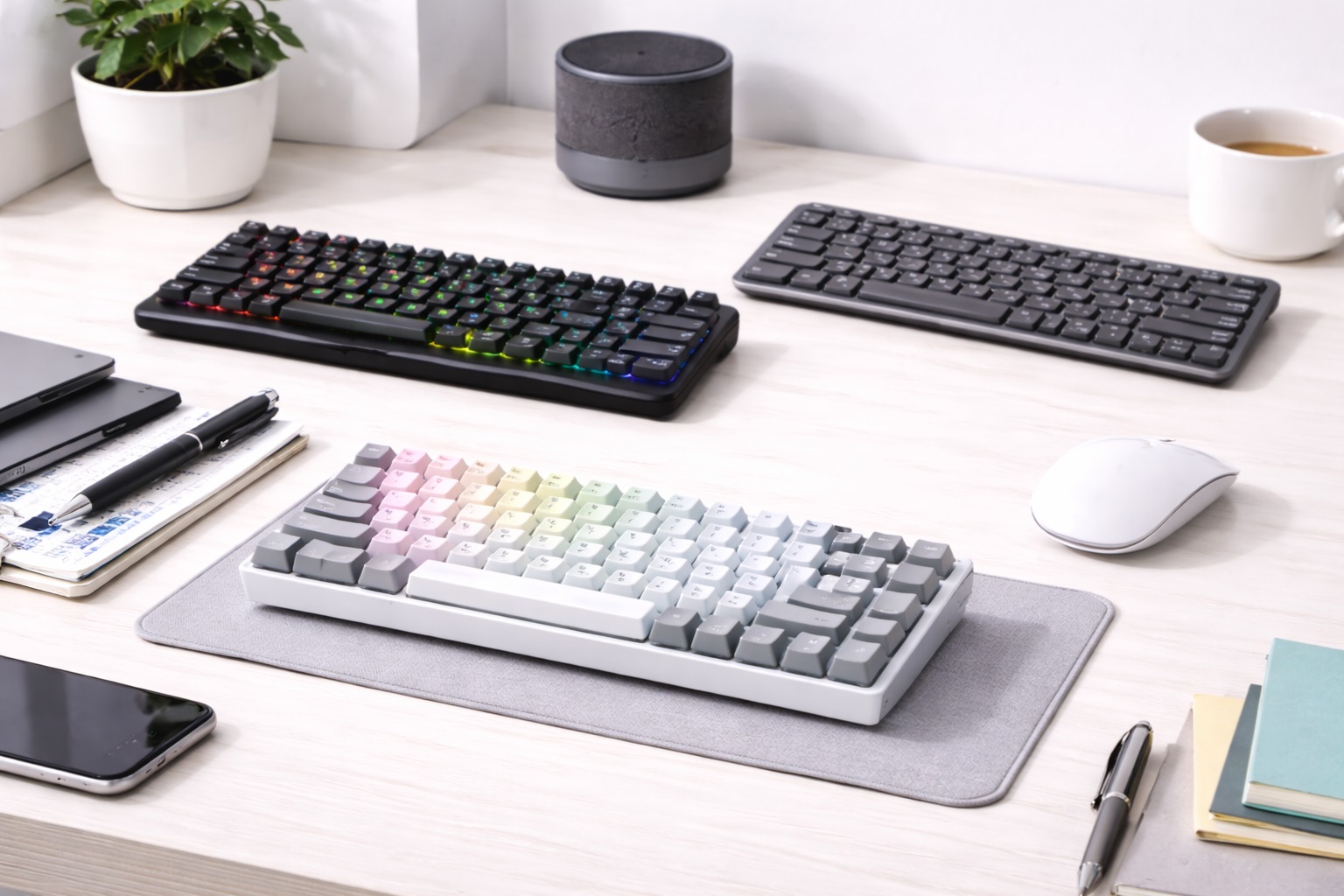
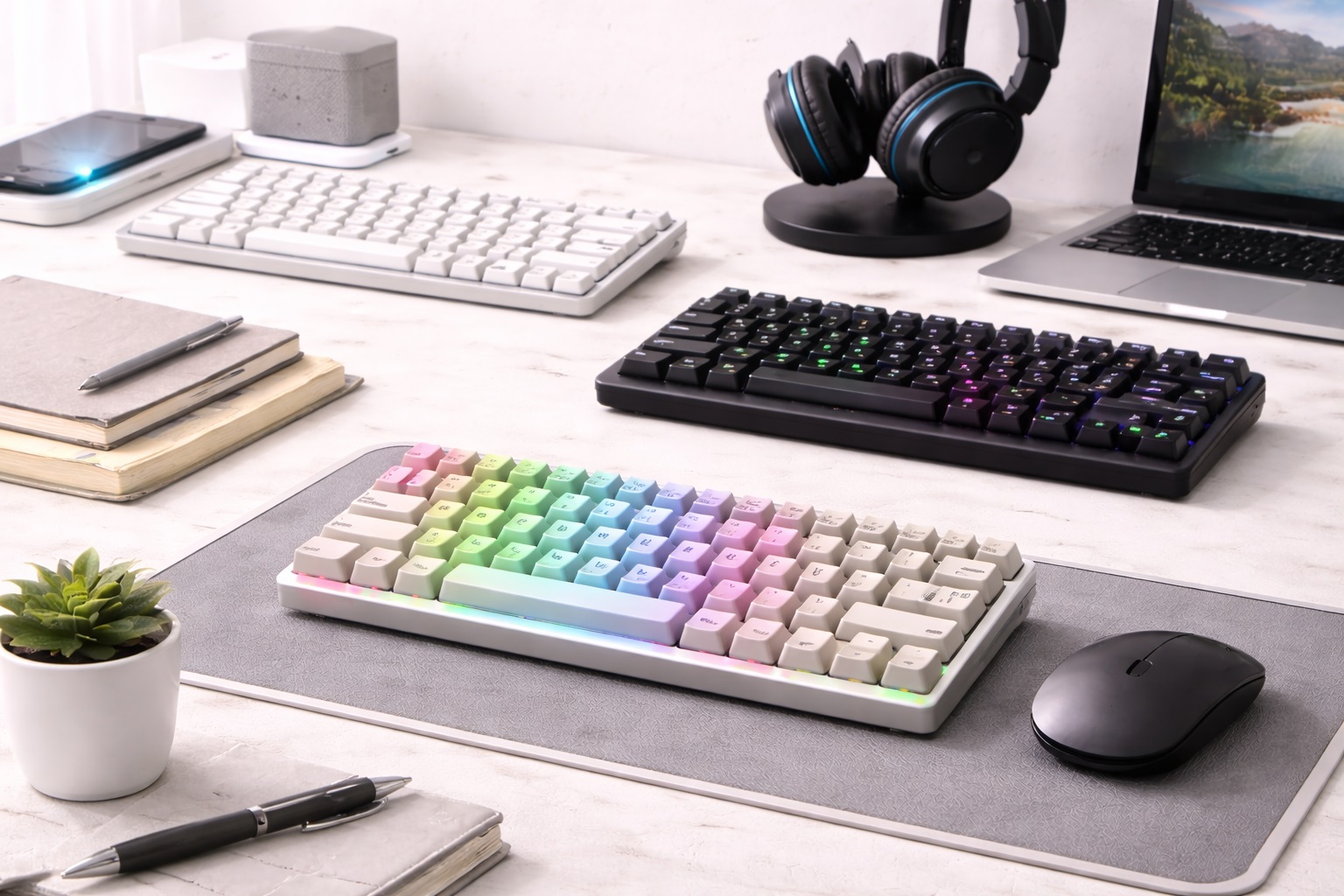
Not every desk-space problem needs the same solution, though. Some people need to keep a number pad for spreadsheet work and just want to shave a little width off. Others are happy to give up the number pad and arrow keys entirely in exchange for maximum mouse room. This guide compares three practical approaches — a full wireless mechanical keyboard for anyone unwilling to compromise on typing feel despite a small desk, a silent membrane keyboard that tends to run thinner and more compact by default, and dedicated TKL or 60% layouts built specifically to reclaim desk space.
Each of the three categories below solves the small-desk problem differently, and the trade-offs are genuinely different depending on whether you rely on the number pad, how much you value tactile feedback, and how much extra mouse space actually matters for your daily work. Read through the detailed comparisons first, then use the buying guide to match specific dimensions and layout choices to your actual desk measurements rather than guessing from a product photo.
Top 3 Compact Keyboards for Small Desks (Detailed Reviews)
1. Wireless Mechanical Keyboard – Best For Typing Feel Without Full-Size Bulk
A wireless mechanical keyboard combines the tactile feedback and durability of mechanical switches with cable-free Bluetooth or 2.4GHz connectivity, and many mechanical keyboards are available in more compact form factors than their membrane counterparts, since removing the wired connector and battery compartment already trims some bulk from the design. Mechanical switches typically last 50 to 100 million keystrokes, which matters if you're investing in a smaller, more premium board rather than treating the keyboard as a disposable accessory. For a small desk specifically, choosing a mechanical keyboard in a TKL or compact size gives you the typing feel you want without the number pad eating into your mouse space.
The trade-off is that full-size mechanical keyboards remain among the largest options on the market if you don't specifically choose a compact variant, so it's worth being deliberate about size when shopping in this category rather than assuming "mechanical" and "compact" are mutually exclusive. Most modern wireless mechanical keyboards include USB-C charging and multi-device pairing, which is convenient on a small desk where you might switch between a laptop and a secondary device without wanting to manage multiple physical keyboards taking up space simultaneously. Shoppers who skip straight to a manufacturer's flagship full-size line and only later discover a compact version existed in the same switch family often end up needlessly reshopping, so it pays to search a brand's full lineup rather than stopping at the first mechanical keyboard that appears in search results.
- Pros:
- Excellent typing feedback available even in compact form factors
- Wireless freedom reduces cable clutter on an already tight desk
- Long switch lifespan makes it a durable long-term choice
- Multi-device pairing avoids needing separate keyboards for different devices
- Cons:
- Full-size mechanical variants remain bulky if you don't specifically choose a compact layout
- Generally costs more than a comparably sized membrane keyboard
Best For: Anyone unwilling to compromise on typing feel who specifically seeks out a TKL or smaller mechanical layout rather than a full-size board.
Why We Recommend It: A compact mechanical keyboard proves you don't have to choose between typing satisfaction and desk space — provided you actively choose the smaller layout rather than defaulting to whichever mechanical keyboard is most popular or heavily marketed.
2. Silent Membrane Keyboard – Best For Thin, Low-Profile Desk Footprint
Silent membrane keyboards use rubber dome switches beneath a silicone membrane, and this construction generally allows for a thinner overall keyboard profile than mechanical switch housings require, since there's no discrete switch stem and spring mechanism taking up vertical space beneath each key. For a small desk, this lower profile matters in ways beyond footprint alone — a slimmer keyboard also tends to sit at a more comfortable typing angle without needing a separate wrist rest, which itself would consume additional desk space.
Membrane keyboards are also generally more affordable than mechanical alternatives and are widely available in genuinely compact widths, since manufacturers building for the budget-conscious segment of this category have historically prioritized smaller, simpler designs. The typing feel is softer and less precise than mechanical switches, which matters if you do heavy, fast typing, but for general desk use where space is the primary constraint, the thinner, quieter membrane design solves the small-desk problem effectively without requiring any specific size trade-off. Its lighter overall weight is also worth noting for anyone who occasionally needs to shift the keyboard aside entirely, whether to make room for a laptop stand or simply to wipe down the desk underneath it.
- Pros:
- Thinner overall profile than most mechanical keyboards
- Generally more affordable than mechanical alternatives
- Wireless options widely available in genuinely compact sizes
- Lighter weight, easier to shift or store temporarily when desk space is needed for other tasks
- Cons:
- Softer, less precise typing feedback than mechanical switches
- Shorter typical lifespan than mechanical designs under heavy daily use
Best For: Small-desk users who want a genuinely thin, low-profile keyboard and don't require mechanical-level typing precision.
Why We Recommend It: When desk space is tight in every dimension, including vertical clearance and typing angle, a thin membrane keyboard solves more of the space problem simultaneously than a mechanical alternative typically can.
3. Compact TKL or 60% Keyboard – Best For Maximum Reclaimed Desk Space
Tenkeyless (TKL) keyboards remove the number pad entirely, cutting overall width by roughly 20% compared to a full-size layout, while 60% keyboards go further still, removing the function row, navigation cluster, and arrow keys for the smallest practical footprint available in either mechanical or membrane switch types. For a genuinely small desk, this category delivers the most direct solution to the space problem, since the missing keys translate directly into inches of reclaimed surface area for your mouse or other essentials.
The adjustment period for missing keys is real, though, particularly on a 60% layout where accessing function keys, arrow keys, or navigation commands requires a secondary key combination that takes time to become second nature. For anyone who relies heavily on the number pad for data entry or spreadsheet work, this category requires a genuine workflow change rather than just an adjustment period, so it's worth being honest about your actual typing habits before committing to the smallest layout available. Users who make the switch deliberately, rather than being forced into it by desk constraints alone, generally report a shorter and less frustrating adjustment period than those who feel they have no other option.
- Pros:
- Dramatically more desk space reclaimed than any other keyboard category
- Available in both mechanical and membrane switch variants
- More portable, useful if you also move the keyboard between desks or rooms
- Compact format often encourages a more natural, centered mouse position
- Cons:
- Missing number pad and navigation keys require a genuine adjustment period
- Function keys on 60% models require a secondary key combination for every use
Best For: Anyone whose small desk is the single biggest constraint on their setup and who doesn't rely heavily on the number pad or dedicated navigation keys.
Why We Recommend It: When reclaiming maximum desk space is the primary goal, no other category delivers as directly — the trade-off in missing keys is real, but for many small-desk users, the mouse room gained is worth the adjustment period.
Buying Guide: How to Choose the Best Keyboard for a Small Desk
Use these fifteen factors to match a compact keyboard to your specific desk dimensions and daily workflow rather than guessing from a product photo alone.
1. Measure Your Actual Desk Before Shopping
It sounds obvious, but measuring the exact width available for your keyboard and mouse together, rather than estimating, prevents the common mistake of buying a "compact" keyboard that still doesn't leave enough mouse room. Account for monitor stand footprint and any other permanent desk items when taking this measurement, since those items also compete for the same limited space. A tape measure and five minutes before you shop will save far more frustration than reading another comparison chart.
2. Layout Size (Full, TKL, 60%, or Smaller)
Full-size keyboards include a number pad and take the most desk width. TKL removes the number pad for roughly 20% less width. 60% and 65% layouts remove the function row and navigation cluster for maximum compactness. Choose based on how often you actually use the number pad, since that single decision determines most of the available desk-space savings, and it's the single biggest lever you have before getting into finer details like depth or keycap profile.
3. Number Pad Necessity
If you do frequent spreadsheet work, accounting, or data entry, giving up the number pad entirely may cost you more time than the reclaimed desk space is worth. A detachable or separate number pad, used only when needed, can be a reasonable middle ground for this specific situation, letting you keep the compact main keyboard in place while pulling out numeric entry only for the tasks that actually require it.
4. Keyboard Depth, Not Just Width
Desk-space discussions often focus entirely on width, but depth matters just as much on a small desk, particularly if you also want room in front of the keyboard for a wrist rest or notebook. Compact keyboards vary in depth as well as width, so check both dimensions rather than width alone, since a keyboard that's narrow but unusually deep can still crowd a small desk in ways a width-only comparison would miss entirely.
5. Wireless Connectivity to Reduce Cable Clutter
On a small desk, cable clutter compounds the space problem beyond the keyboard's physical footprint alone. A wireless keyboard removes one more cable from an already crowded desk surface, which matters more on small desks than on larger ones where cable routing is less of a constraint, and it also makes it easier to temporarily lift the keyboard aside without unplugging anything.
6. Keycap Profile and Typing Angle
A thinner keyboard profile often allows for a flatter, more natural typing angle without needing a separate wrist rest, which itself would consume desk space you're trying to reclaim. Check the keyboard's height specification, not just its width and depth, when evaluating true footprint on a small desk, since a tall keyboard can force an uncomfortable wrist angle that then requires additional accessories to correct.
7. Adjustment Period for Compact Layouts
Moving to a 60% or smaller layout requires learning function-layer key combinations for keys that were previously dedicated. Budget a genuine adjustment period of one to two weeks before judging whether the space savings are worth the workflow change for your specific daily tasks, and consider printing a small reference card of the function-layer shortcuts until they become automatic.
8. Switch Type Independent of Layout Size
Layout size and switch type are independent choices — you can find compact layouts in both mechanical and membrane switch types. Don't assume that choosing a smaller layout means sacrificing the switch feel you prefer; check both specifications separately when comparing options, since manufacturers frequently offer the identical compact layout across several different switch variants.
9. Foldability or Stackability for Multi-Purpose Desks
If your small desk serves multiple purposes throughout the day — work, hobbies, occasional dining — a keyboard that can be quickly stacked, moved, or stored when not in use adds practical flexibility beyond its static footprint alone, and lighter compact designs make this kind of daily repositioning far less of a chore.
10. Battery Life for a Wireless Compact Board
Compact wireless keyboards vary in battery life depending on internal battery size, which is sometimes reduced to keep the overall footprint small. Check this specification specifically rather than assuming compact wireless keyboards match the battery life of larger models, since a genuinely tiny board sometimes trades battery capacity for size in ways a casual glance at the spec sheet won't reveal.
11. Included Palm or Wrist Rest
A separate wrist rest adds to your keyboard's total desk footprint, which can undermine the space savings of choosing a compact layout in the first place. Some compact keyboards are designed with a low enough profile that a separate wrist rest becomes unnecessary, which is worth checking before assuming you'll need one, since adding one back defeats much of the purpose of going compact.
12. Build Quality at Smaller Sizes
Compact keyboards sometimes use lighter materials to keep manufacturing costs down at a smaller physical size, which can affect perceived sturdiness. Check reviews specifically for build quality feedback on the compact variant rather than assuming it matches a manufacturer's full-size flagship model, since compact lineups are occasionally treated as a secondary product line with different internal components.
13. Vertical Clearance Under Monitor Arms and Shelves
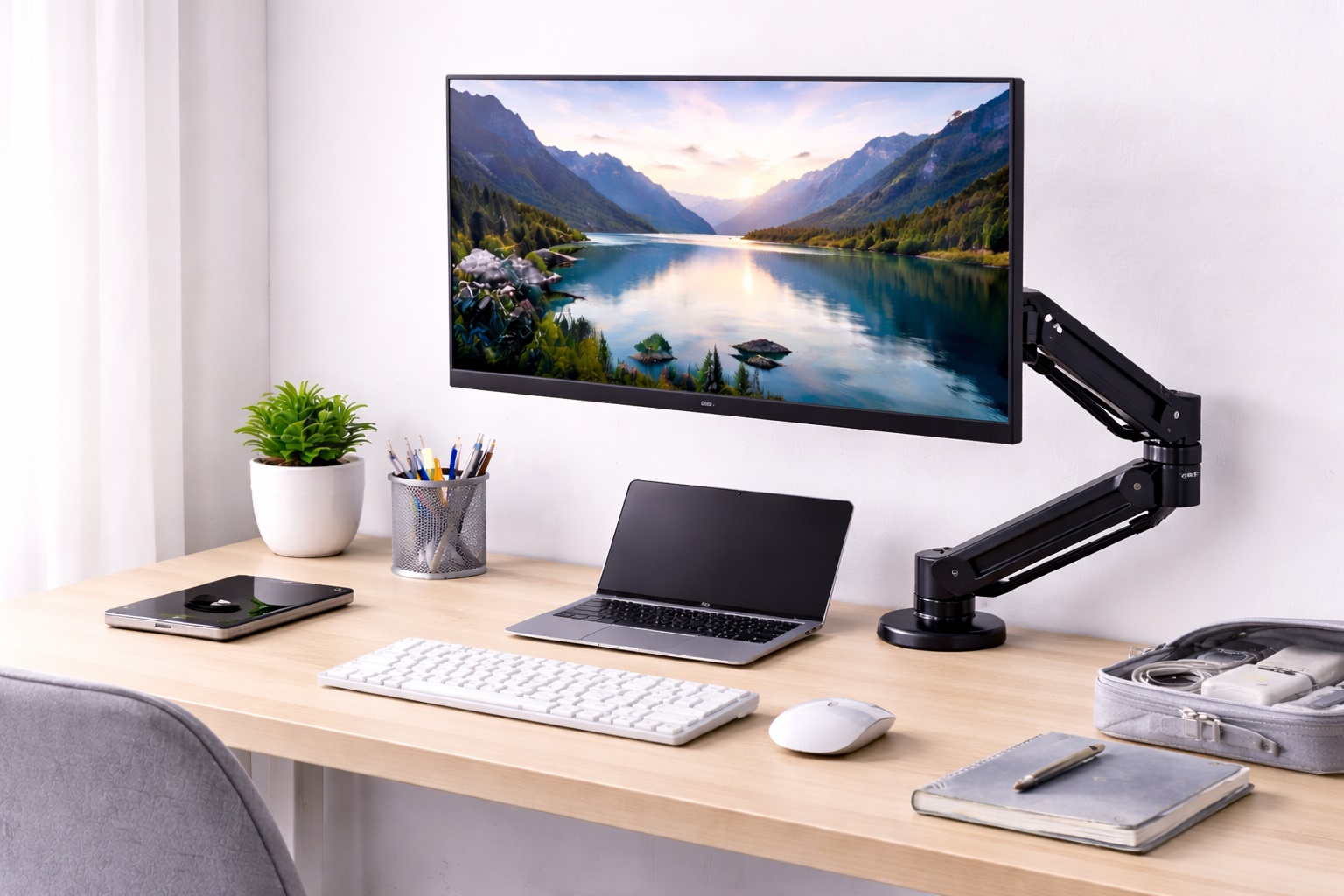
Small desks often pair a keyboard with a monitor arm, an under-desk shelf, or a raised laptop stand, and the vertical clearance available in that setup can be just as constrained as horizontal desk space. A taller keyboard with a steep typing angle can clip against a monitor arm's lowest extension point or bump a raised shelf edge during vigorous typing, so it's worth checking your existing vertical clearance before assuming any compact keyboard will fit cleanly underneath.
14. Corner or Angled Desk Considerations
Small desks are frequently corner units or angled designs rather than simple rectangles, and a keyboard's actual usable position can shift depending on where the desk narrows or where a support leg intrudes into the workspace. Test-fitting with a piece of cardboard cut to the keyboard's exact dimensions before buying is a low-effort way to confirm a specific model will actually sit where you need it to, rather than discovering a poor fit only after unboxing.
15. Multi-Monitor Setups on a Small Footprint
If your small desk also supports two monitors, the keyboard and mouse area shrinks further to accommodate the additional stand footprint and viewing angle adjustments. In this scenario, prioritizing width savings above all other factors, even ahead of number pad access, tends to produce the most usable day-to-day setup, since the mouse needs a consistent, uncramped path between both screens.
16. Keyboard Trays as a Complementary Space Solution
A pull-out keyboard tray mounted beneath the desk can free up the entire primary desk surface for a monitor, notebook, or mouse pad, effectively adding usable space without changing the desk itself. This works best paired with a genuinely compact keyboard, since most trays are narrower than a full desktop and a full-size board simply won't sit comfortably on one. Treating the tray and the keyboard's footprint as a combined decision, rather than two separate purchases, tends to produce the tidiest result.
Frequently Asked Questions
1. How much desk space does switching from full-size to TKL actually save?
Removing the number pad typically saves around 20% of total keyboard width, which translates to roughly two to three inches depending on the specific model. That space directly becomes available for mouse movement, which is often the primary motivation for switching layouts on a small desk, and it's frequently enough room to let a wider mouse motion feel natural again rather than cramped against the keyboard's edge.
2. Will I regret giving up the number pad?
It depends entirely on how often you use it. If you do frequent numeric data entry, you may find yourself missing it regularly. If you rarely touch it, most users adjust within a week or two and don't miss it afterward, often forgetting they ever had one within a month of regular compact keyboard use.
3. Are 60% keyboards too small for daily productivity work?
Not necessarily, but they do require learning function-layer combinations for arrow keys, navigation, and function keys that were previously dedicated. Many users adapt within one to two weeks, though the adjustment is more noticeable for people who frequently use those keys, particularly programmers and spreadsheet-heavy roles that rely on arrow key navigation constantly.
4. Does a smaller keyboard mean a worse typing experience?
No — layout size and switch quality are independent factors. A well-built compact mechanical keyboard can offer the same typing feel as a full-size model from the same manufacturer, just without the number pad and sometimes the navigation cluster, since the core switch mechanism under each key doesn't change based on overall board size.
5. Should I choose a detachable number pad instead of giving it up entirely?
This can be a reasonable middle ground if you need the number pad occasionally but want a compact main keyboard most of the time. A separate number pad can be stored away or brought out only when needed, preserving desk space day-to-day while still covering the occasional task that genuinely requires numeric entry.
6. Is the most expensive compact keyboard always the best for a small desk?
Not necessarily. Higher price often reflects premium switches, materials, or programmability rather than space efficiency specifically. Focus on the exact width and depth measurements relative to your desk rather than price alone, since a budget-friendly compact board can solve the space problem just as effectively as a premium one.
7. How long should a quality compact keyboard last?
A well-built keyboard from a reputable brand typically lasts two to five years or longer with regular use, regardless of layout size. Mechanical switches generally outlast membrane switches in raw keystroke lifespan, and compact boards see no meaningful difference in longevity purely from their smaller footprint.
8. Can I return a compact keyboard if the size doesn't work for my desk?
Most retailers offer a 15 to 30 day return window, which gives you time to actually measure the fit on your desk and test the adjustment period for any missing keys before committing long-term. Use that window deliberately rather than assuming the fit is right based on the listing photos alone.
9. What's the best keyboard size if I only occasionally need the number pad?
A TKL layout paired with a separate detachable number pad, used only when needed, typically offers the best balance for this specific pattern, saving desk space daily while keeping numeric entry available when required without a permanent footprint commitment.
10. Does brand name matter when choosing a compact keyboard?
Established brands generally offer more consistent build quality and clearer size specifications. Independent measurements and reviews matter more than brand reputation alone, since compact variants sometimes cut corners that a manufacturer's flagship full-size model doesn't, particularly around internal battery capacity and keycap material.
11. Do compact keyboards work well with external monitor arms and stands?
Generally yes, and the reduced footprint often makes it easier to fit a monitor stand's base within your existing desk space without further crowding your keyboard and mouse area, which is a common secondary benefit small-desk users report after switching.
12. Is a mechanical or membrane keyboard better for a small desk overall?
Neither is universally better for space alone — membrane keyboards tend to run thinner, while mechanical keyboards are available in equally compact widths if you choose a TKL or 60% mechanical model specifically rather than a full-size one. The deciding factor should be typing feel preference rather than an assumption that one switch type is inherently more compact.
13. Should I cut a cardboard template before buying a specific compact keyboard?
It's a genuinely useful step if your desk has an unusual shape, a corner cutout, or a support leg that intrudes into the workspace. A cardboard template cut to the exact listed dimensions takes a few minutes and can save you a return shipment if the model turns out not to fit where you actually intended to place it.
14. Does a compact keyboard fit under a monitor arm's lowest extension?
It depends on the keyboard's height, not just its width and depth, so check that specification directly if your setup includes a monitor arm or raised shelf. A thinner membrane or low-profile mechanical design is generally the safer choice when vertical clearance is already tight.
15. What should I prioritize if my small desk also supports two monitors?
Width savings should take priority over keeping the number pad in this scenario, since the additional monitor stand footprint further reduces available mouse room. A TKL or 60% layout paired with a thin profile generally produces the most workable day-to-day setup for a dual-monitor small desk.
16. Is it worth buying a keyboard tray instead of shrinking the keyboard itself?
A keyboard tray can be a useful complement to a compact layout rather than a substitute for one, since it reclaims vertical desk surface for other items while the keyboard itself still needs to be an appropriate size for the tray's typically narrower dimensions. On a genuinely small desk, combining a compact layout with a tray tends to free up more usable space than relying on either change alone.
Final Verdict
- Best Overall for Small Desks: Compact TKL or 60% Keyboard – the most direct solution for reclaiming desk space.
- Best for Typing Feel in a Small Footprint: Wireless Mechanical Keyboard in a compact size – satisfying feedback without full-size bulk.
- Best for Thin, Low-Profile Setups: Silent Membrane Keyboard – the slimmest footprint with the least vertical desk clutter.
There's no single correct compact layout for every small desk — the right choice depends on how often you actually use a number pad, how much mouse room you need, and how much adjustment period you're willing to accept for a smaller footprint. Measure your desk honestly, read the buying guide factors above with your actual daily workflow in mind, and choose the layout that solves your specific space constraint rather than the one that simply looks smallest in a photo. A few minutes of honest measurement and self-assessment up front will save you from a return shipment and a second round of shopping later, which is ultimately the whole point of working through a buying guide rather than picking whatever ranks first in a random online search.