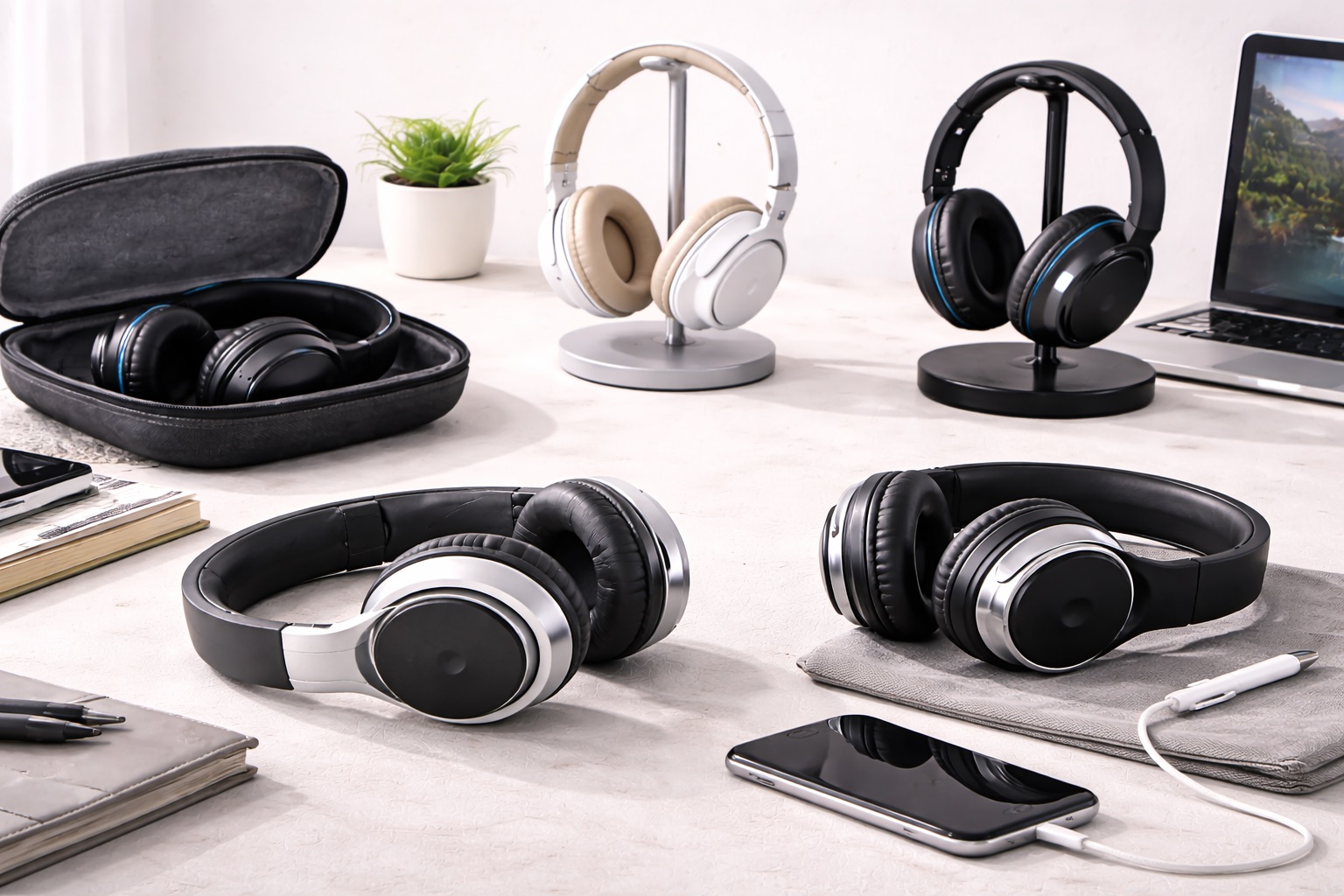
Best Headphones Under $100 in 2026: Sound Worth the Price
Spending under $100 on headphones used to mean accepting tinny sound, flimsy hinges, or a Bluetooth connection that dropped out mid-call. That is no longer the tradeoff it once was. Manufacturing improvements and more competitive component pricing have pushed features that were once reserved for $200-plus flagships — real active noise cancellation, multi-device pairing, and drivers tuned by people who actually understand audio — into this more accessible price bracket.
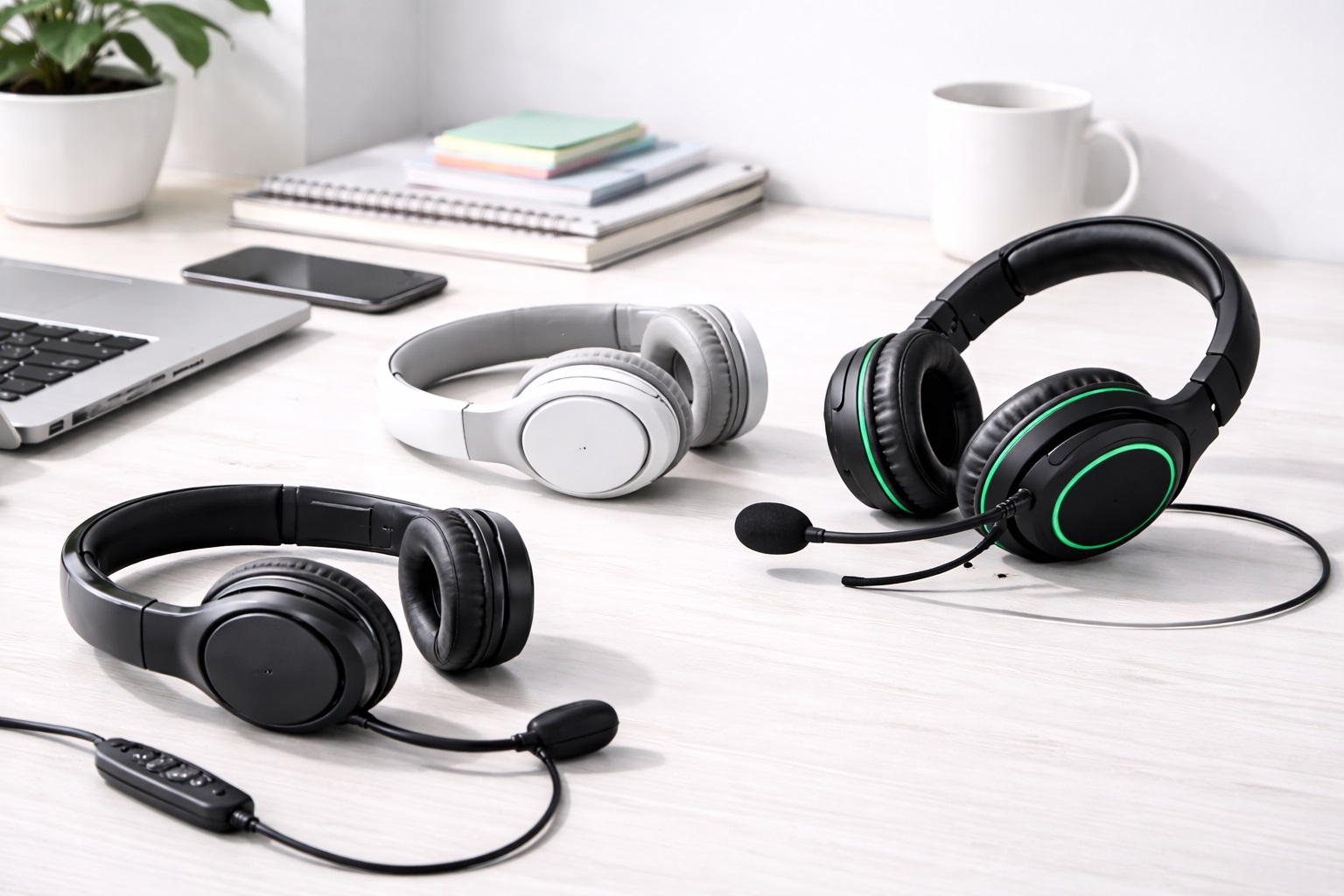
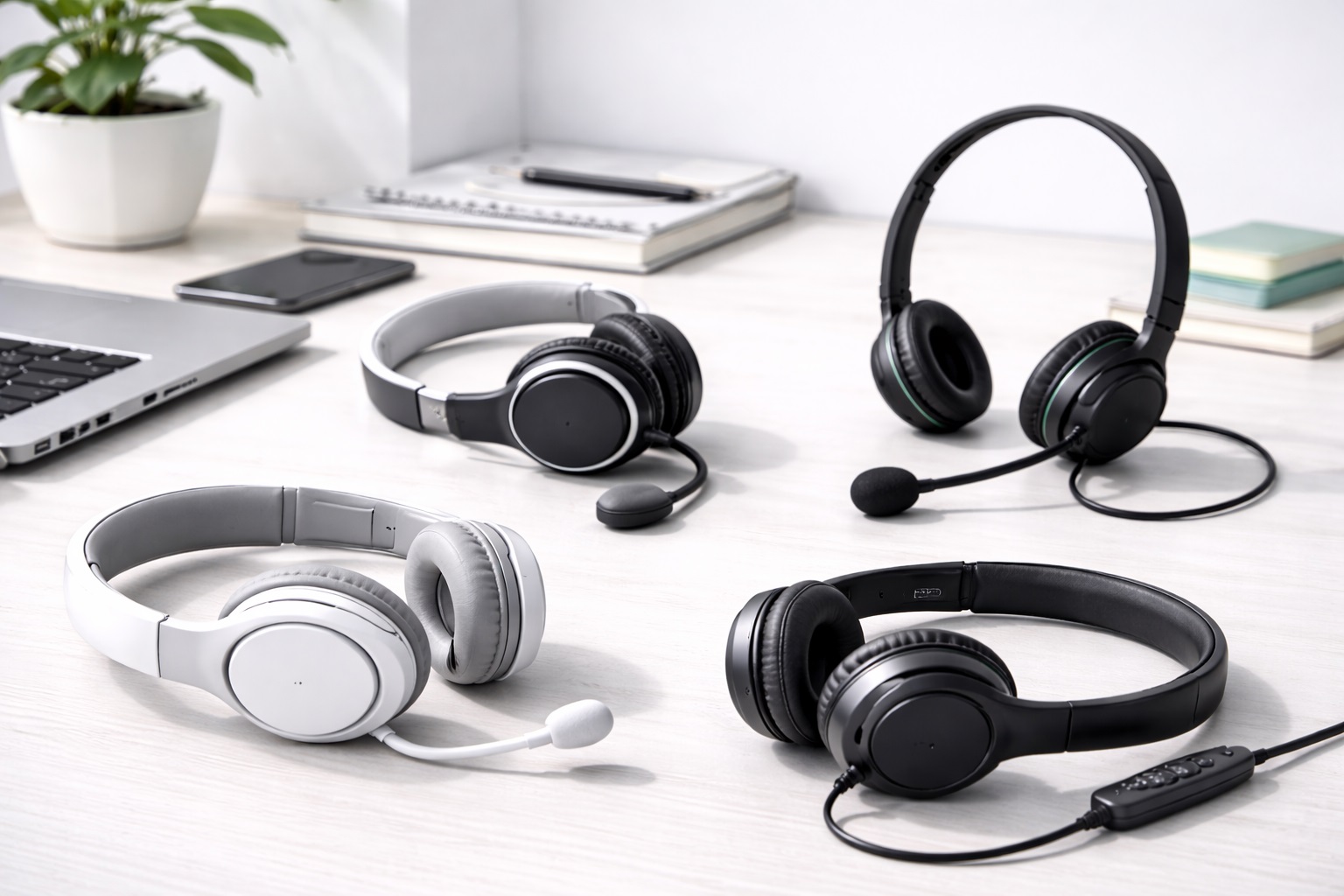
The catch is that "headphones under $100" is not one category. It covers three genuinely different design philosophies: full over-ear cans built for immersion, lighter on-ear models built for portability, and noise-canceling designs built to solve the specific problem of staying focused in a loud environment. Picking the wrong one for your situation is the most common reason people end up disappointed, even when the product itself is well made.
This guide walks through all three, with an honest look at where each one earns its keep and where it falls short, followed by a buying guide and FAQ section aimed at helping you match the purchase to how you actually listen — not to a star rating.
It also helps to think about where and when you'll actually be wearing these. A pair that sounds fantastic sitting still at a desk can feel completely wrong on a train platform or during a workout, and a pair built for commuting will rarely deliver the same depth of sound as something designed purely for still, focused listening. None of the three formats below is objectively superior to the others — they are solving different problems, and the right choice depends entirely on which problem is actually yours.
| Style | Isolation Type | Portability | Typical Battery Life | Best For |
|---|---|---|---|---|
| Over-Ear Wireless | Passive (ear-cup seal) | Low | 20–40 hours | Home listening, desk work, studying |
| On-Ear Wireless | Passive (lighter seal) | High | 20–30 hours | Commuting, travel, everyday carry |
| Noise Canceling | Active (electronic) plus passive | Varies by shell | 15–30 hours (ANC on) | Noisy offices, flights, focus work |
The table above is a starting point, not a final answer — actual battery life, isolation, and comfort still vary between individual models within each style, which is why the detailed breakdowns below matter as much as the category itself.
Top Picks Reviewed (Detailed Reviews)
1. Over-Ear Wireless Headphones – Best Overall
Over-ear wireless headphones remain the most complete listening experience available in this price range. Because the ear cup fully encloses the ear rather than resting against it, the design creates strong passive noise isolation before any electronics are even involved — a structural advantage that on-ear and in-ear formats simply cannot replicate. Pair that with larger driver housings and you get fuller bass and a more spacious soundstage than smaller designs typically manage. Bluetooth 5.0 or newer is standard at this price point, along with multi-device pairing and battery figures that commonly land between 20 and 40 hours per charge.
The tradeoff is size. These are not the headphones you slip into a jacket pocket, and the padded ear cups can start to feel warm during long sessions in a hot room or during physical activity. For anyone working from a desk, studying, or simply listening at home, though, that's a minor cost for the sound quality on offer.
- Pros:
- Strong passive noise isolation from the full ear-cup seal
- Long battery life suited to all-day use
- Fuller, richer sound thanks to larger drivers
- More comfortable than smaller designs during long listening sessions when the fit is right
- Cons:
- Bulkier and harder to carry than on-ear or in-ear alternatives
- Ear cups can trap heat during extended wear in warm conditions
Best For: Home listening, remote work, studying, and anyone who ranks sound quality above pocketability.
Why We Recommend It: No other format in this price range matches the combination of isolation and sound quality that a well-built over-ear design delivers, which is why it remains the default recommendation for buyers without a specific portability constraint.
Where this format makes less sense is if you're primarily walking, commuting, or exercising — the size and heat retention become real friction points rather than minor quirks in those situations, and one of the more portable formats below will likely serve you better day to day.
In practice, this is the format worth prioritizing if headphones are your primary listening device rather than an occasional accessory. Someone who listens to music or podcasts for several hours a day while working, studying, or relaxing at home gets more cumulative benefit from the improved comfort and sound quality than someone who only reaches for headphones occasionally during a commute.
2. On-Ear Wireless Headphones – Best for Portability
On-ear headphones trade some of that isolation and bass depth for a meaningfully smaller and lighter package. Because the cushion rests on the ear rather than around it, the whole unit can be built smaller, and most on-ear models in this category fold flat for storage in a bag or even a large coat pocket. That combination of size and weight makes them a natural fit for anyone who is moving through their day rather than sitting at a desk.
The compromise shows up in two places: passive isolation is noticeably weaker than an over-ear seal provides, so ambient noise gets through more easily, and because the cushion presses directly against the ear rather than around it, some users notice fatigue after a couple of hours of continuous wear. For commuting, gym use, or travel, though, the size-to-performance ratio is hard to beat.
- Pros:
- Noticeably lighter and more compact than over-ear designs
- Fold flat for easier storage in bags and while traveling
- Generally priced lower than comparable over-ear models
- Reasonable balance between sound quality and everyday portability
- Cons:
- Weaker passive isolation than over-ear alternatives
- Can cause ear fatigue during longer continuous wear
Best For: Commuters, students, and anyone who prioritizes packability without giving up decent audio quality.
Why We Recommend It: When portability is the deciding factor, on-ear designs deliver most of the sound quality of larger headphones in a package that is far easier to carry and store day to day.
If your listening happens mostly at a desk or in one quiet room, this format's compromises on isolation and bass depth aren't buying you anything — an over-ear pair would deliver noticeably better sound for roughly the same money in that scenario.
Where on-ear designs genuinely shine is in scenarios where you're switching contexts throughout the day — a commute, then a desk, then a gym bag, then a backpack for travel. The lighter clamping force and folding hinge that make this format less ideal for marathon listening sessions are the same features that make it far more livable as a daily-carry item than a bulkier over-ear pair would be.
3. Noise Canceling Headphones – Best for Focus
Active noise cancellation (ANC) works differently from the passive isolation built into over-ear and on-ear shells. Microphones on the headphone pick up ambient sound, and the electronics generate an inverse signal that cancels much of it out before it reaches your ear. This technology has become dramatically more accessible over the past few years, and meaningful ANC performance is no longer limited to flagship-priced products. Most ANC headphones in this range also include a transparency mode that lets ambient sound back in when you need situational awareness — crossing a street, hearing an announcement, or having a quick conversation without removing the headphones.
ANC is particularly effective against continuous low-frequency noise — engine hum, HVAC systems, airplane cabins — which is exactly the kind of background noise that erodes focus during a workday. The technology does add cost and draws additional battery power, and less refined implementations can introduce a faint processing artifact that some listeners notice in very quiet rooms.
- Pros:
- Meaningfully reduces continuous background noise for better focus
- Transparency mode adds situational awareness when needed
- Often paired with a more refined overall sound profile
- USB-C rechargeable on most current models
- Cons:
- Adds cost and reduces battery life compared to non-ANC models
- Less mature implementations can introduce faint processing artifacts
Best For: Remote workers in shared or noisy spaces, open-plan office employees, and frequent travelers.
Why We Recommend It: ANC solves a specific, common problem — the inability to focus in a noisy environment — and when it's implemented well, the improvement to concentration and call quality is immediate and noticeable.
If most of your listening happens in already quiet spaces, the extra cost and battery drain of ANC buys you very little in practice, and a standard over-ear or on-ear pair will likely serve you just as well for less money.
ANC is also worth considering for anyone who takes frequent calls in shared or public spaces, since the same microphone array used for noise cancellation often improves how clearly your voice comes through on the other end of a call, on top of the listening benefits.
Buying Guide: How to Choose the Best Headphones Under $100
Rather than defaulting to whichever model has the most reviews, match your purchase against the factors below that actually affect your day-to-day experience.
1. Active vs. Passive Noise Isolation
Passive isolation comes from physical materials — foam padding, memory foam, and a properly sealed ear cup. Active noise cancellation uses microphones and electronics to cancel sound before it reaches your ear. ANC costs more but is significantly more effective against continuous low-frequency noise like engine hum, while passive isolation tends to handle sudden, higher-pitched sounds reasonably well on its own.
2. Driver Size and Sound Signature
Larger drivers, generally 40mm and up, tend to move more air and produce fuller bass response. Size alone doesn't guarantee quality, but within a similar build tier, bigger drivers usually translate into a fuller low end. It's also worth checking whether a model is tuned toward bass emphasis, a flatter neutral profile, or brighter treble, depending on the kind of music or content you listen to most.
3. Ear Cup Material and Padding
The padding material shapes both comfort and isolation. Protein leather (faux leather) seals well against the head but traps heat during longer sessions. Fabric and velour breathe better but seal less tightly. Memory foam padding conforms more closely to individual ear shapes than standard foam, which generally improves both comfort and passive isolation.
4. Wireless Codec and Latency
For music playback, support for higher-quality Bluetooth codecs such as aptX or AAC improves the audio signal over a standard connection. For video, check whether latency is low enough to avoid a noticeable gap between audio and picture. Calls and music generally hold up fine across most modern headphones, but video streaming is where lower-end codec limitations tend to show up first.
5. Battery Life vs. Actual Usage
Match the advertised battery figure to how you actually use headphones rather than chasing the highest number available. Someone who wears headphones for two hours during a commute has very different needs than someone wearing them for eight hours at a desk. Most mid-range wireless headphones in this bracket land in the 20–30 hour range, which comfortably covers the majority of everyday use cases.
6. Foldability and Travel Case
If headphones are going to travel with you regularly, check whether they fold flat and whether a carrying case is included. Full-size over-ear models without a folding hinge are considerably harder to pack safely without a hard case, while on-ear designs are generally built with folding and compact storage in mind from the start.
7. Microphone Quality for Calls
If calls are a regular use case, evaluate microphone performance separately from music sound quality — the two don't always track together. Headphones with a dedicated microphone housing tend to isolate your voice from background noise better than a single microphone built into the ear cup. Reviews that specifically discuss call quality are more useful here than general sound-quality reviews.
8. Headband Pressure and Clamp Force
Excessive clamping force is one of the more common complaints with over-ear and on-ear headphones, and it's difficult to judge from a spec sheet alone. User reviews tend to flag clamping issues consistently when they exist, so it's worth reading a handful before committing, particularly if you plan to wear the headphones for multi-hour sessions.
9. Touch Controls vs. Physical Buttons
Touch panels look cleaner on the outside of the ear cup but are easier to trigger by accident and harder to operate precisely without looking at your hand. Physical buttons are less visually seamless but give reliable tactile feedback. Which one suits you better depends largely on where and how often you're adjusting volume or skipping tracks.
10. Open-Back vs. Closed-Back Design
Closed-back headphones seal sound in both directions, keeping outside noise from getting in and your audio from leaking out. Open-back designs let sound pass both ways, which produces a more natural, spacious soundstage but offers essentially no isolation. Open-back headphones make sense for quiet, dedicated home listening only; closed-back designs work in nearly any environment.
11. Multi-Device Pairing
Some headphones in this range can maintain an active connection to two or more devices at once and switch between them automatically — useful if you regularly move between a laptop and a phone. This isn't universal, so check the specification directly rather than assuming it's included.
12. Warranty and Return Window
A reasonable warranty is one of the more reliable signals of build confidence from the manufacturer. Combine that with the retailer's return window, and keep the original packaging until you're confident the fit, comfort, and sound suit your needs — headphones are one of the more personal purchases to get right on the first try.
13. Charging Speed and Connector Type
USB-C has become the standard charging connector at this price point, replacing older micro-USB ports, and fast-charge support that delivers a few hours of playback from a short top-up can matter more day to day than the maximum battery figure. If you tend to charge headphones only when the battery is nearly empty, quick-charge capability is worth checking specifically rather than assuming it's included.
14. Weight and Long-Session Comfort
Total weight matters less on its own than how that weight is distributed across the headband and ear cups. A slightly heavier pair with a well-padded, wide headband can feel more comfortable over several hours than a lighter pair that concentrates pressure on a narrow band. If you plan on multi-hour sessions regularly, comfort-focused reviews are worth more than a raw weight spec.
15. Sweat and Moisture Resistance
If you plan on using headphones during exercise or in humid climates, check for an IPX rating or manufacturer statement about sweat resistance. Ear cup materials that aren't designed to handle moisture can degrade faster, and internal electronics without any protection are more vulnerable to failure from repeated sweat exposure over time.
16. Replaceable Parts and Long-Term Care
Ear cup cushions and cables (on wired or hybrid models) wear out well before the internal electronics do. Checking whether a manufacturer sells replacement ear pads separately can meaningfully extend the useful life of an otherwise good pair of headphones, rather than forcing a full replacement once the padding compresses or the material cracks.
17. Price Range Within the Under-$100 Bracket
Not every product under this ceiling is priced the same, and the difference between a $30 pair and a $95 pair within the same style is rarely arbitrary. Lower-priced options tend to cut corners on driver quality, hinge durability, or Bluetooth chipset reliability first, since those components are less visible to a casual buyer than the exterior finish. Reading a few reviews that specifically mention long-term reliability, rather than out-of-box impressions, helps separate genuinely good value from a product that simply looks the part in photos.
Frequently Asked Questions
1. What is the difference between over-ear and on-ear headphones under $100?
Over-ear headphones fully enclose the ear inside the cup, which generally gives better passive isolation and more comfortable long-term wear. On-ear headphones rest against the ear instead, making them smaller and lighter but with noticeably less isolation. For long sessions and stronger sound isolation, over-ear designs are usually the better fit.
2. Do I actually need noise-canceling headphones under $100?
ANC earns its cost in consistently noisy settings — open offices, commutes, airports, and cafes. For quiet home listening, passive isolation from a well-fitting over-ear pair often performs adequately without the added expense and battery drain that ANC introduces.
3. What counts as good battery life for wireless headphones under $100?
Most models in this range offer 20–30 hours of playback, enough for several days of typical listening between charges. At roughly 8 hours of daily use, a 24-hour battery means charging about every three days; anything above 40 hours generally settles into a weekly charging routine for heavier users.
4. Can I use headphones under $100 for both music and calls?
Yes — nearly all modern wireless headphones handle the switch between music playback and an incoming call automatically. Microphone quality does vary by model, so if clear calls matter to you specifically, look for reviews that address call performance rather than assuming it matches the music sound quality.
5. Do headphones under $100 support pairing with multiple devices at once?
Some do, allowing the headphones to stay connected to two or three devices and switch between them without manual re-pairing — handy for moving between a laptop and phone throughout the day. It's not a given at this price point, so confirm it in the spec sheet if it matters to your workflow.
6. Is the most expensive option always the better headphones under $100?
Not necessarily. A higher price within this bracket often buys extra features, but plenty of mid-range models perform very well for everyday listening. It's more useful to identify which features actually matter for how you'll use them than to assume price tracks quality in a straight line.
7. How long should a good pair of headphones under $100 last?
A well-built pair from a reputable brand commonly lasts two to five years or more with reasonable care. The manufacturer's warranty terms are a fair proxy for how confident they are in the build.
8. Can I return headphones under $100 if they don't fit well?
Most retailers offer a return window somewhere between 15 and 30 days. Hold onto the original packaging during that period so you keep the option open if the fit, comfort, or sound doesn't end up matching your expectations.
9. Which style of headphones under $100 is the right one for me?
It depends on what you're optimizing for. If sound quality and isolation matter most, an over-ear pair is the strongest choice; if portability is the priority, on-ear is the better fit; if focus in noisy environments is the main goal, ANC is worth the extra cost.
10. Does the brand matter when choosing headphones under $100?
Established brands tend to offer more consistent quality control, better customer support, and more reliable warranty service. That said, newer brands occasionally deliver strong value at this price point — it's worth reading verified reviews carefully either way before deciding.
11. Are wired headphones still worth considering under $100?
Wired options remove Bluetooth latency and battery concerns entirely, and they can offer strong sound quality for the price since there's no wireless chipset to fund. The obvious tradeoff is the physical cable, which some users find limiting for daily mobility compared to a wireless pair.
12. How much does comfort actually vary between models at this price?
Quite a bit. Ear cup padding, clamping force, and headband weight distribution all differ meaningfully between models even at similar price points, which is why fit-related reviews are worth reading closely rather than relying on spec sheets alone.
13. Will these headphones work well for gaming?
Wired connections and lower-latency Bluetooth codecs both help for gaming, since noticeable audio lag can throw off timing in fast-paced titles. Over-ear designs with good passive isolation also tend to work well for gaming since they block out room noise without needing ANC running constantly, which helps preserve battery during longer sessions.
14. Is it worth waiting for a sale to buy headphones under $100?
If you're not in a rush, prices in this category do fluctuate around major shopping periods, and the same model is sometimes available meaningfully cheaper during those windows. That said, chasing a sale on the wrong style of headphone for your needs isn't really a saving — matching the format to your use case matters more than shaving a few dollars off the price.
15. Do these headphones need a companion app?
Many wireless models pair with a companion app for firmware updates, EQ adjustment, and toggling features like ANC strength or transparency mode. An app isn't mandatory for basic use, but it can meaningfully expand what a pair of headphones is capable of after purchase, so it's worth checking whether one is available and well-maintained.
16. Can I replace the ear pads myself if they wear out?
On most over-ear and on-ear designs, yes — ear pads are typically held on with a friction fit or a light adhesive and can be swapped without tools. Availability of official replacement pads varies by brand, so it's worth checking before you buy if you expect to keep a pair for several years.
Final Verdict
- Best Overall: Over-Ear Wireless Headphones – the strongest all-around combination of sound quality and isolation for the price.
- Best for Portability: On-Ear Wireless Headphones – compact and travel-ready without giving up meaningful audio quality.
- Best for Focus: Noise Canceling Headphones – the practical choice for noisy offices, commutes, and travel.
- Best Value Consideration: Whichever style matches your daily routine most closely, since the best pair is the one you actually reach for and use consistently rather than one that sits in a drawer.
None of these three styles is universally "better" — each one solves a different problem well. The right pick under $100 comes down to matching the format to how and where you actually listen, not to whichever option has the flashiest spec sheet. If sound quality and comfort during long sessions matter most, start with an over-ear model. If you're moving through your day and need something compact, on-ear is the more practical fit. And if noisy environments are the main obstacle to enjoying your music or getting work done, the extra cost of ANC tends to pay for itself quickly. Use the reviews and buying guide above to narrow down what matters most for your situation, and the decision becomes a lot more straightforward than scrolling through star ratings alone.