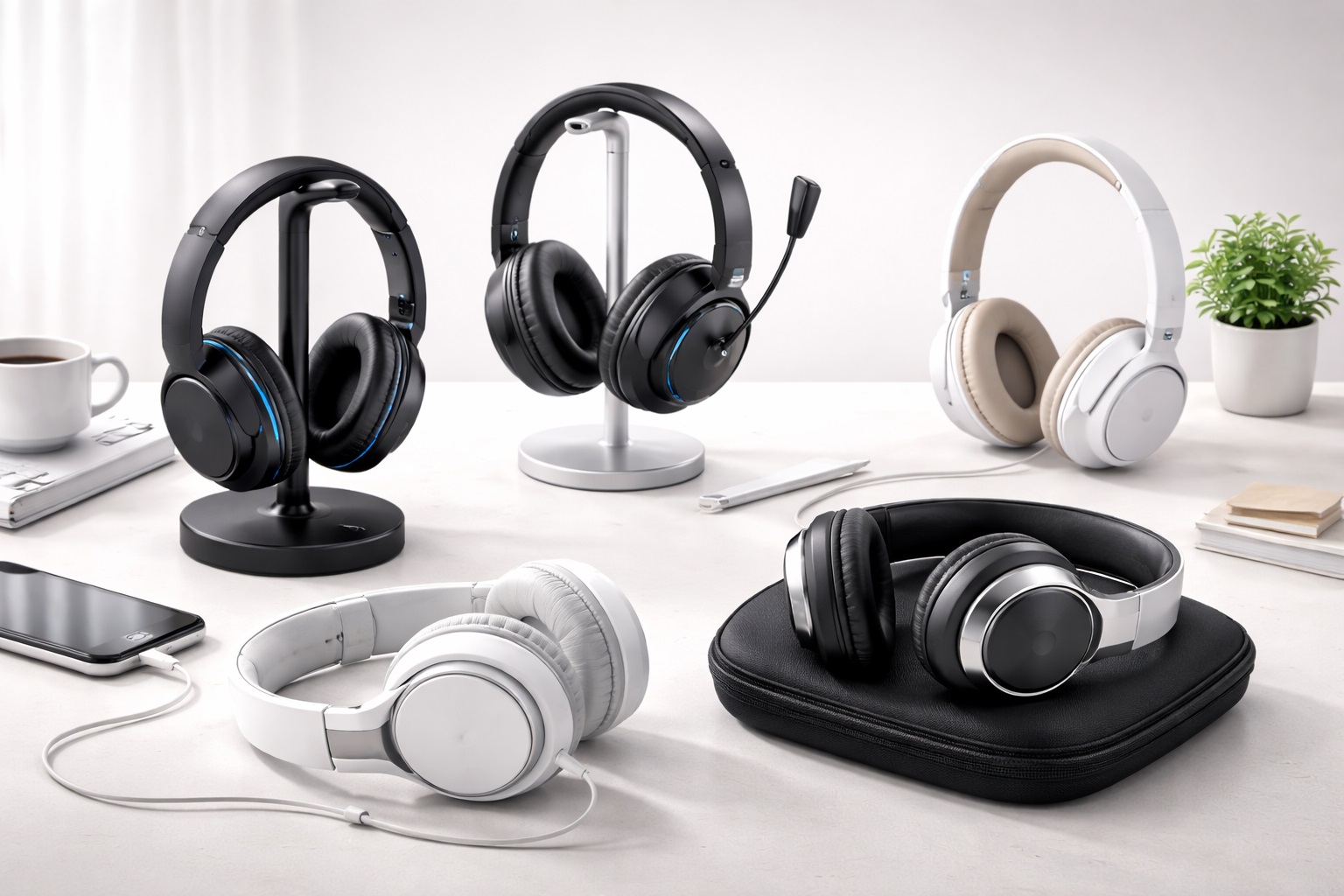
Best Budget Headphones: Professional Sound on an Everyday Budget
A tight budget used to mean accepting thin, tinny sound and flimsy plastic construction from your headphones. That's changed considerably in recent years, as manufacturers have pushed better drivers, real Bluetooth codecs, and even active noise cancellation down into price tiers that were once reserved for the most basic wired sets. The result is a category with genuinely useful options, but also one where it's easy to overpay for a feature you won't use or underpay for a feature you actually need.
This guide compares three distinct approaches to budget headphones: a full over-ear design built for maximum sound and isolation, a lighter on-ear design built for portability, and a noise-canceling design built specifically for staying focused in loud environments. Value-focused music listeners, remote workers juggling calls and meetings, and students studying in shared spaces each tend to gravitate toward a different one of these three, and understanding why helps you avoid picking based on price alone.
Below you'll find detailed breakdowns of each option, a buying guide covering the technical and practical factors that actually matter, answers to the most common questions buyers ask before purchasing, and a final verdict to help you settle on the right pick quickly.
It's worth setting expectations before diving in. Budget headphones in this range won't match the absolute reference-quality tuning or the most advanced adaptive noise cancellation found in flagship models costing several times as much. What they do offer is a genuinely satisfying listening experience for daily use, and in many cases the practical difference between a well-chosen budget pair and a premium model is smaller than the price gap between them would suggest.
The three categories below aren't a ranked list from best to worst — they're built around three different listening priorities. Sound quality, portability, and noise control each pull product design in a slightly different direction, and no single pair of headphones maximizes all three at once without a significant jump in price. Understanding that trade-off up front makes it much easier to pick confidently rather than second-guessing the decision after the fact.
Top Picks Reviewed (Detailed Reviews)
Over-Ear Wireless Headphones – Best Overall
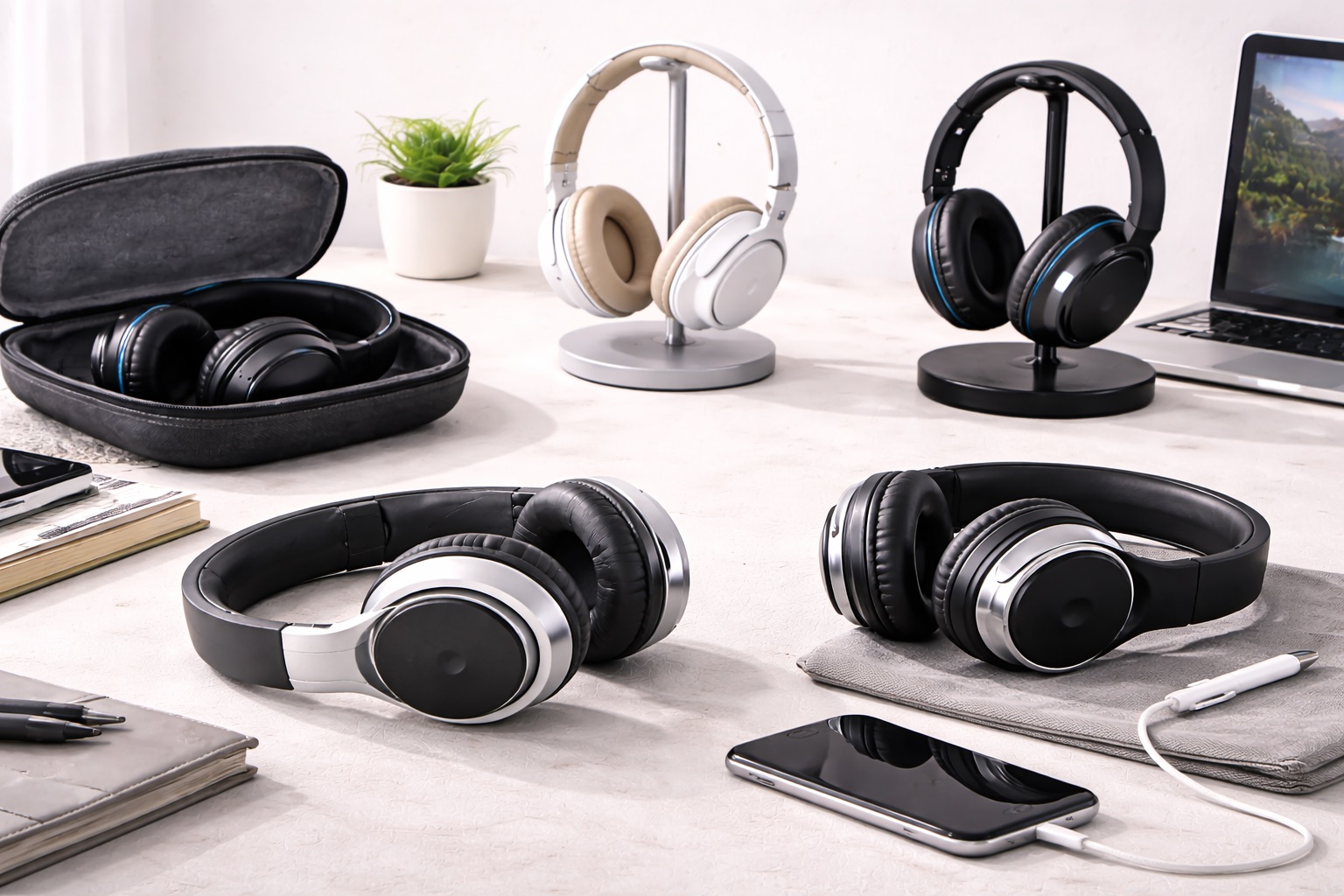
Over-ear wireless headphones deliver the most immersive listening experience in this category. The full-size ear cups create passive noise isolation while the wireless connection offers freedom of movement. Models across price ranges typically include Bluetooth 5.0 or higher, multi-device pairing, and battery life of 20–40 hours on a single charge, which is enough for most listeners to go several days between charges without thinking about it.
The larger ear cup also gives manufacturers room to fit bigger drivers, which generally translates to fuller bass and a more spacious overall sound compared to smaller designs. That extra size is the main trade-off: over-ear headphones are simply bulkier to store and carry than anything designed around portability first.
- Pros:
- Strong passive noise isolation from full ear cup design
- Long battery life for extended sessions
- Rich sound with large drivers
- Comfortable for extended wear when fit is good
- Cons:
- Bulkier to carry than on-ear or earbuds
- Can cause warmth during extended use in hot environments
Best For: Audiophiles, remote workers, and anyone who values immersive sound over portability.
Why We Recommend It: The over-ear design consistently delivers the best combination of sound quality and passive isolation, making it the default recommendation for users who prioritize listening experience above everything else and don't mind the extra bulk in exchange for it.
For anyone who spends long stretches at a desk, whether working or simply listening to music, the comfort advantage of a properly fitted over-ear design also compounds over time. A cup that distributes pressure evenly around the ear rather than resting directly on it tends to remain comfortable for hours in a way that smaller designs often can't match.
On-Ear Wireless Headphones – Best for Portability
On-ear headphones sit against the ear rather than enclosing it, making them more compact and lighter than full over-ear models. This comes at the cost of some isolation and bass depth, but the reduced size and weight make them significantly easier to carry. Many fold flat for bag storage, which matters more than it sounds once you're trying to fit a pair into an already-full backpack alongside a laptop and other daily items.
The smaller ear cushion also means less surface area pressing against the head, which some users find more comfortable for shorter sessions even though it can create pressure points during much longer wear compared to a full over-ear cup that spreads that pressure across a wider area.
- Pros:
- Lighter and more compact than over-ear designs
- Fold-flat for easier storage and travel
- Often more affordable than over-ear alternatives
- Good balance of portability and audio quality
- Cons:
- Less passive isolation than over-ear models
- Extended wear can cause ear fatigue on the ear rest
Best For: Commuters, students, and users who want a portable listening option that balances audio quality with packability.
Why We Recommend It: For users who want good sound without the bulk of full-size headphones, on-ear designs offer a practical middle ground that suits commuting and everyday portable use well, especially for anyone who values pocketable convenience over maximum audio immersion.
The lighter clamping and reduced bulk also make on-ear headphones easier to wear alongside glasses or in warmer climates where a full ear cup can feel stifling after a while. That combination of practical convenience factors is often more important day-to-day than a small difference in bass depth.
Noise Canceling Headphones – Best for Focus
Active noise cancellation (ANC) uses microphones to detect and cancel ambient sound, significantly reducing background noise in busy environments. The technology has improved dramatically at mid-range price points, making meaningful ANC accessible well below premium flagship pricing. Most models also offer a transparency mode for situational awareness, letting you hear announcements or conversations without removing the headphones entirely.
ANC works especially well against constant, low-frequency noise such as engine hum, air conditioning, or an open-plan office's background chatter, which is exactly the kind of noise that passive isolation alone struggles to block. The added electronics do draw more battery than a passive-only design, and cheaper ANC implementations can occasionally introduce a faint hiss or processing artifact that more expensive models manage to avoid.
- Pros:
- Meaningful reduction of ambient noise for focus
- Transparency mode for safe outdoor use
- Often includes premium sound profiles
- Rechargeable with USB-C on most modern models
- Cons:
- ANC adds cost and battery consumption
- Processing artifacts can be noticeable on cheaper implementations
Best For: Remote workers in noisy environments, open office users, and anyone who needs to focus in loud surroundings.
Why We Recommend It: ANC headphones solve a specific and real problem — the ability to focus in noise-polluted environments. When the technology is done well, the productivity benefit is immediate and significant, particularly for anyone working from a shared space or a busy household.
Even outside of work, ANC changes the experience of commuting or traveling by removing the low rumble of an engine or transit system that would otherwise force you to raise the volume just to hear clearly, which in turn reduces long-term listening fatigue and unnecessary volume exposure.
Buying Guide: How to Choose the Best Budget Headphones
Use these key factors to match your purchase to your actual listening habits rather than defaulting to the highest-rated or most-reviewed option on a retailer's page.
1. Active vs. Passive Noise Isolation
Passive isolation blocks sound through physical materials — foam, memory foam, and sealed ear cup designs. Active noise cancellation (ANC) uses microphones to electronically cancel ambient sound. ANC costs more but significantly outperforms passive isolation in continuous low-frequency noise like engine hum and HVAC. Passive isolation handles higher-frequency intermittent sounds better, so the right choice depends heavily on the specific noise environment you're trying to block out.
2. Driver Size and Sound Profile
Larger drivers, generally 40mm and up, typically produce better bass extension. Driver quality matters more than size alone, but for the same quality tier, larger drivers generally move more air and deliver fuller low-frequency sound. Check whether the headphone is tuned for bass, neutral accuracy, or treble emphasis based on your listening preference, since tuning philosophy varies more between brands than raw driver size does.
3. Ear Cup Material and Padding
Ear cup padding material affects both comfort and isolation. Protein leather, sometimes called faux leather, provides good isolation but retains heat during longer sessions. Velour and fabric breathe better but offer somewhat less isolation. Memory foam padding conforms to the ear shape better than standard foam, improving both comfort and seal against the side of the head.
4. Wireless Protocol and Latency
For music listening, Bluetooth aptX or AAC codec support improves wireless audio quality over the baseline SBC codec most devices fall back to. For video content, check whether latency is low enough to avoid visible audio-video synchronization issues. Most modern headphones handle music and calls well, but streaming video occasionally exposes latency at lower Bluetooth codec qualities, which can be distracting once you notice it.
5. Battery Life vs. Usage Pattern
Match battery life to your actual daily usage rather than just maximizing the number on the spec sheet. A commuter who uses headphones two hours daily has very different needs than a remote worker wearing them eight hours across back-to-back meetings. Most mid-range wireless headphones offer 20–30 hours, which serves the majority of users well without demanding a nightly charge.
6. Foldability and Travel Case
If you carry headphones regularly, check whether they fold flat and whether a carrying case is included. Full-size over-ear headphones without folding capability are difficult to transport reliably without a hard case to protect the ear cups and headband. On-ear designs generally fold more compactly, making a dedicated case less essential for day-to-day carrying.
7. Microphone Quality for Calls
If you use headphones for calls, evaluate microphone quality separately from sound quality, since the two don't necessarily correlate. Boom microphones attached to the headphone provide better voice isolation than built-in microphones on the ear cup. Read call-specific reviews to assess real-world microphone performance, particularly if you take calls in a noisy home or shared office.
8. Headband Pressure and Clamp Force
Headphones that clamp too tightly cause headaches during extended sessions, while too loose a fit can let the headphones shift or slip during movement. This is difficult to evaluate without trying the headphone on, but user reviews consistently mention clamping force issues when they exist. Brands known for correct clamping design their headphones around average head circumference measurements gathered from broad customer data.
9. Touch Controls vs. Physical Buttons
Touch controls look cleaner but are more prone to accidental activation and can be frustrating to operate precisely without looking, especially while wearing gloves or moving. Physical buttons provide reliable tactile confirmation without requiring a specific gesture to register. Consider which you prefer based on where and how often you actually adjust your headphones during a typical day.
10. Open-Back vs. Closed-Back Design
Closed-back headphones isolate sound in both directions — keeping external sound out and your audio private from people nearby. Open-back headphones allow sound to bleed both in and out, creating a more natural, spacious soundstage but offering essentially no isolation. Open-back designs suit dedicated home listening in a quiet room only; closed-back designs suit nearly any environment, including shared or public spaces.
11. Build Quality and Hinge Durability
The folding hinges and headband adjustment sliders are common wear points on budget headphones, particularly on models that get folded and unfolded daily for commuting. Metal-reinforced hinges tend to hold up better over time than all-plastic joints, and checking reviews specifically for long-term durability complaints can reveal issues that aren't obvious from a brand-new unit.
12. Warranty and Return Policy
A warranty of at least one year is a reasonable baseline for budget headphones and reflects the manufacturer's confidence in the electronics and build. Check the retailer's return window as well, since comfort and fit are hard to judge from photos and specifications alone, and a pair that looks great on paper may simply not suit your head shape or ear size.
13. Codec Support and Streaming Quality
Beyond the standard SBC codec, some budget headphones support higher-quality options like aptX or AAC, which can noticeably improve streaming audio quality on compatible devices. Not every phone or laptop supports every codec, so check compatibility with your primary listening device rather than assuming a listed codec will automatically improve your experience.
14. Weight and Long-Session Comfort
Total headphone weight affects comfort more over a multi-hour session than it does in the first few minutes of wear. A slightly heavier pair with well-distributed padding can actually feel more comfortable over time than a lighter pair that concentrates pressure on a smaller contact area, so raw weight alone isn't a reliable comfort predictor.
15. Charging Speed and Quick-Charge Features
Many budget wireless headphones now include a quick-charge feature that provides several hours of playback from a short charging window, which is useful if you tend to forget to charge overnight. Check the specific quick-charge ratio listed, since this varies meaningfully between models even within the same price bracket.
16. Wired Fallback Option
Some wireless headphones include a 3.5mm auxiliary port that lets you keep listening even if the battery runs out or if you need to connect to a device without Bluetooth. This fallback option is worth prioritizing if you plan to use the headphones with older equipment, in-flight entertainment systems, or any device that doesn't support wireless pairing.
17. Case and Accessory Inclusions
Beyond the headphones themselves, check what's actually included in the box — a hard or soft carrying case, a charging cable, and sometimes an auxiliary cable for wired use. These small inclusions add real value and convenience, and their absence may mean an extra purchase down the line if you decide you need them.
Frequently Asked Questions
What is the difference between over-ear and on-ear budget headphones?
Over-ear headphones fully enclose the ear within the ear cup, providing better passive isolation and generally more comfortable long-term wear. On-ear headphones rest against the ear, making them more compact and lighter but with less isolation. For extended sessions and better sound isolation, over-ear designs are typically preferred.
Do I need noise-canceling budget headphones?
Active noise cancellation is genuinely useful in consistently noisy environments — open offices, commuting, airports, and cafes. For home use in a quiet room, passive isolation from a well-fitting over-ear design often performs adequately without the added cost of ANC.
What is a good battery life for wireless budget headphones?
Most wireless headphones offer 20–30 hours of playback, which covers several days of typical use between charges. If you use headphones for 8 hours daily, a 24-hour battery life means charging every three days. More than 40 hours of battery life provides a weekly charge schedule for heavy users.
Can I use budget headphones for both music and calls?
Yes. Most modern wireless headphones support both music listening and call switching seamlessly. When a call arrives, the headphone switches automatically. Microphone quality varies by model — check call-specific reviews if clear call audio is particularly important to you.
Do budget headphones work with multiple devices simultaneously?
Multi-device pairing is available on many wireless headphones in this range, allowing the headphones to connect to two or three devices and switch between them without manual re-pairing. This feature is useful for switching between a laptop and a phone. Check the specification explicitly, as not all wireless headphones support it.
Is the most expensive budget headphones always the best?
Not necessarily. Higher price often means more features, but many mid-range options offer excellent performance for everyday use. Focus on the features that matter for your specific listening habits rather than assuming price alone signals quality.
How long should a quality pair of budget headphones last?
A well-built product from a reputable brand typically lasts two to five years or longer with reasonable care. Always check warranty terms as a quality indicator, since a longer warranty period generally reflects greater manufacturer confidence in the internal components.
Can I return budget headphones if they don't suit me?
Most retailers offer a 15–30 day return window. Keep the original packaging during your evaluation period to ensure you have the option to return the headphones if the fit or sound doesn't meet your expectations after actual use.
What is the best budget headphone style for a shared workspace?
Noise-canceling headphones are usually the strongest fit for a shared or open workspace, since they actively reduce the ambient chatter and background noise that passive isolation alone struggles to fully block out.
Does brand name matter when choosing budget headphones?
Established brands generally offer better quality control, customer support, and warranty reliability. However, newer brands sometimes offer excellent value — read verified reviews carefully before purchasing to see how a specific model has performed for other buyers over time.
Will budget headphones sound as good as premium models?
Budget headphones have closed much of the gap in recent years, particularly for casual listening, but premium models still generally offer more refined tuning, better build materials, and more advanced ANC processing. For most everyday listening, though, a well-chosen budget pair delivers a satisfying experience without the premium price tag.
How do I know if headphones will fit comfortably before buying?
Check the listed weight and clamping force if available, and look through verified reviews for repeated mentions of discomfort during long sessions. Because fit varies by head shape and ear size, a generous return window is often the most reliable way to confirm comfort in practice.
Can I use budget headphones while exercising?
On-ear and over-ear designs are generally less suited to intense exercise than dedicated sport earbuds, since sweat and movement can affect padding and fit over time. For light activity or stationary workouts, most budget headphones handle the use case fine, but check for any specific sweat resistance rating if exercise is a primary use case.
Do budget headphones support voice assistants?
Many wireless models in this range support voice assistant activation through a button press, letting you trigger your phone's assistant without reaching for the device. This is a fairly standard feature at this price point now, though the specific assistant supported depends on your phone's operating system rather than the headphones themselves.
How often should I replace the ear cup padding?
Ear cup padding on frequently used headphones typically shows visible wear within one to two years, depending on usage and material. Some popular models offer replacement pad kits, which can extend the usable life of an otherwise well-functioning pair significantly cheaper than buying a full replacement.
What causes headphones to disconnect randomly from Bluetooth?
Random disconnects are often caused by interference from other wireless devices, outdated firmware, or a weakening battery in either the headphones or the connected device. Keeping firmware updated through the manufacturer's companion app, when available, resolves many of these issues over time.
Are companion apps worth using for budget headphones?
Companion apps often unlock useful features like equalizer presets, firmware updates, and customizable button controls that aren't accessible directly on the headphones. Not every budget model includes an app, so check whether one is available if these customization options matter to your listening habits.
Can I replace the battery in wireless budget headphones?
Most budget wireless headphones use a sealed, non-removable battery, meaning a significantly degraded battery generally means replacing the whole unit rather than swapping a component. A small number of models are designed with a user-replaceable battery, so check the specifications if long-term battery replacement is an important consideration for you.
Do budget headphones work well for gaming?
Wired connections or low-latency wireless modes tend to work better for gaming than a standard Bluetooth connection, since audio delay is more noticeable during fast-paced gameplay than during music listening. If gaming is a primary use case, check specifically for a low-latency mode or a wired option rather than assuming any wireless pair will feel responsive enough.
How do I clean budget headphones properly?
Wipe ear cups and the headband with a slightly damp cloth and mild soap if needed, avoiding harsh chemicals that can degrade padding materials over time. Removable ear pads, where available, can be cleaned more thoroughly on their own, which helps extend their usable life between full replacements.
Final Verdict
- Best Overall: Over-Ear Wireless Headphones – Best all-around sound and isolation for the price.
- Best for Portability: On-Ear Wireless Headphones – Compact and travel-ready without sacrificing audio quality.
- Best for Focus: Noise Canceling Headphones – The focused work and travel choice for noisy environments.
The right budget headphones depend entirely on how and where you listen most. A dedicated home listener who wants the fullest sound will get the most from an over-ear design, a commuter juggling a bag full of daily essentials will appreciate the lighter on-ear option, and anyone working through a noisy household or open office will get the most practical benefit from active noise cancellation.
None of these three approaches is a lesser version of the others — each optimizes for a genuinely different listening scenario, and the right one for you depends on which scenario describes your daily routine most accurately. Use the buying guide factors and the individual breakdowns above to make a confident, well-matched decision rather than choosing based on price or star rating alone.
It's also worth thinking honestly about how you actually listen day to day rather than the scenario you imagine you'll use most. Someone who buys ANC headphones expecting to use them primarily while traveling, but who actually spends most listening time at a quiet home desk, may find that the extra cost and battery draw of noise cancellation goes largely unused. Matching the purchase to your real, everyday habits rather than an occasional use case tends to produce more satisfying results.
Price within this category also correlates less directly with satisfaction than people expect. A thoughtfully chosen pair at the lower end of the budget range, matched carefully to your actual listening habits, will often outperform a pricier pair chosen without that same consideration. Read verified reviews for the specific model you're considering, paying particular attention to comments about comfort during long sessions and long-term durability, since these are the areas where budget headphones vary the most from one model to the next.