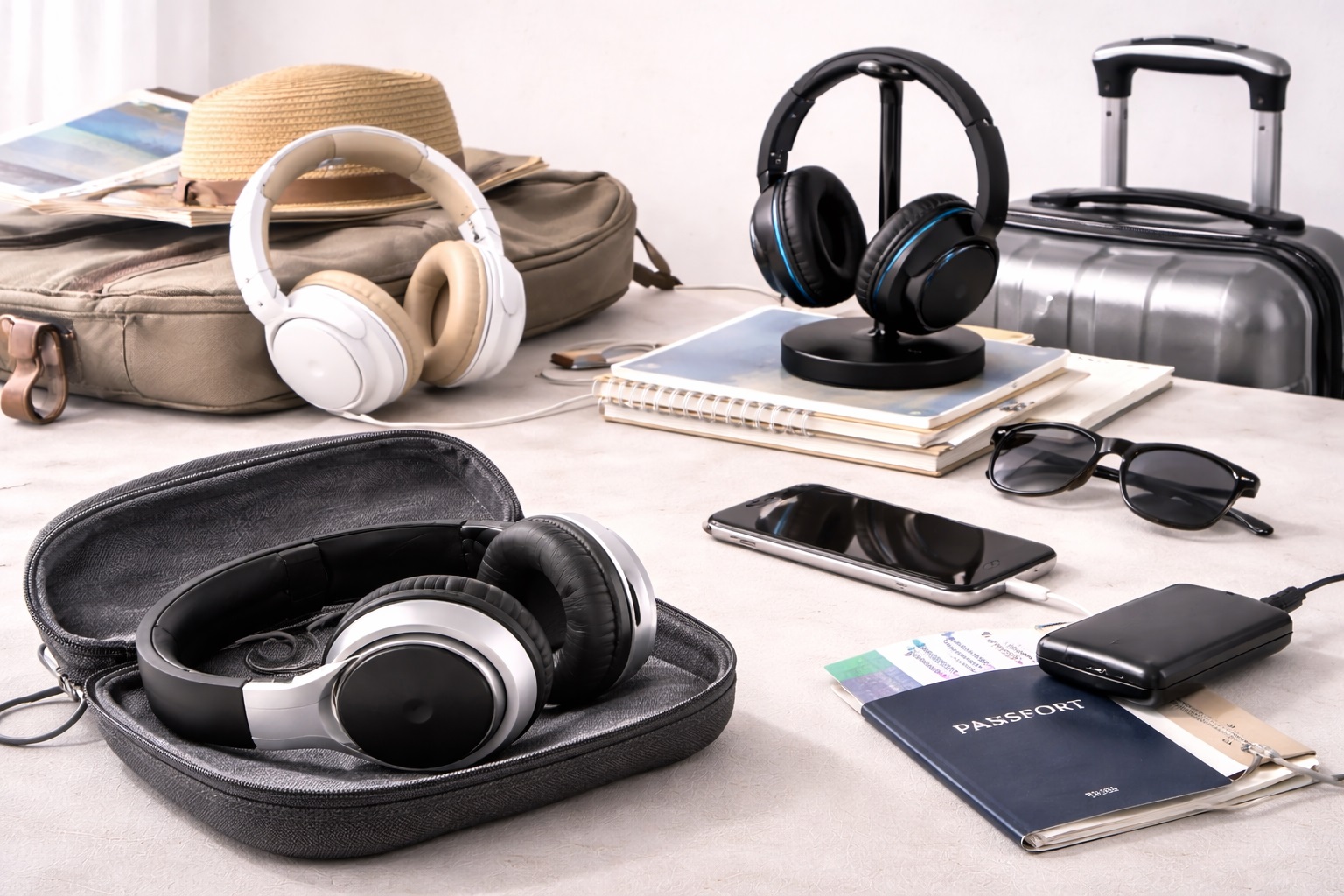
Best Travel Headphones: Comfort and Quiet for Long Trips
Travel puts a genuinely different set of demands on headphones than everyday listening at home or in an office ever does. A long flight, an overnight train, or a multi-hour road trip all involve many hours of continuous engine noise, cramped seating, and the ongoing need to pack efficiently without sacrificing comfort along the way. What works well for a quick daily commute doesn't necessarily hold up across a full transatlantic flight, and the wrong choice becomes painfully obvious somewhere over the ocean rather than during a brief store test beforehand. Unlike a commute, there's usually no easy way to swap headphones mid-trip if the first choice turns out to be uncomfortable, which makes getting the decision right beforehand considerably more important than it is for everyday purchases you can simply replace next week.
This guide compares the three most practical headphone categories for frequent travelers dealing with planes, trains, and long-distance commutes, weighing them specifically against what matters for travel: how well they handle continuous low-frequency noise, how comfortable they remain over many hours, and how easily they pack away between trips without taking up precious luggage space.
Frequent travelers also tend to develop strong, well-earned opinions rather quickly, since the stakes of a poor choice are considerably higher when you're stuck with it for a long overnight flight rather than a short twenty-minute commute across town. The categories below are chosen because each solves a different part of the travel equation, and understanding which part matters most for your typical trip will make the decision considerably easier.
It's also worth thinking about the full travel routine rather than just the flight or train ride itself. Headphones that need to survive being stuffed into a carry-on, pulled out quickly at security, and used through several time zones face a different set of demands than a pair that lives permanently on a desk. Durability and packability matter here nearly as much as sound quality and noise cancellation. A headphone that performs beautifully in a controlled home listening test but arrives at your destination with a cracked hinge from being crushed at the bottom of a carry-on has effectively failed at the one job it was bought for, regardless of how it sounded on day one.
Comfort compounds dramatically on long journeys in a way that's easy to underestimate when shopping. A slight pressure point that's unnoticeable for the first hour of a flight can become genuinely painful by hour six, which is why fit and clamping force deserve more attention in a travel-focused buying guide than they might elsewhere.
Think honestly about the trips you actually take rather than an idealized version of your travel schedule. Someone who flies internationally several times a year has different priorities than someone whose longest regular trip is a two-hour train ride to visit family. Matching your headphone choice to your real pattern of travel, rather than the most demanding trip you could hypothetically imagine, tends to produce a far more satisfying long-term purchase. It's worth actually tallying your trips from the past year or two before deciding — many people overestimate how often they take the kind of marathon journey that justifies the heaviest, most feature-packed option, when in reality most of their travel consists of shorter regional trips that a lighter, more compact pair would handle just as comfortably.
Top 3 (Detailed Reviews)
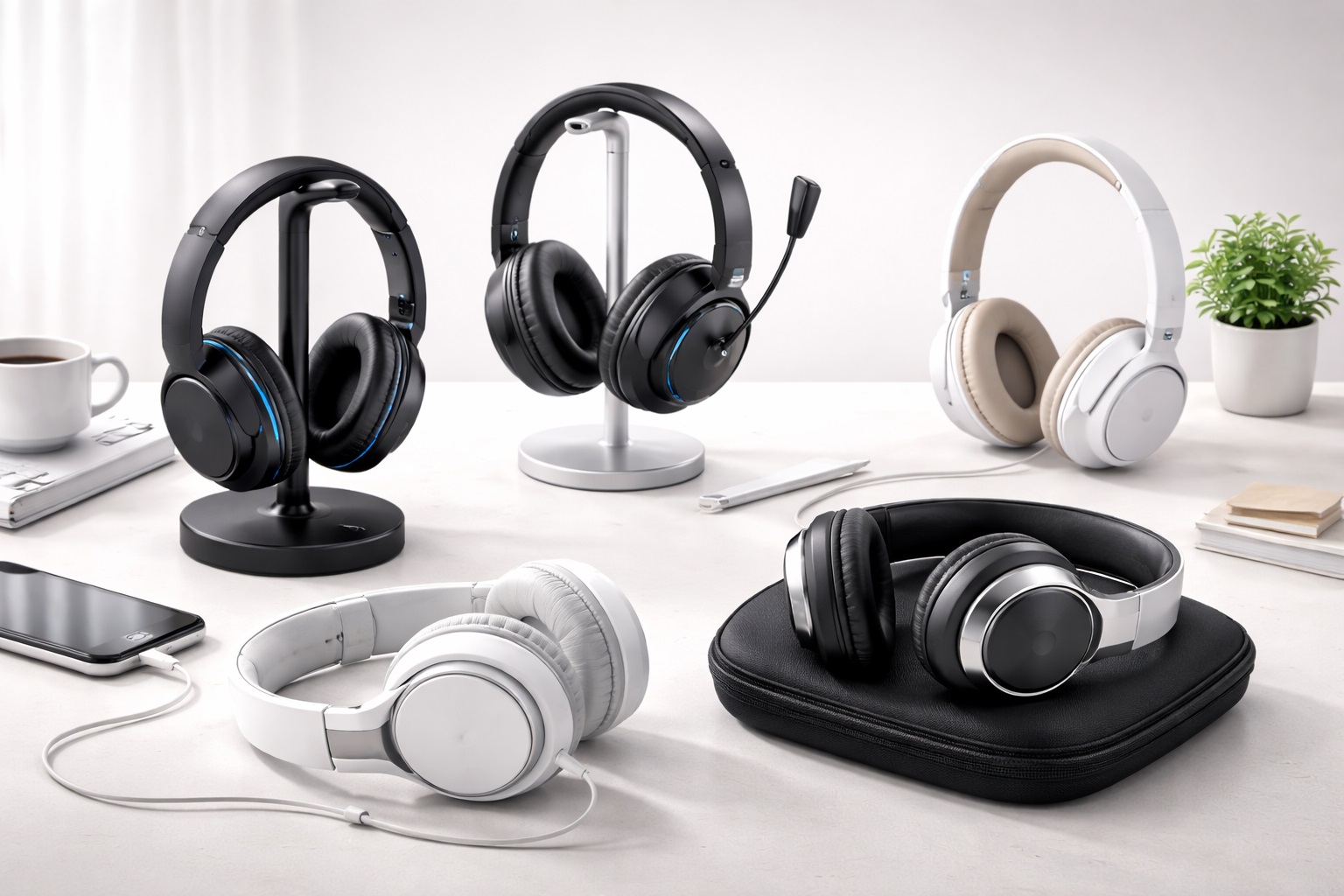
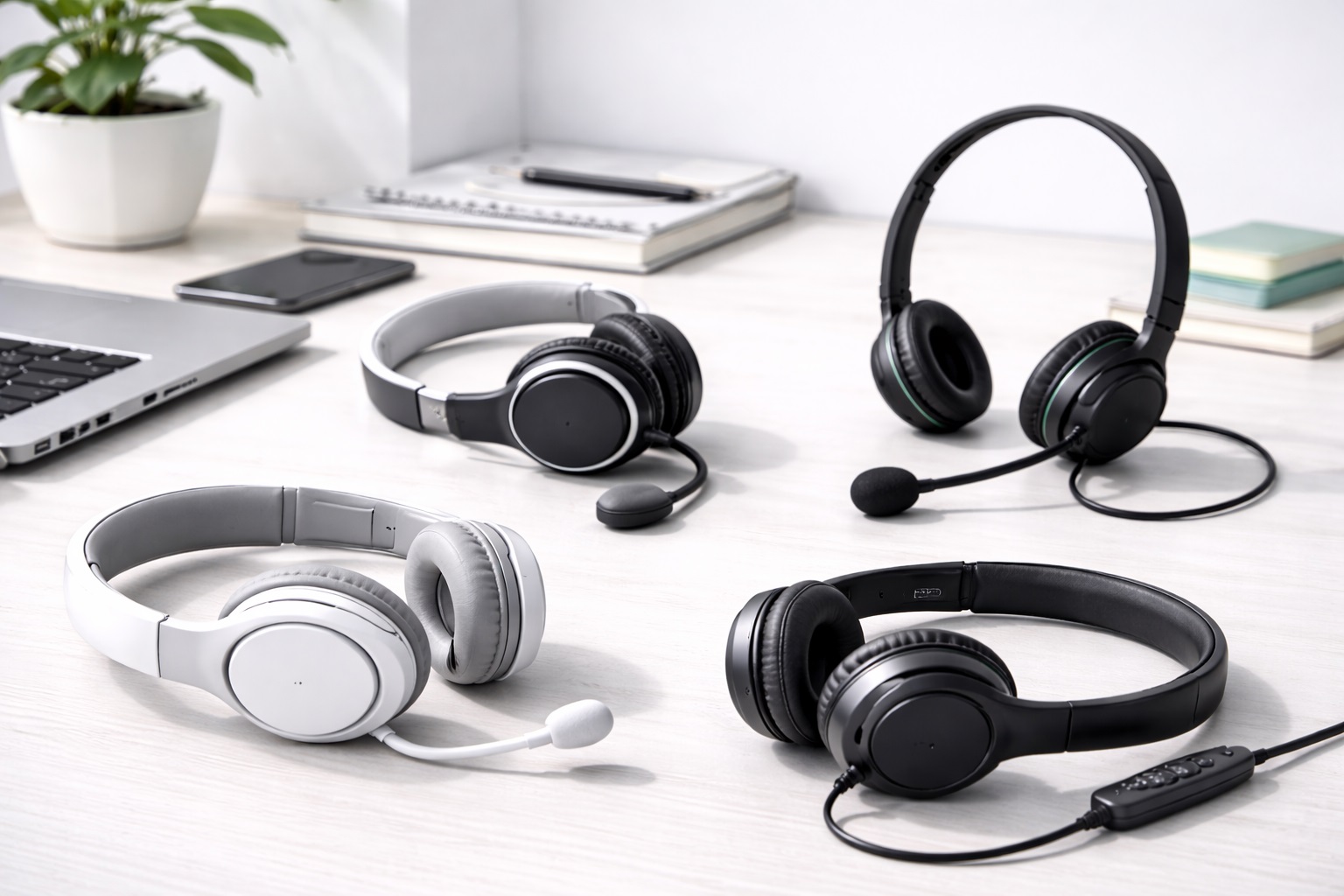
1. Over-Ear Wireless Headphones – Best For Long-Haul Comfort and Sound
Over-ear wireless headphones remain the standard recommendation for serious travelers, and for good reason. The full ear cups distribute pressure evenly across a wider area than smaller formats, which becomes increasingly important as hours pass on a long flight or train ride. The sealed design also provides genuine passive isolation against cabin and engine noise even before any active noise cancellation is factored in. Most current models run Bluetooth 5.0 or newer, offer 20 to 40 hours of battery life comfortably covering even the longest international flights, and fold at the hinges for reasonably compact storage in a carry-on bag. Frequent flyers who have tried multiple categories over the years often settle back on over-ear designs specifically because the comfort holds up so consistently well across trips of very different lengths. That consistency is a meaningful advantage in itself — not having to reconsider your headphone choice depending on whether the next trip is a quick regional hop or a full transcontinental flight removes one more variable from the packing process.
- Pros:
- Best overall comfort for extended multi-hour wear on long journeys
- Strong passive isolation reduces cabin and engine noise even without ANC engaged
- Long battery life comfortably covers the longest international flights
- Folding design reduces footprint for carry-on storage
- Fuller, richer sound makes movies and podcasts more enjoyable during long trips
- Holds up consistently well across trips of very different lengths and conditions
- Cons:
- Bulkier than smaller formats even when folded
- Can feel warm during longer wear in a stuffy cabin environment
- Takes up noticeably more carry-on space than a compact on-ear pair
- May require a dedicated pouch or hook rather than fitting loosely into a bag
Best For: Frequent long-haul travelers who prioritize comfort and sound quality above minimizing luggage space.
Why We Recommend It: For anyone regularly facing flights of five hours or more, the comfort advantage of an over-ear design becomes increasingly valuable as the journey stretches on, making the extra bulk a reasonable trade for genuinely better long-haul comfort.
2. On-Ear Wireless Headphones – Best For Minimizing Luggage Space
On-ear headphones fold into a noticeably smaller package than over-ear designs, which matters directly to travelers packing light or dealing with strict carry-on size limits. They're also quicker to put on and remove during security checks or when a flight attendant needs your attention, since the lighter build doesn't require the same careful adjustment as a full over-ear pair. The trade-off is somewhat reduced isolation against continuous engine noise, meaning the difference is more noticeable on longer flights than shorter ones. For travelers who move through airports frequently and value speed and convenience above squeezing out every last bit of isolation, this lighter format tends to fit naturally into a fast-paced travel routine. Business travelers juggling tight connections in particular tend to appreciate not having to think carefully about repositioning a bulkier pair every time they need to hear a gate change announcement or answer a question at a check-in counter.
- Pros:
- Smallest folded footprint among wireless headphone categories, ideal for tight luggage space
- Quick to remove and reapply during security screening and boarding
- Generally more affordable than full over-ear travel alternatives
- Lighter weight reduces overall carry-on load for light packers
- Still delivers a meaningful upgrade in sound over basic earbuds for movies and podcasts
- Easy to slip into a jacket pocket during a quick layover between connecting flights
- Cons:
- Less effective at blocking continuous engine hum on longer flights
- Extended wear over many hours can create more noticeable ear fatigue
- Smaller ear cups feel less immersive for movies compared to over-ear designs
- Isolation gap becomes more noticeable specifically on the longest overnight routes
Best For: Travelers who pack light, take shorter or medium-length trips, and prioritize luggage space over maximum long-haul comfort.
Why We Recommend It: When carry-on space is at a premium and your typical trip doesn't involve marathon flights, the compact on-ear format solves the packing problem without giving up much practical sound quality.
3. Noise Canceling Headphones – Best For Blocking Engine and Cabin Noise
Active noise cancellation exists almost specifically for travel scenarios like this — consistent, droning low-frequency noise from jet engines, train wheels, or road tires is exactly the kind of sound ANC technology handles best. The difference between a flight with and without active noise cancellation is often described by frequent travelers as the single biggest quality-of-life improvement available for long trips, reducing fatigue and making it considerably easier to sleep, read, or focus on a movie. Most current models also include a transparency mode, useful for quickly hearing flight announcements or a flight attendant without removing the headphones. Travelers who have switched from a basic wireless pair to genuine active noise cancellation on a long trip frequently describe it as one of the more noticeable quality-of-life changes in how tired they feel after landing. The effect tends to compound on multi-leg itineraries in particular, where reduced fatigue from the first flight can meaningfully affect how well you cope with a tight connection or a second overnight leg later in the same journey.
- Pros:
- Best-in-class performance against continuous engine and cabin noise
- Transparency mode allows quick awareness for announcements without headphone removal
- Significantly reduces fatigue on long flights compared to passive isolation alone
- Often paired with above-average sound tuning for movies and music
- USB-C charging simplifies packing alongside other travel electronics
- Makes sleep and focused reading noticeably easier during overnight and long-haul flights
- Cons:
- Highest upfront cost of the three categories
- Battery drains faster with ANC engaged continuously through a long flight
- Cabin pressure changes can occasionally create a faint sensation some travelers notice with lower-cost ANC implementations
- Adds slightly more weight than a comparable non-ANC pair in the same category
Best For: Frequent flyers and long-distance travelers who want the most effective possible reduction of engine and cabin noise on every trip.
Why We Recommend It: For genuinely frequent long-haul travel, ANC delivers the single biggest improvement to overall trip comfort of any headphone feature, making it worth the added cost for anyone who travels several times a year.
Buying Guide: How to Choose the Best Travel Headphones
These twelve factors are weighted specifically toward what matters for travel — noise cancellation, packability, and comfort over many continuous hours — rather than general listening priorities. Read through them with your own typical trip length in mind, since a headphone well suited to occasional weekend travel may not hold up nearly as well for someone crossing multiple time zones on a regular basis.
1. Active Noise Cancellation Quality
Not all ANC implementations perform equally well against low-frequency engine noise specifically. Look for reviews that test performance in genuinely noisy environments like flights or trains rather than quiet offices, since the two situations stress the technology quite differently. A model praised for ANC in a home office review won't necessarily perform the same way against a jet engine's constant drone.
2. Comfort Across Many Continuous Hours
A headphone that feels fine for a thirty-minute test at home can become uncomfortable by hour four of a long flight. Prioritize reviews specifically discussing extended wear and clamping force rather than short-term first impressions from a store visit, since travel comfort issues rarely show up in a brief trial.
3. Folded Footprint for Carry-On Luggage
Check exactly how compact the headphones become when folded, since carry-on space is almost always at a premium. Some designs fold flat into a genuinely small package, while others only fold partially at the hinges without much size reduction, which matters more than it seems once you're trying to zip a bag closed at the gate.
4. Battery Life for International Flights
The longest flights can run many hours, and layovers and delays add further time beyond the scheduled flight duration. Choose battery life with a comfortable margin above your longest typical trip, particularly if you plan to use ANC continuously throughout, since running out of charge somewhere over an ocean is a genuinely frustrating way to spend the remaining hours of a journey.
5. Wired Backup Option
Many aircraft entertainment systems still use a wired connection, and battery failure mid-trip is a genuine inconvenience. A headphone that includes a wired mode as a backup provides valuable flexibility that a Bluetooth-only design cannot, letting you keep listening even if the battery runs unexpectedly low partway through a long flight.
6. Case Protection for Checked or Carry-On Bags
A hard-shell case protects against the rougher handling that luggage receives compared to a desk or bag at home. If your headphones will regularly be tossed into an overhead bin or checked bag, this protection is worth the extra bulk it adds, since a cracked hinge partway through a trip is far more disruptive than a slightly heavier case.
7. Quick Access During Security and Boarding
Headphones that are quick to remove and store are genuinely useful during security screening, where you may need to remove them briefly, and during boarding, where announcements require your attention. Consider how easily a design comes on and off without needing careful readjustment each time, since fumbling with headphones while holding boarding passes and a passport adds unnecessary friction to an already busy moment.
8. Multi-Device Pairing for Mixed Travel Devices
Many travelers switch between a phone for offline entertainment, a tablet for reading, and occasionally a laptop for work during a trip. Multi-device pairing avoids the hassle of manually re-pairing at every switch, which is especially valuable during a long journey with limited patience for troubleshooting unfamiliar Bluetooth menus in a cramped seat.
9. Weight for Reducing Overall Travel Fatigue
Every extra ounce matters less for a single trip but adds up across frequent travel, both in terms of luggage weight and physical fatigue from wearing heavier gear for many hours. Lighter designs reduce this cumulative burden meaningfully for frequent flyers who feel the difference across a long travel year rather than a single journey.
10. Durability for Rough Travel Handling
Travel involves considerably rougher handling than everyday desk or home use — overhead bins, security trays, and crowded seating all present opportunities for damage. Reinforced hinges and a solid protective case extend practical lifespan for anyone traveling regularly, and this durability difference compounds meaningfully over dozens of trips a year.
11. Warranty and International Support
If you travel internationally often, check whether the manufacturer offers support or warranty service in multiple regions, since a defect discovered abroad is more complicated to resolve without that coverage, and shipping a defective unit back from another country adds real delay and cost.
12. Airline and Airport Security Compatibility
Most wireless headphones pass through airport security without issue, but very large over-ear designs occasionally draw extra scrutiny during screening. Familiarizing yourself with your specific airport's typical process can save a small amount of hassle on travel days, particularly at smaller regional airports with less familiar screening procedures.
13. Sound Signature for Movies and In-Flight Entertainment
A headphone tuned heavily for bass-forward music can make dialogue in movies and podcasts sound slightly muddier than a more balanced tuning would, which matters more on a long flight where entertainment consumption is often movie- and podcast-heavy rather than purely music-focused. If most of your travel listening involves spoken dialogue, look specifically for reviews mentioning vocal clarity rather than assuming a headphone praised for music will automatically handle speech content just as well.
14. Keeping Small Accessories Organized in a Travel Bag
Charging cables, wired adapters, and small pouches are easy to lose track of in a crowded carry-on bag, and a missing cable partway through a trip is a genuinely frustrating problem to solve in an unfamiliar airport or city. A small zippered pouch dedicated specifically to headphone accessories keeps everything together and makes it easy to do a quick check before leaving a hotel room or gate area.
15. Using Headphones as Part of a Sleep and Time Zone Routine
Frequent long-haul travelers often use noise-canceling headphones deliberately as a sleep aid during flights, pairing them with an eye mask and a consistent pre-flight routine to encourage rest on a schedule that matches their destination time zone rather than their departure time zone. Headphones with a stable, secure fit that stays comfortable while lying back or leaning against a window are particularly valuable for this specific use case, since a design that shifts or creates pressure points defeats the purpose of using them to rest.
Frequently Asked Questions
1. What matters most for headphones used mainly for travel?
Noise cancellation quality and comfort over many continuous hours matter more than almost any other factor, since these are the two things that most directly affect how a long flight or train ride actually feels once you're several hours into the journey.
2. Do I really need noise-canceling headphones for travel?
If you fly or take long trains regularly, active noise cancellation is widely considered one of the most impactful travel upgrades available, meaningfully reducing fatigue and making rest or focus considerably easier during long journeys through multiple time zones.
3. How much battery life do I need for a long international flight?
Look for a generous amount of total battery life to comfortably cover the longest flights plus delays and layovers, especially if you plan to use active noise cancellation continuously throughout the trip, since a depleted battery mid-flight is hard to recover from.
4. Are on-ear or over-ear headphones better for travel?
Over-ear designs generally offer better comfort and isolation for long-haul trips, while on-ear headphones save valuable luggage space for travelers who pack light or take shorter, more frequent trips rather than occasional long-haul journeys.
5. Can I use travel headphones with in-flight entertainment systems?
Many models include a wired adapter or cable specifically for this purpose, since aircraft entertainment systems commonly use a different connector than standard headphone jacks. Check this compatibility before your trip if you plan to use the in-flight system rather than your own downloaded content.
6. Is it worth paying more for premium noise cancellation while traveling?
For frequent travelers, yes — the difference between basic and premium ANC implementations is often very noticeable on long flights specifically, even if it matters less in quieter everyday environments back home.
7. How long should travel headphones last?
A well-built pair typically lasts two to five years even with regular travel use, though the rougher handling involved in travel makes checking build quality and case protection more important than for headphones used mainly at home on a desk.
8. Can I return travel headphones if they don't perform well on my first trip?
Most retailers offer a 15 to 30 day return window, which is usually enough time to test the headphones on at least one real trip before deciding whether they suit your travel routine and typical journey length.
9. What's the best headphone type for someone who travels several times a month?
Noise-canceling over-ear headphones tend to be the strongest overall choice for genuinely frequent travelers, combining the best comfort and noise reduction for repeated long-haul use across a busy travel schedule.
10. Does brand name matter when choosing travel headphones?
Established brands tend to offer more consistent ANC performance and more reliable international warranty support, both of which matter more for frequent travelers than for occasional or local use closer to home.
11. Do noise-canceling headphones help with jet lag?
Indirectly, yes. Better rest during a flight, made possible by reduced noise fatigue, can genuinely help travelers arrive feeling less exhausted, even though the headphones themselves don't address jet lag directly or replace proper sleep scheduling.
12. Should I bring a backup pair of headphones when traveling internationally?
For very long or important trips, a simple backup pair of wired earbuds is a reasonable safeguard against battery failure or an unexpected malfunction, particularly on trips where replacement options may be limited or considerably more expensive than at home.
13. Do noise-canceling headphones work as well on trains as they do on planes?
Yes, generally. Train noise tends to be somewhat different in character from jet engine noise, but the same low-frequency, continuous quality that ANC handles well on flights applies just as effectively to most train journeys and long highway drives as a passenger.
14. What should I pack alongside travel headphones for a long trip?
A short charging cable, a compatible wall adapter, and a slim protective pouch cover most needs without adding significant bulk. Some travelers also pack a simple wired backup pair in case of battery issues on an especially long or remote journey where replacements are hard to find.
15. Is it worth buying travel headphones specifically, rather than using my everyday pair?
If your everyday headphones already handle long wear comfortably and include decent noise isolation, a dedicated travel pair may not be necessary. For anyone whose daily headphones are optimized for a desk or gym rather than hours of continuous wear, a purpose-built travel option is usually a worthwhile upgrade.
16. What's a reasonable amount to spend on a pair of headphones dedicated to travel?
Since travel headphones are used for many hours across a wide range of trips, it's usually worth spending toward the upper end of your comfortable budget for genuine ANC performance and solid build quality, rather than treating them as a casual accessory purchase, given how much of their total lifetime use tends to happen on trips where comfort really matters.
17. How do I keep travel headphones from getting damaged in checked luggage?
If you're checking a bag rather than carrying headphones on, pack them in their hard case surrounded by soft clothing rather than near the edges of the bag where impacts are most likely, and avoid placing heavy items directly on top of the case during packing.
Final Verdict
- Best Overall for Travel: Noise Canceling Headphones — the single biggest comfort upgrade available for frequent long-haul trips and overnight flights.
- Best for Long-Haul Comfort: Over-Ear Wireless Headphones — superior comfort and isolation once ANC isn't the deciding factor for you.
- Best for Packing Light: On-Ear Wireless Headphones — the smallest footprint for travelers prioritizing luggage space over maximum long-haul comfort.
The right choice for travel ultimately depends on how often you fly, how long your typical trips run, and how much luggage space you're realistically willing to dedicate. Use the comparisons and buying guide above to match your headphones to your actual travel pattern, and you'll notice the difference on your very next long trip rather than wishing you'd chosen differently somewhere over the ocean. Whichever category you settle on, testing it on a real trip within your return window remains the most reliable way to confirm it actually suits your travel habits before you're committed for good. A good travel headphone purchase tends to pay for itself many times over across a year of regular trips, simply by making each individual journey noticeably less tiring, which is a return on investment that's easy to overlook when comparing prices in isolation.