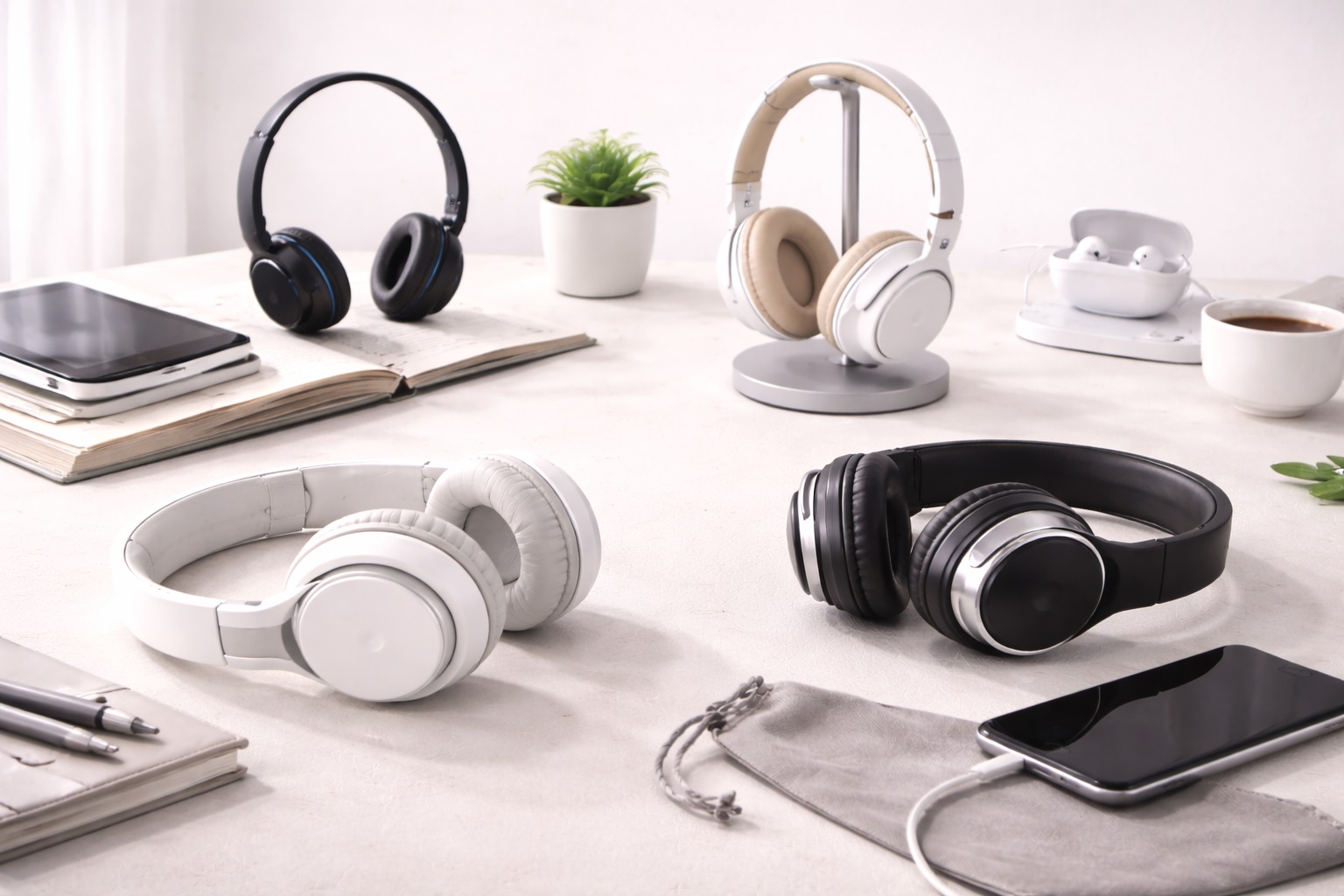
Best Lightweight Headphones for All-Day Wear in 2026
Anyone who has worn the wrong pair of headphones through a full workday knows the problem isn't sound quality — it's the ache behind the ears by hour three, the hot spot where the headband meets your scalp, or the creeping fatigue that makes you want to rip them off before your last meeting even starts. Weight and comfort matter as much as driver specs, yet most buying guides bury that detail under a wall of frequency-response numbers nobody asked for.
This guide takes a different approach. Instead of ranking headphones purely on audio fidelity, it looks specifically at what makes a pair sustainable for 4+ hours of continuous wear — clamping force, ear cup material, weight distribution, and how each design category trades comfort against isolation and portability. None of the three styles covered here is universally "best"; each solves a different version of the same fatigue problem, and the right pick depends on where and how long you're actually wearing them.
We've grouped the market into three practical categories: full over-ear wireless models built for immersive, long-session listening; on-ear designs that shave off bulk and weight at a small cost to isolation; and active noise-canceling headphones aimed at people who need to disappear into their audio in a loud environment. Each has a distinct comfort profile, and the buying guide further down breaks out the specific factors — padding material, clamp force, driver size — that determine whether a pair will still feel good on hour six.
Read through the three detailed reviews first to understand where each style excels, then use the buying guide and FAQ sections to match a specific set of features to your own daily routine, whether that's remote work calls, commuting, gym sessions, or quiet focus time at a desk. Comfort during extended wear rarely comes down to a single number on a spec sheet; it's the combination of weight distribution, material choice, and fit adjustment that determines whether you notice the headphones at all by the middle of the afternoon.
Top 3 Lightweight Headphones (Detailed Reviews)
1. Over-Ear Wireless Headphones – Best For Immersive All-Day Listening
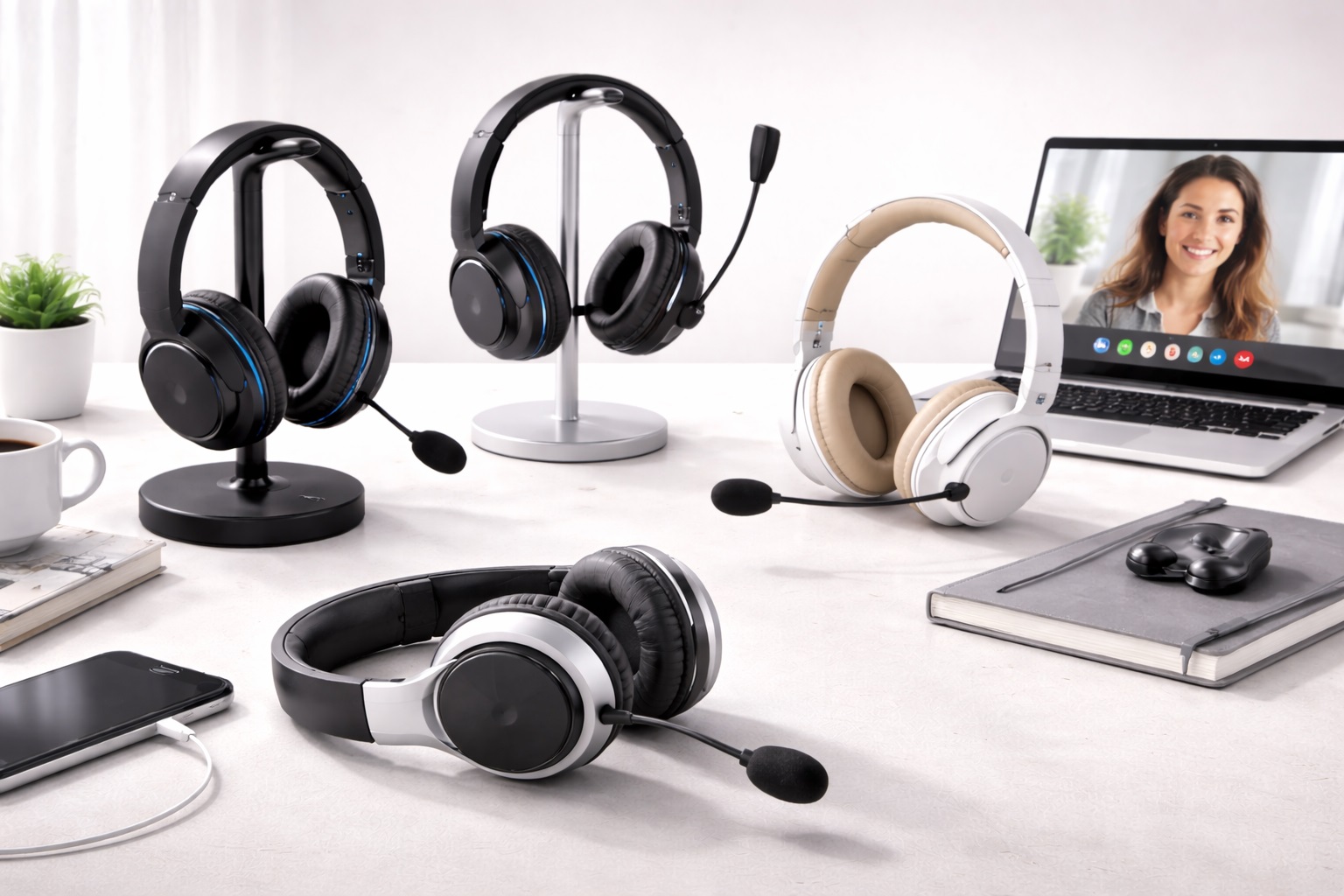
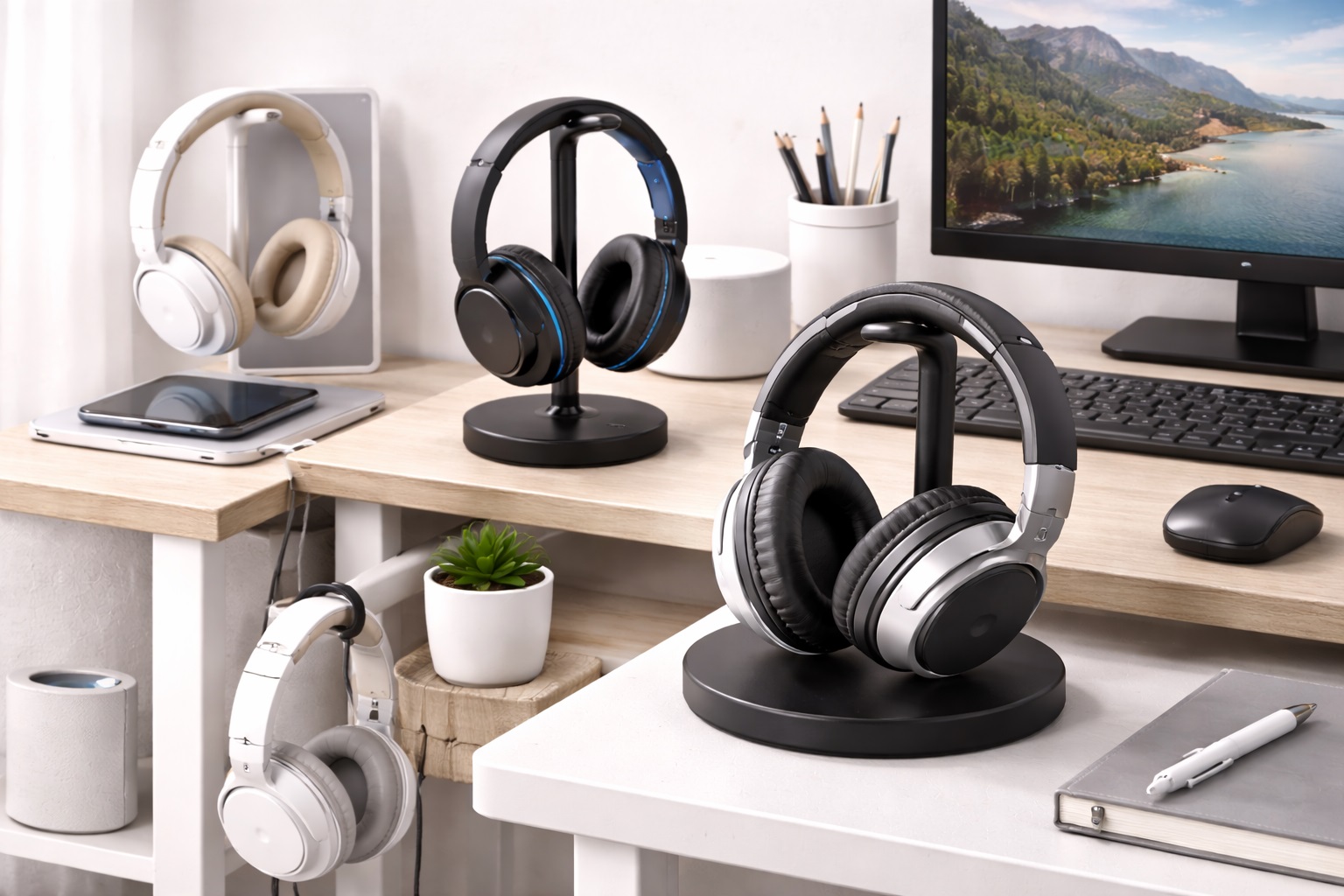
Over-ear wireless headphones remain the reference point for comfort during genuinely long sessions, provided the ear cups and headband are built with enough padding to distribute weight evenly. The full-size ear cups fully enclose the ear rather than resting on it, which removes a major source of fatigue — pressure directly on the ear cartilage — while also delivering meaningful passive noise isolation from the seal alone. Wireless connectivity on current models typically means Bluetooth 5.0 or newer, support for pairing with more than one device, and battery life in the 20 to 40 hour range depending on whether active noise cancellation is running. The larger internal volume of the ear cup also allows for bigger drivers, which is why this category tends to deliver richer bass and a more spacious soundstage than smaller designs can manage.
The trade-off is size. A full over-ear headphone is not something you slip into a jacket pocket, and even folding designs still take up meaningful bag space. Heat buildup around the ears is also a real consideration in warm climates or during physical activity, since the sealed cup traps warmth against the skin over a long session. For a static work-from-home setup or long-haul travel where portability is secondary to comfort, though, this is generally the category that produces the least end-of-day fatigue, largely because the weight sits on the head and around the ear rather than pressing directly against it. Users who have struggled with sore ears from smaller designs often find that switching to a well-padded over-ear pair resolves the issue almost immediately, simply because the pressure is no longer concentrated on a small area of cartilage.
- Pros:
- Full ear cup enclosure removes direct pressure on the ear itself
- Strong passive noise isolation from the sealed cup design
- Longer battery life typical of the category, often 20–40 hours
- Larger drivers generally produce fuller bass and a wider soundstage
- Cons:
- Bulkier to carry and store than on-ear or in-ear alternatives
- Ear cups can trap heat during extended wear in warm environments
Best For: Remote workers, audiophiles, and anyone spending most of a session in one location where portability isn't the priority.
Why We Recommend It: When the primary goal is surviving a full day of calls or music without ear fatigue, the over-ear design's weight distribution and ear-enclosing fit consistently outperform smaller formats. It is the safest default recommendation for anyone whose main complaint with previous headphones was soreness rather than bulk.
2. On-Ear Wireless Headphones – Best For Portability Without Losing Comfort
On-ear headphones use smaller ear cups that rest against the ear rather than surrounding it, which immediately cuts weight and folded size compared to a full over-ear design. That reduction matters more than it sounds for all-day wear: less total mass means less strain on the neck and head over a long session, and most on-ear models fold flat, making them dramatically easier to store in a bag or carry between rooms. The compromise is that resting directly on the ear concentrates pressure in a smaller area, so padding quality becomes the single most important comfort variable in this category — a well-cushioned on-ear pair can outlast a poorly padded over-ear pair in comfort, and vice versa. Buyers moving from a bulky over-ear pair are often surprised how much less neck strain they notice after a few days, even though the ears themselves may need a short adjustment period to the more concentrated contact point.
Sound quality and isolation take a modest step down compared to over-ear designs, mainly because the smaller cup limits driver size and the open-against-the-ear fit doesn't seal out ambient sound as effectively. For commuting, moving between meeting rooms, or any scenario where you're taking the headphones on and off repeatedly throughout the day, though, the lighter overall weight and fold-flat design make this category genuinely more practical than carrying a full-size pair everywhere. Anyone who spends part of the day at a desk and part of it away from it tends to appreciate how easily an on-ear pair slips off and folds down between uses.
- Pros:
- Noticeably lighter overall weight than full over-ear designs
- Fold-flat construction simplifies storage and transport
- Frequently more affordable than comparable over-ear models
- Easy to put on and remove repeatedly throughout a busy day
- Cons:
- Less passive isolation since the ear isn't fully enclosed
- Pressure concentrated on the ear itself can cause fatigue on long sessions if padding is thin
Best For: Commuters, students, and anyone who moves between environments and needs a lightweight pair that packs down small.
Why We Recommend It: For users who prioritize low overall weight and portability but still want a meaningfully better listening experience than earbuds, on-ear designs hit a practical middle ground — provided you check ear cup padding quality carefully before buying, since that single spec determines whether the category's smaller contact area becomes a comfort advantage or a liability.
3. Noise Canceling Headphones – Best For Blocking Distraction Without Adding Bulk
Active noise cancellation (ANC) works by using onboard microphones to detect ambient sound and generate an inverse waveform that cancels it out electronically, rather than relying purely on physical padding to block noise. That distinction matters for comfort: because ANC does part of the isolation work electronically, manufacturers can often use lighter, less densely padded ear cups than a purely passive design would need while still achieving strong noise reduction. The technology has become dramatically more accessible over the past several product generations, with meaningful ANC performance now available well below flagship price points, and most current models include a transparency or ambient mode for switching back to situational awareness without removing the headphones.
ANC does add cost and draws additional battery power compared to a purely passive design, and cheaper implementations can introduce audible processing artifacts or a faint hiss during cancellation. For anyone working in a genuinely loud environment — an open office, a busy household, transit — the ability to cancel steady low-frequency noise like HVAC hum or engine drone is a real productivity advantage that passive isolation alone struggles to match, and it often lets you run at lower volume, which itself reduces listening fatigue over a long day. That secondary benefit — not needing to push volume up to compete with background noise — is easy to overlook but genuinely meaningful across an eight-hour stretch. Over a genuinely long commute or open-office shift, that lower-volume habit alone can be the difference between finishing the day with ringing ears and finishing it without noticing any listening fatigue at all.
- Pros:
- Meaningfully reduces steady ambient noise like HVAC hum and engine drone
- Transparency mode allows quick situational awareness without removing the headphones
- Often allows lower listening volumes, reducing fatigue over long sessions
- USB-C rechargeable batteries are standard on current models
- Cons:
- Adds cost and battery drain compared to purely passive designs
- Budget implementations can introduce audible hiss or processing artifacts
Best For: Remote workers in noisy households, open-office employees, and anyone who needs to concentrate in an environment they can't control.
Why We Recommend It: ANC solves a specific, common problem — the inability to focus in a noise-polluted space — and does so without requiring the heavier padding that purely passive isolation depends on. When implemented well, the combination of noise reduction and lower required volume makes this category a strong choice for anyone whose fatigue comes from environmental noise rather than headphone weight alone.
Buying Guide: How to Choose the Best Lightweight Headphones
Use these fifteen factors to match your purchase to your actual daily routine rather than defaulting to whichever pair has the most reviews or the highest sticker price.
1. Total Weight and Where It's Distributed
Raw weight in grams tells only part of the story — how that weight is distributed across the headband and ear cups matters just as much. A slightly heavier pair with a well-padded, wide headband can feel lighter over a four-hour session than a nominally lighter pair that concentrates weight on a narrow band across the top of the head. Check reviews specifically for long-session comfort rather than just the spec sheet weight figure.
2. Clamping Force
Clamping force is the inward pressure the headband exerts to keep the ear cups seated against your head. Too little clamp force causes the headphones to slide during movement; too much creates headaches and jaw tension within an hour or two. This is genuinely difficult to judge without trying a pair on, but it's the single most commonly cited complaint in negative reviews when it's wrong, so it's worth reading user feedback specifically for clamp-related comments.
3. Ear Cup Padding Material
Protein leather (a synthetic leather-like material) creates a good seal for isolation but tends to retain heat against the skin. Velour and woven fabric breathe considerably better and stay cooler over long sessions, at some cost to isolation. Memory foam padding underneath either surface conforms to individual ear shape better than firmer foam, improving both the seal and the pressure distribution simultaneously.
4. Ear Cup Size and Shape
Oval ear cups that fully surround the ear without touching the cartilage anywhere reduce pressure points significantly compared to smaller or round cups that may press against the top or bottom of the ear. If you have larger ears, this spec matters more than almost any other single factor, since contact with the cartilage is one of the fastest routes to fatigue during extended wear.
5. Battery Life Relative to Your Actual Usage
Match battery life to how you actually use headphones rather than chasing the highest number available. Someone wearing headphones two hours a day during a commute has very different needs than someone wearing them eight hours during a full remote workday. Most mid-range wireless headphones in the 20–30 hour range comfortably cover a full week of moderate daily use between charges.
6. Foldability and Included Case
If you're carrying headphones daily, check specifically whether the design folds flat and whether a case is included. Full-size over-ear headphones without a folding hinge are genuinely difficult to transport safely without a hard case, since the ear cups are vulnerable to being crushed in a bag. On-ear designs generally fold more compactly and survive bag transport with less protection.
7. Driver Size and Sound Signature
Larger drivers, typically 40mm and above, tend to produce fuller bass extension, though driver quality within a given size class matters more than raw diameter alone. Beyond size, check whether a given model is tuned toward bass emphasis, a more neutral flat response, or a brighter treble-forward signature, and match that to your listening preference rather than assuming bigger numbers automatically mean better sound.
8. Active vs. Passive Isolation Needs
Passive isolation, achieved through physical seal and padding, handles higher-frequency intermittent sounds like conversation reasonably well. Active noise cancellation specifically targets continuous low-frequency noise like engine hum or HVAC systems far more effectively than passive isolation alone can manage. Decide which type of noise dominates your typical environment before paying extra for ANC you may not need.
9. Wireless Codec and Latency
For pure music listening, support for higher-quality Bluetooth codecs like aptX or AAC improves wireless audio fidelity over the base SBC codec. For video content specifically, check whether latency is low enough to avoid a noticeable gap between audio and picture — this is more often an issue on lower-cost implementations and worth checking in reviews if you frequently stream video.
10. Touch Controls vs. Physical Buttons
Touch-sensitive control surfaces look sleeker but are more prone to accidental activation from adjusting the headphones or brushing against a collar, and they're harder to operate precisely without looking. Physical buttons are less elegant but provide reliable tactile confirmation, which matters more than aesthetics if you frequently adjust volume or skip tracks without visual feedback.
11. Microphone Quality for Calls
If calls are a regular use case, evaluate microphone performance as a separate spec from audio playback quality — the two don't necessarily correlate. Look specifically for call-focused reviews or comparisons, since general audio reviews often don't test microphone clarity in any detail, and a headphone with excellent playback sound can still have a mediocre built-in microphone.
12. Open-Back vs. Closed-Back Design
Closed-back designs seal sound in both directions, keeping outside noise out and your audio private from people nearby. Open-back designs deliberately allow sound to pass both ways, which creates a more natural, spacious soundstage at the cost of zero isolation and audible leakage to anyone nearby. Open-back suits dedicated quiet home listening only; closed-back is the practical choice for shared spaces, offices, or transit.
13. Headband Adjustment Range and Fit Consistency
A headband's adjustment range determines whether the same pair fits consistently across different head sizes within a household, or whether it will hold its fit as padding compresses slightly over months of daily use. Sliders that click into fixed notches tend to hold position more reliably during active movement than smooth-friction sliders that can drift out of adjustment over a session. If more than one person in your home will regularly share the same pair, check specifically for a wide adjustment range rather than assuming a "one size fits most" design will actually stay put for everyone.
14. Carrying Case Quality and Included Accessories
A rigid or semi-rigid carrying case protects folded ear cups and hinges far better than the soft drawstring pouch that ships with many budget models, and it's worth checking what's actually included before assuming protection is equivalent across price points. A hard case also makes it realistic to toss headphones into a backpack alongside a laptop and charger without worrying about a hinge cracking under incidental pressure. Included accessories like a spare charging cable, a 3.5mm auxiliary cable for wired fallback, or an airline adapter are minor details individually, but they add up to meaningfully less friction for someone who travels or commutes with their headphones daily.
15. Warranty Coverage and Replacement Parts Availability
Since ear pad foam is the component most likely to wear out before the internal electronics fail, check whether the manufacturer sells replacement pads separately and whether the base warranty — typically one to two years — actually covers padding degradation or only electronic defects. A pair with genuinely available replacement parts can extend usable life by years for a relatively small additional cost, while a pair with no aftermarket support effectively has a fixed lifespan tied to how quickly the foam compresses and cracks.
Frequently Asked Questions
1. What's the real difference between over-ear and on-ear lightweight headphones for long wear?
Over-ear designs fully enclose the ear, spreading pressure across the surrounding area and generally producing less fatigue over multi-hour sessions. On-ear designs rest directly on the ear, concentrating pressure in a smaller zone, but they weigh less overall and fold more compactly. For sessions beyond four hours, over-ear designs are typically more comfortable; for frequent on-and-off portable use, on-ear's lighter weight often wins out.
2. Do I actually need noise cancellation, or is passive isolation enough?
It depends on your noise environment. ANC provides a genuine advantage against continuous, low-frequency noise like HVAC systems, engine drone, or open-office chatter. If you mostly listen in a quiet room, a well-sealed passive over-ear design can perform adequately without the added cost, weight, and battery drain that ANC introduces.
3. How much battery life do I actually need for daily use?
Most wireless headphones in the 20–30 hour range cover several days of typical use between charges. If you wear headphones roughly eight hours a day, a 24-hour battery means charging roughly every three days. Anything above 40 hours generally supports a full week of heavy daily use on a single charge.
4. Will lightweight headphones work well for both music and video calls?
Yes, in most cases. Current wireless headphones handle the switch between media playback and call audio automatically. Microphone quality does vary meaningfully between models, though, so if clear call audio is a priority, check call-specific reviews rather than assuming general audio quality reviews cover it.
5. Can lightweight headphones connect to more than one device at once?
Many mid-range and premium wireless headphones support multi-point pairing, letting the same pair stay connected to two or three devices and switch automatically without manual re-pairing. This is genuinely useful if you regularly switch between a laptop and a phone. It's not universal, though, so check the specification explicitly before assuming it's included.
6. Does spending more always get you a more comfortable pair?
Not necessarily. Price often tracks feature additions like ANC, premium materials, or app-based customization rather than comfort specifically. A well-designed mid-range pair with good padding and appropriate clamp force can be more comfortable for all-day wear than an expensive pair with aggressive clamping or poor ventilation.
7. How long should a good pair of lightweight headphones actually last?
A well-built pair from a reputable manufacturer typically holds up for two to five years of regular use, with padding usually needing replacement before the internal electronics fail. Check whether replacement ear pads are sold separately, since that extends usable life considerably beyond the original padding's lifespan.
8. What's a reasonable return window if a pair doesn't fit comfortably?
Most retailers offer a return window somewhere between 15 and 30 days. Since comfort issues like clamp force and heat buildup often only become apparent after a few full days of real use, it's worth keeping the original packaging until you've worn a new pair through at least one genuinely long session.
9. Which of the three styles is best if I split my time between home and commuting?
On-ear wireless headphones tend to serve this mixed use case best, since the lighter weight and fold-flat design make them practical to carry daily, while still delivering meaningfully better comfort and sound than earbuds. If your commute is unusually loud, a compact ANC pair is worth considering instead.
10. Is a heavier headphone always less comfortable?
Not necessarily. Weight distribution matters more than total weight alone. A heavier pair with a well-padded, wide headband can outlast a lighter pair with poor padding or excessive clamp force in real long-session comfort, which is why clamp force and padding deserve more attention than the raw weight spec.
11. Do ear cup materials really make a noticeable difference in comfort?
Yes, especially over multi-hour sessions. Protein leather retains heat and can become uncomfortable in warm rooms or during physical activity, while velour and fabric breathe better but isolate less. Memory foam underneath either surface improves the fit around the ear shape regardless of the outer material.
12. Does brand reputation matter much in this category?
Established audio brands generally offer more consistent quality control and more reliable warranty support, which matters for a product you're depending on daily. That said, several newer brands have released genuinely well-padded, comfortable designs at competitive prices — reading verified long-term-use reviews is more useful than brand name alone.
13. Is a hard carrying case worth paying extra for?
If you travel or commute with your headphones regularly, yes — a rigid case protects the hinges and ear cups far better than a soft pouch and meaningfully reduces the risk of damage from being tossed into a bag with other gear. If the headphones mostly stay on a desk at home, a basic pouch or no case at all is a reasonable place to save money.
14. How can I tell if clamping force will be too tight before I buy?
Reviews that specifically mention wearing the headphones for several consecutive hours are more useful here than spec sheets, which rarely list clamp force as a number. Look for repeated mentions of headaches, jaw tension, or glasses discomfort in verified long-term reviews, since those complaints are the clearest signal that a given model's headband tension runs high.
15. Should I care about a wired fallback option on wireless headphones?
It's a useful safety net rather than a core requirement. A 3.5mm cable input lets you keep using the headphones during a dead battery or on flights where wireless connections to seatback entertainment aren't supported. It's a low-cost feature to have available even if you rarely end up needing it.
Final Verdict
- Best Overall for All-Day Wear: Over-Ear Wireless Headphones – the most reliably comfortable option for long, stationary sessions.
- Best for Portability: On-Ear Wireless Headphones – lighter, fold-flat, and easy to carry between locations all day.
- Best for Noisy Environments: Noise Canceling Headphones – solves distraction without requiring heavy passive padding.
There isn't a single universally correct answer here — the right lightweight headphones depend on where you spend most of your listening hours and what specifically causes fatigue for you, whether that's ear pressure, overall weight, or an environment you can't control. Use the comfort-specific factors above, particularly clamping force and ear cup padding, to narrow down a pair that will still feel good after hour four rather than just hour one, and give any serious contender a genuine multi-hour trial before deciding it's the right long-term fit for your routine.