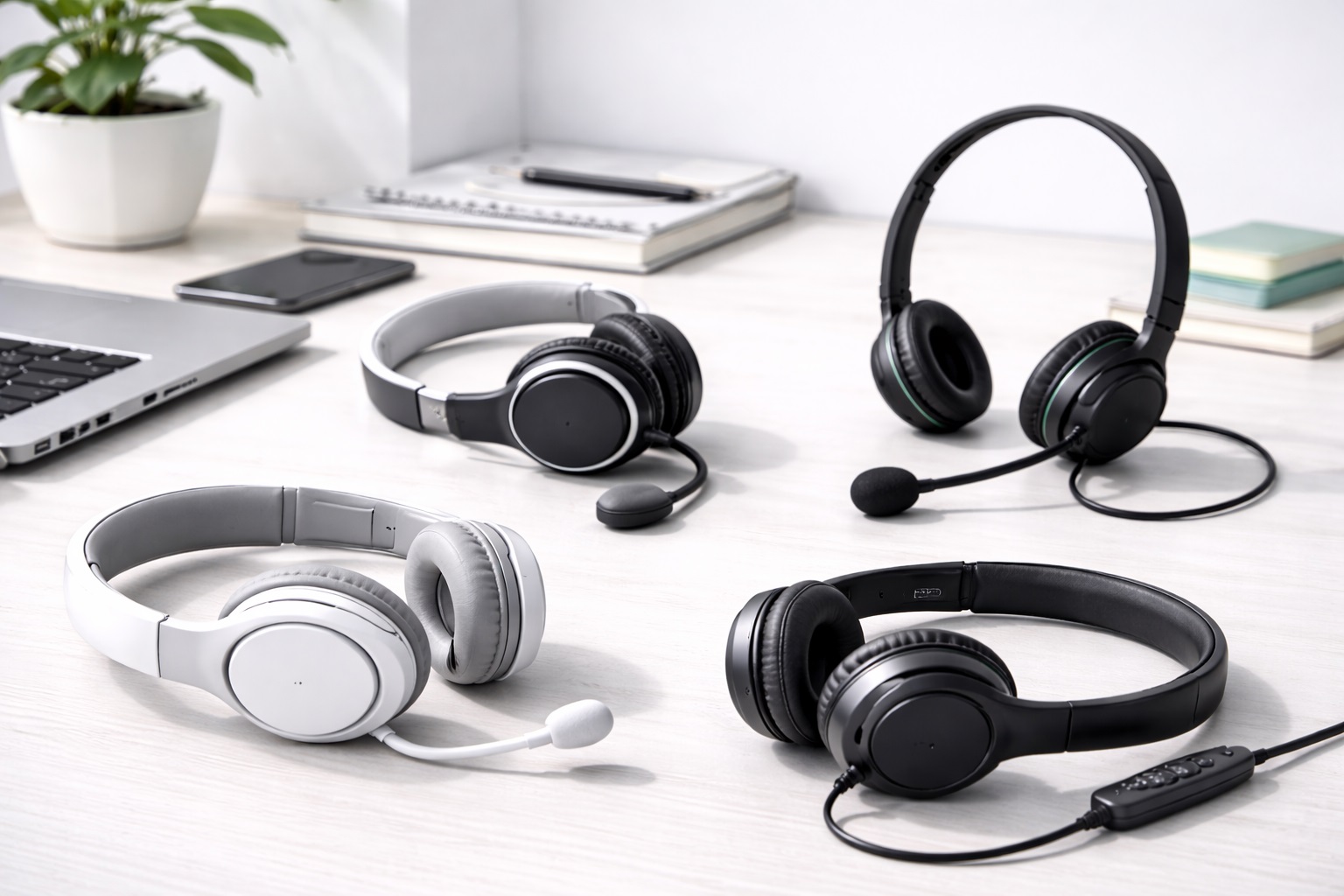
Best Lightweight Headsets in 2026: Comfort That Lasts All Day
Nobody notices a headset until it starts pressing on the top of their skull three hours into a shift, and by then the damage is done — a dull ache across the crown, a red mark behind the ear, a headset shoved into a drawer while a pair of loose earbuds quietly takes over the rest of the day. Weight is the one spec that quietly decides whether a headset gets worn for a full eight-hour shift or abandoned by lunch. This guide focuses specifically on that trade-off: how manufacturers shave grams off a headset without gutting the microphone, the battery, or the sound quality that made you want a proper headset in the first place.
What follows is a practical breakdown of the lightweight headset category as it actually exists today, not a ranked popularity contest built around brand recognition. Some designs go light by shrinking padding and ear cup size, which trades comfort for isolation. Others go light by using better materials — magnesium or aluminum frames, thinner but denser foam, smaller drivers that still produce full sound. Knowing which trade-off you're actually getting matters far more than the raw gram figure printed on a spec sheet, and closing that knowledge gap is the entire point of this article.
Weight also interacts with things that have nothing to do with grams: clamping force, whether the cushions breathe or trap heat, how the microphone performs once the frame has been thinned to save mass. A headset that reads as "lightweight" on paper can still cause fatigue if the weight is poorly distributed. The comparisons and buying advice below are built around that reality, not a single number.
Top 5 Lightweight Headsets (Detailed Reviews)
1. Featherweight Wireless Over-Ear Headset – Best For All-Day Wear
This style represents the current best answer to the "how do you make a full over-ear headset light" problem. Instead of trimming ear cup size — which sacrifices isolation — the weight comes off the headband and hinge assembly, typically through a suspension-strap design or a magnesium alloy frame that replaces the usual thick plastic yoke found on older over-ear models. The result is a headset that still covers the whole ear, still isolates reasonably well from ambient office or household noise, and still carries a proper boom or retractable microphone, but sits at a weight that most wearers stop noticing entirely after the first ten minutes of a call.
The suspension-strap variant deserves particular attention because it solves comfort and weight at the same time rather than trading one for the other. Instead of a single padded headband pressing down across the top of the skull, a thin fabric or mesh strap suspends the frame around it, distributing pressure across a wider area and letting air circulate underneath. Combined with a magnesium or aluminum yoke that flexes without adding bulk, this construction routinely lands in the 230–260 gram range while still offering the isolation and microphone quality expected from a full over-ear design.
- Pros:
- Suspension-strap or magnesium frame removes pressure points without shrinking the ear cups
- Full over-ear isolation retained despite the reduced overall weight
- Boom or flip-mic delivers call-grade voice clarity that budget lightweight models often can't match
- Typically pairs a lighter shell with a larger battery, since less mass is spent on the frame itself
- Breathable strap or mesh headband reduces heat buildup during multi-hour sessions
- Cons:
- Suspension straps can feel unusual for the first few wears before they mold to your head shape
- Premium lightweight frame materials push these toward the higher end of the price range
- Replacement parts for the suspension mechanism can be harder to source than standard headband padding
Best For: Anyone who wears a headset for six or more hours a day and has previously given up on over-ear designs specifically because of head or ear pressure by the afternoon.
Why We Recommend It: It solves the actual problem — long-session discomfort — without asking you to accept a smaller, less isolating ear cup in exchange. That's a real engineering trade-off resolved in your favor, not a marketing label slapped on a shrunken headset.
2. Compact On-Ear Lightweight Headset – Best For Portability
Dropping to an on-ear design is still the single fastest way to cut weight, because you're removing cup depth, padding volume, and often headband reinforcement all at once. A well-made compact on-ear headset keeps enough clamping force to stay put during movement while using thinner, denser cushioning that avoids the "pinching" feeling cheaper on-ear designs have long been known for. These models typically fold flat or collapse into a slim profile, which matters most if the headset travels between a home office, a commute bag, and a desk at a second location during the same week.
The trade-off here is honest and worth stating plainly: on-ear designs give up passive isolation for their low weight and small footprint. In a quiet home office that trade barely registers. In an open-plan office or a busy household, it means more ambient sound reaching your ears and your own voice carrying further than it would through a sealed cup. For users who prioritize small and light over maximum isolation, that trade is usually worth making.
- Pros:
- Among the lightest full headset categories available, often well under 200 grams
- Folds or collapses for compact storage in a bag, drawer, or laptop sleeve pocket
- Denser modern cushioning reduces the classic on-ear pinch complaint from older designs
- Fast to put on and take off between quick, back-to-back calls
- Smaller footprint means less strain on a backpack or bag over a long commute
- Cons:
- Passive isolation is noticeably lower than over-ear alternatives in loud rooms
- Clamping force that keeps it secure can still feel tight during multi-hour sessions
- Smaller ear cups can feel warm faster despite the lighter overall build
Best For: People who move between locations during the day, or whose calls are frequent but shorter — customer support shifts with regular breaks, hybrid workers switching desks, or anyone who values a headset that genuinely disappears into a bag.
Why We Recommend It: It's the honest choice for portability-first buyers. Rather than pretending an on-ear design matches over-ear isolation, this pick leans fully into what on-ear does well — low weight, small footprint, quick wear — and delivers it with better comfort engineering than older on-ear headsets ever managed.
3. Slim-Profile Wired USB Headset – Best For Budget-Conscious Buyers
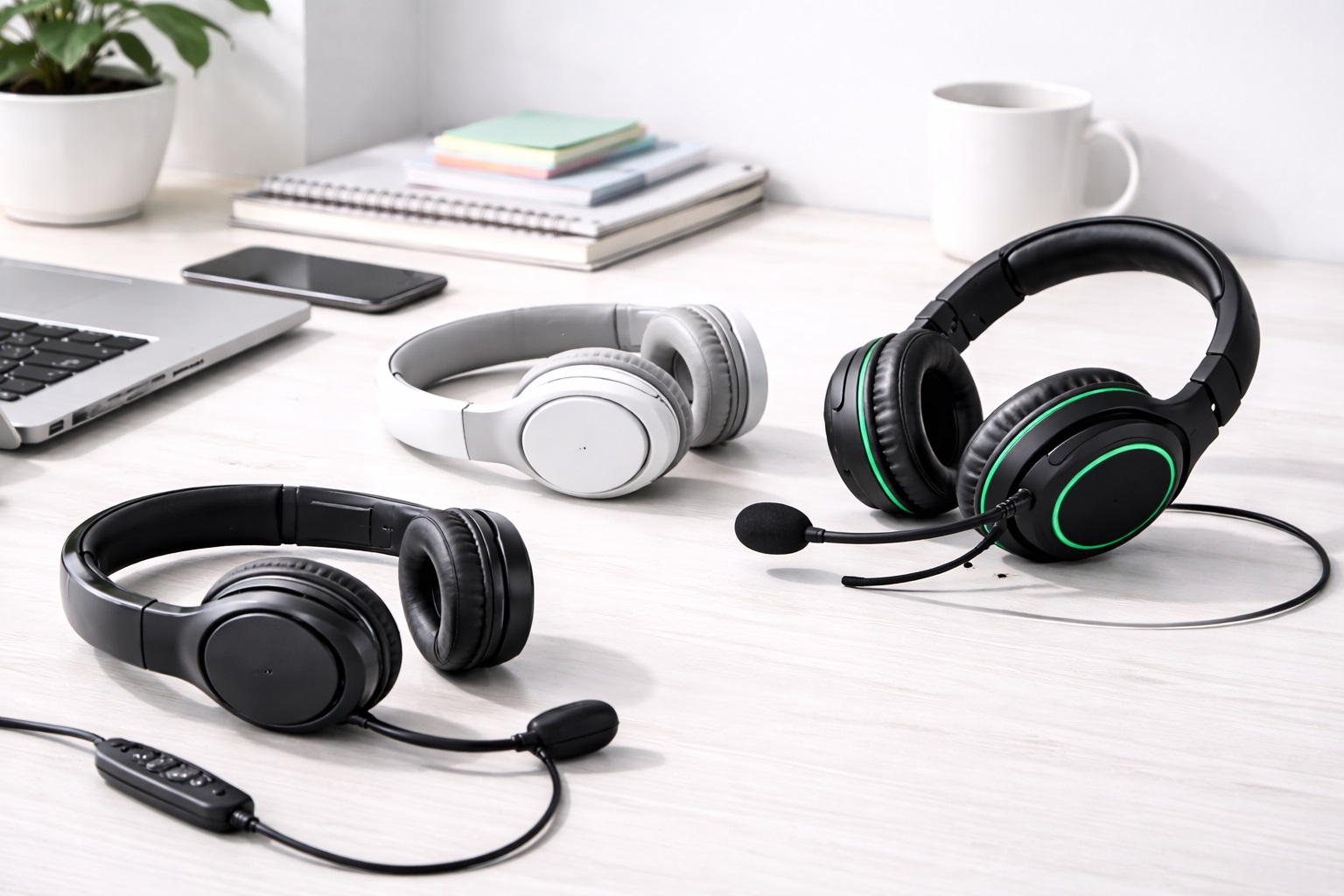
Removing the wireless radio, battery, and charging circuitry is an underrated way to cut weight, and it's also the reason wired headsets remain the least expensive path into the lightweight category. A well-designed slim wired headset uses a lighter single-sided or minimal-frame build, since there's no battery weight to balance on one side and no charging port housing to accommodate on the shell. The trade-off is the cable itself, which some users forget about within a day of use and others never fully adjust to, particularly if their desk setup requires frequent movement.
What separates a good slim wired option from a cheap one is usually the USB DAC quality and cable routing. A braided or reinforced cable at the strain-relief point avoids fraying under repeated flexing, and a competent onboard DAC can outperform a similarly priced Bluetooth chip, since no compression codec is involved in the signal path.
- Pros:
- No battery weight to carry, and one less internal component that can fail over time
- Typically the most affordable way to get a genuinely light headset with a real microphone
- Zero charging routine — plug in and it works every single time, with no dead-battery surprises
- USB DAC often delivers cleaner audio than a Bluetooth chip at the same price point
- Cons:
- Cable limits movement range around the desk compared to any wireless option
- Requires a free USB-A or USB-C port, which can be a real problem on newer slim laptops
- Cable strain points near the ear cup can wear out faster on cheaper builds
Best For: Desk-bound workers and budget-conscious buyers who want low weight and reliable audio without paying the premium that wireless components typically add to a headset's price.
Why We Recommend It: It proves that "lightweight" doesn't require a premium price tag. By removing the parts that add weight and cost simultaneously — the battery and the wireless radio — this option hits a genuinely low weight figure at a price point the other styles on this list rarely reach.
4. Ultra-Compact Sports Lightweight Headset – Best For Active Use
A smaller subset of the lightweight category is built specifically around movement — quick calls taken while walking around the house, standing desk use, or simply a preference for something that stays secure without a heavy clamp. These headsets typically use a lightweight behind-the-neck or slim over-the-ear hook design rather than a traditional over-the-head band, which removes the top-of-head pressure point entirely and shifts the small amount of weight that remains to the ears and the back of the neck instead.
Because the frame itself is minimal, manufacturers in this category tend to focus engineering effort on the microphone rather than the housing, since there's little shell to hide a bulky boom mechanism inside. The result is often a compact, fixed-position microphone with dedicated noise-canceling processing that performs surprisingly well for its size, even without the flexibility of a full boom arm.
- Pros:
- Removes top-of-head pressure entirely by shifting the design away from a traditional headband
- Extremely low total weight, often under 150 grams including the microphone
- Secure fit for walking around or standing desk use without constant readjustment
- Compact microphone housing still delivers solid noise-canceling performance for calls
- Cons:
- Little to no passive isolation, since there's no sealed ear cup involved
- Not ideal for long music or gaming sessions where full sound isolation matters
- Battery life tends to be shorter due to the very limited internal volume for cells
Best For: Users who take frequent calls while moving around, prefer nothing resting on top of the head, or want the lowest possible weight and don't need strong isolation from outside noise.
Why We Recommend It: It solves the weight problem from a completely different angle than the other entries on this list — by rethinking where the headset actually contacts your body rather than just trimming materials from a traditional design.
5. Premium Hybrid Lightweight Headset – Best For Gaming and Work Combined
The newest entrants in this category try to serve two audiences at once: people who game in the evening and take work calls during the day, without owning two separate headsets. These hybrid designs typically combine a suspension-style lightweight headband with a detachable boom microphone, letting the same headset switch between a clean listening-only look for media and a call-ready configuration for work, all without adding meaningful weight in either mode.
The detachable microphone approach matters more than it might seem. A fixed boom mic adds a small but constant amount of weight and bulk on one side of the headset at all times, even when you're not on a call. Making it removable means the headset can be genuinely lighter during listening-only use, while still offering full call capability when the microphone is reattached for a meeting.
- Pros:
- Detachable microphone keeps weight down during music, gaming, or media use
- Works equally well for gaming sessions and professional video calls
- Suspension-style headband keeps long gaming or work sessions comfortable
- Often includes both USB-C wired and wireless connection modes in one device
- Cons:
- Higher price point than single-purpose lightweight headsets
- Detachable microphone connector is another small part that can eventually wear or loosen
Best For: Users who need one headset to handle both gaming sessions and professional calls without switching devices or accepting a compromise in either use case.
Why We Recommend It: It's the most versatile option on this list for anyone whose day genuinely splits between work calls and personal gaming time, without forcing a heavier fixed-microphone design onto the hours when no microphone is needed at all.
Buying Guide: How to Choose the Best Lightweight Headset
Weight alone is not the whole story. The ten factors below cover what actually determines whether a light headset stays comfortable, sounds good, and holds up over months of daily use rather than looking good only on a spec sheet in a store listing.
1. Total Weight Versus Weight Distribution
A 260-gram headset with even weight distribution across a padded headband can feel lighter in practice than a 220-gram headset that concentrates pressure on a narrow strip at the top of the head. Look past the raw gram figure and check how the manufacturer describes the headband construction — a wider contact area, a suspension strap, or a soft top pad that spreads load across more surface area matters more for real-world comfort than the number on the box. Two headsets with an identical weight rating can feel completely different after three hours depending on how that weight is spread across your head.
2. Frame Material
Plastic frames are the lightest in raw terms but can feel less durable over time and sometimes creak under repeated adjustment or folding. Aluminum or magnesium alloy frames add a small amount of weight compared to plastic but often survive years of daily folding, adjusting, and travel far better, since metal resists the fatigue cracking that plastic hinges eventually develop. For a headset you expect to keep for several years of regular use, a metal-reinforced frame is usually worth the modest weight trade-off involved.
3. Ear Cup Size and Isolation Trade-off
Smaller ear cups weigh less but isolate less, both from outside noise coming in and from your own voice leaking out during calls taken in shared or open spaces. If you work in a quiet home office, the isolation loss barely matters day to day. If you work in an open-plan office, a busy household, or a coffee shop regularly, a slightly heavier over-ear design may genuinely serve you better than the lightest option available on the shelf, even if it means carrying a few extra grams on your head.
4. Clamping Force
Lightweight headsets often compensate for reduced padding volume with tighter clamping force to keep the ear cups seated correctly against the head. Too little clamping force and the headset slides during any movement; too much and it produces a dull headache within an hour of continuous wear. If possible, test the clamping force in person before buying, or check user reviews specifically for complaints about tightness rather than relying on the advertised weight figure alone to judge comfort.
5. Microphone Quality on Lighter Frames
Cutting weight sometimes means a shorter or thinner boom microphone arm, or a fixed rather than adjustable mic position, which can reduce voice pickup consistency compared to bulkier designs built without weight constraints. Check whether the microphone includes noise-canceling processing and whether it can be positioned close enough to your mouth for clear, consistent pickup — a lightweight frame should not come at the cost of being difficult for callers to understand on the other end of a video meeting.
6. Battery Life for Wireless Lightweight Models
Removing weight from a wireless headset sometimes means accepting a smaller internal battery to save mass. Check the rated battery life against your actual daily usage pattern — a headset with roughly 15 hours of battery life is fine for a single workday but may require mid-week charging if you also use it for gaming or personal calls in the evening on top of a full workday of meetings.
7. Cushion Material and Long-Term Comfort
Memory foam paired with a breathable fabric or perforated leatherette cover tends to stay comfortable the longest, while thin foam pads used purely to save weight can compress and lose their comfort within just a few months of daily use. Ask whether replacement cushions are sold separately for the model you're considering, since this is the component most likely to wear out first regardless of how light the headset started out on day one.
8. Fold-Flat or Collapsible Design
If the headset travels with you between locations, a fold-flat hinge or fully collapsible headband reduces both the effective weight you feel while carrying it and the storage footprint it takes up in a bag. Confirm the hinge mechanism feels solid rather than loose when you test it — a wobbly folding joint is one of the most commonly reported failure points on lightweight headsets that were built to hit an aggressive cost or weight target.
9. Wireless Range and Connection Stability
Lightweight wireless headsets sometimes use smaller antennas to save internal space and weight, which can shorten effective wireless range compared to bulkier gaming headsets with more room for radio hardware. If you regularly step away from your desk during calls or move between rooms, check the manufacturer's stated range figure and look for user reports of dropouts specifically at typical home or office distances before committing to a purchase.
10. Warranty and Build Confidence
A longer warranty period is a reasonable proxy for how confident a manufacturer is in a lightweight design holding up over time, since lighter frames are inherently more prone to stress and fatigue than heavier, more reinforced builds. Favor options that come with at least a one-year warranty, and check specifically whether the warranty covers the hinge and headband assembly — these are the parts most likely to be stressed by daily folding, adjusting, and repeated wear.
Frequently Asked Questions
1. What weight actually qualifies as a "lightweight" headset?
Most standard headsets sit somewhere between 250 and 350 grams. Anything under roughly 220 grams is generally considered lightweight for a full headset that includes a working microphone, while true featherweight designs can drop below 200 grams, and some ultra-compact styles fall under 150 grams, by using suspension straps, minimal frames, or behind-the-neck designs instead of a traditional headband.
2. Does a lighter headset always mean a worse microphone?
Not necessarily, and this is a common misconception. Weight savings typically come from the frame, headband, and ear cup materials rather than from the microphone module itself. That said, it's worth checking specifically, since some budget lightweight models genuinely do use shorter or lower-quality microphone components as one of several ways to hit an aggressive overall weight target.
3. Can a lightweight headset still deliver good bass and full sound quality?
Yes, though driver size and enclosure design matter far more than overall headset weight for how the audio actually sounds. Smaller, well-engineered drivers inside a properly sealed ear cup can deliver genuinely full sound in a light package — weight reduction and audio quality are largely independent engineering problems, not a direct one-for-one trade-off as many buyers assume.
4. Are on-ear or over-ear designs better for reducing overall weight?
On-ear designs are almost always lighter because they use less material overall in the cups, padding, and frame. Over-ear designs can be made light too, through better frame materials and suspension-style designs, but they typically won't match the very lowest weights that dedicated on-ear or behind-the-neck models are able to reach.
5. How long does a lightweight headset typically last with daily use?
With reasonable care, a well-built lightweight headset commonly lasts two to four years before hinge wear, cushion degradation, or battery capacity loss becomes noticeable enough to affect daily use. Metal-reinforced frames tend to outlast all-plastic builds under the same amount of daily folding, adjusting, and general handling over that time.
6. Is wireless or wired better for keeping overall weight down?
Wired headsets have a natural weight advantage since they carry no battery or wireless radio hardware, but the cable itself is a comfort and mobility trade-off that some users find more annoying in daily use than a few extra grams of headset weight would be. Choose based on whether cable movement or raw headset weight bothers you more during a typical day at your desk.
7. Do lightweight headsets fit smaller heads and glasses wearers comfortably?
Generally yes, and often better than heavier designs, since a lighter overall build typically requires less clamping force, which reduces pressure on the arms of glasses at the point where they meet the headband. Look for models with adjustable clamping force or additional cushioning specifically at the temple area if you wear glasses regularly throughout the day.
8. What's the actual difference between a lightweight headset and lightweight headphones?
A headset includes a microphone built specifically for two-way communication, while headphones are a listening-only device with no talk-back capability at all. If you need to speak during calls or use voice chat while gaming, a headset is the correct category to shop in regardless of how light a comparable pair of headphones might be.
9. Can I replace worn cushions on a lightweight headset to extend its useful life?
Many models sell replacement ear cushions separately, and swapping them is usually the single most effective way to extend the useful life of a lightweight headset, since the foam pads reliably wear out well before the internal electronics or drivers do. Check parts availability for your specific model before buying if long-term use over several years matters to you.
10. Is it worth paying more for a premium lightweight headset over a budget option?
It depends heavily on your daily usage hours. For occasional or light use, a budget lightweight option is often perfectly sufficient for the job. For six or more hours of daily wear, the better frame materials, suspension design, and cushion quality found in premium models tend to justify the extra cost through meaningfully improved comfort and longer overall lifespan.
Final Verdict
- Best Overall: Featherweight Wireless Over-Ear Headset — full isolation and call quality without the usual over-ear weight penalty.
- Best for Portability: Compact On-Ear Lightweight Headset — the lightest, most travel-friendly option for frequent movement between locations.
- Best Budget Pick: Slim-Profile Wired USB Headset — proof that low weight doesn't require a premium price tag.
- Best for Active Use: Ultra-Compact Sports Lightweight Headset — removes top-of-head pressure entirely for movement-heavy days.
- Best for Gaming and Work Combined: Premium Hybrid Lightweight Headset — one headset that adapts to both without adding weight.
The lightest headset on paper isn't automatically the most comfortable one for you — weight distribution, clamping force, and cushion quality all interact with your specific head shape and how many hours you actually wear the headset each day. Use the comparisons and buying factors above to match a lightweight headset to your real daily routine, rather than chasing the smallest number printed on a spec sheet.