Best Lightweight Office Chairs: Support That's Easy to Move
Not everyone has a room dedicated entirely to a desk. For a lot of people, the same corner of a living room, guest bedroom, or open-plan apartment has to serve several purposes across a single day — a workspace in the morning, a spot for a yoga mat in the evening, a place for a guest bed frame to fold out when family visits. In that kind of space, a heavy, hard-to-move office chair becomes its own kind of obstacle, regardless of how ergonomically sound it is sitting still.
The instinct in this situation is often to assume lightweight automatically means flimsy, and that trade-off used to be more accurate than it is now. A genuinely well-designed lightweight chair can still deliver real lumbar support, adjustable height, and a stable base — it just does it without the heavier steel frames and thick padding that make some office chairs a two-person job to reposition.
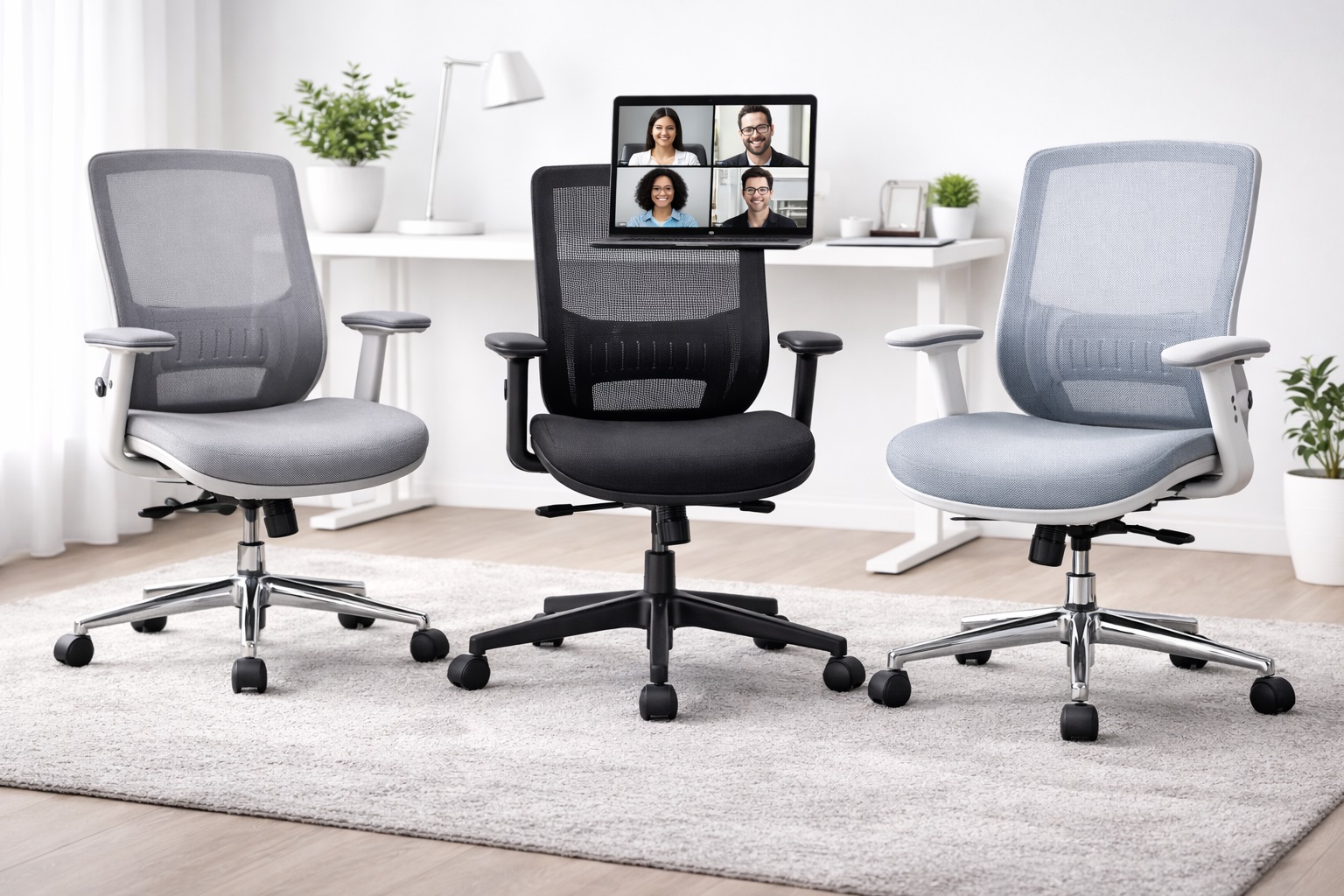
This guide compares three styles that each solve the “chair that moves easily” problem in a slightly different way: a breathable mesh design that balances weight and support well, a padded executive option for anyone who wants more cushion despite a multi-use room, and a genuinely minimal task chair built specifically around being repositioned often. None of these is automatically correct for every room — the right pick depends on how often you're actually moving the chair and what else that space needs to accommodate.
It's worth being upfront that “lightweight” and “cheap” aren't the same thing, and shouldn't be treated as synonyms while shopping. Some genuinely well-built chairs achieve a lower weight through smarter engineering rather than by cutting corners on the components that matter for back support. Reading the specifics of each option below will help you tell the difference rather than assuming every light chair is a compromise.
There's also a practical cost to getting this decision wrong that's worth naming directly. A heavy chair in a multi-use room tends to just stay wherever it ends up, quietly reshaping how the rest of the room gets used around it rather than being moved as originally intended. Over time, that often means the room's other functions — the yoga mat, the guest bed, the play space — get compromised instead, simply because moving the chair became enough of a hassle that nobody bothered. A genuinely lightweight chair avoids that slow erosion of a room's flexibility.
Top 3 Lightweight Office Chairs (Detailed Reviews)
Mesh Back Ergonomic Chair – Best Overall Balance of Weight and Support
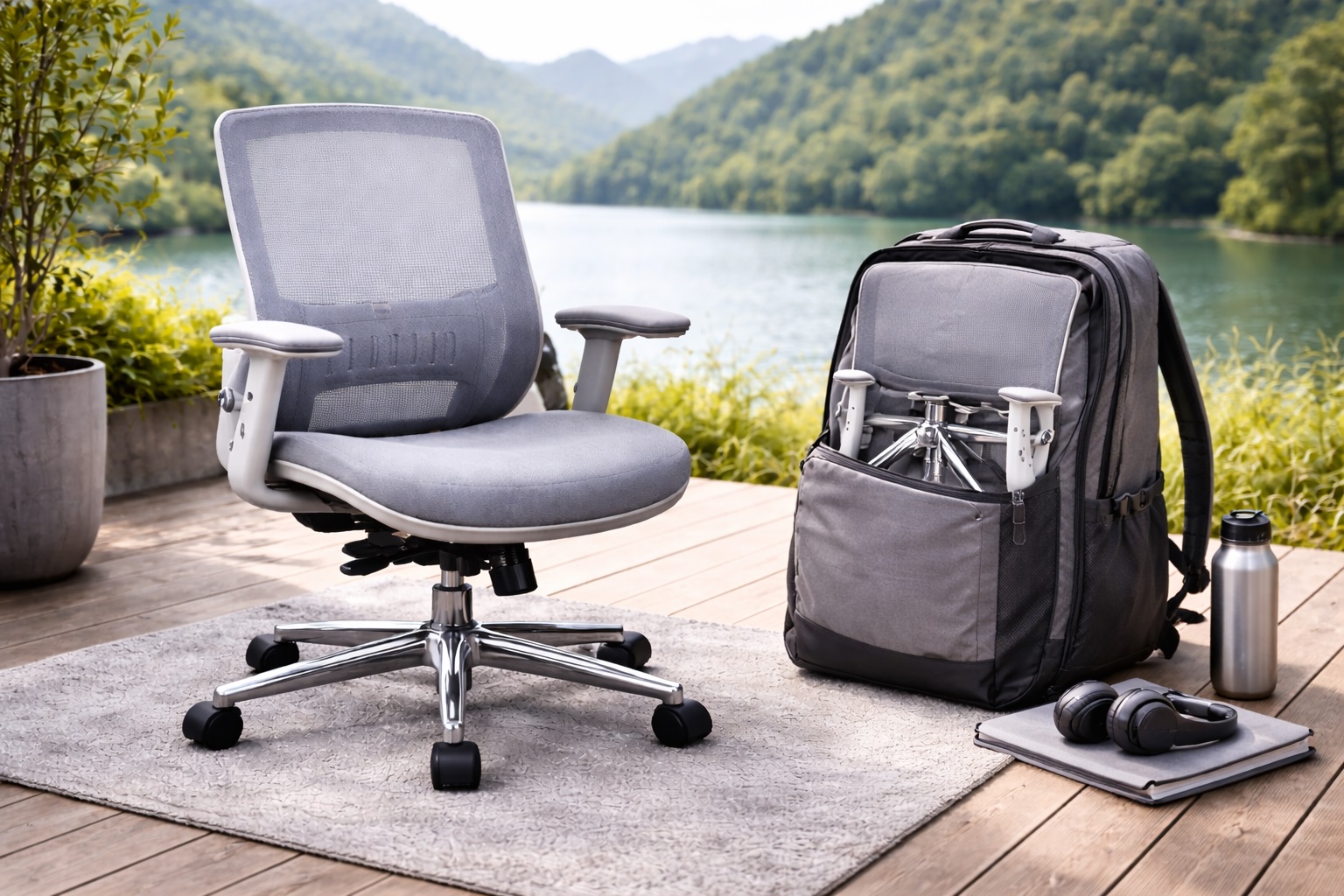
A mesh back chair tends to weigh noticeably less than an equivalent padded design, simply because the mesh material itself is lighter than the foam and fabric layering used in cushioned alternatives. That weight advantage comes without sacrificing the core ergonomic features that matter most — most mid-range mesh chairs still include adjustable lumbar support, armrests, and seat height, covering the essentials even in a genuinely light-framed design. That combination is exactly what makes this style the safest default for a multi-use room: you're not trading away back support to get a chair that's actually practical to lift and reposition several times a week.
The breathable mesh also happens to suit a multi-use room particularly well, since it doesn't retain heat or trap odors the way foam padding can when a chair spends part of its day being used for something other than sitting at a desk — pushed against a wall, used as a temporary clothes rack, or otherwise treated less carefully than furniture in a single-purpose office.
Casters on most mesh chairs roll smoothly across both carpet and hard flooring, which matters if the room switches between uses that call for the chair to be tucked away in different spots throughout the day. The relatively slim profile also makes it easier to angle through a doorway or around other furniture than a bulkier executive design.
- Pros:
- Genuinely lighter than most padded alternatives
- Still includes real lumbar, armrest, and height adjustment
- Breathable material suits a multi-use, less climate-controlled room
- Slim profile is easier to reposition around other furniture
- Cons:
- Mesh quality varies significantly between price points
- Some budget mesh models feel less plush than a padded chair
Best For: Anyone whose desk shares a room with another daily-use function and needs a chair that's genuinely easy to reposition without sacrificing back support.
Why We Recommend It: This style delivers the best overall balance between being light enough to move easily and supportive enough to actually protect your posture during real work sessions.
It's also worth noting that this style tends to age well visually in a shared space, since the neutral, functional look of a mesh chair blends into a multi-use room more easily than a chair with a stronger, more office-specific aesthetic. That matters in a living room or bedroom in a way it wouldn't in a dedicated office where appearance is less of a shared concern.
Executive Padded Chair – Best for Cushioned Comfort in a Shared Room
An executive-style padded chair is heavier than the other two options here, but compact and armless variants trim a meaningful amount of that extra weight while keeping the plush, cushioned seat and taller backrest that make this style appealing for anyone who prefers a softer sit over a firmer mesh surface.
For a multi-use room, the visual presence of an executive chair can actually work in its favor — a well-chosen padded chair can double as a reasonably comfortable reading or guest seat when it's not being used at the desk, which matters in a room that already serves more than one function throughout the day.
The trade-off is that this style takes more effort to reposition than the other two, so it suits a room where the chair moves occasionally rather than multiple times a day. If your space genuinely needs the chair relocated constantly, the added weight here becomes a real daily annoyance rather than an occasional inconvenience, and that daily friction tends to compound over weeks in a way that's easy to underestimate the first time you're standing in a showroom rather than actually living with the chair.
- Pros:
- Plush cushioned seat doubles as comfortable occasional seating
- Taller back supports the neck and upper back
- Compact or armless variants reduce weight and footprint
- Suits a room that also needs occasional extra seating
- Cons:
- Heavier than mesh or basic task chair alternatives
- Less practical if the chair needs moving multiple times daily
Best For: A shared room where the chair moves occasionally rather than constantly, and where extra comfortable seating is a genuine bonus.
Why We Recommend It: For a room that only needs the chair repositioned now and then, the added comfort and dual-purpose seating value of this style can outweigh its extra weight.
This option also suits households where more than one person shares the room, since a comfortable, presentable chair reads less like dedicated office equipment and more like a normal piece of living-room furniture that happens to also work well at a desk.
Compact Task Chair – Best for Rooms That Need the Chair Moved Constantly
A compact task chair, stripped of executive styling and heavy padding, is the lightest of the three options here and the easiest to reposition multiple times in a single day. Built around the core adjustments that matter — lumbar support, seat height, and armrests — without the added bulk of thicker cushioning or a taller frame, this style is genuinely built for frequent movement rather than adapted to it.
For a room that serves several different functions across a day — a home gym corner in the morning, a workspace by midday, a spot for a child's activity in the evening — a chair this light and this simple to slide, lift, or tuck away removes friction that a bulkier design would add to every single transition.
The simpler mechanical design also means fewer components to work loose or wear out from being moved constantly, which matters for a chair that's handled more frequently than one that stays parked at a single desk indefinitely. Fewer moving parts also generally means fewer things to eventually squeak or wobble, which is a small but real advantage in a shared room where a noisy chair is more noticeable than it would be behind a closed office door.
- Pros:
- Lightest and most maneuverable of the three options
- Still covers the essential lumbar and height adjustments
- Compact size tucks away easily in a multi-use room
- Fewer mechanical parts to loosen from frequent handling
- Cons:
- Less visually polished than executive alternatives
- May lack a headrest or advanced tilt features
Best For: Rooms that genuinely need the chair repositioned several times a day to accommodate other uses of the same space.
Why We Recommend It: When the chair has to move constantly to make way for other uses of a room, minimizing weight and bulk matters more than any other single factor, and this style is built specifically around that reality.
It's also the style most likely to actually get moved consistently rather than left in place out of inconvenience. A chair this easy to lift and reposition removes the small daily friction that otherwise leads to a heavier chair simply staying put, quietly limiting what else the room can be used for throughout the day.
Buying Guide: How to Choose the Best Lightweight Office Chair
Weigh these factors against how often you're actually moving the chair and what else your room needs to accommodate, rather than judging purely on weight alone.
1. Actual Chair Weight
Check the listed weight in pounds or kilograms rather than relying on marketing language like “lightweight,” which isn't a standardized term across brands. A meaningful difference — 10 pounds lighter, for instance — makes a genuine daily difference if you're repositioning the chair often, while a marginal difference may not be worth trading away other features for. It's also worth lifting or at least reading detailed weight-distribution notes where available, since two chairs listed at a similar overall weight can still feel quite different to lift depending on how that weight is distributed across the base versus the seat and back.
2. Lumbar Support Without the Bulk
A lighter chair doesn't have to mean sacrificing lumbar support. Look specifically for height-adjustable lumbar support even in compact, minimal designs, since this feature affects daily comfort more than weight savings do, and good engineering can deliver both at once.
3. Caster Quality for Frequent Movement
A chair that moves often needs casters built for repeated rolling rather than occasional use. Look for dual-wheel casters rated for daily movement, and check whether they're suited to your specific flooring, since a caster mismatched to your floor type wears out faster under frequent use.
4. Seat Height Range
Correct seat height allows your feet to rest flat on the floor with thighs roughly parallel to the ground. Most chairs adjust between 16 and 21 inches. If the chair moves between different desks or surfaces of varying height in your multi-use room, a wider adjustment range is worth prioritizing.
5. Stability of a Lighter Frame
A lighter chair should still feel stable when you sit down or lean back. Check reviews specifically for stability complaints, since some ultra-light designs achieve their weight savings by thinning the base in ways that can feel wobbly, particularly for taller or heavier users.
6. Footprint When Tucked Away
If the chair needs to be tucked under a desk or against a wall between uses, measure how compactly it actually folds or slides into that space. Some lightweight chairs are narrow when in use but don't tuck away as neatly as their weight alone would suggest.
7. Dual-Purpose Seating Potential
In a multi-use room, consider whether the chair might double as occasional seating for guests or another household member. A padded executive style handles this better than a minimal task chair, which is worth weighing if your room regularly hosts more than one activity involving seating.
8. Assembly Simplicity
Lighter chairs are often simpler to assemble as well, typically requiring 20 to 30 minutes with basic included tools. This matters if you anticipate needing to disassemble and reassemble the chair for storage or a move, since a simpler design is easier to handle repeatedly.
9. Weight Capacity Despite a Lighter Frame
A lighter chair frame doesn't necessarily mean a lower weight capacity, but it's worth checking specifically rather than assuming. Most standard chairs, light or not, support 250 to 300 pounds, and confirming this against your own needs avoids an uncomfortable surprise.
10. Noise When Rolling
A chair moved frequently across hard flooring can become a noise source in a shared living space, particularly if other household members are nearby during the day. Rubber-coated casters roll more quietly than harder plastic wheels, which is worth checking if noise is a genuine consideration in your household.
11. Durability Under Frequent Handling
A chair moved several times a day experiences more mechanical stress at its joints and mechanisms than one that stays parked at a single desk. Look for reviews that specifically mention durability under frequent repositioning rather than only initial comfort impressions.
12. Price Relative to Feature Trade-Offs
Lightweight chairs span a wide price range, and a lower price sometimes reflects genuinely reduced ergonomic features rather than clever engineering. Compare the specific adjustments included — lumbar, height, armrests — against price rather than assuming lighter automatically means cheaper or lower quality.
13. Material Finish and Visual Blend in Shared Spaces
A chair sitting in a living room or bedroom is on display in a way an office chair tucked into a dedicated workspace never is, so it's worth considering how the material and color actually look against the rest of the room rather than treating appearance as an afterthought. Neutral mesh tones and simple upholstery colors tend to blend into a shared space more easily than a chair with an overtly office-branded look, which matters more here than it would in a room used for nothing but work.
14. Cleaning and Spot Maintenance for Multi-Use Rooms
A chair that spends part of its time in a living room, playroom, or home gym corner is exposed to more variety of spills, dust, and general wear than one confined to a single-purpose office. Mesh surfaces generally wipe down easily, while fabric upholstery benefits from a removable or washable cushion cover, particularly in a household with kids or pets sharing the same multi-use space throughout the day.
15. Storage Options When the Chair Isn't in Use
Some lightweight chairs are designed to be tucked fully under a desk or folded flat against a wall when not needed, which matters more in a multi-use room than in a dedicated office where the chair can simply stay in place indefinitely. If your room needs to fully reset between uses — say, converting from workspace to guest space — checking how compactly the chair actually stores away is worth as much attention as its weight while in use.
As a general rule, read a handful of specific listings rather than assuming every chair within a category performs identically simply because the general description sounds similar. Two mesh chairs advertised as lightweight can still differ meaningfully in caster quality, mesh tension, and long-term stability, and those differences tend to matter more the more frequently the chair actually gets moved.
Frequently Asked Questions
1. Does a lightweight office chair sacrifice ergonomic support?
Not necessarily. Many lightweight chairs still include adjustable lumbar support, seat height, and armrests — the weight savings typically come from thinner materials and smarter engineering rather than removing the features that matter most for posture and comfort.
2. What's the easiest type of office chair to move between rooms?
A compact task chair with a simple mechanical design and smooth-rolling casters is generally the easiest to reposition frequently, since it combines low weight with a narrow footprint that maneuvers easily around other furniture.
3. Will a lightweight chair feel less stable than a heavier one?
It depends on the specific design rather than weight alone. Some lightweight chairs achieve their weight savings through smart engineering and remain quite stable, while others cut corners on the base that can make them feel wobbly. Checking stability-specific reviews helps distinguish between the two.
4. Can a lightweight chair double as occasional seating for guests?
A padded executive-style lightweight chair generally works better for this than a minimal task chair, since it offers more visual presence and cushioned comfort suitable for someone sitting briefly rather than working at a desk.
5. Do lightweight chairs wear out faster than heavier ones?
Not inherently, though a chair moved frequently does experience more mechanical stress regardless of its weight. Choosing a design specifically built for frequent handling, with simpler mechanisms and sturdy casters, helps offset this compared to a heavier chair not designed with movement in mind.
6. Is the most expensive lightweight chair always the best?
Not necessarily. Higher price sometimes reflects premium materials or styling rather than the specific features that matter for a multi-use room, like caster quality and stability. Focus on the features relevant to your actual use case over general price or brand reputation.
7. How long should a lightweight office chair last with frequent movement?
A well-built lightweight chair typically lasts several years even with regular repositioning, though casters and the gas lift mechanism tend to show wear faster under frequent handling than they would in a stationary setup.
8. Can I return a lightweight chair if it doesn't suit my multi-use room?
Most retailers offer a 15 to 30 day return window. Test the chair through a realistic week of actual repositioning before that window closes, since how a chair handles occasional movement in a showroom differs from how it holds up under your specific daily routine.
9. What's genuinely the best lightweight chair for a shared, multi-use room?
It depends on how often the chair actually needs to move and what else the room needs to accommodate. Occasional repositioning favors the mesh or executive options above, while constant movement favors the compact task chair specifically built around that use case.
10. Does brand matter when choosing a lightweight office chair?
Established brands generally offer more consistent quality control across their lighter product lines, which matters since weight savings can sometimes come at the cost of build quality if not engineered carefully. Reading verified reviews that specifically address stability and durability is worth the extra effort.
11. Are folding office chairs a good alternative to a standard lightweight chair?
Folding chairs can work well for storage-constrained rooms, though they typically sacrifice some ergonomic adjustability compared to a standard lightweight chair with a full range of features. Consider a folding design only if storage space, not just movement, is a genuine constraint in your room.
12. How do I know if my current chair is too heavy for my room's needs?
If you find yourself avoiding repositioning the chair because of its weight, or if moving it regularly causes strain, that's a reasonable sign a lighter alternative would better suit your actual daily routine and room requirements.
13. Can a lightweight chair handle daily use as reliably as a heavier one?
Yes, provided it's a genuinely well-engineered design rather than one that cut corners purely to hit a lower weight figure. Checking reviews specifically for long-term daily use, not just initial impressions, is the best way to confirm this before buying.
14. Should I choose based on weight alone if I'm unsure how often the chair will move?
Not entirely — weight matters, but confirm the chair still includes real lumbar support and height adjustment regardless of how light it is. A chair that's easy to move but uncomfortable to sit in for long stretches isn't actually solving the underlying problem.
15. Can I use a lightweight office chair outdoors on a patio occasionally?
Most lightweight indoor chairs aren't built to handle outdoor humidity or direct sun exposure over time, even for occasional use, since the mesh, foam, and metal components can degrade faster outdoors than they would indoors. If you want a chair that moves between an indoor desk and an occasional outdoor spot, look specifically for a design rated for that kind of mixed use rather than assuming any lightweight chair handles it equally well.
16. Is it worth buying two lightweight chairs instead of one heavier one?
For some multi-use households, having a second lightweight chair permanently stationed in another common area can be more practical than repeatedly hauling one chair back and forth between rooms. This is worth considering if the same room genuinely needs seating in more than one spot throughout the day rather than just needing one chair moved from place to place.
17. How do I protect flooring when moving a lightweight chair frequently?
Choosing casters matched to your specific flooring type is the single biggest factor here, since a caster mismatched to hardwood or tile can leave marks over time with repeated rolling. A furniture pad or small area rug under the chair's typical parking spot can also reduce wear on the floor finish in a room where the chair returns to roughly the same spot after each move.
Final Verdict
- Best Overall Balance of Weight and Support: Mesh Back Ergonomic Chair – genuine ergonomic function without unnecessary bulk.
- Best for Cushioned Comfort in a Shared Room: Executive Padded Chair – comfort and dual-purpose seating for occasional repositioning.
- Best for Rooms That Need the Chair Moved Constantly: Compact Task Chair – built specifically around frequent, easy repositioning.
A multi-use room doesn't have to mean choosing between real ergonomic support and a chair that's actually practical to live with day to day. The three options above each solve that trade-off differently, depending on how often the chair genuinely needs to move and what else your space is being asked to do throughout the day.
Think honestly about your actual routine before choosing — how many times a day the chair changes position, and whether it needs to double as anything else in the room. Matching the chair to that real pattern, rather than to how the room looks in an idealized version of itself, will make the accessory feel like a natural part of your space instead of something you're constantly working around.
If you're still unsure how often the chair will actually need to move, the mesh option remains the safest general-purpose choice. It balances weight and support well enough to handle both occasional and frequent repositioning reasonably comfortably, giving you room to learn your actual pattern of use before committing to a more specialized option on either end of the spectrum.