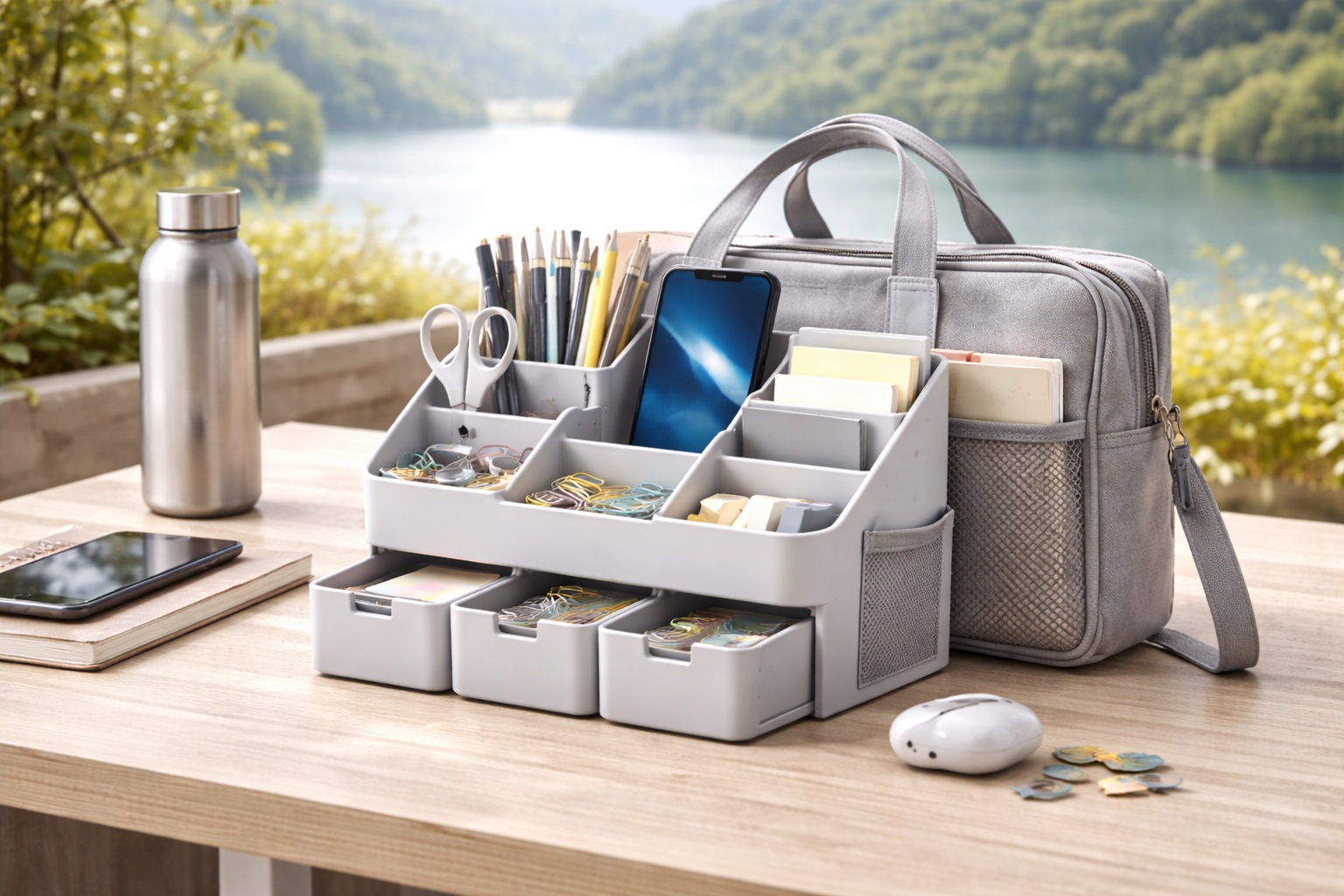
Best Lightweight Desk Organizers for Portable Setups
A desk organizer sounds like a simple purchase until you actually start comparing models. Weight, material, compartment layout, and how the piece behaves once you start moving it around all turn out to matter more than the product photos suggest. For anyone who shifts their workstation between rooms, folds down a home office at the end of the day, or simply likes the option of rearranging their setup without wrestling a heavy tray across the desk, lightweight construction becomes the deciding factor rather than an afterthought.
The organizers covered in this guide were chosen because they represent genuinely different approaches to the same problem: keeping pens, cables, documents, and small accessories contained without adding bulk or weight to a desk that may need to be cleared or reconfigured regularly. One leans on natural material and a warm look, one uses open metal construction for a modern feel, and one is built specifically for people who still handle a meaningful amount of paper. None of them is universally "best" — the right pick depends on how you actually use your desk from day to day.
Throughout this guide, we focus on the practical differences that affect daily use: how each organizer holds up to being picked up and moved, how much visible clutter it actually removes, and where each design starts to show its limits. We also walk through the buying factors that matter most before you commit — compartment sizing, base stability, cleaning requirements, and footprint — so you can match the organizer to your workspace instead of guessing based on a product photo.
If you split time between a home office and a shared space, work from a small apartment desk, or simply prefer furniture you can rearrange without help, the recommendations below are built around exactly that kind of flexible, low-weight setup.
It's also worth acknowledging what a lightweight organizer won't do. It won't replace a proper filing cabinet if you handle large volumes of paperwork, and it won't provide the drawer-level security some office setups require for sensitive documents. What it will do is keep the visible surface of a desk clear and functional without demanding a permanent commitment to a single layout — a meaningful advantage for renters, shared workspaces, and anyone whose desk setup changes with the seasons or the job.
Top 3 (Detailed Reviews)
1. Bamboo Desktop Organizer – Best For Natural Aesthetic
Bamboo desk organizers are built from a fast-growing, renewable material that gives them a warm, natural look most plastic or metal organizers can't match. The typical layout includes a few pen slots, a small phone stand cut into the frame, and a shallow open tray for whatever loose items accumulate during the week — sticky notes, paper clips, a spare charger. Because bamboo is a hard, dense wood-like material, the surface resists the small scuffs and scratches that show up quickly on cheaper plastic organizers within the first few months of daily use. It also tends to look more at home on a desk shared with other furniture, since the grain and finish read as a piece of furniture rather than an office supply. The tradeoff is that bamboo, while still light enough to reposition easily, carries more heft than a molded plastic or wire equivalent, and it isn't forgiving of spilled coffee or water left sitting on the surface. Over months of use, a well-sealed bamboo finish tends to age gracefully, taking on a slightly deeper tone rather than looking worn out the way scuffed plastic does. Assembly, where required, is usually limited to slotting a few pre-cut panels together rather than dealing with loose screws or brackets.
- Pros:
- Natural, sustainable material with a warm, furniture-like appearance
- More scratch-resistant than typical plastic organizers
- Blends into home and professional environments without looking like office equipment
- Compartments sized for the items people actually keep on a desk
- Cons:
- Heavier than plastic or wire alternatives, though still easy to carry
- Vulnerable to water damage if liquid sits directly on the exposed wood
Best For: Home office workers who want their desk to look intentional rather than purely functional, and who are willing to trade a little extra weight for a material that ages better than plastic.
Why We Recommend It: Bamboo strikes a balance that's hard to find elsewhere — it's still light enough to pick up and move without effort, but it looks and wears like a real piece of furniture rather than a disposable accessory. For a home workspace where appearance matters as much as function, it's a sensible starting point.
2. Mesh Wire Organizer – Best For Visibility and Modern Workspaces
Metal mesh organizers take the opposite approach from bamboo, favoring an open, industrial look that suits minimal or modern desk setups. Because the structure is open wire rather than a solid frame, you can see everything stored inside at a glance — no digging through a closed compartment to find a specific pen or cable. Most models are built with a few different compartment sizes and a base with enough weight or width to keep the whole thing from tipping when you reach for something. The steel construction holds up well over time and doesn't develop the small stress cracks that lower-quality plastic organizers eventually show. Cleaning is straightforward since there's no enclosed cavity to wipe out, though the open design also means dust settles on stored items rather than staying hidden behind a wall or lid. The weighted base also tends to double as a subtle anchor point, keeping the whole unit in place even when you're reaching in and out of it frequently throughout the day. Because the wire gauge is typically on the thicker side, these organizers rarely bend or deform even under a fairly full load of pens, cables, and small tools.
- Pros:
- Visible storage makes it easy to find items without searching
- Durable steel construction holds up to daily handling
- Modern, minimal look suits contemporary desk setups
- Simple open shape makes cleaning quick
- Cons:
- Less warm in appearance than natural-material alternatives
- Open mesh offers no dust protection for anything stored inside
Best For: Remote workers and students who want a clean, modern desk and don't mind trading a bit of dust protection for the convenience of seeing everything at once.
Why We Recommend It: The open mesh design solves a specific frustration — rummaging through a closed organizer for a small item — better than almost any other style. Combined with steel's durability, it's a practical option for anyone who prioritizes function and a clean look over a softer aesthetic.
3. Vertical File Organizer with Storage – Best For Heavy Paper Use
This style combines a vertical file holder with a smaller desktop organizer section, aimed squarely at people who still handle a meaningful volume of physical paperwork alongside their digital tools. The file section keeps folders and loose documents standing upright and visible instead of stacked flat where they get buried and forgotten, while the attached compartments handle pens, a phone, and small accessories. Because it does two jobs in one footprint, it's larger than a basic organizer, but it still ends up taking less total desk space than a separate file holder and a separate pen tray would combine to use. For anyone who's tried to manage paper with sticky notes and loose stacks, the difference in visible clutter after switching to a dedicated vertical section is immediately noticeable. Most versions use slanted slots rather than flat-bottomed ones, which keeps folders from sliding together into an unreadable block and makes it easier to flip through them quickly when searching for a specific document. The combined design also tends to sit flush against a wall or monitor riser, keeping the footprint efficient despite the added function.
- Pros:
- Handles physical documents and small accessories in one unit
- Keeps papers upright and visible rather than buried in a flat stack
- Meaningfully reduces visible desk clutter for paper-heavy workflows
- More space-efficient than buying a separate file holder and organizer
- Cons:
- Larger footprint than a basic desk organizer
- More organizer than necessary for people who work almost entirely digitally
Best For: Professionals, students, and home office workers who still manage real paperwork — mail, printed documents, forms — alongside their laptop or desktop setup.
Why We Recommend It: For anyone whose desk clutter is mostly paper rather than pens and cables, this is the one organizer on this list built specifically to solve that problem. Combining file storage with general organization in a single piece keeps the desk cleaner than trying to manage both separately.
Buying Guide: How to Choose the Best Lightweight Desk Organizer
Use the factors below to match your purchase to how you actually use your desk, rather than defaulting to whichever option has the most reviews.
1. Compartment Size and Configuration
Start by thinking through what you actually put on your desk during a normal week. A single open tray suits people who mostly store a notebook or tablet. Small divided sections work better for pens, USB drives, and other tiny items that get lost in a large compartment. If you use a phone stand or deal with cables daily, look for an organizer with a section built for that specific purpose rather than trying to make a general tray work. It also helps to think about seasonal shifts in what sits on your desk — a student's needs during exam season can look very different from the rest of the term.
2. Material and Durability
Bamboo resists scratching and light moisture better than most budget alternatives, while metal wire is close to indestructible under normal desk use. Plastic organizers vary enormously in quality — some are genuinely rigid and long-lasting, while others flex and eventually crack under repeated handling. Don't choose based on appearance alone; check what the organizer is actually made from before assuming it'll hold up. Reading verified reviews that mention how a product holds up after six months or a year is usually more useful than the initial unboxing photos most listings lead with.
3. Weight for Portability
Since the whole point of a lightweight organizer is being able to move it easily, pay attention to actual weight rather than just marketing language like "lightweight" or "portable." A bamboo or solid plastic organizer in the one-to-two-pound range is easy to relocate one-handed; anything heavier starts to feel like furniture you'd rather leave in place. Manufacturer listings don't always state a precise weight, so cross-checking a couple of retailer pages or Q&A sections can save you from a surprise once the box arrives.
4. Non-Slip Base
A base without grip tends to slide across a desk every time you pull a pen or piece of paper out, which gets irritating fast. Rubber feet or a textured base coating solve this reliably. It's worth checking reviews specifically for complaints about sliding, since this is the kind of small annoyance that shows up consistently when a design lacks it. A slipping organizer is also more likely to tip when a compartment is loaded unevenly, so base grip and stability tend to go hand in hand.
5. Height and Sightlines
Taller organizers hold more but can block your view of a monitor or window behind the desk. Lower, horizontal designs keep the desk feeling open. Think about your monitor height and what you actually want visible above the organizer before choosing between a tall or low-profile design. It's a small detail that's easy to overlook in a product photo but obvious the moment the organizer is sitting on your actual desk.
6. Cable Management Features
Some organizers include routing channels or clip points specifically for cables, which noticeably cuts down on visible cable mess. If tangled charging cables are a recurring annoyance on your desk, prioritize an organizer that actually addresses this rather than assuming a general tray will help. Even a couple of simple clip points near the base can make the difference between a desk that looks tidy and one where cables snake across every visible surface.
7. Cleaning and Maintenance
Every desk organizer collects dust eventually, regardless of material. Closed-back designs trap less visible dust but are harder to wipe out thoroughly. Open wire or mesh designs show dust more obviously but are quicker to clean when you get around to it. Neither approach eliminates maintenance — they just change how often you'll notice it needs doing.
8. Desktop Footprint
Measure your actual available desk space before buying. An organizer that provides excellent storage but eats most of your usable surface defeats the purpose. Vertical designs generally maximize storage per square inch of desk space, which makes them a better fit for smaller desks than wide horizontal trays. A quick tape-measure check before ordering saves the hassle of returning something that technically fits but leaves no room to actually work.
9. Modular or Expandable Design
Some organizer systems are built from stackable pieces you can add to over time, which is useful if your storage needs tend to shift. If your setup is stable and predictable, a single-piece organizer is simpler. If you regularly reconfigure your desk, a modular system gives you more flexibility to adapt. Buying one core piece first and adding modules later also spreads out the cost, which can be a more comfortable way to build up a full setup than committing to a large system up front.
10. Style Consistency with Your Workspace
An organizer that clashes visually with the rest of your desk still does its job, but it creates a small disconnect every time you look at it. Matching material and finish to your monitor stand, keyboard, or desk surface goes a long way toward making the whole setup feel intentional rather than assembled piecemeal. This matters more in shared or visible workspaces, like a home office that doubles as a guest room, than in a closed-door setup nobody else sees.
11. Ease of Relocation
Since portability is the whole point of choosing a lightweight organizer, think about how it actually behaves when you pick it up loaded with items. Open trays can spill loose items if tilted during a move; enclosed compartments hold contents in place better when relocating the organizer across a room or between desks. If you move the organizer often, a design with a molded carry point or recessed handle makes a noticeable difference over one with only flat edges to grip.
12. Price Relative to Longevity
Basic plastic organizers are inexpensive but tend to need replacing sooner. Bamboo and metal cost more upfront but typically last significantly longer under regular use. It's worth thinking in terms of cost per year of use rather than just the sticker price — a more durable organizer replaced less often can end up costing less over time. Factor in shipping costs for replacements too, since a cheap organizer that needs reordering every year isn't necessarily the bargain it first appears to be.
Frequently Asked Questions
1. What size lightweight desk organizer do I actually need?
Measure your available desk space first. A good general rule is that the organizer shouldn't take up more than about 20–25% of your total desk width. On a 40-inch desk, that puts you in the 8–10 inch range. Prioritize the specific items you want within reach and pick a compartment layout built around those. It's easy to size up just because a larger organizer looks more impressive in photos, so measure first and resist that temptation.
2. How do I stop a lightweight organizer from picking up odors over time?
Bamboo and metal resist odor buildup better than plastic. Regular emptying and a wipe-down with a slightly damp cloth prevents most buildup before it starts. Avoid storing food in any organizer compartment, since that's the most common source of lingering smell. If you keep small electronics in an enclosed section, make sure there's enough ventilation to avoid a warm plastic smell developing. A light sprinkle of baking soda left in an empty compartment overnight can also help neutralize odors that have already settled in.
3. Is a lightweight organizer with cable management actually worth paying more for?
If tangled charging cables genuinely bother you, yes. Dedicated routing channels or clip points cut down on visible mess noticeably. But if your cable situation is minor, a separate cheap cable clip might solve the problem for less than upgrading to a premium organizer purely for that one feature. Weigh the cost difference against how much the clutter actually bothers you day to day before deciding it's a must-have feature.
4. Can I assemble a modular lightweight organizer system without tools?
Yes, on most designs. Individual pieces typically stack or slot together without any hardware. The main thing worth doing ahead of time is planning your final layout, since modular systems go together more smoothly when you already know exactly which pieces you need rather than figuring it out as you go. Sketching the arrangement on paper first, even roughly, avoids the common mistake of buying pieces that don't actually combine into a workable footprint.
5. How often should I actually clean a desk organizer?
Once a month is enough to prevent significant buildup for most people. Empty every compartment, wipe all surfaces with a slightly damp cloth, and let everything dry fully before putting items back. High-touch spots like pen holders benefit from a quicker wipe weekly, and an annual deeper clean keeps the whole thing in good shape long-term. Setting a recurring reminder on your phone is a simple way to keep this from slipping to the bottom of the to-do list.
6. Is the most expensive lightweight organizer always the better choice?
Not necessarily. A higher price usually buys more features or a nicer material, but plenty of mid-range organizers cover everyday needs just as well. It's worth focusing on the specific features that matter for your desk rather than assuming price alone tells you what you need to know. In this category especially, the jump from budget to mid-range tends to buy real improvements, while the jump from mid-range to premium often buys mostly aesthetics.
7. How long should a well-made lightweight desk organizer last?
With reasonable care, a quality organizer from a reputable brand typically lasts somewhere between two and five years, sometimes longer for bamboo or metal designs. Checking the warranty terms before buying is a decent shortcut for gauging how confident the manufacturer is in their own build quality.
8. Can I return a lightweight organizer if it doesn't work out for my desk?
Most retailers give you somewhere between 15 and 30 days to return an item that doesn't suit your needs. It's worth holding onto the original packaging during that evaluation window just in case the size, weight, or layout doesn't end up working the way you expected. Photographing the item and packaging as soon as it arrives also makes any return process go more smoothly if the retailer requires proof of condition.
9. What's the single best lightweight organizer for someone who moves their desk setup often?
There isn't one universal answer — it depends on what you're storing and how you move the piece. Someone repositioning a mostly-digital setup benefits most from something like the mesh organizer, while someone hauling paper documents around benefits more from the vertical file design. Match the pick to your actual storage needs rather than a general "best" label, and don't be afraid to start with a smaller, simpler organizer and upgrade later once you know exactly what your routine actually requires.
10. Does brand reputation matter much for something as simple as a desk organizer?
It matters more than people expect. Established brands tend to have more consistent quality control and easier warranty support if something goes wrong. That said, smaller or newer brands sometimes offer genuinely good value — it's worth reading verified reviews carefully rather than assuming a bigger name always wins.
11. Will a lightweight organizer hold up if I travel with it between a home office and a coworking space?
Enclosed, compact organizers travel better than open trays, which can spill loose items in transit. If you're regularly moving the organizer between locations rather than just repositioning it on the same desk, prioritize a design with contained compartments and check that nothing extends far enough to catch on a bag or car seat. A soft cloth bag or a spare tote reserved just for the organizer also protects it from scratches during transport and keeps loose items from shifting around during the ride.
12. Are lightweight desk organizers sturdy enough for daily use, or do they feel flimsy?
This depends heavily on material rather than weight alone. Bamboo and steel mesh options in this guide are both genuinely light and structurally solid — lightweight doesn't have to mean flimsy. The organizers to be cautious of are thin, low-quality plastic designs that cut weight by cutting material thickness rather than by using a naturally light material well. A quick way to spot the difference before buying is checking whether reviewers mention flexing, creaking, or cracking under normal use — those complaints tend to cluster around the thin plastic designs rather than the bamboo or metal options.
Final Verdict
- Best Overall: Bamboo Desktop Organizer – a natural, durable look that suits most home office setups.
- Best for Visibility: Mesh Wire Organizer – clean, modern organization with everything visible at a glance.
- Best for Paper-Heavy Work: Vertical File Organizer with Storage – the practical pick for anyone still managing real paperwork.
There's no single correct answer here — the right lightweight desk organizer comes down to what you actually keep on your desk and how often you move it around. Someone who works almost entirely on a laptop has very different needs from someone juggling folders and forms every day. Use the individual reviews and buying guide above to match the organizer to your actual routine, rather than picking based on price or star rating alone, and you'll end up with something that stays useful long after the first week of novelty wears off. Take a few minutes before ordering to actually picture your desk one month from now, still lightweight enough to move on a whim but still doing its job of keeping the everyday clutter contained.