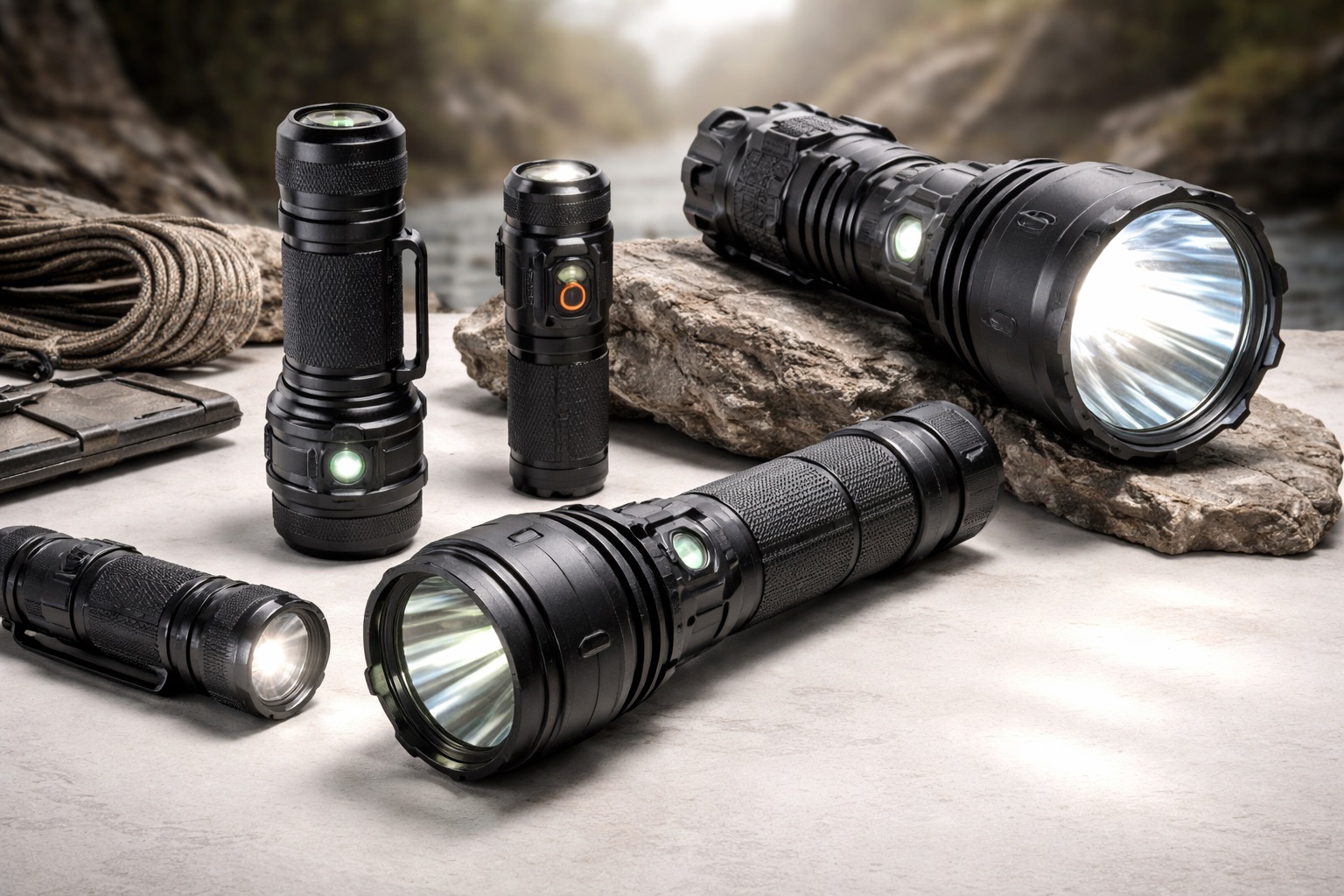
Best Durable Flashlight in 2026
A flashlight only matters in the moment you actually need it, and that's usually the worst possible time to discover it's fragile. Whether it's slipped off a shelf, been left in a hot car all summer, or simply seen years of daily use, a durable flashlight has to keep working long after a cheaper one would have cracked, corroded, or stopped turning on reliably. Reliability isn't just about surviving a single drop test — it's about consistent performance trip after trip, year after year, in conditions that vary from a dry hallway to a rainy job site.
This guide looks at eight flashlights that are commonly chosen specifically for their durability and dependability, from time-tested classics to modern tactical-grade lights built with rugged materials. Each review below explains what makes the model tough, where its limitations lie, and who is likely to get the most value from it, so you can weigh durability against price, features, and your own typical use, rather than assuming every flashlight labeled "rugged" delivers the same level of real-world dependability.
Beyond the individual reviews, we've built out a full buying guide covering the materials, ratings, and design choices that actually affect long-term reliability, along with a set of frequently asked questions addressing the practical side of keeping a flashlight working well for years.
It's worth noting up front that "durable" can mean different things depending on how you use a flashlight. A light that needs to survive being dropped on a concrete garage floor has different requirements than one that mainly needs to resist corrosion from years of humid storage. Keep your own conditions in mind as you read through the reviews and guide below, rather than assuming the toughest-looking light is automatically the most reliable choice for your situation.
It also helps to separate two related but distinct ideas: durability, meaning how well a flashlight physically withstands abuse, and reliability, meaning how consistently it performs when you actually need it. A flashlight can be extremely tough and still let you down through a corroded battery contact or a worn switch, which is why this guide treats both angles together rather than focusing on toughness alone.
Top 8 Durable Flashlights (Detailed Reviews)
Maglite LED Flashlight – Best For Time-Tested, Field-Proven Reliability
Few names carry the same reputation for longevity as Maglite, and the modern LED version keeps the brand's signature beam focus adjustment, letting you twist between a wide flood and a tight spot beam depending on the task. At around $25, it's one of the more affordable options on this list, but its reputation for lasting decades in glove boxes, kitchen drawers, and toolboxes is a big part of why it remains a default recommendation for anyone who simply wants a flashlight that keeps working. Many households have owned the same Maglite for years without issue, which says a lot about its baseline reliability. It's the kind of flashlight that quietly does its job for so long that people forget it was ever a purchase at all.
- Pros:
- Decades-long reputation for lasting reliability
- Adjustable beam focus for flood or spot use
- Affordable, widely available price point
- Cons:
- Fewer modern electronic features than newer tactical lights
- Bulkier than compact contemporary designs
Best For: Buyers who want a proven, no-surprises flashlight with a long track record of simply continuing to work, year after year, without any real maintenance beyond fresh batteries.
Why We Recommend It: There's real value in a design that's been refined and trusted for decades — it's a known quantity in a category where untested new gadgets sometimes fail exactly when you need them most, and a proven track record is hard to fake.
Olight S2R Baton II – Best For Reliable Recharging Without Battery Hassles
The Olight S2R Baton II relies on magnetic charging, which sidesteps one of the most common reliability issues with flashlights: corroded or mismatched battery contacts from disposable cells left in too long. At about $70, it sits toward the premium end of this list, but the ability to simply dock it on a charging cable reduces the chances of the light failing to turn on because of a battery problem. For anyone who has been let down by a flashlight with leaked or dead batteries, that reliability improvement is meaningful, since it removes one of the most common reasons a flashlight fails to work when it's needed.
- Pros:
- Magnetic charging avoids battery corrosion issues
- Premium build quality and finish
- Consistent performance when kept charged
- Cons:
- Depends on regular charging to stay reliable
- Higher price than disposable-battery alternatives
Best For: Buyers who want to eliminate battery-related failures by keeping a single rechargeable light topped off and ready to grab at a moment's notice.
Why We Recommend It: A large share of flashlight failures trace back to bad batteries, and removing that variable entirely makes this one of the more dependable options here, provided you stay on top of charging it regularly.
Streamlight ProTac HL – Best For Mission-Critical, Professional-Grade Reliability
Streamlight has built its name supplying flashlights to law enforcement, military, and industrial users who genuinely cannot afford equipment failure, and the ProTac HL carries that reputation with multi-fuel capability that lets it run on more than one battery configuration. At about $80, it's the most expensive light in this lineup, reflecting a level of construction and testing aimed squarely at professional reliability standards rather than casual household use. That heritage matters if your flashlight genuinely needs to work in a high-stakes moment rather than just around the house.
- Pros:
- Multi-fuel flexibility reduces dependence on one battery type
- Professional-grade construction and testing standards
- Trusted by security and industrial professionals
- Cons:
- Highest price point among the flashlights reviewed here
- More utilitarian design than lifestyle-oriented brands
Best For: Buyers who want the same caliber of dependable equipment used by professionals whose job depends on their gear working every single time it's called upon.
Why We Recommend It: When failure genuinely isn't an option, a flashlight built to professional standards offers a level of confidence that consumer-grade lights often can't match, even if it costs a bit more upfront.
Coast PX1 LED – Best For Consistent Beam Quality Over Time
The Coast PX1 LED is built around pure beam optics designed to produce a clean, even beam without the dark rings or hot spots that lower-quality reflectors can develop or worsen over time. At around $40, it's a mid-range option, appealing to buyers who want a light that performs as well after months of use as it did on day one, rather than degrading in beam quality as components wear. That consistency is easy to take for granted until you compare it against a cheaper light whose beam has grown noticeably uneven after a year or two of regular use.
- Pros:
- Well-engineered optics that hold up over time
- Reputable, established flashlight brand
- Comfortable size for regular carry
- Cons:
- Costs more than basic entry-level lights
- Limited color and finish variety
Best For: Buyers who want dependable beam quality that doesn't noticeably decline as the flashlight ages with regular, everyday use.
Why We Recommend It: A flashlight that still throws a clean, even beam years into ownership is a meaningful sign of overall build quality, not just initial impressions made in a store aisle.
GearLight LED Tactical – Best For Affordable Backup Reliability
The GearLight LED Tactical packs 5 light modes into a genuinely affordable package, making it easy to justify keeping several around the house, car, and garage as reliable backups. At about $20, it's the least expensive light on this list, and having true backups on hand is itself a reliability strategy — if one light fails or goes missing, you're never left without a working option nearby. That redundancy is itself a legitimate reliability strategy, not just a budget compromise.
- Pros:
- 5 selectable modes at a very accessible price
- Easy to stock multiple units as backups
- Compact and easy to store
- Cons:
- Build quality trails premium tactical brands
- Not intended for the heaviest professional-grade use
Best For: Anyone who wants to build in redundancy by keeping several affordable, capable flashlights scattered around the house, garage, and car.
Why We Recommend It: True reliability sometimes comes from having backups rather than a single perfect light — and this one is cheap enough to buy several without hesitation or a second thought about the cost.
Anker Bolder LC90 – Best For Dependable Everyday Brightness
Anker built its reputation on electronics that consistently perform as advertised, and the Bolder LC90 carries that reputation into the flashlight space with a rated 900 lumens of brightness. At roughly $30, it delivers strong, dependable output at an accessible price, making it a solid everyday option for anyone who wants consistent brightness without paying for premium materials they may not need. It has earned a loyal following among buyers who care more about consistent function than premium branding.
- Pros:
- 900 lumens of consistent, dependable brightness
- Trusted brand with a track record for reliability
- Simple, predictable operation
- Cons:
- Housing feels less rugged than premium outdoor brands
- Fewer accessory options than boutique brands
Best For: Buyers who want dependable, consistent brightness for everyday use without paying a premium for extra durability features they may never actually need.
Why We Recommend It: A trusted electronics brand behind the product adds a layer of confidence that the light will perform as expected, trip after trip, without unpleasant surprises.
Fenix PD35 V3.0 – Best For Maximum Structural Durability
If pure structural toughness is the priority, the Fenix PD35 V3.0's tough aluminum body is built specifically to withstand drops, impacts, and rough handling that would damage lesser flashlights. At about $90, it's the most expensive light on this list, positioned as an investment for buyers who need their flashlight to survive years of demanding physical use without cracking or failing structurally. It's built with the assumption that it will eventually be dropped, knocked, or crushed against something, and engineered to keep working anyway.
- Pros:
- Tough aluminum housing built for serious abuse
- Strong reputation for structural durability
- Consistent performance under demanding conditions
- Cons:
- Premium price relative to plastic-bodied alternatives
- Heavier than compact everyday-carry lights
Best For: Buyers whose flashlight regularly takes physical abuse — job sites, glove boxes, or frequent drops — and needs to survive it structurally, trip after trip.
Why We Recommend It: When the question is simply "will it survive being dropped," the PD35's rugged construction is built specifically to answer yes, trip after trip, year after year.
ThruNite Archer 2A – Best For Fail-Safe Switch Reliability
The ThruNite Archer 2A uses a dual switch design that separates the power button from mode selection, which reduces the chances of the light unexpectedly switching modes or turning off due to a worn or overused single switch. Splitting these functions across two switches also means less mechanical stress is placed on either one individually. At around $35, it's a mid-priced option that prioritizes mechanical reliability in the part of a flashlight that tends to wear out first through repeated use.
- Pros:
- Dual switch design reduces mechanical wear on any single button
- Predictable, consistent operation over time
- Dependable build from an established brand
- Cons:
- Costs more than basic single-switch lights
- Fewer cosmetic finish choices than some competitors
Best For: Buyers who use their flashlight frequently enough that switch wear and reliability over thousands of clicks genuinely matters to them.
Why We Recommend It: The switch is often the first part of a flashlight to fail, and the Archer 2A's split design is a smart way to reduce that specific point of failure over years of regular clicking.
Buying Guide: How to Choose the Best Durable Flashlight
Durability isn't a single feature you can check off a list — it's the combined result of materials, design choices, and how well a product is engineered to age gracefully. The sections below break down the individual factors that add up to genuine long-term reliability, rather than just a tough-looking exterior.
1. Housing Material
Aircraft-grade aluminum is the most common material in durable flashlights, prized for being lightweight yet resistant to dents and cracking. Reinforced polycarbonate is a common budget alternative that can still hold up well, though it's generally more prone to cracking under severe impact than quality aluminum construction. Either material can perform well for years if the rest of the build quality is solid, so housing material is best viewed as one piece of a bigger picture rather than the whole story.
2. Impact and Drop Resistance
Accidental drops are one of the most common ways a flashlight gets damaged, so how a light is designed to handle them is worth understanding before you buy. Many durable flashlights are built or tested to survive drops onto hard surfaces from a meaningful height. While exact standards vary by brand, a flashlight explicitly marketed around rugged or tactical use is generally a safer bet for surviving accidental drops than a light designed primarily for indoor convenience. Reading real customer feedback about drops and rough handling can be more informative than marketing copy alone.
3. Water and Weather Resistance Ratings
IP or IPX ratings indicate how well a flashlight resists water intrusion, from light splashing to full submersion. For long-term reliability, a higher-rated light is less likely to suffer internal corrosion or failure after exposure to rain, humidity, or accidental drops in water. Even flashlights that never leave the house benefit from decent water resistance, since humidity and condensation can cause slow damage over time.
4. Switch and Button Quality
It's easy to overlook the switch when comparing flashlights side by side, but it deserves close attention since it's the single most-used moving part on the entire device. The switch is one of the most frequently used and most failure-prone components on a flashlight. Sealed, well-engineered switches rated for a high number of clicks tend to outlast cheaper buttons that can become loose, sticky, or unresponsive after regular use. If you're comparing two similar lights, the tactile feel of the switch itself is often a good early indicator of overall build quality.
5. Battery Contact Corrosion
This is one of the sneakiest reliability killers, since it happens slowly and often goes unnoticed until the flashlight suddenly won't turn on. Disposable batteries left in a flashlight for extended periods can leak and corrode the internal contacts, which is one of the most common reasons an otherwise fine flashlight stops working. Rechargeable lights with sealed battery compartments can reduce this specific risk, though they introduce their own maintenance needs, namely remembering to charge them and avoiding letting the internal cell sit fully depleted for long periods.
6. LED Lifespan and Consistency
The light source itself is another factor worth understanding, since it directly affects how long a flashlight remains genuinely useful. Quality LEDs are rated for tens of thousands of hours of use and tend to maintain consistent brightness and color over that lifespan, unlike older bulb-based lights that dimmed and eventually burned out. Nearly every flashlight on this list uses LED technology, which is itself a meaningful reliability advantage over older lighting types, and it's part of why modern flashlights as a category are simply more dependable than the incandescent models many people grew up using.
7. Seals and Gaskets
O-rings and rubber gaskets around the lens, battery compartment, and switches are what actually deliver a flashlight's water and dust resistance rating in practice. Over years of use, these seals can wear down, so higher-quality materials in this area contribute meaningfully to long-term reliability. Occasionally checking and, if possible, lightly lubricating O-rings on lights that allow it can meaningfully extend their effective lifespan.
8. Brand Reputation and Track Record
Some brands have built decades-long reputations specifically around reliability, and that history is a reasonable signal when comparing similarly priced options. A brand that's been trusted by outdoor professionals or emergency responders for years has generally earned that trust through consistent real-world performance rather than marketing alone, which is worth factoring into a purchase decision.
9. Battery Type and Long-Term Cost
It's worth thinking about battery type not just for convenience but for the total cost and hassle of keeping a flashlight running reliably over its full lifespan. Beyond convenience, battery type affects long-term reliability. Rechargeable lithium-ion batteries degrade gradually over hundreds of charge cycles, while disposable batteries offer consistent fresh performance each time but require ongoing purchases and proper storage to avoid leaks. Neither drawback is severe, but they're worth factoring into which type suits your habits better.
10. Thermal Management
Higher-output flashlights generate more heat, and how well a light dissipates that heat affects both performance and long-term component lifespan. Metal-bodied lights generally manage heat better than plastic ones, which is one more reason aluminum construction tends to correlate with durability, particularly in higher-output flashlights that run hotter during extended use.
11. Warranty and Manufacturer Support
Warranty coverage rarely gets the attention it deserves during a purchase, but it can be one of the most telling indicators of how a manufacturer expects its own product to hold up over time. A meaningful warranty is often a sign that a manufacturer stands behind its own durability claims. Checking warranty length and what it actually covers can give you a useful signal about how confident a brand is in its own product's longevity, and it's a detail that's easy to overlook in the excitement of a purchase.
12. Price vs. Long-Term Value
Durable flashlights in this category range from around $20 for a solid budget option up to $90 for premium, professional-grade builds. A more expensive light that lasts many years without failure can be better value over time than repeatedly replacing a cheaper light that breaks down, even though the upfront cost looks less appealing on paper.
13. Matching Durability to Your Actual Use
Not everyone needs the most rugged flashlight on the market. Someone who keeps a light in a kitchen drawer has different durability needs than someone who carries one daily on a job site or trail, so weigh how much physical abuse your flashlight will realistically face before deciding how much to spend on toughness. Buying more ruggedness than you'll ever use isn't wrong, but it's rarely necessary either.
Frequently Asked Questions
What makes one flashlight more durable than another?
Durability generally comes down to housing material, seal quality, switch design, and overall engineering. Aluminum-bodied lights with sealed switches and solid water resistance ratings tend to hold up better over years of use than basic plastic lights, especially under repeated drops or outdoor exposure.
How long should a good flashlight last?
With reasonable care, a well-built flashlight can last many years, and some models, like classic Maglite designs, have reputations for lasting decades with minimal maintenance beyond battery changes. How long a specific unit lasts still depends heavily on how it's stored and used.
Why do flashlights stop working over time?
Common causes include battery corrosion, worn or damaged switches, water intrusion through degraded seals, and physical damage from drops. Most of these issues can be reduced through proper storage and occasional maintenance, rather than being an inevitable outcome of normal use.
Are rechargeable flashlights more or less reliable than disposable-battery models?
Both can be reliable if properly maintained. Rechargeable lights avoid battery leak corrosion but depend on regular charging, while disposable-battery lights avoid that dependency but need fresh batteries and careful storage to prevent leaks. Neither type is inherently more durable than the other.
What water-resistance rating should I look for in a durable flashlight?
Higher IPX ratings offer stronger protection against rain, splashing, and submersion. For general durability and long-term reliability, a mid-to-high IPX rating provides a solid buffer against everyday moisture exposure without needing full submersion protection for most household or outdoor uses.
Can a dropped flashlight still be reliable afterward?
It depends on the drop and the flashlight's construction. Rugged, well-built lights are specifically designed to survive drops onto hard surfaces without internal damage, while more delicate designs may develop issues even after a single hard impact, sometimes without any visible external damage.
Does a metal housing always mean better durability than plastic?
Generally yes for impact resistance, since metal housings like aircraft-grade aluminum resist cracking better than most plastics. However, high-quality reinforced polycarbonate can still perform well and offers a lighter-weight alternative that some buyers prefer for everyday carry.
How can I prevent battery corrosion in my flashlight?
Avoid leaving disposable batteries in a flashlight for extended periods of disuse, check batteries periodically, and remove them if you won't use the light for several months, since corrosion is one of the most common causes of flashlight failure and is largely preventable.
Is a more expensive flashlight always more durable?
Not automatically, but price often correlates with better materials, more rigorous testing, and stronger seals. A well-reviewed mid-priced light can still be quite durable, so it's worth reading about specific construction rather than assuming price alone guarantees toughness.
How often should I test a flashlight I keep for emergencies?
Testing an emergency flashlight every few months is a reasonable habit, ensuring the batteries are still good and the light turns on reliably before you actually need it in a real situation rather than discovering a problem during an actual emergency.
What's the most common point of failure on a flashlight?
The switch and the battery compartment are two of the most common failure points, since they see the most physical use and are most exposed to moisture and corrosion over time compared to the rest of the housing.
Do LED flashlights last longer than older bulb-based lights?
Yes, generally. LEDs are rated for tens of thousands of hours and don't suffer the sudden burnout that older incandescent bulbs did, making virtually all modern flashlights, including every model on this list, more reliable in that specific respect than older lighting technology.
Can a durable flashlight still fail even with proper care?
No product is completely immune to failure, but choosing a well-built light, maintaining it properly, and keeping a backup on hand significantly reduces the odds of being caught without a working flashlight when you need one most.
Final Verdict
- Top Pick: Maglite LED Flashlight for overall excellence.
- Budget Choice: Streamlight ProTac HL for great value.
- Premium Choice: Olight S2R Baton II for high-end features.
Durability ultimately comes down to matching a flashlight's construction to how you'll actually use it, and the eight options above span a wide enough range to fit nearly any level of demand, from an occasional-use household light to a light built for daily professional abuse. Prioritize the housing material, seals, and switch design that fit your conditions, keep an eye on battery maintenance, and any of these picks should serve you reliably for years to come. A little routine care goes a long way toward getting the full lifespan out of whichever flashlight you choose.