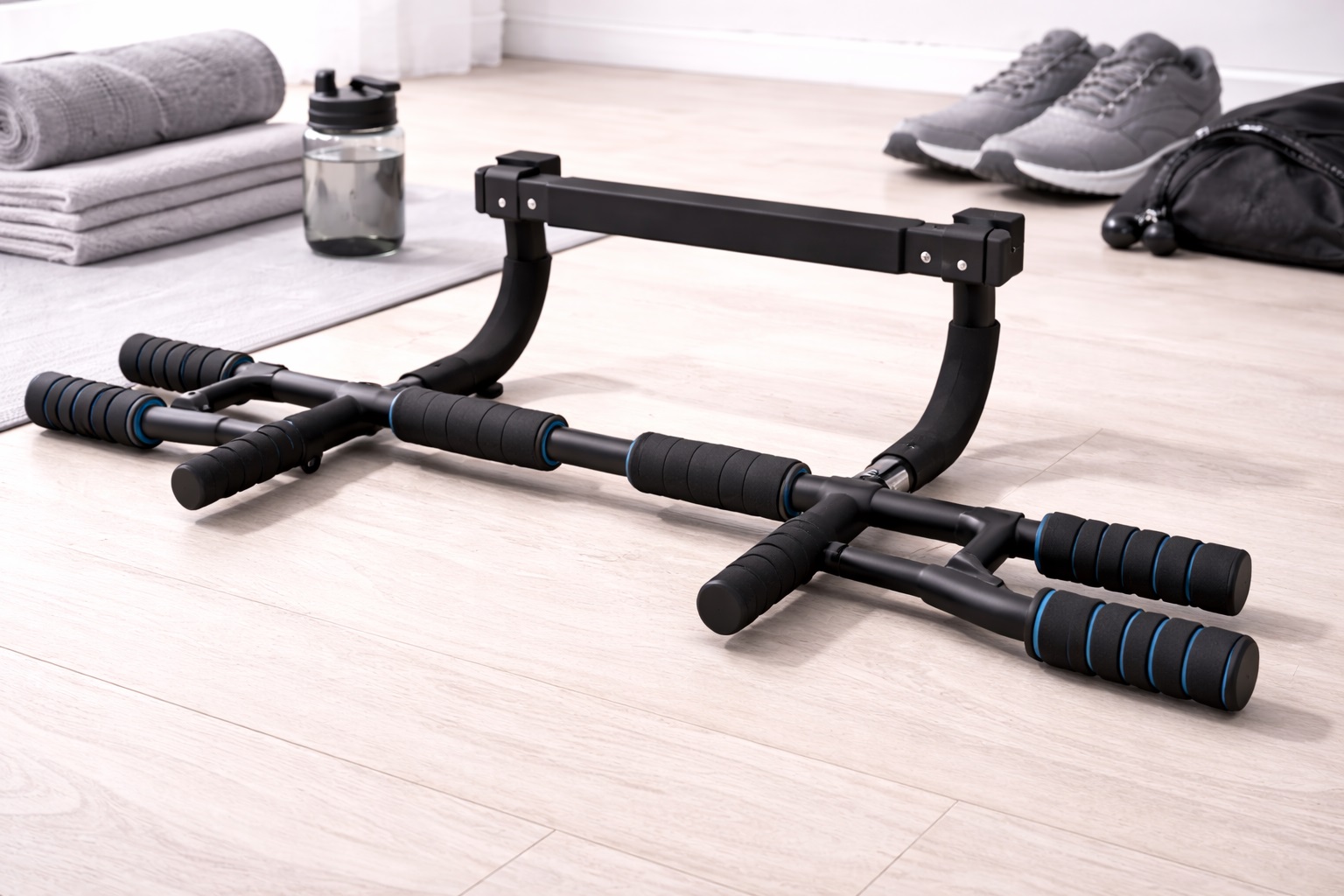
Best Pull Up Bar for Beginners in 2026
A pull up bar is one of the simplest, most effective pieces of equipment you can add to a home gym, and it is often the first serious strength tool beginners buy once they have outgrown basic bodyweight routines. Pull-ups and their many assisted variations build back, shoulder, and grip strength that few other exercises target as directly, all without needing a large footprint or a heavy investment.
For someone just starting out, though, the sheer variety of pull up bar styles on the market can be confusing. Doorway bars, wall-mounted bars, ceiling-mounted bars, and freestanding power towers all solve the same basic problem in different ways, each with its own trade-offs around installation, stability, and cost that matter more to a beginner than they might initially expect.
Stability and safety deserve particular attention for anyone new to pull-ups. A bar that flexes, wobbles, or was not installed correctly undermines confidence and can genuinely be dangerous, so beginners especially benefit from choosing a bar rated well above their body weight and installed exactly according to the manufacturer's instructions.
It is also worth setting realistic expectations from day one. Very few beginners walk up to a bar and complete a clean pull-up on their first attempt, and that is completely normal. The right bar simply gives you a safe, dependable place to practice the assisted variations and dead hangs that gradually build the strength a full pull-up requires.
Below, we compare eight pull up bars well suited to beginners, followed by a complete buying guide and answers to the questions new lifters ask most often before making their first purchase.
Top 8 Best pull up bar Picks (Detailed Reviews)
1. Gronk Fitness Ceiling – Best For Long-Term, Commercial-Grade Reliability
The Gronk Fitness Ceiling bar is built to commercial grade standards, the same general category of construction found in serious training facilities, which gives beginners real peace of mind about long-term stability. At around $120, it is a bigger upfront investment than doorway options, reflecting its permanent, ceiling-mounted design.
Because it mounts directly into ceiling joists rather than relying on door frame tension, it avoids the wobble or shifting that some temporary bars can develop over time, which matters for beginners still building confidence in their form and grip.
- Pros:
- Commercial-grade construction built for long-term reliability
- Permanent ceiling mount eliminates door-frame wobble
- Well suited to a dedicated, long-term home gym space
- Cons:
- Highest price point among the bars on this list
- Requires proper ceiling joist installation, unlike simpler doorway bars
Best For: Beginners setting up a dedicated home gym space who want a permanent, rock-solid mounting solution.
Why We Recommend It: Its commercial-grade build gives beginners the stability and confidence to focus on form rather than equipment safety.
2. Sportsroyals Power Tower – Best For a Complete Beginner Home Gym Station
The Sportsroyals Power Tower is an all-in-one station that combines a pull up bar with dip bars and other upper-body training stations, giving beginners a broader range of exercises within a single freestanding piece of equipment. At around $180, it is the priciest option here, reflecting its expanded functionality.
For beginners who are not yet doing full pull-ups, having dip stations and other assisted movements built into the same unit provides a natural progression path without needing to buy additional equipment as strength develops.
- Pros:
- All-in-one station supports pull-ups, dips, and more
- Freestanding design requires no wall or ceiling installation
- Provides a natural progression path as strength improves
- Cons:
- Highest price point among the bars on this list
- Larger footprint than wall-mounted or doorway alternatives
Best For: Beginners who want a complete upper-body training station rather than a pull up bar alone.
Why We Recommend It: It gives beginners room to grow into multiple exercises without needing to buy separate equipment later.
3. Garren Fitness Maximiza – Best For Sturdy, Affordable Wall-Mounted Training
The Garren Fitness Maximiza uses heavy duty chrome construction at a price around $35, making it one of the more affordable ways to get a genuinely sturdy, permanently mounted bar. For beginners on a budget who still want the stability of a fixed installation, it is a sensible middle ground.
Chrome construction resists corrosion and wear well over years of regular use, and a wall-mounted design avoids the potential give that some doorway-tension bars can develop, offering beginners a stable foundation to build their pull-up strength on.
- Pros:
- Heavy duty chrome construction offers long-term sturdiness
- Affordable price for a permanently mounted bar
- Wall mounting avoids door-frame tension concerns
- Cons:
- Requires wall installation, which renters may not be able to do
- Less portable than doorway or freestanding options
Best For: Budget-conscious beginners who want the stability of a permanently mounted bar without a high price tag.
Why We Recommend It: It delivers real long-term sturdiness at a price accessible to most beginners just starting out.
4. Perfect Fitness Multi-Gym – Best For Renters Who Can't Drill Into Walls
The Perfect Fitness Multi-Gym includes door frame protection specifically designed to install without drilling or permanent hardware, at a price around $40. For beginners renting an apartment or otherwise unable to make permanent modifications, this removes a major barrier to getting started.
The protective padding also helps prevent damage to door frames during installation and removal, which matters for anyone who needs to be able to take the bar down cleanly at the end of a lease or when moving.
- Pros:
- Door frame protection allows drill-free, damage-conscious installation
- Removable design suits renters and temporary living situations
- Reasonably priced for a no-drilling doorway solution
- Cons:
- Requires a compatible door frame width and depth
- Generally rated for a lower maximum weight than mounted bars
Best For: Renters and beginners who need a bar that installs and removes cleanly without any permanent modifications.
Why We Recommend It: It solves the specific problem of wanting a pull up bar without being able to drill into walls or ceilings.
5. OneTwoFit Wall Mounted – Best For Stable, Permanent Wall Installation
The OneTwoFit Wall Mounted bar uses triangular stability in its bracket design, a structural approach that distributes load efficiently and resists flexing under weight. At around $60, it sits in the middle of the price range for a genuinely stable, permanent installation.
Triangular bracing is a well-established engineering approach for handling load without excessive material, and applying that same principle to a wall-mounted pull up bar gives beginners a bar that feels solid and predictable through every rep.
- Pros:
- Triangular bracket design resists flexing under load
- Permanent wall mount offers consistent, predictable stability
- Reasonably priced for its engineered stability
- Cons:
- Requires wall installation, which renters may not be able to do
- Less portable than doorway or freestanding alternatives
Best For: Beginners in a permanent residence who want a genuinely stable, engineered wall-mounted bar.
Why We Recommend It: Its bracing design gives beginners a bar that feels solid and dependable through every single rep.
6. Hakeno Doorway Bar – Best For Quick, No-Fuss Doorway Setup
The Hakeno Doorway Bar features a locking mechanism that secures it within a doorway frame quickly, without tools or permanent hardware, at a price around $50. For beginners who want to start training within minutes of unboxing, this kind of simple setup removes any friction.
A reliable locking mechanism is especially important for a doorway bar, since it is the primary thing keeping the bar secure during use, and beginners in particular benefit from a design that locks confidently and predictably every time it is installed.
- Pros:
- Locking mechanism allows quick, tool-free setup
- Reasonably priced for a doorway-mounted design
- No permanent installation required
- Cons:
- Requires a compatible door frame for a secure fit
- Generally rated for a lower maximum weight than mounted bars
Best For: Beginners who want to start training immediately without any installation hassle.
Why We Recommend It: Its locking design offers real peace of mind for anyone new to trusting a doorway-mounted bar.
7. Iron Gym Total Upper Body – Best For Simple, Damage-Free Installation
The Iron Gym Total Upper Body bar is built around a no-drilling-required design, at a price around $30, making it one of the simplest and most affordable ways for a beginner to get started with pull-ups at home. Its straightforward setup has made it a long-running favorite for first-time buyers.
Because it requires no drilling or permanent hardware, it is also easy to move between doorways or take with you if you relocate, which is a practical advantage for beginners who are not yet certain pull-ups will become a long-term habit.
- Pros:
- No drilling required for a simple, damage-free installation
- Very affordable entry point for first-time buyers
- Portable enough to move between doorways or homes
- Cons:
- Requires a compatible door frame width
- Generally rated for a lower maximum weight than mounted bars
Best For: First-time buyers who want the simplest, least committal way to start pull-up training at home.
Why We Recommend It: Its long track record as a beginner favorite comes from just how easy it is to set up and start using.
8. AmazeFan Pull Up – Best For Comfortable Grip While Learning
The AmazeFan Pull Up bar features an ergonomic angled grip designed to reduce strain on the wrists and shoulders, which is particularly valuable for beginners still building the strength and mobility that pull-ups demand. At around $45, it offers a genuine comfort upgrade over straight-bar designs.
Angled grips allow for a more natural hand and wrist position through the pulling motion, which can make early pull-up attempts, and the assisted variations beginners often start with, feel noticeably more comfortable and sustainable.
- Pros:
- Ergonomic angled grip reduces wrist and shoulder strain
- Comfortable design supports longer, more frequent practice
- Reasonably priced for the ergonomic upgrade it offers
- Cons:
- Requires a compatible door frame for installation
- Generally rated for a lower maximum weight than mounted bars
Best For: Beginners whose wrists or shoulders feel strained by a plain straight-bar grip design.
Why We Recommend It: Its ergonomic grip removes a common source of early discomfort that can otherwise discourage new lifters.
Buying Guide: How to Choose the Best Pull Up Bar for Beginners
Choosing a first pull up bar comes down to balancing safety, installation method, and your available space. The sections below walk through what beginners should prioritize most.
1. Weight Capacity and Safety Margin
Always choose a bar rated well above your body weight, since the added momentum of a pull-up puts more dynamic load through the bar than your static weight alone would suggest.
2. Installation Method
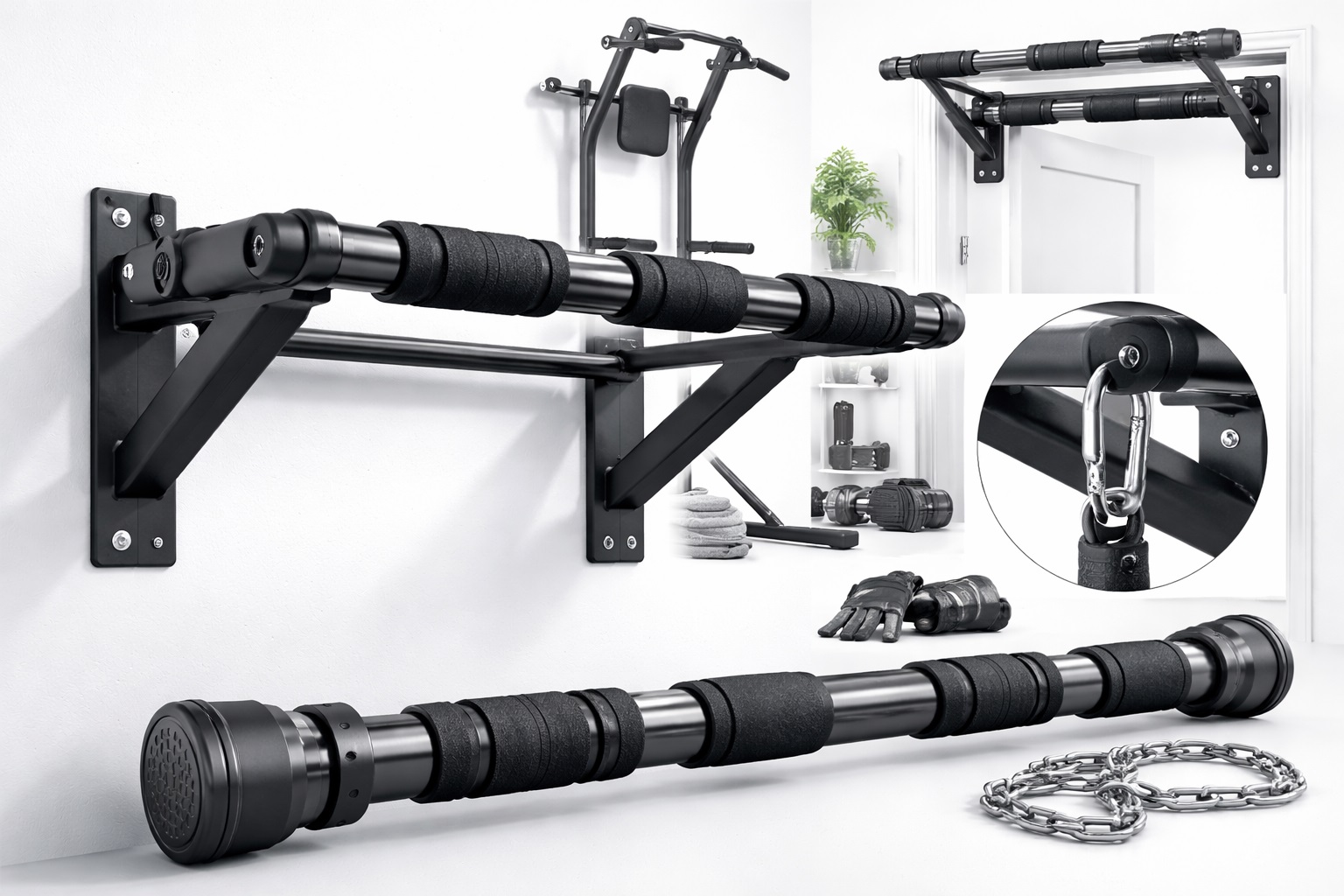
Doorway bars install without tools, wall or ceiling-mounted bars require drilling but offer more permanent stability, and freestanding power towers need no installation at all but take up more floor space.
3. Renting Versus Owning Your Space
Renters or anyone unable to make permanent modifications generally benefit from a doorway or freestanding bar, while homeowners have more flexibility to consider wall or ceiling mounting.
4. Door Frame Compatibility
Doorway bars require a specific range of frame width and depth to install securely, so checking your door's measurements against the product's specifications before buying is essential.
5. Grip Positions and Variety
Bars with multiple grip positions, such as wide, narrow, and neutral, let beginners target different muscle groups and find the grip that feels most comfortable as they build strength.
6. Padding and Grip Comfort
Foam or rubber padding on the grip area reduces hand strain during longer or more frequent practice sessions, which matters especially for beginners still building callus tolerance and grip endurance.
7. Stability During Use
A bar that flexes or wobbles under load undermines both safety and confidence, so checking reviews specifically for stability feedback is worth doing before committing to a purchase.
8. Assisted Pull-Up Options
Some beginners benefit from resistance bands or assisted pull-up attachments that reduce the effective load, which is worth considering if you cannot yet complete a full unassisted pull-up.
9. Available Ceiling and Door Clearance
Make sure you have enough overhead clearance for a full range of motion, including the ability to fully extend your arms at the bottom of each rep without hitting the floor or furniture.
10. Portability Considerations
If you expect to move homes or want to travel with your equipment, a doorway or freestanding bar offers more flexibility than a permanently mounted option.
11. Additional Exercise Stations
Power towers and multi-gyms often include dip bars, push-up handles, or ab straps, which can be valuable for beginners wanting to build a broader routine around their pull up bar.
12. Reading Installation Instructions Carefully
Following manufacturer installation instructions exactly, including recommended door frame types or wall stud locations, is critical for safety regardless of which bar style you choose.
13. Price Versus Long-Term Use
A slightly higher upfront cost for a genuinely stable, well-built bar is often worth it if you expect pull-ups to become a long-term part of your routine.
14. Assessing Your Current Strength Level
Complete beginners who cannot yet do a full pull-up may want to prioritize a bar compatible with resistance bands or one paired with a step or box for assisted variations.
15. Bar Diameter and Hand Size
Bar thickness affects grip comfort, and beginners with smaller hands may find a slightly thinner bar easier to grip securely than a thick, oversized one.
16. Checking Weight Ratings for Household Members
If multiple people in your household will use the same bar, make sure its weight capacity comfortably accommodates the heaviest expected user with margin to spare.
17. Long-Term Maintenance
Periodically checking bolts, brackets, or door tension mechanisms for looseness helps maintain safety over months and years of regular use.
18. Setting Realistic Beginner Goals
Building toward a first full pull-up often takes consistent practice over weeks or months, so choosing equipment that supports assisted variations can help beginners progress safely.
19. Considering Future Upgrades
Some beginners eventually outgrow a basic doorway bar and move toward a wall-mounted or freestanding option as their training becomes more serious, so it is worth considering your longer-term plans.
20. Balancing Cost With Confidence
A more expensive, visibly sturdy bar can genuinely help beginners feel more confident attempting pull-ups, which is a real, if less tangible, factor worth weighing against pure price.
21. Warming Up Before Pull-Up Training
Because pull-ups place significant demand on the shoulders, elbows, and grip, a brief warm-up involving arm circles, light band work, or a few easy dead hangs helps prepare your joints and connective tissue before attempting harder sets, reducing the risk of strain during early training.
22. Tracking Progress as a Beginner
Logging how many assisted or negative repetitions you can complete each week, or simply timing how long you can hold a dead hang, gives beginners a concrete way to see progress even before achieving a full unassisted pull-up.
23. Combining Pull-Ups With a Broader Strength Routine
Pull-ups target the back, shoulders, and grip effectively, but pairing them with push-focused exercises like push-ups or presses helps beginners build a more balanced upper-body strength routine over time.
24. Recognizing When to Upgrade Equipment
If a beginner bar starts to feel less stable under your growing strength, or if you find yourself wanting more exercise variety than it supports, that is a natural signal to consider a more robust wall-mounted bar or a full power tower.
Frequently Asked Questions
What type of pull up bar is best for beginners?
Doorway bars are often a good starting point for beginners due to their low cost and simple, no-drilling installation, though wall-mounted bars offer more long-term stability.
Are doorway pull up bars safe?
When installed correctly in a compatible door frame and used within their rated weight capacity, doorway bars are generally safe, though checking the fit carefully before each use is a good habit.
How do I know what weight capacity I need?
Choose a bar rated well above your body weight to account for the additional dynamic force generated during a pull-up.
Can beginners do pull-ups without any prior training?
Many beginners start with assisted variations, such as using a resistance band or a step for support, before progressing to full unassisted pull-ups.
Do I need to drill holes to install a pull up bar?
Not necessarily; doorway and freestanding bars typically require no drilling, while wall or ceiling-mounted bars do require permanent installation.
What is the difference between a pull up bar and a power tower?
A power tower is a larger, freestanding unit that combines a pull up bar with additional stations like dip bars, while a standalone pull up bar focuses on just the pulling movement.
How much space do I need for a pull up bar?
You need enough overhead and floor clearance for a full range of motion, including fully extending your arms without touching the ground or nearby furniture.
Can renters install a pull up bar without damaging their apartment?
Yes, doorway bars with padded, tension-based installation and freestanding power towers both avoid the need for drilling into walls or ceilings.
How long does it take a beginner to build up to a full pull-up?
This varies widely by individual starting strength, but many beginners see steady progress over several weeks to a few months of consistent practice.
What grip width is best for beginners?
A shoulder-width, neutral or overhand grip is generally a comfortable starting point, with narrower or wider grips explored as strength and comfort develop.
Are resistance bands helpful for beginner pull-ups?
Yes, resistance bands looped over the bar can reduce the effective weight being lifted, making them a popular tool for beginners building toward their first unassisted pull-up.
Can a pull up bar be used for other exercises besides pull-ups?
Yes, many bars also support hanging leg raises, dead hangs, and other bodyweight exercises that build grip and core strength alongside pulling strength.
How do I check if my door frame is compatible with a doorway bar?
Measuring your door frame's width and depth and comparing it against the product's listed compatible range before purchasing helps avoid an incompatible fit.
Is it normal for a doorway bar to feel slightly less stable than a mounted one?
Some doorway bars do feel less rigid than permanently mounted options, which is a normal trade-off for their easier, tool-free installation.
What should beginners do if they cannot yet complete a single pull-up?
Starting with dead hangs, negative pull-ups, or band-assisted repetitions are all common ways beginners build the strength needed for their first full pull-up.
Do pull up bars need to be checked periodically for safety?
Yes, periodically checking bolts, brackets, and door tension mechanisms for looseness helps maintain safe, reliable performance over time.
Can children use a beginner pull up bar safely?
With appropriate supervision and a bar rated for their weight, many children can safely use pull up bars, though adult oversight is recommended.
What is a reasonable price for a good beginner pull up bar?
Many effective beginner options fall between thirty and sixty dollars, with pricier freestanding or ceiling-mounted options available for those wanting more stability or features.
Should beginners choose a bar with padded grips?
Padded or ergonomic grips can improve comfort during early practice, which may help beginners train more consistently without hand or wrist discomfort.
How do I safely remove a doorway pull up bar?
Following the manufacturer's specific release instructions, usually involving releasing tension or a locking mechanism gradually, helps ensure safe removal without sudden movement.
Can I do pull-ups every day as a beginner?
Most beginners benefit from a few sessions per week with rest days in between, since the back, shoulders, and grip need time to recover between demanding pulling sessions.
What muscles do pull-ups primarily work?
Pull-ups primarily engage the back muscles, biceps, shoulders, and grip, making them one of the more efficient compound exercises for upper-body strength.
Is it better to buy a pull up bar or join a gym for pull-up training?
A home pull up bar offers convenience and lower long-term cost, while a gym may provide additional equipment and coaching, so the right choice depends on personal preference and budget.
Can a pull up bar help with posture?
Strengthening the back muscles through regular pull-up training can support better posture over time, particularly for people who spend long hours sitting.
What is a negative pull-up and why is it useful for beginners?
A negative pull-up involves slowly lowering yourself from the top position, which builds the same muscles used in a full pull-up and is a common stepping stone for beginners.
Do I need gloves to use a pull up bar?
Gloves are optional; some beginners prefer them for grip and comfort, while others train bare-handed and gradually build calluses and grip strength over time.
How do I maintain a wall or ceiling-mounted pull up bar?
Periodically checking that all bolts remain tight and inspecting the mounting bracket for any signs of wear helps maintain long-term safety for permanently installed bars.
Final Verdict
- Top Pick: Gronk Fitness Ceiling for overall excellence.
- Budget Choice: Iron Gym Total Upper Body for great value.
- Premium Choice: Sportsroyals Power Tower for high-end features.
Starting a pull-up practice does not require the most expensive or elaborate equipment on the market. A simple, well-reviewed doorway bar is enough to begin building real strength, and you can always upgrade to a mounted bar or a full power tower once you know pull-ups have become a lasting part of your routine. Prioritize stability and a weight rating with a healthy safety margin above all else, and let your growing strength guide any future upgrades.
Progress on a pull up bar tends to come in small, steady increments rather than sudden breakthroughs, and that is exactly what makes it such a rewarding piece of equipment to own long-term. Whatever bar you start with, the consistency of showing up for a few short sessions each week will do more for your strength than any single feature on the equipment itself.