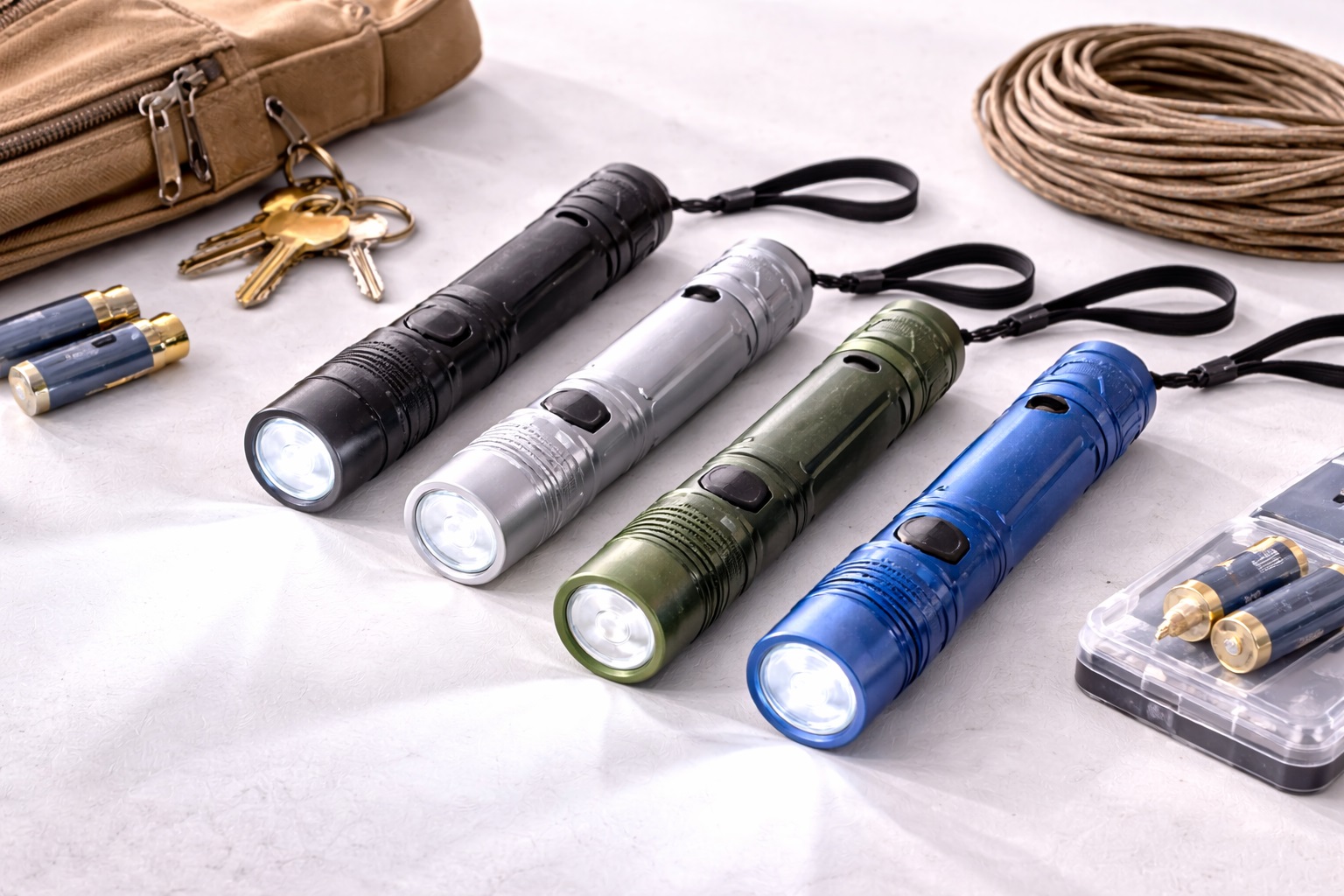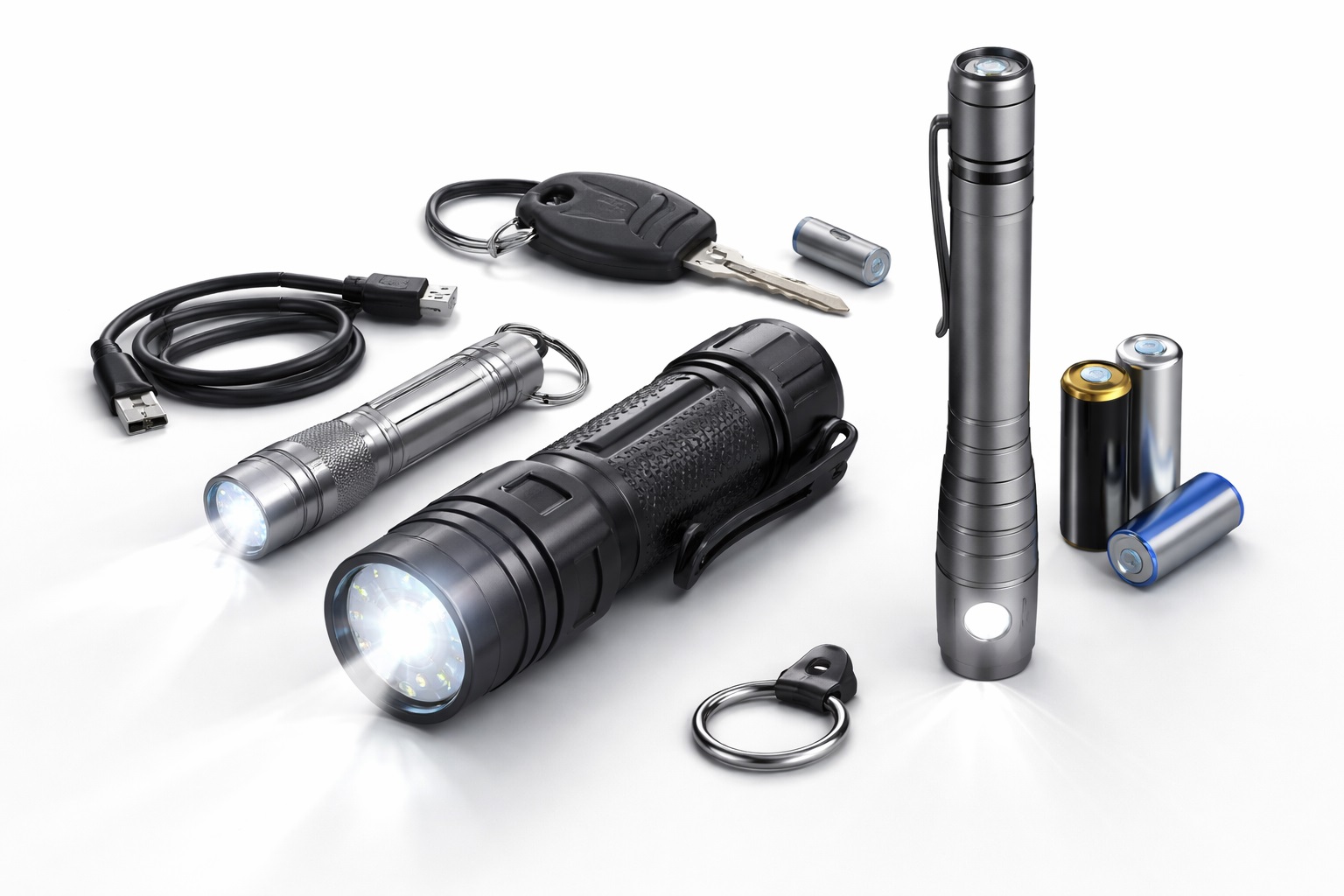
Best Flashlight for Night Safety in 2026
Walking to your car after dark, checking on a noise in the backyard, or navigating a power outage all come down to one thing: whether the beam in your hand actually shows you what you need to see. A flashlight built for night safety and visibility has to do more than glow — it needs a beam that reaches far enough to identify a threat or obstacle, a runtime that won't quit halfway through an evening walk, and a housing that survives being dropped on concrete or left in a glove box through a hot summer. Not every flashlight on the market is built with that job in mind, which is why picking the right one matters more than it seems.
In this guide we look at eight widely available flashlights that are frequently chosen for personal safety and visibility use, from budget-friendly tactical-style lights to premium rechargeable models. Each entry below breaks down what the light is known for, who it suits best, and where it falls short, so you can match a model to the way you actually plan to use it rather than buying based on brand name alone.
Beyond the individual reviews, we've included a detailed buying guide covering brightness, runtime, materials, and other factors worth weighing before you buy, along with answers to the questions people ask most often about choosing and maintaining a flashlight for night safety.
It's worth remembering that "best" doesn't mean the same thing for every household. A retiree who wants a simple light for the walk from the car to the front door has very different priorities than someone who keeps a flashlight in a bug-out bag or hikes after sunset. That's why this guide separates out beam quality, runtime, battery type, and durability as individual factors rather than boiling everything down to a single winner — so you can weigh what matters to your own routine before settling on a purchase.
Top 8 Flashlights for Night Safety (Detailed Reviews)
Coast PX1 LED – Best For Focused Beam Control
The Coast PX1 LED has built a following among people who want to fine-tune their beam rather than settle for a single fixed pattern. Its pure beam optics are designed to minimize the dark rings and artifacts that cheaper reflector-based lights often produce, giving you a cleaner, more even spread of light whether you're scanning a wide area or focusing on a single spot down the street. At around $40, it sits in the mid-range of this list, priced for buyers who want noticeably better optical quality without stepping up to a premium tactical light. For anyone who has struggled to read a street sign or a house number under a harsh, uneven beam, the difference a well-engineered optic makes is immediately noticeable.
- Pros:
- Clean, consistent beam pattern with minimal dark spots
- Solid, reputable build from an established flashlight brand
- Comfortable size for one-handed nighttime use
- Cons:
- Priced higher than basic tactical lights with similar output
- Limited to standard color and finish options
Best For: Buyers who want a clean, glare-free beam for identifying faces, house numbers, or obstacles at a distance during nighttime walks.
Why We Recommend It: Beam quality matters as much as raw brightness for night safety, and the PX1 LED's optics make it easier to actually see detail rather than just light up a wall of glare.
Anker Bolder LC90 – Best For Everyday Brightness
Anker built its reputation on electronics that punch above their price, and the Bolder LC90 follows that pattern in the flashlight space. Its headline feature is a rated 900 lumens of brightness, which is enough output to light up a driveway, a yard, or a stretch of sidewalk without straining. At roughly $30, it undercuts several higher-priced competitors on this list while still offering a genuinely bright beam, making it one of the more approachable entry points for anyone who wants strong output without a premium price tag. It's a sensible pick for a household that wants one bright, no-nonsense light to keep by the back door.
- Pros:
- 900 lumens of brightness for a competitive price
- Trusted brand with wide retail availability
- Straightforward, no-frills operation
- Cons:
- Housing feels less premium than pricier rivals
- Fewer finish and accessory options than boutique brands
Best For: Budget-conscious buyers who want strong, usable brightness for general nighttime visibility without paying a premium.
Why We Recommend It: Few lights in this price range match its lumen output, making it a practical pick for anyone who mainly cares about raw brightness for safety.
Streamlight ProTac HL – Best For Serious, Extended Use
Streamlight has long supplied lights to law enforcement and outdoor professionals, and the ProTac HL reflects that heritage. Its standout trait is multi-fuel capability, meaning it can run on more than one battery type or configuration depending on what you have on hand — a useful trait when you need the light to work regardless of what batteries are in the drawer. At about $80, it's the most expensive light in this lineup, positioned for buyers who treat their flashlight as essential safety gear rather than a convenience item. That mindset shows in the details — the switches, the housing, and the overall fit feel built for repeated, serious use rather than occasional convenience.
- Pros:
- Multi-fuel flexibility for different battery situations
- Built to a professional-grade standard
- Trusted by security and outdoor professionals
- Cons:
- Highest price point among the flashlights reviewed here
- Understated look with limited cosmetic variety
Best For: People who want a dependable, professional-grade light they can trust in genuine emergencies, regardless of which batteries are available.
Why We Recommend It: Its fuel flexibility removes one of the most common points of failure — a dead or mismatched battery — right when you need light the most.
ThruNite Archer 2A – Best For Simple, Reliable Operation
The ThruNite Archer 2A is built around a dual switch design that separates the on/off function from mode selection, which means you're less likely to accidentally cycle through brightness levels or strobe mode when you just want the light on. At around $35, it's a mid-priced option aimed at buyers who value predictable, fumble-free operation over a long list of features. That kind of simplicity is genuinely useful in a stressful nighttime situation when you don't want to think about which button does what. It's the kind of design choice you don't notice until you compare it against a light that keeps cycling through modes when all you wanted was steady illumination.
- Pros:
- Dual switch layout prevents accidental mode changes
- Dependable build quality from an established brand
- Intuitive operation, even for first-time users
- Cons:
- Costs more than entry-level single-switch lights
- Fewer cosmetic finish choices than some competitors
Best For: Anyone who wants a flashlight they can operate correctly on the first try, especially in a stressful or dark situation.
Why We Recommend It: A confusing interface is a real liability at night — the Archer 2A's dedicated switches make it about as foolproof as a flashlight gets.
Olight S2R Baton II – Best For Rechargeable Convenience
The Olight S2R Baton II is built around magnetic charging, which lets you snap the light onto its charging cable without fiddling with a port cover or replacing disposable batteries. At about $70, it's priced toward the premium end of this list, reflecting the convenience of never needing to hunt for AA or AAA cells before heading out at night. For people who keep a flashlight by the door or in a car, the ability to simply top it off like a phone is a meaningful quality-of-life upgrade. It also means one less type of battery to keep stocked in the house.
- Pros:
- Magnetic charging simplifies topping off the battery
- Premium fit and finish
- No need to stock disposable batteries
- Cons:
- Higher price than disposable-battery alternatives
- Requires access to the proprietary charging cable
Best For: Buyers who want a rechargeable light they can keep topped up at home and grab on their way out the door.
Why We Recommend It: Magnetic charging removes the most common excuse for a flashlight sitting dead in a drawer — it makes staying charged effortless.
Fenix PD35 V3.0 – Best For Rugged Durability
The Fenix PD35 V3.0 leans on a tough aluminum body to set itself apart, built to handle drops, bumps, and rough handling without failing when it matters. At roughly $90, it commands the highest price on this list, positioning it as an investment piece for buyers who prioritize a light that can survive years of regular carry and the occasional accident. Fenix has built a strong reputation among outdoor and tactical users specifically for this kind of durability, and that reputation carries over well to anyone who simply wants a light that won't quit after a hard drop on the driveway.
- Pros:
- Tough aluminum housing built to withstand drops and rough use
- Strong reputation among outdoor and tactical users
- Consistent, dependable performance
- Cons:
- Premium price relative to plastic-bodied alternatives
- Heavier than compact everyday-carry lights
Best For: People who need a flashlight that can take a beating — glove box duty, job sites, or frequent outdoor use — without losing reliability.
Why We Recommend It: Durability is the foundation of night safety gear, and the PD35's aluminum construction is built specifically to survive the abuse that safety flashlights tend to take.
Maglite LED Flashlight – Best For Adjustable Beam Focus
Maglite is one of the most recognizable names in flashlights, and the modern LED version keeps its signature beam focus adjustment, letting you twist the head to switch between a wide flood for close-range visibility and a tight spot for scanning distance. At around $25, it's one of the more affordable options here, appealing to buyers who want a familiar, no-nonsense light without paying for extra electronic features they may not use. There's something reassuring about a design that's been proven over decades of household use.
- Pros:
- Adjustable beam focus for flood or spot use
- Trusted, decades-old brand name
- Affordable price point
- Cons:
- Fewer advanced features than newer tactical designs
- Bulkier profile than compact modern lights
Best For: Buyers who want a classic, easy-to-understand flashlight with a simple twist-to-focus beam and a name they already trust.
Why We Recommend It: Sometimes the simplest tool is the most dependable one, and Maglite's adjustable focus still handles the flood-to-spot needs of night safety very well.
GearLight LED Tactical – Best For Budget Versatility
The GearLight LED Tactical earns its spot with 5 light modes packed into a genuinely affordable package, giving you options like high, low, and strobe without paying tactical-brand prices. At about $20, it's the least expensive light on this list, making it an easy entry point for anyone who wants a backup light, a light for each family member, or simply a low-risk way to try out a tactical-style flashlight for the first time. Buying two or three to stash around the house costs less than a single premium light.
- Pros:
- 5 selectable modes for different situations
- Very accessible price point
- Compact, easy-to-carry size
- Cons:
- Build quality trails premium tactical brands
- Not intended for the heaviest-duty professional use
Best For: Anyone stocking multiple flashlights for a household, car, or emergency kit without spending heavily on each one.
Why We Recommend It: Having multiple modes at this price makes it easy to justify buying several — one for every bag, drawer, or family member.
Buying Guide: How to Choose the Best Flashlight for Night Safety
Choosing a flashlight for safety isn't quite the same as picking one for camping or job-site work, even though the products overlap. The priorities below are ordered roughly by how much they tend to matter for someone who wants dependable visibility around the house, in the car, or on a nighttime walk, but feel free to weigh them differently based on your own habits.
1. Lumen Output and Brightness
Lumens measure total light output, and for night safety you generally want enough brightness to illuminate a driveway, yard, or stretch of sidewalk rather than just the ground at your feet. Many everyday flashlights fall somewhere between a couple hundred and several hundred lumens, with higher-output models pushing past that for search or security use. More lumens isn't automatically better, though — a very bright, unfocused beam can wash out detail up close, so it helps to think about how far you actually need to see. If you're mainly walking around your own property, a moderate output is usually more comfortable to use than the highest number on the shelf.
2. Beam Distance and Throw
Brightness and beam distance aren't the same thing. A flashlight with a tightly focused reflector can throw usable light much farther than one with the same lumen rating but a wider, floodier beam. If your priority is identifying something across a yard or down a dark street, look for a light described as having strong throw or a focused beam, rather than judging purely on the lumen number.
3. Runtime and Battery Life
A flashlight is only useful for as long as its battery lasts, and runtime typically drops as you increase brightness. High modes that look impressive on paper may only last an hour or two, while lower or medium settings can stretch for many hours. If you expect to use your light for extended periods — during a power outage, for example — it's worth checking runtime at the brightness level you'll actually use most, since manufacturer figures are usually based on the lowest setting.
4. Battery Type: Disposable vs. Rechargeable
Flashlights generally run on either disposable batteries like AA or AAA cells, or rechargeable lithium-ion batteries that you top off via USB or a charging dock. Disposable-battery lights are convenient because replacements are everywhere, which matters in a true emergency. Rechargeable lights save money over time and are easy to keep topped off if you're diligent about charging them, but they're less useful if the power is out and you forgot to charge in advance.
5. Build Material and Durability
Most quality flashlights use aircraft-grade aluminum or reinforced polycarbonate housings designed to survive drops, knocks, and general rough handling. For a light you plan to keep in a car, a bag, or by the door for safety purposes, durability matters more than it does for a light that mostly sits in a drawer. Look for reinforced lens covers and a housing that feels solid rather than hollow in the hand, since that first impression usually holds up over years of use.
6. Water and Weather Resistance
Many flashlights carry an IP or IPX water-resistance rating, indicating how well they hold up against rain, splashes, or brief submersion. For a safety light you might use in bad weather or keep in a vehicle exposed to temperature swings and moisture, a higher resistance rating adds real peace of mind, even if you don't plan on using it underwater.
7. Size, Weight, and Portability
A flashlight that's too bulky to carry comfortably tends to end up left behind exactly when you need it. Compact, pocket-friendly models are easier to keep on you at all times, while larger lights often trade portability for extra brightness, runtime, or durability. Think honestly about where you'll actually carry the light — pocket, bag, glove box, or nightstand — before choosing a size.
8. Switch Design and Ease of Use
How a flashlight turns on matters more than it seems, especially in the dark or under stress. Single-button designs are simple but can require cycling through multiple modes to reach the one you want. Dual-switch designs, like separating power from mode selection, tend to reduce fumbling and accidental mode changes when you just need light immediately.
9. Light Modes and Strobe Function
Most modern flashlights offer multiple brightness levels, and many tactical-style models add a strobe or SOS mode. Strobe can be genuinely useful for signaling or disorienting an unwanted presence, while having low and medium modes helps preserve battery life and avoid blinding yourself or others at close range indoors.
10. Beam Focus: Flood vs. Spot vs. Adjustable
A flood beam spreads light wide for close-range visibility, which is useful for walking or working nearby. A spot beam concentrates light for distance, better for scanning down a street or across a yard. Adjustable-focus lights let you twist between the two, giving you flexibility if you're not sure which you'll need on a given night.
11. Grip and Ergonomics
A flashlight you'll carry regularly should feel secure in your hand, with enough texture or knurling to avoid slipping, especially if your hands are cold or wet. Some models include a pocket clip or lanyard loop, which can make a real difference for quick access and preventing drops.
12. Price vs. Performance
Flashlight pricing in this category generally spans from around $20 for a basic but capable tactical-style light up to $90 or more for premium rechargeable and professional-grade models. Spending more typically buys better materials, more consistent output, and extra convenience features like rechargeability, but a well-reviewed budget light can still cover most everyday night-safety needs perfectly well. It's often smarter to spend on one dependable light than to split your budget across several unreliable ones.
13. Matching the Flashlight to Your Night Safety Needs
Before buying, think about how you'll actually use the light: walking the dog after dark, checking on a strange noise, navigating a power outage, or keeping one in the car for emergencies. Someone who mainly needs to identify what's near their front door has different priorities than someone who wants maximum throw across a large yard, so let your specific routine guide which features matter most. Writing down your top two or three priorities before you shop can make it much easier to filter out flashlights that look impressive on paper but don't actually fit how you'll use one. It also helps to think about where the light will actually live day to day — a kitchen drawer, a car console, or a coat pocket — since that alone can rule out models that are too bulky or too fragile for the job.
Frequently Asked Questions
What is a good lumen output for a night-safety flashlight?
For most household and personal-safety uses, a light in the low hundreds of lumens up to around 900 lumens, like the Anker Bolder LC90 on this list, provides plenty of visibility without being overkill for everyday situations. Anything much brighter is usually more than a typical household needs and mainly adds cost and battery drain.
How long do flashlight batteries typically last?
Runtime depends heavily on the brightness setting used. Lower and medium modes can run for many hours, while the brightest setting on a high-output light may only last one to a few hours before needing new or recharged batteries. If long runtime matters most to you, get in the habit of using the lowest mode that still gets the job done.
Are rechargeable flashlights better than ones with disposable batteries?
Neither is universally better — rechargeable lights are cost-effective and convenient if you remember to charge them, while disposable-battery lights are easier to power up in a true emergency since replacement batteries are widely available. Some households keep one of each type to cover both scenarios.
What does an IPX water-resistance rating mean?
IPX ratings describe how well a device resists water intrusion, with higher numbers indicating stronger protection against rain, splashing, or submersion. A higher-rated flashlight is a safer bet if you'll use it outdoors in unpredictable weather or store it somewhere humid, like a garage or vehicle.
Can I use a flashlight safely in the rain?
Many flashlights are designed to handle rain and splashes without issue, but it's worth checking the specific water-resistance rating of a model before relying on it in consistently wet conditions. A basic splash-resistant light may not hold up as well in a genuine downpour.
Should I choose a flood beam or a spot beam?
It depends on your main use. A flood beam is better for close-range visibility around your home, while a spot beam throws light farther for scanning distant areas. An adjustable-focus flashlight lets you switch between the two as needed, which is often the most practical choice for general safety use.
What's the difference between lumens and beam distance?
Lumens measure total light output, while beam distance measures how far a usable beam of light actually travels. Two flashlights with similar lumen ratings can have very different beam distances depending on their reflector design, so it helps to consider both figures rather than lumens alone.
How often should I check or replace flashlight batteries?
It's good practice to check disposable batteries every few months, especially in flashlights kept in emergency kits or vehicles, since batteries can leak or lose charge over time even when not in use. Set a reminder alongside other household maintenance tasks if you tend to forget.
Does a heavier flashlight mean better durability?
Not necessarily. Weight often comes from the housing material and battery type rather than durability alone. A well-built aluminum light can be both lightweight and highly durable, so it's worth reading about construction rather than judging by weight alone.
What safety features matter most in a personal-use flashlight?
A strobe mode, reliable switch design, and a beam bright enough to identify people or obstacles at a distance are among the most useful features for personal night safety, along with a housing that won't fail if dropped in a moment of panic.
Do more expensive flashlights actually perform better?
Higher-priced flashlights often deliver more consistent brightness, better build materials, and added convenience like rechargeability, but a well-chosen budget model can still meet most everyday night-safety needs effectively. It's usually more important to match the light's features to your specific use than to chase the highest price tag.
How do I maintain a flashlight for long-term reliability?
Keep the battery contacts clean and free of corrosion, store batteries properly if the light won't be used for a while, and periodically test the light so you're not caught with a dead flashlight during an actual emergency. Wiping down the lens and housing occasionally also helps maintain beam clarity.
Can one flashlight cover both outdoor and everyday safety needs?
Yes, in most cases. A mid-range flashlight with adjustable brightness and a durable housing, such as several models on this list, can comfortably handle both everyday household use and occasional outdoor or emergency situations without needing a second dedicated light.
Final Verdict
- Top Pick: Coast PX1 LED for overall excellence.
- Budget Choice: Streamlight ProTac HL for great value.
- Premium Choice: Anker Bolder LC90 for high-end features.
There's no single flashlight that fits everyone's night safety routine, but the eight models above cover the range from budget-friendly backups to rugged, rechargeable options built to last. Think about how far you need to see, how often you'll use the light, and whether convenience or raw durability matters more to you, and you'll be able to narrow this list down to the one that actually earns a permanent spot by your door or in your car. Whichever you choose, the most important habit is simply keeping it charged or stocked with fresh batteries, since even the best flashlight is no help sitting dead in a drawer.