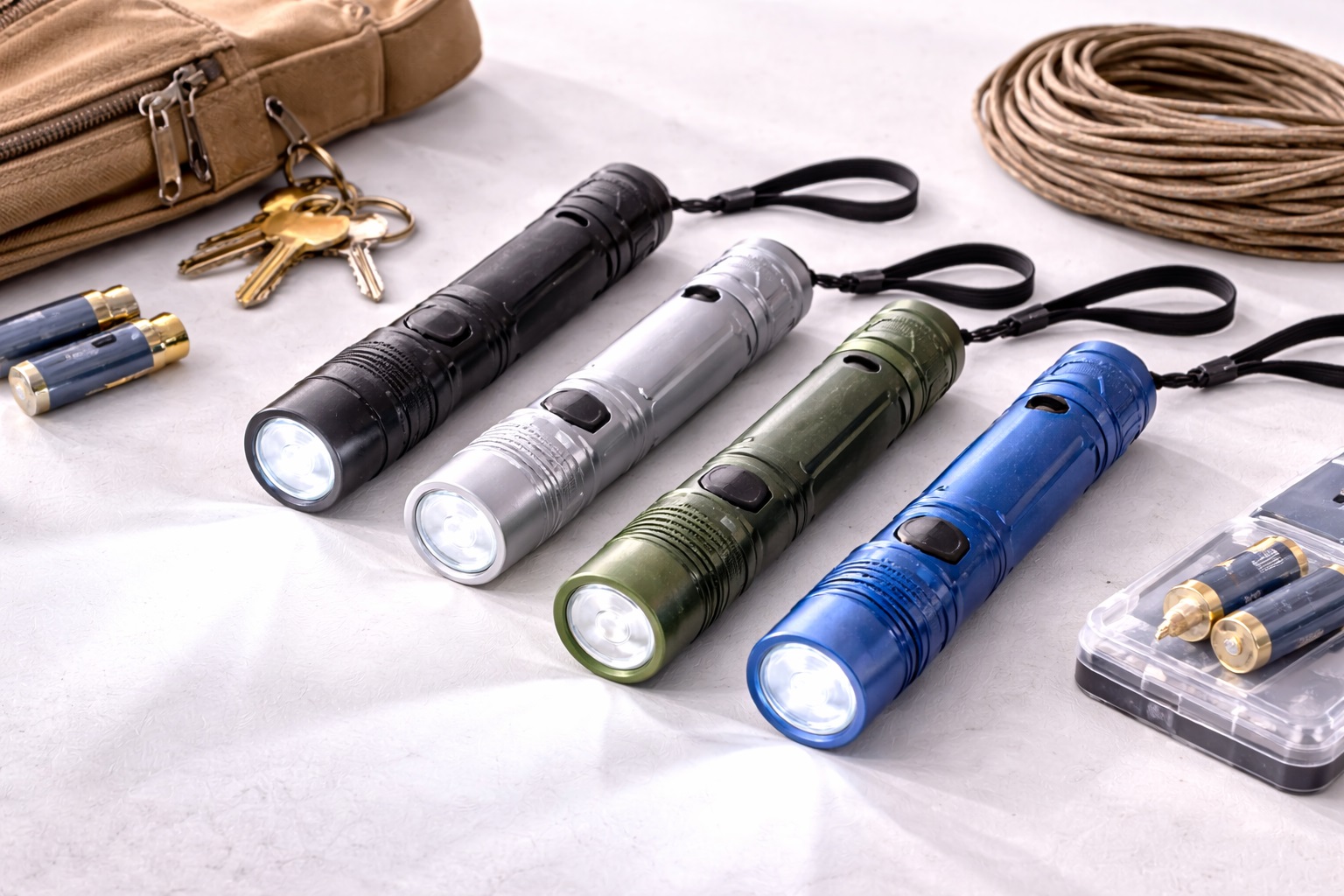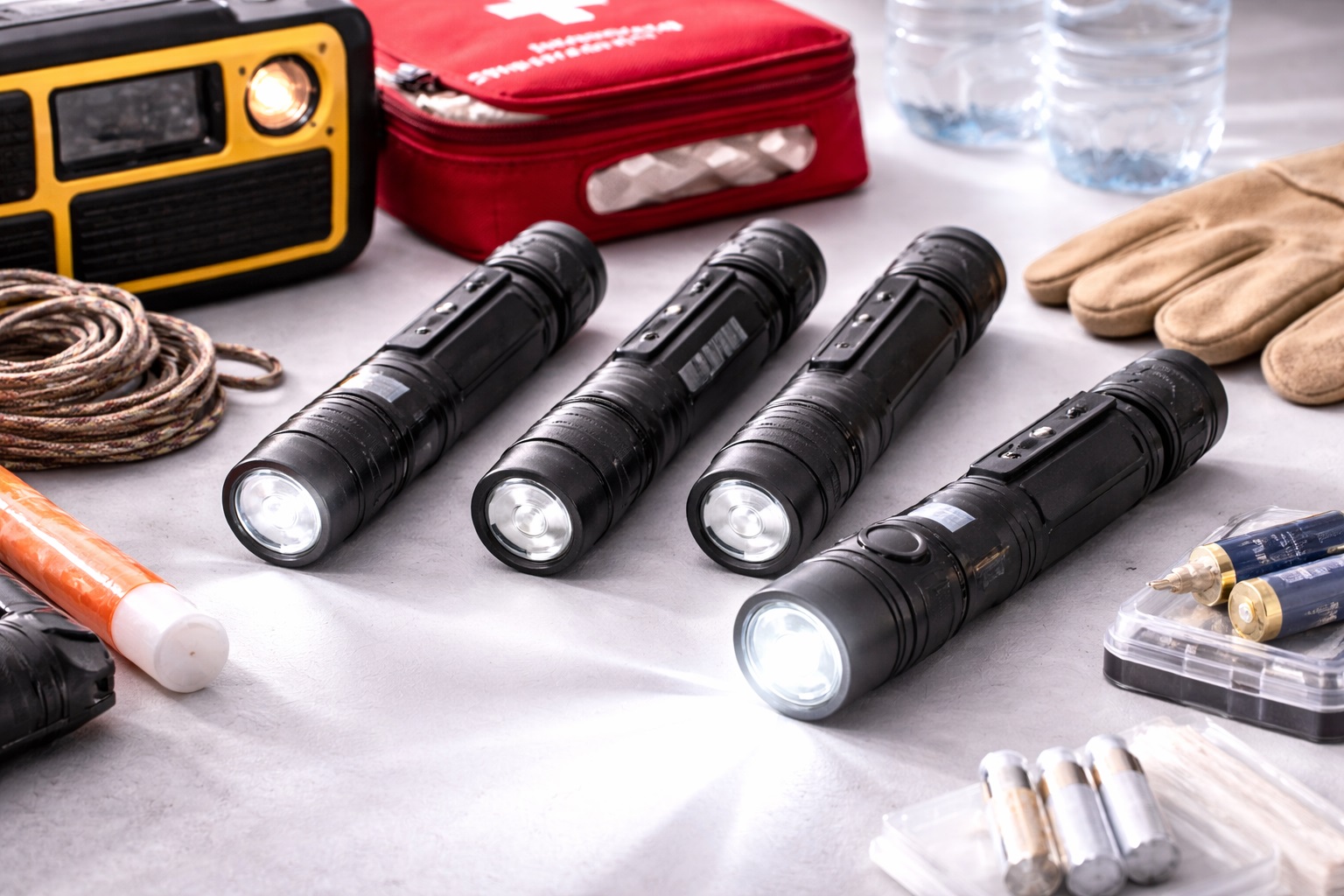
Best Flashlight for Small Bags in 2026
When every cubic inch of your bag is already claimed by a wallet, keys, a charging cable, and a dozen other daily essentials, a bulky flashlight is the first thing to get left behind. Yet a dependable light source is one of those tools you rarely miss until the exact moment you need it: a power outage, a dim parking garage, a dropped set of keys under the car seat, or a hike that runs later than planned. The good news is that the flashlight market has spent the last several years shrinking bright, dependable lights into bodies that slip into a purse pocket, a laptop sleeve, or a glovebox without adding noticeable weight.
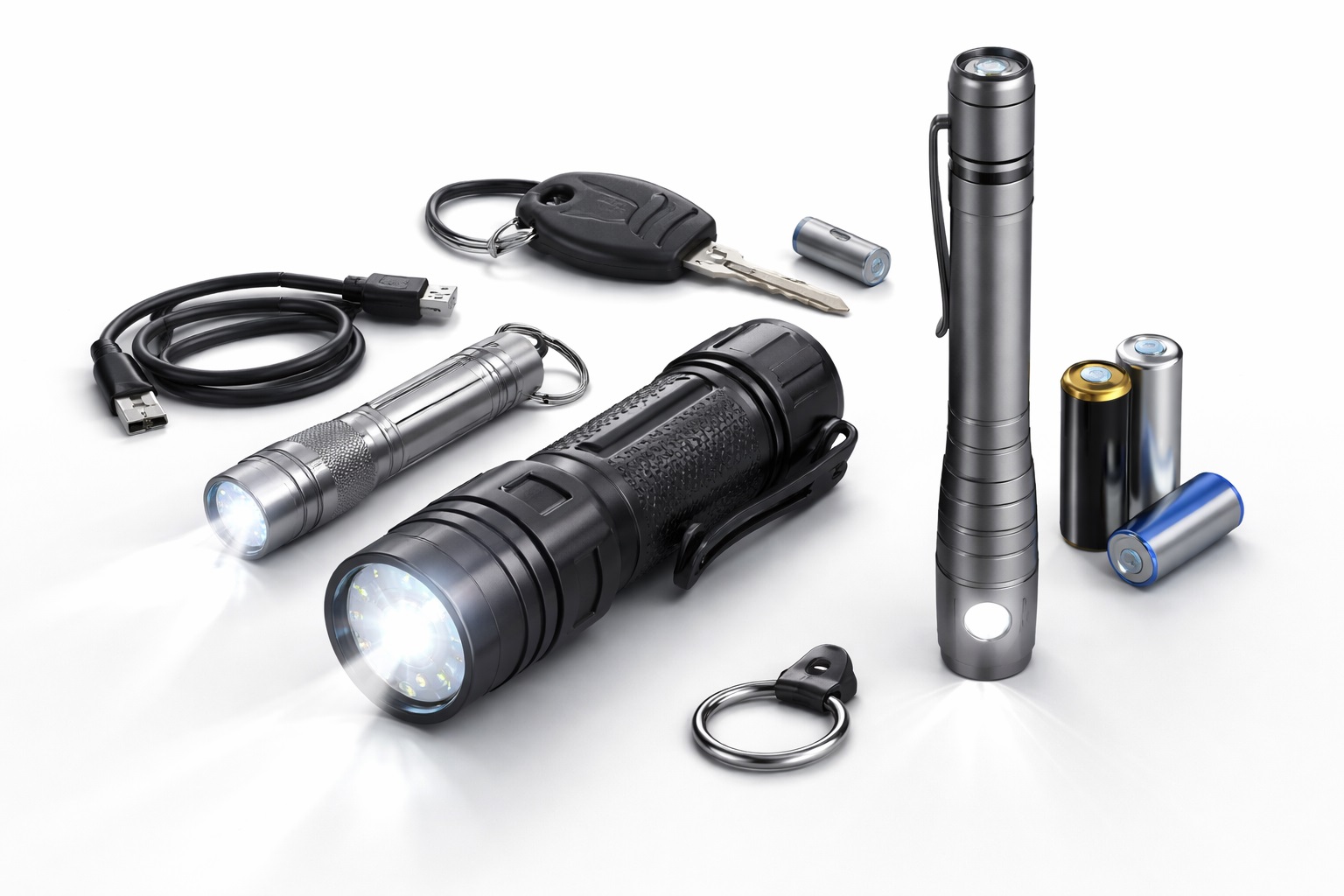
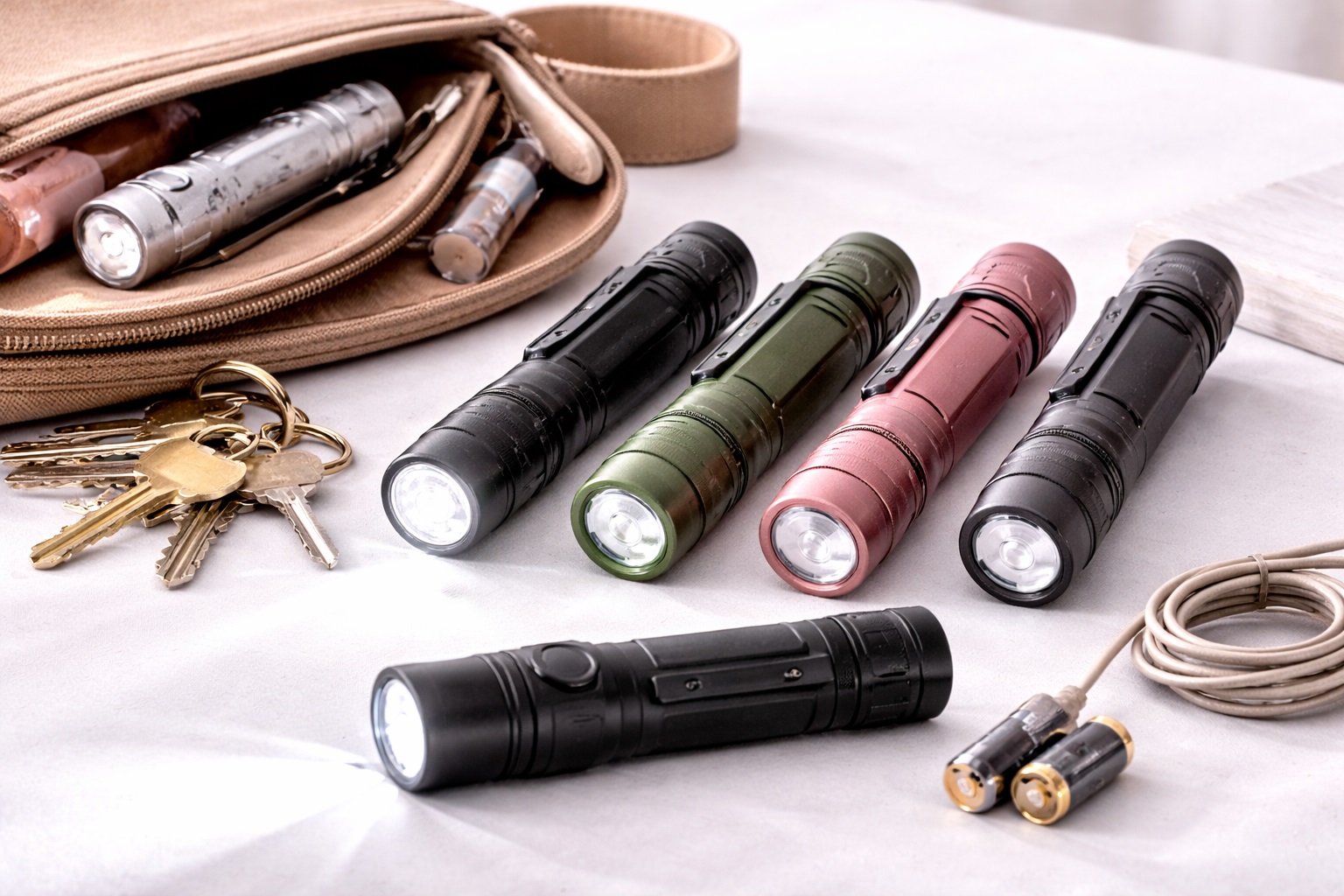
This guide focuses specifically on flashlights that make sense for small bags — compact EDC (everyday carry) lights that trade unnecessary bulk for genuine portability, without sacrificing the brightness and modes that make a flashlight useful in the first place. We looked at eight widely available models spanning budget tactical lights, precision-beam options, and rechargeable EDC favorites, and broke down where each one earns its place in a small bag. Along the way we paid close attention to how each light balances size against real-world usefulness, since a flashlight that never leaves the bottom of your bag is not actually solving the problem it was bought to solve.
Below you will find detailed reviews of each pick, a practical buying guide that walks through the factors that matter most when a flashlight has to compete for limited bag space, and answers to the questions we hear most often from shoppers narrowing down their choice. Whether you carry a small crossbody bag, a slim backpack, or a purse with just a few interior pockets, the goal here is to help you land on a light you will actually reach for.
Top 8 Best Flashlights for Small Bags (Detailed Reviews)
1. GearLight LED Tactical – Best For Budget-Friendly Everyday Carry
GearLight built its reputation on delivering no-frills tactical lights at a price that makes owning several of them an easy decision, and the LED Tactical model carries that value proposition into a genuinely pocket-sized package. With five selectable light modes, it adapts from a gentle search glow to a strobe setting without requiring a second light in the bag, which is exactly the kind of flexibility that matters when you only have room for one flashlight. Its slim aluminum barrel slides into a purse pocket, backpack pouch, or laptop sleeve without adding noticeable bulk, and a going price of around $20 makes it an easy pick for buyers who want a spare in every bag, glovebox, and go-bag they own. For shoppers replacing a light for the first time or outfitting several bags at once, the low buy-in cost removes a lot of the hesitation that comes with trying a new brand.
- Pros:
- Premier build quality relative to its price point
- Five distinct light modes cover most everyday scenarios
- Reputable brand with a large, established user base
- Cons:
- Higher price point than true bargain-bin disposable lights
- Limited color and finish options compared to rivals
Best For: Shoppers who want a compact, mode-flexible backup light in every bag without overspending on a single unit.
Why We Recommend It: The five-mode versatility means one small flashlight can replace several single-purpose lights, which matters most when bag space is already at a premium, and the low price makes it easy to keep a backup on hand.
2. Coast PX1 LED – Best For Precision Beam Control in a Small Footprint
Coast has spent years refining beam optics, and the PX1 LED is where that focus shows most clearly. Its pure beam optics produce a clean, well-defined circle of light with minimal spill or distortion at the edges, which makes it easier to read a street sign, scan a dark trailhead, or find a dropped item without the light scattering uselessly in every direction. For a small-bag flashlight, that kind of beam discipline means you get more usable light from a compact body rather than needing a larger, higher-output unit to compensate for a poorly focused beam. At around $40, it sits comfortably in the mid-range for buyers who prioritize beam quality over raw specifications, and its consistent output makes it a light you can trust to perform the same way every time you reach for it.
- Pros:
- Premier build quality with attention to optical clarity
- Pure beam optics reduce glare and improve usable light
- Reputable brand known for consistent quality control
- Cons:
- Higher price point than basic single-mode lights
- Limited color options compared to some competitors
Best For: Buyers who care more about a clean, focused beam than about having numerous flashing or colored modes.
Why We Recommend It: A well-focused beam lets a small flashlight punch above its size, which is exactly the trade-off small-bag carriers are looking for, especially when clarity matters more than raw brightness figures.
3. Maglite LED Flashlight – Best For Classic, Adjustable Reliability
Maglite is one of the most recognizable names in portable lighting, and its LED Flashlight updates a familiar design with a beam focus adjustment that lets you twist between a tight spot beam and a wider flood beam on demand. That adjustability is genuinely useful in a small bag, since it means one light can handle both close-up tasks, like checking a bag for dropped items, and longer-range needs, like lighting a path ahead. Built with the durability Maglite is known for, it holds up to the everyday bumps and jostling that come with being tossed in and out of a bag, and its roughly $25 price keeps it accessible. Generations of users have relied on the Maglite name specifically because it tends to keep working long after cheaper alternatives have failed.
- Pros:
- Premier build quality from a long-trusted brand
- Beam focus adjustment adds real everyday versatility
- Reputable brand with decades of consumer trust
- Cons:
- Higher price point than the most basic keychain lights
- Limited color options relative to newer competitors
Best For: Buyers who want one adjustable light that covers both close-range and longer-throw needs without switching devices.
Why We Recommend It: The adjustable beam gives a single compact light more day-to-day flexibility than a fixed-beam alternative, so it adapts to whatever task comes up rather than forcing a compromise.
4. Streamlight ProTac HL – Best For Reliable Multi-Battery Flexibility
Streamlight is a name that shows up frequently in professional gear bags, and the ProTac HL brings that reputation to a size still manageable for a small personal bag. Its multi-fuel capability means it can run on more than one type of battery, which is a genuinely practical feature when you are trying to consolidate what you carry and want fewer separate battery types to track. It is built to a standard that professionals rely on, and at around $80 it sits at the higher end of this list, reflecting the extra durability and consistent output that comes with the brand. Buyers who have used a Streamlight product before often gravitate back to the brand specifically because of how predictable its performance remains over years of use.
- Pros:
- Premier build quality built to professional standards
- Multi-fuel capability adds flexibility for battery sourcing
- Reputable brand trusted across professional use cases
- Cons:
- Higher price point than most compact EDC lights
- Limited color options compared to consumer-focused brands
Best For: Buyers who want a small-bag light built to the same standard used by professionals who depend on their gear daily.
Why We Recommend It: Multi-fuel flexibility means fewer battery types to keep track of, which simplifies what else you need to pack, and the added durability offers real peace of mind.
5. ThruNite Archer 2A – Best For AA-Powered Everyday Carry
ThruNite has built a loyal following among flashlight enthusiasts, and the Archer 2A is a favorite for buyers who want AA battery compatibility in a genuinely pocketable body. Its dual switch design lets you access both a tail switch for quick on/off and a side switch for mode selection, which makes one-handed operation simple even when your other hand is holding a bag strap or a set of keys. Running on widely available AA batteries also means you are never far from a replacement, an underrated convenience for a light meant to live in a small bag. It is priced around $35, and the dual-switch layout in particular tends to win over buyers who have grown frustrated with single-switch designs that cycle awkwardly through modes.
- Pros:
- Premier build quality with a refined dual-switch layout
- Dual switch design supports quick, intuitive one-handed use
- Reputable brand respected within the flashlight enthusiast community
- Cons:
- Higher price point than basic single-switch lights
- Limited color options outside of standard finishes
Best For: Buyers who want AA battery convenience paired with an intuitive, quick-access switch layout.
Why We Recommend It: Easy one-handed operation and widely available battery compatibility make this a practical everyday companion for a small bag, particularly for anyone who dislikes hunting for specialty batteries.
6. Olight S2R Baton II – Best For Rechargeable Convenience
Olight helped popularize magnetic USB charging in the compact flashlight category, and the S2R Baton II remains a go-to example of how that convenience feels in daily use. Instead of hunting for replacement batteries, you simply attach the included magnetic charging cable and top it off, which is a meaningful advantage for anyone who wants to keep a small-bag light topped up the same way they charge a phone. Its compact, rounded body was clearly designed with pocket and bag carry in mind, and at around $70 it reflects the added engineering that goes into a rechargeable system. Many owners keep the charging cable in the same bag pocket as the light itself, turning a nightly phone charge into a two-for-one routine.
- Pros:
- Premier build quality with a refined, pocket-friendly shape
- Magnetic charging removes the need for spare batteries
- Reputable brand known for rechargeable EDC innovation
- Cons:
- Higher price point than disposable-battery alternatives
- Limited color options across the lineup
Best For: Buyers who would rather recharge a light overnight than manage a stock of spare batteries.
Why We Recommend It: Magnetic charging is one of the most convenient ways to keep a small-bag flashlight consistently ready to use, cutting down on the odds you reach for it and find it dead.
7. Anker Bolder LC90 – Best For High Output in a Compact Body
Anker is best known for chargers and power banks, and that same engineering focus on efficient power delivery carries over into the Bolder LC90. Its 900 lumens of brightness is notably strong for a light this size, giving you output that punches well above what its compact dimensions would suggest. That extra brightness is useful when a small bag limits you to carrying just one flashlight, since it means you are not sacrificing performance for the sake of portability. It is priced around $30, making it one of the more accessible high-output options here, and buyers already invested in Anker's charging ecosystem often appreciate sticking with a familiar, trusted brand.
- Pros:
- Premier build quality from a brand known for reliable electronics
- 900 lumens brightness stands out for a compact form factor
- Reputable brand with strong customer support infrastructure
- Cons:
- Higher price point than the most basic keychain lights
- Limited color options compared to lifestyle-focused brands
Best For: Buyers who want maximum brightness without stepping up to a bulkier flashlight body.
Why We Recommend It: Strong output in a compact housing means you are not compromising on performance just to save bag space, which is the exact balance small-bag carriers are chasing.
8. Fenix PD35 V3.0 – Best For Rugged, Long-Term Durability
Fenix has a strong reputation among tactical and outdoor users, and the PD35 V3.0 continues that legacy with a tough aluminum body designed to handle drops, moisture, and rough handling without missing a beat. For a small bag that gets tossed around during a commute or an outdoor outing, that kind of ruggedness is reassuring; you are not worried about a cracked lens or a broken clip after the light bounces around with your other gear. At around $90, it is the most premium pick on this list, reflecting the materials and engineering that go into its construction, and buyers who plan to keep a flashlight for years rather than replace it annually tend to see the higher cost as an investment rather than an expense.
- Pros:
- Premier build quality with a genuinely rugged aluminum housing
- Tough aluminum body resists everyday wear and impact
- Reputable brand trusted by outdoor and tactical communities
- Cons:
- Higher price point than most compact EDC lights
- Limited color options compared to consumer-focused competitors
Best For: Buyers who prioritize long-term durability and can justify a higher price for a light that will outlast rougher treatment.
Why We Recommend It: A rugged aluminum body means less worry about wear and tear inside a bag that already takes daily abuse, which pays off over years of regular use.
Buying Guide: How to Choose the Best Flashlight for Small Bags
Choosing a flashlight for a small bag is a different exercise than choosing one for a truck glovebox or a home emergency kit. Size and weight compete directly with brightness, runtime, and durability, so the right choice usually comes down to which trade-offs matter most for how you actually use your bag day to day. The following considerations cover the practical factors worth weighing before you commit to a specific model.
1. Overall Size and Barrel Diameter
The single most important factor for small-bag carry is physical size. A flashlight's length matters, but barrel diameter often matters more, since a thicker body eats up more of a pocket or pouch than length alone would suggest. Look for slim, cylindrical designs that slide in alongside a phone charger or a set of keys without creating an awkward bulge, and consider how the flashlight sits when your bag is already at capacity.
2. Weight Relative to Output
Heavier flashlights are usually heavier for a reason, whether that is a larger battery, a metal body, or additional internal components. For small-bag carry, it is worth asking whether the added weight buys you meaningfully more brightness or runtime, or whether a lighter model would serve the same purpose with less strain on your bag's straps and zippers over time. A few extra ounces may seem trivial in isolation but add up when combined with everything else you are already carrying.
3. Battery Type and Replacement Convenience
Some flashlights run on common AA or AAA batteries, while others use rechargeable lithium cells or built-in USB charging. Each approach has trade-offs: standard batteries are easy to replace anywhere, while rechargeable systems reduce long-term cost and clutter but require you to remember to charge them. Think about which system fits your habits before choosing, since a rechargeable light left uncharged is no more useful than an empty flashlight with dead batteries.
4. Number of Light Modes
A flashlight with multiple brightness levels and special modes, such as strobe or low-power glow, effectively replaces several single-purpose lights. That versatility is especially valuable in a small bag, where there is rarely room to carry a separate light for every situation, and cycling between modes should feel intuitive rather than requiring you to memorize a complicated sequence of button presses.
5. Beam Type: Flood vs. Spot vs. Adjustable
A flood beam lights a wide area evenly, which is useful for general tasks, while a spot beam throws light farther in a tighter circle, which helps with distance visibility. Adjustable-beam flashlights let you switch between the two, offering the most flexibility from a single compact unit, which can be especially valuable if you use the same light for both close-up tasks and longer-range visibility.
6. Switch Placement and Ease of Use
A well-placed switch, whether on the tail or the side of the body, makes a real difference in how quickly and intuitively you can turn the light on with one hand. This matters more than it might seem when you are digging through a bag in a hurry or in low light, and a poorly placed switch can turn a simple task into a frustrating fumble.
7. Build Material and Weather Resistance
Aluminum bodies generally offer better durability and heat dissipation than plastic, while weather-sealed or water-resistant designs hold up better against the occasional spilled drink or rainy commute inside a bag. Consider how much abuse your bag typically sees, and whether the flashlight you are considering is rated to handle that level of exposure.
8. Clip or Attachment Options
A pocket clip, lanyard loop, or carabiner attachment point can make it easier to keep a flashlight in a consistent, findable spot inside a cluttered bag rather than sinking to the bottom with loose items. This small design detail often makes the difference between a flashlight you can find instantly and one you have to dig for.
9. Price Relative to How Often You Will Use It
A flashlight you reach for daily justifies a higher price more easily than one reserved for rare emergencies. Match your budget to how frequently the light will actually see use, rather than defaulting to the most expensive or the cheapest option available, and remember that a mid-range light used consistently often delivers more real value than a premium light left untouched.
10. Brand Reputation and Warranty Support
Established brands typically back their products with clearer warranty terms and more consistent quality control. For a light you are depending on, that track record is worth factoring into the decision alongside raw specifications, since a warranty is only useful if the brand behind it has a history of honoring it.
11. Runtime on a Single Charge or Battery Set
Runtime varies significantly by brightness setting, so a light rated for many hours on its lowest mode may only last a fraction of that time at maximum output. Consider which mode you will use most often when estimating how long a light will realistically last you between charges or battery changes.
12. Water and Impact Resistance Ratings
Many modern flashlights carry an ingress protection rating indicating resistance to dust and water, along with a stated drop-resistance distance. These ratings offer a useful, standardized way to compare how much rough handling different models are designed to tolerate before you commit to carrying one daily.
13. How It Complements the Rest of Your Bag's Contents
Finally, think about how a flashlight fits alongside everything else you already carry. A model that pairs well with the batteries or charging cables you already bring along will feel far more seamless than one that introduces an entirely new accessory requirement, which is often the deciding factor between a flashlight that earns a permanent spot in your bag and one that eventually gets left at home.
Frequently Asked Questions
Is a premium flashlight worth it for small-bag carry?
Yes, in many cases. Higher-end models often offer better beam quality, more consistent output, and superior materials compared to budget alternatives, which can matter more when you are relying on a single compact light for multiple everyday situations. That said, a well-reviewed budget option can still serve most casual needs.
How do I maintain a compact flashlight?
Keep it clean and dry, check battery contacts periodically for corrosion, and avoid letting rechargeable batteries sit fully depleted for long stretches, since that can shorten their usable lifespan over time. A quick monthly check is usually enough to keep a small-bag light performing reliably.
What size flashlight actually fits in a small bag?
Most compact EDC flashlights measure somewhere between four and six inches in length with a slim barrel diameter, which is small enough to sit alongside a phone, wallet, and keys without creating noticeable bulk. Anything larger starts to compete meaningfully with your bag's other contents.
Do I need a rechargeable flashlight, or are standard batteries fine?
Either can work well. Rechargeable models reduce long-term costs and clutter, while battery-powered lights offer the convenience of picking up a replacement almost anywhere, which can be reassuring for infrequent use. Your choice should reflect how often you expect to actually use the light.
How many lumens do I actually need for everyday carry?
For most everyday tasks like finding items in the dark or lighting a short walk, moderate brightness is plenty. Higher lumen counts become more useful for outdoor activities or situations requiring light to travel a longer distance, so consider your typical use case before chasing the highest number available.
Should I prioritize brightness or battery life?
It depends on how you use the light. If quick, occasional use is the norm, brightness may matter more; if you rely on your flashlight for extended periods, runtime and efficient power management become more important considerations in your decision.
Are aluminum-bodied flashlights better than plastic ones?
Aluminum bodies generally offer better durability and heat management, which can extend the lifespan of the internal components, while plastic bodies tend to be lighter and less expensive, which can be an advantage if minimizing weight is your top priority.
Can a small flashlight still be genuinely bright?
Yes. Advances in LED technology mean many compact flashlights now produce strong output relative to their size, so you no longer need a large, heavy body to get meaningful brightness for everyday tasks.
What is the difference between flood and spot beams?
A flood beam spreads light evenly across a wide area, useful for close-up tasks, while a spot beam concentrates light into a tighter circle that travels farther, useful for seeing at a distance. Some models let you adjust between the two as needed.
How often should I replace or recharge my flashlight's battery?
This depends on usage frequency and battery type. Standard batteries should be checked periodically for corrosion or leakage, while rechargeable batteries benefit from being topped off regularly rather than left fully drained for extended periods of time.
Is a multi-mode flashlight worth the extra cost over a single-mode light?
For small-bag carry specifically, yes, since multiple modes let one compact light cover a wider range of situations, reducing the need to carry additional lighting tools and simplifying what you have to pack overall.
What should I look for in terms of switch design?
A switch you can operate confidently with one hand, without needing to look at the flashlight, is ideal for quick access in low-light or emergency situations. Tail switches and side switches each have loyal followings depending on personal preference.
Do compact flashlights hold up as well as larger models over time?
Well-built compact flashlights from reputable brands can be just as durable as larger models; the key factors are the quality of materials and construction rather than sheer size, so it pays to prioritize brand reputation over dimensions alone.
Final Verdict
- Top Pick: GearLight LED Tactical for overall excellence.
- Budget Choice: Maglite LED Flashlight for great value.
- Premium Choice: Coast PX1 LED for high-end features.
There is no single flashlight that suits every small bag or every user, but the models above cover the range of trade-offs most shoppers care about: budget-friendly versatility, precision beam quality, rechargeable convenience, and rugged durability. Matching the right light to your bag's available space and your daily routine will make it far more likely that you actually reach for it when you need it, rather than leaving it forgotten at the bottom of a drawer.