Best Air Fryers for Small Apartments: Compact Picks That Perform
A full-size air fryer looks great in a spacious kitchen with plenty of counter space to spare, but it can quickly become the single most annoying appliance in a small apartment — hogging outlet access, blocking cabinet doors, and taking up storage space you don't actually have. For anyone cooking in a studio, a one-bedroom, or a dorm-style kitchen, the right air fryer isn't necessarily the biggest or most powerful one. It's the one that fits your actual counter, your actual portion sizes, and your actual routine.
This guide covers six distinct air fryer styles built with small-space cooking in mind, from a true 2-quart mini model sized for a single serving to a toaster oven combo that replaces two appliances with one. Each style solves a different piece of the small-kitchen puzzle — some prioritize footprint above everything else, others focus on precise cooking control, and some are built simply to be affordable and easy to store. The right pick depends on how many people you're typically cooking for, how much counter and cabinet space you can spare, and how much control you want over the cooking process itself.
It's worth setting expectations early: capacity and footprint are usually in direct tension in this category. A basket large enough to cook a full meal for two or three people is rarely going to be small enough to tuck into a narrow cabinet gap, and a genuinely compact unit will mean cooking in smaller batches more often. Understanding that trade-off before comparing specific models will save you from choosing based on price or brand alone and ending up with an air fryer that doesn't actually fit your kitchen or your cooking habits.
The sections below cover six air fryer categories in detail, a buying guide addressing the practical factors that matter most in a small kitchen, and answers to the questions apartment cooks ask most often before buying.
Top Air Fryers for Small Apartments (Detailed Reviews)
1. 2-Quart Mini Air Fryer – Best for Solo Cooking
A true 2-quart air fryer is built around a single priority: fitting into the smallest available counter or cabinet space while still cooking a real single-serving meal. This size suits one person cooking a portion of fries, a few chicken tenders, or a small batch of vegetables without needing to manage a basket sized for a family. For a studio apartment kitchenette or a dorm room with barely enough counter space for a coffee maker, this is often the only size that realistically fits.
The compact basket does mean batch cooking becomes necessary for anything beyond a single portion, and features like a rotating tray or multiple cooking presets are less common at this size than in larger models. For someone who cooks for themselves most nights, though, the smaller size rarely feels limiting in practice.
- Pros:
- Smallest footprint in the category, ideal for tight counters
- Right-sized basket for true single-serving portions
- Lightweight and easy to store in a small cabinet
- Cons:
- Requires batch cooking for more than one portion
- Fewer preset functions than larger digital models
- Basket may be too small for larger cuts like a whole chicken breast
Best For: Solo cooks in studios or dorm kitchens with very limited counter and storage space.
Why We Recommend It: When space is the single biggest constraint, a true mini air fryer is the only category that reliably fits without compromise.
This size also tends to heat up and cook faster for small portions than a larger basket would, simply because there's less empty air space for the unit to circulate and heat before food starts cooking.
2. 3-Quart Compact Air Fryer – Best Overall for Small Apartments
A 3-quart air fryer strikes a middle ground that suits most small-apartment households — enough basket space to cook a real meal for one person with leftovers, or a modest portion for two, without the bulk of a family-size unit. This size is often described as the sweet spot for apartment cooking because it rarely feels cramped for everyday meals while still tucking away in a standard cabinet.
Compared to the 2-quart mini, it takes up a bit more counter and storage space, and it may still require two batches for a full dinner shared between two people who both want a generous portion. For most solo cooks and many couples, though, this size covers the large majority of everyday cooking needs.
- Pros:
- Balanced capacity for one person or a light meal for two
- Still compact enough for most apartment kitchen storage
- Versatile enough for everyday meals without frequent batching
- Cons:
- Larger than a true mini model, though still compact overall
- May require two batches for a full meal shared by two people
- Takes up slightly more storage space than the 2-quart size
Best For: Apartment dwellers who want the best balance between cooking capacity and a small footprint.
Why We Recommend It: It covers the widest range of everyday small-kitchen cooking needs without asking you to sacrifice much counter space in return.
This capacity also tends to be the most widely available size in the compact category, which generally means more model choices, more accessories, and more replacement parts available if something eventually needs repair.
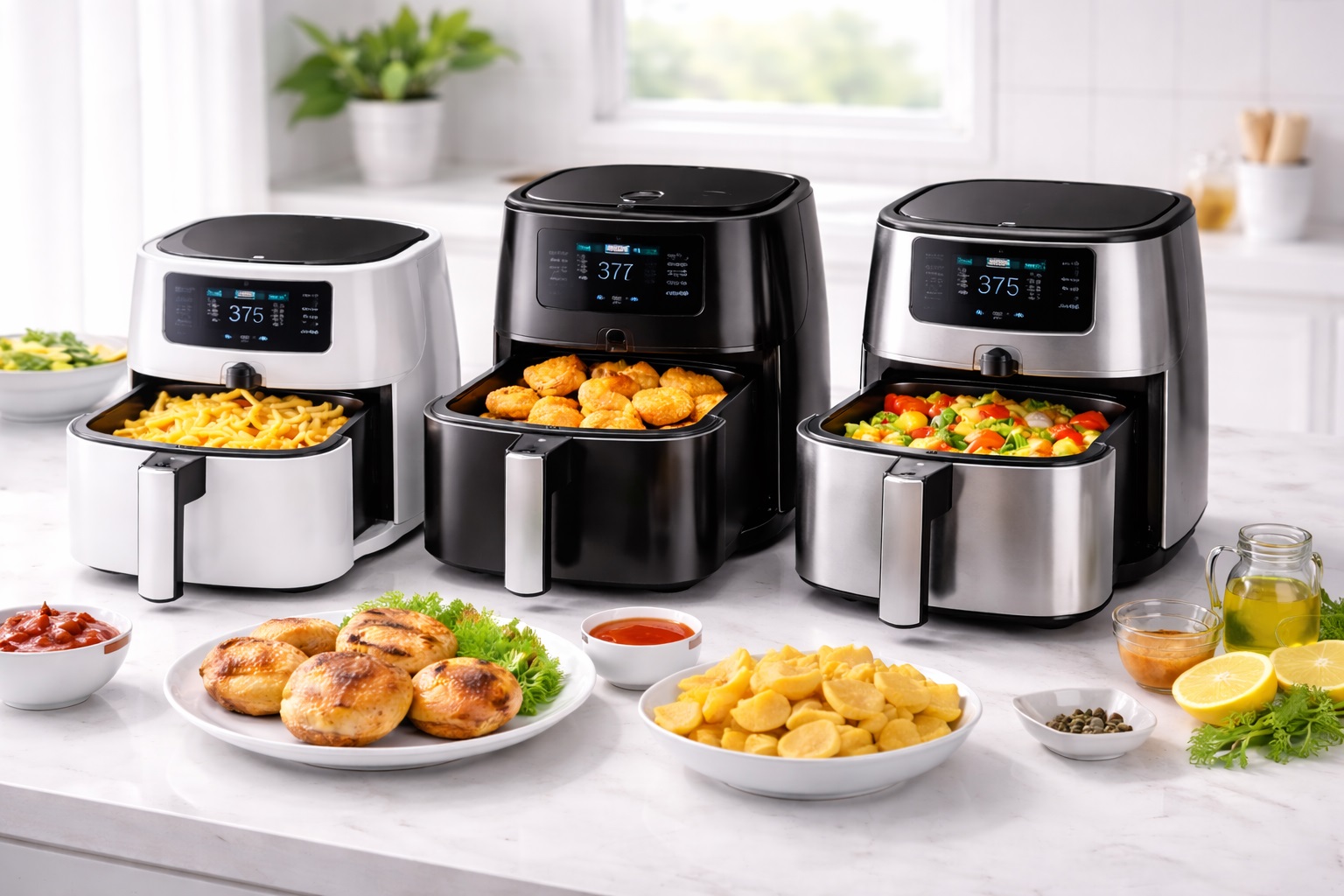
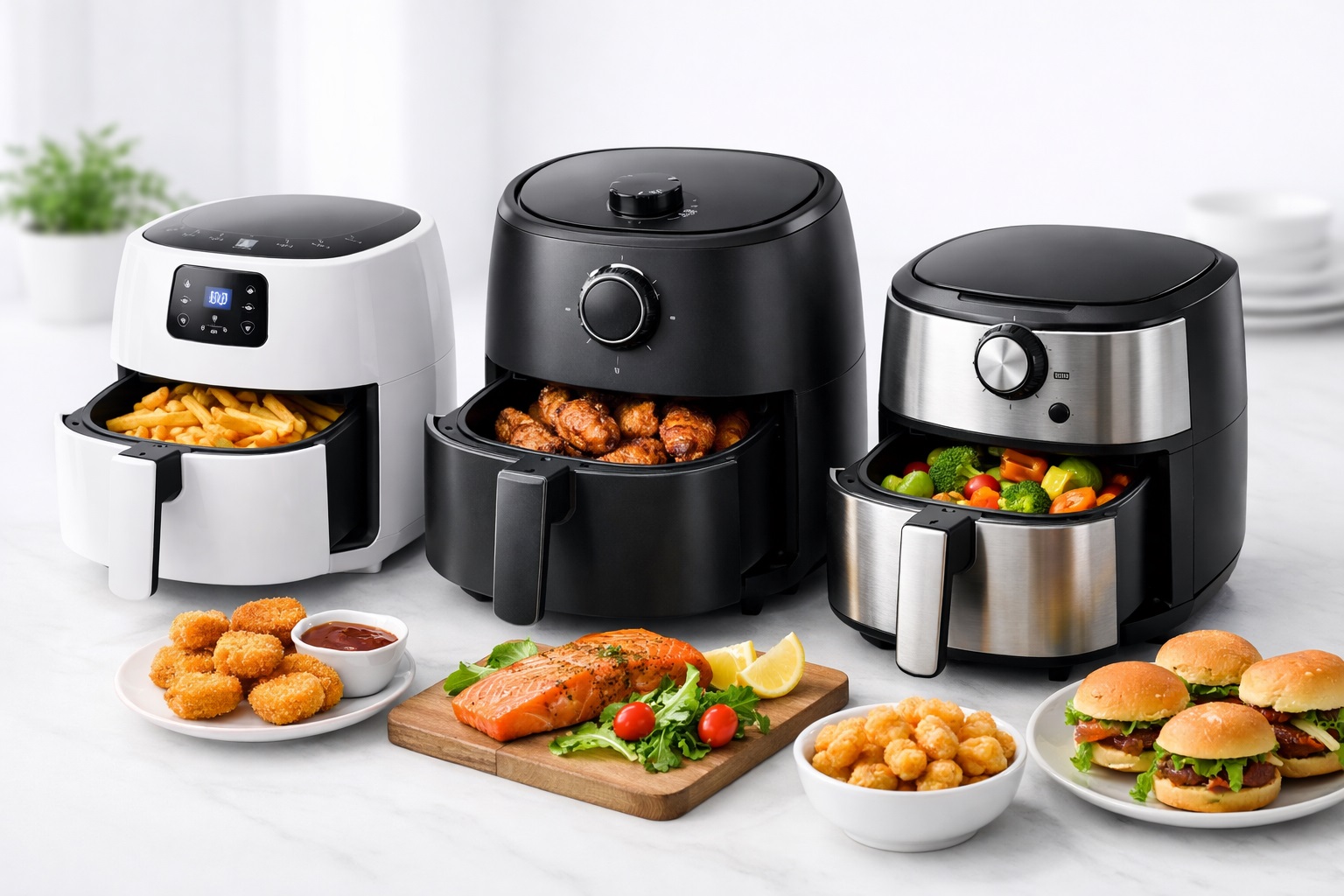
3. Digital Air Fryer – Best for Precise, Repeatable Results
A digital air fryer replaces a manual dial with an electronic display and preset cooking programs for common foods like fries, chicken, or vegetables, letting you select a food type and let the unit manage temperature and time automatically. For anyone who wants consistent, repeatable results without guessing at settings each time, this precision is the main draw.
The trade-off is a slightly higher price than an equivalent analog model and, in some cases, a marginally larger footprint to accommodate the digital display and control panel. For cooks who value convenience and consistency over simplicity, this is a reasonable exchange.
- Pros:
- Preset programs simplify cooking common foods consistently
- Digital display allows precise temperature and time control
- Often includes a memory function for frequently used settings
- Cons:
- Usually priced higher than a comparable analog model
- Digital controls add complexity some users don't need
- Control panel may add slightly to the unit's overall footprint
Best For: Apartment cooks who want consistent, repeatable results without manually adjusting settings every time.
Why We Recommend It: Preset programs and precise digital control reduce the guesswork that comes with manual dial-based cooking.
This style also tends to appeal to newer cooks specifically because the presets remove much of the trial and error involved in learning how a given air fryer behaves with different foods.
4. Analog Dial Air Fryer – Best for Simplicity
An analog dial air fryer strips the cooking process down to two physical controls — a temperature dial and a timer — without a digital display or preset programs to navigate. For anyone who prefers straightforward, mechanical controls over menus and screens, this simplicity is a genuine feature rather than a limitation.
Because there's no preset guidance, achieving consistent results for a specific food takes a bit more trial and error early on, and there's no memory function to recall a favorite setting automatically. Once you've learned your preferred settings for the foods you cook most, though, the dial becomes just as fast to use as any digital equivalent.
- Pros:
- Simple, intuitive controls with no menus to navigate
- Typically more affordable than digital equivalents
- Fewer electronic components that could eventually fail
- Cons:
- No preset programs to guide cooking times for specific foods
- No memory function to automatically recall favorite settings
- Requires more initial trial and error to dial in results
Best For: Cooks who prefer simple mechanical controls and want to avoid digital menus entirely.
Why We Recommend It: Its straightforward dial-and-timer design removes any learning curve tied to digital interfaces or preset menus.
This style is also often the easiest to operate for anyone sharing kitchen duties with roommates or family members who aren't familiar with a specific digital unit's menu structure.
5. Air Fryer Toaster Oven Combo – Best for Multi-Function Versatility
An air fryer toaster oven combo builds air-frying capability into a larger toaster-oven-style housing, adding functions like baking, toasting, and broiling alongside the air fry setting. For a small kitchen where counter space for a second dedicated appliance simply isn't available, replacing both a toaster oven and an air fryer with one unit is a genuinely practical space-saving move.
This versatility comes with a larger overall footprint than a dedicated basket-style air fryer, since it needs to accommodate a full oven-style interior rather than a compact frying basket. For anyone with even slightly more counter space to work with, though, the added functionality often outweighs the extra size.
- Pros:
- Combines air frying with toasting, baking, and broiling
- Replaces two appliances with one, saving counter space overall
- Interior shape often accommodates larger or oddly-shaped foods
- Cons:
- Larger footprint than a dedicated basket-style air fryer
- Air fry results may differ slightly from a basket design
- Heavier and less convenient to store away between uses
Best For: Apartment cooks who want to replace multiple countertop appliances with a single multi-function unit.
Why We Recommend It: Consolidating a toaster oven and an air fryer into one appliance is one of the most effective ways to save counter space without giving up functionality.
This category also tends to suit anyone who bakes or reheats food regularly in addition to air frying, since the oven-style interior handles a wider range of cooking tasks than a basket ever could.
6. Budget Compact Air Fryer – Best Budget Pick
A budget compact air fryer covers the essentials — a small basket, a manual or simple digital control, and dependable everyday performance — without the extra presets, larger capacity, or premium build materials of pricier models. For anyone furnishing a first apartment or simply not wanting to spend heavily on a countertop appliance, this remains a sensible entry point.
The compromise typically shows up in basket capacity and long-term build durability, since budget models are often sized closer to the 2-quart range and may use lighter-duty materials than higher-priced alternatives. For light, occasional use, this trade-off is usually a reasonable one.
- Pros:
- Low upfront cost for functional everyday air frying
- Simple to set up and use immediately
- Compact size suits small apartment kitchens well
- Cons:
- Smaller basket capacity than mid-range or premium models
- Build materials may be less durable over years of daily use
- Fewer functions than digital or combo-style units
Best For: Budget-conscious apartment cooks who want dependable basic air frying without a large investment.
Why We Recommend It: It covers fundamental air frying needs at a price that makes sense for a first apartment or occasional use.
For many solo cooks, this category is genuinely sufficient — the biggest gains in everyday cooking results often come from not overcrowding the basket, rather than from any feature a pricier model would add.
Buying Guide: How to Choose the Best Air Fryer for a Small Apartment
Once you've identified which category fits your kitchen and cooking habits, these factors help you compare specific models within it.
1. Cooking Capacity (Quarts)
Basket capacity determines how much food you can cook in a single batch, which directly affects how often you'll need to cook in multiple rounds. Matching capacity to how many people you typically cook for avoids both an oversized unit that wastes counter space and an undersized one that turns every meal into two batches.
It also helps to think about how you actually eat day to day rather than only the largest meal you might occasionally cook, since sizing around a rare big batch can leave you with a bulkier unit than your typical routine actually requires.
2. Countertop Footprint
The unit's actual width, depth, and height matter as much as its cooking capacity in a small kitchen, since two air fryers with the same basket size can differ meaningfully in how much counter space they occupy. Measuring your available counter space before buying avoids the common mistake of ordering based on capacity alone.
Don't forget to account for clearance space around the unit as well, since air fryers need airflow around their vents to operate safely and shouldn't be pushed flush against a wall or cabinet.
It's also worth measuring the height of any shelf or cabinet space where you plan to store the unit, since some compact air fryers are surprisingly tall even when their base footprint is small, particularly basket-style models with a hinged lid.
3. Temperature Range
A wider temperature range supports more cooking styles, from low-temperature dehydrating to high-heat crisping. Checking the minimum and maximum temperature a model supports is worth doing if you plan to cook a variety of foods rather than just reheating fries.
Consistency across that range also matters — some budget models can run slightly hotter or cooler than their displayed setting, which is worth checking in reviews if precise temperature control matters for what you cook.
4. Preset Cooking Functions
Digital models with preset programs simplify cooking common foods without manually adjusting time and temperature, while dial-based models rely on your own experience and adjustment. Consider how much you value that convenience against the simplicity of manual controls.
Presets are especially useful for anyone newer to air frying, since they remove much of the early trial and error involved in learning how a specific unit behaves with different foods.
5. Ease of Cleaning
A dishwasher-safe, non-stick basket makes daily cleanup significantly easier than a model requiring careful hand-washing after every use. For apartment kitchens with limited sink and counter space for drying dishes, this is a bigger factor than it might initially seem.
Removable parts that break down into fewer, simpler pieces are also generally easier to clean thoroughly than baskets with tight corners or non-removable components that trap grease over time.
6. Noise Level During Operation
Air fryers use a fan to circulate hot air, and fan noise varies noticeably between models. In a small apartment where the kitchen may be steps away from a living or sleeping area, a quieter unit can make a real difference to daily comfort, especially during evening cooking.
7. Power Draw and Outlet Compatibility
Air fryers can draw significant power during operation, and older apartment wiring or shared circuits can sometimes struggle if multiple high-draw appliances run at once. Checking a unit's wattage and avoiding running it alongside another heavy appliance on the same circuit helps prevent tripped breakers.
8. Price and Long-Term Value
Weigh how often you expect to use the air fryer against how much you're willing to spend on features like presets, digital displays, or combo functionality. A simpler, less expensive model that covers your actual cooking habits reliably is often better value than a feature-heavy one you'll rarely use fully.
9. Brand Reliability and Warranty
Established appliance brands typically offer more consistent heating performance and clearer warranty terms, which matters for an appliance used several times a week. A reasonable warranty period is a useful signal of the manufacturer's confidence in the unit's durability.
10. Storage and Portability
If counter space is limited enough that the air fryer needs to be stored away between uses rather than left out permanently, consider its weight and how easily it fits in a cabinet or on a shelf. A lighter, more compact unit is meaningfully easier to move in and out of storage on a daily basis.
11. Accessory Availability
Some air fryers support additional accessories like baking pans, skewer racks, or silicone liners that expand what you can cook. If versatility matters to you, checking what accessories are available and compatible with a specific model is worth the extra research.
12. Real-World User Feedback
Specifications rarely reveal how a basket's non-stick coating holds up after months of regular use, or whether a digital display remains responsive over time. Reviews focused on longevity, rather than first impressions, add valuable context before you commit to a specific model.
Frequently Asked Questions
What size air fryer is right for one person?
A 2 to 3-quart air fryer is generally enough for a single serving with some leftovers, without taking up more counter or storage space than necessary. Sizing up further usually only makes sense if you frequently cook for guests or want to batch-cook meals for the week ahead.
Do smaller air fryers cook food differently than larger ones?
The core air frying principle is the same regardless of size, though a smaller basket circulates hot air around food in a tighter space, which can mean slightly faster cooking times for small portions compared to a larger basket with more empty air around the food.
Is a digital air fryer worth the extra cost over an analog model?
If you value preset programs and precise, repeatable settings, yes. If you're comfortable adjusting temperature and time manually and want to keep things simple, an analog dial model often delivers very similar cooking results at a lower price.
Can an air fryer toaster oven combo really replace a separate air fryer and toaster oven?
For most everyday toasting, baking, and air frying needs, yes — a combo unit handles all three reasonably well. Dedicated basket-style air fryers can still produce slightly crispier results for foods like fries, so the trade-off is versatility against marginally better air fry performance.
How much counter space does a compact air fryer actually need?
Beyond the unit's own footprint, allow a few extra inches of clearance around the back and sides for proper airflow, since air fryers vent hot air during operation and shouldn't be pushed directly against a wall or cabinet.
Are budget air fryers reliable for daily use?
Many budget models perform adequately for regular use, though they may show wear in the non-stick coating or overall build sooner than pricier alternatives. For light to moderate daily use, a budget model is often a reasonable choice, especially for a first apartment.
Can I cook a full meal for two people in a small air fryer?
A 3-quart model can usually manage a modest meal for two with some batching, while a 2-quart mini will likely require cooking components separately in sequence. Planning your meal around the basket size, rather than the other way around, leads to better results.
How do I clean an air fryer basket without a dishwasher?
Soaking the basket briefly in warm soapy water loosens most residue, and a non-abrasive sponge prevents damaging the non-stick coating. Avoid metal utensils or scouring pads, which can scratch the coating and shorten the basket's usable life.
Is it safe to run an air fryer in a small apartment kitchen?
Air fryers are generally safe when used on a stable, heat-resistant surface with adequate clearance around the vents. Avoid placing one directly under a cabinet or too close to a wall, and check your circuit's capacity if you plan to run other high-draw appliances at the same time.
Do compact air fryers use less electricity than full-size models?
Smaller air fryers generally draw somewhat less power than larger models, and air frying overall tends to use less energy than a full-size conventional oven for small to medium portions, since it heats a much smaller interior space.
What's the easiest air fryer type for a beginner to use?
A digital model with preset cooking programs is typically the easiest starting point, since it removes much of the guesswork around time and temperature for common foods while you get familiar with how the appliance behaves.
Should I buy an air fryer with a see-through window?
A viewing window lets you check on food without opening the basket and interrupting the cooking cycle, which can be a helpful convenience. It isn't essential, but it's a reasonable feature to prioritize if two otherwise similar models are close in price.
Will an air fryer make my small apartment kitchen smell like fried food?
Air frying generally produces far less lingering odor than deep frying, since it uses little to no oil and doesn't fill the kitchen with hot oil vapor. Some smell from the food itself is normal, but it typically clears much faster than traditional frying odors, which is a genuine advantage in a small, enclosed apartment kitchen.
Do I need special cookware or accessories to get started?
Most air fryers work fine straight out of the box with just the included basket, though parchment liners or a small baking pan accessory can expand what you're able to cook. There's no need to buy extra accessories immediately — start with the basics and add accessories only once you know what you'll actually use regularly.
Final Verdict
- Best Overall: A 3-quart compact air fryer offers the best balance of cooking capacity and small-kitchen footprint.
- Best for Solo Cooking: A 2-quart mini air fryer fits the tightest counter and storage space while still handling single portions well.
- Best for Precision: A digital air fryer delivers the most consistent, repeatable results through preset programs.
- Best Budget: A budget compact air fryer covers essential air frying needs at an accessible price.
- Best for Versatility: An air fryer toaster oven combo replaces multiple appliances with one multi-function unit.
The right air fryer for a small apartment comes down to matching cooking capacity, counter footprint, and control preferences to your actual routine, rather than defaulting to whichever model has the most features listed on the box. A unit that fits comfortably in your kitchen and gets used regularly will serve you far better than a larger, more capable one that ends up shoved in the back of a cabinet.
If you're unsure where to start, prioritize matching capacity to how many people you typically cook for, then measure your actual available counter space before comparing specific models. Preset programs, combo functionality, and premium build materials are all genuine conveniences, but they matter less than simply choosing a size that fits both your kitchen and your everyday cooking habits.