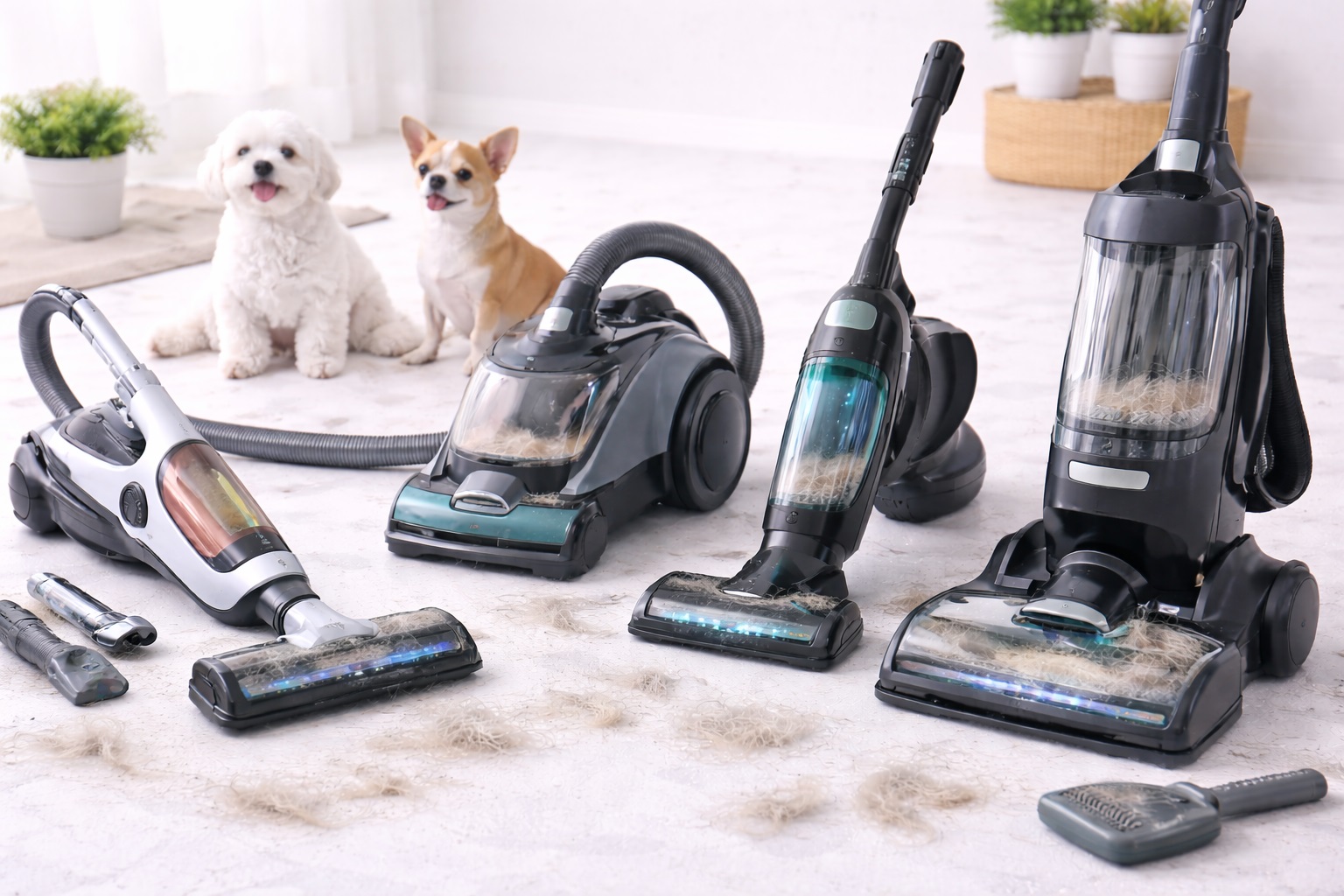
Best Pet Vacuum for Small Dog Hair: Top Picks for 2026
Small dog fur behaves differently from the coarser hair of larger breeds, and that difference matters more for vacuum selection than most product descriptions acknowledge. Fine, lightweight fur tends to float rather than settle, cling to fabric through static rather than lying loosely on top of it, and work its way into upholstery weave in a way that a vacuum optimized for heavier hair often struggles to fully extract.
This guide focuses specifically on vacuum features that handle fine, lightweight fur well — suction consistency, brush roll design suited to short or fine hair rather than long coarse hair, and filtration that captures the finer dander that often accompanies small breed shedding — rather than general pet hair vacuum advice built around larger dog coats.
No single vacuum handles every part of a fine-fur cleaning routine perfectly. Most households end up combining a couple of tools — something for daily quick pickup and something else for a more thorough weekly pass — rather than expecting one machine to do it all equally well. The comparisons below reflect that reality rather than promising a single all-purpose solution.
Static cling deserves specific attention with fine fur, since it's the characteristic that makes small dog hair uniquely frustrating to clean compared to coarser coats. Fur that clings to fabric through static resists standard suction until that static charge is addressed, which is why certain brush roll and attachment designs consistently outperform others on this specific type of fur.
Top 8 Pet Vacuums for Small Dog Hair (Detailed Reviews)
1. Cordless Stick Vacuum with Pet Tool – Best for Daily Fur Pickup
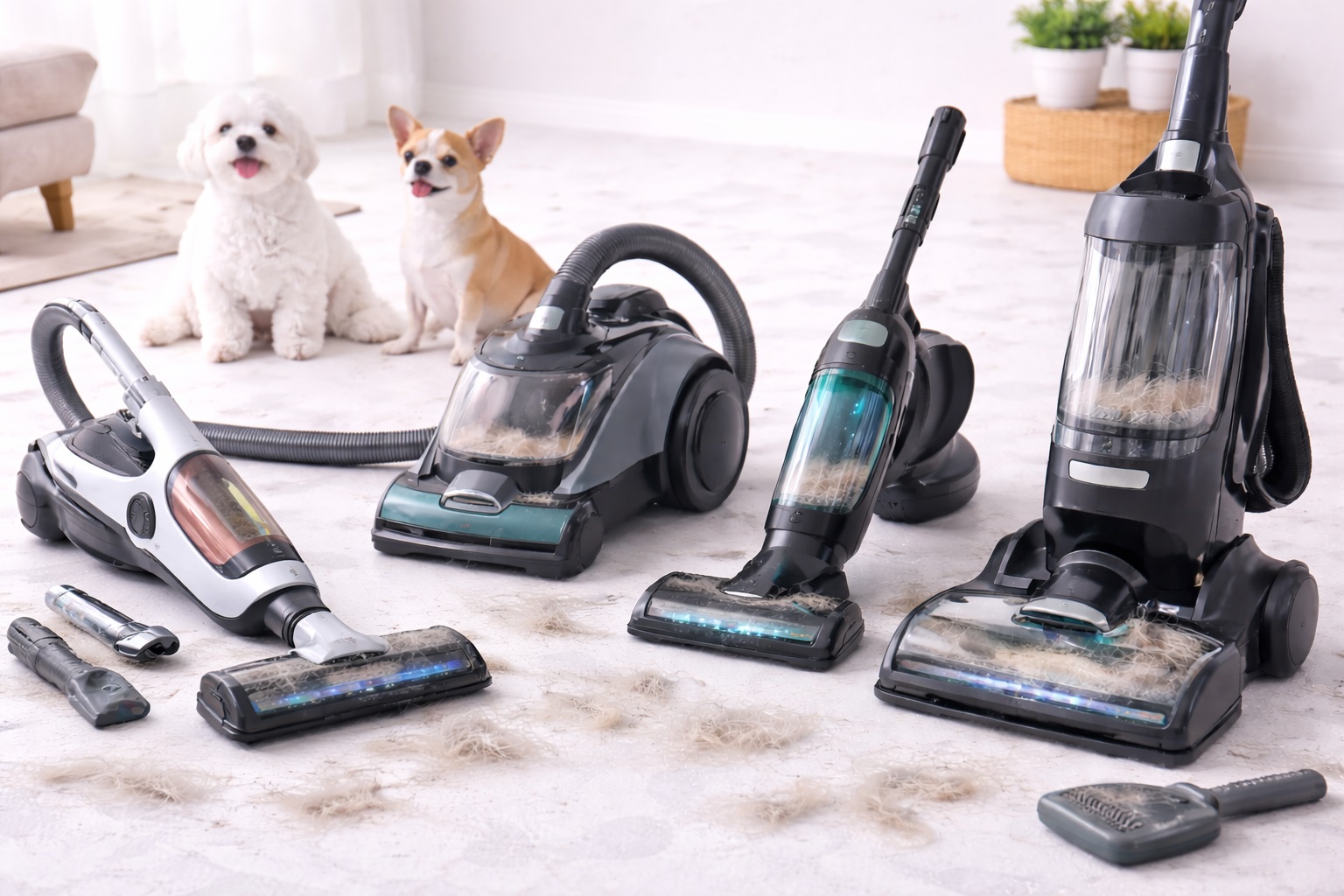
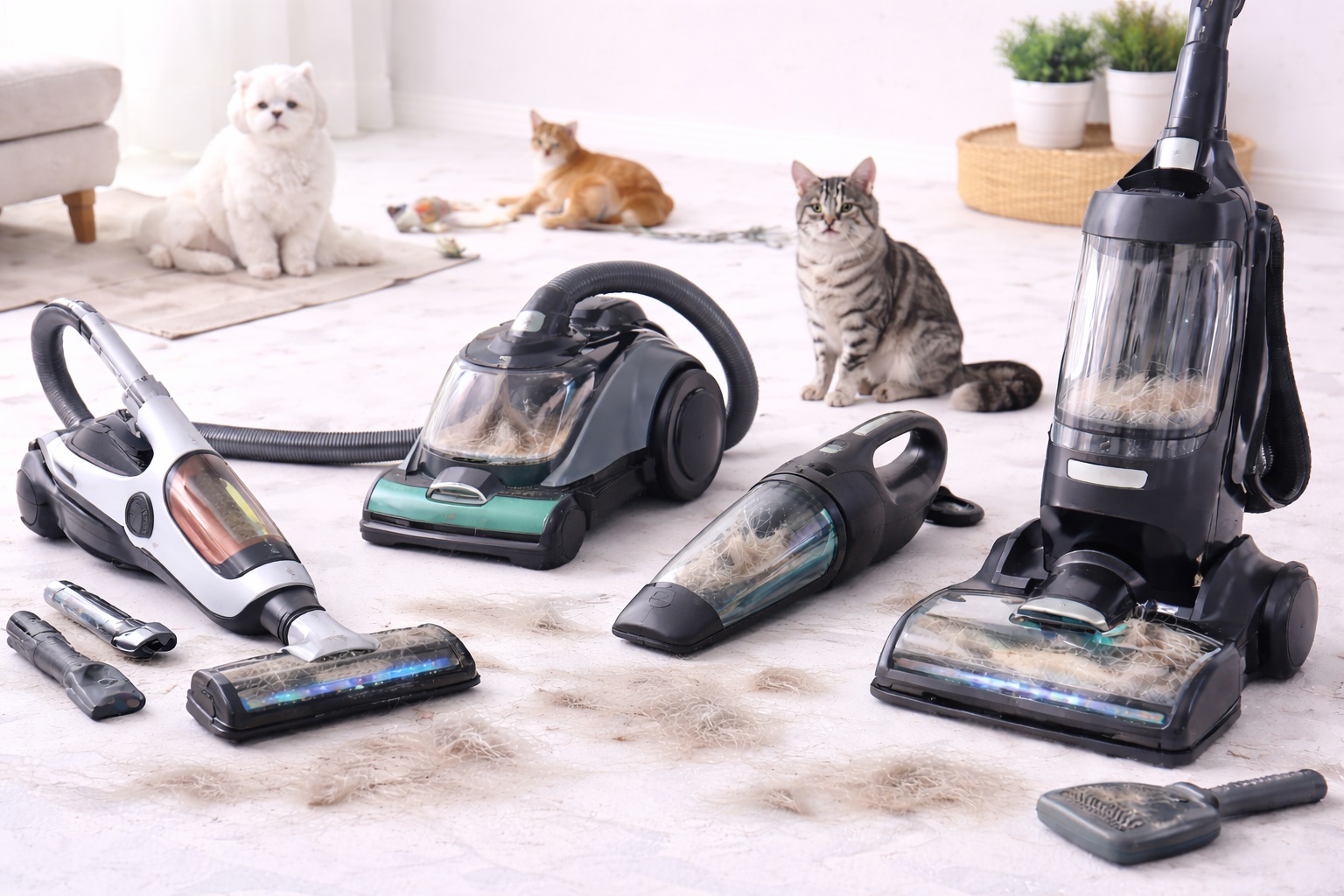
A cordless stick vacuum with a specialized pet hair attachment provides the most practical daily cleaning tool for homes dealing with fine, lightweight shedding. The cordless design allows quick movement between rooms without swapping outlets, and pet-specific brush rolls include tangle-free or self-cleaning mechanisms that prevent hair from wrapping around the brush — a particular problem with fine fur that wraps more readily than coarser hair.
- Pros:
- Cordless freedom for quick room-to-room cleaning
- Tangle-free brush roll reduces the maintenance fine fur usually causes
- Lightweight enough for frequent daily use without fatigue
- Converts to handheld for furniture and stairs
- Compact enough to store in a closet or under a stair without dedicated space
- Cons:
- Battery life of 30 to 60 minutes may limit single-pass cleaning in larger homes
- Dustbin capacity is smaller than upright alternatives
Best For: Owners who clean frequently and want a quick, convenient tool for daily fine-fur pickup without pulling out a heavier machine.
Why We Recommend It: This is the tool most owners actually reach for on a daily basis — quick to deploy, effective on the light, easily disturbed fur that fine coats produce, and simple to store between uses.
2. Upright Vacuum with HEPA Filter – Best for Deep Cleaning and Fine Dander
An upright vacuum with true HEPA filtration captures fine dander at high efficiency, which matters specifically for small breeds whose lighter coats often shed more airborne dander relative to their size than heavier-coated breeds. Sustained high suction pulls embedded fur out of carpet fiber where fine hair tends to settle deeper than coarser hair typically does.
- Pros:
- HEPA filtration captures fine dander effectively
- Sustained suction reaches fur embedded deep in carpet fiber
- Large dustbin handles accumulated fine fur without frequent emptying
- Powered brush roll agitates fiber to release trapped hair
- Cons:
- Heavier and less maneuverable than a stick vacuum
- Cord limits room-to-room mobility during use
Best For: Carpet-heavy homes and allergy-sensitive households wanting a thorough weekly deep clean alongside daily maintenance.
Why We Recommend It: For fine fur and dander embedded in carpet, sustained suction and true HEPA filtration together address what a lighter daily tool typically can't reach on its own.
3. Robot Vacuum with Fine-Debris Sensor – Best for Automated Daily Maintenance
A robot vacuum with a sensor tuned to detect fine, lightweight debris runs more frequently or at higher suction specifically in areas with fine fur accumulation, addressing the baseline shedding that settles between manual cleaning sessions. Self-empty base station models go weeks without manual intervention, which suits fine fur's tendency to accumulate steadily in small amounts throughout the day. Scheduling the robot to run during hours the household is typically out also avoids disturbing a sound-sensitive small dog with the noise of a running vacuum passing nearby.
- Pros:
- Fine-debris sensing targets accumulation automatically
- Self-empty stations reduce manual maintenance for weeks at a time
- Maintains consistently cleaner floors between deep cleaning sessions
- Operates without requiring the owner's active involvement
- Cons:
- Less effective on carpet than a dedicated upright vacuum
- Requires periodic brush and sensor maintenance to stay effective
Best For: Busy households wanting consistent daily fur control without manual vacuuming every day.
Why We Recommend It: Fine fur accumulates steadily rather than in obvious clumps, which makes automated, frequent cleaning genuinely more effective at preventing buildup than periodic manual sessions alone.
4. Handheld Vacuum with Motorized Mini Brush – Best for Furniture and Upholstery
A handheld vacuum paired with a motorized mini brush attachment specifically targets the static-clung fur that settles into couch cushions, car seats, and other upholstery — surfaces where fine hair resists standard suction until the motorized brush agitates it loose from the fabric weave. This targeted approach outperforms a full-size vacuum's standard upholstery attachment for this specific problem.
- Pros:
- Motorized brush loosens static-clung fur from fabric weave
- Compact and easy to store for quick spot cleaning
- Effective on car interiors as well as home furniture
- More targeted than a full-size vacuum's upholstery attachment
- Cons:
- Small dustbin requires frequent emptying during heavy use
- Not a substitute for floor cleaning across an entire home
Best For: Spot-cleaning furniture, car interiors, and other upholstered surfaces where fine fur clings through static.
Why We Recommend It: Fine fur's tendency to cling through static rather than settle loosely means standard suction alone often isn't enough on upholstery — the motorized brush's agitation directly solves that specific problem.
5. Anti-Static Vacuum Attachment System – Best for Reducing Fur Cling Before Vacuuming
An anti-static attachment or pre-treatment tool neutralizes the static charge that causes fine fur to cling to fabric and hard surfaces in the first place, making a follow-up vacuuming pass significantly more effective regardless of which vacuum is used afterward. This addresses the root cause of fine fur's stubbornness rather than just increasing suction power to compensate for it.
- Pros:
- Neutralizes static cling at its source before vacuuming
- Improves the effectiveness of any vacuum used afterward
- Works well on both fabric and hard surfaces
- Relatively inexpensive addition to an existing cleaning routine
- Cons:
- An extra step rather than a standalone cleaning solution
- Effectiveness varies somewhat with humidity and fabric type
Best For: Households finding that standard vacuuming alone leaves visible fur behind on furniture and clothing due to static cling.
Why We Recommend It: Addressing static cling directly, rather than just increasing suction to compensate for it, solves the specific mechanism that makes fine fur harder to remove than coarser hair in the first place.
6. Canister Vacuum with Fine-Filter Bag System – Best for Sealed Dust and Dander Containment
A canister vacuum using a fine-filter bag system seals collected fur and dander inside a disposable bag rather than exposing it during emptying, which matters for households sensitive to the fine dander that small breed shedding often produces. This containment approach avoids the brief but real dust exposure that happens when emptying a bagless dustbin. The longer hose and wand reach typical of canister designs also make it easier to clean stairs, curtains, and other vertical surfaces without needing to lift the main unit around the room.
- Pros:
- Sealed bag system prevents dust and dander exposure during emptying
- Fine-filter bags capture particles a standard bag might miss
- Strong, consistent suction typical of canister designs
- Well suited to allergy-sensitive households
- Cons:
- Ongoing cost of replacement bags over time
- Bulkier and less maneuverable than a stick vacuum
Best For: Allergy-sensitive households wanting to minimize dust and dander exposure during the emptying process itself.
Why We Recommend It: For households where dander sensitivity is a real concern, sealed bag containment addresses an exposure point that bagless dustbins inherently create every time they're emptied.
7. Compact Car Vacuum for Pet Hair – Best for Vehicle Interiors
A compact, cordless vacuum designed specifically for car interiors handles the fine fur that accumulates in seat fabric and floor mats after a small dog rides along regularly, with a narrow nozzle designed to reach into seat crevices where standard household vacuums struggle to fit effectively. A car's fabric seats and floor mats tend to hold fine fur through the same static mechanism as home upholstery, so a dedicated crevice tool with strong, concentrated suction addresses that specific problem better than a general-purpose attachment.
- Pros:
- Narrow nozzle reaches into seat crevices and tight spaces
- Compact size fits easily in a car for on-the-go cleaning
- Strong enough suction for fine fur despite small size
- Rechargeable and ready without needing a power outlet
- Cons:
- Small dustbin requires frequent emptying during a thorough car cleaning
- Not intended to replace a full-size home vacuum
Best For: Owners who regularly drive with their small dog and need a dedicated tool for vehicle interior fur cleanup.
Why We Recommend It: Standard household vacuums are often too bulky to effectively reach into car seat crevices, and this compact, purpose-built design solves that specific access problem.
8. Multi-Surface Vacuum with Adjustable Suction – Best for Mixed Flooring Homes
A multi-surface vacuum with adjustable suction settings and automatic floor-type detection handles the transition between carpet, hardwood, and tile common in most homes without requiring a manual settings change at every threshold, maintaining effective fine-fur pickup across different surface types in a single cleaning pass.
- Pros:
- Automatic floor detection adjusts suction without manual input
- Consistent fine-fur pickup across carpet, hardwood, and tile
- Reduces the need for separate tools per surface type
- Simplifies whole-home cleaning into a single pass
- Cons:
- Higher price point than single-surface-focused vacuums
- Automatic detection occasionally requires a manual override for edge cases
Best For: Homes with a mix of carpet and hard flooring wanting consistent performance without switching tools or settings manually.
Why We Recommend It: Most homes aren't single-surface, and this design removes the friction of manually adjusting for each transition, which matters for maintaining consistent fine-fur pickup throughout a full cleaning session.
Buying Guide: How to Choose the Best Pet Vacuum for Small Dog Hair
Use these factors to match a vacuum to the specific challenges of fine, lightweight fur rather than general pet hair vacuum advice built around coarser coats.
1. Tangle-Free Brush Roll Design
Fine fur wraps around standard brush rolls readily, requiring frequent manual cleaning. Tangle-free or self-cleaning brush designs cut or release hair before it wraps, which matters more for fine fur than for coarser, less clingy coats.
2. Suction Consistency Over Peak Power
Fine fur benefits more from consistent, sustained suction than from a single high peak power number, since intermittent power fluctuations let lightweight fur settle back down before full extraction.
3. HEPA Filtration for Fine Dander
Small breeds often produce fine dander alongside their lighter coats. True HEPA filtration captures this effectively; non-HEPA vacuums can recirculate fine particles back into the air through the exhaust.
4. Static Management Features
Look for anti-static attachments, brush materials designed to reduce static buildup, or complementary pre-treatment tools, since static cling is the characteristic that makes fine fur uniquely resistant to standard vacuuming.
5. Dustbin Capacity Relative to Cleaning Frequency
Fine fur accumulates steadily rather than in obvious clumps, so a smaller dustbin may fill up faster than expected relative to visible mess. Match capacity to your realistic cleaning frequency.
6. Attachment Variety for Different Surfaces
Fine fur settles differently on carpet, hard floors, and upholstery. A vacuum with dedicated attachments for each surface type handles the full range of where fine fur actually accumulates in a home.
7. Noise Level Around Sensitive Small Dogs
Small dogs are sometimes more sound-sensitive than larger breeds. Quieter models reduce the stress vacuuming can cause, which matters for maintaining a consistent cleaning routine without upsetting the dog.
8. Filter Maintenance and Washability
Clogged filters reduce suction performance significantly, and fine fur and dander can clog filters faster than coarser debris. Washable filters reduce ongoing replacement cost and maintain performance longer.
9. Cordless Convenience Versus Corded Power
Cordless models offer quick daily deployment; corded uprights offer sustained power for deeper weekly cleaning. Many households benefit from combining both rather than relying on a single vacuum type.
10. Vehicle-Specific Needs
If your dog rides in the car regularly, a compact vacuum designed for tight seat crevices handles that specific cleaning need better than adapting a full-size household vacuum for the task.
11. Weight and Maneuverability for Frequent Use
A vacuum used daily benefits from being genuinely lightweight and easy to maneuver, since a heavier or bulkier unit is more likely to get skipped on busy days despite fine fur's tendency to accumulate quickly.
12. Replacement Part Availability
Brush rolls and filters wear out with regular use. Confirm replacement parts remain available and reasonably priced for your specific model before committing to a long-term purchase.
13. Battery Life and Charging Habits for Cordless Models
Check the realistic runtime at the suction setting you'll actually use most, since manufacturer-listed maximum runtime often applies only to the lowest power setting. Also consider whether the vacuum supports quick top-up charging for a few minutes of extra runtime, which matters if daily cleaning sessions sometimes run longer than a single full charge comfortably covers.
14. Time Cleaning Around a Sound-Sensitive Dog's Routine
Some small dogs startle noticeably at vacuum noise, particularly higher-pitched motors common in compact cordless models. Where possible, vacuum during a consistent, predictable time of day and consider a quieter model if your dog shows ongoing stress around the sound, since a consistent routine tends to reduce that stress more than the vacuum's specific decibel rating alone.
15. Plan for Multi-Pet Households With Mixed Coat Types
If your household includes both a small, fine-coated dog and another pet with a coarser coat, look for a vacuum with adjustable brush roll settings or interchangeable heads rather than one optimized narrowly for a single fur type, since a setup tuned only for fine fur may underperform on coarser hair from a second pet.
16. Consider Total Cost Including Consumables
Bagged canister models carry an ongoing cost for replacement bags, while bagless models incur no recurring bag cost but may need filters replaced periodically. Factor this ongoing cost into the comparison rather than judging purely on the upfront purchase price, especially for a vacuum expected to see frequent, regular use against fine fur.
17. Match Attachments to Where Fine Fur Actually Accumulates in Your Home
Walk through your home and note where fine fur visibly collects most — a favorite couch cushion, a car seat, a rug near the door — before choosing a vacuum, then confirm it includes attachments specifically suited to those exact locations rather than a generic attachment set that doesn't match your actual problem spots.
Common Mistakes to Avoid
A common mistake is choosing a vacuum based on general pet hair marketing without checking whether it specifically addresses fine, lightweight fur and static cling, since many pet-focused vacuums are actually optimized for the coarser, heavier coats of larger shedding breeds. A second mistake is expecting a single vacuum to handle every surface and situation equally well, when most households genuinely benefit from combining a daily quick-pickup tool with a separate deeper-cleaning option for weekly maintenance. A third is neglecting filter and brush roll maintenance, which matters more for fine fur than coarser hair since fine debris clogs filtration components faster and reduces suction performance more noticeably over time.
Frequently Asked Questions
1. Why is fine dog hair harder to vacuum than coarser hair?
Fine, lightweight fur tends to cling to fabric through static rather than settling loosely, and it works into upholstery weave and carpet fiber more readily than coarser hair. This means standard suction alone is sometimes less effective without static management or targeted agitation.
2. What type of vacuum is best for fine pet hair specifically?
A combination approach works best — a cordless stick vacuum with a tangle-free brush for daily pickup, and a HEPA-filtered upright for weekly deep cleaning of carpet and embedded fur. No single vacuum type handles every fine-fur scenario optimally on its own.
3. How often should I vacuum with a small shedding dog?
Daily quick vacuuming on high-traffic areas, combined with a weekly deep clean of the entire home, generally keeps fine fur accumulation manageable. Because fine fur settles steadily rather than in obvious clumps, waiting for visible buildup often means it's already spread further than expected.
4. Is the most expensive pet vacuum for small dog hair always the best?
Not necessarily. Price often reflects extra features and smart sensors rather than core suction and filtration performance. Match the vacuum to your specific fine-fur challenges rather than the highest price point.
5. How long should a quality pet hair vacuum last?
A well-built vacuum from a reputable manufacturer typically lasts three to seven years with regular filter and brush maintenance, though battery-powered cordless models may need battery replacement sooner than the rest of the unit.
6. Can I return a pet vacuum if it doesn't handle my dog's fur well?
Most retailers offer a 15 to 30 day return window. Test the vacuum on your specific problem areas — upholstery, car seats, carpet — early within that window rather than waiting.
7. What should I prioritize when buying a vacuum for fine dog hair?
Prioritize tangle-free brush design, consistent suction, and static management features specifically, since these address the characteristics that make fine fur more challenging than coarser hair.
8. Does brand name matter for pet hair vacuums?
Established brands tend to offer more consistent build quality and better filter and part availability long-term. Newer brands can still offer good value, so checking reviews focused specifically on fine fur performance is worthwhile.
9. How do I reduce static cling on furniture between vacuuming sessions?
A fabric-safe anti-static spray or a quick pass with a rubber pet hair removal tool can loosen fur between full vacuuming sessions, making the next vacuuming pass more effective.
10. Is a robot vacuum enough on its own for a small shedding dog?
Generally not as a complete solution. Robot vacuums handle baseline daily maintenance well but are typically less effective than a dedicated upright on carpet or in reaching upholstery and stairs.
11. Do I need a separate vacuum for my car if my dog rides along often?
A compact, purpose-built car vacuum reaches seat crevices far more effectively than adapting a household vacuum, so a dedicated tool is worthwhile for households with frequent car trips involving their dog.
12. How do I know if my vacuum's filter needs replacing?
Noticeably reduced suction despite an empty dustbin is the clearest sign. Check your specific model's recommended filter replacement or washing schedule, since fine dander can clog filters faster than expected.
13. Are HEPA filters necessary if no one in the household has allergies?
Not strictly necessary, but they still improve overall air quality by capturing fine dander that would otherwise recirculate. For households without allergy concerns, this is a nice-to-have rather than an essential feature.
14. Can vacuuming too often damage carpet or upholstery?
Daily vacuuming is generally safe for most modern carpet and upholstery materials. Excessive suction settings on delicate fabrics can occasionally cause pilling over time, so check manufacturer guidance for particularly delicate materials.
15. What's the best way to clean pet hair off clothing before laundering?
A handheld vacuum with a motorized mini brush attachment removes surface fur effectively before washing, which also helps prevent fur from transferring to other items during the laundry cycle itself.
16. Can I use a pet hair vacuum on hardwood floors without scratching them?
Most modern vacuums with adjustable or automatic floor-type detection are safe on hardwood, but check that the brush roll can be set to a non-contact or reduced-agitation mode for hard flooring, since a brush roll designed for carpet agitation running at full intensity on hardwood can occasionally cause fine surface scratches over repeated use.
17. Do I need a separate attachment for cleaning stairs?
A dedicated stair or upholstery attachment generally performs better than the main floor head on stairs, since stairs combine edges, corners, and sometimes carpet transitions that a full-size floor nozzle isn't shaped to reach effectively. Most cordless and canister models include a suitable attachment for this purpose.
18. What's the best way to remove hair that's already wrapped around the brush roll?
Most tangle-free brush rolls still benefit from an occasional manual check — remove the brush roll according to the manufacturer's instructions and use a seam ripper or the included cleaning tool to cut through any hair that has wrapped around the ends near the bearings, which is where most residual buildup tends to accumulate even on self-cleaning designs.
19. Will a pet vacuum help with pet odor as well as visible fur?
A vacuum with strong filtration and a sealed dustbin or bag helps reduce the dander and skin cell buildup that contributes to pet odor in carpet and upholstery, though it works best alongside regular grooming and washable furniture covers rather than as a standalone odor solution.
Final Verdict
- Best for Daily Fur Pickup: Cordless Stick Vacuum with Pet Tool — the most convenient daily-use option for fine fur.
- Best for Deep Cleaning and Dander: Upright Vacuum with HEPA Filter — thorough weekly cleaning for carpet-heavy homes.
- Best for Automated Maintenance: Robot Vacuum with Fine-Debris Sensor — consistent daily control without manual effort.
- Best for Furniture and Upholstery: Handheld Vacuum with Motorized Mini Brush — targets static-clung fur directly.
- Best for Reducing Static Cling: Anti-Static Vacuum Attachment System — addresses fine fur's root cause before vacuuming.
- Best for Dust Containment: Canister Vacuum with Fine-Filter Bag System — minimizes dander exposure during emptying.
- Best for Vehicle Interiors: Compact Car Vacuum for Pet Hair — reaches tight seat crevices standard vacuums can't.
- Best for Mixed Flooring: Multi-Surface Vacuum with Adjustable Suction — consistent performance across surface types.
Fine, lightweight small dog fur genuinely behaves differently from coarser coats, and the vacuum that handles it best usually isn't a single all-purpose machine but a combination suited to daily pickup, weekly deep cleaning, and the specific surfaces where fine fur tends to cling through static. Matching your setup to how your particular dog sheds and how your home is actually laid out will get better results than chasing the single highest suction number on a spec sheet.