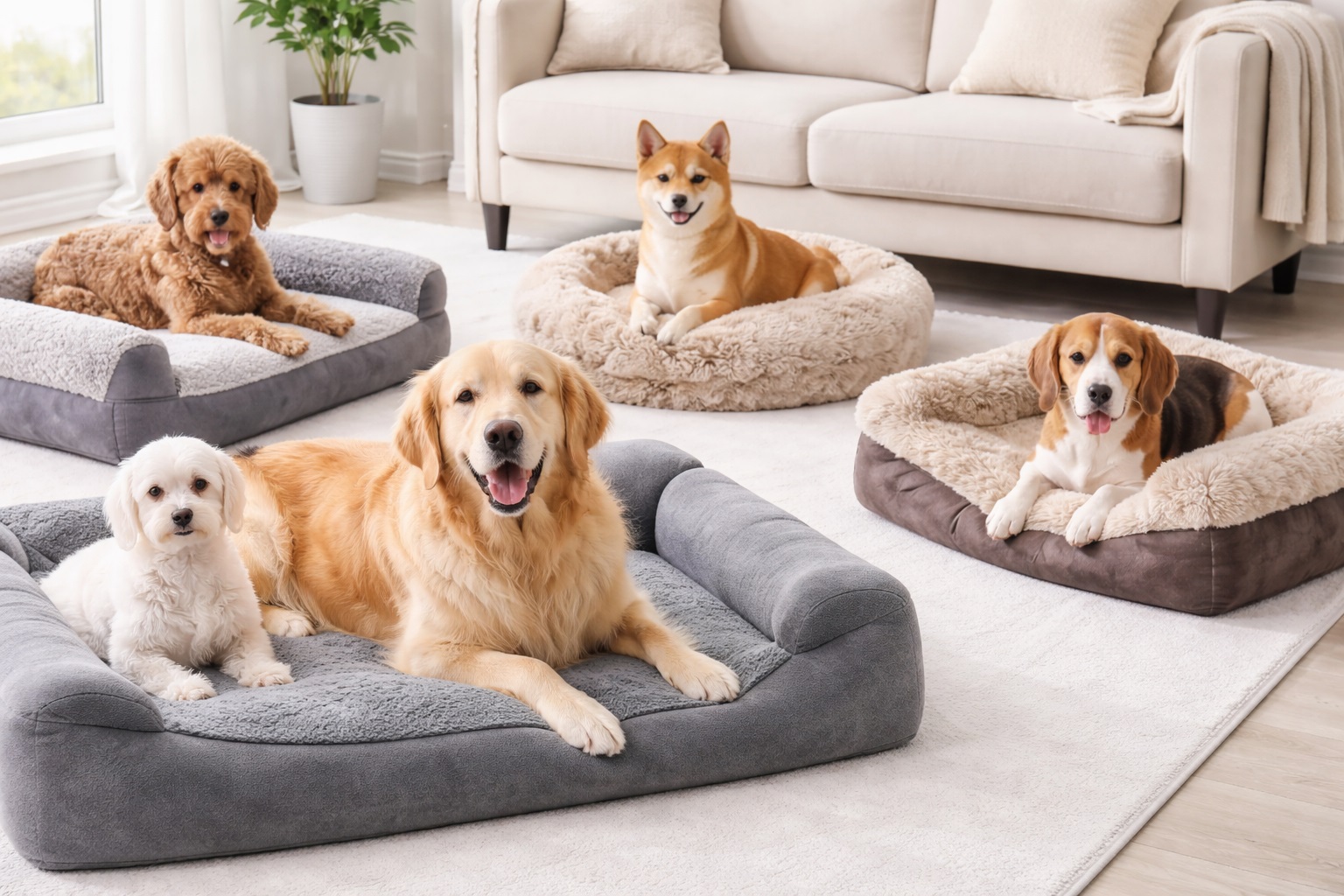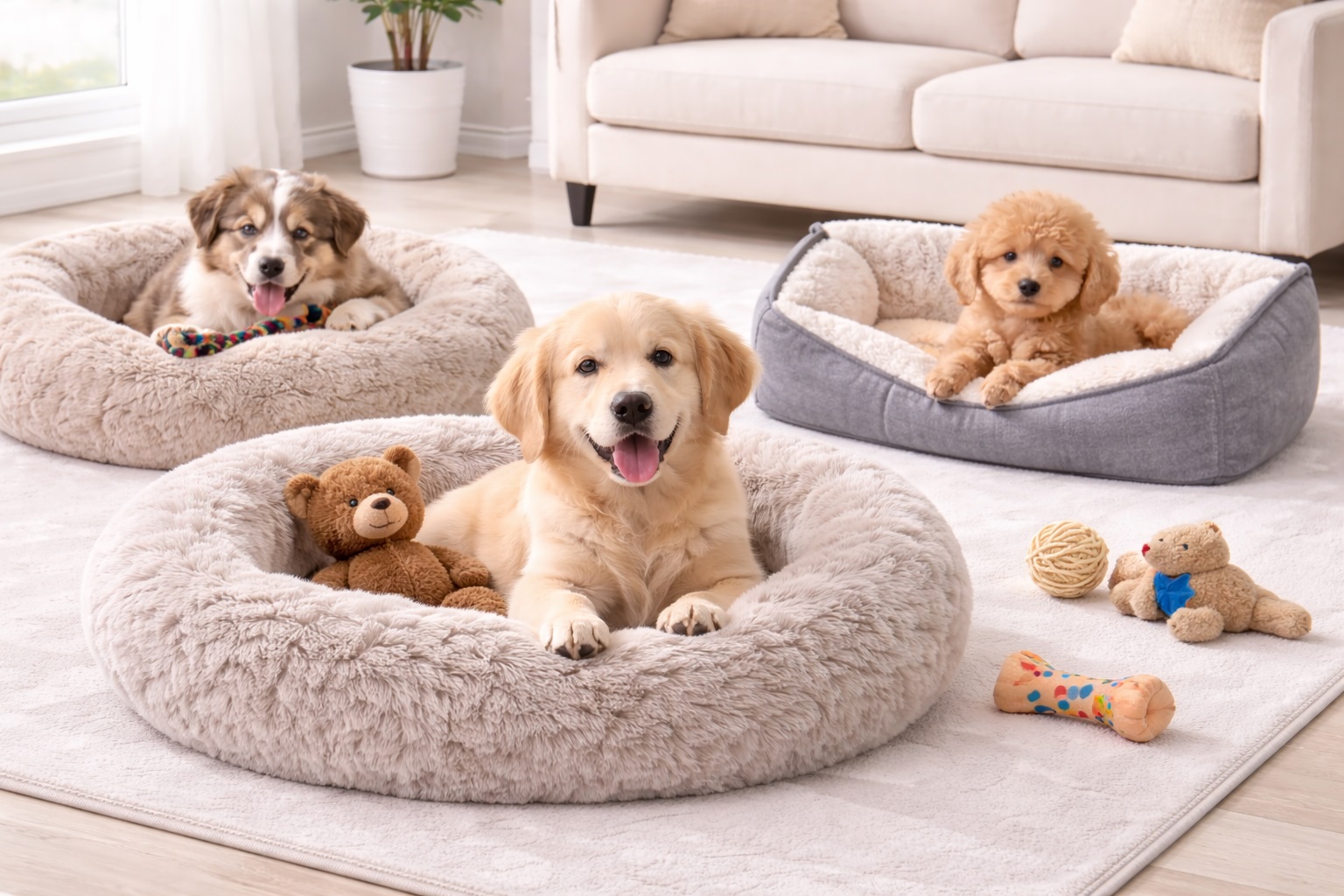
Best Dog Beds for Puppies: Safe, Cozy First Beds
A puppy's first bed has a job that goes beyond simple comfort. It needs to feel secure enough to ease the stress of leaving a litter and a familiar environment, durable enough to survive teething and chewing, washable enough to handle the accidents that are a completely normal part of housetraining, and sized in a way that accounts for a puppy that may double or triple in size within a matter of months.
This guide walks through the bed styles that consistently work well during this early period, from the first nights home through the end of the teething phase around six months of age. We weigh chew resistance and washability more heavily than we would for an adult dog bed, since these two factors determine whether a puppy bed survives its intended purpose or needs replacing within weeks of purchase.
Breed size matters considerably here as well. A puppy that will grow into a large adult dog has very different bed requirements at eight weeks old than a puppy from a toy breed that will stay small its entire life, and buying with future growth in mind — rather than only the puppy's current size — often produces better long-term value. We also address the crate-training angle specifically, since many puppies spend meaningful time in a crate during the early housetraining period, and the bed inside that crate needs its own particular set of considerations.
Because puppies are still learning what is and is not appropriate to chew, and because accidents happen regularly during this stage regardless of how diligent the housetraining routine is, durability and washability carry more weight in this guide than they would for a calmer, fully trained adult dog. Use the comparison tools and detailed reviews below to choose a bed that survives the puppy stage rather than becoming an early casualty of it.
Budget planning also looks different for a puppy bed than it does for an adult dog's bed. Many new owners are tempted to invest in an elaborate, expensive bed right away, but the realistic expectation should include the likelihood of at least one replacement during the first year due to growth, chewing damage, or accidents that a waterproof liner did not fully prevent. Spending moderately on a durable, washable first bed, and reserving a larger investment for after the puppy stage settles, tends to produce better overall value than committing fully to a premium product on day one.
It is worth remembering, too, that every puppy is different in temperament and chewing intensity, and no single bed style works universally for every puppy of the same breed. A calm, low-energy puppy may do perfectly well with a plush design that a more determined chewer from the same litter would destroy within days. Watching your specific puppy's early behavior around bedding, rather than assuming breed alone dictates the right choice, will guide better decisions as the puppy grows.
Top Picks Reviewed
1. Reinforced Chew-Resistant Bolster Bed – Best for Teething Puppies
A bolster bed with reinforced stitching, a tougher outer fabric, and fewer loose seams than a standard adult bed is built specifically to survive the teething period, when puppies chew almost anything within reach as a way of relieving gum discomfort and exploring their environment. The reinforced construction does not make the bed entirely chew-proof, since no fabric bed truly is, but it meaningfully extends how long the bed lasts compared to a delicate plush design bought for an adult dog.
- Pros:
- Reinforced stitching resists the teething chewing common in puppies
- Tougher outer fabric holds up better than standard plush materials
- Raised bolster edge still offers the security many puppies seek
- Machine-washable cover for frequent cleaning during housetraining
- Cons:
- Not fully chew-proof for particularly determined chewers
- Costs more than a basic bolster bed without reinforcement
Best For: Puppies actively in the teething phase, roughly between three and six months of age.
Why We Recommend It: Teething is a predictable, temporary phase that most puppies go through, and a bed built to anticipate this behavior avoids the frustration and expense of replacing a standard adult bed destroyed within the first few weeks of ownership.
2. Waterproof-Lined Crate Mat – Best for Housetraining and Crate Use
A flat, waterproof-lined mat sized to fit a standard crate protects against the accidents that are a normal part of the housetraining process, preventing moisture from soaking into internal filling and causing permanent odor. The thin profile suits confined crate space, and the simple, flat design is easy for a young puppy to navigate without needing to climb over a bolster edge in an already unfamiliar space.
- Pros:
- Waterproof liner protects against housetraining accidents
- Slim profile fits standard crate dimensions
- Simple flat design is easy for young puppies to navigate
- Machine washable and quick to dry given the thin construction
- Cons:
- Minimal cushioning compared to a bolster or foam bed
- Needs replacing with a larger size as the puppy grows
Best For: Crate training, especially during the first several months when accidents are still a normal, expected occurrence.
Why We Recommend It: Housetraining accidents are a given during this stage rather than an exception, and a waterproof liner turns what would otherwise be a ruined bed into a quick wipe-down and wash, keeping the crate a clean, appealing space rather than an unpleasant one.
3. Plush Nest Bed with Raised Edge – Best for Settling-In Comfort
A soft, plush nest bed with a raised edge on multiple sides gives a new puppy a sense of enclosure similar to what it experienced curled against littermates, which can meaningfully ease the stress of the first several nights away from its mother and siblings. The enclosed shape gives a puppy something to press against while sleeping, a comfort behavior that mimics the physical contact it is used to from the litter.
- Pros:
- Raised edges mimic the physical contact of sleeping among littermates
- Soft plush filling comforting during the stressful settling-in period
- Lightweight and easy to move between rooms or into a crate
- Machine-washable cover on most models
- Cons:
- Less durable against determined chewing than reinforced designs
- Filling may need replacing as the puppy grows and gains weight
Best For: The first few weeks after bringing a puppy home, when the priority is easing the transition away from the litter.
Why We Recommend It: The emotional transition of leaving littermates is a genuine adjustment for a young puppy, and a bed that recreates some of that physical contact and enclosure can measurably ease the first nights in a new home.
4. Oversized Orthopedic Mat for Growing Large-Breed Puppies – Best for Future-Sizing
For puppies expected to grow into large or giant adult breeds, buying an oversized orthopedic mat from the start — rather than a puppy-specific small bed that will be outgrown within months — is more economical over the long run and provides supportive joint cushioning during a rapid growth period when bone and joint development is especially active. A younger, smaller puppy will simply use a portion of the larger mat until it grows into the full size.
- Pros:
- Sized for the puppy's expected adult size, avoiding repeat purchases
- Supportive foam benefits joint development during rapid growth
- More economical over the full growth period than replacing beds repeatedly
- Washable cover simplifies cleaning during the accident-prone period
- Cons:
- Feels oversized for the puppy during the first few months
- Higher upfront cost than a small puppy-specific bed
Best For: Large and giant breed puppies expected to reach substantial adult size, where growth-stage economics favor buying ahead.
Why We Recommend It: Large-breed puppies grow at a remarkable rate, and buying an appropriately sized bed for the expected adult weight from the outset avoids the repeated replacement cost of upgrading through several sizes during the first year alone.
5. Heated Puppy Bed Insert – Best for Cold Homes and Very Young Puppies
A low-wattage heated insert designed for puppies replicates some of the body heat a puppy would normally get from littermates and its mother, which matters particularly for very young puppies with limited ability to regulate their own body temperature in a cold home or during winter months. The chew-resistant cord and puppy-specific low heat setting make this a safer option than a generic heating pad not designed with pets in mind.
- Pros:
- Gentle warmth compensates for reduced ability to self-regulate temperature
- Chew-resistant cord designed specifically for pet safety
- Often removable for unheated use as the puppy matures
- Particularly useful in cold climates or drafty rooms
- Cons:
- Requires access to a power outlet near the bed's location
- Not appropriate once a puppy begins actively chewing cords
Best For: Very young puppies, toy breed puppies with less natural insulation, and cold-climate households.
Why We Recommend It: Young puppies rely heavily on external warmth sources during their first weeks, and a heated bed addresses this physiological need directly during a period when the puppy cannot yet regulate its own temperature as effectively as an adult dog.
6. Quilted Travel and Crate Mat – Best for Multi-Location Flexibility
A thin, quilted mat that folds easily is practical for a puppy that needs bedding in several places at once during the early training period — inside a crate, in a playpen, and in the car for trips to the veterinarian. Its low cost also makes it reasonable to own several, reducing the pressure to keep a single expensive bed pristine during an especially messy developmental stage.
- Pros:
- Inexpensive enough to own several for different locations
- Folds flat for easy transport to veterinary visits or travel
- Machine washable and dries quickly given the thin construction
- Fits crates, playpens, and car seats without modification
- Cons:
- Minimal cushioning compared to a bolster or foam bed
- Less durable against determined chewing over time
Best For: Households managing a puppy across multiple locations, including crates, playpens, and travel.
Why We Recommend It: Puppies spend their early months moving between several confined spaces as part of normal training and supervision, and having multiple low-cost mats available removes the friction of constantly relocating a single bed between locations.
7. Donut Bed with Machine-Washable Insert – Best for Small and Toy Breed Puppies
A small donut-shaped bed with a fully removable, machine-washable insert suits toy and small breed puppies that will not outgrow the bed as quickly as a large-breed puppy would. The raised rim offers the curled, secure sleeping position many small puppies default to, while the fully washable construction handles the frequent laundering that housetraining and normal puppy mess require without shortening the bed's usable life.
- Pros:
- Raised rim supports the curled sleeping position common in small puppies
- Fully removable insert allows genuinely complete washing
- Appropriately sized for breeds that will remain small into adulthood
- Lightweight and easy to move between rooms
- Cons:
- Not appropriately sized for puppies expected to grow into large breeds
- Filling can flatten with heavy chewing or repeated washing over time
Best For: Toy and small breed puppies that will not need substantial upsizing as they mature into adulthood.
Why We Recommend It: Small breed puppies benefit from a bed sized close to their eventual adult dimensions from the start, since the growth curve is far less dramatic than it is for large or giant breeds, making an early investment in a quality small bed more practical.
8. Snuggle Sack with Faux Fur Lining – Best for Anxious Puppies Adjusting to a New Home
A soft snuggle sack that a puppy can burrow partially inside, lined with faux fur, provides an especially strong sense of enclosure that can help particularly anxious puppies settle during the first nights in a new environment. This differs from a standard bolster bed by offering a partial cover the puppy can push against or hide beneath, similar to nesting behavior seen in a litter setting.
- Pros:
- Partial cover offers strong enclosure for particularly anxious puppies
- Faux fur lining is soft and comforting against a puppy's coat
- Compact and portable between rooms or into a crate
- Machine washable for frequent cleaning during the settling-in period
- Cons:
- Not every puppy accepts the partial covering immediately
- Less durable than reinforced designs against determined chewing
Best For: Especially anxious puppies during the first one to two weeks in a new home.
Why We Recommend It: Some puppies show clear signs of stress during the initial transition period, and a snuggle sack's partial enclosure can provide a meaningfully greater sense of security than an open bed during this especially vulnerable window.
9. Elevated Cot Bed, Puppy Size – Best for Warm-Weather Puppies and Easy Supervision
A small elevated cot with a taut mesh surface keeps a puppy cool during warm weather and off potentially cold tile or hardwood floors, while its open design allows an owner to easily see and supervise a puppy resting nearby, which matters during a stage when close supervision is standard practice. The lack of filling also means no material to trap odor from the frequent messes typical of this stage.
- Pros:
- Airflow beneath the puppy helps regulate body temperature in warm weather
- Open design allows easy visual supervision during active training
- No filling to trap odor from frequent accidents or spills
- Wipes clean quickly for fast turnaround
- Cons:
- Less cushioning and enclosure than a bolster or nest style
- Small frames can tip if a puppy jumps on and off energetically
Best For: Warm climates, energetic puppies under close supervision, and households prioritizing fast cleanup.
Why We Recommend It: The combination of easy visibility, quick cleaning, and temperature regulation suits the supervised, mess-prone nature of early puppy ownership better than a fully enclosed bed would during this specific stage.
Buying Guide: How to Choose the Best Dog Bed for Your Puppy
Use these factors to select a puppy bed that survives the early months while genuinely supporting your puppy's comfort and development. Puppy bed shopping differs from adult dog bed shopping specifically because durability, washability, and anticipated growth all carry more weight than they would once a dog is fully grown and settled into stable habits. Treat the first bed as a practical, temporary solution rather than a lifelong purchase, and expect to revisit the decision once the puppy stage has passed.
1. Buy for Expected Adult Size When the Breed Is Known
For puppies expected to grow substantially, an oversized bed purchased early avoids repeated replacement as the puppy grows through several sizes within its first year.
2. Prioritize Chew Resistance During the Teething Window
Reinforced stitching and tougher fabric reduce how quickly a bed gets destroyed during the teething period that typically runs from around three to six months of age.
3. Choose Washable, Waterproof-Lined Options for Housetraining
Accidents are a normal, expected part of housetraining rather than a sign of a problem. A waterproof liner prevents permanent odor damage to internal filling during this period, and treating each accident calmly and cleaning promptly supports better training outcomes than reacting with frustration.
4. Consider a Simple Flat Design for Very Young Puppies
A puppy just settling into a new home may find a flat mat easier to navigate than a bed with a tall bolster edge to climb over in an unfamiliar space.
5. Provide Warmth for Very Young or Toy Breed Puppies
Young puppies and toy breeds have less capacity to regulate body temperature independently. A heated insert or well-insulated plush design compensates for this during vulnerable early weeks.
6. Match the Bed to Crate Dimensions if Crate Training
A bed that fits the crate precisely, without excessive extra space, helps the crate feel like a secure den rather than an oversized enclosure, which supports more effective housetraining.
7. Keep Multiple Low-Cost Mats for Different Locations
Puppies move between several confined spaces during training. Inexpensive mats in each location reduce the friction of relocating a single bed constantly.
8. Reassess the Bed as the Teething Phase Ends
Once a puppy reaches roughly six months and teething subsides, a more plush or less heavily reinforced adult-style bed often becomes appropriate, since destructive chewing typically decreases significantly.
9. Watch for Signs the Puppy Has Outgrown a Bed
A puppy that can no longer stretch out or curl comfortably has outgrown its current bed. Upgrading proactively rather than waiting for obvious discomfort supports better sleep quality during a critical growth period.
10. Supervise Initial Chewing Behavior on Any New Bed
No bed is entirely puppy-proof. Monitor a new bed during the first few uses to identify whether your particular puppy poses a chewing risk to that specific design.
11. Avoid Overly Elaborate or Decorative Beds Early On
Simple, durable, washable designs make more sense than elaborate decorative beds during a stage when destruction and accidents are both likely, reserving more delicate options for after this phase passes.
12. Budget for at Least One Bed Replacement During the First Year
Even with a durable choice, growth and teething mean many puppy owners replace at least one bed during the first year. Planning for this reduces frustration if it becomes necessary, and setting expectations accordingly from the start avoids treating a normal replacement as a product failure.
Frequently Asked Questions
1. What size bed should I buy for a puppy?
For breeds expected to grow large, buy toward the anticipated adult size. For breeds that stay small, a puppy-appropriate small bed is usually sufficient without needing to size up significantly.
2. How do I stop my puppy from destroying its bed?
Choose a reinforced, chew-resistant design during the teething phase, provide appropriate chew toys as an alternative outlet, and supervise initial use of any new bed closely. Redirecting chewing toward an approved toy the moment it starts is more effective than only reacting after the bed has already been damaged.
3. Is a heated bed necessary for a puppy?
Not universally, but very young puppies and toy breeds benefit from added warmth during their first weeks, when their ability to regulate body temperature is still developing.
4. Should I buy a bed for the crate and a separate bed for other rooms?
Many owners do, particularly during housetraining, since a puppy benefits from having bedding available in each space it spends supervised time in throughout the day. Keeping the styles inexpensive during this stage makes maintaining several locations at once far more practical.
5. How often should a puppy's bed be washed?
More frequently than an adult dog's bed, given the higher likelihood of accidents during housetraining. Several times weekly is reasonable during the early months.
6. When should I switch from a puppy bed to an adult bed?
Once teething subsides, typically around six months, and once the puppy has reached a size where a puppy-specific bed no longer fits comfortably.
7. Can cats' beds work for small puppies?
Sometimes, particularly for toy breed puppies, since the size and softness often overlap. Verify washability and chew resistance regardless of which product category it was originally marketed under.
8. Is it normal for a new puppy to avoid its bed at first?
Yes, this is common during the initial adjustment period. Placing a familiar-smelling blanket in the bed and allowing a few days of adjustment often resolves this, and consistent placement in the same location helps the puppy build a clear association over time.
9. What should I do if my puppy has an accident on its bed?
Clean it promptly using an enzymatic cleaner if the bed is not waterproof-lined, since residual odor can encourage repeat accidents in the same spot.
10. Do large-breed puppies need different bedding than small-breed puppies?
Yes, primarily in terms of anticipated sizing and the greater joint support benefit that supportive foam offers to larger-breed puppies during rapid growth.
11. How long does a puppy bed typically last before replacement is needed?
Many households replace at least one bed during the first year due to growth or teething damage, even with a durable initial choice.
12. What is the biggest mistake new puppy owners make when buying a first bed?
Buying an expensive, delicate bed before the teething and housetraining phases are complete, which frequently results in an early, disappointing replacement.
Final Verdict
- Best for Teething Puppies: Reinforced Chew-Resistant Bolster Bed — built to survive the most destructive developmental stage.
- Best for Housetraining and Crate Use: Waterproof-Lined Crate Mat — protects against normal, expected accidents.
- Best for Settling-In Comfort: Plush Nest Bed with Raised Edge — eases the transition away from littermates.
- Best for Future-Sizing Large Breeds: Oversized Orthopedic Mat for Growing Large-Breed Puppies — avoids repeated replacement during rapid growth.
- Best for Cold Homes and Very Young Puppies: Heated Puppy Bed Insert — compensates for limited temperature regulation.
- Best for Multi-Location Flexibility: Quilted Travel and Crate Mat — inexpensive coverage across crates, playpens, and travel.
- Best for Small and Toy Breed Puppies: Donut Bed with Machine-Washable Insert — sized appropriately without needing much upsizing.
- Best for Anxious Puppies Adjusting to a New Home: Snuggle Sack with Faux Fur Lining — strong enclosure during the first vulnerable nights.
- Best for Warm-Weather Puppies and Easy Supervision: Elevated Cot Bed, Puppy Size — cool, visible, and fast to clean.
The right first bed for a puppy accounts for the realities of this specific developmental stage — teething, accidents, and rapid growth — rather than assuming an adult dog bed will serve equally well from day one. Use the buying guide and detailed reviews above to choose a bed built to survive the puppy stage while genuinely supporting your puppy's comfort and healthy development, and revisit the decision once your puppy reaches adulthood and its habits have settled into a more predictable, stable pattern.