Best Vacuums for Cat Hair: Specialized Cleaning for Fine, Static-Prone Feline Fur
Cat hair behaves differently than dog hair in ways that catch a lot of new cat owners off guard. It is finer, lighter, and picks up a static charge easily, which is why it clings stubbornly to upholstery, blankets, and dark clothing rather than simply sitting loose on the floor waiting to be swept up. A vacuum built with dog hair in mind does not automatically handle this well, since the design priorities are different — cat hair calls for strong, fine-particle suction and surface tools that can lift static-bound fur off fabric rather than just agitate carpet fiber.
Cat owners also deal with a wider range of surfaces in daily cleaning than the term pet hair vacuum usually implies. Cats jump onto couches, curtains, countertops, and cat trees, spreading fine fur across surfaces that a floor-focused vacuum never reaches. The most effective vacuums for cat hair specifically address this by pairing strong suction with versatile upholstery attachments and filtration fine enough to catch dander in addition to visible fur, since fine cat hair often carries dander directly attached to it.
This guide compares three practical vacuum categories that consistently perform well against cat hair specifically, walks through the buying factors that matter most for feline fur rather than pet hair in general, and answers the questions cat owners most often ask before choosing a vacuum.
Top 3 Vacuums for Cat Hair (Detailed Reviews)
1. Cordless Stick Vacuum with Motorized Upholstery Tool – Best for Furniture and Static Cat Hair
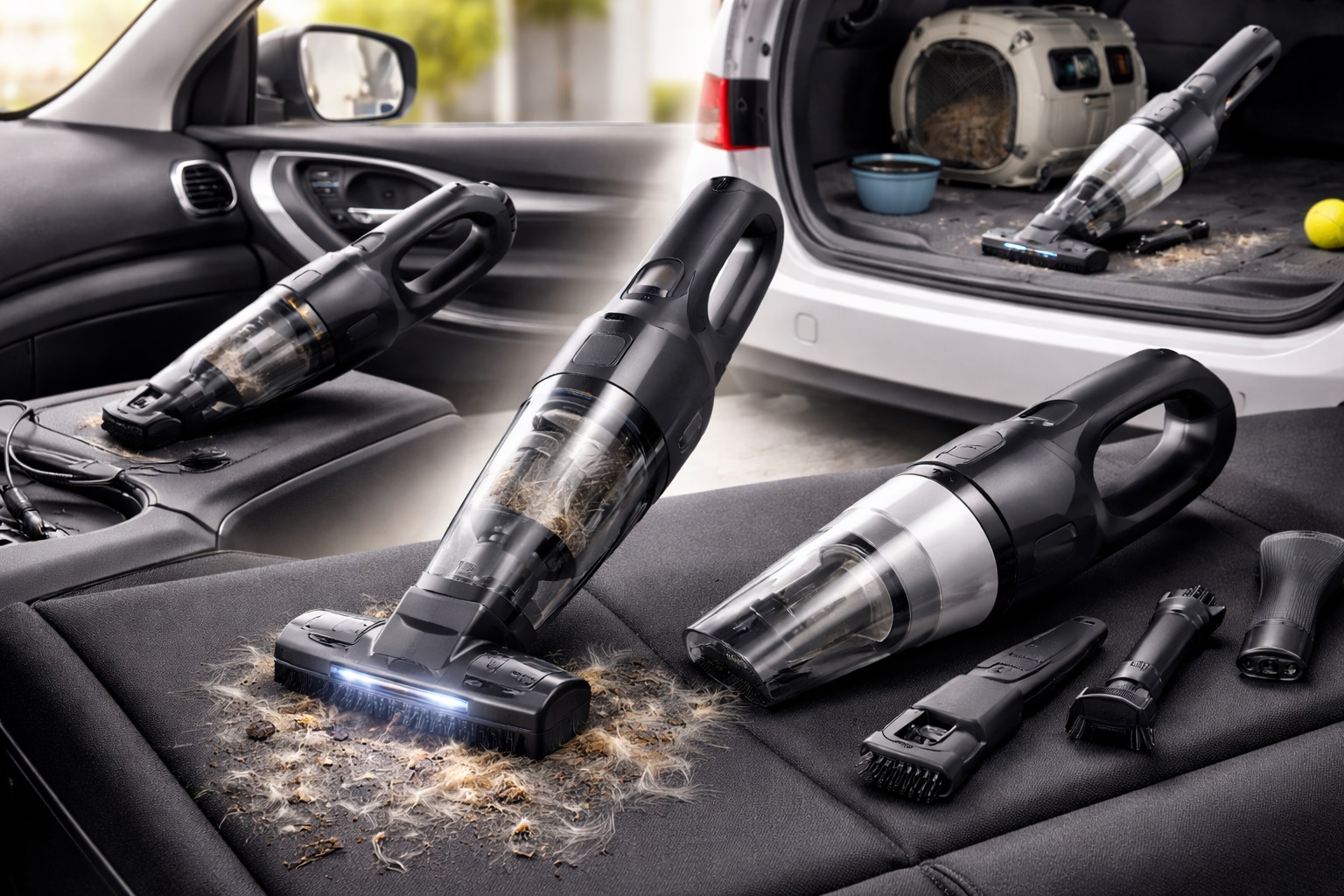
A cordless stick vacuum equipped with a small motorized brush specifically for upholstery addresses the part of cat hair cleanup that a standard floor vacuum handles poorly — fur embedded in couch cushions, cat beds, and blankets. The motorized action of this attachment agitates fabric enough to lift statically clinging fur that a standard suction-only tool would simply glide over. Because cats spend so much time on furniture rather than the floor, this attachment is arguably as important for cat owners as the main floor head.
- Pros:
- Motorized upholstery tool lifts static-bound fur from furniture and fabric
- Cordless design makes quick furniture touch-ups convenient
- Lightweight enough for repeated use across multiple rooms and surfaces
- Converts easily between floor and handheld use for cat trees and stairs
- Cons:
- Battery runtime limits how much furniture and floor can be covered in one charge
- Smaller dustbin fills quickly with fine cat hair and dander combined
Best For: Cat owners whose cats spend significant time on furniture and need a tool that actually lifts embedded fur rather than just brushing over it.
Why We Recommend It: The motorized upholstery attachment specifically solves the furniture fur problem that generic pet vacuums often ignore. For cat owners, this single attachment frequently gets more use than the main floor head, making it a priority feature rather than a bonus.
Running the upholstery tool over cushions and blankets weekly, even between full floor-cleaning sessions, keeps static fur from building up to the point where it becomes visibly noticeable on dark fabric, which is often the first sign owners notice their cleaning routine has fallen behind.
Owners with light-colored furniture or dark clothing that shows cat hair prominently tend to rely on this attachment the most, since visible fur on fabric is usually the specific complaint that prompted the search for a better vacuum in the first place.
2. Upright Vacuum with Fine-Particle HEPA Filtration – Best for Dander and Allergy Control
An upright vacuum with true HEPA filtration captures the fine dander that travels alongside cat hair, which matters more for cat owners than it might initially seem, since cat dander is one of the most common triggers for pet allergies — more so than dog dander for many allergy sufferers. Sustained upright suction also pulls embedded cat hair out of carpet fiber more thoroughly than lighter cordless alternatives, addressing the part of cat hair that works its way below the surface over time.
- Pros:
- HEPA filtration captures fine dander alongside visible cat hair
- Strong sustained suction for embedded hair in carpet
- Larger dustbin handles higher-volume dander and hair combined
- Powered brush roll thoroughly agitates carpet fiber
- Cons:
- Bulkier and less convenient for spot-cleaning furniture
- Corded design limits mobility between rooms
Best For: Cat owners managing allergy concerns or carpet-heavy homes who want thorough weekly deep cleaning that addresses dander specifically, not just visible fur.
Why We Recommend It: For allergy-sensitive households, the HEPA-filtered upright is the tool that actually reduces airborne dander levels rather than just cosmetically removing visible fur. Combined with a lighter tool for furniture, it rounds out a complete cat hair cleaning system.
Because cat dander particles are smaller than most visible hair strands, a non-HEPA vacuum can appear to be doing its job on hair while still recirculating the allergen that actually causes reactions, which is why filtration quality matters more here than raw suction numbers alone.
Running this vacuum on a consistent weekly schedule rather than only when carpets look visibly dirty helps keep dander levels steadier over time, which allergy-prone household members often notice as a gradual improvement rather than an immediate one.
3. Robot Vacuum with Fine-Debris Sensor Mode – Best for Automated Daily Fur Control
A robot vacuum with a sensor mode tuned to detect fine debris runs at boosted suction specifically when it encounters concentrations of light material like cat hair, rather than treating every pass identically. Because cat hair accumulates continuously in small amounts throughout the day rather than in one obvious weekly mess, a robot running daily catches this buildup before it becomes visible on floors, which is particularly useful in homes where cats have free run of most rooms.
- Pros:
- Daily automated runs prevent fine hair from accumulating visibly
- Fine-debris sensing boosts suction specifically where hair concentrates
- Self-empty base models reduce manual dustbin contact with fine dander
- Covers floor area consistently without requiring a scheduled manual session
- Cons:
- Cannot reach furniture, countertops, or cat trees where fur also accumulates
- Requires periodic brush and sensor cleaning to maintain detection accuracy
Best For: Cat owners with mostly hard flooring or low-pile carpet who want consistent daily floor maintenance without manual effort.
Why We Recommend It: The robot vacuum's daily consistency directly addresses how cat hair actually accumulates — gradually and continuously rather than in one obvious event. Pairing it with occasional manual cleaning of furniture covers the gap it cannot reach on its own.
Owners who let a robot run every day, rather than a few times a week, tend to report the clearest results, since consistent daily suction prevents fine hair from ever building up enough to become visually obvious on the floor in the first place.
Placing the charging base in a central, frequently traveled area of the home rather than a rarely visited room also improves results, since the robot's path naturally passes through the areas where a free-roaming cat is likely to have left hair behind.
Buying Guide: How to Choose the Best Vacuum for Cat Hair
Cat hair's fine, static-prone nature calls for a slightly different set of priorities than pet hair vacuums built primarily around dog fur.
1. Motorized Upholstery Attachment Quality
Since cats spend so much time on furniture, an upholstery tool with its own small motorized brush lifts embedded fur far more effectively than a passive suction-only attachment. Check specifically that this tool is motorized rather than a simple fabric nozzle.
Test the attachment on a cushion or blanket during the return window if possible, since the difference between a genuinely motorized tool and a fabric-textured but unpowered nozzle is immediately obvious once you see how much static-clinging fur each actually lifts.
A small, low-profile head on this attachment also matters for reaching tight spots such as the corners of couch cushions and the base of upholstered furniture legs, where fur tends to accumulate most heavily but is hardest to access with a bulkier tool.
2. Fine-Particle Filtration for Dander
True HEPA filtration captures dander that a standard filter allows to recirculate. Since cat dander is a particularly common allergy trigger, verify the filter meets genuine HEPA standards rather than a loosely used HEPA-style label.
Households without specific allergy concerns can reasonably use a lower-tier filter, but should still check that it is fine enough to prevent visible dust exhaust, which is a rough sign of inadequate filtration regardless of formal certification.
A sealed system design, where all air passing through the vacuum is forced through the filter rather than bypassing it through gaps in the housing, matters as much as the filter's own rating, since a leaky housing can undermine even a genuine HEPA filter's effectiveness.
3. Suction Power on Low-Pile and Hard Surfaces
Cats often favor smooth surfaces and low-pile rugs over thick carpet, so suction tuned for these surface types matters more for cat owners than the deep carpet extraction power that dog-hair vacuums emphasize.
Overly aggressive brush roll agitation on hard floors can also scatter loose fur before it is picked up, so a vacuum with adjustable or automatic surface-based suction tends to perform better across a typical cat-friendly home's mixed flooring.
Homes with tile, laminate, or hardwood as the dominant surface can generally get by with a lighter, less powerful vacuum than one primarily fighting fur embedded in thick carpet, freeing up budget to spend on filtration and attachment quality instead.
4. Static Reduction Features
Some vacuum heads and attachments are designed with anti-static bristle materials or coatings specifically to reduce the static cling that makes cat hair stick to fabric and the vacuum head itself during cleaning.
Even without a dedicated anti-static feature, slightly dampening a cloth attachment or wiping fabric with a dryer sheet before vacuuming can reduce static cling enough to make a standard tool noticeably more effective on cat hair specifically.
Dry winter air tends to worsen static cling noticeably, so households in dry climates or heated homes during colder months may notice cat hair clinging more stubbornly and requiring these extra static-reduction steps more consistently than in humid conditions.
5. Dustbin and Filter Capacity for Fine Debris
Fine cat hair and dander can clog standard filters faster than coarser dog hair, since the particles are small enough to pack densely into filter material. A larger filter surface area or a pre-filter stage helps maintain suction longer between cleanings.
Checking how quickly suction visibly weakens between filter cleanings during your trial period gives a practical sense of whether the filtration system is genuinely suited to fine cat hair or better matched to coarser debris.
A pre-motor foam filter positioned before the main HEPA stage can extend the life of the primary filter significantly by catching larger hair strands first, reducing how quickly the fine filtration stage clogs with mixed debris.
6. Attachment Versatility for Cat Furniture and Trees
Cat trees, scratching posts, and window perches all accumulate fur that a floor-only vacuum never reaches. A narrow crevice tool and a small brush attachment extend cleaning to these frequently overlooked surfaces.
Checking the reach and flexibility of the hose or wand length matters here too, since taller cat trees and elevated perches can be awkward to clean with a rigid or short attachment.
A soft dusting brush that will not scratch or damage sisal scratching posts is another useful addition for households with dedicated cat furniture, since a standard hard-plastic nozzle can wear down natural fiber surfaces over repeated cleaning sessions.
7. Noise Sensitivity for Skittish Cats
Cats are frequently more noise-sensitive than dogs and may avoid a room entirely during and after vacuuming if the machine is particularly loud. Lower decibel models reduce this disruption and make regular vacuuming easier to maintain as a habit.
Introducing a new vacuum gradually — running it briefly in short bursts over the first few days — can help a cat acclimate faster than an abrupt full-length cleaning session on day one.
Some cats never fully acclimate regardless of introduction method, in which case simply vacuuming at consistent times and allowing the cat a clear escape route to another room reduces stress more effectively than trying to force continued exposure.
8. Weight and Reach for Stairs and Elevated Surfaces
Cats climb and perch at height more than dogs typically do, so a vacuum that converts easily to a lightweight handheld mode makes reaching stairs, shelves, and elevated cat furniture considerably more practical.
A shoulder strap or a genuinely comfortable handheld grip becomes more important here than it might for a dog-focused household, since cat owners tend to use the handheld mode more frequently across a wider variety of surfaces.
Overall unit weight matters more here as well, since a vacuum that feels manageable resting on a floor can feel considerably heavier once lifted overhead to reach the top of a tall cat tree or a high shelf.
9. Brush Roll Design for Fine Hair
Fine cat hair can actually be harder to fully extract from certain brush roll designs than coarser dog hair, since it can work its way into small gaps and bearings rather than simply wrapping around the roller externally.
Sealed brush roll bearings and a smooth, gap-free roller housing reduce the amount of fine hair that works its way into the mechanism itself, which extends the useful life of the brush roll motor over time.
Reviewing whether a specific model's brush roll can be fully removed for a periodic deep clean, rather than only accessible for surface hair removal, gives a better long-term outlook for how well it will continue handling fine cat hair after a year or more of regular use.
10. Odor and Litter Tracking Considerations
Homes with litter boxes often deal with tracked litter alongside cat hair, and vacuums with a wide floor nozzle and adequate suction for granular debris handle both simultaneously more effectively than a hair-focused design alone.
A brush roll that can be switched off for hard floor litter pickup, leaving pure suction to handle granular debris, avoids scattering litter granules that a spinning brush can sometimes fling rather than collect.
Placing a litter mat at the exit of the litter box further reduces how much granular litter needs to be picked up by the vacuum at all, which lightens the combined debris load your machine has to handle in any single cleaning session.
11. Multi-Cat Household Capacity Needs
Multiple cats generate proportionally more hair and dander, making dustbin capacity and filter durability more important considerations than in single-cat households, where a smaller-capacity vacuum may still perform adequately.
Households with three or more cats should specifically prioritize models known for handling heavy fine-debris loads without frequent filter clogging, based on multi-pet owner reviews rather than general single-pet feedback.
Splitting cleaning duties across two smaller sessions, rather than attempting one exhaustive pass through a large multi-cat home, can also help a smaller-capacity vacuum keep pace without needing multiple mid-session bin emptyings.
12. Replacement Part and Attachment Availability
Motorized upholstery attachments and fine filters wear out with regular use. Confirm that these specific parts remain available and reasonably priced for the model, since the specialized cat-hair features are often the first to need replacement.
Checking whether the motorized upholstery attachment specifically has its own replacement part listing, separate from the main unit's general parts page, confirms the manufacturer treats it as a genuinely supported component rather than a one-time accessory.
A quick search for the model name alongside the word replacement before buying reveals whether an active secondhand or aftermarket parts community exists, which can be a useful backup option once official parts eventually become harder to find.
Frequently Asked Questions
1. Why does cat hair need a different vacuum approach than dog hair?
Cat hair is finer, lighter, and more prone to static cling, meaning it embeds in fabric and carries dander more readily than coarser dog hair. This calls for motorized upholstery tools and fine-particle filtration that a dog-hair-focused vacuum may not prioritize. Vacuums marketed generically for pet hair sometimes lean toward the coarser end of that spectrum, so checking specifically for cat-oriented reviews is worthwhile.
2. Do I need HEPA filtration specifically for cat hair?
It is strongly recommended, particularly for allergy-sensitive households, since cat dander is a especially common allergy trigger and a non-HEPA filter can recirculate it back into the room during cleaning. Even in households without diagnosed allergies, finer filtration tends to keep air quality noticeably better over time.
3. How often should I vacuum a home with cats?
Daily quick passes over furniture and high-traffic floor areas work well for most cat households, with a more thorough weekly session covering carpet, cat trees, and less frequently used surfaces. Multi-cat households often benefit from splitting this into shorter, more frequent sessions rather than one long weekly clean.
4. Can a robot vacuum handle cat hair on its own?
It handles floor-level accumulation well when run daily, but cannot reach furniture, cat trees, or elevated perches, so it works best paired with occasional manual cleaning of those surfaces. Treat it as the floor half of a two-part cleaning system rather than a complete solution on its own.
5. Is the most expensive vacuum for cat hair always the best?
Not always. Many mid-range models include the specific features that matter most for cat hair — motorized upholstery tools and adequate filtration — without the added cost of unrelated premium features. Compare the presence of these two specific features across price points rather than assuming cost alone reflects cat-hair performance.
6. How long should a quality vacuum for cat hair last?
With regular filter maintenance and reasonable care, a well-built cat hair vacuum typically lasts two to five years, similar to general pet vacuums, provided fine-debris filters are cleaned or replaced on schedule. Neglecting filter maintenance specifically shortens lifespan faster with fine cat hair than with coarser debris.
7. Can I return a vacuum for cat hair if it doesn't suit me?
Most retailers offer a 15 to 30 day return window. Test the upholstery attachment and filtration specifically on your cat's usual furniture spots within that window before deciding, since that is where most cat-specific performance differences become apparent.
8. What should I prioritize when buying a vacuum for cat hair?
Prioritize the motorized upholstery attachment and filtration quality first, since these two factors most directly address the specific challenges of fine, static-prone cat hair. Suction power and dustbin size are worth comparing only after these two baseline needs are met.
9. Does brand name matter for vacuum for cat hair?
Somewhat. Brands with dedicated pet hair product lines tend to include more thoughtfully designed upholstery tools and filtration than general-purpose lines, so check the specific model rather than the brand alone. A brand's flagship general vacuum is not automatically better suited to cat hair than its dedicated pet-hair model.
10. Why does my vacuum seem less effective on cat hair than it was on dog hair?
Fine cat hair can pack into filters and brush roll bearings more densely than coarser dog hair, gradually reducing suction faster than a vacuum's rated performance for pet hair in general suggests. More frequent filter checks help offset this, particularly in the weeks after switching from a dog-only household to one with cats as well.
11. Do I need a separate vacuum just for furniture and upholstery?
Not necessarily, provided your main vacuum includes a genuinely motorized upholstery attachment. A separate handheld vacuum is only worth adding if the primary unit's attachment proves inadequate on your specific furniture fabric, which is worth testing before assuming a second purchase is needed.
12. How can I reduce static cling before vacuuming cat hair off furniture?
Lightly dampening a cloth attachment or wiping fabric surfaces with a dryer sheet beforehand can reduce static enough to make hair noticeably easier to lift, complementing whatever vacuum attachment you are using. A rubber-bristled hand brush used just before vacuuming can also help loosen deeply embedded fur first.
Final Verdict
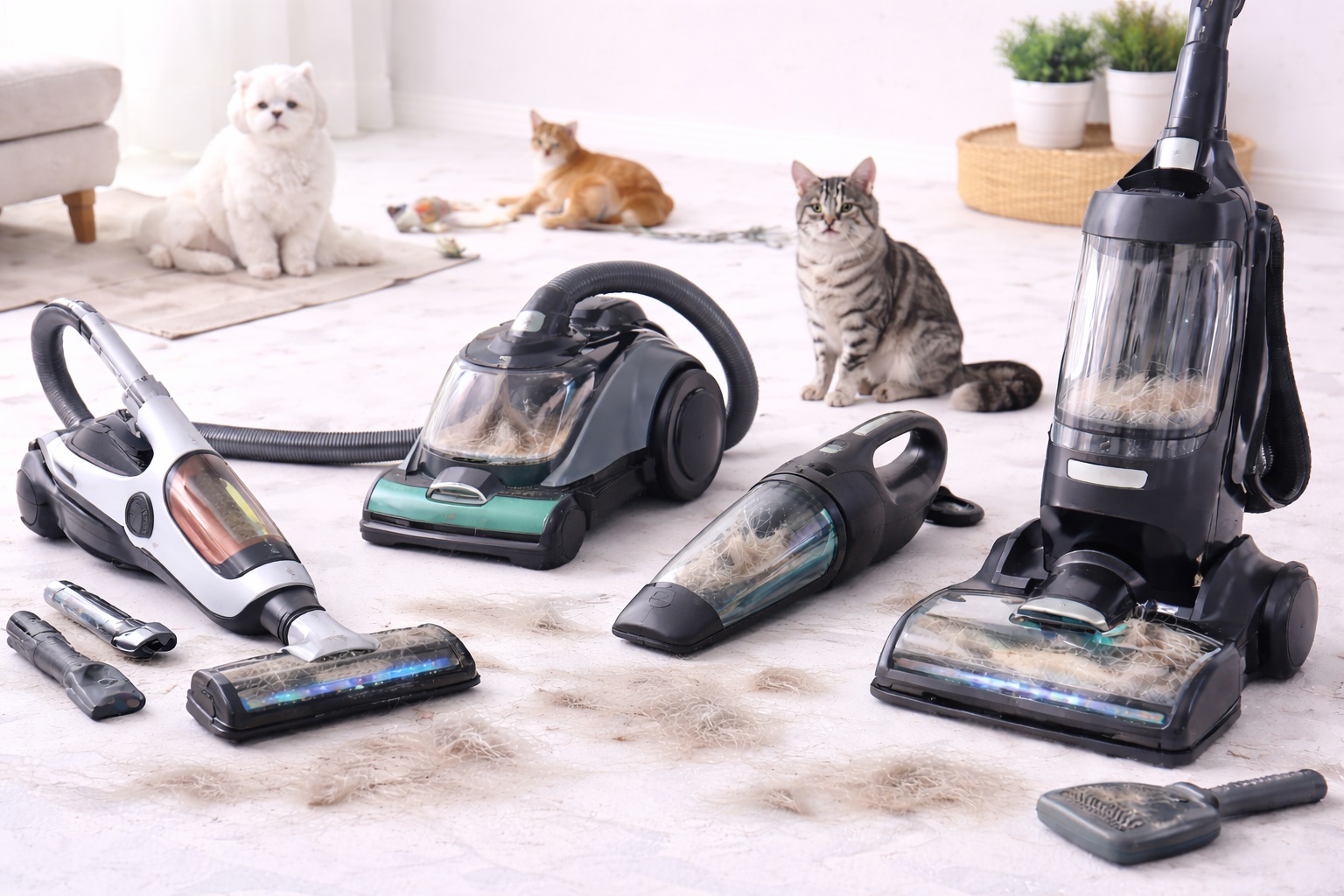
- Best for Furniture and Static Cat Hair: Cordless Stick Vacuum with Motorized Upholstery Tool — the most effective option for fur embedded in fabric and cat furniture.
- Best for Dander and Allergy Control: Upright Vacuum with Fine-Particle HEPA Filtration — the strongest choice for allergy-sensitive households and carpet-heavy homes.
- Best for Automated Daily Fur Control: Robot Vacuum with Fine-Debris Sensor Mode — the most consistent hands-off floor maintenance between manual sessions.
Cat hair's fine texture and static tendencies call for a slightly different vacuum priority list than pet hair vacuums built primarily around dogs. Focus on motorized upholstery attachments, genuine fine-particle filtration, and dustbin capacity suited to your number of cats, and use the comparisons above to settle on a combination that actually addresses where cat hair accumulates in your specific home.
Most cat households end up relying on more than one tool from this list rather than a single do-everything vacuum, since floor cleaning, furniture cleaning, and daily maintenance each call for slightly different strengths. Building a small system around your cat's actual habits — where they perch, how many there are, and how much time you have for manual cleaning — will serve you better long-term than chasing the single highest-rated model on a general pet vacuum list.
Take stock of where fur actually shows up most in your home before finalizing a choice — a couch that always seems covered, a favorite windowsill perch, or a carpeted hallway your cat sprints down daily. Matching the vacuum and attachments you choose to those specific spots, rather than to a generic checklist of features, is what turns a purchase into a cleaning routine that genuinely keeps pace with a cat-owning household.