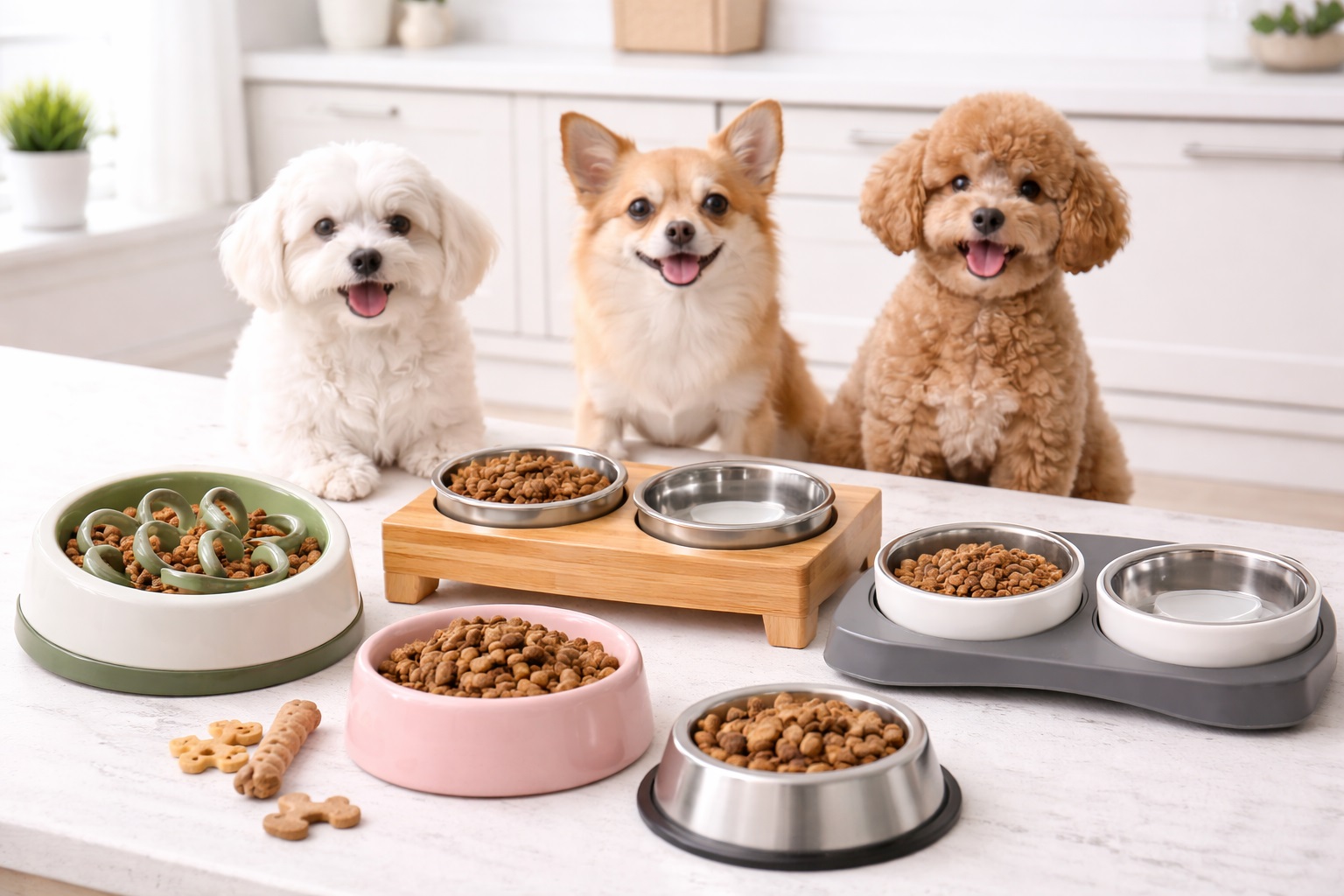
Best Food Bowls for Small Dogs: Right-Sized Feeding
A food bowl designed for a large dog, simply filled with a smaller portion, is not the same as a bowl actually designed for a small dog. Toy and small breeds have proportionally smaller mouths and shorter snouts in many cases, need shallower bowls to avoid pressing whiskers or cheeks uncomfortably against tall sides, and are more likely to tip over an oversized bowl that outweighs their own body relative to a large dog's bowl.
This guide focuses specifically on bowl styles that suit small dog proportions, covering material safety, stability during feeding, and the practical maintenance concerns that matter most for a bowl used multiple times daily over years of ownership. We also address breed-specific concerns, since flat-faced small breeds like Pugs and Shih Tzus have different bowl depth needs than narrow-snouted breeds like Chihuahuas and small terriers.
Small dogs also tend to eat smaller portions more frequently in some feeding routines, which means a bowl gets picked up, moved, and washed more often relative to its size than a large dog's bowl might. Stability, ease of cleaning, and a design that doesn't spill easily during normal handling all carry extra weight in this context.
Weight and size proportions matter in another practical sense as well: a heavy stainless bowl appropriate for a large dog can feel disproportionately large and unwieldy next to a small dog's actual eating posture, while an appropriately scaled bowl keeps the whole feeding setup proportionate and easier for the dog to use naturally without needing to stretch awkwardly or struggle with an oversized rim. Use the comparison tools and detailed reviews below to find a bowl genuinely designed with small dog proportions in mind.
Cost is usually not the limiting factor in this category, since even high-quality stainless steel and ceramic bowls scaled for small dogs tend to cost relatively little compared to many other pet products. The bigger decision is usually how many bowls to own for different purposes — a primary home bowl, a travel bowl, and potentially a slow feeder or elevated set for specific needs — rather than agonizing over a single perfect all-purpose bowl that has to serve every situation equally well.
It also helps to periodically reassess a small dog's bowl needs as circumstances change. A young, healthy small dog may do fine with a simple stainless bowl for years, but the same dog entering its senior years might benefit from an elevated setup, while a dog that develops a tendency to gulp food might need a slow feeder introduced later in life. Treating the bowl choice as something that can evolve alongside your dog, rather than a single permanent decision, tends to produce better outcomes over the dog's lifetime.
Top Picks Reviewed
1. Shallow Stainless Steel Bowl, Small Size – Best Overall Hygienic Choice
Stainless steel remains the most hygienic material available for any size dog, and a small, shallow version sized specifically for toy and small breeds avoids the excessive depth that can press against a small dog's face during eating. The non-porous surface resists bacterial growth and does not absorb odors the way plastic does over time, and the bowl is fully dishwasher safe for complete sterilization between uses.
- Pros:
- Non-porous surface resists bacterial growth better than plastic
- Dishwasher safe for complete sterilization
- Shallow depth avoids pressing against a small dog's face
- Durable — doesn't chip, crack, or scratch with normal use
- Cons:
- Lightweight bowls can slide on hard floors without a non-slip base
- No insulation properties — contents reach room temperature quickly
Best For: Small dog owners who prioritize hygiene and long-term durability above other considerations.
Why We Recommend It: A correctly sized, shallow stainless bowl solves the hygiene concerns that apply to every dog while specifically avoiding the discomfort a deep, oversized bowl can cause a small dog's face during normal eating.
2. Elevated Small-Breed Bowl Set with Stand – Best for Ergonomic Feeding
An elevated stand holding two small bowls raises the feeding surface to a more comfortable height for small dogs, reducing the neck strain that comes from bending all the way to floor level, particularly for dogs with any existing neck or spine sensitivity. Because small dogs sit lower to the ground already, even a modest elevation can make a meaningful ergonomic difference during every meal.
- Pros:
- Reduces neck strain during feeding compared to floor-level bowls
- Stand keeps both bowls stable and in place during eating
- Removable bowls are typically dishwasher safe
- Aesthetically appropriate for indoor home environments
- Cons:
- Elevation is not appropriate for every dog — check with a veterinarian for bloat-prone breeds
- Stand adds to the overall cleaning surface area
Best For: Small dogs with existing neck sensitivity, older small dogs, and those for whom a veterinarian recommends a raised feeding position.
Why We Recommend It: Even a modest height increase reduces the degree of neck extension a small dog performs during every single meal, which adds up to a meaningful daily comfort improvement over months and years of use.
3. Slow Feeder Bowl, Small Breed Size – Best for Fast Eaters
A slow feeder bowl scaled specifically for small breeds uses internal ridges or a maze pattern sized appropriately for a smaller mouth, slowing consumption without frustrating a dog whose mouth is too small to navigate a maze designed for larger breeds. Rapid eating causes bloat risk and digestive discomfort in dogs of any size, and small dogs that gulp their food benefit just as much from this intervention as larger breeds do.
- Pros:
- Maze pattern scaled appropriately for a small dog's mouth size
- Slows eating rate, reducing bloat and vomiting risk
- Provides mild mental engagement during feeding
- Most versions are dishwasher safe
- Cons:
- Not appropriate for dogs with dental disease that struggle with the maze
- Requires an adjustment period for dogs used to unobstructed access
Best For: Small dogs that eat rapidly, gulp air during meals, or experience frequent post-meal vomiting.
Why We Recommend It: A maze designed at the correct scale for a small mouth actually slows eating effectively, whereas a maze designed for a larger dog's mouth can be either too easy to bypass or genuinely frustrating for a small dog to use.
4. Ceramic Whisker-Friendly Bowl – Best for Flat-Faced Small Breeds
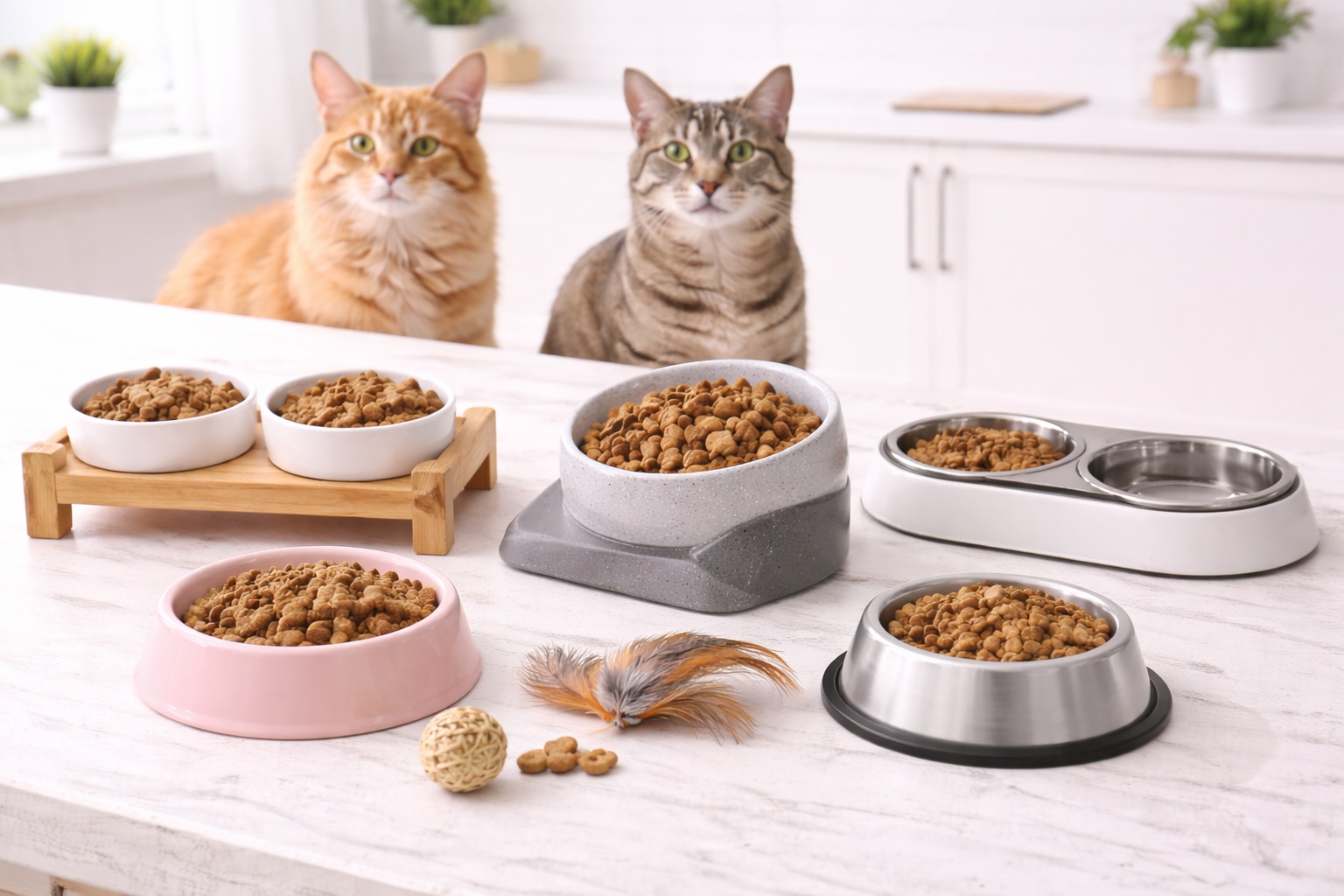
A wide, shallow ceramic bowl avoids pressing against the whiskers and face of flat-faced small breeds like Pugs, Shih Tzus, and small Bulldogs, whose short snouts make a standard deep bowl uncomfortable to use fully. The wide opening allows the dog to reach food without needing to press its face into a narrow, deep cavity, and ceramic is fully dishwasher safe and heavier than plastic, resisting tipping during eating.
- Pros:
- Wide, shallow shape suits flat-faced breeds specifically
- Heavier ceramic material resists tipping during feeding
- Dishwasher safe and hygienic like stainless steel
- Available in aesthetically appropriate designs for home use
- Cons:
- Ceramic can chip or crack if dropped
- Heavier than stainless, less convenient for travel
Best For: Flat-faced small breeds and any small dog that shows reluctance to eat from a deep, narrow bowl.
Why We Recommend It: Brachycephalic breeds physically struggle with deep bowls in a way that is easy to overlook, and a properly wide, shallow design directly resolves the discomfort rather than leaving the dog to adapt to an uncomfortable feeding setup.
5. Collapsible Silicone Travel Bowl, Small Size – Best for On-the-Go Feeding
A collapsible silicone bowl folds flat for travel and pops into shape when needed, sized appropriately for a small dog's portion needs during walks, car trips, and visits. Because small dogs are carried and transported more frequently than large dogs, a genuinely portable bowl that fits into a pocket or small bag solves a practical gap that a rigid bowl cannot.
- Pros:
- Folds flat for easy portability during travel
- Sized appropriately for small portions rather than wasting space
- Lightweight and simple to rinse clean on the go
- Inexpensive enough to keep multiples for different bags or vehicles
- Cons:
- Less stable than a rigid bowl on uneven ground
- Not intended as a primary daily feeding bowl at home
Best For: Travel, walks, car trips, and any situation requiring a portable feeding solution away from home.
Why We Recommend It: Small dogs travel with their owners more often than large dogs typically do, and a genuinely compact, foldable bowl solves the practical challenge of feeding away from home without carrying a bulky rigid bowl.
6. Non-Slip Rubber-Base Bowl – Best for Preventing Mealtime Mess
A bowl with a rubberized non-slip base addresses a specific problem common to small dogs: a lightweight bowl that slides across hard flooring as the dog eats, scattering food and creating mess with every meal. The heavier, grippy base keeps the bowl anchored in place regardless of how enthusiastically a small dog eats, without requiring a full elevated stand setup.
- Pros:
- Non-slip base keeps the bowl anchored during enthusiastic eating
- Reduces spilled food and mealtime mess on hard floors
- Simple single-bowl design without added stand complexity
- Widely available in dishwasher-safe materials
- Cons:
- Rubber base can wear or discolor over years of use
- Slightly bulkier than a bare bowl without a base
Best For: Small dogs on hardwood or tile floors that struggle to keep a lightweight bowl in place during meals.
Why We Recommend It: Small dogs generate enough force while eating to send a lightweight, unanchored bowl sliding several feet across a smooth floor, and a non-slip base solves this directly without adding the complexity of a full elevated stand.
7. Automatic Portion-Control Feeder, Small Bowl Size – Best for Scheduled Feeding
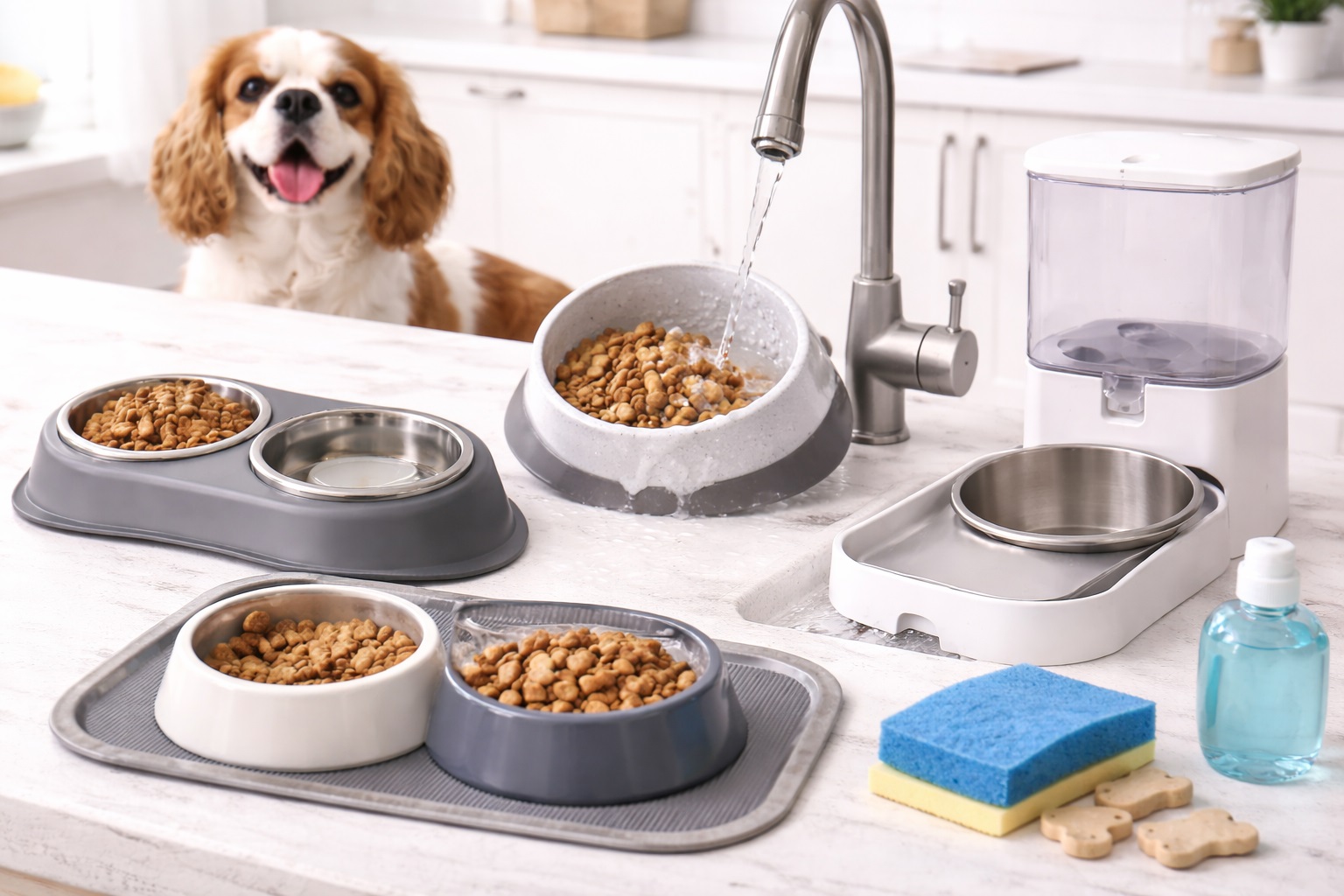
An automatic feeder with a small bowl attachment dispenses a measured portion at set times, which suits small dogs prone to weight gain from overeating, since small breeds often require very precise, modest portions where even minor overfeeding has a proportionally larger impact on body weight than it would for a large dog. This style works best with dry kibble rather than wet food.
- Pros:
- Delivers precise portions suited to a small dog's modest caloric needs
- Useful for owners with irregular schedules or those often away from home
- Helps prevent overfeeding, a common issue in small breeds prone to weight gain
- Removable bowl component is typically dishwasher safe
- Cons:
- Best suited to dry food rather than wet food
- Higher upfront cost than a standard bowl
Best For: Small dogs prone to weight gain, and owners with irregular schedules who need consistent, precisely portioned feeding times.
Why We Recommend It: Small breeds are particularly sensitive to overfeeding given their modest caloric needs relative to body size, and an automatic feeder removes the risk of inconsistent portioning that can occur with manual scooping.
8. Double Diner Bowl Set, Small Size – Best for Multi-Small-Dog Households
A double diner set with two attached small bowls in one unit suits households with more than one small dog, keeping feeding stations contained to a single, tidy footprint rather than two separate bowls scattered across the floor. The attached design also reduces the chance of one dog's bowl sliding into a housemate's space during a shared feeding time, a common source of minor food-related tension between small dogs.
- Pros:
- Contains two feeding stations in one tidy, compact unit
- Reduces bowls sliding into a housemate's space during meals
- Simplifies feeding logistics in multi-small-dog households
- Typically dishwasher safe for easy cleaning
- Cons:
- Fixed spacing may not suit dogs with strong feeding-space preferences
- Less flexible than fully separate individual bowls
Best For: Households with two small dogs that eat at the same time in the same general area.
Why We Recommend It: A shared, structured feeding station reduces the low-level competition that can arise when two small dogs eat from separate, movable bowls placed close together, without requiring a fully separate feeding room for each dog.
9. Insulated Stainless Travel Bowl – Best for Extended Outings and Warm Weather
An insulated version of a stainless steel bowl keeps water cooler for longer during extended outings in warm weather, which matters for small dogs that dehydrate more quickly relative to their body size than large dogs during exercise or travel. The insulation adds a small amount of bulk compared to a basic collapsible bowl but delivers a genuine practical benefit on longer walks, hikes, or car trips during hot months.
- Pros:
- Insulation keeps water cooler for longer during warm-weather outings
- Stainless interior maintains the hygiene benefits of standard steel bowls
- More durable than a collapsible silicone option for frequent travel use
- Suitable for both food and water depending on the outing
- Cons:
- Bulkier and heavier than a folding travel bowl
- Higher cost than a basic non-insulated travel bowl
Best For: Extended outdoor outings in warm weather, hiking, and longer car trips where water temperature matters.
Why We Recommend It: Small dogs are more vulnerable to rapid dehydration during warm-weather activity than their size might suggest, and an insulated bowl helps keep drinking water appealing and genuinely cool for longer stretches away from home.
10. Weighted Anti-Tip Ceramic Bowl – Best for Enthusiastic or Clumsy Eaters
A ceramic bowl with a wider, weighted base specifically resists tipping over during energetic eating, which some small dogs are prone to given how much force they can generate relative to a lightweight bowl's own mass. This style suits puppies still learning table manners as well as adult dogs that eat with more enthusiasm than precision, keeping food contained rather than scattered across the floor after every meal.
- Pros:
- Weighted, wide base resists tipping during energetic eating
- Ceramic material is dishwasher safe and hygienic
- Suits both puppies and adult dogs with enthusiastic eating styles
- Available in a range of styles suited to home decor
- Cons:
- Heavier and less portable than lightweight alternatives
- Can chip if dropped on hard flooring
Best For: Puppies still developing table manners and adult small dogs that eat with more enthusiasm than care.
Why We Recommend It: A weighted, anti-tip design solves a specific everyday frustration without requiring a full elevated stand, keeping mealtime mess contained through the bowl's own stability rather than through constant supervision.
Buying Guide: How to Choose the Best Food Bowl for Small Dogs
Use these factors to match a feeding bowl to your small dog's specific proportions, eating habits, and home environment. Small breed feeding equipment has genuinely different requirements than scaled-down versions of large-breed products, and treating the two categories as interchangeable often produces a poor fit. Consider each factor in the context of your specific dog rather than assuming any single feature matters equally for every small breed.
1. Match Bowl Depth to Facial Structure
Flat-faced breeds need shallow, wide bowls, while narrow-snouted breeds tolerate more standard depths. Observe whether your dog hesitates or pulls back while eating, which often signals an uncomfortable bowl depth. Trying two or three depths and watching which one your dog approaches most eagerly is a reliable, low-cost way to settle this question.
2. Choose Hygienic, Non-Porous Materials
Stainless steel and quality ceramic resist bacterial growth better than plastic, which develops microscopic surface scratches over time that harbor bacteria despite regular washing.
3. Prioritize Stability for Enthusiastic Eaters
A non-slip base or weighted material prevents a lightweight small bowl from sliding across the floor during feeding, which is a more common issue for small dogs than larger breeds given the lower relative weight of most bowls sized for them. This becomes even more noticeable on smooth flooring like tile or hardwood compared to carpeted areas.
4. Consider Elevation for Neck Comfort
A modest elevation reduces neck strain during every meal, particularly for older small dogs or those with any existing neck sensitivity, though it is worth checking with a veterinarian for bloat-prone breeds first.
5. Assess Whether a Slow Feeder Is Appropriate
If your small dog finishes meals in well under a minute or shows visible gulping, a correctly scaled slow feeder bowl is worth trialing rather than assuming the behavior will resolve on its own.
6. Wash Bowls Daily Regardless of Material
Bacteria accumulate on any bowl surface between uses. Daily washing with dish soap and warm water, or a dishwasher cycle, keeps a small dog's bowl genuinely sanitary.
7. Size the Bowl to Actual Portion Needs
An oversized bowl for a small dog's modest portion can make it difficult to reach food at the bottom, while an undersized bowl spills over the sides. Match capacity closely to real portion size rather than choosing a bowl based purely on its outer dimensions.
8. Keep a Portable Option for Travel
A collapsible or lightweight travel bowl separate from the primary home bowl avoids sharing bowls with unfamiliar animals at public water or feeding stations during outings.
9. Separate Food and Water Bowl Placement
Placing water away from food encourages more natural, consistent drinking, particularly relevant for small dogs that may be pickier about food and water proximity than larger breeds.
10. Watch for Chin Irritation from Plastic
Some small dogs develop chin acne or contact dermatitis from repeated plastic bowl contact. Switching to stainless steel or ceramic often resolves this issue within a few weeks.
11. Consider Portion Control for Weight-Prone Breeds
Small breeds are especially sensitive to overfeeding given their modest daily caloric needs. An automatic feeder or measured scoop helps maintain consistent, appropriate portions over time.
12. Replace Bowls Showing Wear
Scratched plastic, chipped ceramic, or a stainless bowl with damaged edges should be replaced rather than kept in daily use, since damaged surfaces harbor bacteria regardless of how thoroughly they are washed. Inspect bowls periodically rather than waiting for obvious visible damage before considering replacement.
Frequently Asked Questions
1. What size bowl does a small dog need?
Match the bowl to your dog's actual portion size and facial structure rather than choosing the smallest available option purely based on the dog's body size.
2. Are ceramic bowls safer than plastic for small dogs?
Ceramic and stainless steel are both more hygienic than plastic long-term, since plastic develops bacteria-harboring scratches that ceramic and steel largely avoid.
3. Do small dogs need a slow feeder bowl?
Only if they show signs of eating too quickly, such as gulping, vomiting shortly after meals, or finishing food in under thirty seconds.
4. Is an elevated bowl safe for all small dogs?
Elevation benefits many small dogs but should be checked against veterinary guidance for breeds prone to bloat before adopting a raised feeding setup.
5. How often should a small dog's bowl be washed?
Daily washing is the standard recommendation, since bacteria accumulate on any bowl surface between uses regardless of material.
6. Why does my small dog avoid its bowl sometimes?
Bowl depth pressing uncomfortably against the face, a lingering smell from inadequate washing, or an unstable bowl that moves during eating are all common, resolvable causes.
7. Can I use the same bowl for food and water?
Separate bowls are generally preferable, since many dogs show a preference for drinking away from where they eat, which better mirrors natural instinctive behavior.
8. Is the most expensive small dog bowl always the best?
Not necessarily. A well-made stainless or ceramic bowl at a moderate price typically performs as well as a premium option for everyday feeding needs.
9. How long does a quality small dog bowl last?
Stainless steel and ceramic bowls can last many years with normal care, while plastic bowls are generally recommended for replacement every year or two due to surface wear that develops even with regular washing.
10. What causes chin acne in small dogs?
Repeated contact with certain plastics is a common contributing factor. Switching to stainless steel or ceramic often improves or resolves the issue.
11. Should I buy a travel bowl separate from the home bowl?
Yes, a lightweight collapsible option makes outings more practical without needing to bring the primary home bowl along each time.
12. Do automatic feeders work well for small dogs?
Yes, particularly for dry food and precise portion control, which matters given how sensitive small breeds can be to even modest overfeeding.
Final Verdict
- Best Overall Hygienic Choice: Shallow Stainless Steel Bowl, Small Size — correctly scaled hygiene and durability.
- Best for Ergonomic Feeding: Elevated Small-Breed Bowl Set with Stand — reduces neck strain during meals.
- Best for Fast Eaters: Slow Feeder Bowl, Small Breed Size — a maze scaled for a small dog's mouth.
- Best for Flat-Faced Small Breeds: Ceramic Whisker-Friendly Bowl — wide and shallow for brachycephalic comfort.
- Best for On-the-Go Feeding: Collapsible Silicone Travel Bowl, Small Size — genuinely portable for outings.
- Best for Preventing Mealtime Mess: Non-Slip Rubber-Base Bowl — keeps a lightweight bowl anchored.
- Best for Scheduled Feeding: Automatic Portion-Control Feeder, Small Bowl Size — precise portions for weight-sensitive breeds.
- Best for Multi-Small-Dog Households: Double Diner Bowl Set, Small Size — a tidy, shared feeding station.
- Best for Extended Outings and Warm Weather: Insulated Stainless Travel Bowl — keeps water cool during longer trips.
- Best for Enthusiastic or Clumsy Eaters: Weighted Anti-Tip Ceramic Bowl — stability without a full elevated stand.
The right food bowl for a small dog comes down to matching depth, stability, and portion size to your dog's actual proportions and eating habits, rather than assuming a scaled-down large-breed bowl will suit just as well. Use the comparisons and detailed reviews above to choose a bowl that supports comfortable, hygienic feeding at every meal, and don't hesitate to keep more than one style on hand as your dog's needs change across different life stages and situations.