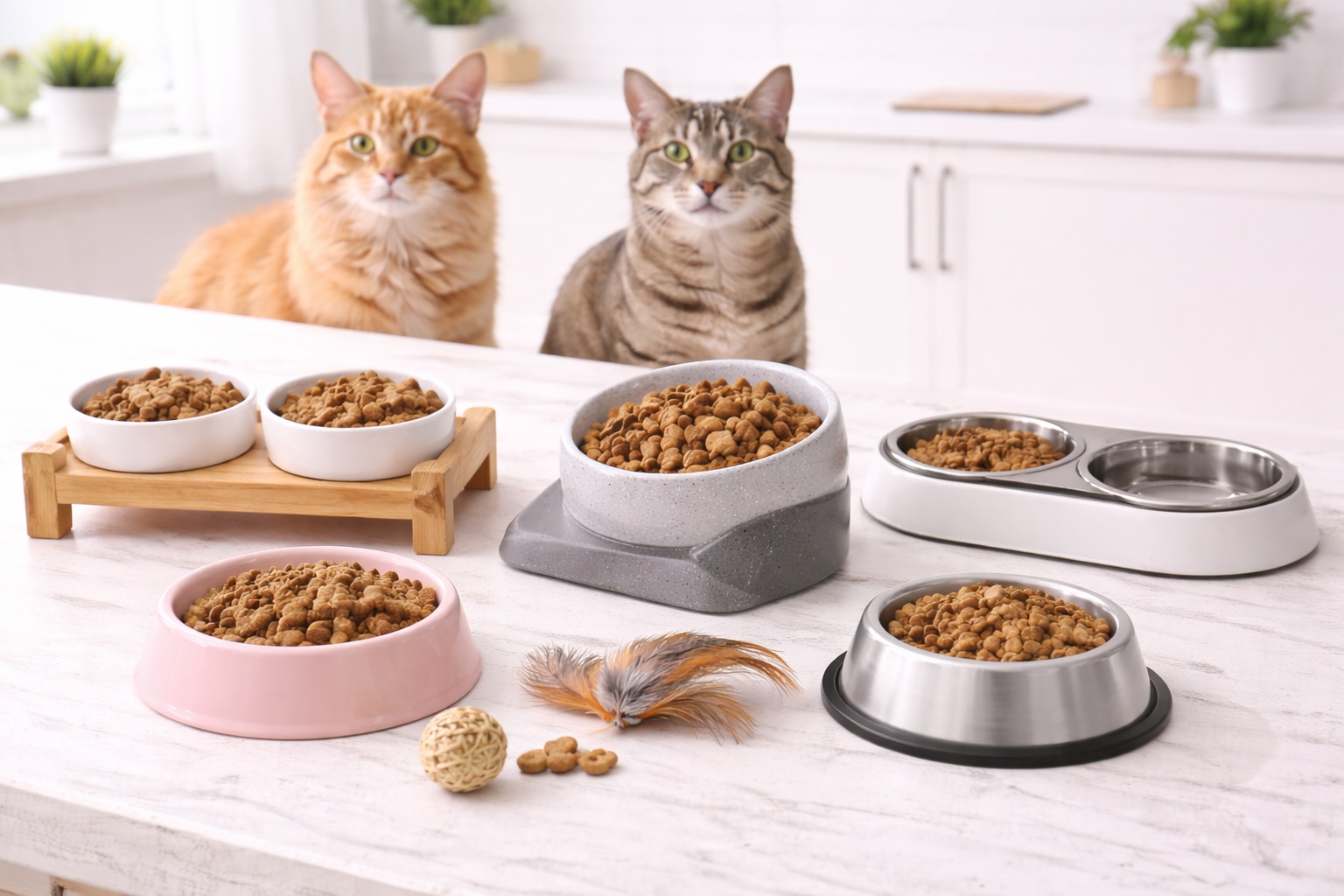
Best Food Bowls for Cats: Whisker-Friendly Top Picks
A standard deep bowl, the kind that works perfectly well for most dogs, is frequently a poor match for cats specifically because of whisker sensitivity, a well-documented feline trait that a bowl designed primarily around dog eating behavior does not account for. Cat whiskers are packed with nerve endings that detect even subtle pressure, and a bowl deep or narrow enough to press against them repeatedly during eating can cause genuine discomfort that leads some cats to pull food out onto the floor to eat, or to reduce their food intake at the bowl altogether. This single design detail explains a surprising share of the seemingly unrelated feeding complaints cat owners bring up, from picky eating to food scattered across the floor.
This guide focuses specifically on bowl designs suited to cat anatomy and behavior, covering whisker-friendly shapes, appropriate depth, and the material and stability factors that matter for a species with distinct feeding instincts from dogs. We also address the common feline preference for eating away from water sources, a behavioral quirk rooted in wild instincts that still influences how domestic cats approach their bowls today, along with the elevation, portability, and multi-cat considerations that shape a well-rounded feeding setup.
Cats are also generally more selective and habit-driven eaters than dogs, meaning a bowl that causes even mild discomfort can lead to reduced eating rather than simply being tolerated. Getting the bowl right matters more for maintaining consistent, healthy eating habits in cats than it might for a less particular species, which is why we evaluate every option here through the specific lens of feline comfort and preference rather than treating cat and dog feeding equipment as fully interchangeable.
Multi-cat households add another layer of consideration, since cats are often less willing than dogs to share a single feeding station without some degree of stress or resource guarding. Use the comparison tools and detailed reviews below to find a bowl genuinely designed around how cats actually prefer to eat.
Cost in this category is rarely the limiting factor, since whisker-friendly bowls in ceramic, glass, or stainless steel are typically priced comparably to standard deep bowls in the same material. The more important decision is usually which material and how many bowls to own, particularly in a multi-cat household, rather than agonizing over price differences between whisker-friendly and standard options within the same material category.
It is also worth noting that switching an established cat to a new bowl shape sometimes requires a brief adjustment period, even when the new bowl is objectively more comfortable. Cats can be creatures of habit around feeding routines, and placing the new bowl in the same familiar location, alongside the old one initially if needed, tends to ease this transition more smoothly than an abrupt full swap.
Top Picks Reviewed
1. Wide, Shallow Ceramic Bowl – Best Overall Whisker-Friendly Choice
A wide, shallow ceramic bowl is the most consistently recommended style for avoiding whisker stress, since the flat, open surface allows a cat to eat without its face or whiskers making contact with raised sides at any point during a meal. Ceramic also offers strong hygiene, being fully dishwasher safe and non-porous once properly glazed, and the material's natural weight helps the bowl resist tipping during eating.
- Pros:
- Wide, shallow shape avoids whisker contact during eating
- Ceramic material is dishwasher safe and non-porous
- Natural weight resists tipping without a separate stand
- Available in a wide range of styles suited to home decor
- Cons:
- Can chip or crack if dropped on hard flooring
- Heavier than plastic, less convenient for travel
Best For: Cats showing any sign of whisker sensitivity or reluctance to eat fully from a standard bowl.
Why We Recommend It: Whisker stress is a genuine, well-documented feline discomfort, and a properly wide, shallow ceramic design resolves it directly rather than leaving a cat to adapt to an uncomfortable feeding setup.
2. Flat Stainless Steel Saucer Bowl – Best for Maximum Hygiene with Whisker Comfort
A flat, wide stainless steel saucer combines the whisker-friendly shape cats need with the superior hygiene of stainless steel, which resists bacterial growth better than any other common material. The shallow saucer shape spreads food across a wide surface, avoiding the pile-up in the center that a smaller, deeper bowl creates, while remaining fully dishwasher safe for complete sterilization.
- Pros:
- Flat saucer shape avoids whisker contact entirely
- Stainless steel offers superior long-term hygiene
- Dishwasher safe for complete sterilization
- Lightweight and simple to clean by hand as well
- Cons:
- Lightweight construction can slide without a non-slip base
- Some cats are sensitive to the metallic reflection or sound
Best For: Households prioritizing maximum hygiene alongside whisker-friendly comfort.
Why We Recommend It: Combining the whisker-friendly flat shape with the superior hygiene of stainless steel addresses both of a cat's core feeding needs without requiring a compromise between comfort and cleanliness.
3. Elevated Whisker-Friendly Stand Set – Best for Cats with Neck or Spine Sensitivity
An elevated stand holding wide, shallow bowls raises the feeding surface to a more natural height while maintaining the whisker-friendly shape cats need, addressing both ergonomic comfort and whisker sensitivity simultaneously. This suits senior cats or those with any existing neck or spine sensitivity that makes bending fully to floor level less comfortable during every meal.
- Pros:
- Combines elevation benefits with whisker-friendly bowl shape
- Reduces neck strain for senior or sensitive cats
- Stand keeps bowls stable and in place during eating
- Removable bowls are typically dishwasher safe
- Cons:
- Elevation is not appropriate for every cat — introduce gradually
- Stand adds to the overall surface area needing regular cleaning
Best For: Senior cats, cats with existing joint or spine sensitivity, and multi-cat households wanting a consistent feeding height.
Why We Recommend It: Combining elevation with whisker-friendly design addresses two separate comfort factors at once, which matters particularly for older cats where both concerns often overlap.
4. Glass Whisker-Friendly Bowl – Best for Households Avoiding Plastic
A wide, shallow tempered glass bowl offers the same whisker-friendly shape and non-porous hygiene as ceramic or stainless steel, while appealing to households that specifically want to avoid plastic materials entirely. Glass does not retain odor, resists staining, and is fully dishwasher safe, and its transparency allows for easy visual confirmation that the bowl is genuinely clean after washing.
- Pros:
- Whisker-friendly wide, shallow shape
- Non-porous surface resists odor and staining
- Transparency allows visual confirmation of cleanliness
- Dishwasher safe for thorough sterilization
- Cons:
- Can chip or break if dropped on a hard floor
- Heavier than plastic, though this also improves stability
Best For: Households wanting a hygienic, whisker-friendly material that avoids both plastic and metal entirely.
Why We Recommend It: Glass delivers the full whisker-friendly and hygiene benefits of ceramic and stainless steel while suiting owners with specific material preferences, without any compromise on comfort or cleanliness.
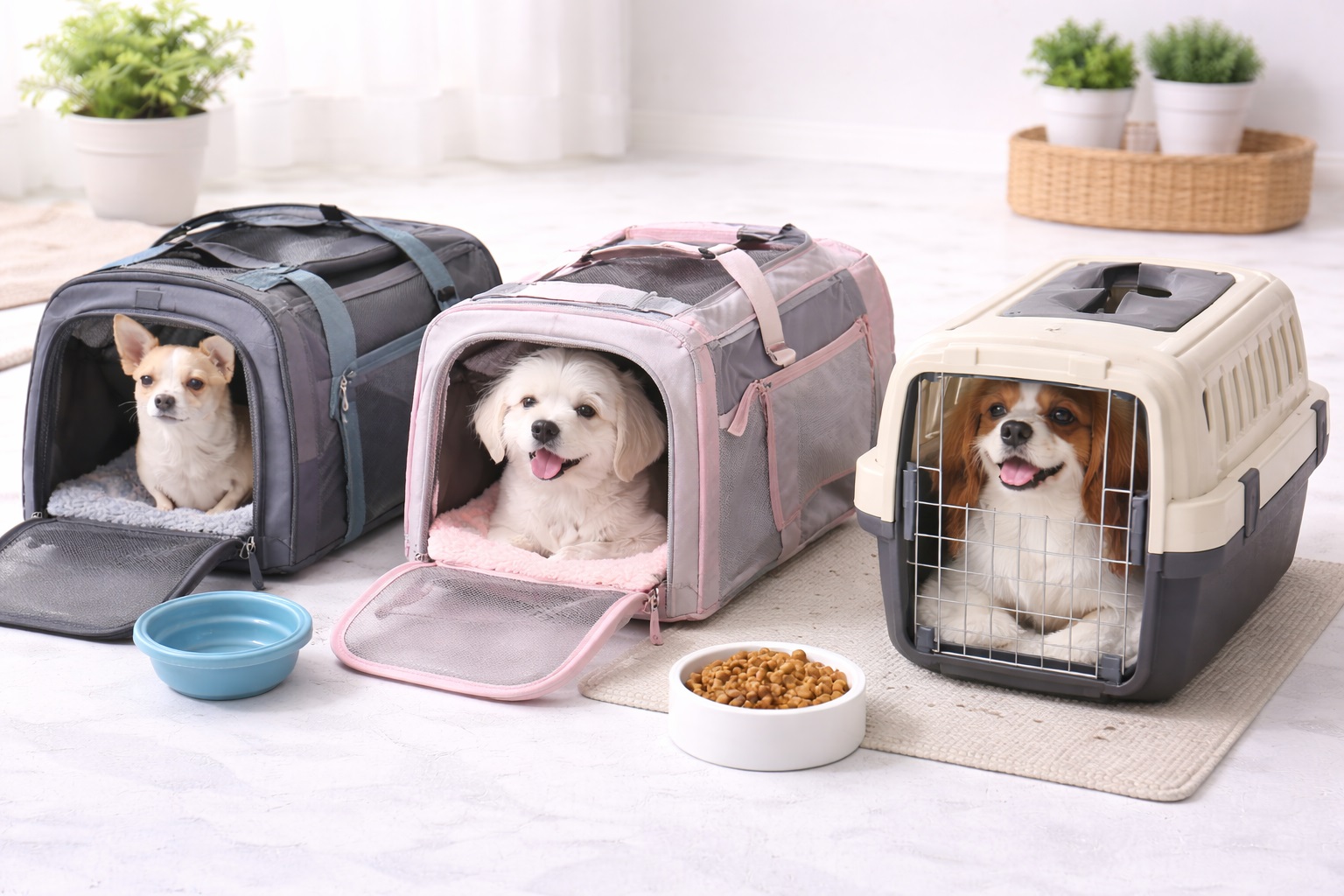
5. Silicone Whisker-Friendly Travel Bowl – Best for Cats That Travel or Visit the Vet
A collapsible silicone bowl with a wide, shallow profile maintains whisker comfort even during travel, folding flat for transport to veterinary visits or trips while still avoiding the whisker contact a standard deep travel bowl would cause. This matters particularly for cats already stressed by travel, where an uncomfortable bowl adds an unnecessary additional source of discomfort during an already difficult experience. Keeping this travel bowl permanently packed in a carrier bag or car, rather than needing to remember it each time, also removes one more small point of friction from an already stressful outing.
- Pros:
- Wide, shallow profile maintains whisker comfort while traveling
- Folds flat for compact transport to appointments or trips
- Lightweight and simple to rinse clean on the go
- Reduces added stress during already stressful travel situations
- Cons:
- Less stable than a rigid bowl on uneven surfaces
- Not intended as a primary daily home feeding bowl
Best For: Cats that travel for veterinary visits, boarding, or trips, where maintaining feeding comfort matters especially during stress.
Why We Recommend It: Cats already find travel stressful, and maintaining a familiar, comfortable whisker-friendly bowl shape during these situations avoids compounding that stress with an additional, avoidable discomfort.
6. Multi-Cat Whisker-Friendly Feeding Set – Best for Households with Several Cats
A set of individual wide, shallow bowls designed for placement in separate locations suits multi-cat households where sharing a single feeding station can create resource guarding stress or one cat consistently dominating access. Each bowl maintains full whisker-friendly comfort while allowing every cat in the household to eat at its own pace without competition or supervision needs.
- Pros:
- Individual bowls reduce resource competition between cats
- Full whisker-friendly comfort for every cat in the household
- Separate placement allows cats to eat at their own pace
- Typically dishwasher safe for easy cleaning of each bowl
- Cons:
- Requires more total floor space than a single shared station
- More individual bowls to wash daily compared to one shared bowl
Best For: Multi-cat households experiencing any resource competition or dominance behavior around a shared feeding station.
Why We Recommend It: Cats are considerably less tolerant of sharing feeding resources than dogs typically are, and separate, individually placed bowls directly address the stress that a single shared station can create in a multi-cat home.
7. Automatic Whisker-Friendly Feeder – Best for Scheduled Feeding Without Sacrificing Comfort
An automatic feeder with a wide, shallow bowl attachment delivers precisely portioned meals at set times while still avoiding the whisker contact a standard automatic feeder's deeper default bowl often causes. This suits households with irregular schedules or cats prone to weight gain, addressing portion control and feeding comfort simultaneously rather than treating them as separate purchases.
- Pros:
- Delivers precise, scheduled portions without whisker discomfort
- Useful for owners with irregular schedules or frequent travel
- Helps manage weight in cats prone to overeating
- Removable bowl component is typically dishwasher safe
- Cons:
- Best suited to dry food rather than wet food
- Higher upfront cost than a standard bowl
Best For: Cats needing consistent portion control alongside whisker-friendly comfort, particularly in households with irregular schedules.
Why We Recommend It: Many automatic feeders default to a deeper bowl shape that undermines whisker comfort, and a model specifically designed with a wide, shallow attachment solves both the scheduling and comfort needs at once.
8. Weighted Whisker-Friendly Ceramic Set – Best for Enthusiastic or Food-Motivated Cats
A weighted, wide ceramic bowl resists being pushed or tipped by particularly food-motivated cats that eat with more enthusiasm and physical force than average, while still maintaining the shallow profile that avoids whisker contact. The added weight keeps the bowl anchored during vigorous eating without requiring a separate non-slip mat or stand accessory.
- Pros:
- Weighted base resists pushing and tipping during vigorous eating
- Maintains whisker-friendly shallow shape
- Ceramic material is dishwasher safe and hygienic
- No separate stand or mat needed for basic stability
- Cons:
- Heavier and less portable than lightweight alternatives
- Can chip if dropped on hard flooring
Best For: Food-motivated cats that push or nudge their bowl noticeably during eating.
Why We Recommend It: Some cats generate real force while eating, and a weighted design solves the resulting instability directly through the bowl's own mass rather than requiring an additional accessory purchase.
9. Raised-Rim Anti-Splash Bowl – Best for Cats That Eat Wet Food Enthusiastically
A wide, shallow bowl with a very slightly raised outer rim contains the splashing and scattering that enthusiastic wet food eating can cause, without compromising the flat interior surface that keeps whiskers comfortable. This addresses a specific, common mess-related frustration for owners of cats on a primarily wet food diet, where scattered food around the bowl is otherwise a near-daily occurrence. Pairing this style with a small washable mat underneath further contains any splashing that does make it past the rim, keeping daily cleanup to a quick wipe rather than a full floor wash.
- Pros:
- Slightly raised outer rim contains splashing and scatter
- Flat interior surface maintains whisker-friendly comfort
- Reduces daily mess around the feeding area
- Available in dishwasher-safe ceramic and stainless options
- Cons:
- Slightly more surface area to clean than a fully flat design
- Rim height must stay minimal to avoid reintroducing whisker contact
Best For: Cats on a primarily wet food diet that tend to scatter or splash food during enthusiastic eating.
Why We Recommend It: This design solves a genuine everyday mess problem specific to wet food feeding without reintroducing the whisker discomfort that a fully deep bowl would cause.
10. Double Whisker-Friendly Diner Set – Best for Feeding Food and Water Side by Side Comfortably
A double diner set with two attached wide, shallow bowls allows a cat to access both food and water from whisker-friendly vessels in one convenient unit, for households that prefer a combined station despite the general instinctive preference many cats show for separated food and water placement. Both bowls maintain the same comfortable shallow profile, differing only in their intended contents.
- Pros:
- Both food and water bowls maintain whisker-friendly comfort
- Convenient combined unit for households preferring one station
- Typically dishwasher safe for easy combined cleaning
- Simplifies feeding logistics into a single tidy footprint
- Cons:
- Some cats still prefer food and water in fully separate locations
- Fixed spacing may not suit every cat's individual preference
Best For: Households wanting a single, tidy, whisker-friendly feeding station rather than separated food and water bowls.
Why We Recommend It: While separated placement is generally preferred by cats, a combined whisker-friendly set still resolves the core comfort issue for households where a single station is the more practical choice.
Across all ten of these styles, the whisker-friendly shape remains the constant, non-negotiable factor, while material, elevation, portability, and stability vary based on each household's specific circumstances. This is worth remembering when comparing products outside this guide as well: a beautifully made bowl in any material still falls short if its basic shape presses uncomfortably against a cat's whiskers during every single meal.
Buying Guide: How to Choose the Best Food Bowl for Cats
Use these factors to select a bowl genuinely suited to feline anatomy, behavior, and your specific household situation. Cat feeding equipment benefits from being evaluated separately from dog products, since the underlying behavioral and physical considerations genuinely differ between the two species. Applying dog-focused shopping assumptions to a cat's bowl is one of the more common, easily avoidable mistakes new cat owners make.
1. Prioritize Whisker-Friendly Shape Above All Else
A wide, shallow bowl that avoids pressing against a cat's whiskers is the single most important factor in feline feeding comfort, more so than material, price, or brand reputation.
2. Choose Non-Porous, Hygienic Materials
Ceramic, stainless steel, and glass all resist bacterial growth better than plastic, which develops microscopic scratches over time that some cats are notably sensitive to, sometimes developing chin acne from contact.
3. Watch for Signs of Whisker Stress
A cat that paws food out of the bowl to eat on the floor, or hesitates before eating, is often signaling discomfort with bowl depth or shape rather than a dislike of the food itself.
4. Separate Water Placement From Food
Cats show a strong instinctive preference for drinking away from where they eat, a behavior rooted in avoiding contamination between food and water sources in the wild. Honor this by placing bowls in separate locations, ideally in different rooms or at least several feet apart within the same room.
5. Provide Individual Bowls in Multi-Cat Households
Cats are generally less willing than dogs to share a feeding station without stress. Each cat benefits from having its own dedicated food bowl and water source.
6. Consider Stability on Hard Flooring
A lightweight bowl that slides during eating can frustrate a cat and create mess. A weighted ceramic or glass bowl, or a stainless bowl with a non-slip base, addresses this directly.
7. Assess Whether Elevation Would Help
Senior cats or those with mobility limitations may benefit from a modest elevation that reduces the need to bend fully to floor level during every meal.
8. Wash Bowls Daily Regardless of Material
Bacteria accumulate on any surface between uses. Daily washing with dish soap and warm water, or a dishwasher cycle, keeps a cat's bowl genuinely sanitary.
9. Size the Bowl to Actual Portion Needs
Cats generally eat smaller portions than dogs relative to bowl size. An oversized bowl can make a small portion look sparse and may discourage eating in some particular cats, so matching bowl size to realistic portions matters more than it might first appear.
10. Keep a Portable Whisker-Friendly Option for Travel
A collapsible travel bowl that maintains the whisker-friendly shape reduces added stress during veterinary visits, boarding, or trips away from home.
11. Observe Individual Preferences Rather Than Assuming Universal Rules
While whisker sensitivity affects many cats, individual tolerance varies. Watching your own cat's actual eating behavior remains the most reliable guide to the right bowl choice.
12. Replace Bowls Showing Wear or Damage
Scratched plastic, chipped ceramic, or a bowl with damaged edges should be replaced rather than kept in daily use, since damaged surfaces harbor bacteria regardless of washing frequency, and a chip in particular can also introduce a sharp edge risk.
13. Observe Feeding Posture and Body Language
Watch whether your cat crouches unusually low, repeatedly backs away and returns to the bowl, or holds its head at an awkward angle while eating, since these postures often indicate the current bowl shape or height is not comfortable, even if the cat continues eating enough to maintain weight.
14. Ease an Older Cat Into a New Bowl Shape Gradually
Cats that have used the same bowl for years sometimes show initial hesitation toward a new shape, even a more comfortable one. Placing the new whisker-friendly bowl beside the old one for the first week, then gradually phasing out the old bowl, generally produces a smoother transition than an abrupt full swap.
Frequently Asked Questions
1. What is whisker fatigue in cats?
Whisker fatigue, also called whisker stress, refers to discomfort caused by a bowl pressing against a cat's sensitive whiskers repeatedly during eating, potentially leading to reduced food intake or eating outside the bowl.
2. How do I know if my cat's bowl is too deep?
Signs include pawing food out to eat on the floor, hesitating before eating, or appearing uncomfortable while positioned at the bowl during meals. Switching to a wide, shallow bowl often resolves these behaviors within days.
3. What bowl material is best for cats?
Ceramic, stainless steel, and glass are all strong choices, each offering non-porous hygiene combined with a wide, shallow, whisker-friendly shape.
4. Do all cats experience whisker stress?
Not universally, but many cats show some degree of sensitivity, and providing a wide, shallow bowl is a low-cost way to rule out this common source of feeding discomfort.
5. Should cats eat separately from other pets?
Generally yes, particularly in multi-cat households, since cats are less tolerant of shared feeding stations than dogs and often experience stress around resource competition.
6. How often should a cat's food bowl be washed?
Daily washing is the standard recommendation, since bacteria accumulate on any bowl surface between uses regardless of material.
7. Why does my cat prefer to drink water away from its food bowl?
This reflects an instinctive preference rooted in avoiding contamination between food and water sources, a behavior that persists in domestic cats despite no longer being strictly necessary.
8. Is an elevated bowl good for cats?
It can benefit senior cats or those with mobility limitations, though introduction should be gradual, and a whisker-friendly shape should be maintained even in an elevated design.
9. Can plastic bowls cause skin problems in cats?
Some cats develop chin acne or contact dermatitis from repeated plastic bowl contact. Switching to ceramic, stainless steel, or glass often resolves this issue.
10. Is the most expensive cat food bowl always the best?
Not necessarily. A well-made ceramic or stainless whisker-friendly bowl at a moderate price typically performs as well as premium branded alternatives.
11. How long does a quality cat food bowl typically last?
Ceramic, glass, and stainless steel bowls can last many years with normal care, while plastic bowls are generally recommended for replacement every year or so.
12. Should I buy a separate travel bowl for my cat?
Yes, a lightweight, whisker-friendly collapsible option makes veterinary visits and travel less stressful without needing to bring the primary home bowl along.
13. Do kittens benefit from whisker-friendly bowls as much as adult cats?
Yes. Kitten whiskers are just as sensitive as an adult cat's, and starting with a wide, shallow bowl from the beginning avoids ever establishing an association between mealtime and mild discomfort in the first place.
14. Does the color of a cat's bowl matter for feeding behavior?
Not for comfort directly, though a lighter interior color makes it easier for an owner to visually confirm the bowl is fully clean, and a color that contrasts with the food itself can make portions easier to see and manage accurately.
Final Verdict
- Best Overall Whisker-Friendly Choice: Wide, Shallow Ceramic Bowl — the most consistently recommended shape for feline comfort.
- Best for Maximum Hygiene with Whisker Comfort: Flat Stainless Steel Saucer Bowl — combines whisker comfort with superior hygiene.
- Best for Cats with Neck or Spine Sensitivity: Elevated Whisker-Friendly Stand Set — comfort and ergonomics together.
- Best for Households Avoiding Plastic: Glass Whisker-Friendly Bowl — hygienic with a modern, clear aesthetic.
- Best for Cats That Travel or Visit the Vet: Silicone Whisker-Friendly Travel Bowl — comfort maintained even away from home.
- Best for Households with Several Cats: Multi-Cat Whisker-Friendly Feeding Set — reduces resource competition between cats.
- Best for Scheduled Feeding Without Sacrificing Comfort: Automatic Whisker-Friendly Feeder — precise portions with a comfortable bowl shape.
- Best for Enthusiastic or Food-Motivated Cats: Weighted Whisker-Friendly Ceramic Set — stability through material weight.
- Best for Cats That Eat Wet Food Enthusiastically: Raised-Rim Anti-Splash Bowl — contains mess without losing whisker comfort.
- Best for Feeding Food and Water Side by Side: Double Whisker-Friendly Diner Set — a tidy, comfortable combined station.
The right food bowl for a cat comes down to prioritizing whisker comfort and hygienic material above all else, rather than assuming a standard bowl designed for general pet use will suit a cat's specific anatomy and instincts equally well. Use the comparisons and detailed reviews above to build a feeding setup your cat genuinely finds comfortable at every meal, and watch for the subtle behavioral cues, such as pawing food onto the floor or hesitating at the bowl, that often signal a change is worth trying.