Best Pet Vacuums for Indoor Use: Quiet, Effective Cleaning That Suits Home Life
Living indoors with a shedding pet means vacuuming becomes a near-daily ritual rather than an occasional chore. The vacuum you choose for that routine has to do more than pick up hair — it has to work around nap schedules, startled cats, sleeping babies, and thin apartment walls without turning cleaning day into a stressful event for everyone in the house. A pet vacuum built for indoor use needs to balance suction, filtration, and maneuverability against a factor that outdoor-oriented or commercial machines rarely consider seriously: noise.
Many owners discover the hard way that a vacuum's marketed suction numbers say nothing about how it will actually feel to run in a small living room while a nervous dog watches from the hallway. Motor whine, high-pitched filter noise, and vibration through hard floors all contribute to a vacuum feeling louder — and more disruptive — than its decibel rating suggests. This guide focuses specifically on what makes a vacuum genuinely suitable for indoor life with pets: not just how much hair it removes, but how it fits into the daily rhythm of a shared home.
Below we compare the three practical categories of pet vacuum that consistently perform well indoors, walk through the buying factors that matter most for noise-sensitive, pet-filled households, and answer the questions owners ask most often before committing to a purchase.
It also helps to set realistic expectations from the start. No single indoor vacuum eliminates the need for any cleaning routine at all, and no amount of marketing language changes the basic physics of suction, filtration, and airflow. What actually varies between models is how well engineers have balanced those competing demands — and how well a given design fits your specific combination of flooring, pet temperament, and daily schedule. Reading past the headline claims to the practical trade-offs each category makes is the most reliable way to land on a vacuum you will still be happy with a year after the purchase.
Top 3 Pet Vacuums for Indoor Use (Detailed Reviews)
1. Cordless Stick Vacuum with Pet Tool – Best for Quiet Daily Fur Pickup
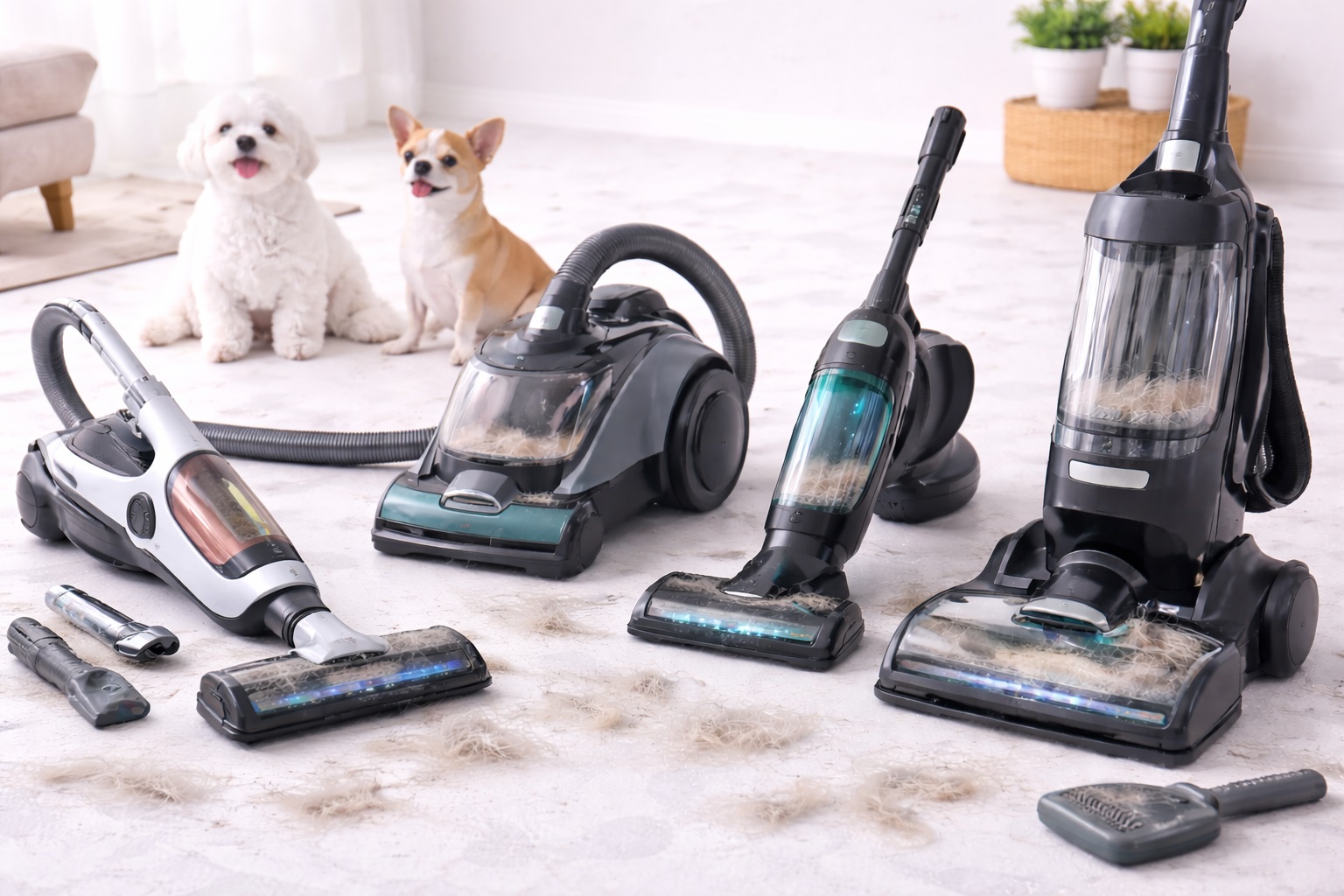
A cordless stick vacuum fitted with a dedicated pet hair attachment is the tool most indoor pet owners reach for multiple times a week. Because it runs on a battery motor rather than a full-size corded motor, it typically produces a lower, more consistent hum than a large upright, which makes it far less likely to send a skittish cat running under the bed. The tangle-resistant or self-cleaning brush roll design common on pet-focused models also means less time wrestling with wound-up hair after each session, which matters when you are vacuuming often enough that maintenance friction adds up quickly.
- Pros:
- Lower operating noise than most full-size uprights
- Cordless freedom for quick room-to-room touch-ups
- Tangle-free pet brush roll reduces maintenance time
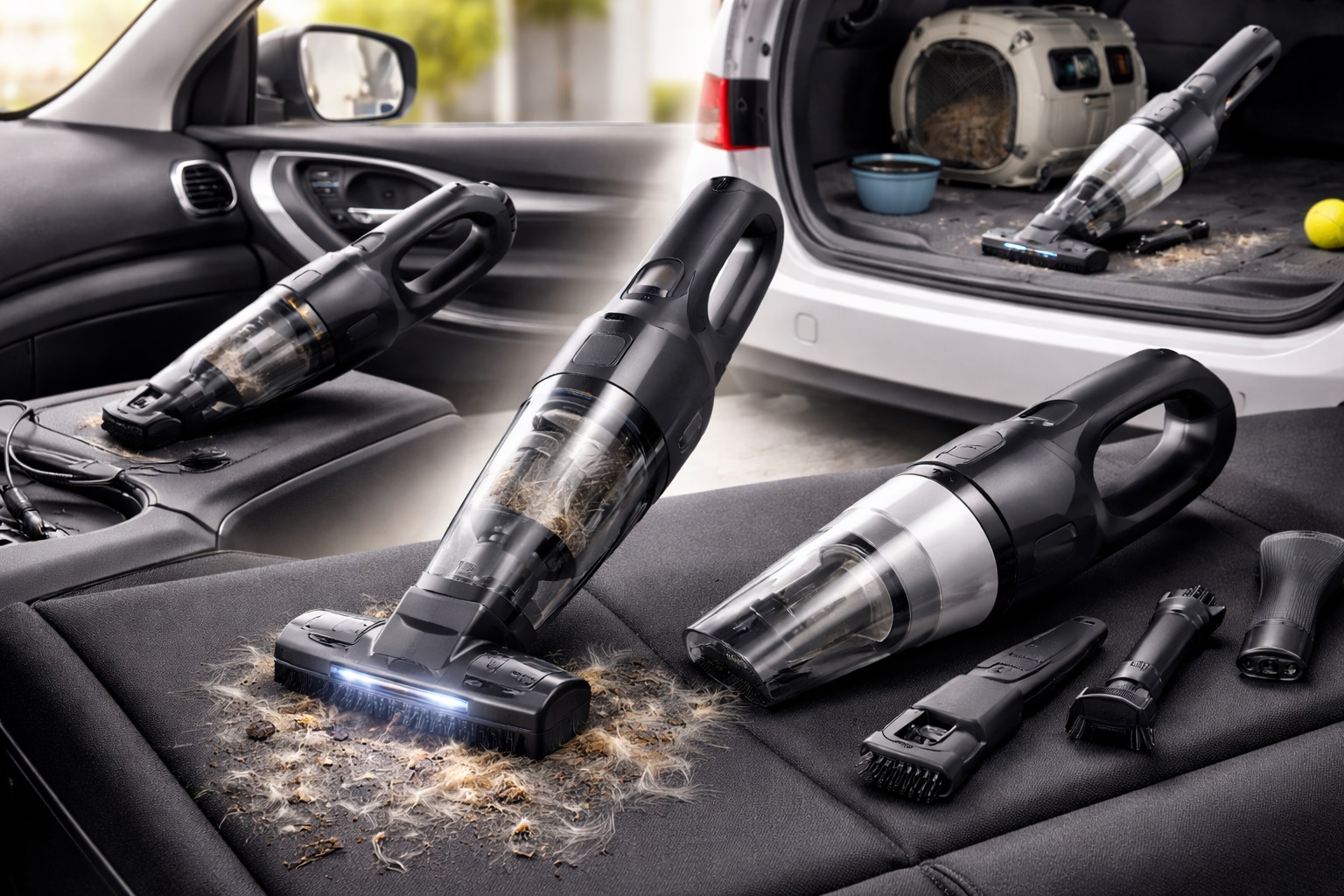
- Converts to a handheld for furniture, stairs, and car interiors
- Cons:
- Battery runtime (roughly 30–60 minutes) can limit single-pass cleaning in larger homes
- Smaller dustbin than a full-size upright, meaning more frequent emptying with heavy shedders
Best For: Indoor pet owners who vacuum frequently and want a lightweight, comparatively quiet tool that can be grabbed and used in seconds without disturbing the household.
Why We Recommend It: For day-to-day indoor cleaning, the cordless stick vacuum offers the best balance of low disruption and genuine effectiveness. It is quick to deploy, quiet enough not to send pets fleeing the room every time, and versatile enough to handle furniture and stairs in addition to floors.
Owners who split cleaning into short, frequent bursts rather than one long weekly session tend to get the most out of this category. Because the vacuum is quick to grab and put away, it fits naturally into small gaps in the day — a few minutes before guests arrive, or a quick pass after the dog comes in from the yard — without the setup and noise commitment of a full-size machine.
2. Upright Vacuum with HEPA Filter – Best for Thorough Indoor Deep Cleaning
When embedded pet hair and dander need to come out of carpet fiber rather than off the surface, an upright vacuum with true HEPA filtration remains the more thorough option. HEPA filters capture particles down to 0.3 microns at a 99.97% efficiency rate, which matters indoors because pet dander is one of the most common indoor allergens and a non-HEPA vacuum can recirculate it right back into the room through the exhaust. Sustained motor power also means the vacuum can pull embedded hair out of carpet pile in fewer passes, which shortens the total time the vacuum needs to run.
- Pros:
- HEPA filtration helps contain dander rather than recirculate it indoors
- Sustained suction extracts embedded hair from carpet more thoroughly
- Large dustbin capacity reduces mid-session emptying
- Powered brush roll agitates carpet fiber for deeper extraction
- Cons:
- Heavier and bulkier to store and maneuver than a stick vacuum
- Corded design limits mobility and reach between rooms
Best For: Households with carpet-heavy floor plans and allergy-sensitive residents who want a weekly deep clean that genuinely lifts embedded hair and dander rather than just surface debris.
Why We Recommend It: An upright with HEPA filtration is the machine that actually solves the deep-clean problem indoors — it is the difference between hair sitting on top of the carpet and hair actually removed from the fiber. Pairing this with a lighter daily tool covers both ends of the indoor cleaning routine.
Running this style of vacuum on a weekly schedule, rather than only when carpets visibly look dirty, keeps dander levels more consistently low between sessions. Allergy-prone households in particular tend to notice the difference in air quality within the first few weeks of establishing a regular deep-cleaning routine rather than cleaning reactively.
3. Robot Vacuum with Pet Hair Mode – Best for Low-Disruption Automated Maintenance
A robot vacuum set to run on a schedule quietly chips away at everyday pet hair accumulation without anyone having to think about it. Pet hair modes typically boost suction and slow the robot's pass speed over problem areas, and because the unit is small and close to the floor, its operating sound tends to read as background noise rather than the more startling burst of a plugged-in machine being switched on. Self-emptying base stations extend the hands-off period even further, which is useful for owners who want consistently clean floors without adding another loud task to their day.
- Pros:
- Runs on a schedule with minimal owner involvement
- Self-empty base models go weeks between manual dustbin emptying
- Lower, steadier operating sound than most upright or canister vacuums
- Can run while the household is out, avoiding disruption altogether
- Cons:
- Less effective than a manual upright on thick carpet or heavily embedded hair
- Requires periodic maintenance of brushes, sensors, and the base station
Best For: Indoor pet owners who want consistent daily upkeep with the least possible noise and effort, especially in homes with mostly hard flooring or low-pile carpet.
Why We Recommend It: The robot vacuum's real value indoors is preventive — it keeps hair from accumulating between deeper manual cleans, and it does so without the noise spike of switching on a full-size machine. Combined with occasional manual vacuuming, this pairing minimizes both mess and disruption.
Scheduling the robot to run during the day while the household is out, rather than early morning or late evening, avoids the sound becoming part of anyone's sleep routine and sidesteps most of the noise concern entirely. Many owners report that once the schedule settles into a routine, pets stop reacting to the robot altogether and simply move out of its path.
Buying Guide: How to Choose the Best Pet Vacuum for Indoor Use
Match these factors against your actual home layout, pet temperament, and daily schedule rather than chasing the highest spec sheet.
1. Decibel Rating and Perceived Loudness
Manufacturers increasingly publish decibel ratings, and models in the 60–70 dB range are generally noticeably calmer than machines running above 80 dB. Keep in mind that perceived loudness also depends on pitch — a lower-pitched hum is often less startling to pets than a high-pitched whine, even at a similar decibel level, so reviews mentioning pet reactions can be as useful as the spec sheet.
It also helps to think about where the noise happens rather than only how loud it is. A vacuum used mainly in an open living room reads differently to a pet than one used in a hallway the animal cannot easily escape from. If your pet already startles at household appliances, look specifically for owner reviews that mention cats or dogs by name rather than relying on the marketing copy alone, since real households tend to describe the actual in-room experience more honestly than a spec sheet.
2. Tangle-Free Brush Roll Design
Standard brush rolls wrap with pet hair quickly, forcing you to stop and manually cut hair free. Tangle-resistant designs use guides, combs, or segmented bristles to shed hair as it collects. For homes with long-haired pets, this feature has an outsized effect on how pleasant the vacuum is to actually live with.
Beyond the brush roll itself, check whether the housing around it opens easily for the occasional deep clean, since even the best tangle-resistant designs eventually need a manual hair removal session. A brush roll that pops out with a single latch saves meaningful time over months of regular use compared to one requiring tools to access.
3. Suction Power for Embedded Hair
Look at suction figures in Pascals or Air Watts as a rough guide to pulling power. Carpet-heavy indoor spaces need more sustained suction to extract hair that has worked its way into the pile, while hard floors are more forgiving of lower-powered machines.
It is worth noting that suction figures measured at the motor rarely match what actually reaches the floor, since airflow loses power through hoses, filters, and attachments along the way. Where possible, prioritize models with independent testing or detailed owner feedback on carpet performance over the raw manufacturer number alone.
4. HEPA or Sealed Filtration
A true HEPA filter, combined with a sealed system that prevents air from bypassing the filter, keeps dander and fine allergens from recirculating indoors. This is especially relevant in homes with asthma or allergy sufferers, where an unsealed system can undermine the benefit of the filter itself.
Some manufacturers use the term HEPA-type or HEPA-style for filters that do not meet the true HEPA standard of capturing 99.97% of particles at 0.3 microns. Reading the specification sheet carefully, rather than trusting the word HEPA alone on the box, avoids paying for allergen protection that falls short in practice.
5. Weight and Maneuverability
Indoor cleaning often means navigating around furniture, under beds, and up stairs. A vacuum that is difficult to lift or steer gets used less often, regardless of its cleaning performance, so hold or test the weight where possible before buying.
Swivel steering, a low center of gravity, and a head that reclines flat under furniture all make a practical difference indoors, where most homes have more obstacles to navigate around than an open showroom floor suggests. A slightly less powerful vacuum that actually gets used under the couch every week beats a stronger one left leaning in a closet.
Anyone carrying the vacuum up and down stairs regularly should also weigh handheld conversion and shoulder-strap options, since a machine that feels manageable on a flat floor can feel considerably heavier when carried up a staircase one-handed.
6. Dustbin Capacity for Shedding Volume
Heavy-shedding pets fill small dustbins fast. A capacity of roughly 0.7 liters or more reduces how often you need to stop and empty mid-session, which matters more in multi-pet homes than single-pet ones.
Emptying frequency also affects hygiene, since a bin packed with pet hair and dander can release some of that material back into the air when opened. Bagless bins with a direct-drop emptying mechanism reduce this compared to designs that require shaking or scraping debris loose by hand, which matters if the emptying happens indoors near living spaces rather than outside over a trash bin.
7. Cordless Runtime vs Corded Reliability
Cordless models offer quiet convenience but are limited by battery runtime, typically 30 to 60 minutes on a full charge. Corded uprights sacrifice some mobility for unlimited runtime and generally stronger sustained suction — many indoor households end up using both for different tasks.
Battery degradation over time is also worth planning for. Most lithium-ion vacuum batteries lose a meaningful share of their original runtime after a few hundred charge cycles, so a cordless model bought primarily for its stated 60-minute runtime may only deliver 40 minutes after a year or two of regular use.
8. Filter Maintenance Requirements
Washable filters lower long-term cost but require regular cleaning and full drying time before reuse to avoid mold. Check how often the manufacturer recommends washing or replacing filters, since a neglected filter is one of the most common causes of lost suction over time.
Set a recurring reminder for filter maintenance rather than waiting for a visible suction drop to prompt it, since by the time performance noticeably declines the filter has often been restricting airflow for weeks already. A five-minute monthly check is a small habit that keeps the whole system performing closer to its rated specification, and it is worth doing this indoors near a window or outdoors entirely to avoid stirring dust back into the room while cleaning the filter itself.
9. Attachment Versatility for Furniture and Stairs
Indoor pet hair collects on couches, cushions, stairs, and car seats as much as on floors. Mini motorized brush tools and upholstery attachments extend a vacuum's usefulness well beyond bare floor cleaning, so check what is included rather than sold separately.
A crevice tool for corners and baseboards and a soft dusting brush for shelves and window sills round out a genuinely versatile indoor kit. If a model's box only includes a single floor head, factor in the cost of attachments separately when comparing total value across options, since a bare-bones kit can end up costing more once the accessories you actually need are added on afterward.
10. Surface Compatibility Across Mixed Flooring
Homes with both carpet and hard flooring benefit from vacuums with automatic surface detection or manual suction adjustment. A machine tuned only for one surface type can underperform or become noisier on the other.
Automatic detection typically raises suction and brush roll speed over carpet and lowers it over hard floor to prevent scattering debris, which also tends to reduce noise on hard surfaces where a fully powered brush roll can rattle audibly against tile or hardwood.
Rugs and floor transitions can also confuse cheaper sensors, causing sudden power changes mid-pass. If your home has several area rugs scattered across hard flooring, look specifically for reviews describing performance on that kind of mixed, broken-up layout rather than a single uniform room.
11. Storage and Charging Footprint
Cordless and robot models need a charging dock, and stick vacuums typically come with a wall-mount stand. Consider where that equipment will live day to day, since an awkward storage spot discourages frequent use.
A dock placed in a frequently used hallway or utility closet tends to get used far more consistently than one tucked away in a garage or basement, simply because the vacuum stays within easy reach for quick cleanups between deeper sessions. Measure the footprint of the dock itself before buying, particularly in smaller apartments where floor and outlet space near a wall may already be limited.
12. Replacement Part Availability
Brush rolls, filters, and batteries wear out over the vacuum's life. Before buying, confirm that replacement parts remain available and reasonably priced for the specific model, since a vacuum with discontinued parts has a shorter practical lifespan than its build quality suggests.
Searching for the specific model's replacement filter or brush roll before purchase, rather than after a part fails, gives a realistic sense of long-term ownership cost and confirms the manufacturer is still actively supporting that product line.
It is also worth checking whether an authorized service center or repair network exists for the brand in your region, since a machine that can be professionally serviced when something beyond a simple part swap breaks tends to have a meaningfully longer useful life than one you would have to replace outright.
Frequently Asked Questions
1. What type of vacuum works best indoors with pets?
A combination approach works best for most households: a cordless stick vacuum for frequent, low-disruption pickups and an upright with HEPA filtration for weekly deep cleaning. Adding a robot vacuum on a schedule further reduces daily accumulation between manual sessions. No single machine excels at every part of the job, so households that settle on one all-purpose unit often end up compromising somewhere, whether on noise, deep-clean performance, or daily convenience.
2. How often should I vacuum indoors with a shedding pet?
Heavy shedders generally call for daily quick passes over high-traffic areas plus a full weekly deep clean. Lighter shedders can usually get by with three to four sessions a week and one thorough weekly pass. Seasonal shedding periods in spring and fall often call for temporarily increasing frequency regardless of breed, since coat turnover accelerates noticeably during those windows.
3. Will a quieter vacuum clean less effectively?
Not necessarily. Noise level is influenced by motor design, casing insulation, and airflow path as much as by raw suction power, so a well-engineered quiet vacuum can still deliver strong performance. Reviews that specifically mention both noise and suction results are the most useful comparison point, since marketing claims about either factor in isolation can be misleading.
4. Do I need a vacuum specifically marketed for pet hair?
For households with regular shedding, yes. Pet-specific models include tangle-resistant brush rolls, larger dustbins, and filtration tuned for fine dander, all of which make a noticeable practical difference over a generic all-purpose vacuum. A standard vacuum can still function, but expect more frequent brush roll cleaning and a shorter effective lifespan under heavy pet hair loads.
5. Is the most expensive pet vacuum for indoor use always the best?
Not always. Price often reflects added features or brand reputation rather than a proportional jump in core cleaning performance, and many mid-range models handle typical indoor pet hair loads very well. Focus on matching specifications to your actual home and pet situation rather than assuming a higher price tag guarantees a better fit.
6. How long should a good indoor pet vacuum last?
With reasonable care and regular filter maintenance, a well-built pet vacuum from a reputable brand typically lasts two to five years before major components need replacement or the unit needs upgrading. Cordless models with removable batteries can sometimes be extended further by replacing just the battery pack rather than the entire unit.
7. Can I return a pet vacuum for indoor use if it turns out too loud for my pet?
Most retailers offer a 15 to 30 day return window, so keep original packaging and test the vacuum around your pet early in that window rather than waiting until it expires. Running the vacuum briefly on the first day of ownership, rather than leaving it boxed until a dedicated cleaning day, gives you the earliest possible read on how your pet reacts.
8. What should I prioritize first when narrowing down options?
Start with your home's flooring mix and your pet's noise sensitivity, then match suction and filtration needs to that reality rather than chasing the highest specification numbers across the board. Writing down your top two or three non-negotiable factors before browsing listings helps avoid being swayed by features that sound impressive but do not actually address your situation.
9. Does brand name matter when choosing an indoor pet vacuum?
Established brands generally offer more consistent quality control and better warranty support, but newer brands can still deliver strong value — checking verified owner reviews mentioning pets specifically is worth the extra few minutes. Pay particular attention to reviews from owners with a similar pet type and flooring situation to your own.
10. Can one vacuum handle both daily pickup and deep cleaning indoors?
Some hybrid models attempt both, but most households get better real-world results pairing a lightweight daily tool with a more powerful weekly deep-cleaning machine rather than relying on a single do-everything unit. Two purpose-built tools used consistently tend to outperform one compromise machine used less often.
11. How do I reduce noise disruption during vacuuming sessions?
Vacuuming at consistent times so pets learn to anticipate it, starting in a room away from the pet, and using a lower power setting where available can all reduce the startle response over time. Offering a treat or a calm word before switching the vacuum on can also help pets build a more neutral association with the sound.
12. Are robot vacuums worth it for indoor pet hair control?
They are most valuable as a supplement rather than a replacement, handling daily maintenance quietly in the background while a manual vacuum handles deeper periodic cleaning. Owners with mostly hard flooring and light to moderate shedding tend to see the strongest results from adding one to their routine.
Final Verdict
- Best for Quiet Daily Fur Pickup: Cordless Stick Vacuum with Pet Tool — the go-to tool for frequent, low-disruption indoor cleaning.
- Best for Thorough Indoor Deep Cleaning: Upright Vacuum with HEPA Filter — the strongest option for embedded hair and allergen control.
- Best for Low-Disruption Automated Maintenance: Robot Vacuum with Pet Hair Mode — the quietest way to keep floors maintained between manual sessions.
The right pet vacuum for indoor use comes down to matching noise tolerance, flooring type, and cleaning frequency to your household's actual routine. Use the comparisons and buying factors above to settle on the combination that fits how you and your pets actually live day to day.
If you take away one principle from this guide, let it be this: the best indoor pet vacuum is the one that gets used consistently, not the one with the most impressive spec sheet sitting unused in a closet. A quieter, slightly less powerful machine that runs three times a week will keep a home cleaner than a top-tier vacuum that only comes out when guests are due, and it will do so with far less friction between you, your floors, and the pets who share them.