Best Pet Carrier for Puppies: Safe Picks for 2026
A puppy's carrier needs change faster than almost any other piece of pet gear a new owner buys. A carrier that fits perfectly at eight weeks can feel genuinely cramped within a couple of months, and the early weeks of carrier use often coincide with the exact window when positive associations with new experiences matter most for a puppy's long-term temperament.
This guide focuses on carriers suited specifically to puppies — early socialization outings, vet trips during a vulnerable vaccination window, and the general unpredictability of a young dog still learning how to behave in an enclosed space — rather than general-purpose carriers built with an adult dog's steadier temperament in mind.
Growth room deserves particular attention here. A carrier sized exactly for a puppy's current measurements may need replacing within weeks, while a carrier with too much extra space can feel insecure rather than comforting to a young dog still building confidence. Finding the right balance matters more for puppies than it does for a fully grown dog whose size is already stable.
Early carrier experiences also shape how a dog feels about carriers and confined spaces for years afterward. A puppy's first several carrier experiences, ideally calm and low-pressure, tend to establish a lasting association — positive or negative — that's considerably harder to reverse once a dog reaches adulthood.
Top 8 Pet Carriers for Puppies (Detailed Reviews)
1. Soft-Sided Carrier with Adjustable Interior Divider – Best for Growing Puppies
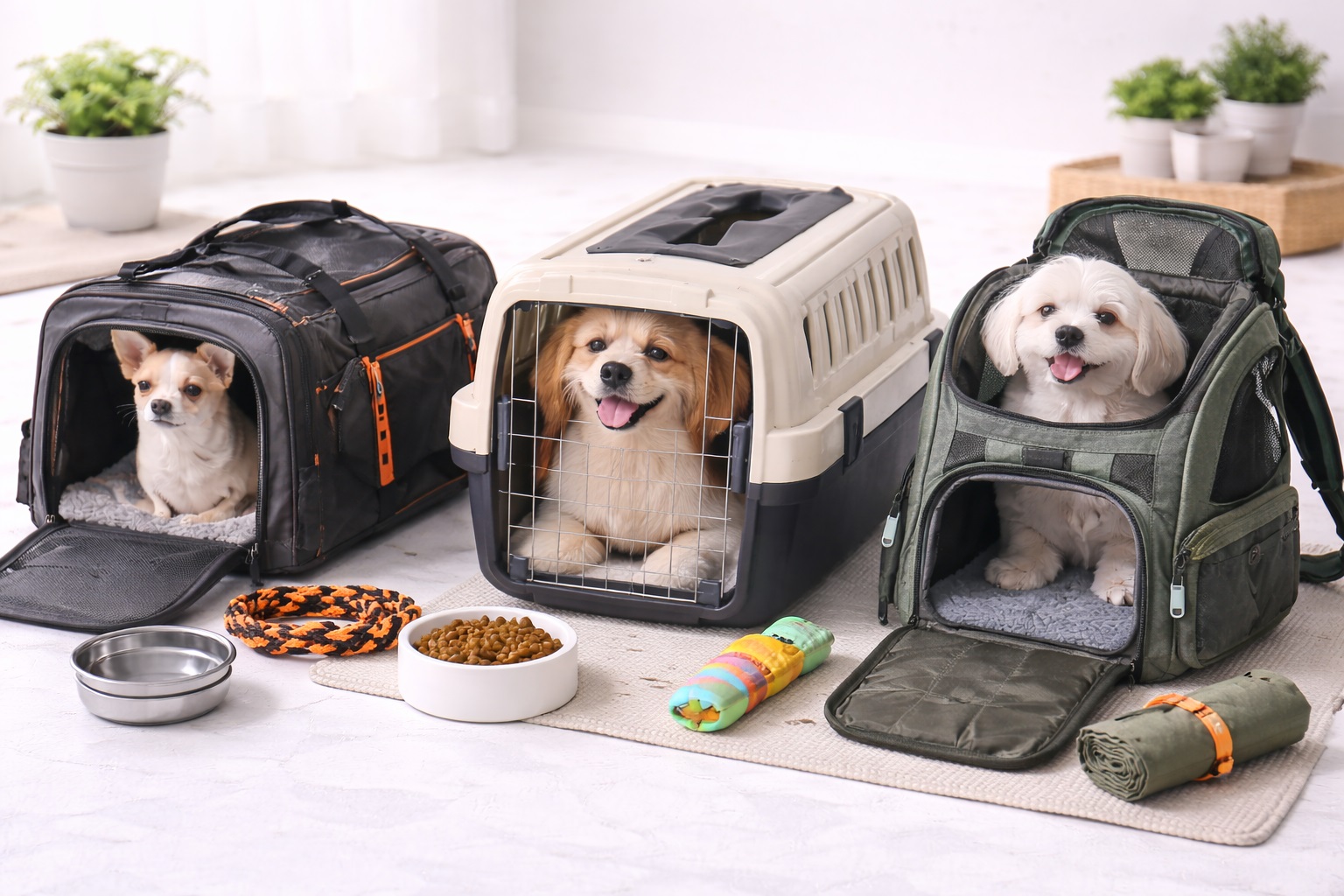
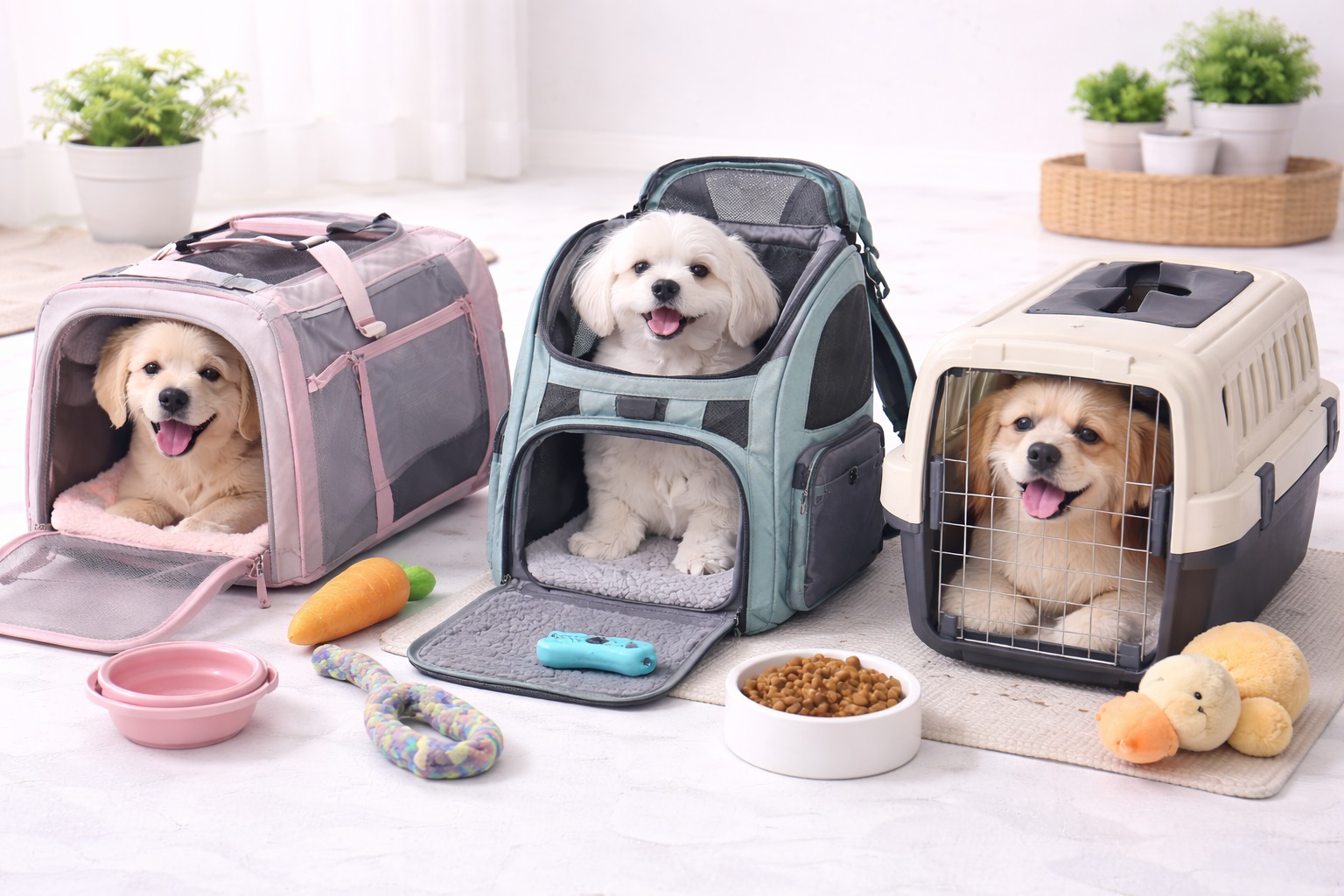
A soft-sided carrier with an adjustable interior divider lets owners reduce the usable space for a very young puppy, providing the snug, secure feeling puppies often prefer, then expand that space in stages as the puppy grows without needing to purchase a new carrier every few weeks. This adaptability directly addresses the fastest-changing size window in a dog's life.
- Pros:
- Adjustable divider grows with the puppy over several months
- Snug initial fit provides a secure feeling for young puppies
- Avoids repeated carrier purchases during a rapid growth period
- Standard soft-sided comfort and portability
- Cons:
- Eventually outgrown once the puppy reaches full adult size
- Divider mechanism adds a small amount of setup complexity
Best For: New puppy owners who want one carrier to reasonably last through the fastest months of a puppy's growth.
Why We Recommend It: This design solves the specific economic and practical problem of puppies outgrowing carriers within weeks, extending the useful life of a single purchase through an adjustable structure.
2. Lightweight Mesh Sling Carrier – Best for Very Young Toy and Small Breed Puppies
A lightweight mesh sling carrier holds a very young puppy close against the owner's body, which can be genuinely calming for a puppy still adjusting to life outside the litter and away from constant physical contact with littermates. It suits puppies under roughly 8 pounds during brief outings, early socialization walks, or short errands. Because the puppy rests directly against the owner's body, this style also makes it easy to feel a puppy becoming restless or overheated and respond immediately, which is harder to notice with a puppy enclosed in a bag-style carrier at arm's length.
- Pros:
- Close body contact can calm a puppy still adjusting to a new home
- Extremely lightweight and simple to use
- Good for brief early socialization outings
- Mesh construction keeps the puppy visible and ventilated
- Cons:
- Only suitable for very young or small puppies
- Limited structural protection compared to a bag-style carrier
Best For: Very young puppies still adjusting to separation from littermates, particularly during early socialization efforts.
Why We Recommend It: For a puppy in the earliest adjustment period after coming home, the calming effect of close body contact can meaningfully ease the transition compared to a fully enclosed bag-style carrier.
3. Ventilated Hard-Sided Carrier – Best for Vaccination-Window Vet Trips
A ventilated hard-sided carrier gives a young puppy a fully enclosed, protected space during the vet trips that happen frequently during the vaccination series, when direct contact with unfamiliar animals and surfaces carries more risk than it does for a fully vaccinated adult dog. The rigid structure also prevents direct contact with waiting room floors during this vulnerable window.
- Pros:
- Fully enclosed structure limits contact during a vulnerable health window
- Rigid sides prevent floor contact in waiting areas
- Easy to wipe down and disinfect between appointments
- Secure latch keeps an unpredictable puppy contained
- Cons:
- Heavier than a soft-sided equivalent for the same size
- Less flexible for growth compared to an adjustable soft carrier
Best For: The specific window of frequent vet visits during a puppy's vaccination series, when minimizing exposure matters most.
Why We Recommend It: During the vaccination period specifically, a fully enclosed, easily disinfected carrier provides a genuine layer of protection that a more open or mesh-heavy design doesn't offer as effectively.
4. Puppy Travel Bag with Washable Puppy Pad Base – Best for Accident Management
A carrier with a removable, washable puppy pad or absorbent base liner accounts for the reality that young puppies haven't fully developed bladder control, making accidents during transport considerably more likely than with an adult dog. This design handles that reality directly rather than treating every accident as an exceptional cleaning event. Some versions also include a slightly raised mesh platform above the absorbent layer, keeping the puppy's coat away from direct contact with any moisture until the owner can address it at the next stop.
- Pros:
- Absorbent base liner handles accidents without soaking through
- Removable and washable for quick turnaround
- Reduces stress around the near-inevitability of puppy accidents
- Keeps the puppy dry and comfortable even after an accident
- Cons:
- Liner needs regular replacement or washing to stay effective
- Not necessary once a puppy is fully house-trained
Best For: Young puppies still developing bladder control during regular carrier use for trips or outings.
Why We Recommend It: Rather than treating accidents as unusual events requiring special cleanup, this design plans for the realistic likelihood of accidents during the early months, reducing stress for the owner and discomfort for the puppy.
5. Backpack Carrier with Bubble Window – Best for Early Socialization Outings
A backpack carrier with a clear bubble window lets a puppy observe the world safely from an enclosed, secure space during the critical early socialization period, when controlled exposure to new sights and sounds supports healthy behavioral development without the risks of full ground-level exposure before vaccinations are complete.
- Pros:
- Bubble window allows safe visual exposure during socialization
- Hands-free design suits active early walks and outings
- Protects a not-yet-fully-vaccinated puppy from ground-level contact
- Comfortable padded base for a young, still-growing body
- Cons:
- Bulkier than a simple sling or basic carrier bag
- Puppy will eventually outgrow the weight capacity
Best For: Owners actively working on early socialization outings before a puppy's vaccination series is complete.
Why We Recommend It: Early socialization benefits from exposure to new environments, and this design provides that exposure while still protecting a vulnerable puppy from direct ground contact during the highest-risk health window.
6. Car Seat Style Puppy Carrier – Best for Frequent Car Rides
A car seat style carrier with a seat belt attachment and bolstered, padded sides keeps a puppy secure and stable during car trips, which matters particularly for a young dog still learning to settle calmly during motion rather than pacing or scrambling around loose on a seat. The elevated, secure position also lets the puppy see out comfortably, which can reduce car-related anxiety over time. A properly fitted harness clip inside the carrier adds a second layer of restraint, which matters for a puppy that hasn't yet learned to stay settled through an entire car ride.
- Pros:
- Seat belt attachment keeps the carrier stable during driving
- Bolstered sides help a puppy settle rather than scramble
- Elevated view can reduce car-related anxiety over time
- Detachable, washable base simplifies accident cleanup
- Cons:
- Not intended for use outside the car
- Puppy will need a larger version as they grow into adulthood
Best For: Households introducing a puppy to regular car travel and wanting to build positive car associations early.
Why We Recommend It: Establishing calm, secure car travel habits early tends to produce a more relaxed adult dog during car rides than allowing loose, anxious movement to become the puppy's default experience.
7. Collapsible Puppy Playpen-Carrier Combo – Best for Multi-Purpose Use
A combo design that functions as both a carrier and a small collapsible playpen gives a puppy a consistent, familiar enclosed space whether at home, visiting family, or on a short trip, which supports the routine and consistency that puppies generally benefit from during the early training and socialization period.
- Pros:
- Doubles as a familiar enclosed space beyond just transport
- Supports consistent routine across different locations
- More versatile than a transport-only carrier
- Collapses for reasonably compact storage and travel
- Cons:
- Bulkier than a dedicated single-purpose carrier
- Higher price point reflecting the dual functionality
Best For: Owners who want one product covering both transport and a familiar contained space during travel or visits away from home.
Why We Recommend It: The consistency of a familiar enclosed space across different locations supports a puppy's sense of security during a developmental period when routine genuinely matters for behavioral outcomes.
8. Basic Cardboard or Loaner Carrier – Best for a Genuinely Short-Term Need
A basic cardboard or shelter-provided loaner carrier handles the immediate need of bringing a new puppy home for the first time without requiring an upfront investment before the owner has settled on a longer-term carrier choice that matches the specific puppy's temperament and eventual adult size.
- Pros:
- Minimal or no cost for an immediate, short-term need
- Adequate for a single trip bringing a new puppy home
- No commitment before choosing a longer-term carrier
- Often provided directly by breeders or shelters
- Lets a new owner observe the puppy's actual temperament before committing to a specific carrier style
- Cons:
- Not durable enough for repeated or regular use
- Minimal structural protection compared to any purpose-built carrier
Best For: The single trip of bringing a brand-new puppy home before deciding on a longer-term carrier solution.
Why We Recommend It: There's no need to commit to a full carrier purchase before even meeting the puppy in person — this option handles the immediate need while leaving the more considered decision for after bringing the puppy home.
Buying Guide: How to Choose the Best Pet Carrier for Puppies
Use these factors to match a carrier to your puppy's current size, expected adult size, and the specific situations you'll use it for most during the first year.
1. Plan for Growth From the Start
Research your puppy's breed or mix to estimate adult size before buying, and consider an adjustable or expandable design if a significant size increase is expected within the first several months.
2. Snug but Not Cramped Fit for Security
Very young puppies often feel more secure in a snugger space than an oversized one, similar to the enclosed feeling of a den. Balance this against genuine comfort — too tight is uncomfortable regardless of any security benefit.
3. Prioritize Full Enclosure During the Vaccination Window
Before a puppy's vaccination series is complete, a more enclosed carrier reduces contact with unfamiliar animals and surfaces during vet trips specifically, which matters more during this window than it will once the puppy is fully vaccinated.
4. Plan for Accidents as a Near Certainty
Young puppies haven't developed full bladder control. A washable, absorbent base liner or a fully wipeable hard-sided interior handles this reality far better than a carrier without any accident accommodation.
5. Consider Socialization Goals
If early controlled socialization outings are a priority, a carrier with visibility — like a bubble window — supports safe exposure to new environments before a puppy is ready for direct ground-level contact.
6. Weight Limit With Growth Margin
Confirm the carrier's weight limit comfortably exceeds not just your puppy's current weight but a reasonable projection of near-term growth, so the carrier doesn't become unsafe within a matter of weeks.
7. Car Safety for Regular Rides
If car trips are frequent, a carrier with genuine seat belt compatibility establishes safer habits early and reduces the chance of a puppy learning to associate car rides with loose, anxious movement.
8. Ease of Cleaning for Frequent Use
Given the higher likelihood of accidents, prioritize carriers with removable, washable, or wipeable components over ones requiring extensive spot cleaning after every use.
9. Building Positive Early Associations
Choose a carrier comfortable enough to leave accessible at home between trips, since a puppy's early experiences with the carrier tend to shape a lasting association that carries into adulthood.
10. Budget for Replacement as the Puppy Grows
Even an adjustable carrier will eventually be outgrown. Plan for at least one carrier upgrade as the puppy reaches adult size rather than expecting a single purchase to last indefinitely.
11. Latch Security for an Unpredictable Young Dog
Puppies are often more physically unpredictable than adult dogs, with sudden bursts of energy or attempts to squirm free. Confirm the latch holds securely under real, sudden pressure.
12. Multi-Purpose Value for Travel and Visits
If travel or visits to family are part of the plan, a combo carrier-playpen design provides a familiar enclosed space in more situations than a transport-only carrier alone.
13. Account for Individual Temperament, Not Just Breed
Two puppies of the same breed and age can have noticeably different comfort levels with enclosed spaces, handling, and new environments. Watch how your specific puppy responds during the first few short carrier sessions at home, and adjust your choice of enclosure level or padding based on that individual reaction rather than general breed expectations alone. A puppy that settles quickly needs far less structural reassurance than a littermate that startles at every new sound, even within the same litter.
14. Climate and Ventilation for Where You Live
A puppy generates less body heat regulation capacity than an adult dog, so carriers used in warmer climates or during summer months benefit from generous mesh ventilation panels, while carriers used primarily in cooler conditions can prioritize a more enclosed, insulated structure. Matching ventilation to your typical climate avoids overheating on one end and unnecessary chill on the other, and it's worth reassessing this balance seasonally rather than assuming one setup suits every month of the year.
15. Coordinate the Choice With Your Veterinarian
Since much of a puppy's early carrier use centers on the vaccination-window vet visits, ask your veterinary office which carrier styles they see work best for young, still-developing patients. Clinic staff handling puppies daily often have practical observations about which designs minimize stress and handling difficulty during this specific developmental period, and they can flag anything specific to your puppy's breed or health history worth factoring in.
16. Material Safety for a Puppy Still Exploring With Its Mouth
Young puppies frequently mouth or chew whatever is within reach, including carrier zippers, mesh edges, and interior padding. Favor carriers built from puppy-safe materials without small detachable parts that could be chewed loose and swallowed, and check stitching and edges periodically for any wear that could create a choking hazard over time.
Common Mistakes to Avoid
A common mistake is buying a carrier sized exactly to a puppy's current measurements without any consideration for growth, leading to an unnecessary replacement purchase within a matter of weeks. A second common mistake is only introducing the carrier for stressful trips like vaccination appointments, missing the opportunity to build a positive association during the developmental window when it's easiest to establish. A third is underestimating how often young puppies have accidents during transport, leading to a carrier without any washable or absorbent component that turns every trip into an unpleasant cleanup situation for the owner and an uncomfortable experience for the puppy sitting in a soiled space.
Frequently Asked Questions
1. What size carrier should I buy for a puppy that will grow significantly?
An adjustable carrier with an interior divider lets you start with a snug, secure fit and expand the space in stages as the puppy grows, extending the useful life of a single purchase through the fastest-changing months.
2. Is it safe to take my puppy out in a carrier before vaccinations are complete?
A fully enclosed carrier that prevents direct contact with unfamiliar animals and ground surfaces is generally considered safer than allowing a not-yet-fully-vaccinated puppy to walk directly on unfamiliar ground. Always follow your veterinarian's specific guidance for your puppy's vaccination timeline.
3. How do I introduce a puppy to a carrier for the first time?
Leave the carrier open and accessible at home with familiar bedding and treats inside, letting the puppy investigate voluntarily before any actual trip. Short, calm, low-pressure sessions work better than forcing entry.
4. Is the most expensive puppy carrier always the best?
Not necessarily. Price often reflects extra features that may become irrelevant once the puppy grows, such as toy-breed-specific sling designs. Match the carrier to your puppy's expected growth trajectory rather than the highest price point.
5. How long will a puppy carrier actually last before being outgrown?
This varies enormously by breed, but many puppies outgrow their initial carrier within two to six months. An adjustable design extends this window, though most owners should expect at least one upgrade before adulthood.
6. Can I return a puppy carrier if it's outgrown quickly?
Standard return windows are typically 15 to 30 days, which usually won't cover a growth-related outgrowing several months later. Consider this when deciding between an adjustable design and a fixed-size option upfront.
7. What should I prioritize when buying a first carrier for a new puppy?
Balance immediate comfort and security with a realistic plan for growth, and prioritize washable or wipeable components given the near-certainty of accidents during the early months.
8. Does brand name matter for puppy carriers?
Less than growth accommodation and cleaning features specifically. Focus on adjustability and washability over brand reputation for this particular life stage.
9. Can I use an adult dog carrier for a puppy instead?
Only if it's appropriately sized for the puppy's current dimensions, not an adult-projected size — an oversized carrier can feel insecure rather than comforting to a young puppy still building confidence in new spaces.
10. How often should I clean a puppy's carrier?
Given the higher likelihood of accidents, plan to clean after every trip during the early months, transitioning to a more routine cleaning schedule once the puppy is reliably house-trained.
11. What's the best carrier for early puppy socialization outings?
A backpack or carrier with a clear viewing window allows safe visual exposure to new environments while still protecting a not-yet-fully-vaccinated puppy from direct ground contact.
12. Should I use a different carrier for car rides versus walking outings?
Ideally yes. A car seat style carrier with seat belt compatibility suits driving specifically, while a backpack or hand-carried bag suits walking outings — the stability needs differ meaningfully between the two situations.
13. My puppy cries or whines in the carrier — is this normal?
Some initial vocalizing during adjustment is common and typically fades with consistent, calm, low-pressure exposure. Persistent distress across many sessions is worth discussing with your veterinarian or a trainer.
14. When should I upgrade from a puppy carrier to a full adult-size carrier?
Once the puppy is consistently pushing against the sides of the current carrier or approaching its stated weight limit, it's time to size up, generally sooner than owners initially expect given typical growth rates.
15. Can a puppy carrier double as a training tool?
Used thoughtfully, a comfortable carrier that also functions as a familiar resting space can support broader confinement training goals, though it shouldn't replace a dedicated crate for extended periods at home.
16. What's the real difference between hard-sided and soft-sided carriers for a puppy?
Hard-sided carriers offer more structural protection and are easier to disinfect, which matters most during the vaccination window when minimizing exposure is a priority. Soft-sided carriers are lighter, more adjustable for growth, and easier to carry for long stretches, which suits frequent short outings once the vaccination series is farther along.
17. Should I puppy-proof the area where I store the carrier at home?
Yes, keep the storage area free of loose cords, small chewable items, or anything a curious puppy might investigate while exploring the carrier voluntarily. Since the goal is unsupervised, low-pressure familiarization, the surrounding space should be as safe as the carrier itself.
18. How do I clean a puppy carrier after an accident?
Remove any washable liner or pad and clean it according to the manufacturer's instructions, then wipe down remaining surfaces with a pet-safe cleaner and allow full air drying before the next use. Lingering odor can encourage repeat accidents in the same spot, so thorough cleaning matters more for puppies than it typically does for a house-trained adult dog.
19. How many carrier sizes will I likely go through before my puppy reaches adulthood?
Most owners of medium-to-large breeds go through at least two carriers between the initial puppy stage and full adult size, while owners of small or toy breeds may get by with a single adjustable carrier for much of that window. Budgeting for at least one upgrade avoids treating an outgrown carrier as an unexpected expense later.
Final Verdict
- Best for Growing Puppies: Soft-Sided Carrier with Adjustable Interior Divider — extends usable life through the fastest growth months.
- Best for Very Young Toy Breeds: Lightweight Mesh Sling Carrier — calming close contact for puppies fresh from the litter.
- Best for the Vaccination Window: Ventilated Hard-Sided Carrier — full protection during the most vulnerable health period.
- Best for Accident Management: Puppy Travel Bag with Washable Puppy Pad Base — built around the reality of incomplete bladder control.
- Best for Early Socialization: Backpack Carrier with Bubble Window — safe visual exposure to new environments.
- Best for Car Rides: Car Seat Style Puppy Carrier — builds calm, secure car travel habits early.
- Best for Multi-Purpose Use: Collapsible Puppy Playpen-Carrier Combo — a consistent space across transport and visits.
- Best for Immediate Short-Term Need: Basic Cardboard or Loaner Carrier — a no-commitment solution for bringing a puppy home.
The right pet carrier for a puppy is rarely a single purchase meant to last a lifetime — it's a choice matched to a specific, fast-moving stage of development. Prioritizing growth accommodation, accident management, and positive early associations will serve a puppy better over the coming months than optimizing for features designed around a settled adult dog's steadier needs. Expect to reassess the choice as your puppy grows, and treat the current carrier as the right fit for now rather than a permanent solution.