Best Budget Pet Carrier: Affordable Options for 2026
A higher price on a pet carrier doesn't automatically mean better safety or comfort. Plenty of the features that matter most — secure latches, adequate ventilation, a stable base, and a size that actually fits your pet — show up on carriers well under the premium price bracket. The features that tend to disappear at lower price points are usually cosmetic or travel-specific: brand-name styling, premium fabric finishes, or airline-specific extras most owners never use.
This guide focuses on where budget carriers genuinely cut corners versus where the savings don't cost you anything functional, so you can find an affordable option without compromising on the handful of features that actually protect your pet during a trip.
The goal here isn't finding the absolute cheapest carrier available, since the lowest-priced options sometimes skip safety-relevant features like a rated weight limit or a secure latch. It's finding the carrier that delivers the necessary safety and comfort features at the lowest reasonable price, which is a meaningfully different target than simply sorting by price and picking the bottom result.
Durability at a budget price point deserves a realistic expectation. A well-chosen affordable carrier used occasionally can last years, while even a premium carrier used daily will show wear eventually. Matching expected use frequency to the carrier's build quality is more useful than assuming price alone predicts how long something will hold up.
Top 8 Budget Pet Carriers (Detailed Reviews)
1. Basic Soft-Sided Carrier with Mesh Panels – Best Overall Value
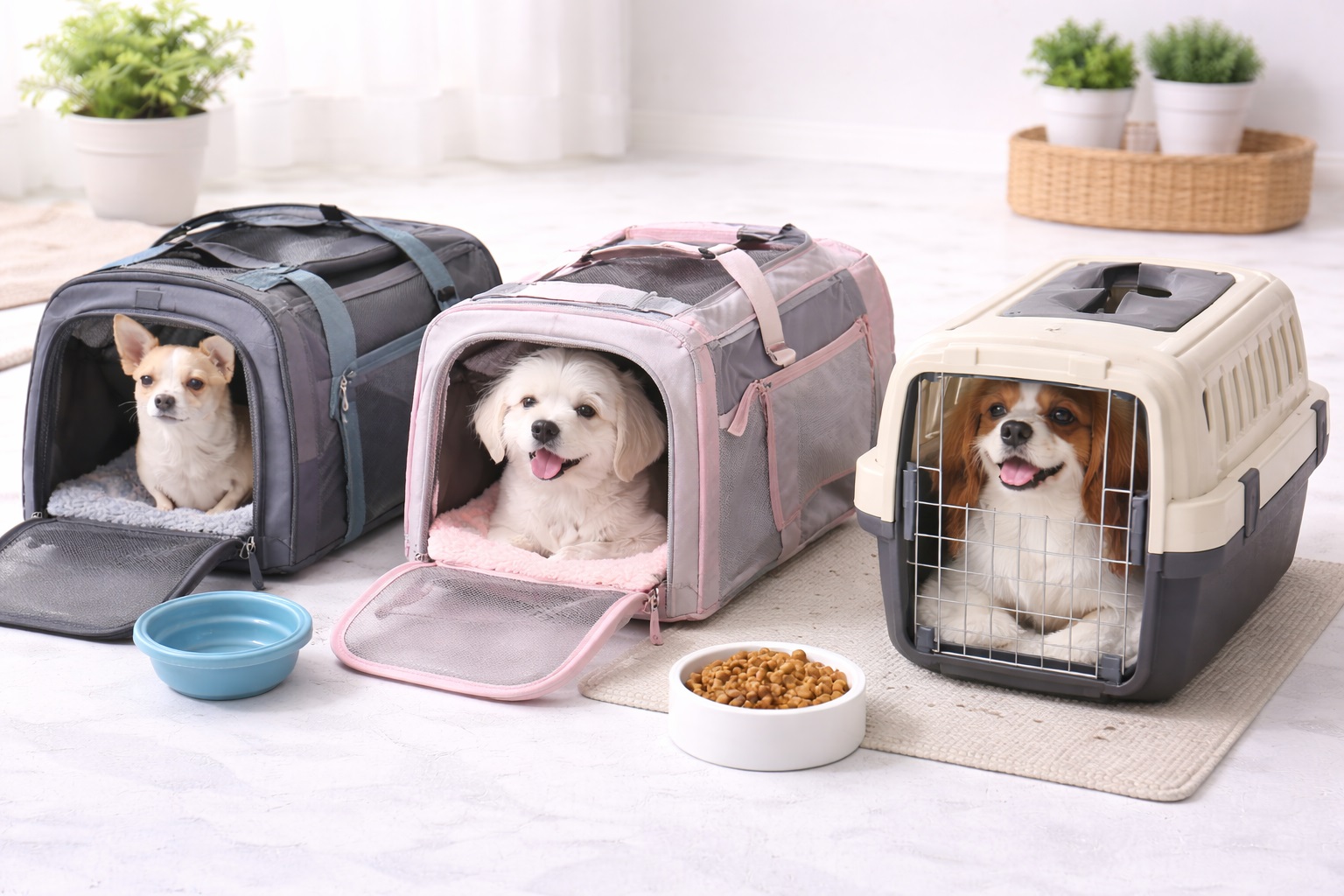
A basic soft-sided carrier with mesh panels on the sides and top delivers the core features most households need — adequate ventilation, a front-loading door, and a padded base — at one of the lowest price points in the category. It won't include premium extras like a bubble window or expandable panels, but it reliably covers routine vet visits and short outings without the added cost of features you may never use. Most versions in this style also include a removable, washable liner pad, which is a small feature worth checking for specifically, since it makes cleanup after an accident or a shedding session considerably easier than a carrier with a fixed, non-removable base.
- Pros:
- Covers core safety and comfort needs at low cost
- Mesh panels provide adequate ventilation
- Lightweight and simple to carry for short trips
- Widely available across most pet retailers
- Cons:
- Fewer premium features like bubble windows or expandable sides
- Padding is typically thinner than higher-priced alternatives
Best For: Owners who need a reliable, no-frills carrier for occasional vet visits without paying for unused extras.
Why We Recommend It: This style covers the features that actually matter for safety and basic comfort while skipping the premium additions that drive up price without adding functional value for occasional use.
2. Budget Hard-Sided Carrier – Best for Affordable Structural Protection
A budget hard-sided carrier provides the structural protection of a rigid shell at a price close to many soft-sided alternatives, since the plastic construction is inexpensive to manufacture at scale. It won't have the finishing touches of a premium hard carrier — smoother latches, nicer handle padding — but the core protective structure performs comparably. The main difference owners notice in daily use tends to be handle comfort during a longer carry, so testing the handle grip in person, or reading reviews specifically about carrying comfort, is worth the extra step if you expect to carry the loaded carrier any real distance.
- Pros:
- Rigid protection at a price close to soft-sided options
- Wipes clean easily, reducing ongoing maintenance cost
- Secure latching mechanism despite the lower price
- Holds up well to occasional, infrequent use
- Cons:
- Handle and latch finishing feels less refined than premium versions
- Heavier than a comparable soft-sided budget option
Best For: Owners who want structural protection for an anxious or scratching pet without paying premium hard-carrier prices.
Why We Recommend It: The core protective value of a hard shell doesn't require premium pricing — this option delivers that structural benefit at a genuinely affordable cost.
3. Cardboard or Disposable Emergency Carrier – Best for One-Time or Rare Use
A reinforced cardboard or disposable carrier, often provided free or at minimal cost by shelters and vet clinics, handles a single short trip reliably without any long-term investment. It's not built for repeated use or larger pets, but for a genuinely rare situation — a rescue, a one-time transport, or a temporary need — it solves the immediate problem without buying equipment that will sit unused afterward. Reinforcing the bottom corners with tape before use, and keeping the trip as short and calm as possible, both help offset the reduced structural margin compared to a purpose-built carrier.
- Pros:
- Minimal or no cost for a genuinely one-time need
- Adequate for a single short trip with a small, calm pet
- No long-term storage commitment required
- Often available directly from shelters or clinics
- Cons:
- Not durable enough for repeated or regular use
- Limited structural protection compared to any purpose-built carrier
Best For: A genuinely one-time transport need, such as a rescue situation or a single unexpected trip.
Why We Recommend It: For a true one-off situation, spending on a reusable carrier makes little financial sense — this option solves the immediate need without unnecessary cost.
4. Multi-Pack Value Carrier Bundle – Best for Multi-Pet Households on a Budget
A multi-pack bundle sold as a set of two or more basic carriers reduces the per-unit cost for households with several pets that each need their own transport option. Buying individually priced carriers one at a time for multiple pets typically costs more than a bundled set, even though each individual carrier in the bundle is fairly basic. Bundles are also worth checking for matching sizes versus mixed sizes, since some are sold specifically for households with similarly sized pets while others include a range of sizes intended for a mix of cats and small dogs under one roof.
- Pros:
- Lower per-unit cost than buying carriers individually
- Solves multi-pet transport needs in a single purchase
- Consistent sizing and features across all carriers in the household
- Practical for households that adopt or foster multiple pets
- Cons:
- Individual units are typically basic, without premium features
- Bundle sizing may not perfectly fit pets of very different sizes
Best For: Multi-pet households needing several carriers at once without paying full individual price for each.
Why We Recommend It: For households with more than one pet, a bundled purchase solves the transport need for the whole household at meaningfully lower total cost than piecing together individual carriers over time.
5. Previous-Season Clearance Carrier – Best for Stretching a Budget Further
Retailers regularly discount pet carriers from a prior season or discontinued color line at a meaningful markdown from original price, while the functional design remains identical to the current full-price version. Checking clearance sections or off-season sales can secure a genuinely well-built carrier at a fraction of its original price, with the only real difference being color or seasonal packaging.
- Pros:
- Same functional design as full-price versions at a lower cost
- Access to features normally found only at higher price points
- Frequently available through end-of-season retail cycles
- No functional compromise versus the current full-price model
- Cons:
- Limited color and size availability depending on remaining stock
- Requires some searching or waiting for the right discount to appear
Best For: Budget-conscious owners willing to search or wait for a discount on a normally higher-priced carrier.
Why We Recommend It: This approach gets genuinely premium features at a budget price, which is a better outcome than settling for a permanently lower-tier product if the timing works out.
6. Basic Wire Crate-Style Carrier – Best for Durable Long-Term Budget Use
A basic wire crate-style carrier, often sold at a modest price point for smaller sizes, offers strong structural durability and excellent ventilation through its open design. It lacks the padding and enclosed feel of a fabric carrier but tends to outlast soft-sided budget options significantly under repeated use, since there's no fabric to wear through or stitching to fail. A folded towel or a thin mat placed on the wire floor addresses most of the padding gap at essentially no added cost, which makes this style a reasonable pick even for owners who initially assume a wire design will feel too bare for their pet.
- Pros:
- Strong structural durability at a modest price
- Excellent ventilation through the open wire design
- No fabric or stitching to wear out over time
- Easy to clean with a simple wipe-down
- Cons:
- Less enclosed and cozy feeling than a fabric carrier
- Bulkier and doesn't fold flat for storage
Best For: Owners prioritizing long-term durability over portability or a fully enclosed feel.
Why We Recommend It: For a household expecting years of occasional use, this design's structural longevity means a lower effective cost per year of service than a soft-sided carrier that wears out sooner.
7. Foldable Fabric Carrier with Minimal Hardware – Best for Lightweight Budget Portability
A foldable fabric carrier with simple zipper closures and minimal metal hardware keeps manufacturing costs low while still providing basic structure and portability. It's not built for heavy daily use, but for occasional trips with a small, calm pet, it delivers adequate function at one of the lowest price points available in the soft-sided category.
- Pros:
- Very low price point within the soft-sided category
- Lightweight and easy to fold for storage
- Adequate for occasional trips with a small, calm pet
- Simple zipper closure requires no learning curve
- Cons:
- Minimal hardware means less robust latching security
- Not built for a strong or anxious pet that pushes against the sides
Best For: Owners with small, calm pets who need occasional, lightweight transport at the lowest possible cost.
Why We Recommend It: For a genuinely calm, small pet and infrequent use, this option delivers adequate function without paying for hardware and structure that a more active or anxious pet would actually need.
8. Secondhand or Marketplace Carrier – Best for Maximum Savings on a One-Time Buy
A gently used carrier found through a local marketplace, community group, or secondhand pet supply shop can deliver a genuinely well-built product — sometimes a mid-range or premium model — at a fraction of its original retail price, since carriers see relatively light wear compared to daily-use pet gear like beds or toys. A thorough inspection and cleaning before use addresses the main concern with buying secondhand. Checking the latch mechanism under real pressure, examining seams and stitching for prior repairs, and giving the whole carrier a proper wash or wipe-down before first use are the three checks worth doing regardless of how clean the listing photos make it look.
- Pros:
- Access to mid-range or premium builds at budget prices
- Reduces waste by extending a carrier's usable life
- Often available quickly through local listings
- Significant savings compared to buying new
- Cons:
- Requires careful inspection for hidden damage or wear
- No warranty or manufacturer support on a used item
Best For: Budget-conscious owners comfortable inspecting and thoroughly cleaning a secondhand item before use.
Why We Recommend It: Carriers experience relatively light wear compared to other pet gear, which makes the secondhand market a genuinely good source for higher-tier builds at meaningfully lower prices than buying new.
Buying Guide: How to Choose the Best Budget Pet Carrier
Use these factors to identify where budget savings are safe versus where cutting cost creates real risk. Not every corner is worth cutting, even at a lower price point.
1. Never Compromise on Latch Security
Regardless of budget, the door latch must hold securely under pressure. This is the one feature where cutting cost creates genuine safety risk — test any latch mechanism thoroughly before relying on it for a real trip.
2. Weight Rating Still Matters
Confirm the stated weight limit exceeds your pet's actual weight with a margin, even on an affordable carrier. A carrier rated below your pet's weight is unsafe regardless of price.
3. Ventilation Is Rarely a Budget Casualty
Mesh panels are inexpensive to manufacture, so most budget carriers still include adequate ventilation. This is a feature where budget options genuinely compete with premium alternatives.
4. Padding Thickness Often Scales with Price
Thinner padding is one of the more common trade-offs at lower price points. For occasional short trips this rarely matters; for a pet that travels frequently or has sensitivity issues, consider adding an aftermarket pad.
5. Consider Total Cost Over Expected Lifespan
A slightly higher upfront cost on a genuinely more durable design can be cheaper over several years than repeatedly replacing a carrier that wears out quickly under regular use.
6. Check for Hidden Features That Don't Affect Function
Brand name, color options, and cosmetic styling add cost without adding safety or comfort value. These are the features most safely skipped when working within a budget.
7. Clearance and Off-Season Timing
Shopping clearance racks or off-season sales periods can secure genuinely premium features at budget prices, since the underlying design hasn't changed — only the styling or season has.
8. Bundle Purchases for Multi-Pet Households
If more than one pet needs a carrier, compare bundled multi-packs against buying individually, since the per-unit savings on a bundle often outweigh the appeal of mixing and matching different styles.
9. Match Build Quality to Actual Use Frequency
A carrier used a few times a year doesn't need the same durability as one used weekly. Save budget on features irrelevant to your actual frequency of use rather than uniformly buying the cheapest option available.
10. Read Reviews for Safety-Specific Feedback
Verified reviews mentioning latch failures, seam tearing, or weight rating issues are more useful at lower price points than general star ratings, since budget options vary more in build consistency.
11. Avoid the Absolute Cheapest Option Without Reading Specifications
The lowest-priced carrier in a category sometimes skips a rated weight limit entirely or lacks a genuinely secure latch. Confirm basic safety specifications are present before choosing based on price alone.
12. Consider Return Policies When Budget Shopping
Budget carriers vary more in sizing consistency than premium ones. A generous return policy reduces the risk of being stuck with a carrier that doesn't fit once it arrives.
13. Sizing for Growth or Weight Changes
A carrier sized precisely for your pet's current weight and length leaves little margin if a young pet is still growing or an older pet's weight fluctuates over time. Choosing a size with a modest amount of extra room, rather than the absolute tightest fit available, avoids the need to replace the carrier again within a year or two of ordinary growth or weight change.
14. Storage Between Uses
Since a budget carrier is often used only occasionally, how it stores between trips matters more than it might for a carrier used daily. Soft-sided and foldable styles collapse flat for closet or under-bed storage, while hard-sided and wire crate styles take up their full footprint indefinitely, which is worth factoring in if storage space at home is already limited.
Common Mistakes to Avoid
The most common mistake is treating price as the only variable and choosing the single cheapest listing without checking whether it includes a rated weight limit or a genuinely secure latch — the two features where cutting cost actually creates safety risk. A second common mistake is assuming a budget carrier can't be durable, which overlooks options like wire crate-style carriers that offer strong long-term durability at a modest price specifically because their construction doesn't rely on fabric or stitching. A third is ignoring clearance and off-season sales entirely, missing the chance to get a genuinely premium carrier at a budget price simply because the search stopped at the first affordable-looking listing.
15. Cleaning and Odor Control at a Budget Price Point
Budget carriers, particularly fabric ones, can hold onto odor more readily than premium options with specially treated liners. A removable, machine-washable liner largely solves this at any price point, so prioritize that feature over other cosmetic extras if odor control is a concern for your specific pet or household.
Frequently Asked Questions
1. Are budget pet carriers actually safe?
Many are, provided they include a rated weight limit and a secure latch mechanism. The features that tend to disappear at lower prices are typically cosmetic or comfort-related, not the core safety features, so checking specifications rather than assuming price predicts safety is the better approach.
2. What's the cheapest way to get a good pet carrier?
Checking clearance sections and off-season sales typically offers the best value, since the underlying design and safety features remain identical to full-price versions — only styling or season changes.
3. Should I buy the cheapest carrier available if I only need it once?
For a genuinely one-time need, a low-cost or shelter-provided disposable carrier is a reasonable choice. For anything beyond a single use, a modestly priced reusable carrier typically works out cheaper over time.
4. Is the most expensive pet carrier always better than a budget option?
Not always. Many mid-range and even budget carriers cover the core safety and comfort features most households need. Match the carrier to your actual use case rather than assuming higher price guarantees better performance.
5. How long should a budget pet carrier last?
A reasonably well-built budget carrier used occasionally can last several years. Frequency of use affects lifespan more than price point alone for most budget-tier options.
6. Can I return a budget pet carrier if it doesn't fit?
Most retailers offer a 15 to 30 day return window regardless of price tier. Keep original packaging until you've confirmed sizing, since budget carriers vary more in dimensional consistency than premium ones.
7. What should I never skip on a budget carrier?
A secure latch and an appropriate weight rating for your pet. These two features directly affect safety and shouldn't be sacrificed regardless of overall budget constraints.
8. Does brand name matter for budget carriers?
Less at the budget tier than at premium price points. Many budget carriers are manufactured by the same handful of suppliers regardless of the retail brand printed on the packaging.
9. Are wire crate-style carriers a good budget option?
Yes, particularly for durability. They lack the enclosed, cozy feel of fabric carriers but tend to outlast soft-sided budget alternatives significantly under regular use.
10. Can a multi-pack carrier bundle save money for multiple pets?
Generally yes. Buying a bundled set for multiple pets typically costs less per unit than purchasing individual carriers separately, provided the sizing works for all the pets involved.
11. Do budget carriers have adequate ventilation?
Usually yes, since mesh panels are inexpensive to manufacture and appear even on low-cost carriers. Ventilation is one of the features least likely to be compromised at a lower price point.
12. How do I know if a cheap carrier is actually unsafe?
Check for a missing or vague weight rating, flimsy latch hardware that doesn't hold firmly when tested by hand, and thin stitching around stress points. Any of these signals warrant choosing a different option even within a tight budget.
13. Is it worth waiting for a sale to buy a pet carrier?
If the need isn't urgent, yes. Seasonal sales and clearance events regularly discount genuinely well-built carriers, often making a premium-tier option affordable at a budget-tier price.
14. Can a disposable carrier be reused?
Cardboard and similarly disposable carriers are generally designed for a single use and lose structural integrity after exposure to moisture or repeated handling. Treat them as single-use rather than attempting to reuse for a second trip.
15. What's the biggest difference between budget and premium carriers?
Usually padding thickness, finishing details on hardware, and extra features like expandable panels or bubble windows — not the core safety features, which appear across most price points from reputable manufacturers.
16. Is buying a secondhand pet carrier a good idea?
Generally yes, provided you inspect stitching, latch function, and structural integrity carefully before use, and thoroughly clean and disinfect it regardless of how it looks. Carriers see relatively light wear compared to daily-use items, making them a reasonable secondhand purchase for a budget-conscious household.
17. How much should I realistically expect to spend on a safe carrier?
A functional, safe carrier with a secure latch and appropriate weight rating is typically available well within a modest budget for most common pet sizes. Spending more generally buys comfort extras and cosmetic finishing rather than additional safety.
18. Do I need a different carrier size as my pet grows?
Yes, if your pet is still a kitten or puppy, since a carrier sized precisely for their current dimensions will likely be too small within several months. Choosing a size with a bit of room to grow into, rather than an exact current fit, avoids an early replacement purchase.
19. Where should I store a carrier I only use occasionally?
A closet, under a bed, or on a garage shelf all work well for a folded soft-sided carrier. Hard-sided and wire crate styles need dedicated floor or shelf space year-round, which is worth considering before buying if storage room at home is limited.
20. Can a budget carrier be used for air travel?
Some can, but airline carriers have specific size and structural requirements that not every budget carrier meets. Check your specific airline's carrier policy before assuming a general-purpose budget carrier will be accepted for a flight.
21. How do I control odor in a budget fabric carrier?
Look for a removable, machine-washable liner and wash it regularly between uses, particularly after any accident or a longer trip. A carrier without a removable liner can still be freshened with a pet-safe fabric spray, but a washable liner remains the more reliable long-term solution.
Final Verdict
- Best Overall Value: Basic Soft-Sided Carrier with Mesh Panels — the most well-rounded option for routine, affordable use.
- Best for Structural Protection: Budget Hard-Sided Carrier — rigid protection without premium pricing.
- Best for One-Time Use: Cardboard or Disposable Emergency Carrier — the most economical choice for a genuinely single trip.
- Best for Multi-Pet Households: Multi-Pack Value Carrier Bundle — the lowest per-unit cost for several pets.
- Best for Stretching a Budget: Previous-Season Clearance Carrier — premium features at a discounted price.
- Best for Long-Term Durability: Basic Wire Crate-Style Carrier — the most durable budget option over years of use.
- Best for Lightweight Portability: Foldable Fabric Carrier with Minimal Hardware — the lowest-cost option for small, calm pets.
- Best for Maximum Savings: Secondhand or Marketplace Carrier — access to premium builds at a fraction of retail price.
A tight budget doesn't have to mean an unsafe or uncomfortable carrier. The features that actually protect your pet — a secure latch, an honest weight rating, and reasonable ventilation — show up across nearly every price tier from established manufacturers, while the features that disappear at lower prices tend to be cosmetic rather than functional. Focus your search on those safety fundamentals first, then let price guide the rest of the decision.