Best Leash for Cats: Safe Harness and Leash Sets for 2026
Walking a cat on a leash is a different challenge than walking a dog, and the equipment reflects that difference. Cats are flexible, low to the ground, and generally far more skilled at backing out of restraints than most owners expect. A leash designed for dogs, or even a poorly fitted cat harness, can let a cat slip free within seconds — which turns a planned outdoor enrichment session into a genuine safety risk for a cat that has never navigated the outside world unsupervised.
This guide focuses on what actually keeps a cat safely restrained during outdoor exploration, how to judge escape resistance and comfort against each other, and which harness and leash combinations suit different stages of a cat's leash training — from first-time introduction to confident, regular outdoor walks. Because a cat's temperament and training stage can shift over months of outdoor practice, the right choice today is worth revisiting periodically rather than treated as a one-time purchase decision.
None of the equipment discussed here requires a large investment. What matters far more than price is fit: a harness sized correctly for your cat's chest and neck measurements will outperform an expensive harness that doesn't fit properly. The comparisons below focus on design differences that affect escape resistance and comfort, since those are the two factors that determine whether leash walking becomes a safe, positive routine or a stressful one-time experiment.
Safety should be the starting point of any decision here, not an afterthought. Cats that escape a leash outdoors face real risks from traffic, other animals, and simply becoming lost in unfamiliar territory. Choosing a harness style with genuine escape resistance, and confirming a snug but comfortable fit before the first outdoor attempt, prevents the vast majority of leash-related incidents before they happen.
Top 7 Leashes for Cats (Detailed Reviews)
1. H-Style Cat Harness with Leash – Best Escape-Proof Design
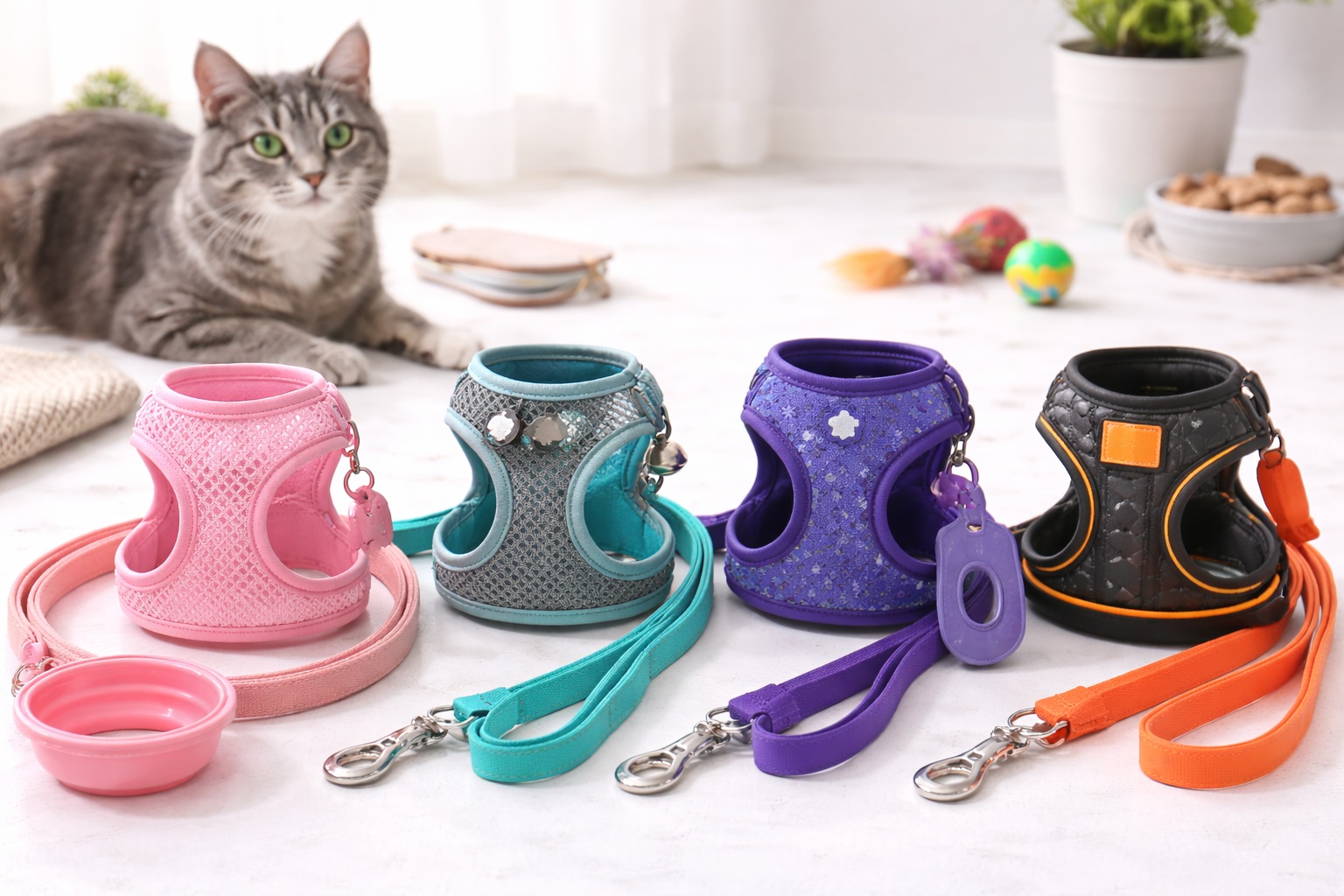
An H-style harness distributes pressure across the chest and back rather than the throat, which makes it the most appropriate and humane restraint for a cat exploring outdoors. Paired with a lightweight leash, it allows full range of movement while keeping the owner in control. The two-strap design makes it structurally difficult for a cat to back out, which is the most common escape method with simpler collar or single-loop designs.
- Pros:
- Distributes pressure across the chest rather than the throat
- Difficult for cats to escape by backing out
- Adjustable at both chest and neck for a precise fit
- Lightweight construction minimizes the restriction a cat feels
- Cons:
- Initial fitting takes patience with cats unfamiliar with harnesses
- Some cats resist wearing any harness at first
Best For: Indoor cats being introduced to controlled outdoor exploration for the first time.
Why We Recommend It: The H-harness is the safety standard for cat walking because its escape resistance is measurably better than vest-style or simple loop designs, and for cats, escaping a leash outdoors is a genuine and immediate safety concern rather than a minor inconvenience.
2. Vest-Style Cat Harness with Leash – Best for Comfort During Long Walks
A vest harness spreads leash pressure over a larger surface area than strap-based designs, which makes it noticeably more comfortable during longer outdoor sessions. Better vest designs include breathable mesh panels for temperature regulation and secure buckle closures, sometimes with reflective trim for visibility. The trade-off against an H-style harness is a marginally higher escape risk for cats that are unusually flexible or determined.
- Pros:
- Larger contact area distributes pressure more evenly
- Breathable mesh helps manage body temperature
- Reflective trim improves visibility in low light
- Extra padding improves comfort during extended wear
- Cons:
- Slightly easier to escape than an H-style for very flexible cats
- More fabric coverage can cause overheating in hot weather
Best For: Cats that already walk regularly and need the most comfortable harness for extended outdoor sessions.
Why We Recommend It: For a cat that is already leash-trained and reliable, the vest harness offers the best wearing comfort for regular longer walks — the padding and distributed pressure reduce the friction and restriction that slimmer strap designs create over time.
3. Retractable Cat Leash with Figure-8 Harness – Best for Exploration Freedom
A retractable leash paired with a figure-8 or simple loop harness gives a confident cat more range to explore while the owner keeps one-handed control via the brake button. The mechanism typically allows 10 to 16 feet of movement, which suits cats that have already mastered basic leash walking and are ready for more independent exploration within a controlled boundary.
- Pros:
- More exploratory range for curious, confident cats
- One-handed brake control for quick restriction
- Compact storage when the leash is retracted
- Suits cats that have graduated from short-leash walking
- Cons:
- Requires attentive handling to avoid sudden line release
- Figure-8 harnesses carry a higher escape risk than H-style designs
Best For: Confident, leash-trained cats ready to move beyond short-leash exploration toward more independent outdoor time.
Why We Recommend It: The retractable leash gives leash-confident cats real exploratory freedom while preserving emergency retraction control, which meaningfully increases the enrichment value of outdoor time once a cat has proven reliable on a shorter lead.
4. Step-In Harness with Leash – Best for Cats That Dislike Overhead Fitting
A step-in harness is fastened by placing the cat's front legs through two loops on the ground before clipping the back strap over the body, avoiding the overhead motion that startles some cats during a standard harness fitting. For cats that panic or bolt when equipment is lowered over their head, this design removes that specific stress point while still providing secure chest coverage.
- Pros:
- No overhead motion — reduces startle response during fitting
- Secure chest and shoulder coverage once fastened
- Good option for cats new to harness training
- Simple two-step fitting process
- Cons:
- Requires the cat to stand still briefly during the leg placement step
- Slightly more fumbling for owners fitting it for the first few times
Best For: Cats that react poorly to overhead harness fitting and owners just starting the leash training process.
Why We Recommend It: Removing the overhead component of fitting solves a specific and common source of harness resistance, which can make the difference between a cat that tolerates leash training and one that actively avoids it.
5. Escape-Proof Mesh Jacket Harness – Best for Anxious or Escape-Prone Cats
A mesh jacket harness wraps more fully around the cat's torso than a strap design, closing with multiple adjustment points to eliminate the gaps a determined cat could use to wriggle free. It suits cats with a documented history of slipping out of simpler harnesses, or naturally anxious cats that tense their bodies in ways that create escape gaps in less structured designs.
- Pros:
- Full torso coverage minimizes escape gaps
- Multiple adjustment points for a precise, secure fit
- Suits cats with a history of escaping other harness styles
- Mesh construction keeps it breathable despite full coverage
- Cons:
- More involved to put on than a simple loop or step-in design
- Bulkier fit may feel restrictive to some cats initially
Best For: Cats that have previously escaped a simpler harness or that show anxious, wriggling behavior during outdoor time.
Why We Recommend It: For a cat with a known escape history, the added security of full torso coverage and multiple adjustment points is worth the slightly longer fitting process — it directly addresses the specific failure point of simpler designs.
6. Bungee-Extension Cat Leash – Best for Reducing Sudden Pull Strain
A bungee-extension leash includes a stretch section that absorbs the sudden force of a cat darting after movement or startling at a noise, which reduces both the jolt transmitted to the harness and the strain on the owner's hand. This matters specifically for cats still building leash confidence, since an unexpected hard stop at the end of a rigid leash can create a negative association that sets training back.
- Pros:
- Absorbs sudden pulls without a hard jolt to the harness
- Reduces the chance of a negative association during early training
- Comfortable grip for the owner during unpredictable movement
- Works with most harness styles
- Cons:
- Slightly less precise control than a fully rigid leash
- Not necessary for calm, already-confident leash walkers
Best For: Cats still building leash confidence, particularly those prone to sudden startled movements outdoors.
Why We Recommend It: A softer stop at the end of the leash prevents a single startling moment from undoing weeks of positive leash association, which makes it a practical choice during the early stages of outdoor training.
7. Adjustable Multi-Point Harness with Padded Straps – Best for All-Day Comfort on Weekend Outings
An adjustable multi-point harness with padded straps is built for owners who take their cats on extended weekend outings rather than short daily walks — camping trips, longer garden sessions, or patio time that stretches well past a few minutes. The extra padding at the shoulder and chest points reduces friction over longer wear periods, while multiple adjustment points allow fine-tuning as the cat settles into a relaxed, natural posture rather than staying tense against a snug fit.
- Pros:
- Padded straps reduce friction during extended wear
- Multiple adjustment points allow a precise, comfortable fit
- Suits longer outdoor sessions better than lighter designs
- Durable stitching holds up to repeated weekend use
- Cons:
- Bulkier and warmer than minimalist harness designs
- Overkill for owners who only take short daily walks
Best For: Owners planning extended outdoor sessions, camping trips, or long weekend outings with a leash-trained cat.
Why We Recommend It: For outings that last well beyond a quick walk around the block, the added padding and fine-tuned adjustability prevent the friction and pressure points that shorter, lighter harnesses aren't designed to handle over extended wear.
Buying Guide: How to Choose the Best Leash for Cats
Use these factors to match a harness and leash set to your cat's temperament and stage of leash training. Most cats benefit from starting with the most escape-resistant option available and only moving to a more exploratory setup once reliable behavior is established — reversing that order tends to create safety problems rather than solve comfort problems. Working through these factors in order, from the safety-critical ones first to the convenience-oriented ones last, tends to produce a better final decision than jumping straight to whichever feature caught your eye first.
1. Escape Resistance as the Primary Factor
Before comfort, style, or price, confirm the harness design resists backing-out escape attempts. H-style and full mesh jacket harnesses are the most escape-resistant; simple loop and figure-8 designs are the least. For a cat's first outdoor experience, prioritize escape resistance above all other factors.
2. Correct Sizing and Fit
A harness should allow two fingers to fit snugly between the strap and the cat's body — tighter risks discomfort and restricted breathing, looser increases escape risk. Measure your cat's chest girth and neck circumference before ordering rather than guessing based on weight alone.
3. Material Breathability
Mesh and breathable nylon prevent overheating during warmer weather walks. Solid fabric or leather retains more heat against the body. For cats walked primarily in summer months, breathability should weigh heavily in the decision.
4. Leash Length for Control Level
Short fixed leashes of 4 to 6 feet suit early training and close supervision. Retractable leashes extending to 10 to 16 feet suit confident, leash-trained cats. Match leash length to how reliably your cat responds to being called back or redirected.
5. Clip and Hardware Strength
Verify the clip is rated for a sudden startled pull, not just steady walking tension. A clip that opens under sudden force during a startle response is a genuine safety failure. Lightweight but rated hardware is preferable to bulky hardware that adds unnecessary weight.
6. Reflective Elements for Low-Light Walks
If walks happen at dawn, dusk, or after dark, reflective piping or trim improves visibility to vehicles and other people. This is a low-cost feature that adds meaningful safety value for owners who walk cats outside of daylight hours.
7. Ease of Putting On and Taking Off
A harness that takes several minutes to fit correctly adds friction to every walk and increases the odds you skip a walk rather than deal with the fitting process. Step-in and quick-clip designs reduce this friction meaningfully for daily use.
8. Weight of the Harness Itself
Cats are generally smaller and lighter than dogs, so harness weight matters more relative to body size. An unnecessarily heavy harness can discourage natural movement and make a cat reluctant to explore during a walk.
9. Adjustment Points for Growing or Seasonal Cats
Kittens still growing, or cats whose coat thickness changes seasonally, benefit from harnesses with multiple adjustment points rather than a single fixed size. This avoids needing to replace the harness every few months during a growth period.
10. Training Stage Compatibility
A cat brand new to leash walking needs a different setup than one confidently exploring a backyard. Match the harness and leash combination to where your cat actually is in the training process, not where you'd like them to be.
11. Indoor Practice Before Outdoor Use
Regardless of which harness you choose, indoor practice wearing it — and walking on leash in a familiar, low-distraction space — before any outdoor attempt significantly improves the odds of a positive first outdoor experience.
12. Cleaning and Odor Resistance
Harnesses worn regularly pick up dirt, dander, and outdoor debris. Machine-washable mesh and nylon designs are far easier to keep fresh than leather or heavily padded designs that require spot cleaning and slower drying.
13. Cost and Availability of Replacement Parts
Buckles, clips, and D-rings occasionally wear out or break well before the rest of the harness does. Checking whether a manufacturer sells replacement hardware separately can save you from replacing an otherwise good harness over a single broken piece. This is a minor consideration compared to escape resistance and fit, but it becomes relevant once a harness has seen a year or more of regular use.
14. Weather Resistance for Rainy or Muddy Walks
Owners who walk cats regardless of light rain or damp grass benefit from quick-drying nylon or mesh over absorbent fabric or leather, which can stay damp against the skin and take much longer to dry between uses. A harness that dries slowly is also more prone to holding odor, which adds an extra cleaning step to what should be a simple outdoor routine.
15. Considering a Longer Practice Line for Recall Training
For cats progressing well past basic leash walking, a longer practice line — used only in a secure, enclosed space rather than near traffic — can help build reliable recall behavior before ever attempting a retractable leash outdoors. This step isn't necessary for every cat, but it's a useful bridge for owners hoping to eventually trust their cat with more exploratory range.
Common Mistakes to Avoid
The most common mistake is skipping the indoor adjustment period entirely and heading straight outside with a brand-new harness. Cats that have never worn a harness before are far more likely to freeze, panic, or attempt to escape when the unfamiliar sensation is combined with unfamiliar outdoor stimulation all at once. A second common mistake is choosing a harness based on appearance rather than escape resistance — a stylish but poorly structured harness is a real safety liability outdoors regardless of how it looks. A third is judging fit only when the cat is standing still; test the fit while the cat is walking and stretching, since a harness that looks snug at rest can loosen significantly during normal movement.
Frequently Asked Questions
1. Can all cats learn to walk on a leash?
Most cats can learn to accept and walk on a harness with patient, gradual introduction. Start by leaving the harness near the cat, then having them wear it indoors for short periods, before attempting an outdoor walk. Some cats never fully accept leash walking, and forcing the experience causes stress rather than enrichment.
2. Is a harness or collar better for walking a cat?
A harness is strongly recommended over a collar for leash walking. Cats can slip out of collars easily, and leash tension on a collar carries real risk of throat and trachea injury. A well-fitted harness, particularly an H-style design, is both safer and far more escape-resistant.
3. How do I introduce my cat to a harness?
Leave the harness near the cat for several days so it becomes a familiar object with a neutral scent. Then gently place it on the cat for short indoor periods, pairing the experience with treats and calm praise. Once the cat is comfortable wearing it around the house, attach the leash indoors before attempting an outdoor walk.
4. Is the most expensive leash for cats always the best?
Not always. Price often reflects materials and finishing details, but many mid-range harness and leash sets perform just as well for everyday outdoor exploration. Match the product to your cat's actual temperament and training stage rather than the highest price available.
5. How long should a quality cat leash and harness last?
A well-built set from a reputable manufacturer typically lasts two to five years with reasonable care, depending on frequency of use. Warranty length is often a useful indicator of how confident the manufacturer is in its own construction.
6. Can I return a leash for cats if it doesn't suit my cat?
Most retailers offer a 15 to 30 day return window. Keep the original packaging until you've confirmed both the fit and your cat's comfort level, since sizing issues are common with first-time harness purchases.
7. What should I prioritize when buying a leash for cats?
Start with escape resistance and correct sizing before considering comfort features or leash length. A harness a cat can slip out of undermines every other feature, no matter how well designed those other features are.
8. Does brand name matter for a cat leash?
Established brands tend to offer more consistent sizing and better warranty support. Newer or smaller brands can still offer excellent value, so reading verified purchase reviews focused on escape incidents is worthwhile before committing either way.
9. How do I know if a harness fits correctly?
You should be able to fit two fingers snugly under any strap while the cat is standing normally. Check the fit again while the cat is walking or stretching, since movement can reveal gaps that aren't visible at rest.
10. Should I let my cat off leash once we're outside?
No. Even a well-trained cat should stay leashed during outdoor time unless in a fully enclosed, secure space like a catio. Outdoor hazards including traffic, other animals, and simply becoming disoriented in unfamiliar territory don't disappear just because a cat seems calm on leash.
11. What age can a kitten start leash training?
Kittens can begin indoor harness familiarization as young as a few months old, using a properly sized kitten or small-breed harness. Outdoor walks should wait until the kitten is fully vaccinated and comfortable wearing the harness indoors first.
12. My cat freezes and refuses to move on leash — what should I do?
Freezing is a common early response and not a sign the cat dislikes walking permanently. Stay patient, let the cat set the pace, and avoid pulling or dragging. Short, low-pressure sessions in a familiar area, repeated consistently, usually resolve freezing behavior over time.
13. Can I use the same harness for indoor and outdoor use?
Yes, most harnesses work for both, though owners walking primarily outdoors may prefer added reflective trim or weather-resistant material, while an indoor-only harness used for occasional supervised yard time can prioritize lightness and comfort instead.
14. How often should I check a harness for wear?
Inspect stitching, buckles, and clips every few weeks with regular use, and before any outdoor walk specifically. Worn stitching or a loosening buckle is a leading cause of unexpected escapes and should prompt replacement rather than continued use.
15. Is it normal for a cat to walk backward or sideways on a leash at first?
Yes, this is a common early response as a cat adjusts to the sensation of the harness and leash. Crab-walking, freezing, or flopping over are typical reactions during the first several sessions and usually fade as the cat becomes more comfortable. Keeping early sessions short, calm, and reward-based helps this phase pass more quickly.
16. Can I attach an ID tag to my cat's harness?
Yes, and it's a good idea for any outdoor walk. Many harnesses include a small D-ring specifically for this purpose. An ID tag with a phone number is a simple backup safety measure in the rare event a cat does slip free despite a well-fitted harness.
17. What should I do if my cat pulls hard after being startled?
Stay calm, keep a firm but gentle grip, and avoid jerking the leash back, which can startle the cat further. A bungee-extension leash, discussed earlier in this guide, is specifically designed to absorb this kind of sudden pull and is worth considering for cats prone to startling at traffic, dogs, or sudden noises.
18. Do certain cat breeds need a different type of harness?
Body shape matters more than breed specifically — long, narrow-chested cats and unusually flexible cats generally need the more structured escape resistance of an H-style or mesh jacket harness, while stockier, calmer cats may do fine with a broader range of designs. When in doubt, prioritize the more escape-resistant option regardless of breed.
Final Verdict
- Best Escape-Proof Design: H-Style Cat Harness with Leash — the most secure, reliable choice for first-time outdoor exploration.
- Best for Comfort During Long Walks: Vest-Style Cat Harness with Leash — the most comfortable option for regular, longer outdoor sessions.
- Best for Exploration Freedom: Retractable Cat Leash with Figure-8 Harness — the best fit for confident, experienced leash walkers.
- Best for Fitting Sensitivity: Step-In Harness with Leash — the easiest option for cats that dislike overhead fitting.
- Best for Escape-Prone Cats: Escape-Proof Mesh Jacket Harness — the most secure choice for cats with a history of slipping free.
- Best for Startle Reduction: Bungee-Extension Cat Leash — the gentlest option for cats still building leash confidence.
- Best for Extended Outings: Adjustable Multi-Point Harness with Padded Straps — the most comfortable choice for longer weekend sessions outdoors.
The right leash for cats depends on where your cat currently stands in leash training and how much that cat tends to test the limits of any restraint. Start with the most escape-resistant option you can find for a first attempt, confirm fit carefully before ever stepping outside, and only move toward more exploratory setups once your cat has demonstrated reliable, calm behavior on a shorter lead. Revisit the choice periodically as your cat's confidence and your own comfort level with outdoor walks both develop — the right setup for a first outing is rarely the same one you'll want a year later, and most owners end up owning more than one harness as their cat's outdoor routine matures.