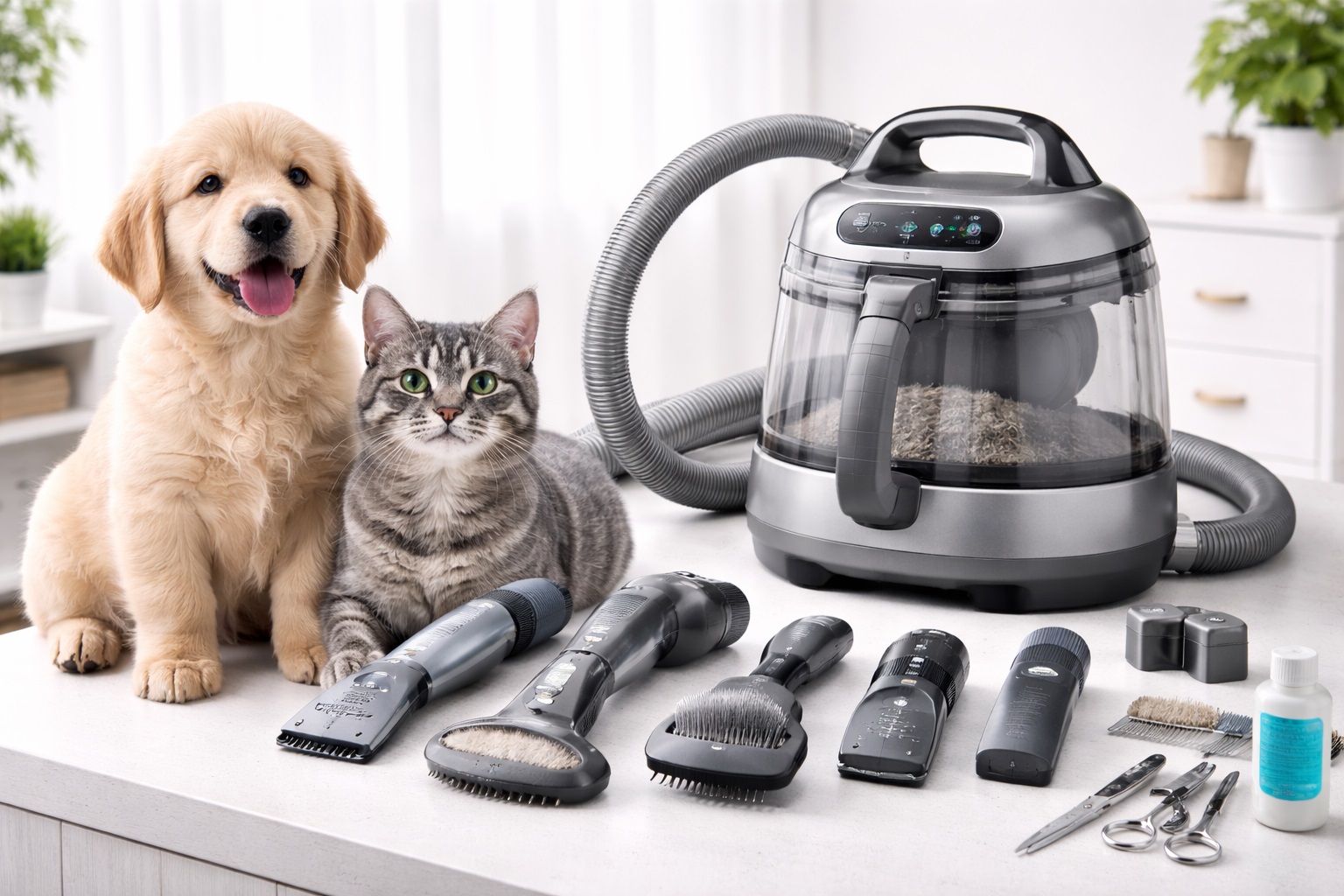
Best Pet Grooming Kits for Home Use: Dog & Cat Picks
Professional grooming appointments add up quickly, and for many dogs and cats, the time between visits is when mats form, coats get shaggy, and nails grow uncomfortably long. A good home grooming kit doesn't need to replace a professional groomer entirely, but it can extend the time between visits, keep a pet more comfortable day to day, and give owners a much better sense of their pet's coat and skin condition through regular hands-on contact.
Not every grooming kit is built for the same job, though. An electric clipper kit designed for a thick-coated dog behaves very differently from a gentle brush set meant for a cat that merely tolerates being touched, and a kit built for quiet operation serves a very different purpose than one built for raw cutting power. This guide walks through the main categories of home pet grooming kits and explains which situations each one actually suits, so you can match a kit to your pet's coat, temperament, and your own comfort handling the tools.
Beyond the individual reviews, you'll find a detailed buying guide covering the factors that matter most when choosing grooming tools — motor power and noise, blade quality, coat compatibility, and more — along with answers to common questions pet owners have before buying their first at-home grooming setup.
It's worth setting expectations early: at-home grooming is most successful as a consistent, low-key routine rather than an occasional major event. Pets generally respond better to shorter, more frequent sessions than to long, infrequent ones, and the right kit should make it easy to keep that rhythm going rather than turning every session into a production that both you and your pet dread.
Top 6 Pet Grooming Kits for Home Use (Detailed Reviews)
1. Electric Dog Grooming Kit – Best Overall for Dogs
An electric dog grooming kit typically centers on a corded or rechargeable clipper with a set of interchangeable guard combs, giving owners control over how short or long to trim their dog's coat across different body areas. These kits are generally built with enough motor power to handle regular trims on medium to thick coats, making them a solid all-purpose choice for owners who want to manage routine maintenance between professional grooms rather than for heavy-duty de-matting work.
- Pros:
- Interchangeable guard combs allow for different trim lengths across the body
- Motor power suited to regular maintenance trims on medium to thick coats
- Versatile enough for most common dog breeds and coat types
- Cons:
- May struggle with heavily matted or very dense double coats
- Requires a learning curve to trim evenly without practice
Best For: Dog owners who want to handle routine coat maintenance at home between professional grooming appointments.
Why We Recommend It: It covers the core need most dog owners actually have — a reliable way to keep the coat tidy month to month — without the complexity or cost of professional-grade equipment.
2. Cat Grooming Kit – Best for Cats
Cat grooming kits are built around the reality that most cats tolerate grooming very differently than dogs do — shorter sessions, gentler tools, and an emphasis on brushes and combs over aggressive clipping. A typical kit includes de-shedding brushes, a slicker brush for detangling, and sometimes gentle trimmers for sensitive areas like paws and the area around the face. The focus is less on dramatic coat changes and more on comfortable, low-stress maintenance that a cat will actually sit still for.
- Pros:
- Gentler tool set matched to feline temperament and sensitivity
- Reduces loose hair and shedding around the home with regular use
- Compact tools are easier to handle for shorter grooming sessions
- Cons:
- Not designed for heavy-duty trimming or thick matting
- Some cats still resist grooming regardless of tool gentleness
Best For: Cat owners looking to manage shedding and light coat maintenance without stressing their pet.
Why We Recommend It: It's specifically matched to how most cats tolerate handling, which makes regular grooming sessions more realistic and less of a struggle for both pet and owner.
3. Complete Dog Grooming Set – Best All-in-One System
A complete grooming set expands beyond clippers alone to include brushes, combs, nail tools, and sometimes ear-cleaning or bathing accessories, aiming to cover the full range of routine dog care in one purchase. This makes it a strong option for owners who want one comprehensive kit rather than assembling separate tools over time, though it does mean paying for a broader set of tools than any single grooming session typically requires.
- Pros:
- Covers clipping, brushing, and nail care in a single purchase
- Reduces the need to buy separate tools over time
- Often includes organized storage for the full tool set
- Cons:
- Higher upfront cost than a single-purpose clipper kit
- Some included tools may go unused depending on your dog's specific needs
Best For: Owners who want one comprehensive grooming system rather than building a tool collection piece by piece.
Why We Recommend It: Having every routine tool in one organized set makes it easier to stay consistent with grooming, since nothing is missing when a session is due.
4. Quiet Low-Noise Clipper Kit – Best for Noise-Sensitive Pets
Many dogs and cats are genuinely afraid of standard clipper noise, which can turn every grooming session into a stressful event for both pet and owner. Quiet clipper kits use motor designs specifically aimed at reducing operating noise and vibration, making them a meaningful option for skittish pets or households with multiple animals that react to loud tools. The trade-off is that quieter motors sometimes offer slightly less raw cutting power than louder, higher-torque clippers.
- Pros:
- Reduced noise and vibration helps calm anxious or noise-sensitive pets
- Makes grooming sessions less stressful for the whole household
- Often lighter in hand, easing longer grooming sessions
- Cons:
- May offer less cutting power than louder, higher-torque clippers
- Could take longer to complete a full trim on thick coats
Best For: Pets that are visibly anxious or fearful around standard clipper noise, and multi-pet households.
Why We Recommend It: For a pet that associates loud clippers with stress, a genuinely quiet motor can be the difference between a manageable grooming routine and one that gets avoided entirely.
5. Budget Pet Grooming Kit – Best Budget Option
A budget grooming kit strips things down to a basic clipper, a couple of guard combs, and perhaps a simple brush, aimed at owners who want to try at-home grooming without a large upfront investment. These kits handle light, occasional maintenance reasonably well, but they typically use less powerful motors and lower-grade blades than mid-range or premium kits, which shows up most in longer sessions or thicker coats.
- Pros:
- Low-cost entry point for owners new to at-home grooming
- Sufficient for light, occasional touch-ups between professional grooms
- Simple to use with minimal setup
- Cons:
- Less powerful motor may struggle with thicker or longer coats
- Blades may dull faster than higher-grade alternatives
Best For: First-time owners testing at-home grooming, or pets that only need light, occasional trims.
Why We Recommend It: It offers a low-risk way to find out whether at-home grooming fits your routine before committing to a more expensive setup.
6. Professional-Grade Home Grooming Kit – Best Premium Option
Professional-grade kits bring higher motor power, sharper and more durable blades, and often a wider range of guard attachments intended to handle thicker coats and more frequent use without the tools wearing down quickly. These kits are aimed at owners with multiple pets, thick-coated breeds, or anyone who grooms often enough that a budget kit's limitations become a genuine bottleneck. The higher price reflects build quality more than any dramatic difference in the basic grooming process itself.
- Pros:
- Stronger motor handles thick coats and frequent use more reliably
- Sharper, more durable blades hold an edge longer
- Well suited to multi-pet households with heavier grooming needs
- Cons:
- Higher price point than mid-range or budget kits
- More power than necessary for light, occasional grooming needs
Best For: Owners with thick-coated dogs, multiple pets, or anyone grooming frequently enough to need heavier-duty equipment.
Why We Recommend It: The added durability and power pay off for owners who groom often, reducing the frustration of underpowered tools bogging down partway through a session.
Buying Guide: How to Choose the Best Pet Grooming Kit
Choosing the right grooming kit comes down to matching the tools to your pet's coat, temperament, and how often you plan to groom at home. The following factors will help you narrow down the right option.
1. Clipper Motor Power and Noise
Motor power determines how easily the clipper cuts through your pet's coat, especially on thicker or double-coated breeds, while noise level affects how well your pet tolerates the process. A more powerful motor generally means faster, smoother trims, but it can also run louder and generate more vibration, which matters if your pet is noise-sensitive.
If you're unsure which matters more for your situation, observe your pet's reaction to household appliances like vacuums or hair dryers — a strong reaction is a reasonable indicator that a quieter, lower-vibration clipper will make grooming sessions go more smoothly.
It's also worth noting that motor heat can build up during longer sessions, particularly on thick coats. A clipper that runs cooler with extended use tends to be more comfortable against the skin and less likely to need frequent breaks mid-trim.
2. Blade Sharpness and Guard Set
Sharp, well-maintained blades cut cleanly without pulling or snagging hair, which makes a real difference in how comfortable grooming is for your pet. A wider range of guard comb attachments gives you more control over trim length across different parts of the body, which is particularly useful for breeds that need different lengths on the body versus the legs, face, or tail.
Check whether replacement blades are readily available for the specific kit, since blades do dull with regular use and eventually need replacing to maintain cutting quality.
Stainless steel blades generally resist corrosion and hold an edge longer than lower-grade metal alternatives, which is worth checking if you plan to use the kit regularly over several years.
3. Suitable Coat Types (Short vs. Long)
Not every clipper kit is built for every coat type. Kits designed for short, single coats may struggle with thick double coats or heavily matted long hair, while heavier-duty kits built for dense coats can be more clipper than necessary for a short-haired breed. Matching the kit to your pet's actual coat type avoids both an underpowered tool and unnecessary overspending.
If your pet's coat changes seasonally, such as a heavier winter undercoat, consider whether the kit's power and blade set can comfortably handle that seasonal variation as well.
Mixed-breed pets or those with unusual coat textures may benefit from a kit with a broader guard comb range, giving you more flexibility to find the setting that works best rather than being locked into a narrow range designed for one specific coat type.
4. Ease of Cleaning Blades
Hair, oil, and skin debris build up in clipper blades quickly, and a kit that's difficult to clean tends to get used less consistently over time. Look for clippers with blades that detach easily for cleaning and, ideally, come with a small cleaning brush and blade oil included, since regular cleaning and lubrication directly affects how long blades stay sharp.
A kit that's genuinely quick to clean after each session is also more likely to be maintained properly, which extends the life of the blades and motor alike.
Establishing a habit of oiling the blades after every few sessions, not just when they start to snag, will noticeably extend how long the factory-sharp edge lasts.
5. Cord vs. Cordless Operation
Corded clippers offer consistent power throughout a session without worrying about battery life, which suits owners doing longer or more frequent grooming sessions. Cordless models offer more freedom of movement and are easier to maneuver around a squirming pet, but battery life and charge time become relevant factors, especially for thicker coats that take longer to trim.
If you regularly groom a larger or thick-coated pet, check the manufacturer's stated runtime per charge to make sure a cordless model can comfortably complete a full session.
Some cordless kits allow charging while in use once the battery runs low, which is a useful feature to check for if you tend to groom larger or multiple pets in one sitting.
6. Price and Value
Grooming kits range from simple, inexpensive clipper sets to comprehensive professional-grade systems. Consider how often you'll actually use the kit and how demanding your pet's coat is before deciding how much to spend — a kit that's more powerful and durable than you need adds cost without meaningful benefit, while an underpowered kit for a thick-coated pet leads to frustration and incomplete trims.
Factor in the cost of replacement blades and accessories over time as well, since a slightly pricier kit with widely available, affordable replacement parts can work out cheaper in the long run than a bargain kit with hard-to-find parts.
7. Brand Reliability
Established pet grooming brands tend to offer more consistent build quality, clearer instructions, and more readily available replacement parts like blades and guard combs. Lesser-known brands can still be worth considering, but it's worth checking verified reviews closely, particularly regarding motor durability and blade sharpness retention over time.
A brand with a longer track record in pet grooming specifically, rather than general small appliances, is often a useful signal that the tools were designed with animal coats and skin sensitivity in mind.
8. Warranty and Support
A warranty on the clipper motor is a reasonable signal of how confident the manufacturer is in its longevity. Check what the warranty actually covers — motor failure, for instance, is a more common and more costly issue than a dull blade, which is typically considered a normal wear item rather than a defect.
Keep your receipt and original packaging until you're confident the kit performs reliably across several grooming sessions, particularly if you're trying an unfamiliar brand.
9. User Reviews and Real-World Feedback
Because every pet's coat, temperament, and tolerance for grooming differs, reading reviews from owners with a similar breed or coat type is especially useful. Look specifically for feedback on noise level, how the clipper performs on thicker areas like the haunches or neck, and how long blades stay sharp with regular use.
Reviews mentioning long-term use, ideally six months or more after purchase, tend to be more reliable indicators of durability than first-impression reviews written immediately after unboxing.
10. Compatibility With Your Pet's Breed and Temperament
Beyond the technical specifications, consider how your specific pet tends to react to handling and unfamiliar tools. A powerful, professional-grade clipper does little good if its noise or vibration makes your pet too anxious to sit still, in which case a quieter, gentler kit — even with less raw power — is likely to produce better real-world results.
For multi-pet households with different breeds or coat types, a versatile kit with a broad guard comb range may serve better than a highly specialized kit built for just one coat type.
Frequently Asked Questions
1. Can I groom my dog at home without professional training?
Basic maintenance trims, brushing, and nail care are manageable for most owners with some patience and a good kit. More complex breed-specific cuts or heavy de-matting are generally better left to a professional groomer, at least until you're comfortable with the basics. Watching a few tutorials specific to your breed's coat before your first session can help avoid common early mistakes.
2. How often should I use a home grooming kit on my pet?
This depends heavily on coat type and length, but many owners find a light brushing session weekly and a full trim every four to eight weeks works well for maintaining a manageable coat between professional visits. Cats generally need less frequent trimming but benefit from more regular brushing to manage shedding.
3. Will an electric clipper hurt my pet if I make a mistake?
Modern clippers with the correct guard comb attached are designed to avoid direct skin contact with the blade, which significantly reduces the risk of nicks. Going slowly, following the direction of hair growth, and using the appropriate guard length are the best ways to avoid mistakes. Areas with loose skin, like the neck and belly, deserve extra caution regardless of the tool used.
4. What's the most common complaint about pet grooming kits?
The most frequent issues are blades that dull faster than expected, motors that overheat or bog down on thick coats, and noise levels that some pets simply won't tolerate. Reading verified reviews from owners with similar coat types helps flag these issues before buying.
5. Can I return a grooming kit if my pet won't tolerate it?
Most retailers offer a standard return window, typically 15 to 30 days, though hygiene-related restrictions sometimes apply to grooming tools that have been used. Check the specific return policy before purchasing, particularly if you're unsure how your pet will react.
6. How do I know if a clipper kit is compatible with my pet's coat?
Check the product description for guidance on coat type and thickness the clipper is designed for. If your pet has a dense double coat or is prone to matting, a heavier-duty or professional-grade kit is generally a safer choice than a basic budget clipper.
7. Are there real differences between grooming kit brands?
Yes. Established grooming brands typically offer more consistent motor quality, sharper stock blades, and better-organized guard comb sets than lesser-known alternatives, though budget options from newer brands can still perform adequately for light use.
8. How important is warranty coverage for a pet clipper?
Warranty coverage is a meaningful indicator of how long the manufacturer expects the motor to last under normal use. Since motor failure is the most costly potential issue with a clipper, a longer warranty period offers real peace of mind, especially for higher-priced kits.
9. What's the best way to compare grooming kits before buying?
List the specific tools you need — clipper, brush, nail trimmer, and so on — along with your pet's coat type and temperament, then compare kits against that specific list rather than against every feature available across the category.
10. Should I buy pet grooming tools online or from a pet store?
Online retailers typically offer a wider selection and better prices, while a pet store lets you see the size and feel of the tools before buying. For owners new to grooming, handling a clipper in person first can help you judge weight and grip comfort before ordering online.
11. Do quiet clippers actually work as well as louder ones?
Quiet clippers can handle most routine maintenance trims effectively, though they sometimes take a bit longer on thick or dense coats compared to higher-torque, louder models. For pets that are noise-sensitive, the trade-off is usually worth it for a calmer grooming session.
12. How do I get my pet used to grooming tools for the first time?
Introduce the clipper or brush gradually, letting your pet see and sniff the tool while it's turned off before attempting an actual trim. Short, positive first sessions with treats and praise tend to build tolerance much faster than a single long session.
13. Is it normal for pets to resist grooming at first?
Yes, especially if they haven't been regularly handled with tools before. Most pets grow more tolerant with consistent, positive exposure over several short sessions, though some individuals remain sensitive to certain tools or areas indefinitely, which is worth respecting rather than forcing.
14. Can the same kit be used on both dogs and cats?
Some multi-purpose kits are marketed for both, but coat texture and temperament differences mean a kit optimized for one species may not perform as well on the other. If you own both, checking whether the kit explicitly supports both coat types is worthwhile before assuming compatibility.
15. What should I do if my pet becomes stressed mid-session?
Stop and give your pet a break rather than pushing through a full trim in one go. Splitting a grooming session across two shorter sittings is far better for building long-term tolerance than finishing one stressful session that makes the next attempt harder.
Final Verdict
The right pet grooming kit depends far more on your specific pet's coat and temperament than on any single kit being universally best. A thick-coated dog that tolerates handling well is a good match for a powerful, professional-grade clipper, while an anxious pet of any species will do better with a quiet, gentle setup even if it means slightly longer sessions.
- Best Overall: The Electric Dog Grooming Kit, for its balance of power and everyday versatility.
- Best for Cats: The Cat Grooming Kit, built around feline tolerance and comfort.
- Best Budget: The Budget Pet Grooming Kit, for owners testing at-home grooming for the first time.
- Best Premium: The Professional-Grade Home Grooming Kit, for thick coats and frequent use.
- Best for Noise-Sensitive Pets: The Quiet Low-Noise Clipper Kit, for anxious or easily startled animals.
- Best All-in-One: The Complete Dog Grooming Set, for owners who want every tool covered in one purchase.
Whichever kit you choose, take the time to introduce it to your pet gradually rather than expecting a full trim in the first session. A grooming routine your pet actually tolerates well will do far more for their coat and comfort over time than the most powerful clipper used inconsistently, and building that tolerance patiently now will make every future session easier for both of you.