Best Budget Pet Water Fountains: Fresh Flowing Water Without the High Price
A pet water fountain doesn't need a premium price tag to deliver the core benefit that makes fountains worthwhile in the first place: flowing, filtered water that encourages a cat or dog to drink more consistently than they would from a still bowl. Budget-conscious shoppers sometimes assume the cheapest fountains are a compromise not worth making, but the reality is more nuanced — the fundamental mechanism of a fountain is fairly simple, and a well-chosen affordable model can deliver most of the practical benefit of a premium one, as long as you know which corners are safe to cut and which aren't. The comparisons and buying guide below are built specifically around that distinction, so you can shop with confidence at whatever price point actually fits your household's budget this year.
The real risk with budget shopping in this category isn't spending too little — it's spending on the wrong things. A cheap fountain with a genuinely reliable pump and adequate filtration is a good buy, and there are plenty of them on the market once you know what to look for beyond the price tag itself. A cheap fountain with a failure-prone pump that needs replacing every few months, or filters that are difficult to find and overpriced relative to the fountain itself, ends up costing more over time than a slightly pricier option would have from the start. Budget shopping done well means separating price from value, not just chasing the lowest number on the listing. That distinction is the entire premise of this guide — helping you identify which low-cost options are genuine bargains and which are simply cheap in a way that costs more down the line.
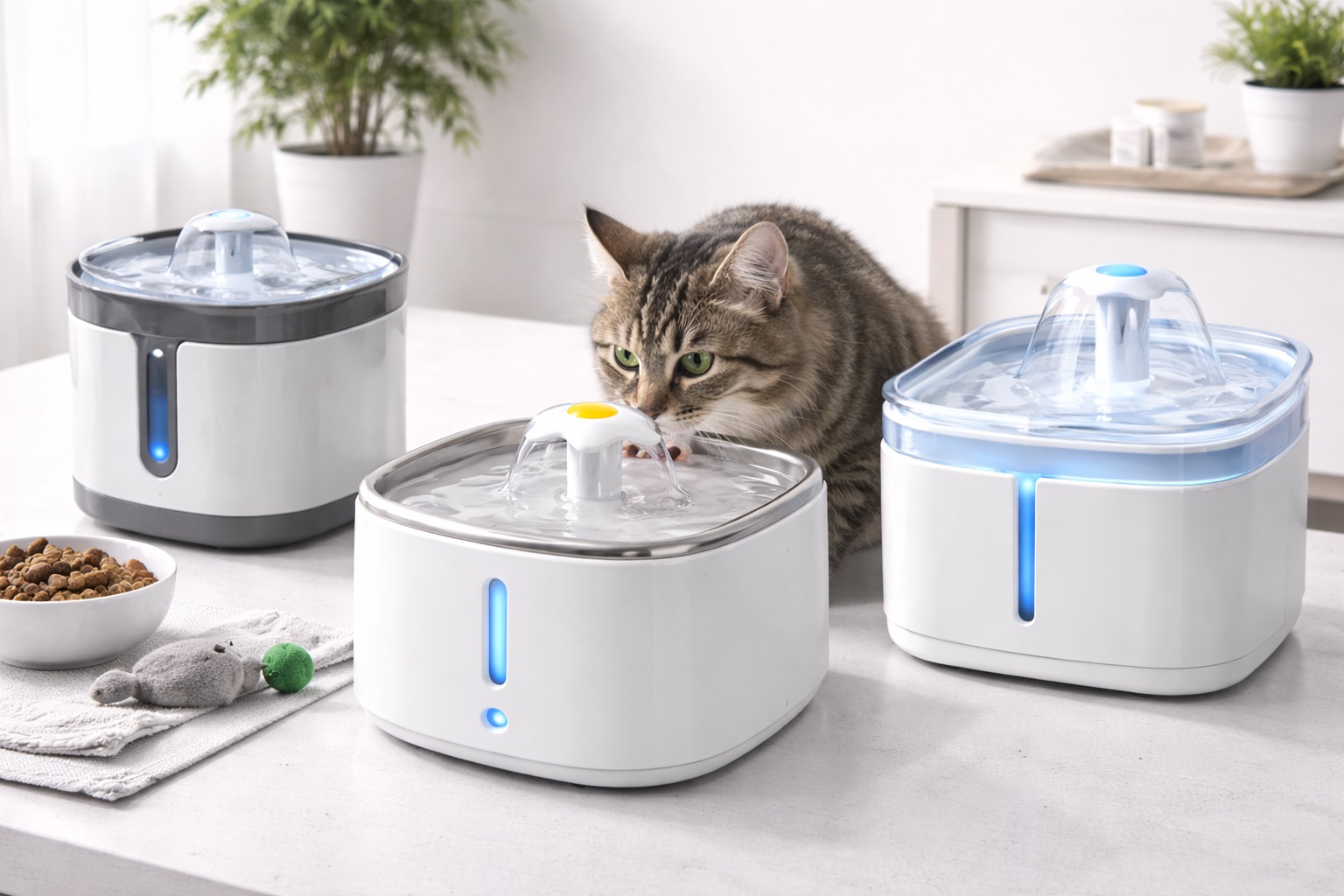
This guide compares the three fountain types most relevant to cost-conscious pet owners: the stainless steel filtered fountain, the ceramic filtered fountain, and the multi-tier plastic filtered fountain, which tends to be the most budget-accessible of the three formats. Below you'll find detailed reviews of each with a budget-focused lens, a ten-point buying guide built around getting real value at a low price, and answers to the questions cost-conscious pet owners ask most often before buying one.
None of this means every expensive fountain is overpriced or every cheap one is a bargain — it means the relationship between price and actual quality in this category is looser than shoppers sometimes assume. Reading the specific details in each listing, rather than using price as a shorthand for quality, is the more reliable way to find genuine value regardless of your specific budget ceiling. A shopper with fifteen dollars to spend and a shopper with sixty dollars to spend can both walk away with a fountain that meaningfully improves their pet's hydration, provided each one applies the same careful comparison process to whatever price bracket they're actually working within. The goal throughout this guide is to make that comparison process explicit, so you're never left guessing which specific detail on a listing actually matters and which is just packaging.
Top Picks Reviewed
Each fountain type carries a different value proposition for a budget-conscious buyer. The multi-tier plastic fountain is usually the most accessible entry point on price alone. Stainless steel costs more upfront but often saves money over time through better durability and easier long-term cleaning. Ceramic sits at a similar or higher price point to stainless steel, justified mainly by its aesthetic appeal rather than a functional advantage a budget shopper necessarily needs to pay for. None of that makes ceramic a poor choice — it simply means the extra cost buys mostly appearance rather than additional hygiene or durability beyond what stainless steel already offers at a comparable or lower price.
1. Stainless Steel Filtered Fountain – Best Overall for Hygiene
A stainless steel pet fountain resists bacterial growth significantly better than plastic alternatives. The filtered flowing water encourages pets to drink more frequently — particularly cats, who instinctively prefer moving water. Stainless steel models are dishwasher safe and maintain their appearance and hygiene properties over time. For a budget-conscious buyer, the higher upfront cost of stainless steel is worth weighing against its typically longer usable lifespan, since a surface that doesn't scratch or degrade the way plastic does tends to need replacing far less often.
Basic stainless steel models without extra features tend to be more affordably priced than premium versions with additional bells and whistles, so it's worth looking specifically for a no-frills stainless option if hygiene and durability matter more to you than extra features you may not use. Stripped-down models without built-in water level displays or app connectivity are frequently priced close to premium plastic fountains while offering a genuinely more durable core material.
- Pros:
- Stainless steel resists bacterial growth
- Flowing water encourages increased drinking
- Dishwasher safe for complete cleaning
- Filter removes impurities, taste, and odor
- Cons:
- Higher cost than plastic alternatives
- Heavier than plastic models
Best For: Budget-conscious pet owners who are willing to pay a bit more upfront for a fountain that's likely to need replacing less often than a cheaper plastic alternative.
Why We Recommend It: The stainless steel surface is the most meaningful quality differentiator in pet fountains. Plastic surfaces develop microscopic scratches that harbor bacteria over time — stainless steel doesn't, which means fewer premature replacements and, over a few years of ownership, often a lower real cost than repeatedly buying and discarding cheaper plastic units. Buyers who've already replaced two or three cracked or scratched plastic fountains over the years often find that switching to stainless steel the first time would have been the more economical path from the start.
2. Ceramic Filtered Fountain – Best for Aesthetics and Hygiene
Ceramic pet fountains provide the same bacterial resistance as stainless steel with a more aesthetically pleasing appearance that suits home environments better. High-quality ceramic is dishwasher safe and maintains its surface integrity indefinitely. The weight of ceramic provides stability that lighter plastic designs can't match. For a strictly budget-focused buyer, ceramic is usually the least essential of the three upgrades, since its main advantage over stainless steel is appearance rather than function.
That said, basic ceramic models without decorative glazing or elaborate shapes can sometimes be priced close to mid-range stainless steel options, making them a reasonable choice if aesthetics genuinely matter to you and you're comfortable handling a more fragile material carefully. Shopping outside of peak pet-supply seasons, like right after major holidays, can sometimes turn up discounted ceramic models close to plastic pricing.
- Pros:
- Ceramic surface resists bacterial growth as well as stainless steel
- Aesthetically appropriate for home environments
- Heavy and stable — pets can't tip it
- Dishwasher safe for complete cleaning
- Cons:
- More expensive than plastic or basic stainless options
- Fragile if dropped — ceramic cracks on impact
Best For: Pet owners with a moderate budget who want a fountain that functions well and looks appropriate as a home accessory, without needing the absolute lowest price on the market.
Why We Recommend It: Ceramic combines the hygiene benefit of non-porous material with an aesthetic that integrates naturally into home décor. It's not the cheapest option on this list, but for buyers with a moderate rather than rock-bottom budget, it offers genuine value relative to its price. It's a sensible middle-ground pick for anyone who has ruled out plastic on hygiene grounds but doesn't want to pay a premium purely for stainless steel's industrial look.
3. Multi-Tier Plastic Filtered Fountain – Best for Multiple Pets
Multi-tier plastic fountains provide multiple drinking levels and a higher water flow rate — useful for households with multiple pets who prefer different drinking heights or simultaneous access. High-quality BPA-free plastic with activated carbon filtration provides adequate hygiene for most multi-pet scenarios at a budget-friendly price. This is typically the lowest-cost format among the three, making it the natural starting point for anyone shopping specifically with price as the top priority. Even at the lower end of its price range, the core filtration and flow mechanism generally works as advertised, which is the part of the purchase that actually matters most to your pet.
The key to getting genuine value from this format on a tight budget is checking filter availability and cost before purchasing, since an ultra-cheap fountain paired with expensive or hard-to-find replacement filters can end up costing more over a year of ownership than a slightly pricier fountain with cheap, widely available filters.
- Pros:
- Multiple drinking levels for different pets and heights
- Higher capacity for multi-pet hydration needs
- BPA-free materials at budget-friendly pricing
- Filter system reduces taste and odor adequately
- Cons:
- Plastic surface scratches and harbors bacteria faster than stainless or ceramic
- Requires more frequent filter replacement in multi-pet use
Best For: Multi-pet households on a tight budget that want multiple simultaneous drinking points and higher water volume without a large upfront investment, and without needing to guess how many pets will actually take to drinking from the fountain regularly before committing further.
Why We Recommend It: Multi-tier fountains address the practical multi-pet challenge of simultaneous access — different pets can drink at different levels from the same unit. For budget-focused buyers specifically, this format delivers the core fountain benefit at the lowest realistic entry price of the three options reviewed here. For anyone who's never owned a pet fountain before and wants to see the behavioral benefit firsthand before spending more, it's the natural place to start.
Buying Guide: How to Choose the Best Budget Pet Water Fountain
Use these fourteen factors to find genuine value rather than simply the lowest sticker price. Together they cover the purchase price, the recurring costs that follow it, and the practical day-to-day details that determine whether a budget fountain still feels like a good decision a year after you buy it.
1. Calculate Total Cost of Ownership, Not Just Upfront Price
Add the expected cost of replacement filters over a year of use to the fountain's purchase price. A cheap fountain with expensive filters can cost more over twelve months than a pricier fountain with affordable, widely available filters. Doing this simple calculation before purchase, rather than after you've already committed to a specific filter ecosystem, is the single most useful habit a budget shopper in this category can develop.
2. Why Flowing Water Matters
Cats and dogs instinctively prefer moving water because in nature, still water is more likely to be contaminated. A flowing fountain encourages pets to drink more frequently, which is directly beneficial for kidney health — a benefit that a budget fountain provides just as effectively as an expensive one, assuming the core mechanism works reliably. This is worth remembering when a premium fountain's marketing implies that a higher price somehow produces a stronger hydration benefit — the underlying behavioral mechanism doesn't scale with price at all.
3. Pump Reliability Over Extra Features
A basic fountain with a reliable pump beats a feature-rich one with a failure-prone pump every time. Prioritize reviews that specifically discuss pump longevity over marketing claims about smart features or app connectivity that add cost without addressing the fountain's core function. A basic model with a strong reliability track record is a better budget purchase than a feature-laden one with mixed or inconsistent reviews about its pump lasting long-term.
4. Capacity for Your Pet Count
A single small dog or cat needs 1–1.5 liters of daily water. A fountain with 1.5–2 liter capacity needs refilling every 1–2 days. For multiple pets, 3+ liter capacity extends refill intervals to practical levels — buying appropriately sized capacity avoids overpaying for volume you don't need. Larger-capacity fountains sometimes carry a proportionally higher price without a matching increase in build quality, so bigger isn't automatically the better-value choice.
5. Filter Replacement Cost and Frequency
Factor in filter replacement cost before purchasing. Replacement filters typically cost $8–$20 per set and need changing every 2–4 weeks. This recurring cost is often the more significant long-term expense compared to the fountain's one-time purchase price. Multiplying the per-filter cost by roughly twenty change cycles across a year gives a realistic annual estimate that's worth comparing directly against the fountain's sticker price.
6. Generic Versus Proprietary Filters
Some budget fountains use generic, universally available filter cartridges, while others require proprietary filters only sold by the manufacturer at a premium. Checking which type a specific model uses before buying can meaningfully affect your ongoing costs. Universal or generic-compatible filters are often sold in bulk at a noticeably lower per-unit price than single-brand proprietary cartridges, which compounds into real savings over a year or more of ownership.
7. Ease of Disassembly for Cleaning
A fountain that's difficult to fully disassemble for cleaning develops slime and bacteria in inaccessible areas. Simpler designs with fewer parts are often both cheaper to manufacture and easier to keep genuinely clean, which is a rare case where budget and quality point in the same direction. A fountain that's genuinely easy to take apart also tends to get cleaned more consistently, which matters more for hygiene over time than the raw material it's made from.
8. Material and Bacterial Resistance Versus Price
Stainless steel and ceramic are most resistant to bacterial surface growth but cost more upfront. Plastic is cheaper but requires more diligent cleaning to stay hygienic. Decide honestly whether you'll actually keep up with the more frequent cleaning plastic requires before choosing it purely on price. If your schedule realistically doesn't allow for weekly deep cleaning, the extra upfront cost of a lower-maintenance material may pay for itself in reduced effort alone.
9. Warranty Length as a Value Signal
A longer warranty on an affordably priced fountain is a meaningful signal that the manufacturer has confidence in the build quality despite the low price. Compare warranty length across similarly priced options as a practical tiebreaker. Two fountains priced identically but carrying different warranty lengths are rarely equal in build quality, even if their listed specifications otherwise look nearly identical.
10. Reading Reviews for Longevity, Not Just Initial Impressions
Many reviews are written shortly after purchase, before a pump has had time to show wear. Look specifically for reviews written months after purchase that discuss ongoing reliability, since these are more useful for a budget purchase than early, enthusiasm-driven first impressions. Sorting reviews by "most recent" rather than "most helpful" on most retail sites is a simple way to surface these longer-term reports.
11. Noise Level and Pump Placement
Budget fountains vary more in operating noise than premium models, since quieter pump technology is one of the first places a lower price gets achieved. A fountain that hums audibly in a quiet room can become a genuine annoyance, especially if it sits in a bedroom or a small apartment where background noise carries. Reading reviews specifically for noise complaints before buying is worth the extra few minutes, since a slightly pricier but noticeably quieter model is often the better long-term choice for stay-at-home owners or light sleepers.
12. Cord Length and Outlet Access
Many budget fountains ship with a short standard cord, which can limit where you're able to place the unit without an extension cord running across a floor or kitchen. Before buying, measure the distance from your intended fountain location to the nearest outlet, and factor a cord extender into your total cost if the included cord won't comfortably reach. This is a small detail that's easy to overlook until the fountain arrives and the placement you'd planned turns out to be impractical.
13. Timing Your Purchase Around Sales Events
Pet supply pricing fluctuates around major retail sales periods, and a mid-range fountain bought during a seasonal sale can sometimes cost less than a base-tier model at full price. If your pet's need for a fountain isn't urgent, watching prices for a few weeks around a known sales event can meaningfully lower your effective cost without settling for a lesser-featured model. Price-tracking tools or browser extensions that alert you to drops are a simple way to catch these windows without checking manually every day.
14. Checking Safety Certifications on the Power Adapter
Even on a tight budget, it's worth confirming that a fountain's power adapter carries a recognized safety certification mark, since this is one area where corner-cutting on an ultra-cheap import can pose a real safety risk rather than just a quality tradeoff. This detail is usually listed in the product specifications or visible in close-up photos of the adapter itself. A few extra dollars spent on a fountain from a manufacturer that meets basic electrical safety standards is a worthwhile tradeoff against the rare but real risk posed by uncertified budget electronics.
Frequently Asked Questions
1. Are budget pet water fountains actually reliable?
Many are, particularly from established manufacturers who also sell premium lines. The core mechanism — a small pump circulating water through a filter — is not inherently complex, so a well-made budget fountain can perform reliably as long as the pump itself is built to a reasonable standard. The variability in this category tends to come down to individual manufacturer quality control rather than price tier alone, which is why checking recent reviews matters more than assuming a correlation between cost and reliability.
2. How often do I need to clean a budget pet water fountain?
Fountain bowls should be cleaned every 3–4 days. The full fountain including pump should be disassembled and cleaned every 1–2 weeks. Filter replacement every 2–4 weeks depending on use. Budget fountains benefit from following this schedule closely, since they may have less bacterial resistance built into the material itself. Setting a recurring reminder for both the quick bowl wipe and the deeper weekly clean helps offset that material disadvantage through consistency.
3. Are plastic pet fountains safe?
BPA-free plastic is generally safe. The concern with plastic isn't toxicity but hygiene — plastic surfaces develop microscopic scratches over time that harbor bacteria despite cleaning. Regular cleaning on a strict schedule offsets most of this concern for budget-conscious owners choosing plastic. If your pet has no history of sensitivity or digestive issues, a well-maintained plastic fountain is a perfectly reasonable long-term choice on a budget.
4. Is the most expensive budget pet water fountain always the best?
Not always, and this is somewhat true by definition within the budget category — many mid-range options outperform pricier alternatives for everyday needs. Match the product to your actual use case rather than assuming higher price within a budget tier guarantees better performance. Reading the specific pros and cons for a given model tells you more than its position in a price ranking ever will.
5. How long should a quality budget pet water fountain last?
A well-built budget pet water fountain from a reputable manufacturer typically lasts 2–5 years with reasonable care, similar to pricier alternatives. Warranty length is a useful indicator of manufacturer confidence in durability regardless of price point. A budget fountain backed by a full one-year warranty is generally a safer bet than one offering only thirty days, even if their listed prices are identical.
6. Can I return a budget pet water fountain if it doesn't suit me?
Most retailers offer 15–30 day return windows. Keep original packaging during your evaluation period to simplify any return, which is especially useful if a budget model's pump proves noisier or less reliable than expected. Testing the fountain for at least a full week before the return window closes gives a more realistic picture of long-term performance than a first-day impression alone.
7. What should I prioritize when buying a budget pet water fountain?
Prioritize pump reliability and filter cost over extra features or brand recognition. These two factors have the biggest impact on whether a budget fountain remains a good value over its full lifespan rather than becoming a recurring expense. Everything else — color, shape, brand recognition — is a distant secondary consideration by comparison.
8. Does brand name matter for a budget pet water fountain?
Established brands offer better warranty support and consistent quality control even at their lower-priced product tiers. Newer or lesser-known brands can still offer excellent value — read verified purchase reviews before committing either way, since a smaller manufacturer with consistently strong reviews can be a safer bet than a bigger name with a recently declining reputation.
9. Is it worth buying a cheap fountain just to test whether my pet likes it?
Yes, this is a reasonable strategy if you're unsure whether your specific pet will adopt a fountain at all. Starting with an affordable option limits your financial risk, and you can always upgrade to a pricier stainless steel or ceramic model once you've confirmed your pet actually uses it. Many owners find the initial budget fountain performs perfectly well long-term and never end up needing the upgrade at all.
10. What's the biggest mistake budget shoppers make in this category?
The most common mistake is focusing exclusively on the fountain's upfront price while ignoring ongoing filter costs and pump reliability, both of which determine the fountain's real cost and value over its actual working life. Avoiding this mistake is largely a matter of slowing down for a few extra minutes of comparison shopping before adding an item to the cart.
11. Do budget pet water fountains use a lot of electricity?
No — the small pumps used in these fountains draw very little power, comparable to a phone charger, so the difference in electricity cost between a budget and premium fountain is negligible over a year of continuous use. This makes ongoing electricity cost a non-factor in the total cost of ownership calculation described earlier in this guide.
12. Can I just use regular tap water in a budget fountain?
Yes. The carbon filter in most budget fountains is specifically designed to reduce the chlorine taste and odor common in tap water, which is one of the reasons pets often drink more readily from a filtered fountain than a plain bowl filled with the same tap water. There's no need to use bottled or filtered water separately unless your household water has unusual mineral content.
13. Is a smaller fountain fine for a kitten or small dog?
Yes — matching capacity to your pet's actual size and water intake, as discussed in the buying guide, means a smaller 1–1.5 liter budget fountain is often the right choice rather than an oversized model that costs more without added benefit. You can always size up later if you add another pet to the household.
14. Would I be better off buying two cheap fountains instead of one better one?
It depends on your home layout. In a multi-story house or a household where pets spend time in separate areas, two basic budget fountains placed strategically can encourage more consistent drinking than a single higher-end unit in one location. For a single-level home with pets that share space, one well-chosen fountain is usually the more cost-effective option.
Final Verdict
- Best Overall for Hygiene: Stainless Steel Filtered Fountain — Best long-term value through durability despite a higher upfront cost.
- Best for Aesthetics and Hygiene: Ceramic Filtered Fountain — Best hygiene and aesthetics combination for buyers with a moderate budget.
- Best for Multiple Pets: Multi-Tier Plastic Filtered Fountain — Best low-cost entry point for multi-pet households on a tight budget.
The right budget pet water fountain depends on whether you prioritize the lowest possible upfront price or the lowest total cost over several years of ownership. Use the buying guide and reviews above to make a well-matched decision rather than assuming price alone tells you which option offers genuine value. The three formats compared here span a meaningful price range, but every one of them can be a smart purchase for the right household when matched thoughtfully to actual needs and habits.
Getting real value on a budget in this category comes down to reading past the sticker price to the details that actually determine long-term cost: pump reliability, filter availability, and how easy the fountain is to keep genuinely clean. A modestly priced fountain chosen with those factors in mind consistently outperforms an equally cheap one picked on price alone, and often rivals pricier options in practical, everyday performance. There's real satisfaction in finding that kind of value deliberately, rather than discovering after the fact that a lower price came with a hidden cost you didn't anticipate at checkout.