Best Easy-to-Clean Dog Beds: Hygienic Picks That Last
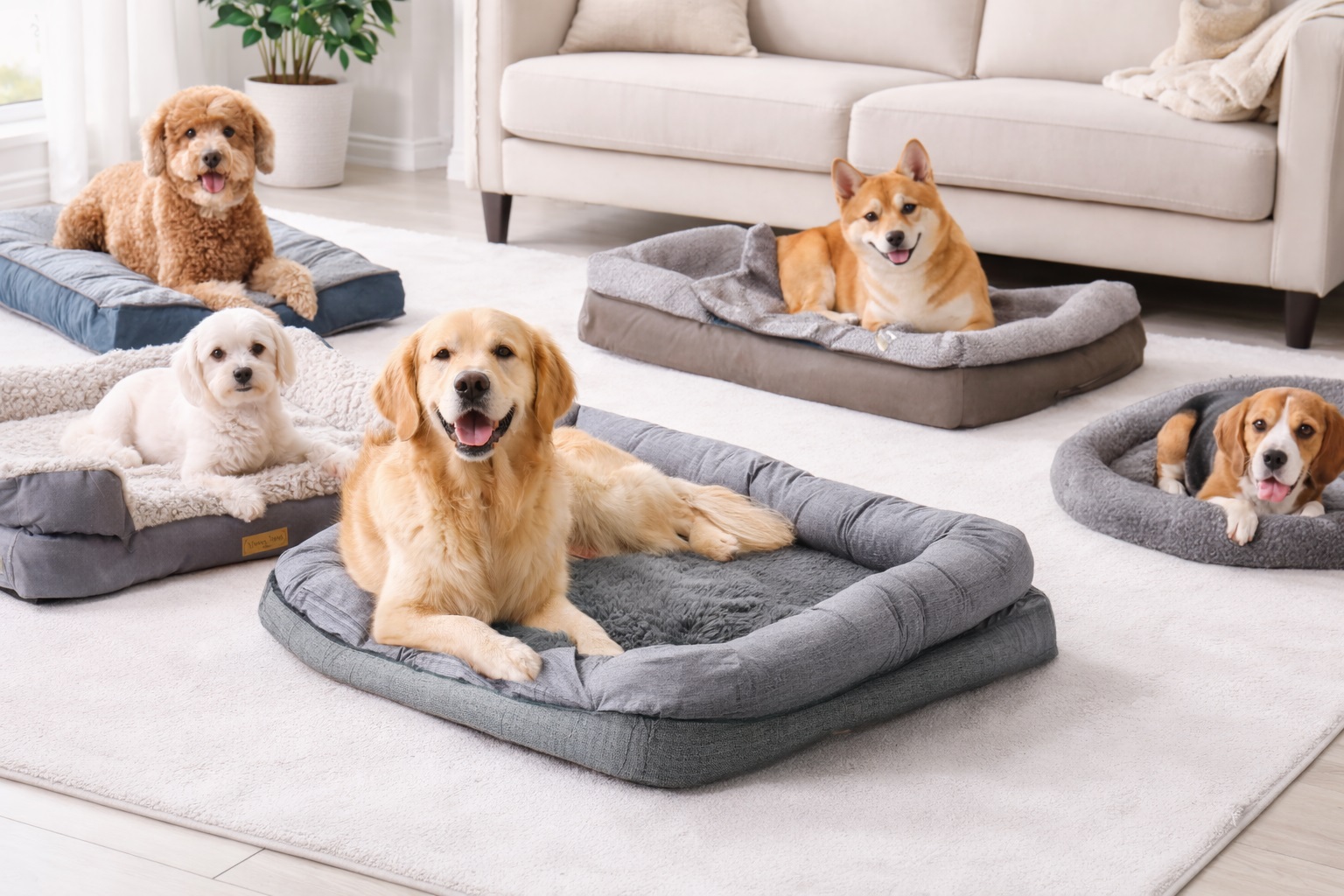
A dog bed accumulates fur, dander, drool, dirt tracked in from outside, and occasionally worse, faster than almost any other piece of household soft furnishing. For many owners, the deciding factor in choosing a bed is not comfort alone but a genuine, realistic answer to one question: how quickly and completely can this actually be cleaned once it gets dirty, rather than how it looks in a product photo on day one.
This guide focuses specifically on the design features that determine real-world cleanability — removable covers versus fully washable one-piece construction, wipeable non-porous surfaces versus absorbent fabric, and drying time, which matters just as much as washing convenience since a bed that stays damp for two days is not a practical option for a dog that needs somewhere to sleep every night. We also cover waterproof liners, which protect the internal filling or foam from moisture that would otherwise cause permanent odor no amount of surface washing can fix.
Dogs that are young puppies still working on housetraining, senior dogs with occasional incontinence, dogs that spend time outdoors before coming back in, and heavy shedders all have a stronger need for a genuinely easy-to-clean bed than a dog that stays clean, dry, and indoors at all times. We considered each bed style against these different use cases rather than assuming one universal standard of easy cleaning applies equally to every household.
It's also worth setting a realistic expectation from the outset: no dog bed is entirely maintenance-free, and even the most washable design still benefits from a regular cleaning routine rather than only being washed once visibly soiled. The beds below simply reduce the effort, time, and difficulty involved in that routine, turning what could be an occasional dreaded chore into a quick, manageable part of normal pet care. Use the comparison tools and detailed reviews below to find the style that matches how often your household actually needs to clean up after your dog.
Cost also factors into this decision differently than it does for a bed chosen purely on comfort or appearance. A bed with a genuinely washable, well-constructed cover and a durable liner may cost somewhat more upfront than a basic filled cushion, but it typically avoids the far larger cost of replacing an entire bed early once odor or staining becomes permanent. Viewed over several years of ownership rather than at the moment of purchase, an easy-to-clean design is frequently the more economical choice even before factoring in the time saved on maintenance itself.
Top Picks Reviewed
1. Fully Machine-Washable Bed with Removable Foam Insert – Best for Complete Weekly Cleaning
A bed built with a fully removable, zippered cover and a separate foam or fiber insert allows the entire cover to go into a standard washing machine while the insert itself is either spot-cleaned or removed to air out. This two-part construction is the gold standard for genuinely complete cleaning, since nothing about the sleeping surface is left un-washable the way a sewn-shut cushion would be. The zipper should be positioned so the insert can be fully extracted, not just partially accessed.
- Pros:
- Entire cover machine washes for genuinely complete cleaning
- Separate insert can be aired out or spot-treated independently
- No sewn-shut sections that trap odor permanently
- Suitable for weekly washing without excessive wear on the product
- Cons:
- Insert itself may still require air-drying time between washes
- Larger sizes may not fit standard home washing machines
Best For: Households that wash the bed weekly as routine maintenance rather than only after visible soiling.
Why We Recommend It: A fully removable cover with a genuinely separable insert eliminates the common frustration of a bed advertised as washable that in practice only allows partial cleaning around a fixed, unwashable cushion core.
2. Waterproof-Lined Bed – Best for Puppies and Incontinent Senior Dogs
A waterproof inner liner sits between the outer fabric cover and the internal filling or foam, preventing urine, drool, or spills from soaking through to the material that would otherwise hold permanent odor. This design is essential for puppies still housetraining and senior dogs with incontinence issues, since it protects the expensive internal component of the bed while still allowing the visible outer cover to be washed normally.
- Pros:
- Waterproof liner protects internal filling from moisture damage
- Prevents permanent odor from accidents soaking into foam
- Outer cover still washes normally like a standard bed
- Extends the effective lifespan of the bed considerably
- Cons:
- Liner material can feel slightly less soft against direct contact
- Liner adds a modest amount to the overall cost
Best For: Puppies in the housetraining process, senior dogs with incontinence, and any dog recovering from an illness involving accidents.
Why We Recommend It: Without a waterproof liner, a single significant accident can permanently ruin the internal foam or filling of an otherwise good bed, regardless of how well the outer cover washes. The liner is inexpensive insurance against replacing the entire product after one bad night.
3. Wipeable Elevated Mesh Cot – Best for Fastest Possible Cleanup
An elevated cot with a taut, non-porous mesh or vinyl-coated fabric surface can be wiped down or hosed off in under a minute, with no filling to absorb moisture, odor, or debris in the first place. This is the fastest possible cleaning method among all dog bed styles, since there is nothing to remove, unzip, or launder — a simple wipe with a cloth or a quick rinse restores the surface to a clean state immediately.
- Pros:
- Fastest cleaning method of any dog bed style — wipe or rinse only
- No filling means nothing to absorb or retain odor over time
- Dries within minutes rather than requiring a full laundry cycle
- Suitable for both indoor use and covered outdoor areas
- Cons:
- Offers noticeably less cushioning than a filled or foam bed
- Some dogs need an adjustment period before accepting the firmer surface
Best For: Households wanting the absolute fastest cleanup, and dogs that spend time both indoors and on a covered patio.
Why We Recommend It: When cleaning speed and simplicity is the single top priority, nothing beats a surface with no filling at all. The tradeoff in plushness is worth it for owners managing frequent messes, active shedding, or a dog that regularly tracks in dirt.
4. Stain-Resistant Woven Fabric Bolster – Best for Everyday Durability with Regular Wear
A bolster bed built with a tightly woven, stain-resistant fabric — often a treated canvas or ballistic-style weave — resists absorbing spills and stains that would set permanently into a plush or looped fabric. The tight weave also resists snagging and pilling, which matters for a bed that gets washed frequently over its lifetime, since repeated laundering is often what shortens a lower-quality fabric's usable life rather than daily wear alone.
- Pros:
- Tightly woven fabric resists staining and snagging
- Holds up well to frequent washing over years of use
- Still provides a genuinely comfortable bolster-style sleeping surface
- Available in darker tones that disguise dirt between washes
- Cons:
- Fabric can feel slightly less plush than looser, softer weaves
- Higher-quality woven fabric adds to the overall cost
Best For: Dogs that need a bed washed frequently over a long lifespan without the fabric degrading quickly.
Why We Recommend It: Frequent washing is often harder on a bed's fabric than daily use by the dog itself, and a tightly woven, stain-resistant material is built specifically to withstand that repeated laundering cycle without pilling or thinning.
5. One-Piece Molded Foam Bed with Sealed Surface – Best for Outdoor-Indoor Transition Dogs
A one-piece bed with a molded foam base and a sealed, non-absorbent surface coating avoids the seams and stitched sections where dirt and moisture typically accumulate in a standard filled bed. Because the surface is sealed rather than fabric-covered, it resists absorbing dirt tracked in from outside and wipes clean rather than requiring a full wash cycle for routine maintenance.
- Pros:
- Sealed surface resists absorbing dirt and moisture
- No seams or stitching to trap debris over time
- Wipes clean for routine daily maintenance
- Suitable for dogs that transition frequently between outdoors and indoors
- Cons:
- Firmer surface than a plush or filled alternative
- Less insulating in cold weather than a fabric-covered design
Best For: Dogs that move frequently between yard time and indoor rest, tracking in dirt and moisture regularly.
Why We Recommend It: A seamless, sealed surface directly addresses the specific problem of dirt and moisture working into stitched seams, which is where most standard beds develop persistent odor over time regardless of how often the removable cover is washed.
6. Quick-Dry Microfiber Mat – Best for Fast Turnaround Between Washes
A flat mat made from quick-dry microfiber absorbs moisture from a damp dog or minor spill while drying substantially faster than standard cotton or plush fabric, thanks to the fine fiber structure that releases moisture quickly rather than holding it. For households washing a dog bed several times a week, drying time becomes as important as washing convenience, and this style shortens the gap during which the dog has no bed available.
- Pros:
- Dries considerably faster than standard cotton or plush fabric
- Absorbs moisture from damp dogs after outdoor activity
- Lightweight and simple to machine wash
- Compact enough to keep a spare on hand for rotation
- Cons:
- Thinner cushioning than a bolster or foam bed
- Less structured shape than a raised-edge design
Best For: Households washing bedding multiple times a week, and owners who want a spare bed in rotation while one is being laundered.
Why We Recommend It: Keeping two quick-dry mats in rotation means a clean bed is always available even while the other is mid-wash-cycle, which solves the practical gap that a single slower-drying bed creates for frequent washers.
7. Odor-Resistant Antimicrobial-Treated Bed – Best for Extending Time Between Washes
A bed treated with an antimicrobial fabric finish resists the bacterial growth responsible for lingering odor between washes, extending the practical time a bed stays fresh even under regular use. This does not replace washing altogether, but it meaningfully reduces how quickly odor becomes noticeable, which matters for households that cannot realistically wash bedding as often as they would like given other time demands.
- Pros:
- Antimicrobial treatment slows bacterial odor buildup between washes
- Extends the practical time a bed stays fresh under regular use
- Still fully washable when a full clean is needed
- Useful for households with limited time for frequent laundering
- Cons:
- Antimicrobial treatment effectiveness diminishes gradually after repeated washing
- Does not eliminate the need for periodic washing entirely
Best For: Busy households that cannot wash bedding as frequently as they would like but still want to manage odor effectively.
Why We Recommend It: Not every household can realistically commit to weekly washing, and an antimicrobial-treated fabric provides a meaningful buffer against odor buildup during the gaps between cleaning sessions.
8. Seamless Vinyl-Coated Bolster Bed – Best for Combining Cushioning with Wipeable Cleanup
A bolster bed built with a seamless, vinyl-coated fabric offers raised-edge structure and a degree of cushioning while still resisting moisture absorption the way a fabric bolster would. The coating means spills and accidents largely stay on the surface rather than soaking through, allowing a quick wipe-down to handle most everyday messes without a full wash cycle, while an occasional deeper clean handles anything that needs more attention.
- Pros:
- Vinyl coating resists moisture absorption while keeping bolster structure
- Wipes clean for most everyday messes without a full wash
- Seamless construction limits places for dirt to accumulate
- More cushioning than a bare mesh or hard-surface option
- Cons:
- Coating can feel less soft than uncoated fabric
- Occasional deep cleaning still needed despite easy wipe maintenance
Best For: Households wanting a middle ground between a fully wipeable bed and a plush fabric bolster.
Why We Recommend It: Not every household wants to sacrifice all cushioning for cleaning speed, and a vinyl-coated bolster splits the difference by handling routine messes with a wipe while still offering a raised, structured sleeping surface.
9. Removable-Cover Orthopedic Mat – Best for Cleaning Without Sacrificing Joint Support
An orthopedic foam mat with a fully removable, machine-washable outer cover addresses a common complaint with supportive beds — that the very foam responsible for joint comfort is often the hardest part of the bed to keep clean. Here, the foam core stays permanently protected by an inner liner while the visible, contact-facing cover comes off completely for regular washing, giving joint-sensitive dogs the support they need without the compromise of a bed that cannot be properly cleaned.
- Pros:
- Fully removable cover keeps supportive foam genuinely clean
- Inner liner protects foam core from moisture during washing
- Maintains joint support benefits alongside cleaning convenience
- Suitable for senior dogs who need both comfort and hygiene
- Cons:
- Costs more than a basic orthopedic bed without a removable system
- Foam core itself still cannot be machine washed directly
Best For: Senior or joint-sensitive dogs whose owners also prioritize regular, thorough washing.
Why We Recommend It: Joint support and easy cleaning are often treated as competing priorities, but a well-designed removable-cover system delivers both without forcing a compromise between comfort and hygiene.
Buying Guide: How to Choose the Best Easy-to-Clean Dog Bed
Use these factors to match a bed's cleaning method to your household's actual routine and your dog's specific mess-generating habits. Cleaning ease is not a single property but a combination of several separate factors — how the cover comes off, what happens to the material underneath, how long everything takes to dry, and how well the fabric resists absorbing odor in the first place — so it helps to evaluate each factor individually rather than relying on a single generic washable label on a product listing.
1. Decide Between Wipeable and Washable
A wipeable, sealed surface cleans faster but offers less cushioning, while a washable fabric bed offers more comfort but requires a full laundry cycle. Match this tradeoff to how frequently cleaning is actually needed in your household, and consider your dog's typical mess level honestly rather than optimistically assuming light cleaning will always be enough.
2. Verify the Cover Is Genuinely Removable
Some beds are marketed as washable but only allow partial access to the surface fabric while a sewn-shut section remains untouched. Confirm the entire sleeping surface, not just an outer layer, can be removed or cleaned.
3. Check Drying Time, Not Just Washing Convenience
A bed that takes two days to dry leaves a dog without bedding for an impractical stretch of time. Quick-dry fabrics or a spare bed in rotation solve this gap for households washing bedding frequently. Thicker foam inserts in particular can take considerably longer to dry through fully than the outer fabric cover, so check both components separately before assuming the whole bed dries quickly.
4. Add a Waterproof Liner for Accident-Prone Dogs
Puppies, senior dogs, and dogs recovering from illness benefit from a liner that protects internal filling from moisture damage, which otherwise causes odor no amount of surface washing can fully resolve. Even dogs that are fully housetrained can benefit from this protection during illness, travel stress, or a change in routine that temporarily disrupts normal habits.
5. Consider Seam Placement
Seams and stitched sections are where dirt and moisture typically accumulate over time in a standard bed. A design with minimal seams, or seams positioned away from high-contact areas, stays cleaner longer.
6. Match Fabric Weave to Expected Wear
A tightly woven, stain-resistant fabric holds up to frequent washing better than a loose or plush weave, which tends to pill and thin faster under repeated laundry cycles. If the bed is washed weekly or more, prioritize this weave quality over a softer texture that may feel nicer initially but degrades sooner.
7. Factor In Wash Temperature Requirements
Some covers require cold water and air drying rather than hot water and machine drying, which affects how thoroughly bacteria and odor are actually eliminated during washing. Check the care label before assuming full sanitization, since a cover that can only be washed cold will not sanitize as completely as one rated for a hot wash cycle.
8. Keep a Spare Bed for Rotation
Households washing bedding several times a week benefit from a second, lower-cost bed kept in rotation, ensuring a clean option is always available while the other is being laundered and dried.
9. Consider Antimicrobial Treatments for Busy Households
An antimicrobial fabric finish extends the practical time between washes for households that cannot commit to a strict weekly laundering schedule, though it does not eliminate the need for periodic washing.
10. Prioritize Non-Porous Surfaces for Outdoor-Indoor Dogs
Dogs that move between yard time and indoor rest benefit from a sealed or non-porous surface that resists absorbing tracked-in dirt and moisture rather than a fabric that soaks it in. This is especially relevant during wet seasons when paws and coats carry more moisture indoors than usual.
11. Weigh Comfort Against Cleaning Priority Honestly
The easiest beds to clean are typically firmer and less plush than a heavily filled cushion. Decide how much comfort you are willing to trade for cleaning speed based on your dog's actual needs, and consider keeping one plush bed alongside a wipeable option rather than forcing a single bed to serve both purposes equally well.
12. Check Manufacturer Washing Instructions Before First Use
Following the specific wash and dry instructions from day one preserves both the cleaning ease and the structural integrity of the bed, whereas ignoring them can shrink fabric, degrade waterproof liners, or void a warranty. Keeping the original care tag or noting the instructions somewhere accessible avoids guesswork months later when the label may have worn away from repeated washing.
Frequently Asked Questions
1. How often should an easy-to-clean dog bed be washed?
Weekly washing is a reasonable baseline for daily use, with more frequent cleaning appropriate for puppies, senior dogs, or households managing heavy shedding or outdoor activity.
2. Are wipeable beds as comfortable as filled beds?
Generally no — wipeable, sealed-surface beds trade some cushioning for cleaning speed. Many households pair a wipeable option with a plush bed for the dog to alternate between.
3. Do waterproof liners make a bed less comfortable?
Slightly, since the liner sits beneath the visible fabric, but the tradeoff is usually worthwhile for dogs prone to accidents given how effectively it protects the internal filling.
4. Is the most expensive easy-to-clean dog bed always the best?
Not always. Price often reflects fabric quality and liner construction, but many mid-range options clean just as effectively for everyday household needs.
5. How long should a quality easy-to-clean dog bed last?
A well-built option typically lasts two to four years with regular washing, assuming the fabric and any liner hold up to the frequency of laundering your household requires. Beds washed several times weekly may wear somewhat faster than this range, which is worth accounting for when comparing warranty terms.
6. Can I return an easy-to-clean dog bed if it doesn't perform as expected?
Most retailers offer a return window of two to four weeks. Test the washing and drying process early within that window to confirm real-world performance.
7. What should I prioritize when buying an easy-to-clean dog bed?
Start with how often your household realistically needs to clean the bed, then match the cover type, liner, and fabric weave to that actual frequency.
8. Does brand name matter for easy-to-clean dog beds?
Established brands often provide clearer washing instructions and more consistent liner quality, though newer brands can perform just as well if reviewed carefully before purchase.
9. What causes persistent odor in a dog bed despite regular washing?
Moisture that has worked into unwashed internal filling or foam, often through seams or without a waterproof liner, is the most common cause of odor that survives repeated surface washing. Once foam has absorbed odor this deeply, replacing the insert is usually more effective than continuing to wash the outer cover alone.
10. Can a wipeable bed be used outdoors?
Many wipeable, sealed-surface designs work well on a covered patio or porch, since their non-absorbent material resists the moisture and dirt exposure that would damage a fabric-covered bed.
11. Should puppies always have a waterproof-lined bed?
During the housetraining period, yes — a waterproof liner protects the bed from the accidents that are a normal part of puppy development without requiring a full replacement afterward.
12. Is a spare bed worth buying for rotation?
For households washing bedding several times a week, yes. A second, lower-cost bed ensures a clean option is always available while the other dries.
Final Verdict
- Best for Complete Weekly Cleaning: Fully Machine-Washable Bed with Removable Foam Insert — nothing on the sleeping surface is left un-washable.
- Best for Puppies and Incontinent Senior Dogs: Waterproof-Lined Bed — protects internal filling from accident damage.
- Best for Fastest Possible Cleanup: Wipeable Elevated Mesh Cot — nothing to launder, just wipe or rinse.
- Best for Everyday Durability with Regular Wear: Stain-Resistant Woven Fabric Bolster — holds up to frequent washing over years.
- Best for Outdoor-Indoor Transition Dogs: One-Piece Molded Foam Bed with Sealed Surface — no seams to trap dirt or moisture.
- Best for Fast Turnaround Between Washes: Quick-Dry Microfiber Mat — dries fast enough for frequent washing cycles.
- Best for Extending Time Between Washes: Odor-Resistant Antimicrobial-Treated Bed — a buffer for busy laundering schedules.
- Best for Combining Cushioning with Wipeable Cleanup: Seamless Vinyl-Coated Bolster Bed — a middle ground between comfort and cleaning speed.
- Best for Cleaning Without Sacrificing Joint Support: Removable-Cover Orthopedic Mat — supportive foam that stays genuinely clean.
The right easy-to-clean dog bed comes down to matching the cleaning method to how your household and your dog actually generate mess, rather than assuming every washable bed solves the same problem equally well. Use the buying guide and detailed reviews above to choose a bed that stays genuinely fresh with a routine you can realistically maintain, and don't hesitate to keep two beds in rotation if your household's cleaning schedule benefits from always having a dry, ready option on hand.