Best Easy-to-Clean Pet Vacuums: Less Time Maintaining, More Time Living
Every pet vacuum eventually needs emptying, its filter needs cleaning, and its brush roll needs clearing of wound hair — the difference between a genuinely easy-to-clean model and a frustrating one shows up in exactly how long each of those steps takes, week after week. A vacuum that takes ninety seconds to empty and wipe down encourages regular use, while one that requires scraping compacted hair out of a narrow bin opening or prying apart a brush roll housing with a screwdriver quietly discourages the very maintenance that keeps it performing well.
Owners of shedding pets vacuum far more often than the average household, which means maintenance friction compounds fast. A five-minute difference in cleanup time per session adds up to hours across a year of regular use, and that time cost is rarely mentioned on a spec sheet or product listing. What actually determines whether a vacuum stays pleasant to own long-term is the emptying mechanism, the filter's washability, and how the brush roll is designed to shed or release hair rather than trap it.
This guide compares three categories of vacuum built around minimizing that maintenance burden, walks through the specific design details worth checking before buying, and answers the most common questions pet owners have about keeping a vacuum genuinely low-effort to maintain over its full lifespan.
Top 3 Easy-to-Clean Pet Vacuums (Detailed Reviews)
1. Self-Cleaning Brush Roll Stick Vacuum – Best for Minimal Manual Unclogging
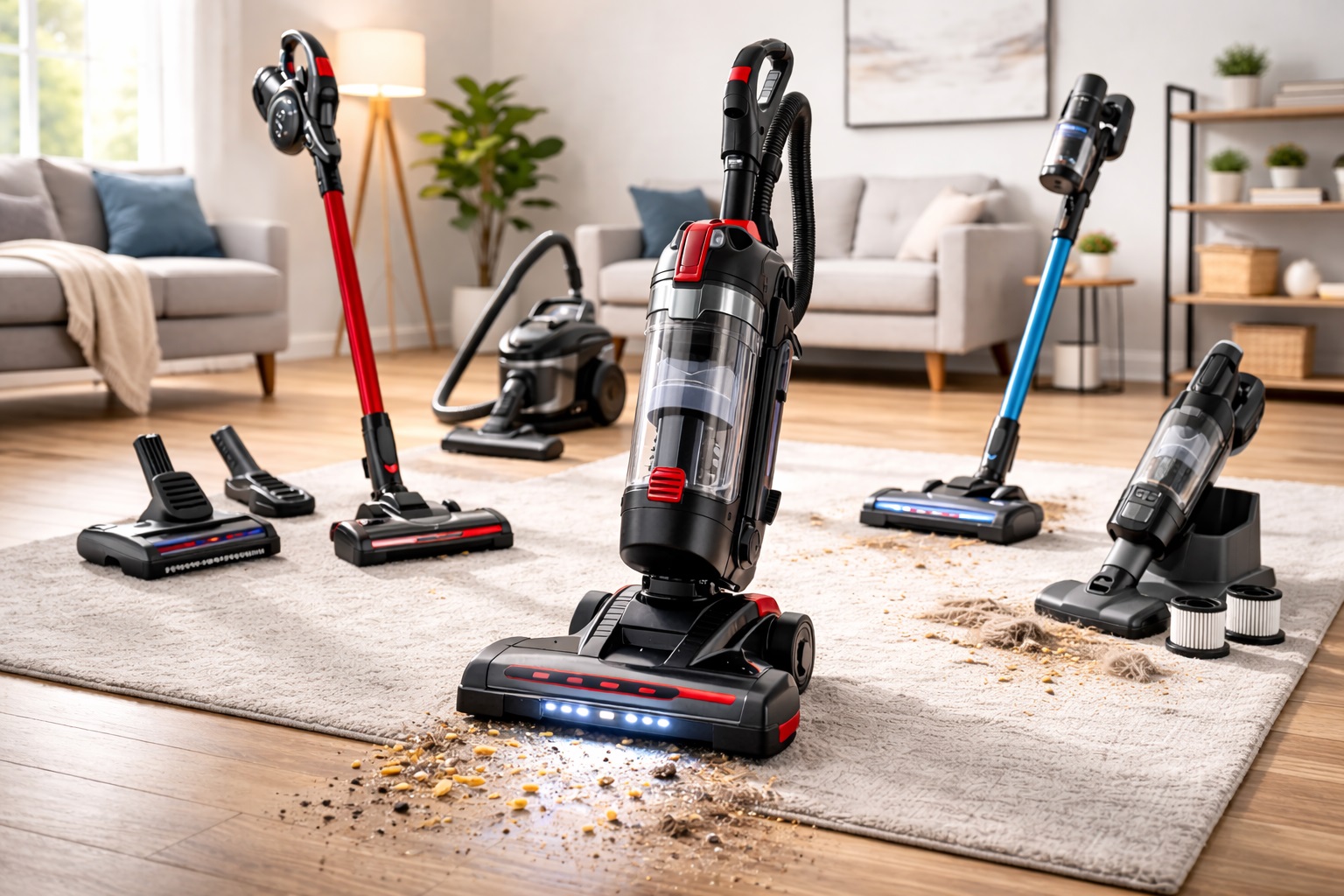
A stick vacuum with a genuine self-cleaning brush roll design uses a comb or guide mechanism that strips hair off the roller automatically as it spins, ejecting it directly into the dustbin rather than letting it wind around the bristles. For pet owners, this single feature eliminates the single most tedious maintenance task associated with vacuuming — cutting wound hair free from a jammed brush roll with scissors. Combined with a one-touch dustbin release, this category consistently produces the lowest weekly maintenance time of any pet vacuum type.
- Pros:
- Self-cleaning brush roll virtually eliminates manual hair removal
- One-touch dustbin ejection reduces contact with collected hair
- Lightweight cordless design encourages frequent quick use
- Fewer parts requiring regular disassembly for cleaning
- Cons:
- Self-cleaning mechanisms add some upfront cost over basic brush rolls
- Battery runtime still limits single-session cleaning area
Best For: Pet owners who vacuum frequently and want to avoid manual brush roll maintenance almost entirely between deep cleans.
Why We Recommend It: The self-cleaning brush roll design directly targets the most common complaint about pet vacuums — the recurring need to physically remove tangled hair. Removing that task from the routine is what makes this category genuinely easier to live with over months of ownership, not just at initial purchase.
Owners switching from a standard bristle brush roll to a self-cleaning design typically notice the difference within the first week, since the absence of a dreaded weekly untangling session is immediately apparent rather than something that only becomes clear after months of comparison.
Because the mechanism actively pushes hair toward the dustbin rather than passively resisting tangling, this design also tends to maintain more consistent suction between filter cleanings, since less hair accumulates around the brush motor housing over time.
2. Bagless Upright with Direct-Empty Dustbin – Best for Fast, Low-Mess Emptying
An upright vacuum with a direct-empty dustbin design lets the entire bin drop its contents straight into a trash bag with a single latch release, avoiding the need to reach in and pull out compacted, matted pet hair by hand. This matters more for pet owners than it does for general households, since pet hair and dander tend to clump and compact inside a bin in a way that loose dust and debris typically does not, making a poorly designed bin opening genuinely unpleasant to empty.
- Pros:
- Direct-drop emptying avoids hands-on contact with compacted pet hair
- Large bin opening reduces jamming during emptying
- Washable filter simplifies the second most common maintenance task
- Sturdy design tends to hold up well to frequent emptying over time
- Cons:
- Heavier and less portable than stick vacuum alternatives
- Corded design limits where it can be conveniently emptied
Best For: Households with heavy shedding pets who empty the dustbin frequently and want that step to be quick and low-mess every time.
Why We Recommend It: For heavy shedders who empty the bin multiple times per session, the direct-empty mechanism removes the most physically unpleasant part of vacuum maintenance. A vacuum this easy to empty gets emptied properly and promptly rather than left half-full out of reluctance to deal with it.
The larger bin opening also makes it easier to spot and remove any foreign debris — a stray toy fragment or bit of packaging — that pet households sometimes vacuum up along with hair, without needing to disassemble the bin further to retrieve it.
Many owners of this category also report that the wider bin opening makes it simpler to give the bin an occasional deeper wipe-down, rather than only being able to shake or scrape loose the majority of the hair and leaving a fine residue behind each time.
3. Robot Vacuum with Self-Empty Base – Best for Near-Zero Manual Maintenance
A robot vacuum paired with a self-emptying base station transfers collected pet hair directly from the robot's small onboard bin into a larger sealed bag or container at the base, going weeks between the owner needing to touch collected debris at all. This is the closest a pet vacuum category comes to hands-off maintenance, since even the routine emptying task is automated alongside the cleaning itself.
- Pros:
- Self-empty base handles bin emptying automatically for weeks at a time
- Robot's own dustbin rarely needs manual contact with pet hair
- Automated scheduling removes the need to remember to vacuum at all
- Sealed base bags reduce dust and dander exposure during emptying
- Cons:
- Base station bags are a recurring consumable cost
- Brush and sensor maintenance still requires occasional manual attention
Best For: Pet owners who want the least possible hands-on maintenance and are comfortable paying a premium and replenishing base station bags periodically.
Why We Recommend It: This category solves the maintenance problem most completely by automating the emptying step itself, not just making the manual version easier. For owners who specifically dislike the physical act of dealing with collected pet hair, this is the most effective solution available.
The trade-off of recurring bag costs is worth weighing against the time saved, but for many owners the ability to go a full month without opening a dustbin at all is worth the modest ongoing expense.
This category also tends to appeal strongly to owners managing shedding alongside a busy schedule, since it removes not just the physical task of emptying but the mental load of remembering to do it, freeing attention for other parts of daily pet care instead.
Buying Guide: How to Choose the Best Easy-to-Clean Pet Vacuum
Maintenance ease is determined by several specific design choices rather than a single feature, so check each of the following before assuming a model will actually stay low-effort over time.
1. Brush Roll Self-Cleaning Mechanism
Look specifically for guide combs or shedding mechanisms built into the brush roll itself, not just a description of tangle resistance. True self-cleaning designs actively eject hair during operation rather than simply slowing how fast it accumulates.
Owner reviews that describe several months of use without ever needing scissors to cut hair free are the strongest confirmation that a self-cleaning claim holds up in practice rather than being a marketing term applied loosely.
It also helps to check whether the self-cleaning mechanism is described as working on both long and short pet hair, since some designs perform noticeably better on one hair type than the other depending on the comb spacing used.
2. Dustbin Emptying Mechanism
A bottom-drop or direct-empty bin design minimizes hands-on contact with collected hair, while narrow-necked or top-loading bins often require more scraping and shaking to empty fully. Test or watch a demonstration video of the emptying process before buying where possible.
Pay attention to whether the bin needs to be emptied over a trash can at an awkward angle, since a design that requires holding the bin upside down and shaking it repeatedly adds meaningful friction compared to a clean single-motion release.
A bin with a wide, unobstructed opening and no internal baffles for hair to catch on will empty more completely on the first attempt, whereas a narrower or more complex internal shape often leaves a residue of compacted hair that requires a second pass to remove.
3. Filter Washability and Access
Washable filters lower long-term cost, but ease of access matters just as much — a filter that requires partial disassembly to remove is more likely to be neglected than one that pulls out with a single latch.
Confirm the manufacturer's recommended drying time for washable filters as well, since a filter that must air dry for a full day before reinsertion can leave the vacuum unusable at an inconvenient moment if only one filter is included.
Some manufacturers sell a second filter specifically so one can dry while the other stays in use, which is worth considering as an inexpensive add-on purchase for households that vacuum daily and cannot afford a day of downtime between washes.
4. Number of Parts Requiring Regular Cleaning
Some vacuums route air through multiple filters, foam inserts, and separators that all need periodic attention, while simpler designs consolidate filtration into one or two washable components. Fewer parts generally means less total maintenance time per session.
Reading the maintenance section of the product manual before buying, when available online, gives a realistic preview of the full cleaning routine rather than relying on marketing copy that tends to emphasize convenience broadly without listing every step involved.
Vacuums with a single combined filter and bin unit that can be rinsed as one piece tend to score better on ease of maintenance than designs that separate filtration into several small components each requiring individual attention.
5. Tool-Free Disassembly
Models that allow the brush roll, filter, and dustbin to be removed without tools are significantly easier to maintain consistently. Any component that requires a screwdriver to access is far less likely to be cleaned on a regular schedule.
Latches and quick-release clips that click firmly into place also matter for the reverse process — reassembly should feel just as straightforward as disassembly, since a fiddly reassembly step discourages taking the vacuum apart for cleaning in the first place.
Color-coded release buttons or clearly molded grip points are small design touches that make tool-free disassembly noticeably faster in practice, especially for anyone doing the cleaning quickly between other daily tasks.
6. Odor Containment During Emptying
Pet hair and dander can carry a noticeable odor when compacted inside a dustbin, particularly from pets with skin conditions or from litter tracked in alongside hair. A sealed bin design reduces the smell released during emptying compared to an open-top bin.
Emptying the bin promptly after each session, rather than letting hair sit and compact over several days, also meaningfully reduces odor regardless of the specific bin design chosen.
An occasional wipe-down of the bin's interior with a damp cloth, beyond simply emptying it, helps prevent odor from building up in seams and corners that loose hair alone does not fully address over repeated use.
7. Self-Empty Base Station Value
For robot vacuums, a self-empty base extends the time between manual interventions substantially, but factor in the ongoing cost of replacement bags when comparing total value against a standard robot vacuum without this feature.
Estimate your household's typical bag replacement frequency based on shedding volume before committing, since heavy-shedding, multi-pet homes will burn through base station bags considerably faster than a single light-shedding cat household.
Some base stations also accept generic or third-party bags at a lower cost than the manufacturer's own, which is worth checking if ongoing consumable spending is a concern for your household budget.
8. Handheld Conversion for Spot Cleaning
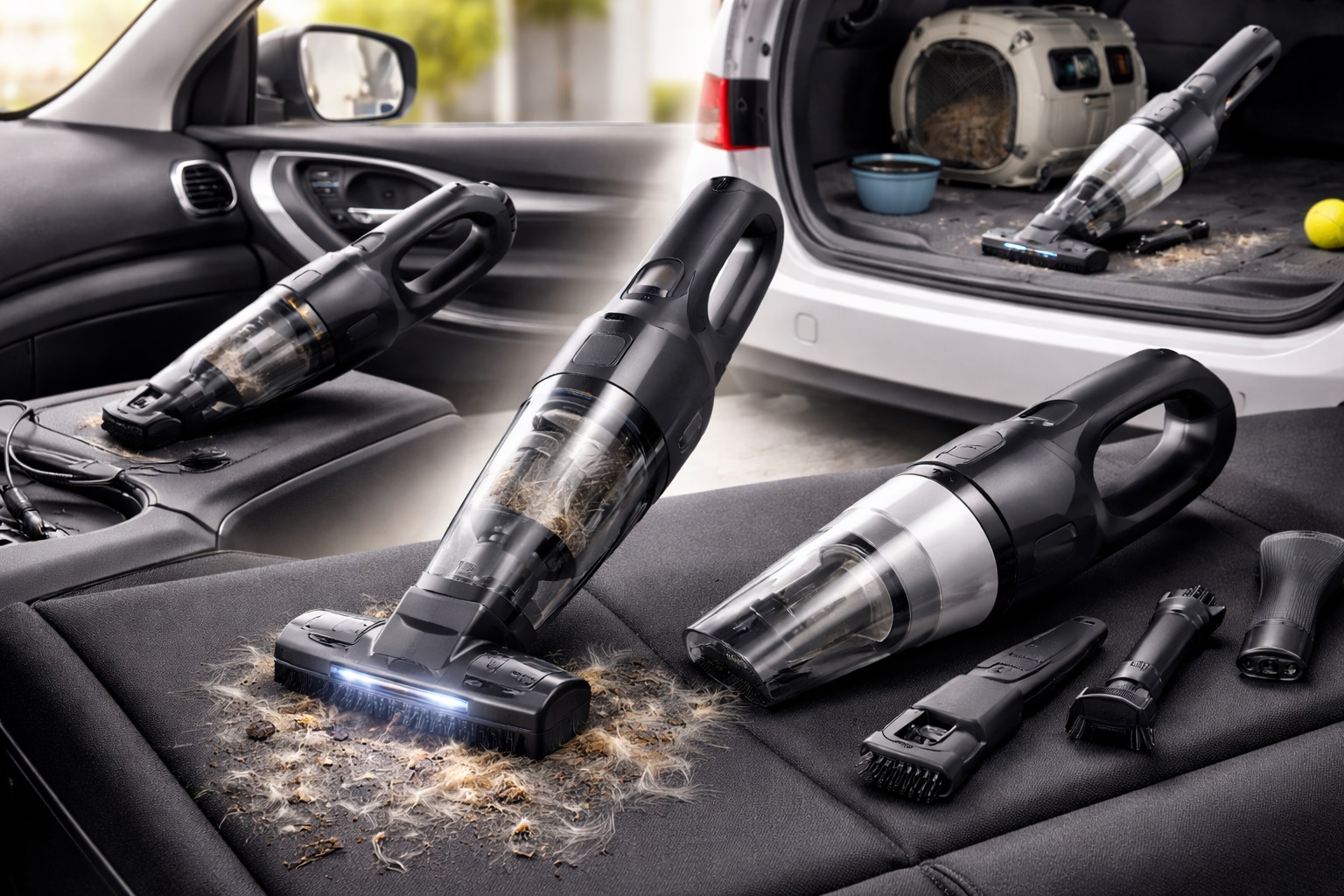
A vacuum that converts easily to a handheld mode for furniture, stairs, and car interiors reduces the need for a second dedicated tool, and by extension, reduces the total number of devices that need separate maintenance routines.
Check that the handheld attachment itself is easy to empty and clean, since a difficult-to-clean secondary attachment can undermine the convenience of an otherwise easy-to-maintain primary unit.
A quick-attach mechanism that does not require awkward twisting or force to switch between modes also encourages more frequent use of the handheld function rather than reaching for a separate dedicated hand vacuum instead.
9. Material Resistance to Staining and Odor Absorption
Dustbins made from smooth, non-porous plastic resist staining and lingering odor better over time than textured or porous materials, which can absorb odor from repeated pet hair and dander exposure.
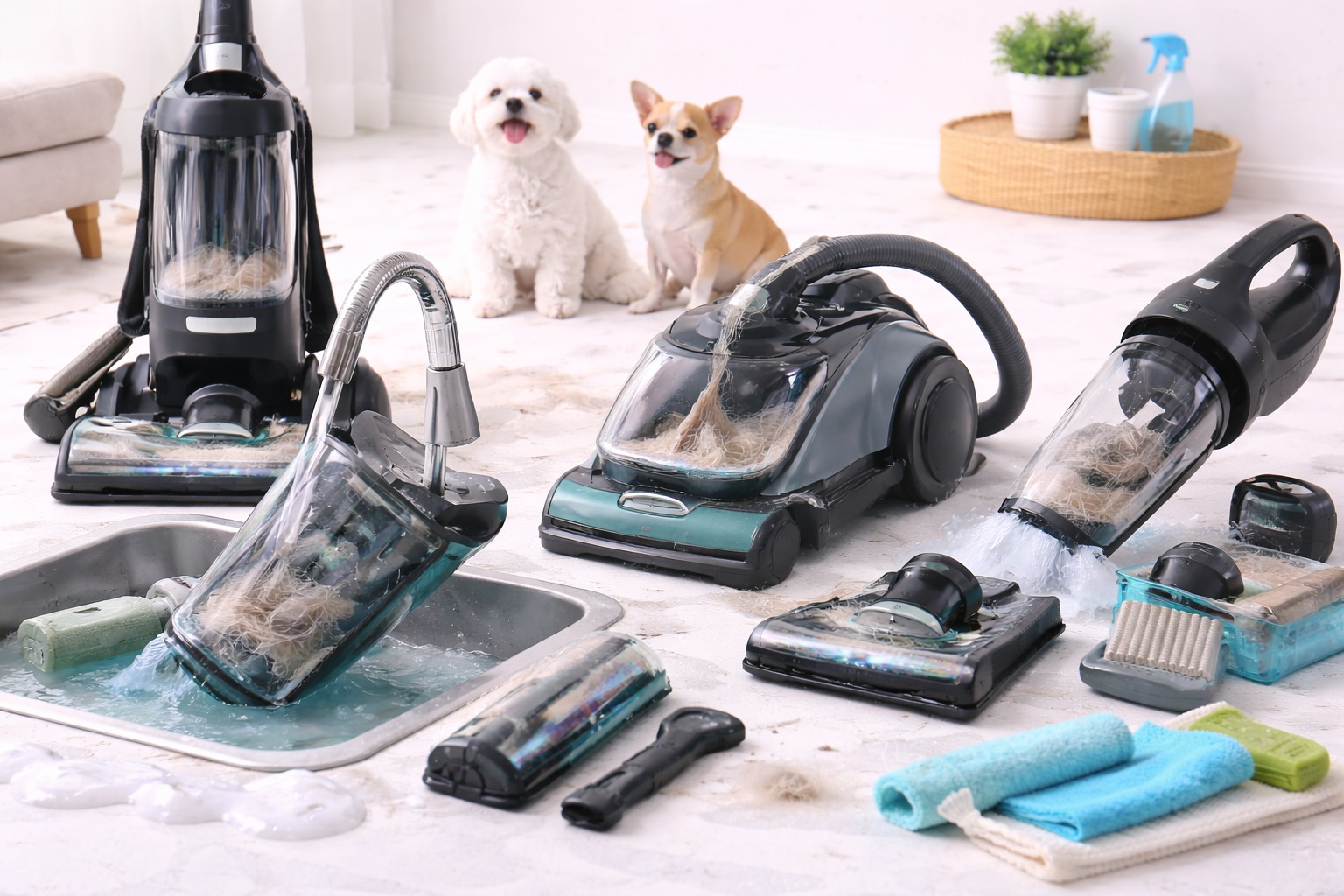
A bin that can be occasionally rinsed with water without damaging seals or electronics adds a deeper level of cleanliness beyond simple emptying, which some pet owners find worthwhile every few months.
Checking the manufacturer's guidance on whether a bin is safe to rinse with water before doing so is important, since some electronic components inside a bin assembly are not designed to tolerate direct water exposure.
10. Manufacturer Cleaning Instructions and Support
Clear, accessible cleaning instructions — ideally including video demonstrations — make it easier to maintain a vacuum correctly and confidently. Vague or minimal instructions increase the odds that maintenance is done incorrectly or skipped altogether.
Manufacturers who provide responsive customer support for maintenance questions also tend to build vacuums with fewer confusing or ambiguous cleaning steps in the first place, since the two generally reflect the same underlying attention to design.
Checking whether a manufacturer maintains an active support forum, chat line, or video library specifically for maintenance topics is a good early signal of how seriously they treat the ongoing ownership experience beyond the initial sale.
11. Replacement Filter and Brush Roll Cost
Even easy-to-clean designs eventually need replacement parts. Confirm that filters and brush rolls remain reasonably priced and available, since an otherwise low-maintenance vacuum becomes a hassle if replacement parts are expensive or hard to find.
Buying a spare filter at the time of initial purchase is a practical way to avoid a maintenance gap later, particularly for washable filters that require a full drying cycle between uses.
Comparing replacement part prices across two or three similarly priced models before purchase, rather than after the vacuum's first filter wears out, avoids an unpleasant surprise a year or two into ownership.
12. Real Owner Feedback on Long-Term Maintenance
Initial impressions rarely capture how a vacuum performs after six months of regular pet hair maintenance. Prioritize reviews written well after purchase that specifically describe ongoing cleaning experience rather than only unboxing impressions.
Look for recurring complaints across multiple independent reviews rather than a single negative account, since an isolated bad experience is less informative than a consistent pattern several different owners describe.
Reviews left between six months and two years after purchase are especially valuable, since that window is typically when early wear on brush rolls, filters, and latches first becomes noticeable enough for owners to mention it.
Frequently Asked Questions
1. What makes a pet vacuum genuinely easy to clean?
The combination of a self-cleaning or tangle-resistant brush roll, a direct-empty dustbin, and an easily accessible washable filter determines most of the real-world maintenance experience. Vacuums missing any one of these three elements tend to feel noticeably more effortful over time, even if the others are well designed, since a single weak point becomes the maintenance bottleneck for the whole machine.
2. How often does a pet vacuum's filter need cleaning?
Most manufacturers recommend washing filters every few weeks under regular pet hair use, though heavier shedding households may need to check more frequently. Following the specific manufacturer schedule rather than guessing helps maintain consistent suction performance, and a quick visual check for visible buildup between scheduled washes is a good habit regardless of the recommended interval.
3. Are self-cleaning brush rolls actually effective, or just marketing?
Genuine self-cleaning designs with guide combs or active shedding mechanisms are noticeably effective at reducing manual hair removal, though the term is sometimes used loosely, so checking detailed owner reviews for a specific model is worthwhile before assuming a claimed feature performs as expected. Look specifically for reviews mentioning long-haired pets, since that is where self-cleaning claims are tested most rigorously.
4. Do easy-to-clean vacuums sacrifice suction power for convenience?
Not necessarily. Maintenance ease and suction power are largely independent design decisions, and many easy-to-clean models maintain strong performance alongside their low-maintenance features. The two qualities come from different parts of the engineering process, so there is no inherent reason one must be sacrificed for the other.
5. Is the most expensive easy-to-clean pet vacuum always the best?
Not always. Some mid-range models include the specific maintenance-friendly features that matter most — self-cleaning brush rolls and direct-empty bins — without the added cost of premium branding or unrelated smart features. Compare the specific maintenance features present rather than assuming price alone reflects how easy a model is to maintain.
6. How long should a quality easy-to-clean pet vacuum last?
With consistent, easy maintenance actually being performed regularly rather than skipped, these vacuums often last as long or longer than standard models, typically two to five years depending on build quality and usage frequency. Ironically, a vacuum that is harder to maintain sometimes has a shorter effective lifespan simply because owners skip upkeep that would have extended it.
7. Can I return an easy-to-clean pet vacuum if it doesn't suit me?
Most retailers offer a 15 to 30 day return window. Test the full maintenance cycle — emptying, filter cleaning, and brush roll clearing — within that window rather than only testing suction performance, since maintenance ease is often the entire reason for choosing this category of vacuum in the first place.
8. What should I prioritize when buying an easy-to-clean pet vacuum?
Prioritize the brush roll design and dustbin emptying mechanism first, since these two factors most directly determine weekly maintenance time for pet owners specifically. Filter accessibility is a close third consideration, particularly for households with allergy concerns who wash filters more frequently.
9. Does brand name matter for easy-to-clean pet vacuum?
Brands that specifically market pet-focused product lines tend to have more genuinely thought-through maintenance features than general-purpose vacuum lines from the same manufacturer, so look at the specific model line rather than the brand alone. A general-purpose flagship model from a well-known brand is not automatically better suited to pet hair maintenance than a dedicated pet line from a smaller manufacturer.
10. Is a self-empty robot vacuum worth the extra cost for easy maintenance?
For owners who specifically want to minimize hands-on maintenance, yes, though the recurring cost of base station bags should be weighed against the time saved compared to a standard robot or manual vacuum. Households with more disposable time than budget may find a standard robot vacuum, emptied manually, a more cost-effective middle ground.
11. How can I tell if a vacuum's cleaning instructions are genuinely simple?
Look for step counts and time estimates in the product manual or manufacturer's website, and cross-reference against owner reviews describing their actual routine, rather than relying on general convenience claims in marketing copy. A manual that walks through the process with clear photos or diagrams is generally a good sign of thoughtful design.
12. Does a lower-maintenance vacuum mean less frequent vacuuming is needed?
No — an easy-to-clean vacuum reduces the effort per maintenance session, but the recommended vacuuming frequency for your pet's shedding level remains the same regardless of how convenient the maintenance itself is. The benefit shows up in how willingly the maintenance actually gets done, not in reducing how often the floors themselves need attention.
Final Verdict
- Best for Minimal Manual Unclogging: Self-Cleaning Brush Roll Stick Vacuum — removes the most tedious pet vacuum maintenance task almost entirely.
- Best for Fast, Low-Mess Emptying: Bagless Upright with Direct-Empty Dustbin — the cleanest, quickest emptying experience for heavy shedders.
- Best for Near-Zero Manual Maintenance: Robot Vacuum with Self-Empty Base — the most hands-off option available, at a modest ongoing cost.
An easy-to-clean pet vacuum saves real time and effort across the months and years you actually own it, not just at the moment of purchase. Focus on the brush roll design, the emptying mechanism, and filter accessibility, and use the comparisons above to find the option that keeps maintenance from becoming a reason to put off vacuuming in the first place.
In the end, the vacuum that gets used consistently is the one that actually keeps a pet-owning home clean, and maintenance friction is one of the biggest hidden reasons a vacuum ends up sitting unused in a closet. Choosing a model that stays genuinely pleasant to empty and clean, even after the novelty of a new purchase has worn off, is what turns a good vacuum into one that earns its place in a regular weekly routine.
Take the time to actually picture your specific weekly routine before deciding — where the vacuum will be emptied, how often the filter realistically gets washed in your household, and who is most likely to be doing that maintenance day to day. A model that matches those real habits will outperform a more impressive spec sheet that ends up ignored once the initial excitement of a new purchase fades.