Best Pet Water Fountains for Cats: 2026 Buying Guide
Cats are notoriously particular about how they drink, and that's not fussiness for its own sake — it's instinct. In the wild, still water sitting in one place is more likely to be stagnant or contaminated, so cats evolved a preference for moving water they can see and hear. A bowl of tap water sitting untouched for a day doesn't trigger that instinct the way a fountain does, which is why so many cat owners notice their cat suddenly drinking more, or drinking from a fountain for the first time in months, after switching from a static bowl.
But not every fountain marketed for pets actually works well for cats specifically. Whiskers are sensitive, and a narrow, deep bowl forces a cat's whiskers to repeatedly brush against the sides while drinking, a sensation some cats find unpleasant enough to avoid the water source entirely — a phenomenon commonly called whisker fatigue. Pump noise matters more for cats than for most dogs, since cats are more sensitive to unfamiliar mechanical sounds near a resource they associate with safety. And multi-cat households need to think about capacity and simultaneous access in a way single-cat households don't.
This guide compares the fountain types that consistently work well for cats specifically, walks through the ten factors that determine whether a cat will actually adopt a fountain rather than ignore it, and answers the most common questions cat owners run into once a fountain is running in their home. We've also included a short section on reading your cat's early behavior around a new fountain, since the first one to two weeks tend to reveal far more about fit than any spec sheet does.
Top Pet Water Fountains for Cats (Detailed Reviews)
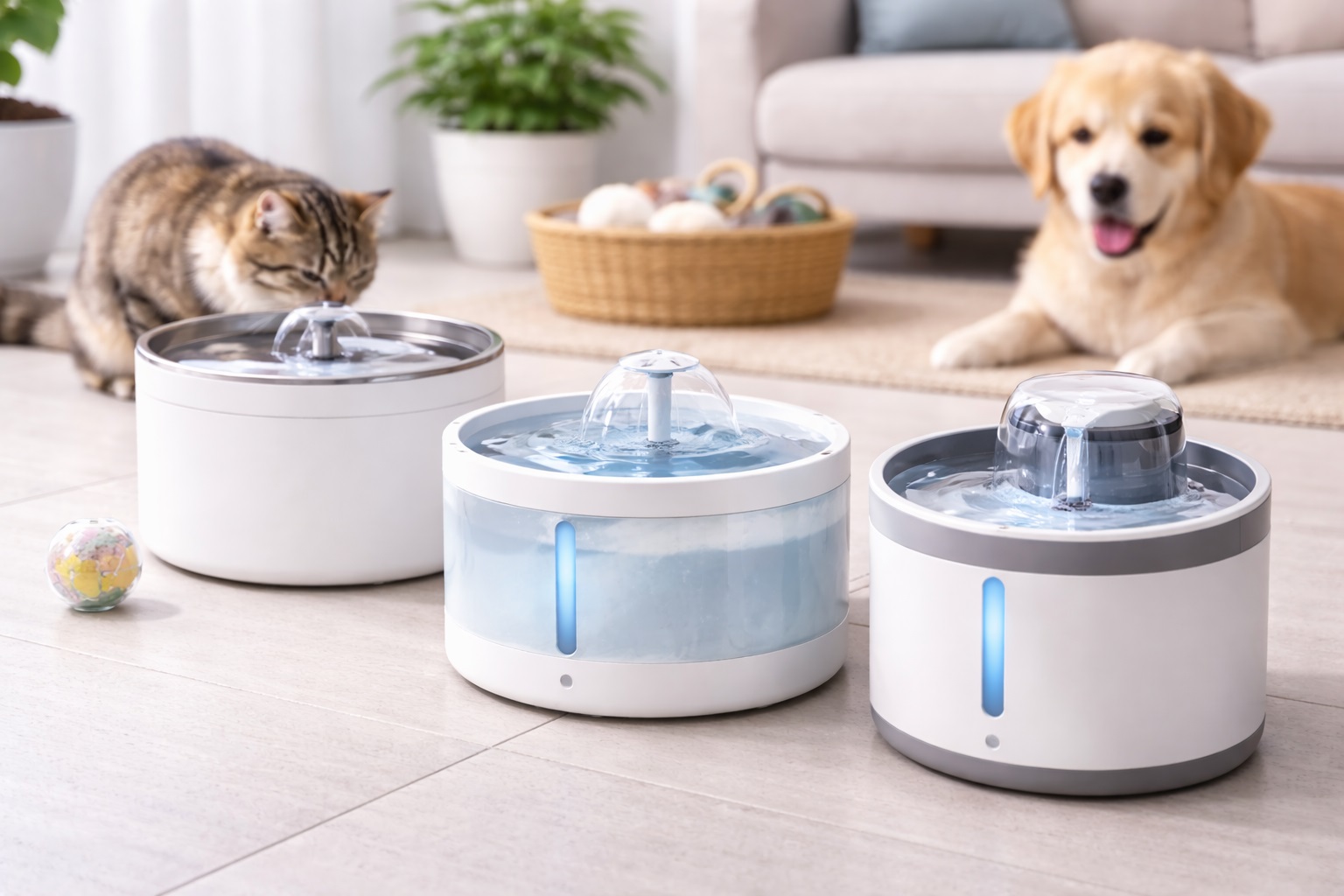
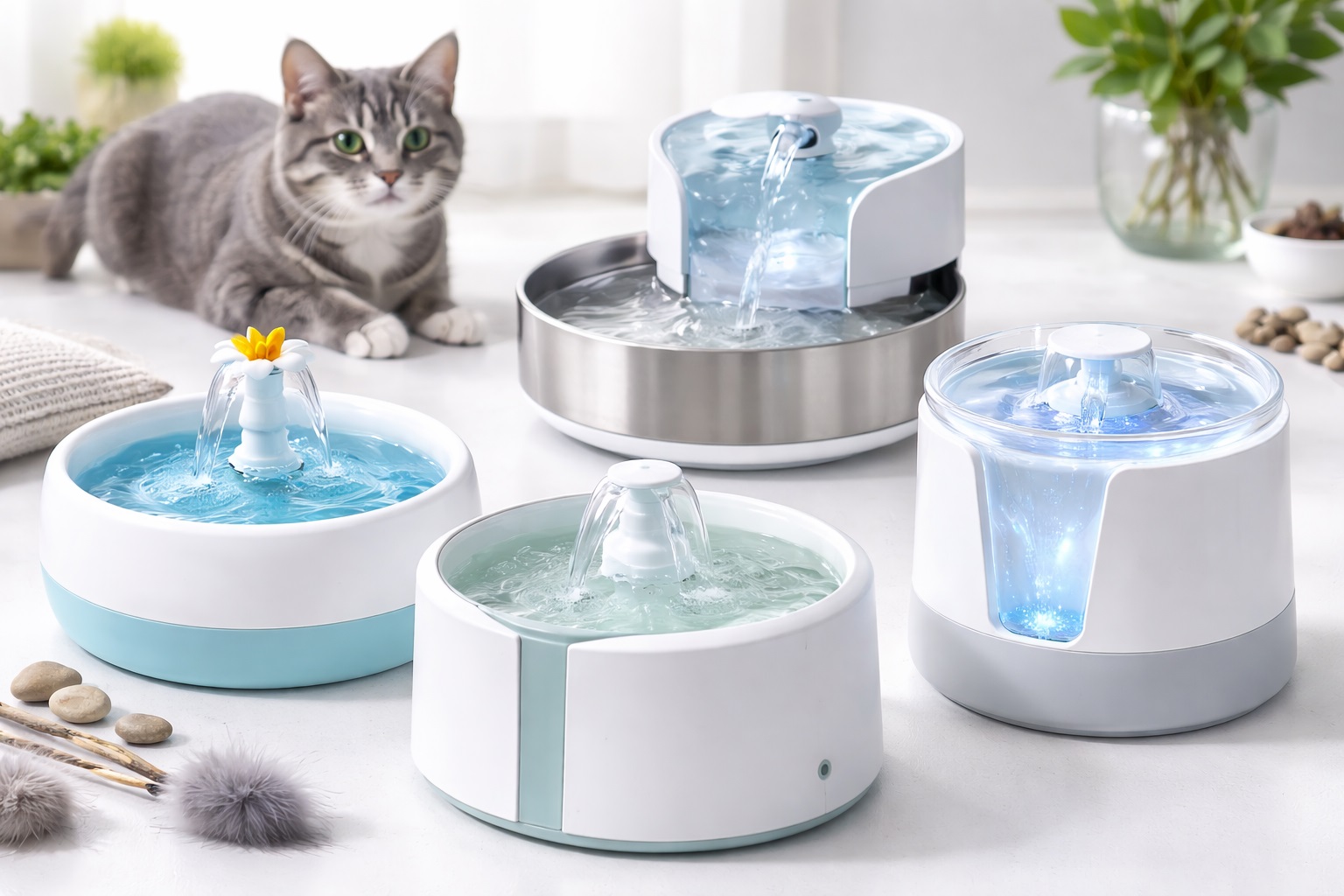
1. Stainless Steel Filtered Fountain – Best for Multi-Cat Hygiene
Stainless steel resists the bacterial buildup that plastic surfaces are prone to, which matters more in multi-cat households where a fountain gets used by several mouths throughout the day. The filtered, flowing water is exactly the kind of moving water source that triggers a cat's natural drinking instinct, and the smooth metal surface doesn't retain the odors of previous use the way plastic sometimes does, which keeps the water appealing to cats with a strong sense of smell around their food and water.
The wide, shallow bowl style common in stainless steel fountains is also relevant here — a broad, open surface lets a cat drink without pressing its whiskers against the sides, and the material's rigidity means the bowl shape doesn't warp or narrow over time the way some plastic designs can after repeated washing. That structural consistency matters over the life of the fountain, since a bowl that subtly narrows or deforms after months of dishwasher cycles can reintroduce the whisker discomfort the design was originally chosen to avoid.
- Pros:
- Stainless steel resists bacterial growth better than plastic
- Flowing water encourages increased drinking in cats specifically
- Dishwasher safe for complete cleaning between multiple cats' use
- Filter removes impurities, taste, and odor that can put cats off drinking
- Cons:
- Higher cost than plastic alternatives
- Heavier than plastic models, which matters less for a stationary fountain but affects cleaning
Best For: Multi-cat households that want a hygienic, wide-mouthed fountain that multiple cats can use without whisker discomfort.
Why We Recommend It: The combination of a wide bowl and a non-porous, odor-resistant surface addresses two of the biggest reasons cats reject a fountain — whisker contact and off-putting smell — better than most alternatives.
2. Ceramic Filtered Fountain – Best for Sensitive or Particular Cats
Ceramic offers the same bacterial resistance as stainless steel with a heavier, more stable base that particular cats seem to respond well to, since a fountain that wobbles or shifts when tapped can be enough to deter a cautious cat from returning to it. The glazed surface doesn't pick up plastic taste or smell, which matters for cats who are known to reject water sources over subtle taste differences that owners can't detect themselves.
Because ceramic doesn't retain odor between fills, refilled water tends to taste more consistent to a cat from one day to the next, which can matter for cats that are inconsistent drinkers and seem to be evaluating the water each time before committing to drink. Owners switching from an older plastic bowl to a ceramic fountain sometimes report their cat drinking more readily within days, which is consistent with taste consistency mattering more to some cats than flow or noise ever did.
- Pros:
- Ceramic surface resists bacterial growth as well as stainless steel
- Heavy, stable base that doesn't shift when a cautious cat approaches
- Doesn't retain plastic taste or odor between fills
- Dishwasher safe for the removable components
- Cons:
- More expensive than plastic or basic stainless options
- Fragile if dropped — ceramic cracks on impact
Best For: Cats that are particular about taste and stability, including cats who previously rejected a lighter plastic fountain.
Why We Recommend It: For cats that are genuinely hard to win over, the combination of taste-neutral material and physical stability removes two subtle deterrents that owners often don't realize are the reason a fountain isn't being used.
3. Multi-Tier Plastic Filtered Fountain – Best for Multiple Cats at Once
A multi-tier design gives several cats their own drinking level, which reduces the resource competition that can develop around a single water source in a multi-cat household. Even cats that get along well often prefer not to drink shoulder-to-shoulder with another cat, and separate tiers or basins let each cat approach on its own terms without feeling crowded out.
The trade-off is the plastic surface, which needs more frequent cleaning to stay appealing to cats with a low tolerance for off-tasting water. For households managing several cats' hydration at once, though, the practical benefit of reduced competition at the water source often outweighs the extra cleaning frequency, and a firm cleaning schedule closes most of the gap with pricier materials in practice.
- Pros:
- Multiple drinking levels reduce competition between cats
- Higher capacity suits households with three or more cats
- BPA-free materials at a budget-friendly price
- Filter system reduces taste and odor adequately for most cats
- Cons:
- Plastic surface scratches and harbors bacteria faster than stainless or ceramic
- Needs more frequent filter changes with heavy multi-cat use
Best For: Households with multiple cats that benefit from separate, simultaneous drinking points more than from premium materials.
Why We Recommend It: Multi-cat hydration problems are often about access, not water quality — giving each cat its own space to drink solves a behavioral issue that a single-bowl fountain, however well made, can't address.
4. Bubble-Stream Circular Fountain – Best for Encouraging Reluctant Drinkers
Some cats respond more strongly to a gentle bubbling stream than to a waterfall-style flow, particularly cats that seemed uninterested in other fountain styles during an initial trial. A circular design with a soft, centered bubble stream creates continuous surface movement across a wide bowl without the splashing sound that can make some cats hesitant, offering a different flow pattern worth trying before concluding a cat simply won't use a fountain at all.
Because the flow in this design is gentler and more evenly distributed than a single spout, cats can approach from any side of the bowl rather than needing to position themselves at one specific spot, which suits multi-cat households where several cats want to drink around the same time.
- Pros:
- Gentle, even flow pattern appeals to cats put off by louder waterfall styles
- Wide circular bowl allows approach from any side
- Lower splash compared to elevated waterfall tiers
- Suits multi-cat approach patterns better than single-spout designs
- Cons:
- Lower flow volume may appeal less to cats that specifically prefer a stronger stream
- Typically smaller capacity than multi-tier alternatives
Best For: Cats that seem hesitant around louder fountain designs, or multi-cat households wanting an all-sides approach point.
Why We Recommend It: Not every cat responds to the same flow style, and a gentler bubble-stream option is worth having in mind as an alternative before assuming a cat that ignored one fountain style will reject fountains altogether.
Buying Guide: How to Choose the Best Pet Water Fountain for Cats
Use these ten cat-specific factors to match a fountain to your cat's actual drinking behavior rather than general pet marketing claims.
1. Prioritize Wide, Shallow Bowls Over Deep Ones
Whisker fatigue is a real and common reason cats avoid drinking from narrow, deep vessels. A wide, shallow drinking area lets a cat's whiskers stay clear of the sides entirely, which matters more for cats than it does for dogs, whose whiskers are less sensitive to repeated contact.
If your cat has previously avoided drinking from a standard bowl but drinks fine from a wide plate of water, that's a strong signal whisker sensitivity is a factor, and a wide-mouthed fountain design should be a priority over other features. Measure the bowl diameter against your cat's face width where possible — a bowl that's noticeably narrower than your cat's whisker span is a design to avoid regardless of other features it offers.
2. Check the Pump Noise Level Specifically for Cats
Cats are more likely than dogs to be startled by unfamiliar mechanical noise near a resource they associate with safety and routine. Ultra-quiet pump designs are usually noted directly in product listings, and it's worth prioritizing these for cats that are generally more cautious or easily startled by household sounds.
If possible, introduce the fountain in a low-traffic area first and observe whether your cat approaches calmly or startles at the pump sound before committing to a permanent location. A pump that runs noticeably louder after a few weeks of use is often a sign of mineral buildup on the impeller rather than a design flaw, and a quick descale usually restores the quieter original operation.
3. Separate Water From Food and Litter
Cats instinctively prefer their water source separated from both food and litter, a preference rooted in avoiding contamination in the wild. Placing a fountain right next to a food bowl or litter box can reduce how often a cat uses it, even if the fountain itself is well designed.
A separate room or at least a few feet of distance from food and litter tends to produce noticeably better fountain adoption than placing everything together for convenience. In smaller homes where full separation isn't possible, even a few feet of distance and a different surface — a mat rather than the same flooring as the litter area — can make a meaningful difference to a particular cat.
4. Match Capacity to Your Number of Cats
A single cat needs roughly 1–1.5 liters of daily water, so a 1.5–2 liter fountain needs refilling every 1–2 days. Multi-cat households should look at 3+ liter capacity to avoid the fountain running low or dry between refills, which risks pump damage and interrupts the flowing water cats respond to.
Running low on water is also a behavioral problem, not just a mechanical one — a cat that approaches a fountain running on a shallow reservoir may experience a weaker or sputtering flow that's less appealing than the steady stream it initially responded to, undermining the very habit you're trying to build.
5. Consider Filter Type for Hair and Debris
Cats shed, and loose fur ends up in water fountains more than most owners expect. A filter designed to catch hair and debris before it reaches the pump reduces both maintenance frequency and the risk of pump strain from hair getting caught in the impeller.
Look specifically for filter reviews that mention hair-catching performance, since not all carbon filters are equally effective at trapping fine debris versus just neutralizing taste and odor. During shedding season, expect to check and clear the filter more often than the standard 2–4 week schedule suggests.
6. Choose Non-Porous Materials for Odor-Sensitive Cats
Cats have a far more sensitive sense of smell than humans, and plastic surfaces that develop microscopic scratches over time can start to hold onto odors that are undetectable to owners but off-putting to a cat. Stainless steel and ceramic avoid this problem far more effectively over the long term.
This becomes especially relevant a few months into ownership, once a plastic bowl has been through dozens of wash cycles. What starts as an odor-neutral surface can gradually develop a faint retained smell that's invisible to a human nose but still enough to make a particular cat drink less consistently than it did when the fountain was new.
7. Watch for Stability Around Cautious Cats
A lightweight fountain that wobbles when a cat leans over it can undermine a cat's confidence in a new water source, especially for cats that are naturally more cautious. Heavier ceramic or stainless steel bases sit more solidly and don't shift during drinking.
If you notice your cat placing a paw on the edge of the fountain before drinking, or approaching and then backing away, instability is worth ruling out as a cause before assuming the issue is noise or taste related.
8. Plan for a Gradual Introduction Period
Cats often need time to adjust to a new sound and flow pattern. Running the new fountain near the old water bowl initially, then gradually relocating it, gives a cautious cat time to associate the new sound with a positive, familiar routine rather than an unfamiliar disruption.
Keeping the old bowl available alongside the new fountain for the first week, rather than removing it immediately, also reduces the risk of a cat going without adequate water while it adjusts to the unfamiliar setup.
9. Check Pump Reliability and Replaceability
The pump is the only mechanical part and the most likely point of failure. Brushless pump motors generally outlast brushed designs, and checking whether replacement pumps are sold separately protects your investment if the original pump eventually wears out from continuous cat use.
Multi-cat households in particular should weigh this factor carefully, since a fountain running continuously for several cats accumulates far more pump hours per year than one serving a single, less frequent drinker. A model with an easily sourced, inexpensive replacement pump effectively extends the useful life of an otherwise well-liked fountain well beyond its original pump's lifespan.
10. Read Cat-Specific Reviews, Not Just General Pet Reviews
A fountain that works well for dogs doesn't automatically work for cats, given the differences in whisker sensitivity, noise tolerance, and drinking posture. Search specifically for reviews from cat owners describing whether their cat actually adopted the fountain, not just general product ratings.
Reviews that mention a specific breed's temperament, or describe a formerly reluctant drinker, tend to be more useful for predicting your own cat's reaction than star ratings alone, which average together very different use cases.
Signs Your Cat Has Actually Adopted the Fountain
Once a fountain is set up, it helps to know what successful adoption actually looks like rather than assuming silence means disinterest. The table below summarizes common signs of adoption versus signs the fountain design may not suit your cat, so you can judge within the first one to two weeks whether to keep the current setup or consider an adjustment. Watching for these signals is far more reliable than guessing from a distance, since cats often interact with a new object cautiously and briefly before settling into a routine either way.
| Behavior Observed | What It Likely Means |
|---|---|
| Cat approaches and drinks within the first few days | Good adoption — flow, noise, and bowl shape are working |
| Cat sniffs the fountain but doesn't drink from it | Possible noise or placement issue — try relocating or a quieter pump model |
| Cat drinks but paws at the water first | Common exploratory behavior, generally not a concern on its own |
| Cat avoids the fountain entirely after initial curiosity | Consider whisker fatigue or taste retention — try a wider, non-porous bowl |
| Multiple cats compete or one cat blocks access | Consider a multi-tier design or a second fountain in another room |
Most cats show a clear preference within the first two weeks, so it's worth resisting the urge to switch fountains too quickly. Give the introduction period outlined earlier a fair chance before concluding a design isn't working for your particular cat. If, after a genuine two-week trial with the old bowl still available as a backup, your cat still shows no interest at all, that's a reasonable point to reconsider bowl shape or flow style rather than assuming the cat simply dislikes fountains in general — most cats that reject one design will still take to a different flow pattern or bowl width given the chance.
Frequently Asked Questions
1. Do cats really prefer flowing water over a still bowl?
Most cats do. The preference is instinctive — in nature, still water is more likely to be contaminated. Many cats that drink inadequately from a still bowl increase their water intake noticeably once introduced to a flowing fountain, which benefits kidney and urinary tract health over time. Increased water intake is particularly valuable for cats prone to urinary crystals or concentrated urine, since more frequent drinking dilutes the urine and reduces the environment those issues develop in.
2. What is whisker fatigue and why does it matter for fountain choice?
Whisker fatigue refers to the mild discomfort some cats experience when their sensitive whiskers repeatedly brush against the sides of a narrow container. A wide, shallow fountain bowl avoids this by giving whiskers room to stay clear of the edges while drinking. Cats experiencing this discomfort sometimes show it by pawing at water to drink from a paw instead, or by hovering near a bowl without committing to drink directly from it.
3. How many fountains do I need for a multi-cat household?
A single fountain with 3+ liter capacity can work for two or three cats, but households with cats that don't get along well, or homes spanning multiple floors, often benefit from a second fountain in a separate area to reduce competition and improve access. As a general rule, one water source per floor of the home, plus one extra for the household overall, tends to reduce competition-related avoidance.
4. Why won't my cat drink from the new fountain?
Common reasons include pump noise, whisker discomfort in a narrow bowl, placement too close to food or litter, or simply needing more time to adjust. Try relocating the fountain near the old water bowl first and gradually moving it, rather than assuming the cat has permanently rejected it. Also rule out a partially clogged filter or a pump running unusually loud, since either can develop after the fountain has been running for a few weeks.
5. Is filtered water necessary for cats, or is a plain fountain enough?
A filter isn't strictly required for the fountain to function, but it removes taste and odor that can make water more appealing to particular cats, and it catches loose hair and debris before it reaches the pump, reducing maintenance and pump strain. For cats that are especially sensitive to taste, a fresh filter can be the difference between consistent drinking and sporadic interest.
6. Are plastic cat fountains safe, or should I avoid them?
BPA-free plastic is generally safe from a toxicity standpoint. The concern is hygiene rather than safety — plastic develops microscopic scratches over time that can retain odor and bacteria more than stainless steel or ceramic, which matters more for cats given their sensitive sense of smell. A well-maintained plastic fountain on a consistent cleaning schedule remains a perfectly workable option for most cats.
7. How often should I clean a cat fountain specifically?
Wipe the bowl every 3–4 days, do a full disassembly and wash every 1–2 weeks, and change the filter every 2–4 weeks. Cats are more sensitive to subtle changes in water taste than dogs, so staying consistent with this schedule matters more for maintaining fountain adoption than it might for a less particular pet.
8. Is the most expensive cat fountain always the best choice?
Not necessarily. Price reflects material and features, but the right choice depends on your specific cat's preferences around noise, bowl shape, and stability — a mid-range fountain that fits those preferences often outperforms a premium one that doesn't, since cat adoption is behavioral rather than purely about build quality.
9. Can I return a cat fountain if my cat won't use it?
Most retailers offer 15–30 day return windows, which is generally enough time to test the introduction period described above and judge whether your cat is adjusting before the window closes. Keep the original packaging during this trial period in case a return becomes necessary.
10. What should I prioritize first when choosing a fountain specifically for cats?
Start with bowl width and pump noise level, since these two factors most directly affect whether a cat will actually approach and drink from the fountain. Capacity and material matter, but they only become relevant once your cat is actually using the fountain regularly, so it's worth confirming basic adoption before optimizing for anything else.
Final Verdict
- Best for Multi-Cat Hygiene: Stainless Steel Filtered Fountain — wide, odor-resistant bowl that suits several cats sharing one source.
- Best for Sensitive or Particular Cats: Ceramic Filtered Fountain — stable, taste-neutral option for cats that reject other designs.
- Best for Multiple Cats at Once: Multi-Tier Plastic Filtered Fountain — separate drinking points that reduce competition in busy households.
The right fountain for your cat depends more on your cat's individual habits than on any single feature ranking highest on paper. A cat that's sensitive to noise, wary of narrow bowls, or particular about taste needs a different match than a confident cat that will drink from almost anything that moves. Use the behavior signs and buying factors above to choose thoughtfully, give the introduction period a real chance, and adjust only if your cat's actual behavior tells you the current setup genuinely isn't working. Above all, resist judging a fountain purely on specifications — the real test is always how your own cat responds once the pump is running and the water is flowing where your cat can see, hear, and reach it comfortably.