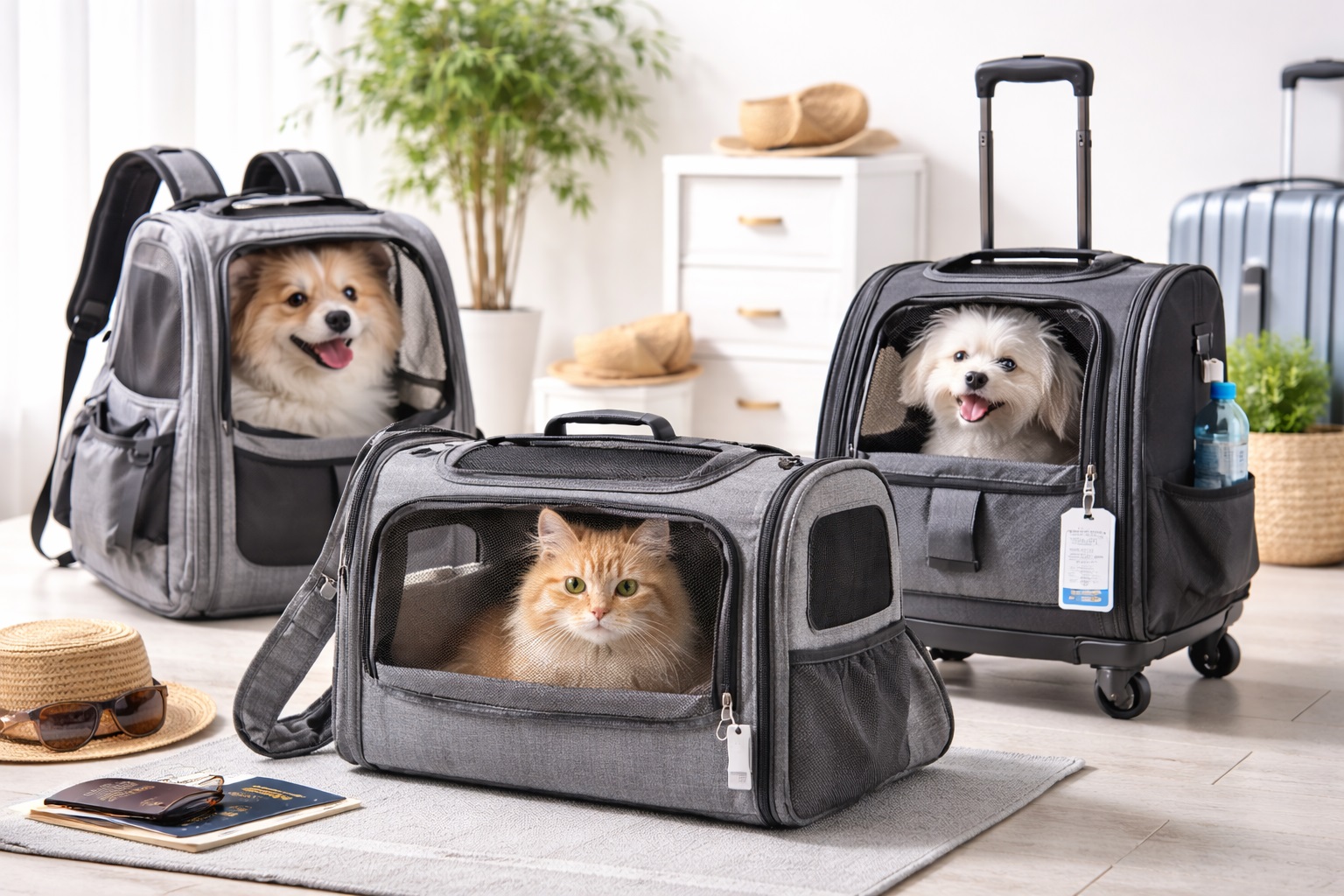
Best Pet Carriers for Travel: Safe, Comfortable Trips With Your Pet
Traveling with a cat or small dog introduces a layer of logistics that pet owners without travel plans rarely think about — airline size restrictions, carrier ventilation, how the animal handles being confined for hours, and whether the carrier itself will survive being handled by baggage crews or squeezed under an airplane seat. Choosing the wrong carrier doesn't just create inconvenience; it can mean being turned away at the gate or having a genuinely stressed pet by the time you reach your destination.
This guide compares the main carrier styles built for travel — airline-approved soft carriers, rolling and backpack designs, hard shell crates, expandable carriers, and budget-friendly options — and looks at what separates a carrier that holds up under real travel conditions from one that only looks adequate in a product listing. Airline compliance, ventilation, structural security, and how the carrier fits your specific mode of travel all factor into which style makes sense.
Whether you're flying with a cat in the cabin, driving cross-country with a small dog, or navigating public transit with a carrier on your back, the right choice depends on matching the carrier's design to your actual travel pattern rather than picking whatever has the most positive reviews in general.
It's also worth acknowledging that no carrier eliminates travel stress for a pet entirely — some animals simply find travel unsettling regardless of how well-designed the carrier is. What a good carrier can do is minimize unnecessary discomfort: adequate airflow, a secure structure that doesn't feel like it might collapse, and a size that lets your pet turn around and lie down comfortably for the duration of the trip.
Beyond the carrier itself, a certain amount of preparation on your end also affects how smoothly a trip goes — getting your pet accustomed to the carrier before travel day, packing familiar bedding, and understanding your specific airline or transit provider's pet policy in advance. The carrier is the foundation, but how you use it plays a real role in the outcome as well.
It's also worth thinking through the return trip, not just the outbound journey, since carriers and pets alike tend to show wear and stress differently on a return leg after days of travel, unfamiliar sleeping arrangements, or a change in routine. A carrier that held up well and kept a pet calm on the way out doesn't always perform identically days later, particularly if it wasn't cleaned or dried properly between uses, or if the pet is more anxious after an unfamiliar environment. Planning for the entire round trip, rather than optimizing purely for the initial journey, tends to produce a smoother overall experience.
Top Pet Travel Carriers (Detailed Reviews)
Airline-Approved Soft Carrier – Best Overall
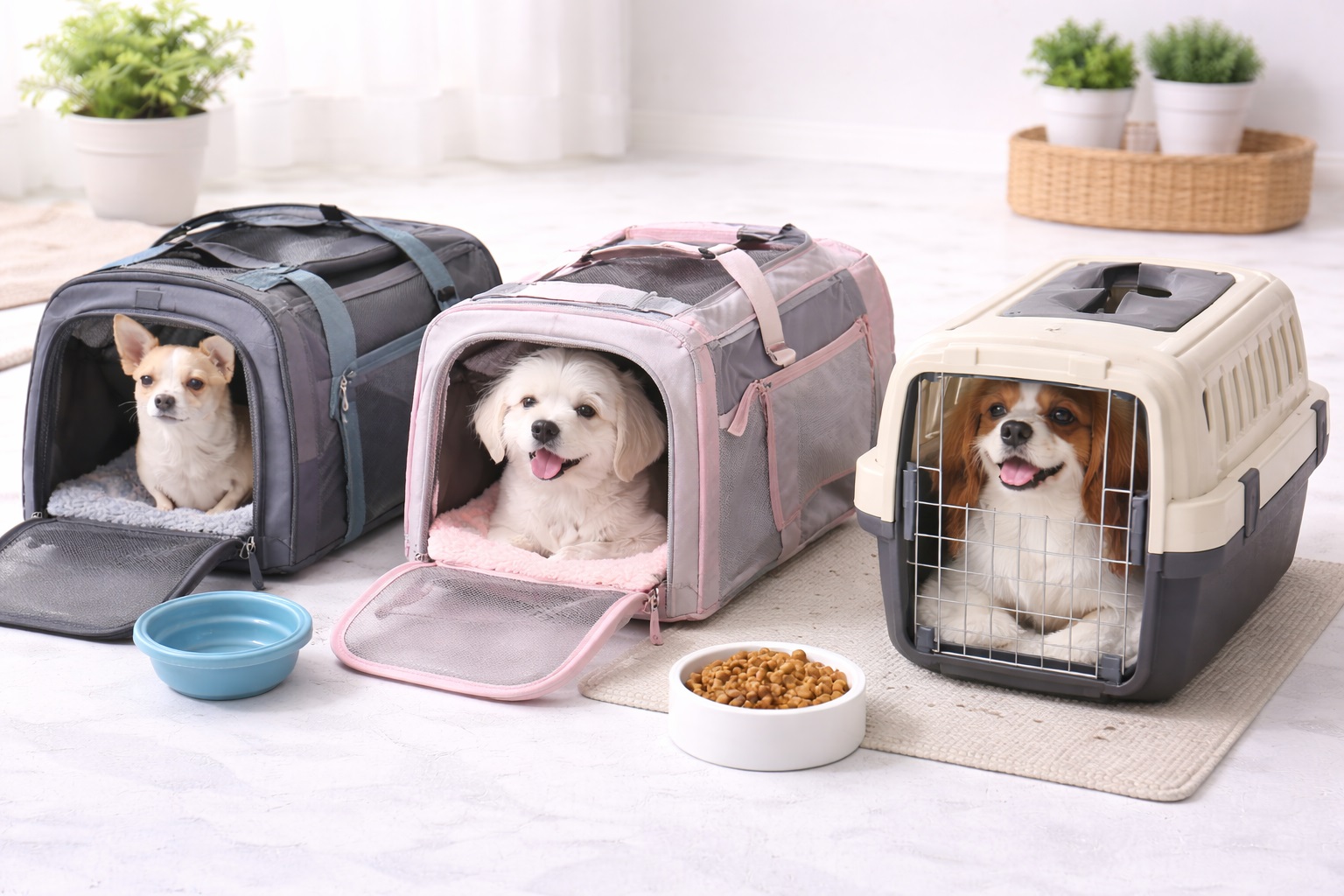
Airline-approved soft carriers are built to meet the under-seat dimension limits set by most major airlines, typically using a collapsible fabric structure with mesh ventilation panels on multiple sides. The soft-sided construction flexes slightly to fit into tight under-seat spaces, while still maintaining enough structure to keep the carrier from collapsing onto the animal inside. Many models include a top-loading zipper opening, which makes it considerably easier to get a nervous cat inside without a struggle at security or the gate. Some also include a separate side-entry zipper, giving you a choice of loading method depending on how your pet prefers to be handled.
- Pros:
- Designed to fit standard airline under-seat dimension requirements
- Mesh panels on multiple sides improve airflow during the flight
- Soft, flexible structure compresses slightly to fit tight spaces
- Cons:
- Less structural rigidity than hard shell alternatives
- Airline size rules vary by carrier, so compliance should be double-checked per airline
Best For: Pet owners flying with a cat or small dog who need a carrier confirmed to fit under an airplane seat.
Why We Recommend It: Purpose-built airline compliance removes the guesswork of whether a carrier will actually be accepted at the gate, which matters far more for air travel than for any other travel mode covered here.
Rolling Wheeled Pet Carrier – Best for Airport Navigation
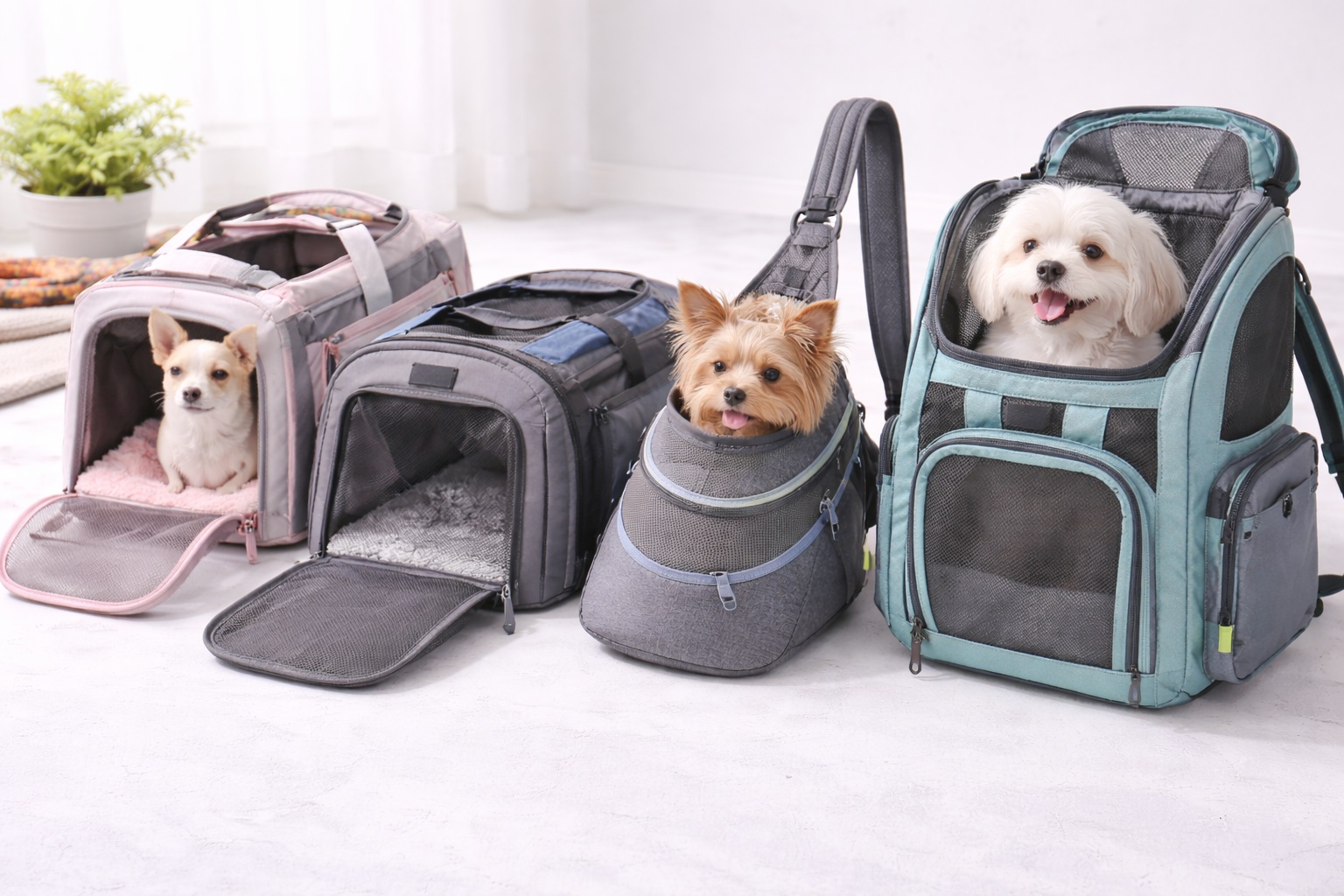
Rolling carriers add a wheeled base and retractable handle to a standard soft or semi-rigid carrier body, letting you pull the carrier through terminals rather than carrying it by hand or over a shoulder for extended distances. This becomes particularly valuable navigating long airport corridors, especially when you're also managing additional luggage. The wheeled base typically detaches or folds flat for storage between trips, though this adds a mechanical component that's worth checking for smooth, reliable operation before you rely on it during travel.
- Pros:
- Wheeled base reduces physical strain during long walks through terminals
- Retractable handle offers flexibility between rolling and hand-carrying
- Generally includes the same ventilation and structure as standard soft carriers
- Cons:
- Added wheels and frame increase overall weight of the empty carrier
- Wheels can catch on uneven terminal flooring or curbs
Best For: Travelers navigating large airports or covering long distances with luggage in addition to their pet.
Why We Recommend It: The wheeled design directly addresses the physical toll of long-distance travel days, which matters especially for connecting flights or larger terminals with substantial walking distances.
Backpack Pet Carrier – Best for Hands-Free Travel
Backpack-style carriers position the pet on your back inside a structured, ventilated compartment, freeing both hands for luggage, tickets, or navigating stairs and escalators. Most include a mesh viewing panel so the pet can see out, along with a padded base and a secure zip or buckle closure to prevent accidental escape. Padded, adjustable shoulder straps also matter here, since the entire weight of the carrier and pet rests on your shoulders rather than being distributed by a handle or wheels.
- Pros:
- Frees both hands during travel, useful when also managing luggage
- Structured shape generally offers more headroom than flat soft carriers
- Mesh viewing panels help reduce anxiety for pets that prefer to see their surroundings
- Cons:
- Weight distribution on your back can become tiring over very long distances
- Less common to see airline pre-approval compared to standard under-seat carriers
Best For: Pet owners who need both hands free while traveling, such as commuting on public transit or navigating stairs with additional bags.
Why We Recommend It: The hands-free design solves a specific and common travel problem — juggling a pet carrier alongside luggage — better than any other style covered in this guide.
Hard Shell Travel Crate – Best for Structural Security
Hard shell crates use a rigid plastic structure, similar to the crates required for cargo-hold pet transport, offering the most protection against being crushed or squeezed by external pressure. The rigid design holds its shape regardless of how it's stacked or handled, which matters most in situations where the carrier may be out of your direct control, such as checked cargo transport. Ventilation on hard shell designs typically comes from molded slots around the sides rather than mesh fabric, which holds up to rougher handling but generally offers a somewhat different airflow pattern than soft-sided mesh panels.
- Pros:
- Rigid structure resists crushing and maintains its shape under pressure
- Often meets cargo-hold transport requirements where applicable
- Secure locking mechanisms reduce the risk of accidental opening
- Cons:
- Bulkier and less flexible than soft carriers for under-seat cabin use
- Heavier overall, adding to total travel weight
Best For: Situations requiring maximum structural protection, including cargo transport or road trips where the carrier may shift during transit.
Why We Recommend It: When structural integrity matters more than compact portability, the rigid shell provides a level of physical protection soft-sided carriers can't match.
Expandable Pet Carrier – Best for Extra Room
Expandable carriers include zippered side or end panels that unfold to create additional interior space once the carrier is stationary, such as at a hotel or rest stop, while collapsing back down to standard dimensions for actual transport. This gives pets a larger area to stretch out during layovers or breaks without sacrificing compliance during the actual travel segments. The added panels are usually made of the same mesh material as the rest of the carrier, maintaining consistent ventilation even when the carrier is in its expanded state.
- Pros:
- Expandable panels give pets more room to stretch during stops
- Collapses back to standard size for compliant transport
- Useful for longer trips involving layovers or extended rest stops
- Cons:
- Expandable panels add another mechanism that could wear out over time
- Needs to be collapsed properly before boarding to remain compliant with size limits
Best For: Longer trips with layovers or rest stops where the pet benefits from extra room outside of active transit.
Why We Recommend It: The ability to expand space during downtime while remaining compliant during active travel addresses the comfort-versus-compliance trade-off better than a fixed-size carrier.
Budget Travel Pet Carrier – Best Value
Budget travel carriers strip the design down to the essentials — basic mesh ventilation, a simple zip closure, and standard dimensions — without the added features of rolling bases, backpack straps, or expandable panels. For occasional travelers who don't need specialized features, this simplified approach keeps costs down while still covering the fundamentals. Since there are fewer moving parts, there's also generally less that can mechanically fail compared to carriers with wheels or fold-out panels.
- Pros:
- Lower price point than feature-added alternatives
- Simple design with fewer mechanisms that could fail
- Adequate for occasional trips where advanced features aren't necessary
- Cons:
- Lacks the convenience features of rolling or backpack designs
- Construction quality can vary more at this price point
Best For: Occasional travelers who need a functional, compliant carrier without paying for features they won't use regularly.
Why We Recommend It: For infrequent travel needs, the fundamentals covered by a budget carrier are often sufficient, making added features an unnecessary expense.
Buying Guide: How to Choose the Best Pet Carrier for Travel
Travel carriers are judged by different standards than everyday pet carriers, since airline rules, extended confinement times, and handling by transit staff all introduce requirements a simple at-home carrier doesn't need to meet. These are the factors that matter most.
1. Airline Cabin Compliance Dimensions
Airlines publish specific under-seat dimension limits, and these vary meaningfully between carriers — a carrier compliant with one airline may exceed another's limits by an inch or two. Always check the specific airline's current pet policy before booking, rather than assuming a carrier labeled "airline-approved" is universally accepted, since that label typically references general industry norms rather than a specific airline's rules. It's also worth checking whether the specific aircraft on your route has any additional space constraints, since regional jets sometimes have tighter under-seat clearance than larger aircraft on the same airline.
2. Ventilation Panel Coverage
Adequate airflow becomes increasingly important the longer the trip, particularly in cargo holds or warm vehicle interiors. Carriers with mesh panels on multiple sides, rather than just the front, generally provide better air circulation and reduce heat buildup during longer confinement periods. Pay attention to how the mesh is reinforced at the seams as well, since ventilation panels are often the first point of wear on a heavily used travel carrier.
3. Structural Rigidity and Security
A carrier that flexes too easily under pressure can feel unstable to a nervous pet and may not hold its shape when handled by baggage crews or squeezed into tight spaces. Reinforced frames within soft-sided carriers, or fully rigid hard shell designs, offer more consistent protection than unstructured fabric carriers. Double-check the locking mechanism on any zippers or latches as well, since a carrier that can be nosed open from the inside poses an obvious escape risk during travel.
4. Comfort Padding Inside
A padded base reduces pressure points during long periods of sitting or lying down, particularly relevant for older pets or those with joint sensitivity. Removable, washable padding is a practical bonus, since accidents during travel are common and a carrier that's difficult to clean afterward creates an unpleasant ongoing problem. Consider bringing a familiar blanket or towel from home as well, since the scent can have a calming effect independent of the padding itself.
5. Weight of Carrier Itself
The empty weight of the carrier matters because airlines and airport handling both factor total weight — pet plus carrier — into transport limits and your own physical effort carrying it. Lighter soft-sided carriers leave more of the weight allowance for the pet itself, which matters for larger cats or small dogs closer to size limits. If you're already managing additional luggage through security and boarding, even a pound or two of difference in carrier weight can matter over a long travel day.
6. Price and Value
Within the travel carrier category, price differences often reflect added convenience features — wheels, backpack straps, expandable panels — rather than fundamental quality differences. For frequent travelers, paying more for these features can genuinely reduce physical strain, while occasional travelers may get equivalent core functionality from a simpler, less expensive design. Weighing how often you'll actually travel with the carrier against its price is a more useful exercise than comparing prices across models in isolation.
7. Brand Reliability
Brands with a specific track record in travel pet gear, rather than general pet accessories, tend to have more refined designs around the specific stresses of travel — zipper durability, seam strength, and airline compliance accuracy. Checking whether a brand explicitly references current airline policies in its product information is a reasonable quality signal, since it suggests the product was designed with actual air travel requirements in mind rather than adapted from a general carrier design.
8. Warranty and Support
Given how much wear travel carriers experience compared to at-home carriers, a manufacturer warranty covering zippers, seams, and structural components is a meaningful consideration. Frequent travelers in particular should look for warranty terms that account for the more demanding use case travel represents, since a carrier used weekly will show wear far faster than one used a few times a year.
9. User Reviews and Real-World Feedback
Reviews from travelers who've actually flown or driven long distances with a carrier are far more useful than reviews based on brief at-home use. Look specifically for mentions of how the carrier held up to actual airport handling, how the pet responded to extended confinement, and whether airline staff raised any compliance questions at the gate. Reviews mentioning specific airlines and routes can be particularly useful if you're planning similar travel.
10. Compatibility With Your Existing Setup
Consider how the carrier fits with your vehicle's seatbelt system if driving, whether it fits your existing pet's harness or leash routine for security during transit, and whether it stores easily between trips. A carrier that's excellent for air travel but awkward for the car ride to the airport creates friction in the overall trip. If you travel with multiple pets, also consider whether individual carriers or a shared multi-pet design better suits your usual travel arrangement.
11. Ease of Cleaning Between Trips
Travel carriers see heavier and more varied use than everyday at-home carriers, including the occasional accident during a stressful trip, so how easily a carrier can be cleaned matters more than it might for casual use. Removable, machine-washable liners and wipeable exterior fabric both reduce the hassle of getting a carrier trip-ready again on short notice, which matters if you travel more than once every few months.
12. Visibility and Pet Anxiety
Some pets feel calmer when they can see their surroundings through mesh panels, while others are more relaxed in a partially covered, den-like space that limits visual stimulation. Carriers with a removable or foldable cover panel offer flexibility to accommodate either preference, letting you adjust based on how your specific pet responds during the trip rather than committing to one fixed level of visibility.
Frequently Asked Questions
How do I know if a carrier meets my specific airline's requirements?
Check the airline's published pet travel policy directly, since exact under-seat dimensions vary between carriers and even between aircraft types on the same airline. A carrier labeled airline-approved generally meets common industry dimensions but should still be confirmed against your specific airline before traveling, ideally by contacting the airline's pet travel desk directly if there's any ambiguity.
How much room does my pet actually need in a travel carrier?
At minimum, your pet should be able to stand up, turn around, and lie down comfortably inside the carrier. For longer trips, slightly more room and a padded base become more important for comfort during extended confinement, though airline size limits ultimately cap how much extra room is realistically available for cabin travel.
Should I sedate my pet for air travel?
Sedation for pet travel is a decision that should involve a veterinarian, since sedatives can affect breathing and body temperature regulation at altitude. A well-ventilated, secure, appropriately sized carrier is generally the safer starting point for reducing travel stress, and many veterinarians recommend against sedation for air travel specifically due to these risks.
Can I use the same carrier for air travel and car trips?
In most cases yes, particularly with soft-sided airline-approved carriers, which also work well secured with a seatbelt in a vehicle. Hard shell crates may be less convenient for frequent car use due to their bulk, but work fine for occasional trips where the added structural protection is a priority.
What's the benefit of a rolling or backpack carrier over a standard shoulder-strap design?
Both styles reduce the physical strain of carrying a pet over long distances, which matters most in large airports or during extended walking. The choice between them usually comes down to whether you prefer pulling a carrier or wearing it, and whether stairs or uneven terrain are part of your typical route, since backpacks handle stairs more gracefully than rolling carriers.
How often should I let my pet out of the carrier during a long trip?
This depends on the mode of travel — during flights, pets generally need to stay in the carrier for the duration per airline policy, while car trips allow for scheduled breaks. Checking airline-specific rules and planning rest stops for road trips helps set realistic expectations before you travel, and building extra time into your itinerary for these breaks reduces overall stress for both of you.
Do expandable carriers stay compliant with airline size limits?
Yes, when properly collapsed to their standard dimensions before boarding — the expansion feature is meant for use during stops, layovers, or once you've reached your destination, not during active transit segments subject to size checks. Double-check that the panels fully collapse and latch before heading to the gate.
What ventilation is actually necessary for a pet carrier?
Mesh panels on at least two or three sides generally provide adequate airflow for most travel situations, with more coverage becoming more important in warm climates or longer trips. Avoid carriers with ventilation limited to a single small panel, especially for air travel, where cabin temperature can vary noticeably during boarding and taxi.
Is a heavier, more rigid carrier always safer for my pet?
Not necessarily — rigidity offers better crush protection in specific situations like cargo hold transport, but added weight can be a downside for cabin travel where you're carrying the whole setup yourself. The safest choice depends on your specific travel mode and how the carrier will be handled by transit staff along the way.
How do I clean a travel carrier after a trip?
Removable, washable padding makes this considerably easier, and most fabric exteriors can be spot-cleaned or machine washed depending on the manufacturer's care instructions. Cleaning promptly after travel helps prevent lingering odors from extended use, and letting the carrier fully air dry before storing it prevents mildew buildup in the fabric.
Do I need to acclimate my pet to the carrier before a trip?
Yes, ideally several days or weeks in advance — leaving the carrier open at home with familiar bedding inside lets your pet associate it with a safe space rather than only encountering it on stressful travel days. This acclimation period tends to noticeably reduce anxiety during actual travel.
Can I bring food and water inside the carrier during travel?
Small, spill-resistant travel bowls that clip to the carrier's interior are generally fine for car trips, but airlines typically discourage loose water during flights due to turbulence and spillage risk, recommending instead that pets have access to water during layovers or before boarding. Checking your specific airline's policy on in-carrier food and water avoids any confusion at the gate.
What should I pack alongside the carrier for a smoother trip?
Familiar bedding, a small supply of regular food, any medications, and a recent photo of your pet in case of an unexpected separation are all reasonable additions beyond the carrier itself. Packing a portable water bowl and a few disposable puppy pads or liners for accidents also helps you handle unexpected situations without scrambling to find supplies while traveling.
Final Verdict
- Best Overall: The Airline-Approved Soft Carrier, for its reliable compliance with cabin travel requirements and solid ventilation.
- Best for Airport Navigation: The Rolling Wheeled Pet Carrier, for reducing physical strain across long terminal distances.
- Best Value: The Budget Travel Pet Carrier, for occasional travelers who need the fundamentals without extra features.
The right travel carrier ultimately depends on how you're traveling, how far, and how often. A single flight a year calls for different priorities than monthly cross-country trips or regular commutes with a pet in tow, and matching the carrier's specific strengths to that actual travel pattern will do more for your pet's comfort — and your own — than choosing based on price or appearance alone.
Before finalizing a purchase, it's worth mapping out your typical trip from start to finish — the walk to the car, the time in a terminal, the actual flight or drive, and how your pet tends to behave under stress — and checking that the carrier you're considering holds up at each stage. A carrier that's perfect for the flight itself but awkward during the drive to the airport, or one that meets airline size rules but leaves your pet cramped for a multi-hour journey, will create friction regardless of how well it performs on paper. Taking that whole-trip view tends to produce a better match than focusing on any single feature in isolation.